The new Magic: The Gathering set requires our best magnifying glass and a good knowledge of Clue

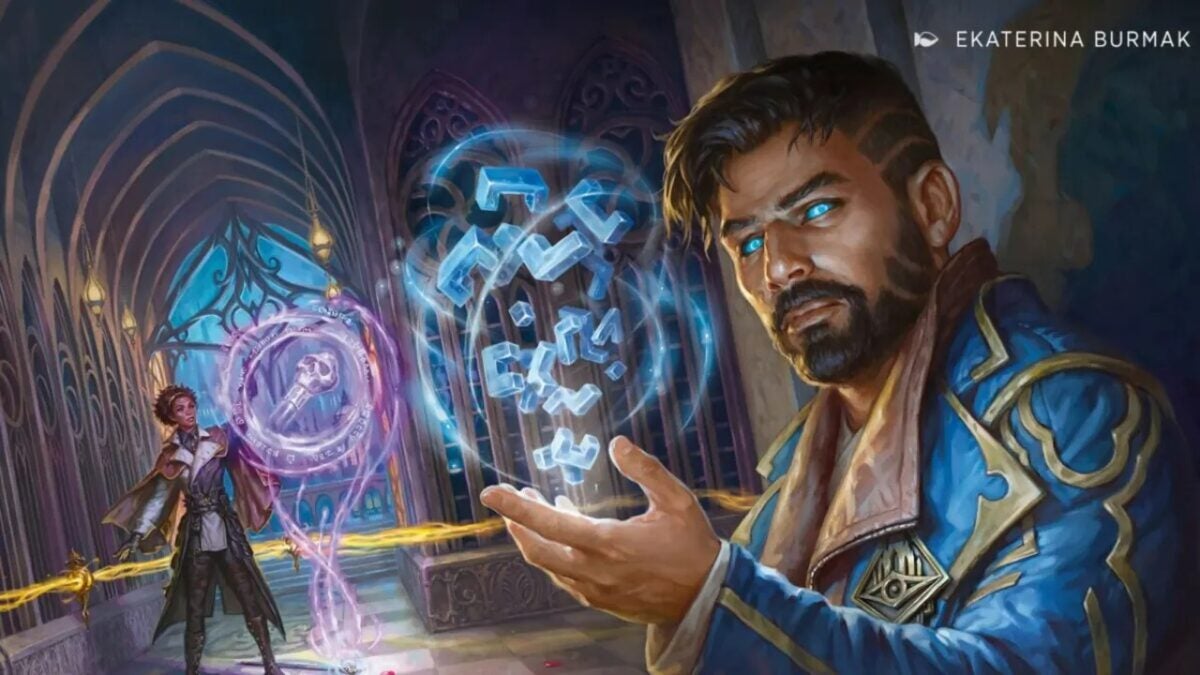
The new Magic: The Gathering collection focuses on detective stories, throwing us into uncovering the culprits of a crime… or being those culprits.

Magic: The Gathering is a game where everything fits. By being set in a multiverse, it is possible to go in practically any direction and it will work. Collections based on specific characters or stories work as well as those that have a more general idea, such as a genre or an external franchise. As shown by the collections of The Lord of the Rings and Fallout. Or how the game’s new main collection does it: Murders in the Karlov Mansion.

Magic: The Gathering Arena DOWNLOAD

As the name suggests, this collection is based on a very simple idea: detective stories. With influences and nods to classics like Sherlock Holmes, but also less obvious ones like Colombo, everything in Murders in the Karlov Mansion seeks to emphasize that idea. We are facing a story of crimes, where clues, evidence, murders, and a whole parade of detectives, victims, and suspects play their role in the plot.

This has been translated with a very interesting story about the murder of a mythical character from the franchise, which can be read for free on the Magic: The Gathering website. But not only that. As usual in the game, the crime and its investigation is something that also transpires in its mechanics.

In this case, it has been in the introduction of two series of mechanics based on crime or the attempt to uncover it. On the crime side, we have mechanics like Disguise, which allows us to play cards face down for a fixed cost, uncovering them by paying a different mana price. Something that serves so that the enemy never knows what is coming

Something more complex is the detective side. Investigate, a mechanic that consists of creating Clue tokens that allow us to draw a card if we sacrifice them, returns because they fit the case so well. But there are also some new ones. Suspect allows us to make a creature unable to block, but in return it can only be blocked by two or more creatures at the same time. Gathering evidence asks us to exile cards that cost the indicated mana value to get extra effects. And the cases are new enchantments, in the form of sagas, that have an effect when they enter the battlefield and, when they are resolved by meeting certain requirements, it is considered that we have solved the investigation, giving us a permanent benefit. As long as the Case remains in play.

This adds a distinctly detective flavor to the game. But it’s not the only thing that gives it that particular flavor. Because along with the collection at Wizards of the Coast, they have released an edition called Ravnica: Clue Edition.

Here we find a series of unique cards, inspired by the mythical board game of criminal investigation. With evidence cards featuring characters, weapons, and rooms taken from Clue, this is a version of the board game that is played with Magic cards. These cards are included in the game pack, creating a new multiplayer format where victory can be achieved in two different ways: by defeating our opponents or by discovering who the killer is.

Magic: The Gathering Arena DOWNLOAD

If something Asesinatos en la mansión Karlov shows us is how versatile and flexible Magic: The Gathering is. The infinite possibilities it has as a game. Besides, a good detective story always works. Even in a card game.
From Modest Beginnings to Worldwide Fame: The Story of Cluedo

Between the war and his tedious job, Anthony E. Pratt escaped in the best possible way: creating his first board game.

Year 1942. Birmingham suffers the bombing of the Nazi Luftwaffe every few years. So much so, that it became the third most bombed British city in World War II after 77 attacks in which 2241 people were killed and 12,391 houses were destroyed. And in the midst of that disaster, Anthony E. Pratt worked in a factory creating tank components, a laborious, repetitive job he hated. Between the war and his tedious job, Pratt escaped in the best possible way: by creating his first board game.

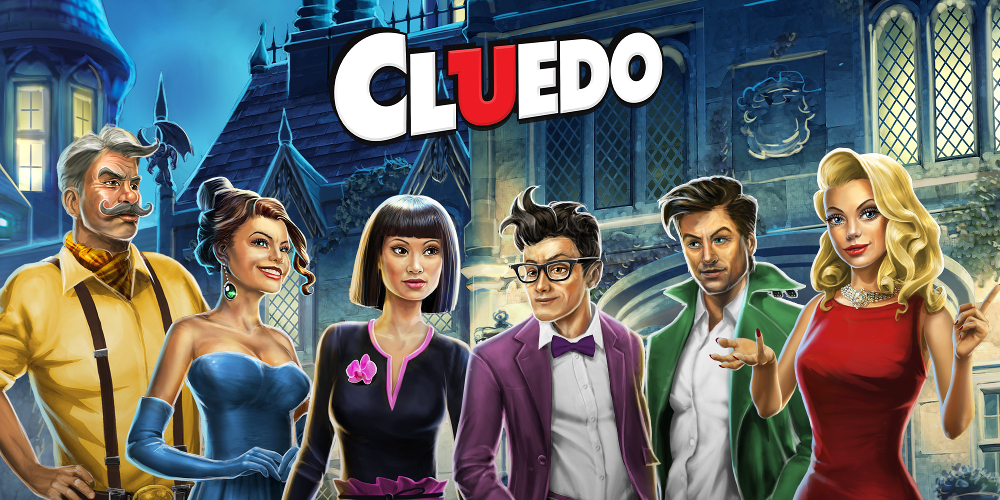
Cluedo: The official edition DOWNLOAD
A complete application for iPhone, by Marmalade Game Studio Limited.

Miss Amapola at the ballroom

Before becoming a tank manufacturer, Pratt was a musician who played in different hotels for rich people where the highlight of those nights in the interwar period was playing murder mystery. Or what amounts to the same thing: discovering who had committed a murder among all those present. Reading the novels of Agatha Christie and Raymond Chandler did the rest: on December 1, 1944, the Briton and his wife Elva, who designed the game board, registered a game called ‘Murder! But the story did not end there… And there were still to be a few unexpected twists and turns.

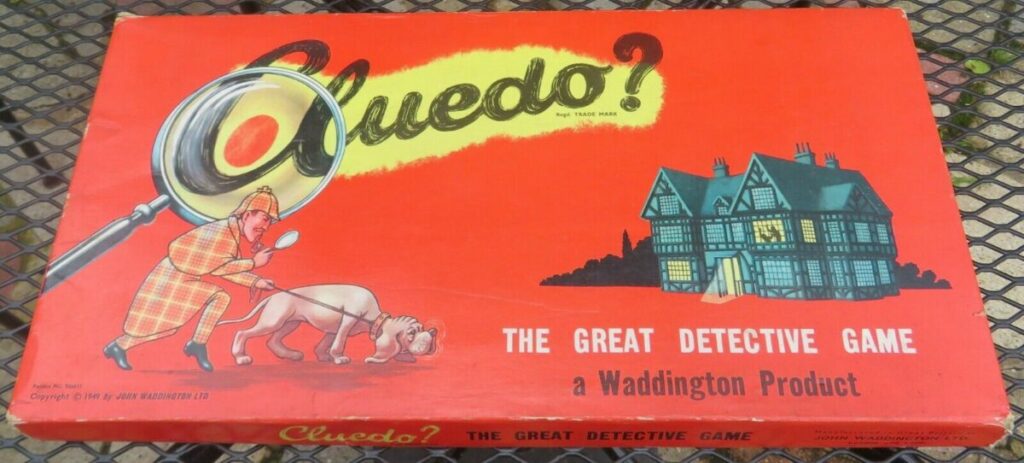
Shortly after registering it, the couple went to Waddingtons, a board game company (which in 1994 would be acquired by Hasbro) and which was already publishing ‘Monopoly’ in the UK. At that time the game was already basically what we know: a country house with different rooms in which a body is found and all the guests are potential murderers. And of course, only by finding the right clues will the mystery be solved. The Pratts immediately convinced Waddingtons, who agreed to distribute it.

It must be said that Waddingtons changed the game slightly to make it more accessible: from ten characters it went down to six and some weapons were removed, such as the hypodermic syringe or the Irish cane. Anyway, the original ideas ended up appearing in some of the many -many, impossible to follow- versions of the board game.

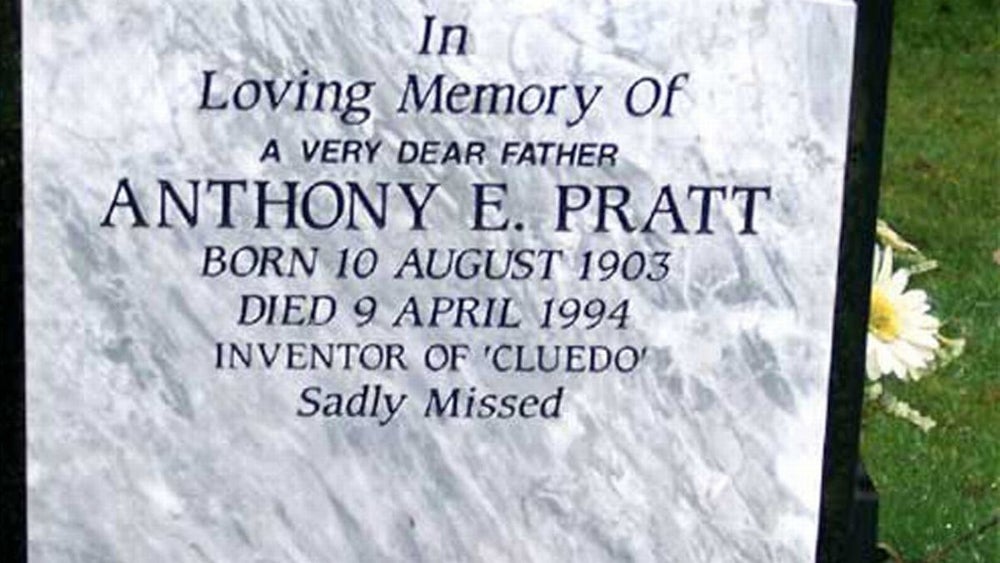
If you think this is a story of how Anthony E. Pratt got rich, think again. When, at last, ‘Cluedo’ was released in 1949, the results in a post-war UK were rather muted. The company told the Pratts that it wasn’t selling very well, especially in America, and they bought the world rights from them for £5,000 (the equivalent of about £100,000 today). Neither of them would ever see any money from ‘Cluedo’ again and their name would become anonymous.

In 1996, to celebrate 150 million units sold, Waddingtons (now part of Hasbro) tried to find Pratt to celebrate with him. He had died two years earlier, at 90. Since receiving the money for ‘Cluedo’ he opened a candy store and worked as a paralegal in complete anonymity. And yet his game has prevailed until now.

Sherlock Clue

In its American release, ‘Cluedo’ (there ‘Clue’) got a deal with Arthur Conan Doyle’s heirs to advertise itself as “the great new Sherlock Holmes game”, even though the detective was neither there nor expected (later, all said and done, he would be the protagonist of several TV commercials in the 70s and 80s, when marketing was in full swing).

Since then, ‘Cluedo’ has been everything. Literally, everything. Starting, of course, with the board game itself with its different meanings: with VHS incorporated in the ‘Atmosfear’ style, in a children’s version where you can find out who hid the lost puppy, card games and even adaptations of ‘The Simpsons’, ‘Friends’, ‘Rick and Morty‘ and ‘Brooklyn 9-9’. Hasbro even came up with a kind of new version that came to replace the classic (‘Cluedo: Discover the secrets’) and was such a failure that two years later they were forced to withdraw it from the market. They should have learned from the history of New Coke.

‘Cluedo’ has had a collection of 18 children’s novels, two comic miniseries, a musical and a play that could end in 216 different ways depending on what the audience decided, a television series, competitions in Canada, Australia, UK, Germany, Italy, Portugal, France and Scandinavia, a dozen video games and, of course, the movie.

Today, ‘The Game of Suspicion’ (the Spanish title of ‘Clue’) is considered a cult classic, but in 1985 it was a resounding box office failure despite its curious way of taking people to the cinema three times: each screening offered one of three different endings (which today have been compiled into the complete film). There was a fourth ending planned, but it seemed to be of poor quality and was never screened.

Ah: in the end, ‘Cluedo’ had its version of Sherlock Holmes when Hasbro decided that there would be no franchise without its version of the game. To sell 150 million copies you have to know how to do it, right? And now, do you know who killed our victim today? Where? and with what weapon?