Humble Bundle has relaunched 36 of its most popular bundles from 2025 in a special event that will take place over 12 days, concluding on December 10. This is a limited event that offers a highlighted selection of games, books, and software, allowing users to access content they may have missed throughout the year. Borderlands at a bargain price One of the most striking bundles is the “Gear Up for Borderlands 4,” which was originally launched in July and is available for $16. This bundle includes several games from the renowned Borderlands series. For fans who […]
Humble Bundle has re-launched 36 of its most popular bundles from 2025 in a special event that will run for 12 days, concluding on December 10. This is a limited-time event that offers a highlighted selection of games, books, and software, allowing users to access content they may have missed throughout the year.
Borderlands at a rock-bottom price
One of the most striking packages is the “Gear Up for Borderlands 4,” which was originally released in July and is available for $16. This package includes several games from the renowned Borderlands series. For fans who want the upcoming title, there is also a package that includes Borderlands 4 for $70, which means that by purchasing this, players get all the previous games in the series at a very attractive effective cost.
In addition to the games, the event includes other interesting bundles, such as the book bundle “Sex, Love, and Everything In Between” and the “Deluxe Dev Dream Mega Bundle,” which offers over 4,000 Unreal Engine assets. These last two are available for just over two days and highlight the variety that Humble Bundle usually offers in its collections.
However, it is crucial for interested parties to act quickly, as some bundles, such as Sniper Elite Classics and “Linux: From Beginner to Professional,” will only be available until December 9, while others, like the Team 17 and Star Trek Comic bundle, are limited until December 8 at 5 p.m. PT / 8 p.m. ET. New bundles will be added every day, so users are encouraged to visit the platform to not miss out on last-minute deals.
On the other hand, many users are eagerly awaiting the return of the classic D&D package, which has proven to be popular among the community, and it could return as part of these special offers. This expectation reflects the ongoing interest in this content from gamers.
No one saw this coming just five years ago. In an unexpected turn of events in the console market, Microsoft has crowned itself as the most successful publisher on PS5 during the last quarter, occupying more than half of the list of the 10 best-selling games. According to a new report from analyst Mat Piscatella of Circana, six of the ten best-selling titles between April 6 and July 5 are from Microsoft, with games like Forza Horizon 5 and Oblivion Remastered. Microsoft? Yes, but with Sony’s brand The strategy of […]
No one saw this coming just five years ago. In an unexpected turn of events in the console market, Microsoft has crowned itself as the most successful publisher on PS5 during the last quarter, occupying more than half of the list of the 10 best-selling games. According to a new report from analyst Mat Piscatella of Circana, six of the ten best-selling titles between April 6 and July 5 are from Microsoft, with games like Forza Horizon 5 and Oblivion Remastered.
Microsoft? Yes, but with Sony’s brand
Microsoft’s strategy of launching Xbox titles on third-party platforms has proven to be key to its recent success. Games like Hi-Fi Rush and Grounded have arrived on PS5, and with the promise of future releases like The Outer Worlds 2, which will be a day-one title on Sony’s console, the trend seems to continue. This approach has allowed Microsoft to expand its presence in the gaming ecosystem beyond its own console.
However, not everything is good news. Despite its commercial success, the latest update of Oblivion Remastered has generated criticism, as players have reported performance issues that do not match the patch notes. This problem could affect the perception of the quality of Microsoft games on PS5.
In this best-sellers list, the only PlayStation title is MLB: The Show 25, which has declined in sales compared to the previous quarter. This underscores the significant changes the console market is experiencing, leading to increasingly intense competition between platforms. Most of the games on the list come from Bethesda, recently acquired by Microsoft, which speaks to the growing influence of the company in Sony’s market.
In conclusion, Microsoft’s outstanding performance on PS5 is a reflection of the evolution of the video game industry, where partnerships and cross-platform strategies are becoming increasingly relevant in a competitive landscape.
A survey conducted among hundreds of developers offers a less hopeful view of the mobile gaming business.
The “games as a service” model doesn’t seem to work very well on smartphones and tablets, and failure is the likely outcome for most development efforts.
SuperScale presents Good Games Don’t Die, a white paper report into the devastating mortality rate of mobile games and their studios ?☠️
The market research firm Atomik Research interviewed 500 developers from the United States and the United Kingdom, revealing a less than stellar trend in the mobile gaming sector.
The “Good Games Don’t Die” report states that 83% of games released on mobile platforms fail within three years, and 43% don’t even survive the development phase and are canceled before release.
The report highlights that 76% of mobile games reached their revenue peak in the first year, but only a meager 4% can achieve the same result during the second year.
The fickle casual users who play on mobile devices are not the only reason for this trend, as only a minority of developers seem willing to adopt a proper “live service” game approach.
According to Atomik Research, over half of mobile developers offer live services in their games, but 38% do not release content or updates regularly.
More than half of developers publish monthly updates for their games, and only 5% of games receive extended support seven years after release.
The failure rate for new game startups is astounding, yet 78% of developers still prefer working on new projects.
More than a third of surveyed developers state that the “uncertainty in the sector” prevents them from creating new mobile gaming experiences, while 30% believe that the current market is too tough to offer a reasonable chance of success.
The report “Good Games Don’t Die” should serve as a wake-up call to the industry, added Trancik, providing actionable data as a source of inspiration for both developers and publishers to maximize their revenue from both “new and old” games.
Are there colognes for girls? Is there school supplies for girls? Well then, surely, there has to be a console for girls.
Fortunately, at this point in life, the vast majority of gamers have accepted the basic fact that girls also play video games. Some have even learned that they deserve respect while playing online. Slowly but surely. The truth is that in 1995, Casio considered this question and decided to address it in the most 90s way possible: Are there perfumes for girls? Are there school supplies for girls? Well then, there must be a console for girls, surely.
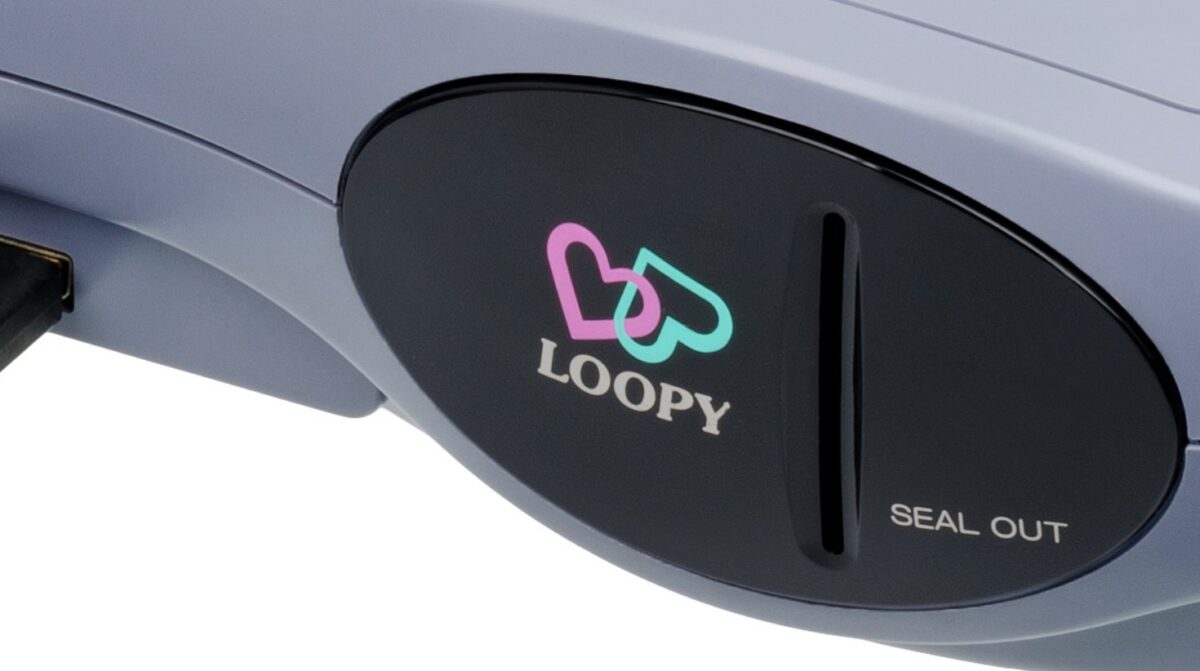
On October 19, 1995, a console known as the Casio Loopy (and later as the My Seal Computer) was released in Japanese stores, designed exclusively for teenage girls. Among other things, it allowed for color printing and the creation of stickers from game screenshots – let’s face it, a great idea – or, with an additional accessory, capturing images from videos and DVDs. By November 1996, Casio had already abandoned the venture. With good reason.
During its thirteen-month lifespan, the Casio Loopy received eleven titles like ‘Chakra-kun’s Charm Paradise,’ based on a manga by Megumi Tachibana, featuring a cat in a magical world; ‘Little Romance,’ a teenage love story primarily made for printing stickers; or ‘Bow-wow Puppy Love Story,’ in which a dog encounters a talking watch and a living doll with whom it must battle evil vegetables. You couldn’t print stickers until you completed the game.
Here’s an interesting fact: it cost exactly the same as the Super Nintendo, and it’s not known exactly how many units it sold. It’s public knowledge that in the first year, they expected to release 200,000 units for sale, but it’s unclear how many were actually released… or how many ended up in the hands of potential buyers. In the end, the major problem with the Casio Loopy was that it was sold as a gaming console when it was actually a color printer, but the idea wasn’t necessarily bad.
Adding to its mistakes was another one: the console only allowed one player, eliminating the social factor that would have at least allowed girls to make stickers together. In the end, although the Game Boy Printer, paired with the Game Boy Camera, produced photos and stickers at a lower resolution, it sold much better. And there’s a reason for that: no one was trying to create gaming ghettos at Nintendo.
Pong is far from being the first game ever shown in public: for this we have to go much further back, back when World War II had ended and scientists had to occupy their time with something.
Normally, when talking about the first video game in history, all eyes go straight to ‘Pong’. And it’s normal: it made history in 1972 despite its simplicity that, in fact, even had a new evolution (‘Pong Quest’) on Nintendo Switch a couple of years ago. But ‘Pong’ is far from being the first game ever shown in public: for that we have to go much further back, back when World War II was over and scientists had to occupy their time with something.
The Canadian National Exhibition is an annual event that began in 1846 as an agricultural fair and has evolved to the present day, where everything has a place. For example, in 1937 there was a roller coaster built of wood and today there are even aeronautical demonstrations with F-35s speeding by. In 1950 there was not so much excitement at the limit, but there was an unexpected novelty.
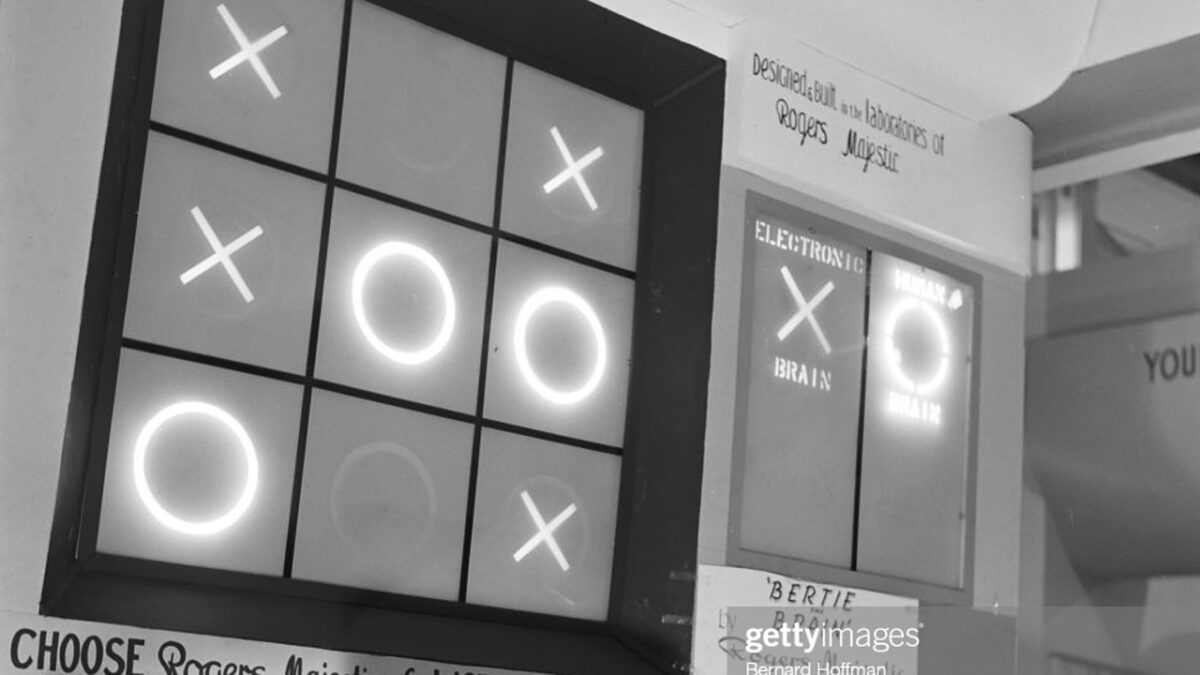
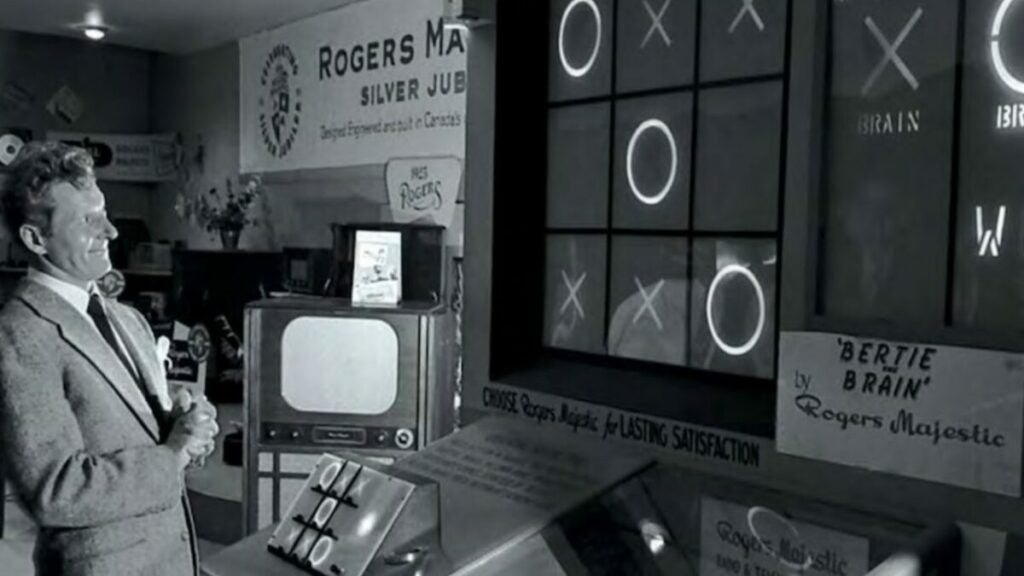
It was ‘Bertie the brain’, the first video game in history. Four meters high of chips and wires made up a computer that was able to play, thanks to its prodigious artificial intelligence… tic-tac-toe. You could even adjust the difficulty level for those who believed that a machine could never beat them. Since then to the PS5 we have evolved a little bit, yes.
Subtitled as “Rogers Majestic’s electronic marvel”, ‘Bertie the brain’ was only alive from August 25 to September 9, 1950. Afterwards, as soon as the exhibition was over, it was dismantled and no longer remains even as a simple curiosity. It is normal: the idea was not to promote the game, but the Additron, an electron tube that did not have (never better said) greater repercussion.
There are doubts about whether ‘Bertie the brain’ can really be considered a video game since it does not have motion graphics, or if it is different from the chess simulators or the “Cathode Ray Tube Entertainment Device” that was registered in 1947 and never even went on sale. In any case, a curiosity of history for those who want to dig into the truth: Or would ‘Baldur’s Gate 3‘ have existed without this cybernetic Tic-Tac-Toe?
It is estimated that he has won about 40 million thanks to a simple but fascinating game.
“If you’re humming along to the jingle ‘Saca un huesito y el corazón, operación’ (Take out a little bone and the heart, Operation), you’re probably already considering a pension plan. Indeed, ‘Operation!’ is a classic family board game. It was invented by a college student who sold it to toy designer Marvin Glass for $500. Today, it is estimated that the game has earned around $40 million, thanks to its simple yet captivating gameplay.”
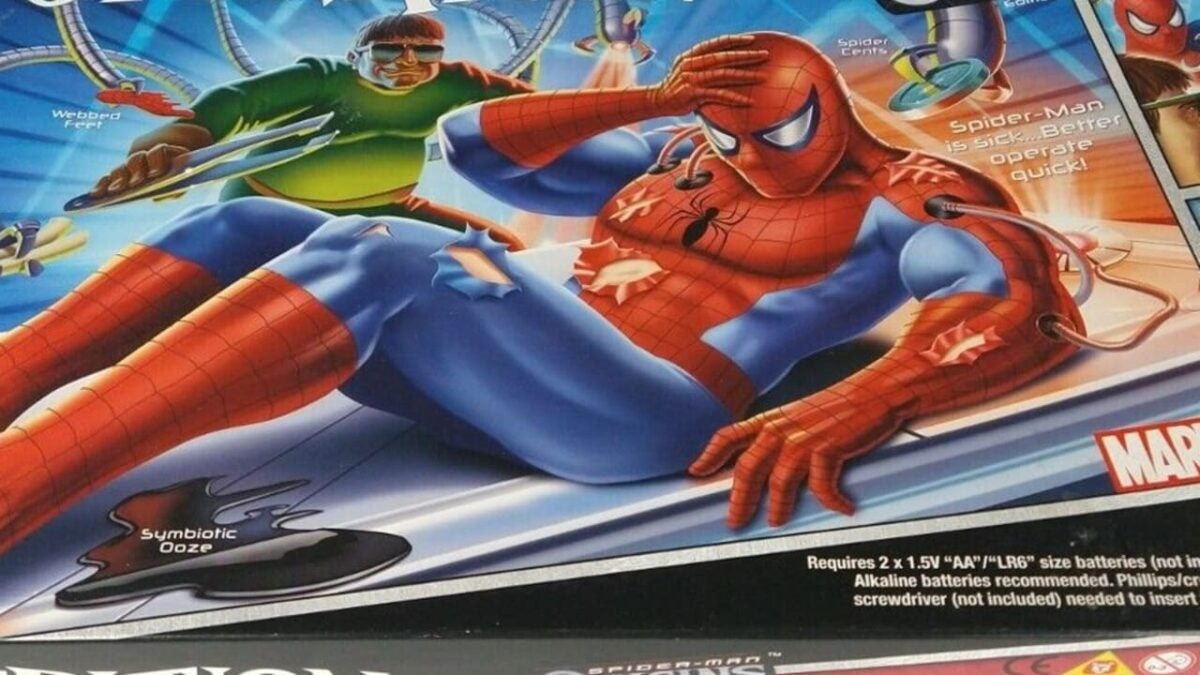
The gameplay is simple: you have to remove the organ indicated by the game without touching the edges. Essentially, it’s a board game based on having a steady hand and not much else, but it has survived from 1965 to the present day. There have been versions of “Operation” with sound effects and even a dog as the protagonist, targeting future veterinarians. However, none compare to the version created with your friendly neighborhood Spider-Man.
Taking advantage of the release of “Spider-Man 2,” where Doctor Octopus was the villain, Marvel teamed up with Hasbro to create the most unlikely Spider-Man game. The superhero was lying on the operating table of the evil doctor, and we had to help him by operating on his malfunctioning web-shooter, his “webbed head,” his “symbiote fluid,” or his “webbed feet.” Oh, and instead of a nose, his eyes would light up along with his “spider-sense.” Who knows why children were placed in the role of a well-meaning Doc Ock trying to save his arch-nemesis by removing random objects from his body.
Spider-Man’s version of “Operation” was not the only absurdly franchised one, but it was the first. Over the years, the game has seen variations featuring “Shrek”, “The Simpsons” (with Homer on the operating table), “Fallout,” “Star Wars” (manipulating R2-D2 and C-3PO), “Doc McStuffins,” and “The Mandalorian.” Interestingly, despite “Operation” seeming like the easiest thing in the world by now, there was one version that sparked controversy among fans: the “Paw Patrol: The Movie” edition.
Firstly, because what is being saved is… a kind of image of all the characters together instead of one of the pups. Secondly, because the holes are all similar in size, and it’s not clear which object goes where. And thirdly, because there hasn’t been enough attention to detail in the game. When you think there’s no corner of the internet for everything, remember that there are people who are such fans of a children’s board game that they are willing to play the Paw Patrol movie version just to point out its flaws. There’s something for everyone out there.
Imagine what it must be like to play ;The Campaign for North Africa, a board game that requires 2 to 10 players and lasts 1500 hours. Yes, you read it right.
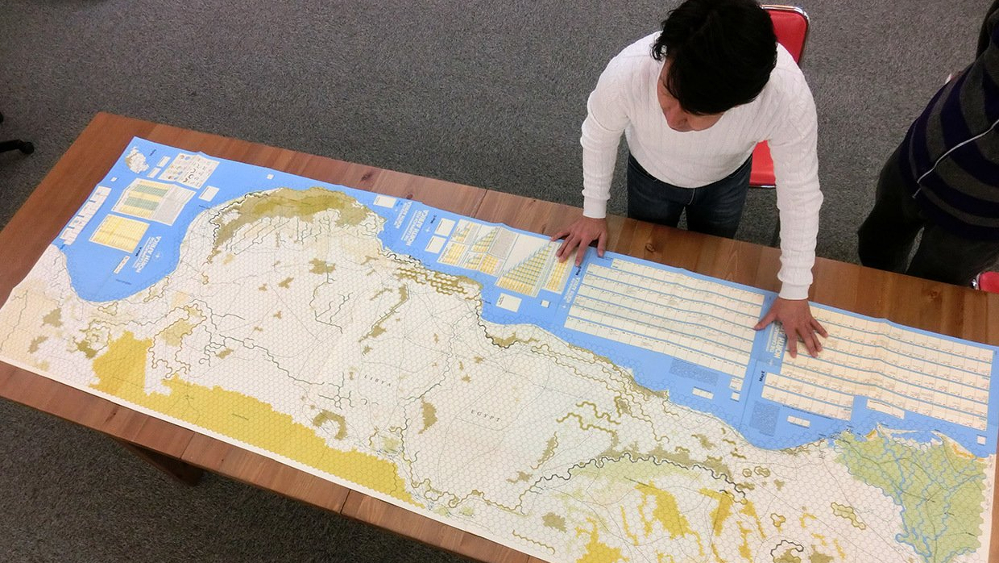
We all know when a game of ‘Monopoly‘ starts, but not when it ends. It is common that between hotels, houses and tickets, the game has to be left on the table from one day to the next, or, if there is a cat in the apartment, it ends in a draw because of the risk of finding all the elements scattered on the floor. If we already feel lazy to continue playing one of the simplest toys on the face of the Earth, imagine what it must be like to play ‘The Campaign for North Africa’, a board game that needs from 2 to 10 players and lasts 1500 hours. Yes. You read that right.
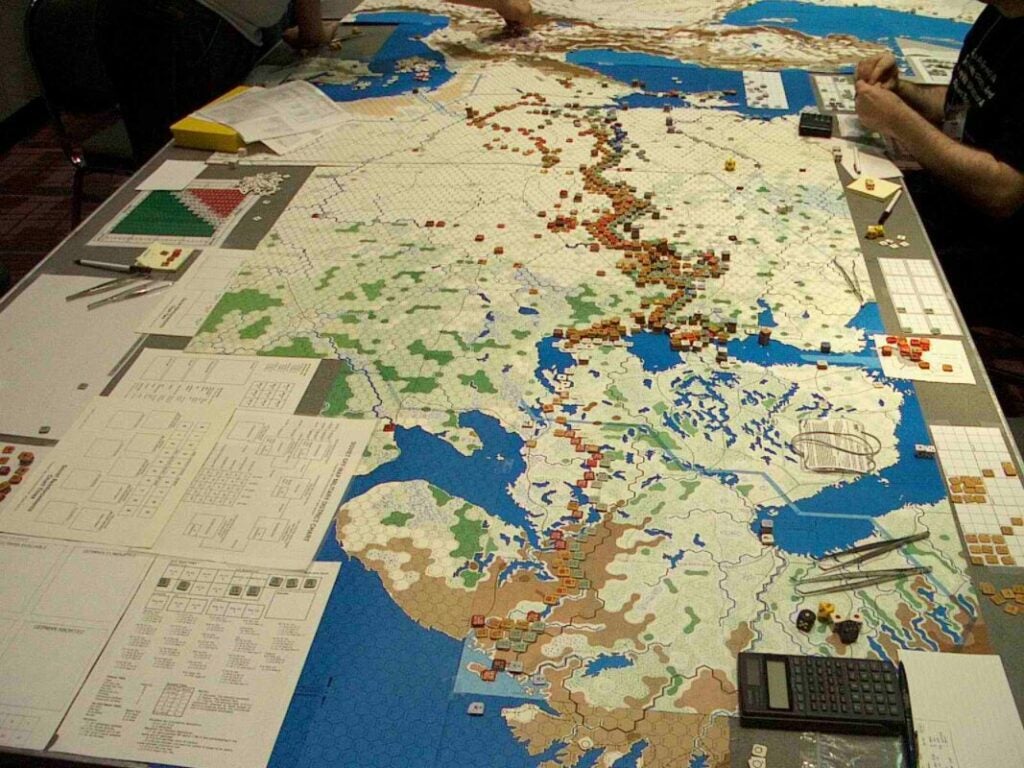
If you only played for two and a bit months, without sleeping or eating breaks, you might be able to finish a game of this 1976 classic that is a gem for the most intrepid gamers because of its three-meter map made up of five smaller maps depicting the war in North Africa during World War II. If you get together with your friends once a week and play for about three hours each session, in just ten years you will have finished the trial game. It’s worth it, isn’t it?
The most interesting thing about ‘The Campaign for North Africa’ is its exhaustive attention to detail. Here it is not enough to move pieces against each other, no: players are divided into two teams and each takes one of the main positions. They can be Commander, Logistics Commander, Rear Zone Commander, Air Commander and Front Commander. And each has to look after the welfare of his troops to the point of, for example, needing enough water for the Italians to cook pasta or having to determine the weather each turn: the hotter it is, the more water evaporates.
To give an example, it is like playing Monopoly but taking care that the washing machines in the hotel are not broken and every room in your house does not have dust on the floor. If you are amazed by the attention to detail and playing “just for a little while” does not convince you, you know what to do. The game comes with 1600 counters of all kinds (you’re going to need them) and a 45-page manual that, after all, is not so much to explain everything that can happen.
To give you an idea of the realism it wants to emulate, on each turn, each unit loses 3% of its gasoline to evaporation, but the British lose 7% because they used a different storage method that prevented it less. On Board Game Geek, the site for board game fans, it has a 6.2 rating. Mind you, good luck finding it: it’s a suicidal project that went on sale for $44 and no one else has dared to release it. So, anyone have something to do for the next twenty years and want to play a little game?
So that you don’t get scared if one day you go to Johto and you find them out there, we have compiled the 10 ugliest Pokémon in history. Pure body horror.
Surely when you hear the word “Pokémon,” adorable creatures like Pikachu, Eevee, or Jigglypuff come to mind… But the truth is, in a world with 1,015 creatures, some of them are bound to be as pleasant as smashing your finger with a hammer. Monsters created on a lazy day, evolutions that go overboard with rococo, and other creatures born with the deliberate intention of being an eyesore. So that you don’t get scared if you ever visit Johto and come across them, we have compiled the top 10 ugliest Pokémon in history. Pure body horror.
Not that the original Muk drives us crazy (after all, it’s a piece of sludge with eyes), but when they redesigned it for the Alolan Pokédex, they gave it a twist that makes it even more sinister: a grotesque, multicolored body. The upside? It feeds on waste products but stores the foul odor within itself. It’s like having a vibrant, living compost for your plants that you never, ever want to look in the face.
9-Vullaby
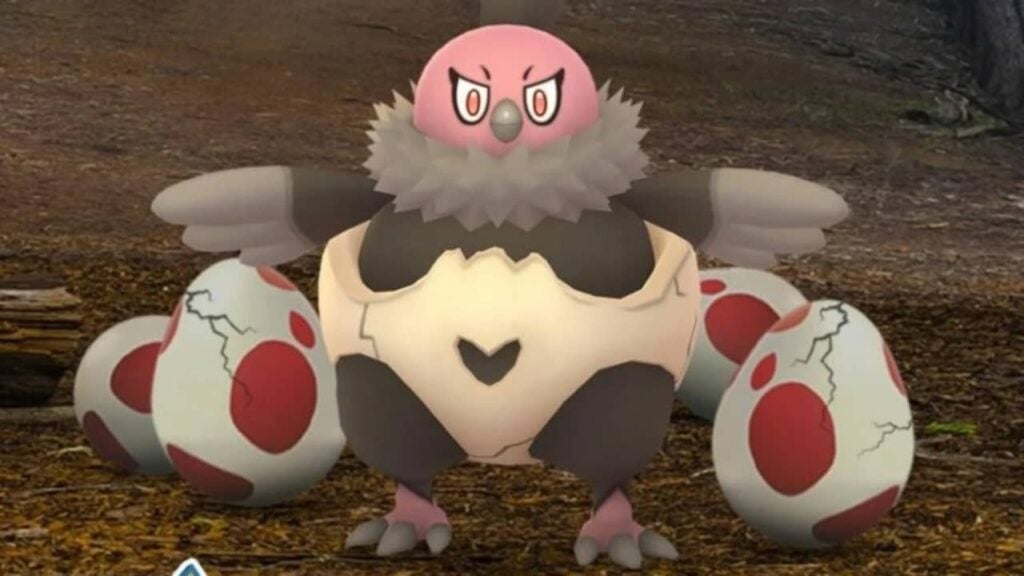
Vullaby first appeared in Pokémon Black/White, and since then, we haven’t been able to forget it. This chicken-like creature (the Pokédex claims it’s a vulture, but who knows) with a featherless head and a two-legged stance seems to come straight from our worst nightmares. And what surrounds its delicate parts is not an egg like Togepi, but the skulls of its enemies. Dealing with Vullabys is truly an experience full of surprises.
8-Crabominable
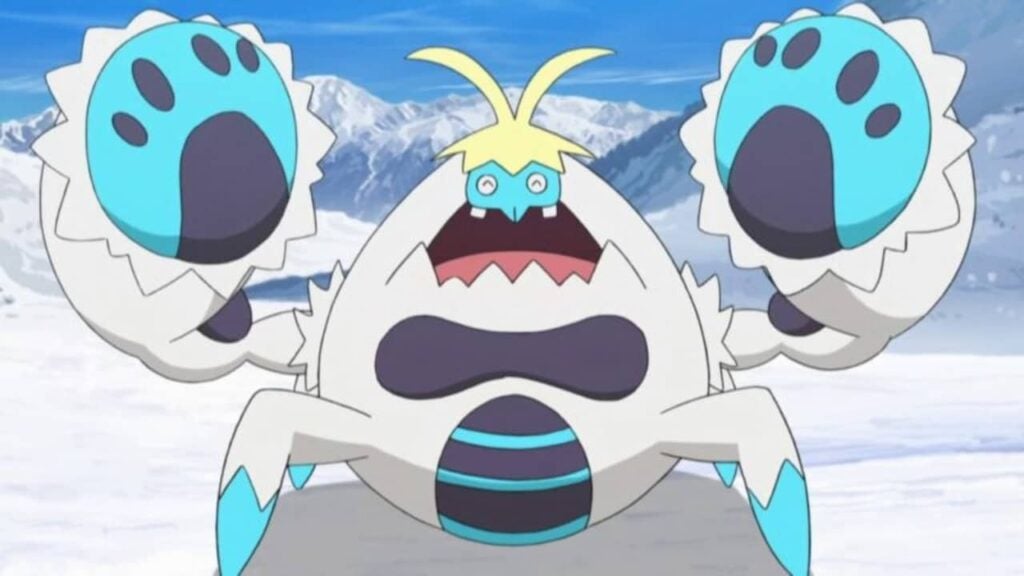
With a name that already includes the word “abominable,” what did you expect? This yeti-crab species is the evolution of Crabrawler and first appeared in Sun/Moon to unsettle anyone who ever wanted to add it to their team. If you want more material to wake up in a cold sweat one day, we can tell you that when Crabominable is in trouble, it can tear off its own claws and throw them at its opponents. Pure class.
7-Dracovish
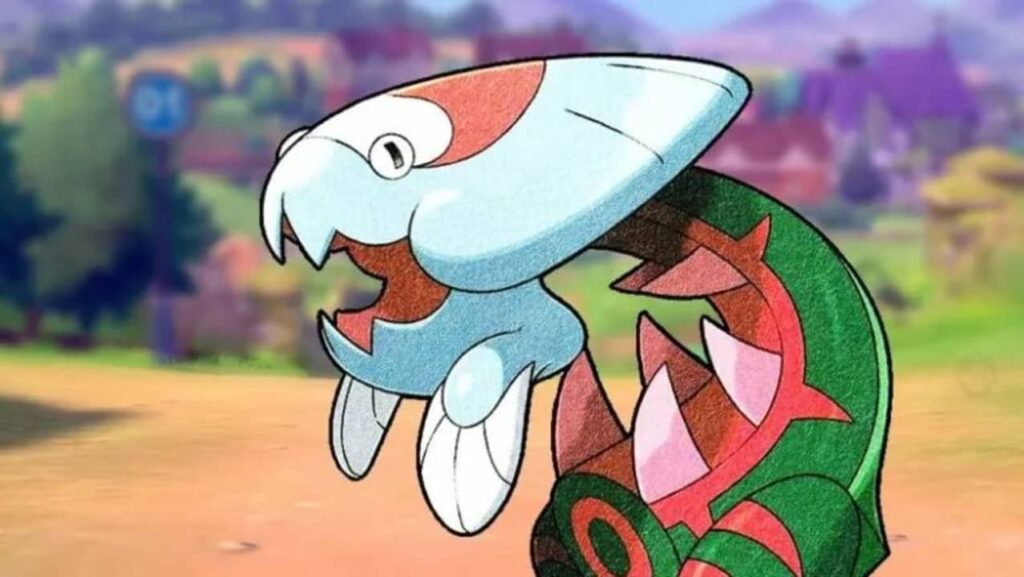
It is one of the most recent Pokémon on the list, which we could first catch in Sword/Shield. It’s a water dragon-like species that doesn’t seem to have teeth and has a C-shaped body with spikes inside. It can’t breathe underwater, and it doesn’t move with much agility there either, being as useful as a four-euro bill. It’s a fossil that hatches from eggs, but sometimes it’s not even necessary to hatch it to complete the Pokédex. We’d also be fine without it.
6-Jynx
I wanted to resist including Jynx, one of the most iconic Pokémon and part of the first generation… And at the same time, it’s so problematic with its blackface resemblance and its parody of the drag world, and, let’s say it, it’s downright ugly. It’s true that in an attempt to mitigate the issue, they introduced a pre-evolution, Smoochum, which doesn’t improve things much but at least gives it a slightly cute touch. Just in case, we hope that when we go out to dance, Jynx doesn’t suddenly appear in a corner, scaring us to death and trying to give us a kiss.
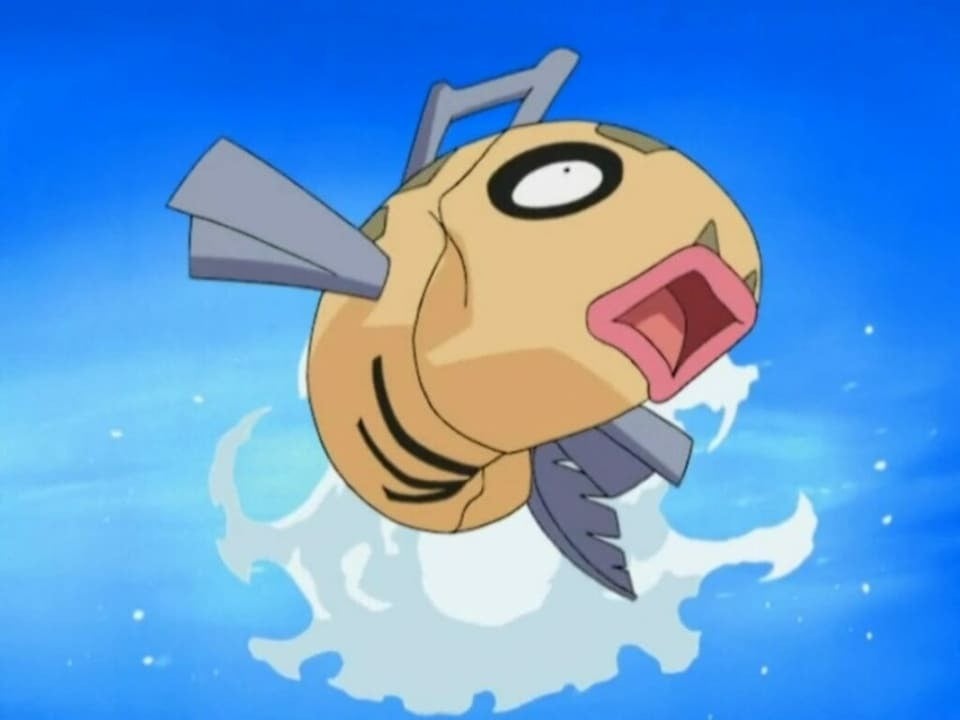
5-Feebas
In the tale of “The Ugly Duckling,” the protagonist eventually transforms into a beautiful swan. That’s exactly what happens with Feebas, which is considered the ugliest Pokémon in its world (even though it’s not much different from, let’s say, Magikarp), but it evolves into one of the most beautiful ones, Milotic. It’s perfect for beauty contests if you manage to train it and level it up… if you can get it to learn something other than Splash. Frustrating indeed.
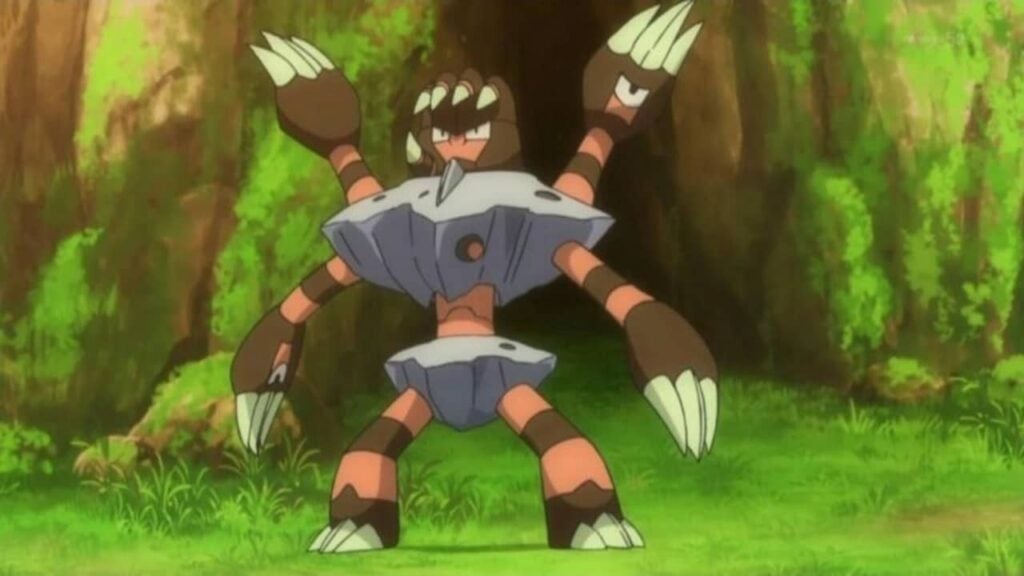
4-Barbaracle
Half rock, half water, all ugliness. If its pre-evolution, Binacle, is already a horror, this version where the clawed hands multiply by three and form a head-hand seems more like a parody of Pokémon than a canonical creature. It is said that Barbaracle is based on a barnacle, but we assure you that if barnacles looked like that, they would be the least consumed seafood product in history.
3-Grafaiai
If I were to encounter Grafaiai on a Thursday night in the middle of the street, I would change streets. Despite the Pokédex stating that it belongs to the Poison type, it seems more like the “Give me everything you’ve got” type. Those slimy fingers and those eyes that seem to want to take everything from you, including your dignity, don’t help either. Interestingly, its name comes from the word “graffiti,” and it is supposed to have a bad temper and enjoy committing crimes, something that is quite evident. It evolves from a Shroodle, which is not particularly beautiful, but at least it doesn’t appear to roam the streets with a multi-purpose Swiss army knife.
2-Bruxish
You’ve guessed it: its name comes from the word “bruxism,” and rightfully so. Just by looking at it, we start grinding our teeth at the excessive display of colors, the teeth capable of taking off a finger if you try to pet it, and that generally malicious face. It is said to cause headaches in its enemies, and considering what it causes us, we can only agree.
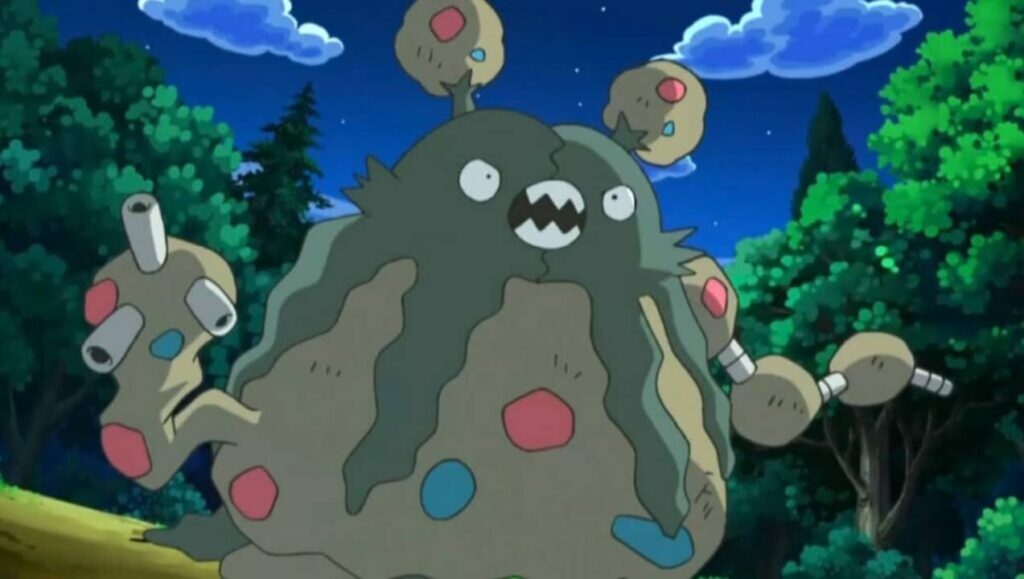
1-Garbodor
It’s a Pokémon that resembles a torn garbage bag. There’s really no need to add anything else.
Are you not aware that in our country we apparently have the only stadium located inside a bullring? Come, we are going to tell you everything about the national team that you did not expect… with a final surprise twist.
When it comes to sports, Spain worships them. Football? The Red One. Tennis? Rafa Nadal. Formula 1? Fernando Alonso. Quidditch? Well… Among all the sporting glories that reign in our country, the one from the beloved sport of ‘Harry Potter’ may not be the most memorable. Could it be that you don’t know what we’re referring to? Are you unaware that apparently we have the only stadium located inside a bullring in our country? Come on, we’re going to tell you all about the unexpected national team… with a surprising twist at the end.
It’s true that J.K. Rowling never mentioned the national team in any of the novels of the series. To learn more about Carmen, Iñigo, Sandelino, and the rest of the group, we have to turn to the video game ‘Quidditch World Cup’ from 2003, set in 1994 during ‘Harry Potter and the Prisoner of Azkaban,’ which featured teams from various countries: Australia, Bulgaria, United Kingdom, France, Germany, Japan, Scandinavia, United States, and, of course, Spain.
The game developers didn’t exactly rack their brains: our stadium was a sort of bullring with architecture reminiscent of Gaudí on the roof, and it would ring church bells whenever a goal was scored. In fact, it is the only stadium in the world located indoors, setting it apart from the rest, of course.
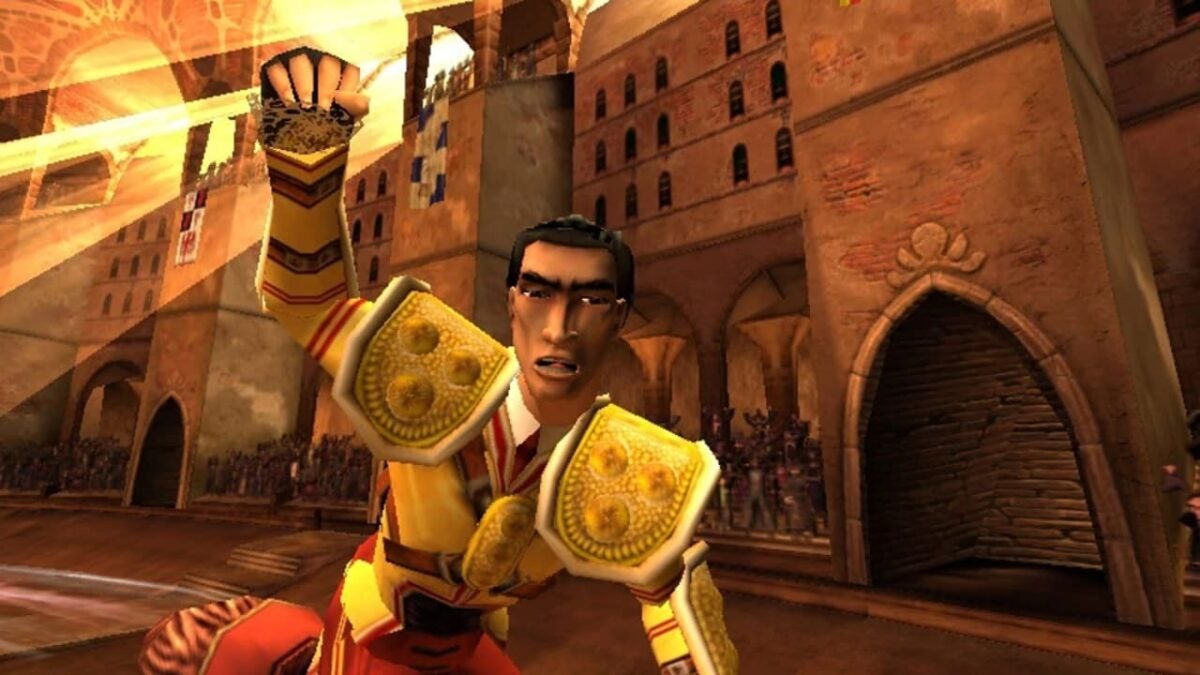
The team’s emblem, as expected, features the standard of the Kingdom of Aragon, but with the addition of several golden Snitches and a Quaffle. Perhaps they didn’t give much thought to those who might be offended by this. The team, of course, wore red and yellow (like bullfighters, alas), and we only know the names of their competitors in the mid-90s. It’s enough to say that they could have done a better job with the Spanish names, at least getting some right.
The Chasers are Carmen García, Ana de Lebrón, and Chavelle Arbelo Cartaya (Chavelle, a typical Spanish name). The Beaters are Vasco Santini and Tiago Montoya, both of whom had trading cards in Chocolate Frogs, the Keeper is Sendelina Felino, and the Seeker is Iñigo Fuente Marrero. They all performed a special move that combined dance and bullfighting. Of course, they did.
But the surprise doesn’t end with the video games: there is also a national quidditch team in real life that was founded in 2015 for the European Games, where they finished ninth and only won one match. Whether you believe it or not, all of them come from different national teams such as Blue Gryffin Burgos, Madrid Lynch, Lumos Compostela, Gasteiz Gamusins, Bizkaia Boggarts, or Malaka Vikings. And yes, indeed, they continue to play (with even a transfer market), with the Dementors being the reigning champions. Consider us officially muggles for having no clue about it.
That time the NES was about to have, in 1990, a game based on 'Hellraiser'… And how, because of him, the developer ended up becoming a company that switched to Christian merchandising.
The history of video games is full of amazing little moments, a priori absurd details that seem innocuous but that have shaped history to this day. For example, that time the NES was about to have, in 1990, a game based on ‘Hellraiser’… And how, because of it, the developer ended up becoming a company that turned to Christian merchandising.
Emulator for the mythical NES that bets on quality
From hell to heaven
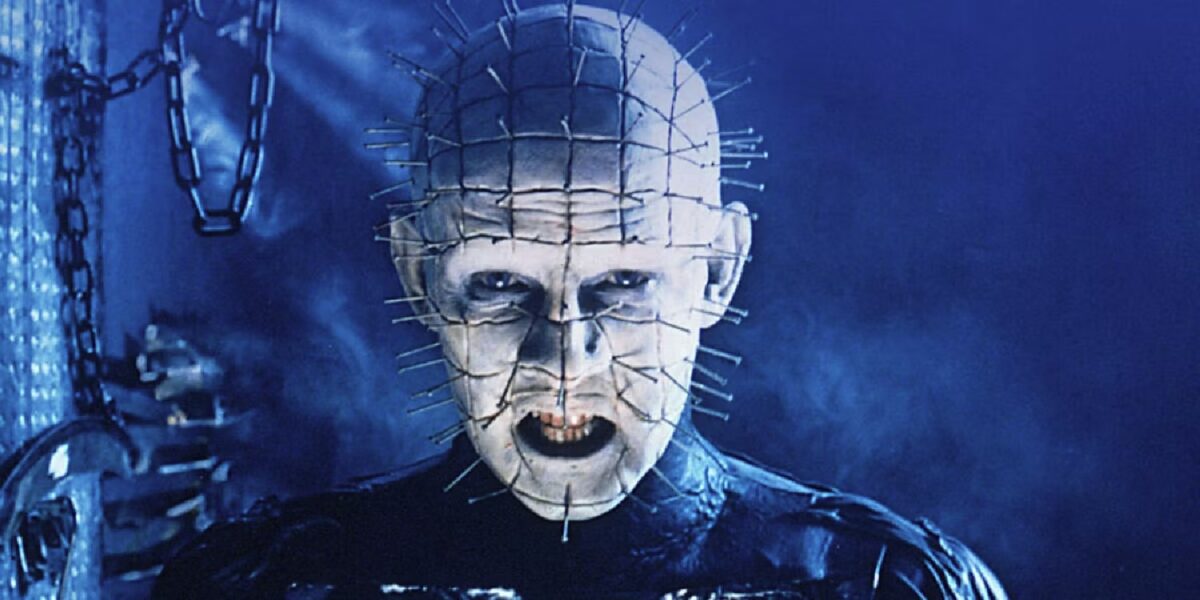
Hellraiser’ was released in 1987 and revolutionized horror cinema thanks to the Cenobites, characters incapable of distinguishing between pain and pleasure, from which Pinhead emerged, an icon on a par with Freddy Krueger, Chucky and Jason Voorhees. The movie was such a cult hit that it spawned nine sequels, a remake, novels, comics and a video game. Well, sort of.
In 1990, a newborn studio called Color Dreams, specialized in releasing games not licensed by Nintendo on cartridges that squeezed the console to the maximum (with a Z80 processor and various changes that sounded spectacular in their head) bought the license of the movie for between 35,000 and 50,000 dollars, with the idea of making a little more or less a rehash of ‘Wolfenstein 3D’ that emulated what the 16-bit consoles were capable of.
In the game we would embody one of the victims of the cenobites trapped in the puzzle-box and trying to get out and solve the puzzles while the enemies tried to prevent it. The problem is that what seemed to be an easy task became more and more complicated and the budget was increasing, to which another problem was added: the owners of the stores. In 1990, Nintendo, always faithful to its principles that no one should make money apart from them, gave a warning to the stores that sold unlicensed products: if they continued to do so, they could forget about having any more titles from the Japanese company.
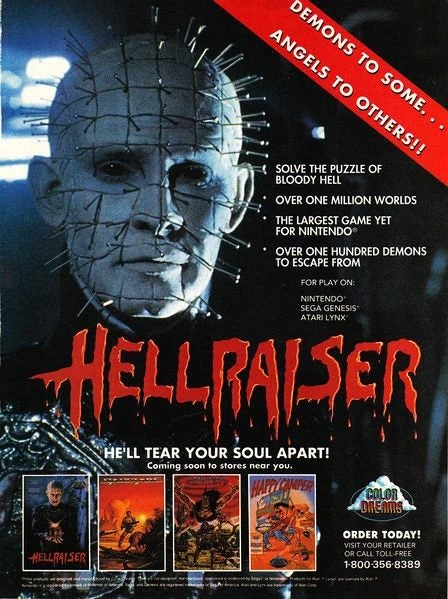
‘Hellraiser’ was even rumored for the Sega Genesis and Atari Lynx (“Solve the puzzle of pure hell. Over a million worlds. The biggest game for Nintendo. Over a hundred demons to escape from,” said the advertising) and was advertised in different magazines, but ended up being cancelled. Or, well, rather… modified.
‘Hellraiser’ became ‘Super 3D Noah’s Ark’, a rip-off of Christian ‘Wolfenstein’ for the Super Nintendo in which Noah had to lead the animals to the ark by shooting tranquilizer darts at them. It’s a change from the Nazis and submachine guns, really. The game thus avoided distribution problems; because instead of going to specialized stores they went straight to Christian bookstores. By then, Color Dreams had already morphed into two companies: Bunch Games, for simple games, and Wisdom Tree, for Christians. This is the only one that survives today.
It must be said that the last game they released was in 2007 and its name alone is already fabulous: ‘Jesus in Space’. Please, a crossover with ‘Hellraiser’ for when?