The problem is that the blow from critics and the public had questioned them and they needed, yes or yes, a renewal. Said and done: thus ‘Achtung baby’ was born.
In the early 1990s, U2 had a very serious problem. ‘The Joshua Tree’ and ‘Rattle and Hum’ (a project that was both an album and a movie) had turned them into a highly serious band that addressed real societal issues. However, the critical and public backlash had put them in a difficult position, and they needed a makeover, no matter what. And that’s how ‘Achtung Baby’ was born.
‘Achtung Baby’ was an album that created tensions within the group because no one was quite sure where they should be heading. In fact, there were even a few months when they separated to try to find a solution. Eventually, when it was released, it sold 18 million copies, became a massive success, and hits like ‘One’ or ‘The Fly’ found their place on the charts.
But of course, an album meant nothing in 1991 without an epic tour to match. And they couldn’t be the same old U2; this time, they had to surprise everyone and show that you could have fun with U2 too. Thus began the Zoo TV Tour, which had its first concert in Lakeland, Florida, on February 29, 1991, and ended, 157 concerts later, in Tokyo on December 10, 1993.
Along the way, everything changed: the show was much more fun and dynamic; they knew how to poke fun at themselves and earned positive nicknames wherever they went. If their previous concerts had been minimalist and very intimate, now they were breaking the stage and proving that they were a proper rock band, mimicking the style of morning radio shows.
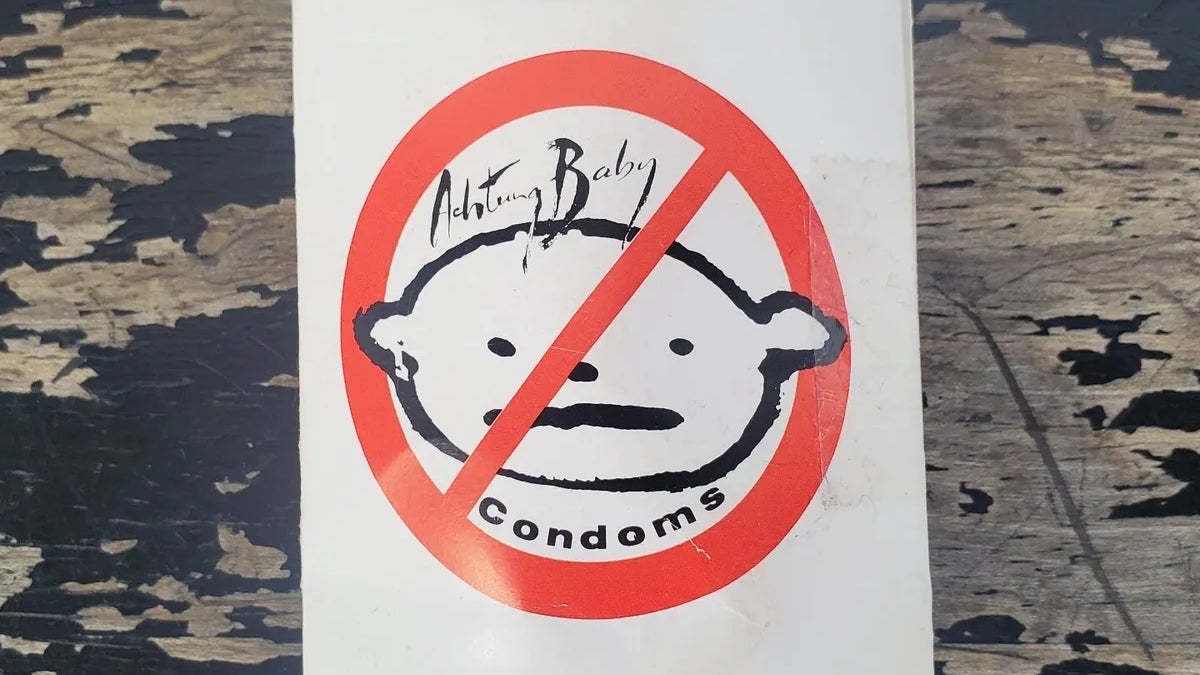
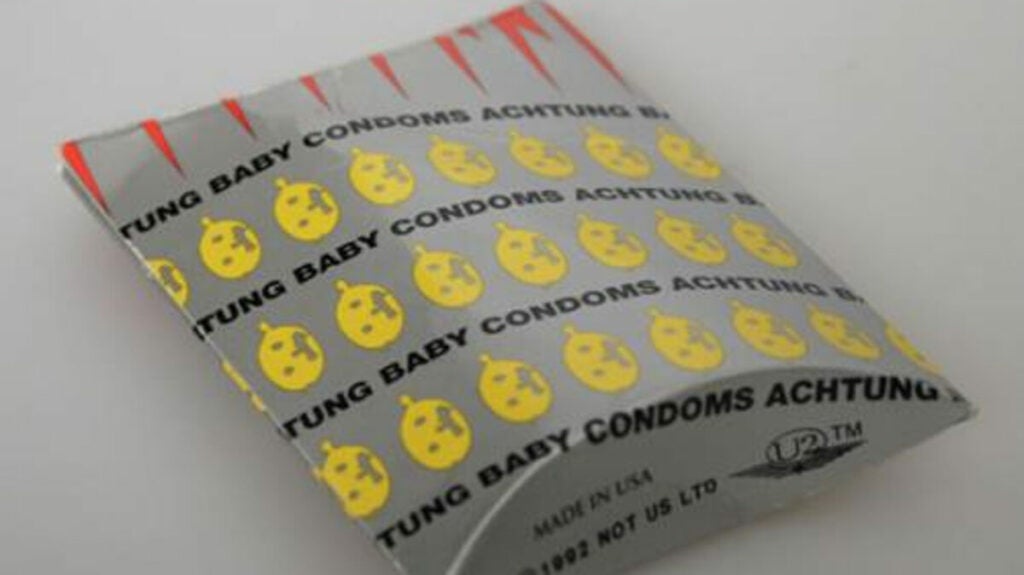
To emphasize this almost humorous shift, they launched some unexpected merchandise items during the concerts: condoms (two in each pack) with a crossed-out baby on them and the words “Achtung Baby!” Obviously, at this point, they can’t be used (who would want to?), but if you’re curious, you might be able to find a pack for around 20 euros. Unopened, of course. Naturally.
What is 'The Machinery Smurfs'? Where did it come from and how far were they able to go? Stay tuned, because this story is not expected.
Whether we like it or not, we cannot control our childhood. We can make anyone who will listen to us believe that when we were kids ‘The Godfather‘ was the best thing that ever happened to us instead of ‘Yuppie Worlds’ or that in our car we listened to Oasis instead of The Makinero Smurfs. Ah, yes. That album that in 1995 appeared in Spain from absolutely nowhere, three years after the death of Peyo and that made a whole generation dance. But, what is ‘Los Pitufos Makineros’, where did it come from and how far were they able to go? Stay tuned, because you are not expecting this story.
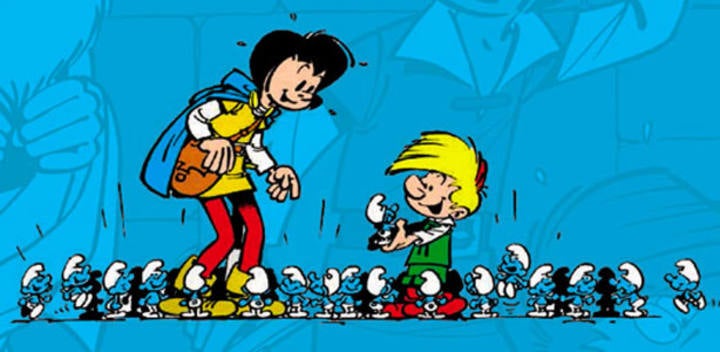
First, an introduction to The Smurfs: in 1958, Peyo had achieved success with the comic and epic adventures of a couple based on a brave man and his disastrous companion. Johan and Pirluit starred in 13 titles created by the author (and four others created after his death by other authors) and, unjustly, he is remembered for having seen the birth, in his ninth long story, of the Smurfs.
‘The Flute of Six Smurfs’ was, without knowing it, the beginning of the rest of Peyo’s life: after bringing them out as secondary characters in a couple more adventures of Johan and Pirluit, the village took on a life of its own and in 1959 ‘The Black Smurfs‘ and its mythical “¡Ñac!” had an unusual success that, after a good handful of comics, exploded with the American cartoon series that lasted from 1981 to 1990 for 258 episodes (quite decaffeinated for the most part, by the way).
It was around this time, in 1978, when The Smurfs made their first appearance in the world of music thanks to Father Abraham, the stage name of the Dutchman Petrus Antonius Laurentius “Pierre” Kartner (who died, by the way, last year), who made a song for the movie based on ‘The Six Smurfs’ Flute’. The single sold more than 400,000 units (although initially the lack of confidence made them print only 1000), and the subsequent album half a million. In Spain it arrived singing in our language in an album titled ‘El padre Abraham y sus pitufos’, with this song as an absolutely impossible advance.
Smurf makina
But it all ends: the Smurfs’ fame faded little by little as the TV series was increasingly considered a kitsch product and by the mid 90’s they were considered a rather finished franchise. But there was still one last attempt before spending a decade hibernating, and the key was not in Spain but, once again… in Holland.
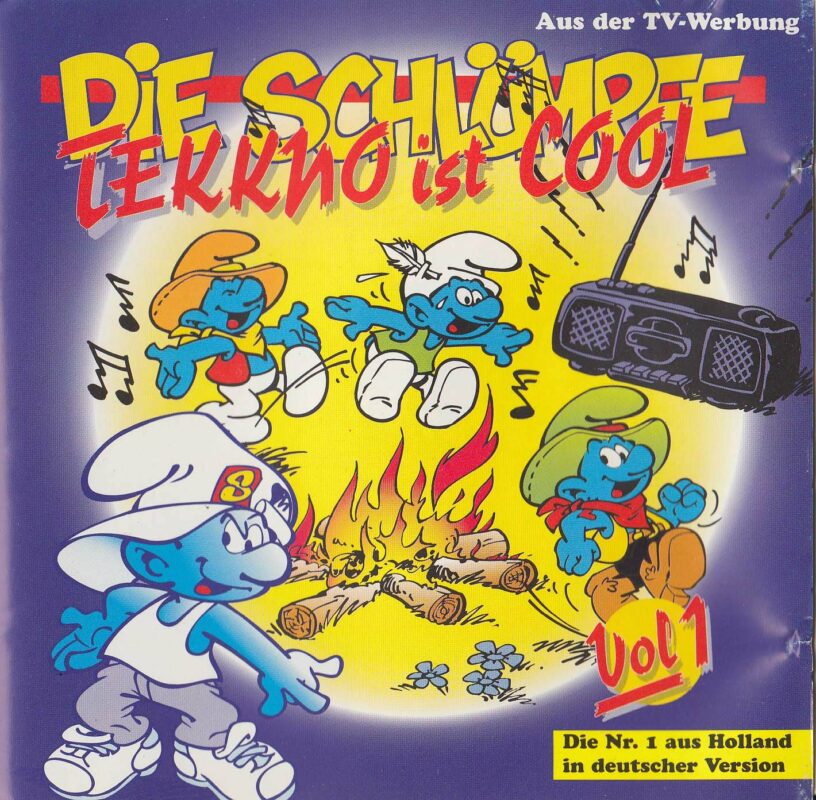
EMI, owner of the franchise, no longer knew what to do with The Smurfs, and asked the Cat Music production team to do something, please, with the characters and some modern “Smurf” songs. At the beginning of 1995, a parody of 2Unlimited’s ‘No limit’ was the number one in Holland and opened the way: on April 6th of the same year ‘Tekkno ist cool’ was released in Belgium and Germany, with smurfed versions of Jam & Spoon or Maxx. The success was such that in September ‘Megaparty’ appeared, another album by Los Pitufos. In Holland, meanwhile, Irene Moors’ CDs with the Smurfs, such as ‘Ga je mee naar Smurfenland’ went double platinum. It was the beginning of a journey that would take them to cover ‘La macarena’ or the Spice Girls throughout Europe, where 8 million albums were sold between 1995 and 1998. We repeat: Eight. Millions.
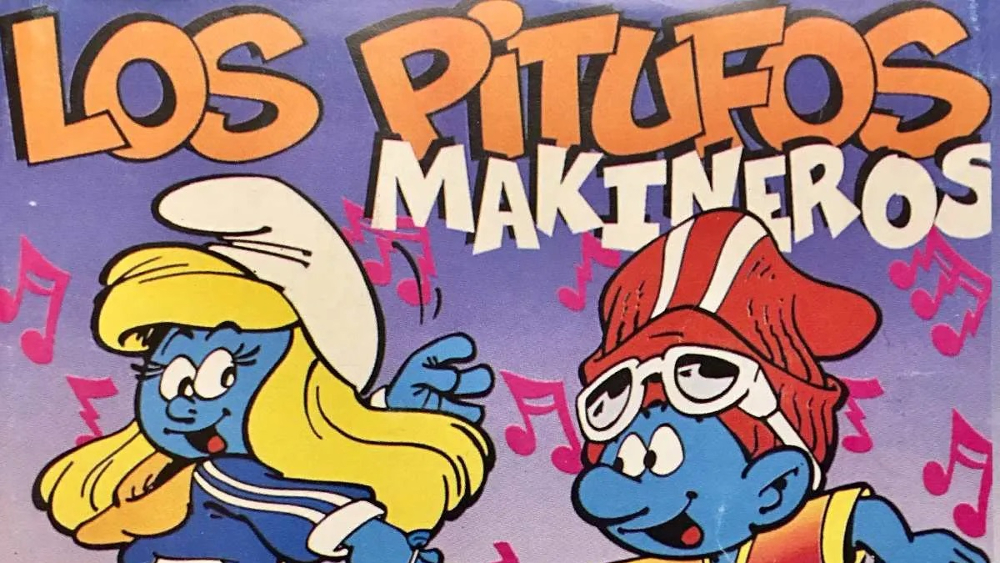
And meanwhile, in Spain, what was happening in 1995? With the bakalao route in decline and dance and techno music opening up to all ages, it was only a matter of time before ‘Los pitufos makineros’ came to us, which had a different cover illustration than the rest of the European versions and in which songs like ‘Scatman’s world’ (‘Somos los pitufos’), ‘El tecno es guay’ (American Pie) or, of course, the ‘No limit’ that triumphed in its Dutch version, here as ‘Cumpleaños feliz’, were versioned. If you’re over thirty, it still resonates in your nightmares (“It’s your birthday, it’s your birthday, it’s your birthday”). This was just the beginning: success was assured.
Smurfs Mix
It must be taken into account that in the 90’s summer remix albums were an art form in Spain. Ever since ‘Max Mix’ opened the way in 1985, the different titles were making their way in the (then) turbulent Spanish market. Bolero Mix’, ‘Máquina total’ (which in 1995 sold more than in any other year with its seventh part), ‘Rumba total’ or ‘Ibiza Mix’ were what was played in every self-respecting summer beach bar. Los Pitufos makineros’ served not only as a parody but also as a children’s version for the whole family.
In 1996, Los Pitufos Makineros released ‘¡Vámonos a Ibiza!‘ with versions of ‘El tiburón’ (‘El campeón’), ‘Staying alive’ (‘¡Piérdete ya!’) or ‘Memories’ (‘El cole acabó’) as well as their own songs like ‘Pitufolimpiadas’ or ‘Futbolmanía’. The albums immediately abandoned the “makineros” with Spain and entered another more pop moment. Thus came out ‘Los Pitufos ¡van a tope!’ (1996) and ‘¡Viva Pitufos! Los Pitufos en directo’ (1997). This album was half a compilation of the three previous ones, but with new songs like the Smurf version of ‘Acompáñame’, the song from ‘Sorpresa, sorpresa, sorpresa’. The 90’s were definitely a thing.
From then on they tried to monetize as they could: ‘¡¡A bailar Pitufos!!!’ (1997), ‘Los Pitufos musicales’ (1997), ‘¡¡Corazón Pitufo! ‘ (1998) that versioned ‘Barbie Girl’ in ‘La pitufina’ or ‘Desátame’ in ‘Pitúfame’ or ‘Los Pitufos 2000’ (1999), with versions of ‘Mambo No 5’ (‘Vivo Pitufando’) or ‘Baby one more time’ (‘Juega otra vez pitufo’). The arrival of the 2000s did not remove the annual album from the team: ‘Los pitufos.com’ (2000) opened the range to explicit songs like ‘Sex bomb’ (‘Pitufos on line’) or ‘The bad touch’ (‘Todo al revés’). This was the last one edited by Arcade, which gave way to Divucsa and versions of exclusively Spanish songs, abandoning the international practices.
The albums continued until 2006: ‘Fiesta Pitufa’, the double ‘Festival Pitufo’, ‘Los Pitufos te desean un cumpleaños feliz’, ‘Los Pitufos ¡no paran! ‘ (with a bonus DVD containing the episode ‘Smurf buccaneer’ from the TV series), ‘Mola pitufar’ (with a CD of Christmas carols and karaoke included), ‘Mola pitufar’ and, finally, ‘Pitufando éxitos’, which included seven interactive games on a CD-ROM and which already showed a new musical style in songs such as ‘Me mola el rumbatón’, which parodied ‘Pa mi guerrera’.
Fourteen albums in eleven years and impossible versions of ‘Aserejé’, ‘Zapatillas’ or ‘I want it that way’ made Los Pitufos Makineros (and, later, Los Pitufos) one of those nostalgic milestones that are a bit embarrassing to remember. The good part is that we were not alone: in Hungary albums were released until 2011 and in Finland more than 19 different ones were sold. In the Czech Republic, in fact, their equivalent to our Makinero Smurfs was the best-selling album between 1994 and 2006.
There is only one international consolation left in the face of musical shame: no country could afford to cover ‘Wonderwall’: Oasis very explicitly requested that ‘Wondersmurf’ should not appear on any of these albums. Smurf it, Gallaghers!
Who is Yung Beef and why can he afford to hand out money like trinkets? We tell you.
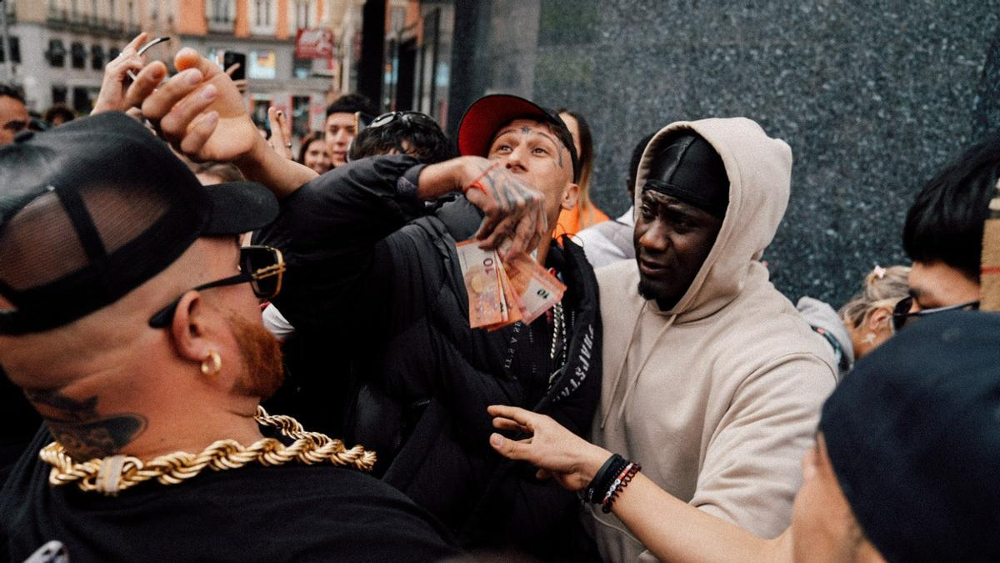
5000 euros (well, as much as a bill can sound). That’s the amount that Yung Beef handed out in Callao to promote his new album, as if it were the opening of season 3 of ‘The Paper House‘. A countdown, a logo, his songs playing in the background and a few people receiving legal tender. But who is Yung Beef and why can he afford to give away money as if they were trinkets? We tell you.
Who is Yung Beef?
Born in 1990 in Granada, it is possible that nobody calls him “Fernando Gálvez” anymore: for the last ten years he has been better known as Yung Beef. A drug dealer who has had a complex life: he started selling drugs at the age of fourteen and soon after he already had a point of sale with his group, the Kefta Boys. But before becoming a mafia boss, he knew how to stop. He worked in Marseille, Paris and London, where he learned all about urban hip-hop and how to mix it with reggaeton, rock, breakbeat or even flamenco.
Where could I hear you?
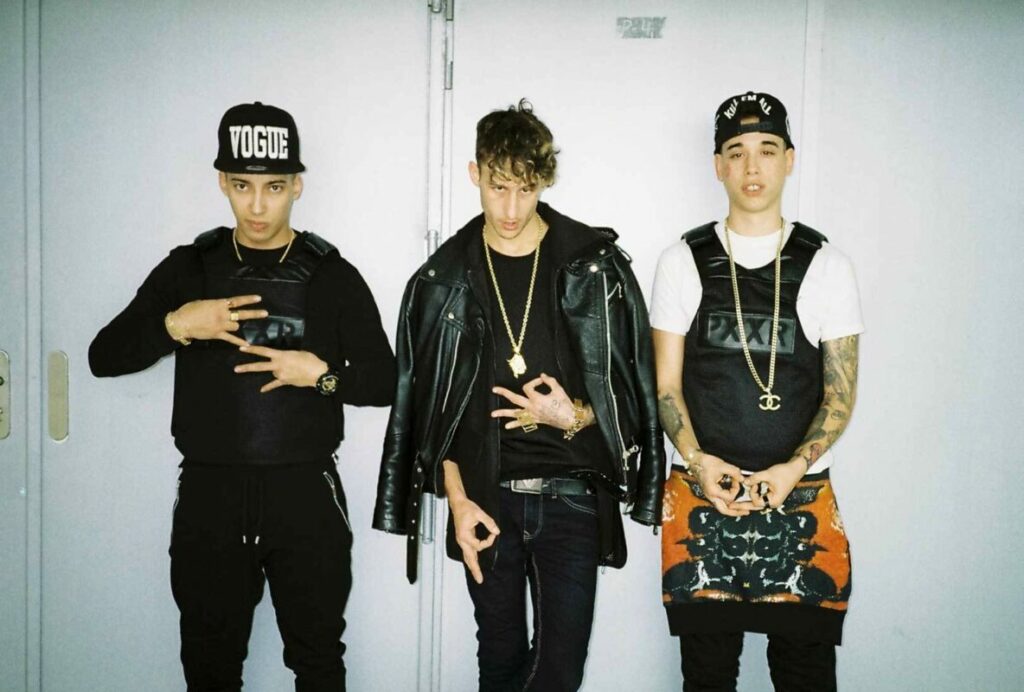
Although he began his career alongside the crimino-music group Kefta Boys, he soon made the move to two of the most influential in the urban scene of the past decade: PXXR GVNG, which changed its name to Los Santos after Sony appropriated the name, and La Mafia del Amor. Since disbanding in 2017, Yung Beef has released six albums and ten EPs. In fact, in 2023 he plans to release three more albums in an unstoppable music career. The first, this one, ‘Gangster Paradise’.
Why should I listen to you?
Yung Beef is not your run-of-the-mill rapscallion. He doesn’t just talk about street stuff or brag about the money he has, he has a more nihilistic approach, questioning whether Yung Beef really is Fernando or is a character he has created for himself, doubting about art, music and modernity itself. That’s why a performance like the one in Callao is more than coherent with himself. After all, what are 5000 euros for someone who has everything?
Yung Beef’s new release is 6 tracks where he turns the routine of the rag-picker who is out of the system and who has finally found happiness. A mature work of someone who seems to have been born wise, but that time has shaped him that way.