Astrophysicists weigh in on black hole facing Earth: A cause for concern?

The black hole is 657 million light years away and if we wanted to go there in a ship it would take us 19,000 years.

If there’s one sentence you don’t want to read in a news story about a massive black hole pointing toward Earth, it’s “It’s unclear how it will affect our galaxy”. And yet, that’s where we are. At the moment we don’t have to prepare for the end of the world, far from it: the black hole is 657 million light years away and if we wanted to go there in a spaceship it would take 19,000 years. We have better things to do in the meantime.

The center of the universe

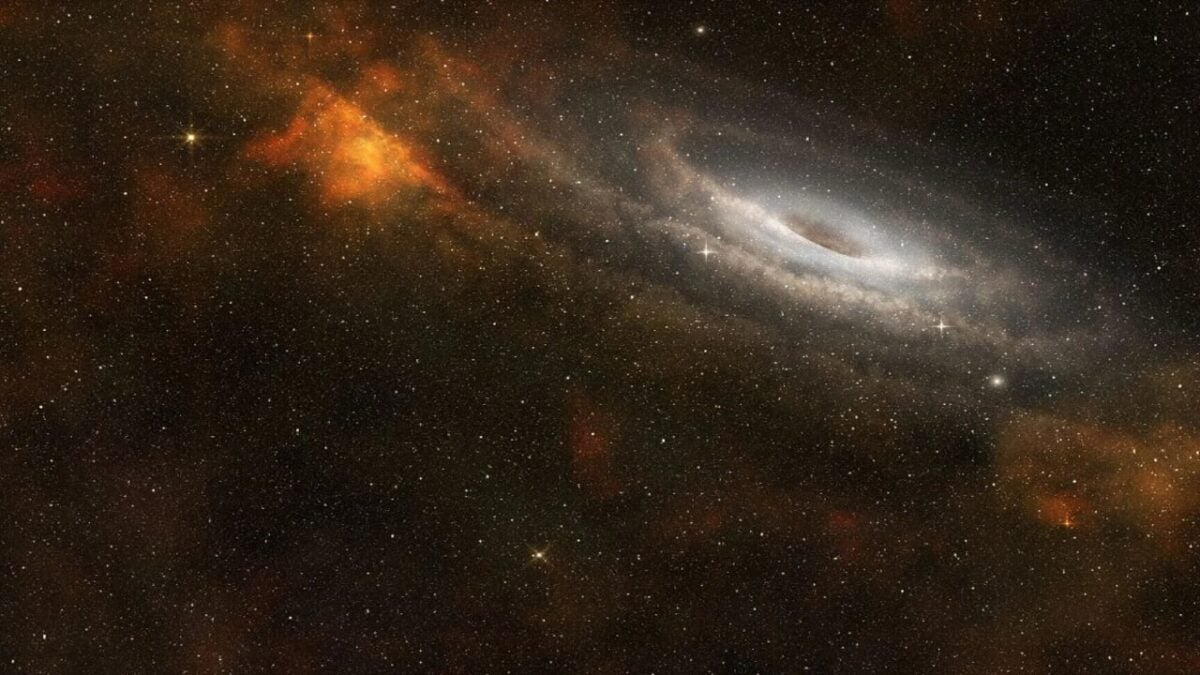
PBC J2333.9-2343. It is not the name of Elon Musk‘s new son, but the name of this hyper-large black hole at the center of a distant galaxy that has now turned its course to head toward Earth. For the moment, scientists at the Royal Astronomical Society are testing to see what is happening.

World Wide Telescope DOWNLOAD

Specifically, the space phenomenon has rotated 90 degrees and has become a “blazar”, which is not a store where you find all kinds of things but the point of a galaxy pointing directly towards the Earth. Blazars are very high energy objects and one of the most powerful phenomena in the universe. I’m sure it gives you a lot of peace of mind to know that there is one now, 657 million light years away, staring us in the face.

Although they do not yet know what caused the change of direction, scientists believe that it collided with another galaxy. In this case, PBC J2333.9-2343 is a galaxy that is outside the norm of what we normally know as such, opening the possibility for new scientific discoveries. We will be watching to see how it evolves and watching the sky out of the corner of our eye just in case. Lest a black hole come out of nowhere.

How to celebrate Ramadan when you are in space?

Alneyadi has already said that it is possible for him to break the fast, saying that it is "not obligatory" for exceptional situations.

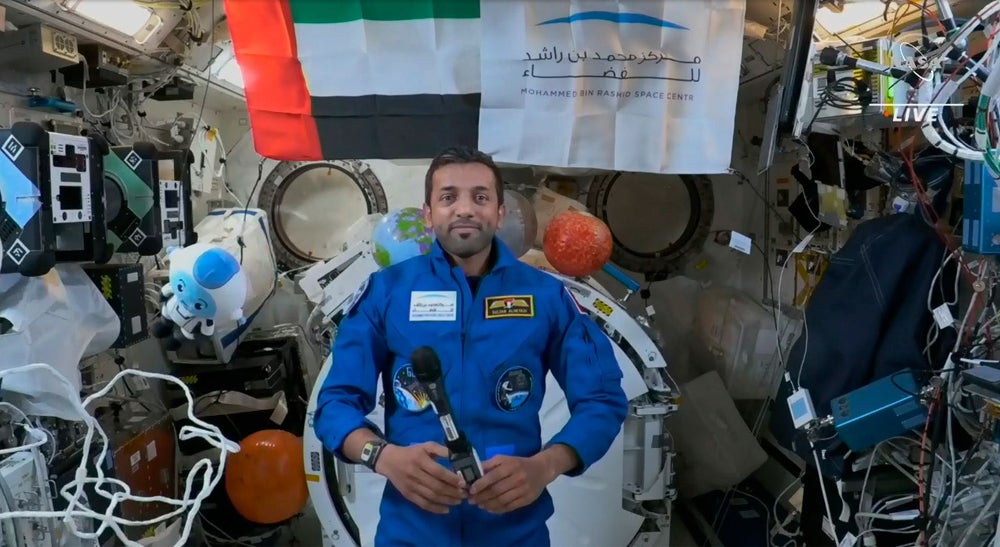
Only a dozen Muslim astronauts have managed to go into space, and none for as long as Sultan Alneyadi, who will be the first to complete a long-term stay in the International Space Station laboratory, where he arrived on March 3. The problem is that Ramadan began on the 22nd and will last until April 21, so how can he fast if he doesn’t know when the sun sets?

Space Ramadan

The International Space Station, which orbits the Earth at 27600 kilometers per hour, allows them to see 16 sunrises and sunsets a day. Something that contradicts their religion, but the mission is notably more important in this case: “Six months is a long duration for a mission, which is a big responsibility,” he said.

Ramadan Calendar Countdown DOWNLOAD
Una completa aplicación Android para observar el Mes Santo

In this case, Alneyadi has already said it is possible for him to break the fast, saying it is “not mandatory” for exceptional situations or those who feel unwell. “Worrying about anything that could jeopardize the mission or perhaps the crew member at risk, we are allowed to eat enough food to prevent any consequences of lack of nutrition or hydration.”

Anyway, if he wanted to, he could fast according to Greenwich Mean Time, although he doesn’t know what he will do yet. “We’ll wait and see how it goes.” This is not the first time a Muslim has had problems with fasting Ramadan by being in space. Malaysian Sheikh Muszaphar Shukor decided to postpone the fast for when he arrived on Earth with the Council’s approval, which also allowed him not to have to kneel to pray, because in space, in the absence of gravity, it is almost impossible.

Some of the links added in the article are part of affiliate campaigns and may represent benefits for Softonic.

Revolutionizing Space Science: Tool to Help Search for Life on Other Planets Unveiled

The tool in question is a technique for searching for water in space that uses the size of an exoplanet to estimate how much liquid is below its surface.

Water is life. It’s not just a catchy slogan: it’s also a reality. None of the planets we are exploring in outer space can support life of any kind, because they have no water to survive on. But that may change thanks to a new tool created by astronomers at Cambridge University with which they will be able to take one of the biggest steps towards colonizing other planets.

One step closer to Planet Express

The tool in question is a technique for finding water in space that uses the size of an exoplanet to estimate how much liquid lies beneath its surface. We don’t mean rivers, seas and waterfalls, but a certain amount of water locked in rocks and minerals kilometers from the surface. It’s not that flashy, but it may be the beginning of the creation of life (or human survival).

If we can know how many of these minerals are inside a planet, it is possible to get the water out of its interior, bring it back to the surface, and be able to replenish, for example, oceans that once disappeared due to intense heat or radiation. “This model gives us a limit on how much water a planet can carry in its interior, based on those materials and their ability to have water on their surface,” the scientists comment. Will we one day be able to bathe in Saturn’s oceans? Let’s not get ahead of ourselves.

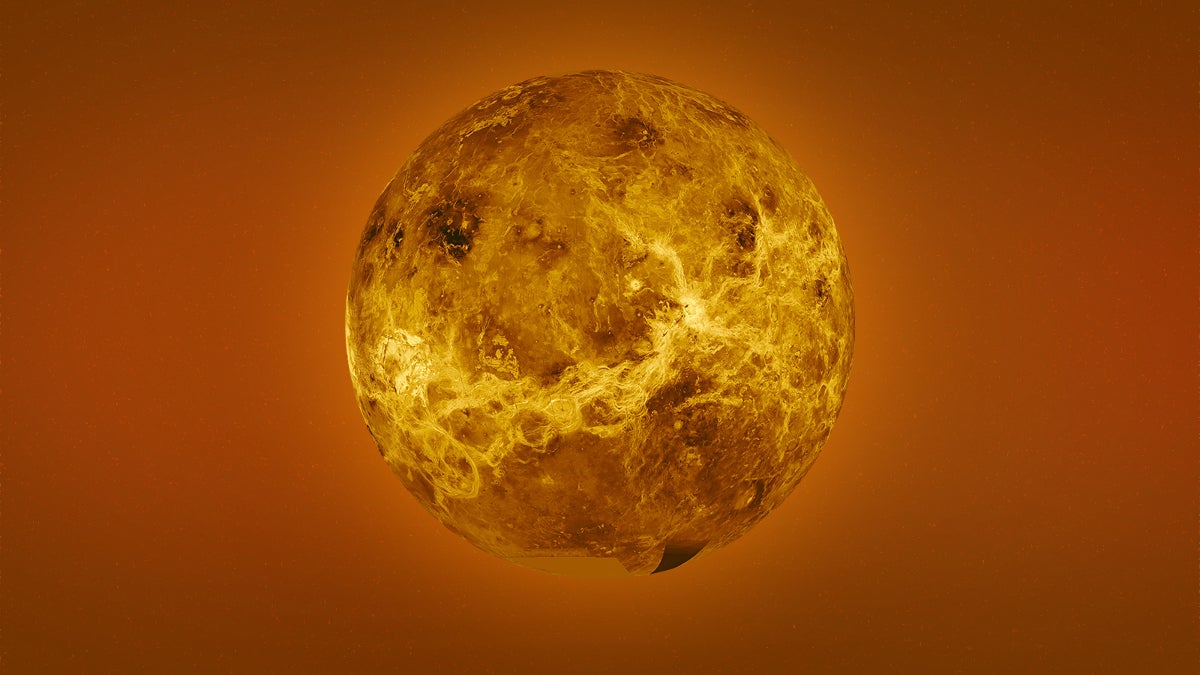
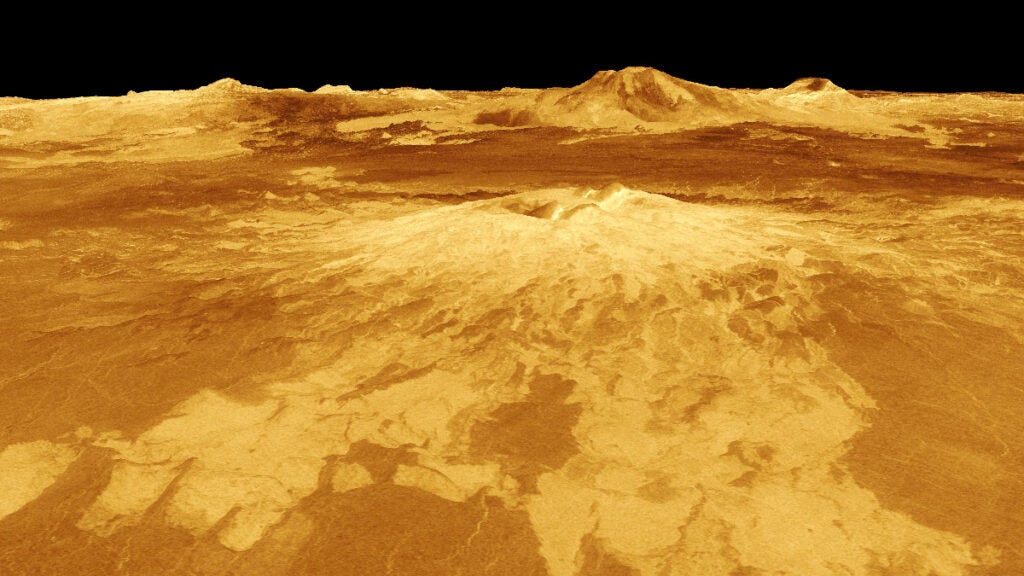
For the time being, scientists will use this new branch of the search for planets to find those most likely to have alien life and study them more closely after triaging them. Of course, do not think that because a planet is huge it will have a lot of water in its interior: in fact, scientists point rather to planets similar in mass to Earth. For example, Venus. It is suspected that before it was the hottest planet in the solar system at about 475 degrees nothing, it had water on its surface.

If that is the case, we could help cool the planet thanks to this tool. Who knows? Maybe in the next few decades we will be able to go on a vacation resort to a small Venusian cove…

Never Delete a Photo Again: The Secret Tricks to Freeing Up Space on Your iPhone and iPad

It is always good to have space on our iPhone or iPad. Let’s talk about seven ways to quickly and easily free up space.

Keeping the iPhone and iPad clean and organized is essential for us to be able to store everything we need. Sometimes the available storage drops drastically, bringing the device closer to having to display the “Storage almost full” warning. Something, fortunately, that we can avoid very easily.

Continue reading “Never Delete a Photo Again: The Secret Tricks to Freeing Up Space on Your iPhone and iPad”

Running Out of iCloud Storage? Here’s How to Manage Your Backups

Backups can take up a lot of space in iCloud. Therefore, it is a good idea that we check if there are some that we can eliminate.

Our iPhone and iPad are able to make backups automatically through iCloud. A very useful feature, since, at any given time, it would allow us to restore our device to its previous state. A resource with which to fix any errors or with which to transfer all our information to a new iPhone (maybe yellow) or iPad in a matter of minutes.

How to delete old copies that no longer need to be saved

Over time, however, too many backups may accumulate in iCloud, taking up considerable space. We are not talking about several copies of the same iPhone, we speak, above all, copies of devices that we are no longer using. In this case, it is best to do a little cleaning, the steps to follow are as follows:

  1. We open the Settings app on our iPhone or iPad.
  2. Tap on our name at the top.
  3. Go to iCloud.
  4. Tap on Manage account space.
  5. In the list at the bottom, tap on Backups.
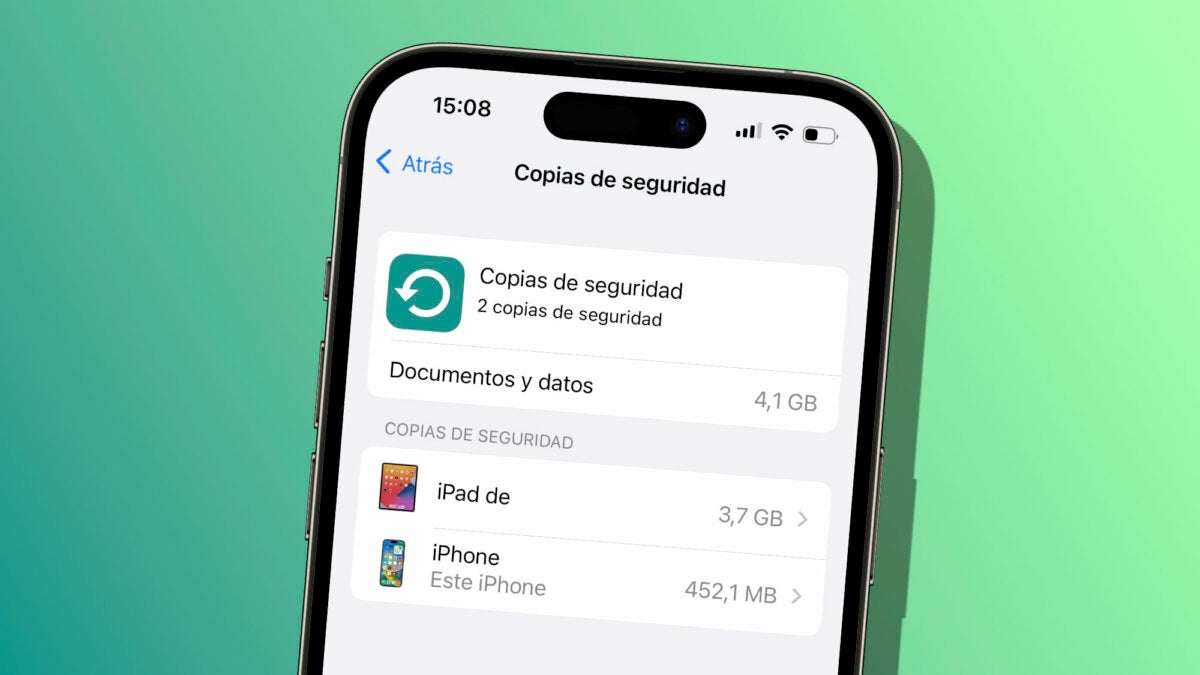
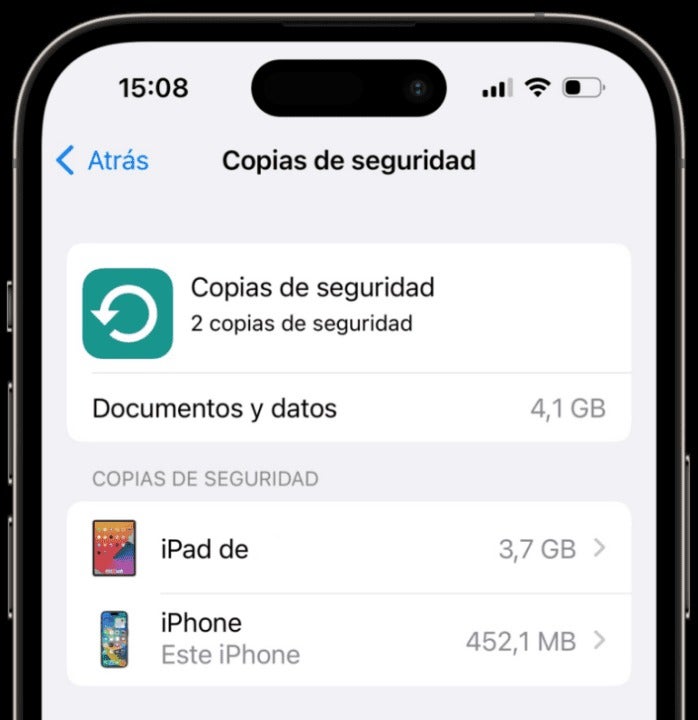
List of backups on an iPhone.

Here we will see a list of all the backups stored in iCloud. If there are several copies of the same device, we must make sure to keep the one with the subtitle “This iPad” or “This iPhone”, which indicates that it belongs to the current device. For the other copies, all we have to do is delete them.

How? Very easy, by touching them and then choosing Delete copy at the bottom. Note also that the date on which the copy was last made is shown here. This information can also help us to confirm that this copy is indeed no longer in use.

iOS 16 DOWNLOAD

Alternatively, when in doubt about which copies to delete, another option is to simply delete them all. Then we go to Settings > Our name > iCloud and in iCloud Backup we make sure that it is activated with Back up this iPhone/iPad. A process we will follow on all our devices to re-enable the copy after wiping.

Along with 10 other amazing features of iOS 16, thanks to this, we will ensure that we are not taking up extra space in iCloud with copies that we will not use. A simple resource to recover space in which to save photos, videos, documents and information that we do need to be available in the Apple cloud.