From Titanic Quest to Venus Venture: Co-Creator of Submarine that Explored Titanic Sets Sights on New Mission

If he is known as “Earth’s evil brother” it is for a reason. You don’t want, a priori, to go to anything evil to visit (much less live there).

Millionaires, for some reason, feel lately compelled to build giant rockets and send humanity packing. Elon Musk wants to send a million people to Mars, Jeffrey Bezos wants to establish an industrial base in space, and Richard Branson aims to lead galactic tourism. While they play at being NASA, a new contender enters. And it doesn’t inspire much confidence.

NASA App DOWNLOAD

A flawed CV

Soon, the Mecano song that said “Déjalo ya, sabes que nunca has ido a Venus en un barco” (“Stop it now, you know you’ve never been to Venus on a boat”) might transition from surrealism to reality, thanks to Guillermo Söhnlein, a millionaire who wants to venture into the space race. You may know him better as one of the two founders of OceanGate and, therefore, Titán. Yes, that’s right, the vessel designed to explore the Titanic, which imploded upon itself.

To his credit, it’s been ten years since he left that project, but it’s not the best introduction. And even less so when he announces his new plan to establish a colony of a thousand people on Venus by the year 2050. If Venus is known as “the evil twin of Earth,” there’s a reason for it, Guille. Visiting anything malevolent doesn’t sound appealing (let alone living there).

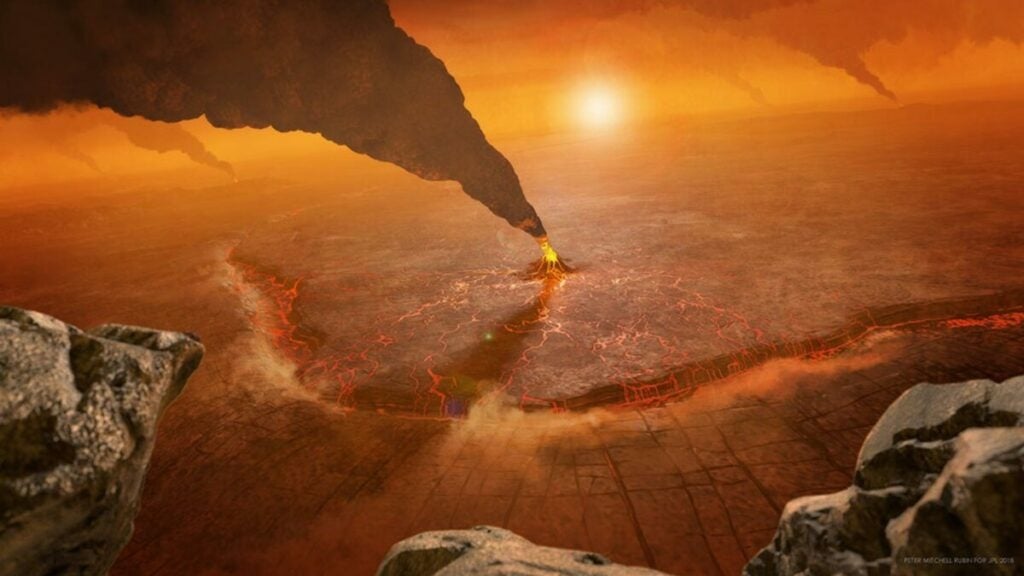
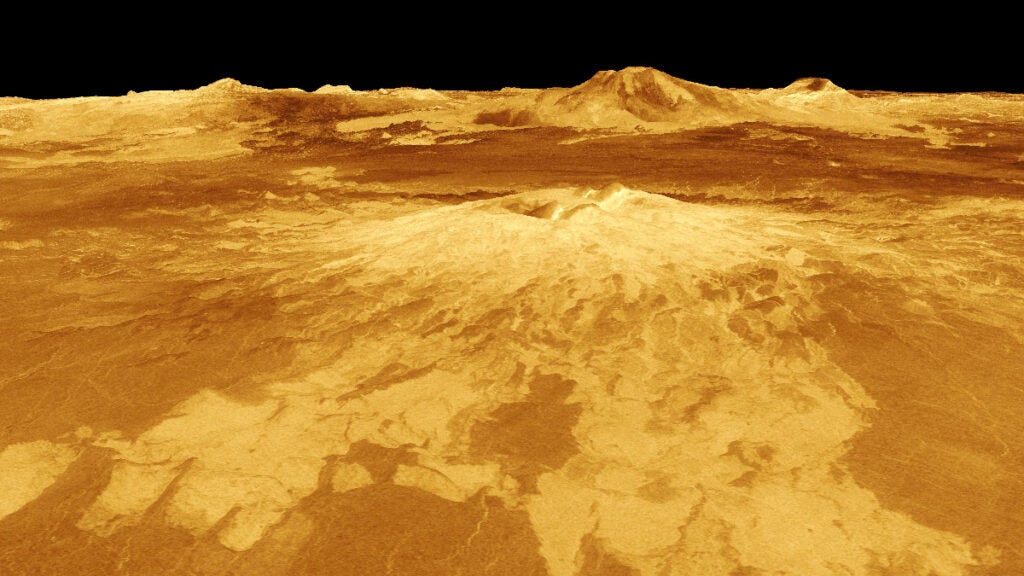
Yes, Venus is the hottest planet in the solar system, with sulfuric acid rains, and atmospheric pressure 90 times that of Earth. However, our friend doesn’t see a reason why we shouldn’t give it a try: there’s a 48-kilometer area on the surface where apparently humans could survive. Oh, well! 48 kilometers! That changes everything!

The plan involves building a space station to shield against sulfuric acid in the clouds. If that happens, he says hundreds of thousands of people could establish a new Venusian civilization. In an interview with Business Insider (not Venus Insider), he ends by saying, “I have the recurring dream of being the commander of the first Martian colony.” Coming from the creator of the imploded submarine, we trust everything he has to tell us wholeheartedly. Let’s go to Venus tomorrow; I’ll pack my suitcase!

NASA App DOWNLOAD

Some of the links added in the article are part of affiliate campaigns and may represent benefits for Softonic.

Scientists Discover Promising Signs of Life on Venus: “Maybe” becomes the Key Word

According to the latest report from a group of astronomers, it is possible that by being afraid of Martians we were looking at the wrong side of the solar system.

Don’t call Iker Jiménez: so far, no Venusian has appeared on Earth greeting and asking to meet our leader. But according to the latest report from a group of astronomers, it is possible that by fearing Martians, we have been looking in the wrong direction in the solar system. Is there life on Venus? The answer is more “maybe” than a resounding “no.”

NASA DOWNLOAD

Venus from the arms

‘Nature Astronomy’, a science journal that has been published since January 2017, has released a study indicating the presence of a peculiar molecule called phosphine in the clouds of Venus. Phosphine is a highly flammable gas that must be frozen to maintain its stability; at room temperature, it explodes and emits a distinct odor of garlic and rotten fish. If Venusians exist, the first thing we should teach them is about cologne.

Although not certain, phosphine could serve as an indicator of life. While it has also been found on Jupiter and Saturn, the difference lies in the fact that on Venus, it is not located in the planet‘s atmosphere but is instead formed by decomposing organic matter. In other words, its composition consists of phosphorus and hydrogen.

It is also true that the presence of phosphine found is not significant enough to cause a major shift in our understanding. In December 2022, NASA did not detect the molecule in Venus’ atmosphere, and at most, there would be 0.8 parts of phosphine per billion parts of everything else (hey, some people have even fewer chances of dating). However, researchers in Hawaii and Chile have been more optimistic, although they need more time for further investigation.

If you were expecting the answer to this article to be “Yes, definitely, and they will come to have breakfast at your house tomorrow, so don’t forget to buy croissants,” we understand the disappointment. However, it remains an incredible scientific advancement that could potentially change everything in the long run. For now, continue making plans for tomorrow; it doesn’t seem like the Venusians will be invading us anytime soon.

Revolutionizing Space Science: Tool to Help Search for Life on Other Planets Unveiled

The tool in question is a technique for searching for water in space that uses the size of an exoplanet to estimate how much liquid is below its surface.

Water is life. It’s not just a catchy slogan: it’s also a reality. None of the planets we are exploring in outer space can support life of any kind, because they have no water to survive on. But that may change thanks to a new tool created by astronomers at Cambridge University with which they will be able to take one of the biggest steps towards colonizing other planets.

One step closer to Planet Express

The tool in question is a technique for finding water in space that uses the size of an exoplanet to estimate how much liquid lies beneath its surface. We don’t mean rivers, seas and waterfalls, but a certain amount of water locked in rocks and minerals kilometers from the surface. It’s not that flashy, but it may be the beginning of the creation of life (or human survival).

If we can know how many of these minerals are inside a planet, it is possible to get the water out of its interior, bring it back to the surface, and be able to replenish, for example, oceans that once disappeared due to intense heat or radiation. “This model gives us a limit on how much water a planet can carry in its interior, based on those materials and their ability to have water on their surface,” the scientists comment. Will we one day be able to bathe in Saturn’s oceans? Let’s not get ahead of ourselves.

For the time being, scientists will use this new branch of the search for planets to find those most likely to have alien life and study them more closely after triaging them. Of course, do not think that because a planet is huge it will have a lot of water in its interior: in fact, scientists point rather to planets similar in mass to Earth. For example, Venus. It is suspected that before it was the hottest planet in the solar system at about 475 degrees nothing, it had water on its surface.

If that is the case, we could help cool the planet thanks to this tool. Who knows? Maybe in the next few decades we will be able to go on a vacation resort to a small Venusian cove…