Betelgeuse’s Supernova Threat: What Would Happen if the Star Explodes?

Betelgeuse still has many thousands of years to live, so the increase in its brightness is a mere anecdote- But of course, the reality is…

One of the brightest stars in the night sky has unexpectedly become even brighter, leading to speculation that it could soon explode in a supernova. Should we anticipate such a unique celestial spectacle in the near future?

NASA App DOWNLOAD

The star in question is Betelgeuse, a massive red-tinted star located on the left shoulder of the iconic Orion constellation. Positioned about 650 light-years away from Earth, Betelgeuse typically ranks as the tenth brightest star in the night sky.

However, since early April, the star has climbed to the seventh position and is currently shining at over 140% of its usual brightness, as reported by the Twitter account Betelgeuse Status, which closely monitors the star’s behavior.

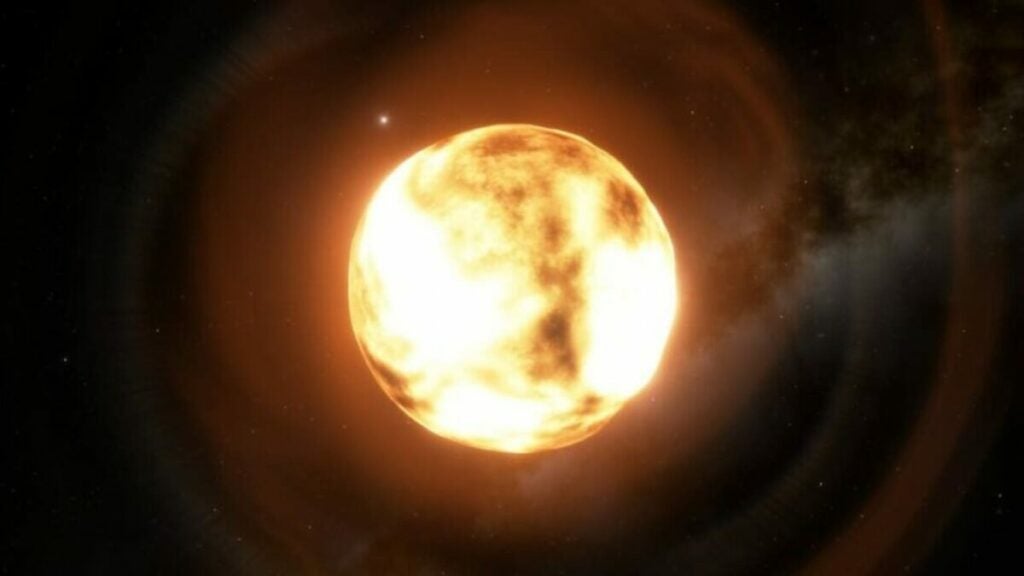
Betelgeuse is a red supergiant, an enormous star that has exhausted all the hydrogen fuel in its core and expanded hundreds of times beyond its original envelope.

Astronomers believe that the star is currently fusing helium into carbon and oxygen, a phase in stellar evolution that lasts from tens to hundreds of thousands of years and precedes the star’s demise in a supernova explosion.

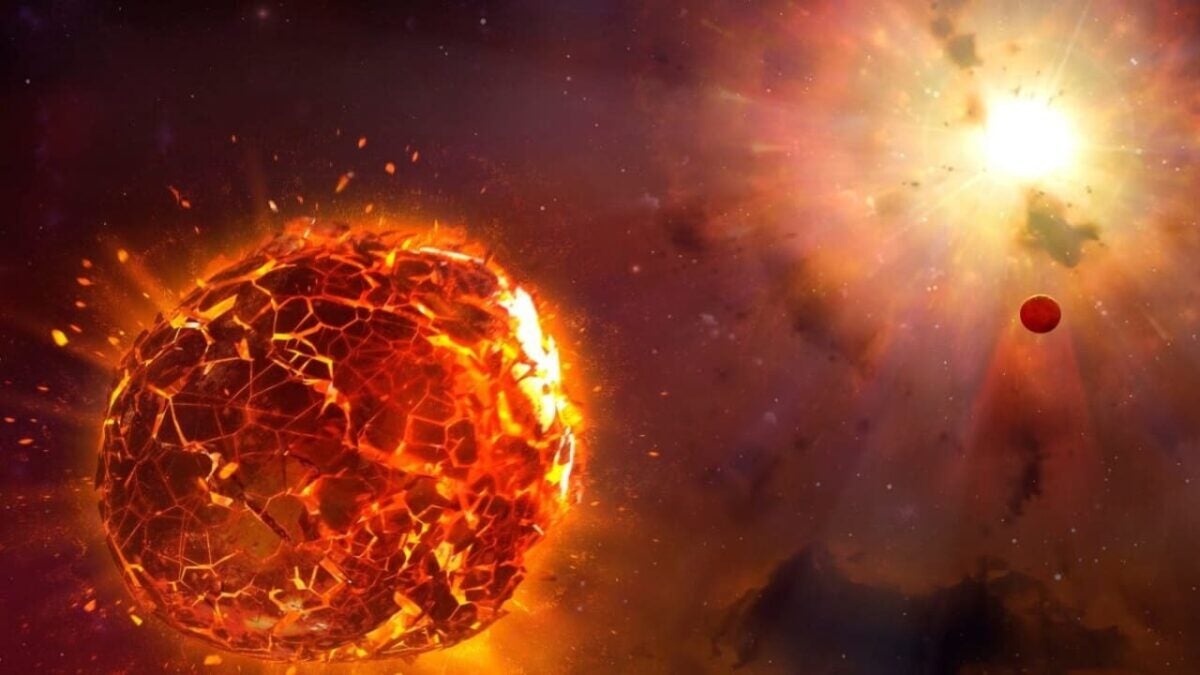
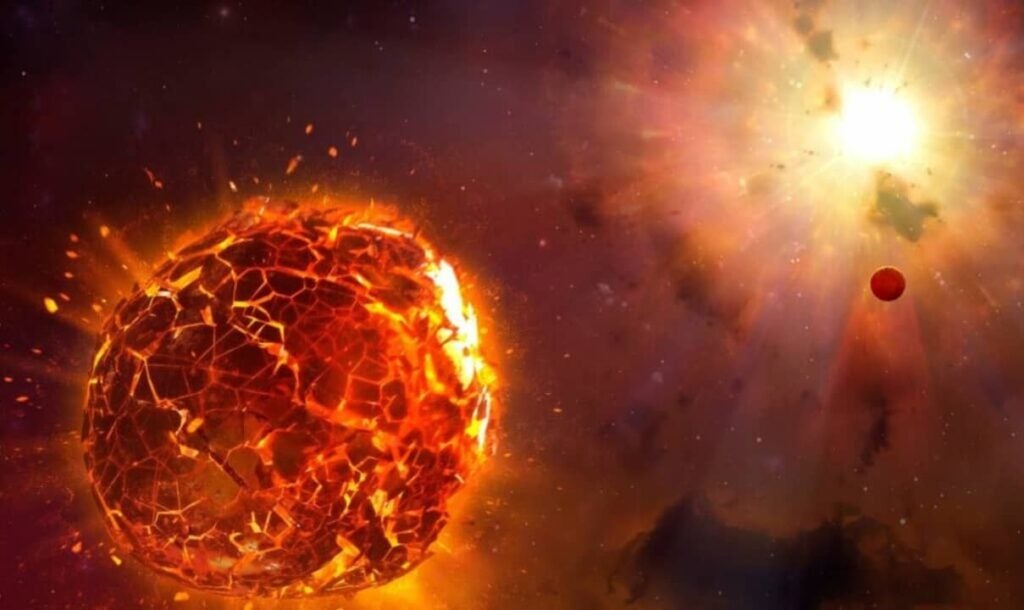
Betelgeuse’s recent antics, dating back to 2019, have led some to speculate that the moment of its spectacular death may be approaching. If Betelgeuse were to go supernova, it would be the closest supernova explosion in over 400 years and would be so bright that it would be visible even in daylight, outshining the moon.
A star that keeps changing

Betelgeuse is a variable star known for its regular oscillations between periods of higher and lower brightness. For over 100 years, astronomers have observed Betelgeuse brightening every 400 days, then fading to about half its maximum brightness before brightening again.

But in December 2019, the star unexpectedly dimmed beyond what had been seen before, reaching a minimum 2.5 times fainter than its usual dimmest state.

The cause of the event, later dubbed the Great Dimming, was traced back to a massive outburst of material from within the star that created a huge cloud of dust, subsequently obscuring our view of the star.

From star to red giant

Although Betelgeuse has regained its usual brightness, the star has not been the same since the Great Dimming. Its brightness oscillation period of 400 days has been halved to 200 days, and the star seems to be exhibiting additional brightness that excites sky observers.

While the normal life of a star ends when it runs out of hydrogen and begins fusing helium in its core, its extended life as a red giant continues beyond the helium-burning stage.

Without helium, the star will continue to burn carbon and oxygen into neon and magnesium, and then burn these into silicon. Eventually, the star’s core becomes filled with iron. And then the fireworks begin.
The time scale of stellar death

While the hydrogen-burning phase of a star can last billions of years, each subsequent phase becomes increasingly shorter.

Betelgeuse still has many thousands of years of life ahead, so its increased brightness is merely anecdotal. In fact, the star has been this bright in the past, albeit only for brief periods of time.

NASA App DOWNLOAD

Some of the links added in the article are part of affiliate campaigns and may represent benefits for Softonic.
Journey to Infinity: Trailblazing Telescope to Embark on Deep Space Exploration

Space is full of mysteries and unanswered questions. Today we have good news, since we have a telescope very close to going to answer them…

The Euclid mission by ESA aims to unveil the mysteries of dark matter and dark energy, which together make up the vast majority of the known universe. ESA, which stands for the European Space Agency, is often referred to as our NASA.

NASA App DOWNLOAD

This weekend, the European Space Agency (ESA) successfully launched the Euclid mission: a space telescope that aims to unveil the mysteries of dark matter and dark energy. It can be seen as Europe’s equivalent to the James Webb Space Telescope.

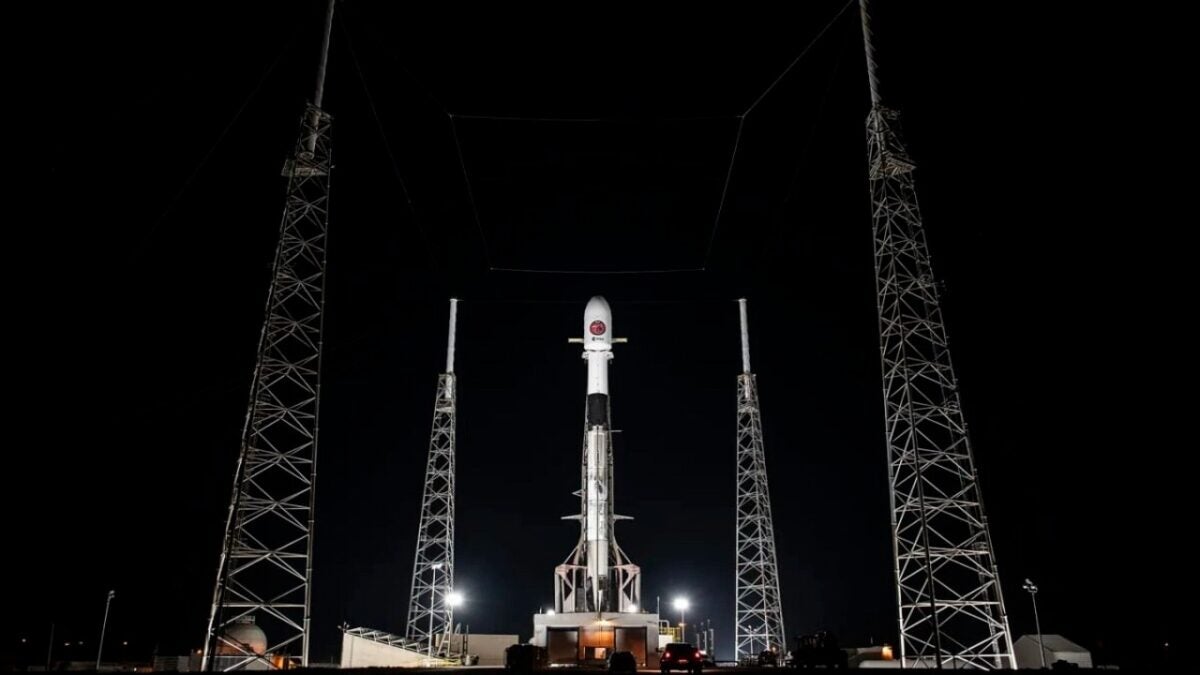
The spacecraft, weighing 2.2 tons and equipped with a 1.2-meter telescope, was transported to space by a SpaceX Falcon 9 rocket and is now on its way to its orbit around the Sun.

A mission that started truncated by the war in Ukraine

Initially, the mission was planned to be launched using a Russian Soyuz rocket from the European spaceport in French Guiana. However, following the Russian invasion of Ukraine, cooperation between the ESA and Russia was interrupted.

Instead, the telescope was launched from the Cape Canaveral Space Station in Florida at 12:11 PM Eastern Time on Saturday, July 1st.

The telescope is headed towards an orbit known as L2, the second Lagrange point, which is the same orbit used by the James Webb Space Telescope and other space telescopes.

This orbit provides great stability, which is especially important for a mission like Euclid, whose goal is to collect extremely detailed observations of the universe.

Euclid is expected to reach L2 within a period of four weeks and then undergo two months of preparations before starting scientific observations in early October.

Euclid will conduct broad and deep surveys of the universe, combining images to create a map of the universe that helps unravel two mysterious concepts: dark matter, which makes up about 27% of all that exists, and dark energy, which accounts for about 68% of the universe.

Every atom, molecule, and speck of observable matter constitutes the tiny remaining 5 percent, known as ordinary or baryonic matter.

Unraveling the mysteries of dark matter and dark energy is crucial for our understanding of the universe. These elusive phenomena have been inferred from the movements of galaxies and the way the universe expands. However, studying them poses significant challenges because dark matter does not interact with light, and dark energy remains an unknown form of energy.

To find evidence of their existence, we need to explore on a grand scale.

You might wonder why Euclid will only survey one-third of the sky. The reason is that distant galaxies in other areas of the sky are obscured by closer stars and dust within our own galaxy. These objects are simply not visible. Best of luck to Euclid in its ambitious mission to shed light on these cosmic mysteries.

NASA App DOWNLOAD

Some of the links added in the article are part of affiliate campaigns and may represent benefits for Softonic.
NASA Issues Alert as Asteroid Hurtles Towards Earth at 26,000 km/h

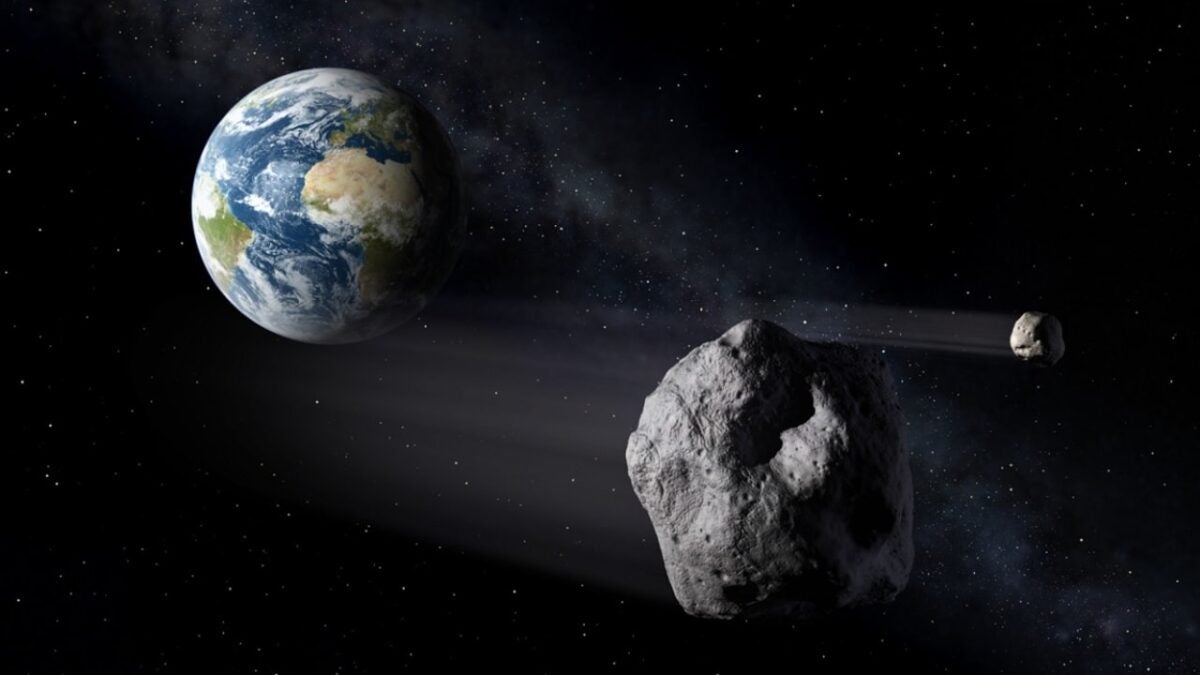
NASA issued an alert about the approach of an asteroid towards Earth with a speed of 26,000 kilometers per hour. Known as 2013 WV44, the space rock was classified as a near-Earth object, and experts announced that they are not prepared to prevent it… in the event it happens.

NASA App DOWNLOAD

According to the information provided by NASA, the asteroid will reach its closest point to Earth on Wednesday, May 5th.

The proportions of the space rock are remarkable, measuring approximately 160 meters in diameter and traveling at a speed of 11.8 kilometers per second. When considering the speed in kilometers, the figure exceeds 26,000 kilometers per hour, which is about 34 times the speed of sound.

NASA classifies the asteroid as a near-Earth object, requiring close monitoring. The distance is nine times greater than the distance between our planet and the Moon, but in astronomical terms, it is a relatively small distance.

An asteroid with thousands of years behind it

The composition of these objects is typically made up of primarily water ice with dust particles, and they are remnants of the formation process of the solar system about 4.6 billion years ago.

Technically, “near-Earth object” refers to celestial bodies such as comets or asteroids that have been gravitationally pulled into close orbits by nearby planets.

This definition applies when the space object is within 1.3 astronomical units (corresponding to 194 million kilometers) from the Sun. This distance can also be translated to within 0.3 astronomical units (44 million kilometers) from the orbit of our planet.

It is not dangerous for life on our planet

Although its size and proximity make it worthy of study and monitoring, the asteroid would not meet the criteria to be classified as potentially hazardous. This classification is applied to celestial bodies that come dangerously close to Earth.

In order to be classified as a Potentially Hazardous Asteroid (PHA), an asteroid must come within 0.05 astronomical units (7.5 million kilometers) of Earth and have a diameter larger than 140 meters.

However, at its closest point to Earth, asteroid 2013 WV44 is expected to pass at a distance of approximately 3.2 million kilometers from our planet. So, everyone can relax, we’re safe… until the next one.

According to NASA, there are 32,254 known Near-Earth Asteroids (NEAs) in our solar system, a number that has increased since the 30,000 reported last October.

Out of the total, it is estimated that there are more than 10,000 asteroids with a diameter larger than 140 meters, and nearly 1,000 asteroids with a diameter larger than 1 kilometer. This highlights the need to keep track of these space rocks.

NASA App DOWNLOAD

Some of the links added in the article are part of affiliate campaigns and may represent benefits for Softonic.

Picture Perfect: The Most Breathtaking Shots of a SpaceX Rocket’s Launch into the Unknown

SpaceX intends to use the Super Heavy and the Starship to transport crew and cargo to the Moon and even Mars. These photos are perfect to see…

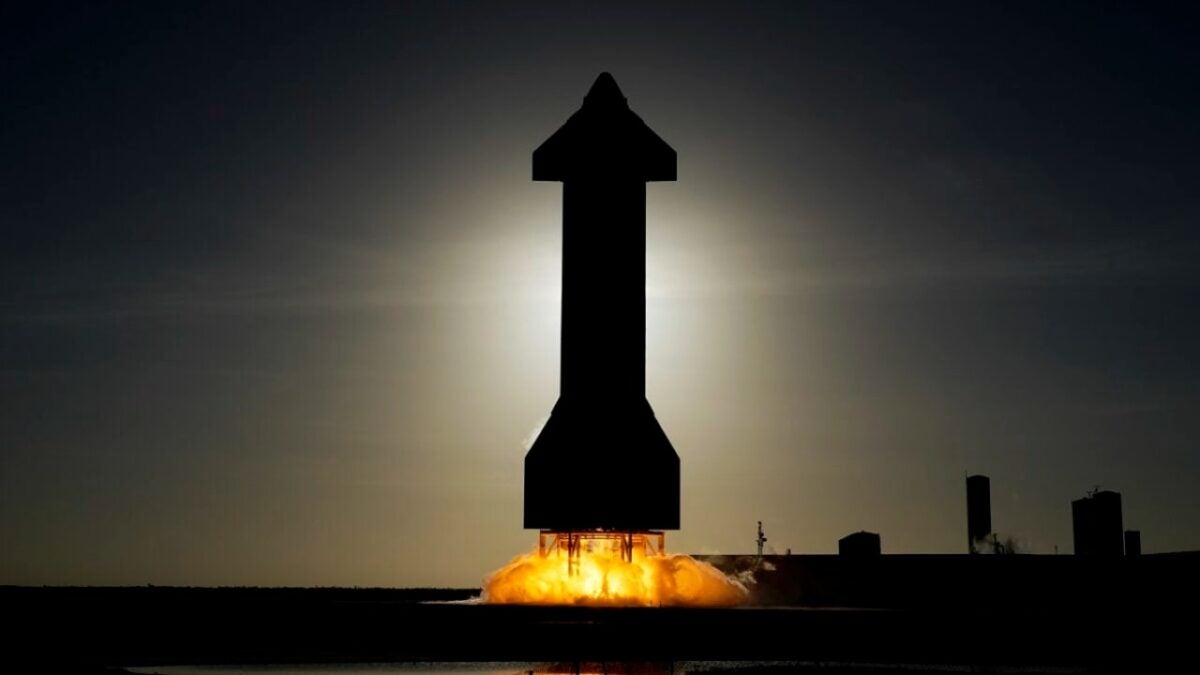
As part of the preparations for the second test flight of its Super Heavy rocket and Starship spacecraft, SpaceX conducted a static launch test of the Starship this week. The spacecraft has undergone over 1,000 changes this year.

Twitter DOWNLOAD

The exercise, which took place at SpaceX’s Starbase facilities in Boca Chica, Texas, involved igniting the six engines of the Starship for several seconds.

Elon Musk’s company released some impressive images of the brief event on Wednesday.

They also shared a video of the dramatic moment when the starship’s engines were ignited.

Here’s how SpaceX explained it in their tweet: “Starship 25 completes a static fire test of six engines at the Texas Starbase.”

The test comes a couple of months after a failed attempt by SpaceX to send the starship on its first orbital flight. About four minutes after a successful launch of the most powerful rocket in history, the vehicle exploded in the air shortly after the Starship failed to separate from the Super Heavy.

SpaceX is now examining the data from the brief flight to make the necessary changes before a second attempt at an orbital flight. Elon Musk, the head of SpaceX, recently stated that engineers have been working on “over a thousand” changes to the vehicle before its next launch.

Preparations also include the construction of a more robust launch platform following the significant damage caused by the impressive power of the Super Heavy during liftoff in April.

Musk said that SpaceX could be ready for launch within six weeks, although they will need permission from the Federal Aviation Administration before initiating the countdown.

SpaceX intends to use the Super Heavy and Starship to transport crew and cargo to the Moon and even Mars. NASA plans to use a modified version of the Starship for the first human lunar landing in five decades, currently scheduled for 2025.

Both parts of the vehicle are designed to be reusable, and once fully developed, they will be capable of autonomous landings similar to the first stage of the company’s workhorse Falcon 9 rocket.

Twitter DOWNLOAD

Some of the links added in the article are part of affiliate campaigns and may represent benefits for Softonic.
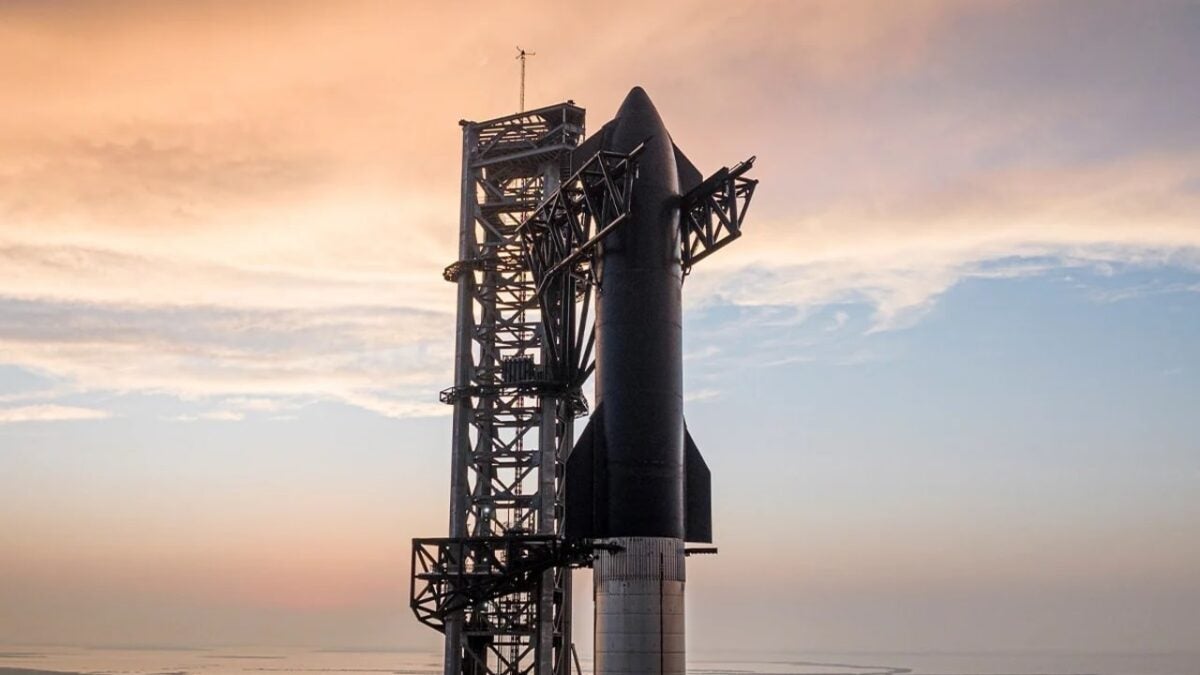
From Trial and Error to Stellar Triumph: Elon Musk’s Rocket Journey Entails 1,000+ Adaptations

The Starship ship will be in charge of taking humans to Mars for the first time. Or that is the intention of Elon Musk with his company SpaceX.

SpaceX will debut numerous enhancements in the second launch of its mega-rocket, Starship. The expectations for this spacecraft couldn’t be higher, as if everything goes well, it will carry humans to Mars within a decade.

Twitter DOWNLOAD

These improvements include a significant change in the way the two stages of the rocket separate, enhancements in the propulsion system, and a reinforced launch platform in South Texas that should better withstand the explosion of the 33 main engines.

“There are a tremendous number of changes between the last Starship flight and this one, over a thousand,” said Elon Musk, founder and CEO of SpaceX. “So, I think the probability of this next flight working, reaching orbit, is much higher than the previous one. Maybe it’s around 60 percent. It depends on how well we do with the stage separation.”

More than 1,000 changes to keep the rocket from exploding

Musk outlined some of the modifications to the Starship rocket during a Twitter Spaces debate on Saturday with journalist Ashlee Vance. He stated that the next Starship rocket and updates to the launch platform at the Starbase facilities in South Texas should be ready for the next test flight in about six weeks. “That’s the best we know right now,” Musk said.

The Starship vehicle is designed to be fully reusable, and SpaceX plans to use it to deploy satellites into orbit, build refueling tankers and propellant depots, and eventually transport cargo and crew to the Moon and Mars.

SpaceX’s long-term goal is to replace its Falcon 9 rocket and Dragon capsule with the private Starship vehicle.

Officials at SpaceX expressed satisfaction with the outcome of the first full test flight of the Starship on April 20th, which reached an altitude of approximately 38 kilometers before losing control due to multiple engine failures and the loss of the rocket’s guidance system.

The test flight set the record for the largest and most powerful rocket ever launched, standing at 120 meters tall and producing around 15 million pounds of thrust from its methane-fueled Raptor engines.

The rocket is divided into two segments. A booster stage called Super Heavy, equipped with 33 Raptor engines, is designed to propel the vehicle through Earth’s atmosphere. Then, an upper stage with six engines—simply known as Starship—takes over to accelerate to orbital velocity.

One of the most significant changes SpaceX is introducing in the design of the Starship is the separation of the booster from the upper stage, which occurs about three minutes after liftoff. The April test flight of the Starship did not achieve the milestone of stage separation.

“We made a sort of last-minute change that is really quite significant for how stage separation works, which is to use what’s called ‘hot staging,’ where we light the engines of the upper stage, or ship, while the engines of the first stage, or booster, are still firing,” Musk said.

Russian rockets, such as the Soyuz, have been using this technique for decades, but it is not employed in any modern U.S. launchers. Typically, rockets shut down their booster engines for a few seconds before jettisoning the first stage and igniting the upper stage engine.

Twitter DOWNLOAD

Some of the links added in the article are part of affiliate campaigns and may represent benefits for Softonic.
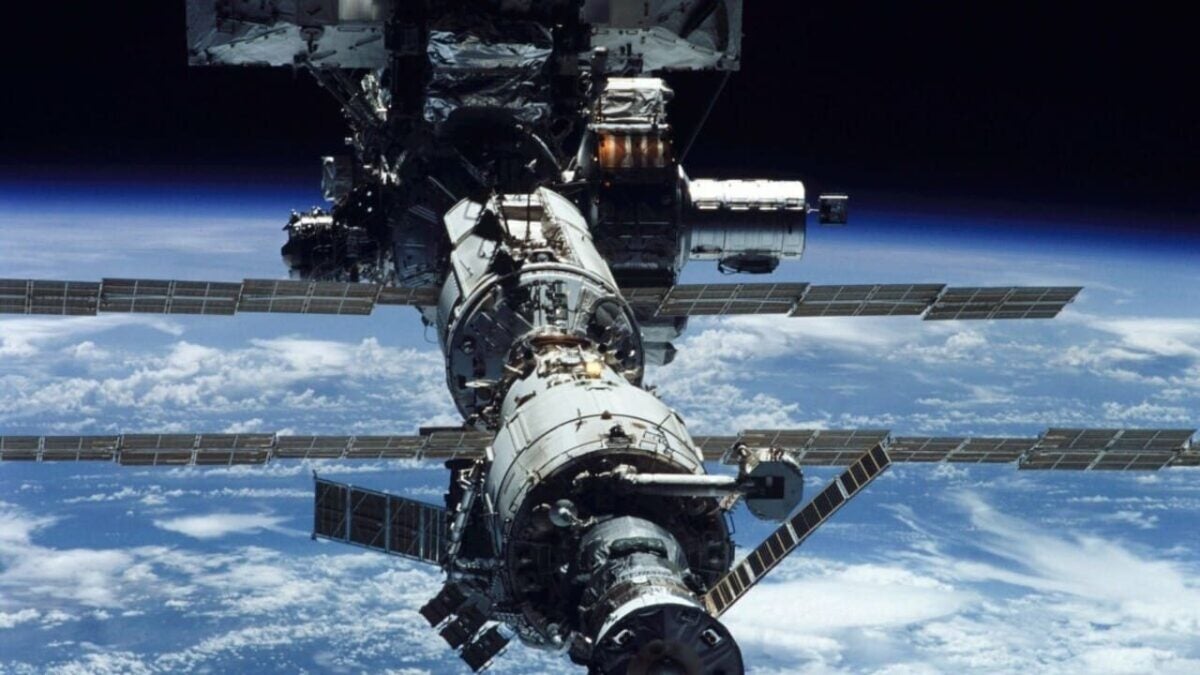
How NASA’s Ingenious Invention Secures a Lifesaving Water Source for the International Space Station

In order to stay in Space and conquer the stars we have to become self-sufficient up there. Today we are one step closer.

Everything that happens in space piques our curiosity. For humans, everything beyond the stratosphere is the unknown. The realm of the stars. For thousands of years, we have been looking up, wondering about things… even how to drink water up there.

NASA App DOWNLOAD

Astronauts aboard the International Space Station have achieved a water recovery rate of 98% in a groundbreaking accomplishment, thanks to a method that might make the faint of heart cringe: they have reached the pinnacle of recycling astronaut urine.

The water recycling achievement is a significant milestone for low-Earth orbit missions aiming to meet the basic needs of astronauts without resupply missions.

This entails recycling or regenerating essentials such as food, air, and water, saving billions of dollars in space resupply missions.

What an astronaut needs to survive

In the case of the International Space Station (ISS), each crew member requires approximately half a liter of water per day for drinking, food preparation, and hygiene purposes such as brushing their teeth.

The ideal target in terms of water has been a recovery rate of 98% of the initial water brought to space by the crews at the beginning of longer missions.

“This is a significant step forward in the evolution of life support systems,” said Christopher Brown, part of the team at the Johnson Space Center that manages life support systems on the ISS, in a statement.

“Let’s say you launch with 45 kilograms of water. You lose 1 kilogram of water along the way, and the remaining 98% keeps cycling. Keeping that running is quite an impressive achievement.”

The milestone of water recovery was achieved by the Environmental Control and Life Support System (ECLSS) during a demonstration of the enhanced Urine Processor Assembly (UPA), which recovers water from urine through vacuum distillation.

The ECLSS is composed of a combination of hardware, including a Water Recovery System that collects wastewater and advanced dehumidifiers that capture moisture from the air inside the ISS as a result of the crew’s breathing and sweating.

This collected water is sent to the Water Processor Assembly (UPA), which then produces potable water. The UPA component of the ECLSS distills urine, but as a byproduct of this process, brine is produced, which still contains some unused water.

A Brine Processor Assembly (BPA) was added to the UPA to extract this remaining residual water. While demonstrating its operation in the microgravity of space, the BPA pushed the ECLSS to the 98% target.

“Before the BPA, our total water recovery was around 93 to 94% overall,” said Jill Williamson, the Water Subsystem Manager for the ECLSS. “Now we have demonstrated that we can achieve a total water recovery of 98% thanks to the brine processor.”

The 98% milestone is promising for future space missions where astronauts will spend longer durations in space during extended stays on the lunar surface and crewed missions to Mars.

NASA App DOWNLOAD

Some of the links added in the article are part of affiliate campaigns and may represent benefits for Softonic.
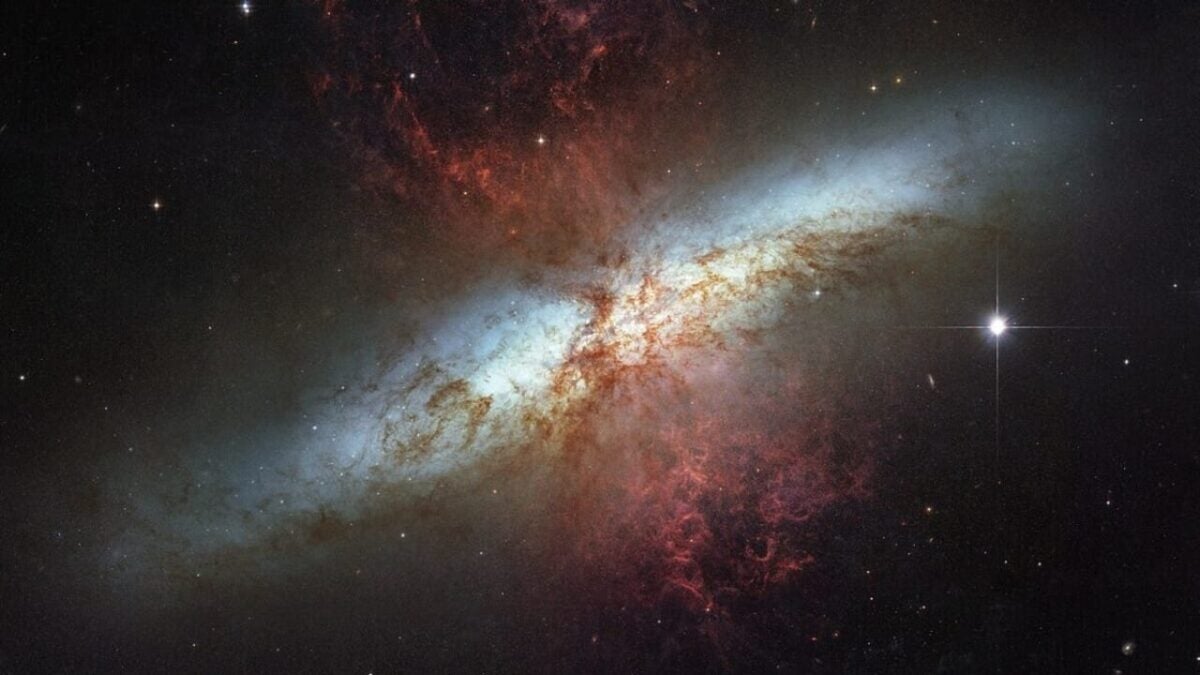
Out of This World Beats: NASA Turns a Galaxy into a DJ, Bringing You the Nebula Session

If you are a fan of NASA, music and Space seem fascinating to you, be sure that you will like the theme that we bring you. Hit Play!

The universe is a marvelous place where everything happens everywhere at the same time. It is so mysterious and vast that humanity has been obsessed with it since we began to reasonthousands of years ago.

NASA App DOWNLOAD

As the aerospace industry prepares for more launches this year, the National Aeronautics and Space Administration (NASA) is busy turning light into sound.

NASA has several telescopes that allow them to see billions of light-years away, and astronomers tirelessly scan the skies every day to understand the universe.

Turning light into sound

Now, bolstered by the new James Webb Space Telescope, the space agency has begun to convert the visual data from various telescopes into sound, aiming to gain a better understanding of the structures of the galaxies and stars they study.

These sounds depend on the characteristics of the objects being studied and often represent a combined set of data from multiple telescopes.

The space agency has shared three sets of sonifications that represent the visual data captured from distant galaxies and stellar systems.

These data encompass a range of phenomena, from a collection of multiple galaxies moving around each other to stars that are kept close to each other due to their gravitational attraction.

The systems and galaxies undergoing the conversion from light to sound include the Messier 104 galaxy (also known as the Sombrero Galaxy) and the stellar systems Stephan’s Quintet and R Aquarii.

R Aquarii is the closest one to Earth, located just 652 light-years away. In the cosmic scale of things, where NASA has studied objects billions of light-years away from Earth, this is practically a neighboring system.

These sonifications vary with the brightness of light and the distance of the observer from the center of the objects. This causes the sound to vary in volume and pitch as the cursor moves through the set of images, and the volume and pitch increase when the light intensifies or the image becomes denser.

NASA App DOWNLOAD

Some of the links added in the article are part of affiliate campaigns and may represent benefits for Softonic.
From Red Planet to Postcard: Marvel at the Majestic Martian Sunset

Space gives us incredible images, they are usually of planets and suns. That's why when we get a magazine postcard on the surface of a planet…

NASA has just gifted us one of the most beautiful and fascinating images we have of a planet other than our own. Specifically, the planet is our red neighbor, and the photographer is none other than the Rover.

NASA App DOWNLOAD

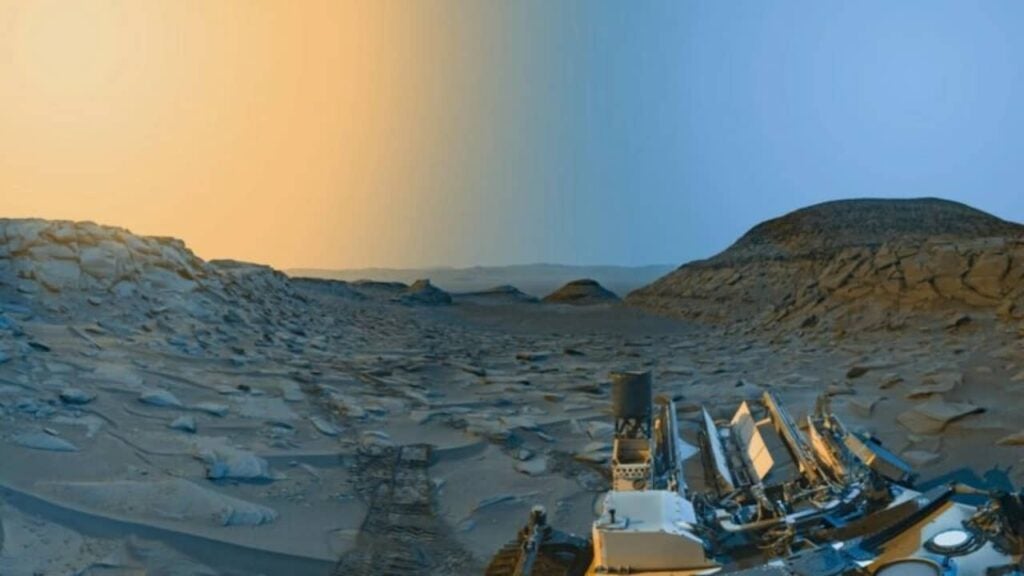
You can now enjoy a new and stunning view of Mars thanks to a postcard from the Gale Crater taken by the Curiosity rover. The image combines two different views of the same area and is colored to showcase the undulating Martian landscape in a region called the Marker Band Valley.

NASA/JPL-Caltech

A sunset on the Martian plain

The image, shared by NASA’s Jet Propulsion Laboratory (JPL), shows the rear of the rover and the tracks it has left on the Martian surface.

The image on the left was taken on the morning of April 8th at 9:20 local Mars time, while the image on the right was taken in the afternoon of the same day at 15:40 local Mars time. The two images have been blended to show how the landscape appears different throughout the day.

The image was captured by Curiosity’s navigation cameras, which take lower-resolution images used to assist the rover’s drivers in navigating the terrain. By the way, you have to see this.

Unlike the color images captured by the rover’s scientific cameras, such as the Mastcam instrument, the navigation camera captures images in black and white. Therefore, this image had to be colorized to depict the colors of morning and afternoon.

NASA makes all images taken by Curiosity available to the public, so if you’re interested in seeing how the navigation camera images looked before being processed, you can check out this gallery.

The striking image is a combination of raw data from the rover and human adjustments to add an aesthetic touch, but it was also favored by the current weather conditions on Mars.

In this region of the planet, it is currently winter, which means there is less dust in the air compared to other seasons. This contributes to giving the image a crisp and defined appearance.

NASA App DOWNLOAD

Some of the links added in the article are part of affiliate campaigns and may represent benefits for Softonic.
A Thousand Years or Less? No Asteroid Alarm Bells for You, Says Science

This news should reassure all of us except Dalas Review, the youtuber who created a laboratory with the intention of finding the key to immortality.

This news should reassure everyone except Dalas Review, the youtuber who created a laboratory with the intention of finding the key to immortality. The fact is that the Earth is safe from the absolute devastation caused by an asteroid… at least for the next thousand years. They have until then to analyze ‘Armageddon’ and see if sending Bruce Willis is feasible.

POT DOWNLOAD
Get into space with the official POT application

The rage of the millennium

Astronomers have taken a look into space and have come to the conclusion that no big asteroid is going to do anything to us for at least a millennium, a period in which Marvel will release an estimated 3,000 movies and series, of which ten will be good. It’s still too early to breathe a sigh of relief, though. Yes, really. Look to the sky with some trepidation.

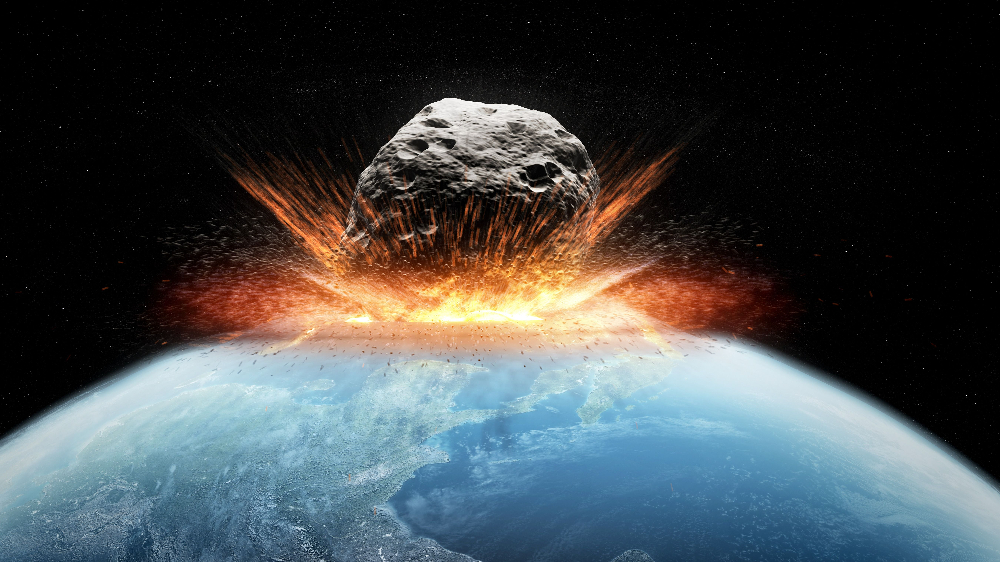
This new study only includes those asteroids that are more than one kilometer long, so other smaller ones may have an impact. One day you go to buy bread and a hundred-meter asteroid falls on you. It could happen! Although it would be worrying, it would not be a catastrophic problem for mankind like that meteorite that wiped out the dinosaurs. It is also true that 66 million years ago that element measured 10 kilometers, so, just in case, they are reducing even to a tenth part, lest it takes Asia ahead.

Oh, by the way: to refine further, it has been confirmed that in the next century no asteroid smaller than one kilometer or that can cause real damage to humanity will fall. Don’t cancel your weekend plan, it seems that after the pandemic season, we don’t have the meteorite season left. Thank goodness.

Don’t Delete Memories! Get More Storage on Your iPhone with These Smart Hacks

With a little optimization of the storage of our device, we will soon be able to enjoy more space.

The iPhone is a device that many of us use every day to communicate, work, entertain and capture unforgettable moments. However, over time, our phone’s storage can start to fill up, preventing us from storing more content. Fortunately, our iPhone itself offers us a good amount of resources to free up storage space and to do so without having to delete our memories.

Continue reading “Don’t Delete Memories! Get More Storage on Your iPhone with These Smart Hacks”