A new chapter in the history of the iconic series The X-Files is underway, as the relaunch of the show has been confirmed with a new actress as the lead and the renowned director Ryan Coogler at the helm of the pilot episode. This return has generated a mix of anticipation and skepticism among fans, who wonder if they will be able to disconnect from the original characters, Fox Mulder (David Duchovny) and Dana Scully (Gillian Anderson). Passing the crown gracefully, Gillian Anderson, who played Scully in the original series, has expressed her support for the new lead, Danielle Deadwyler. In a […]
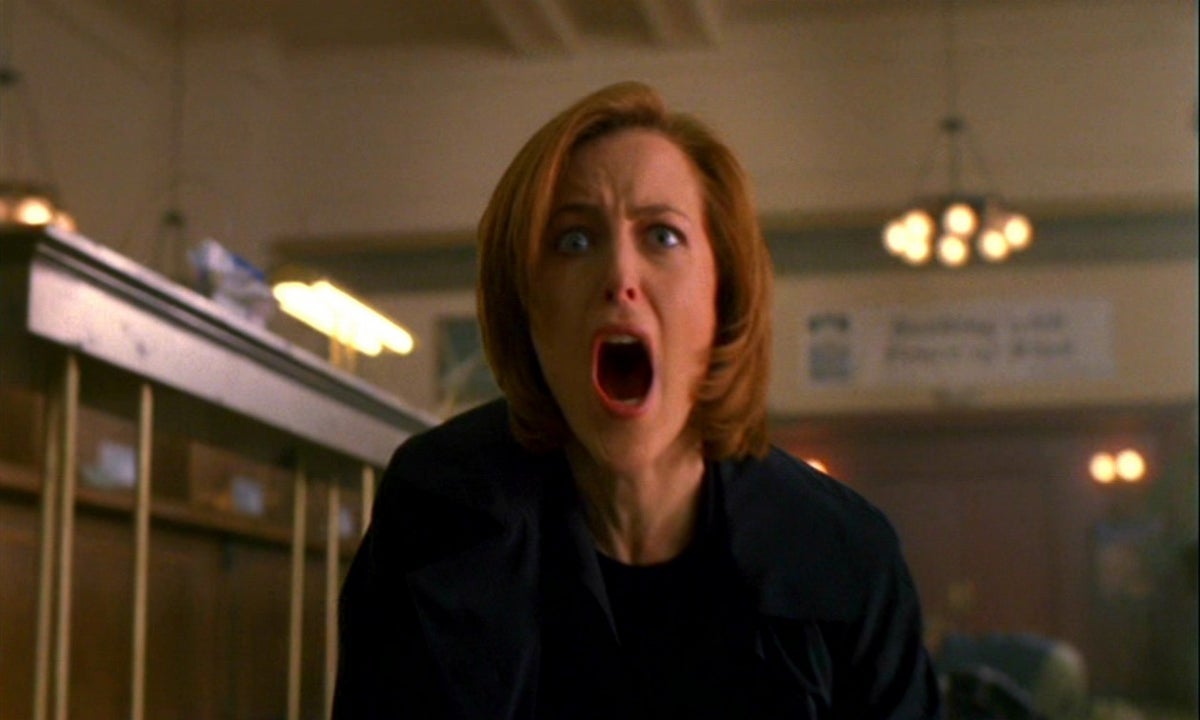
A new chapter in the history of the iconic series The X-Files is underway, as the relaunch of the show has been confirmed with a new actress as the lead and the renowned director Ryan Coogler at the helm of the pilot episode. This return has generated a mix of anticipation and skepticism among fans, who wonder if they will be able to disconnect from the original characters, Fox Mulder (David Duchovny) and Dana Scully (Gillian Anderson).
Passing the crown with grace
Gillian Anderson, who played Scully in the original series, has expressed her support for the new lead, Danielle Deadwyler. At a recent comic convention, Anderson urged fans to keep an open mind and give the new project a chance. Coogler is a great and talented guy. He did very well with the pilot episode, the actress stated, emphasizing that the project deserves to be seen without prejudice.
The new series, under the supervision of original creator Chris Carter as executive producer and with Jennifer Yale as showrunner, will follow two FBI agents with opposing personalities who confront inexplicable phenomena in a closed division. This renewed approach aims to attract a new audience, although it is undeniable that it will be difficult for many fans to forget the chemistry that made Mulder and Scully famous.
As the new protagonists delve into mysteries that challenge logic, they will also have to confront their own fears and convictions. With a renowned creative team and a plot that promises to be intriguing, fans of The X-Files may have reasons to be optimistic about what is to come. However, it remains to be seen whether this series will be able to capture the same magic that made the original a cultural phenomenon.
Hideo Kojima, the famous video game creator, has recently shared his appreciation for standalone episodes of the iconic series The X-Files, emphasizing its independent format that allows viewers to enjoy the series without the need for endless marathons. In particular, he has recommended the episode Monday (6×14), which explores a distressing time loop through the story of its protagonist, Pam. Unlike other tales in the genre that often offer redemptive endings, Monday focuses on pain and despair, providing an emotionally devastating experience. Two classic chapters of The X-Files The episode stands out for its unique approach to the […]
Hideo Kojima, the renowned video game creator, has recently shared his appreciation for standalone episodes of the iconic series The X-Files, highlighting its independent format that allows viewers to enjoy the series without the need for endless marathons. In particular, he has recommended the episode Monday (6×14), which explores a distressing time loop through the story of its protagonist, Pam. Unlike other tales in the genre that often offer redemptive endings, Monday focuses on pain and despair, providing an emotionally harrowing experience.
Two classic episodes of The X-Files
The episode stands out for its unique focus on tragedy, unlike classics like Groundhog Day, where the cycle is used as an opportunity for personal growth. Here, there are no second chances; the loop is inevitable and marked by hopelessness. Kojima points out that, in the end, the revelation behind the loop is deeply moving and highlights the anguish of a character trapped in an endless cycle of suffering.
This chapter of The X-Files also highlights the skill of Vince Gilligan, known for his ability to create narratives with significant psychological weight, as seen in his groundbreaking work on Breaking Bad. In Monday, the story is told from the perspective of a woman facing repeated pain, a theme that undoubtedly resonates with viewers. Kojima, in his brief assessment, recalls that Gilligan’s storytelling and his attention to character psychology make this episode a memorable experience.
Kojima and X-Files fans now have an opportunity to rediscover Monday, available on Disney+. This resurgence of standalone episodes reflects a desire among fans for stories that can be enjoyed independently and that, despite the passage of time, continue to resonate emotionally.
As the Christmas season approaches, the discussion about which movies can truly be classified as Christmas films heats up. Traditionally, these movies evoke stories of hope, reconciliation, and family love, personified in classics like It’s a Wonderful Life (1946). However, this concept is increasingly expanding, including iconic action films like Die Hard (1988), which has become synonymous with the holidays for many. Now, a group of fans has decided to take this redefinition to a new extreme, advocating for The Thing (1982), the horror and science fiction masterpiece […]
As the holiday season approaches, the discussion about which movies can truly be classified as Christmas films heats up. Traditionally, these movies evoke stories of hope, reconciliation, and family love, personified in classics like It’s a Wonderful Life (1946). However, this concept is increasingly expanding, including iconic action films like Die Hard (1988), which has become synonymous with the holidays for many. Now, a group of fans has decided to take this redefinition to a new extreme by advocating for The Thing (1982), John Carpenter’s horror and science fiction masterpiece, to be recognized as a Christmas movie.
A movie without many festivities
Despite the fact that The Thing takes place in the freezing and desolate landscapes of Antarctica and is completely devoid of any trace of Christmas spirit, its defenders argue that the atmosphere of isolation and the omnipresent snow make it a grim antithesis to traditional celebrations. As part of their effort, they have started a petition aimed at convincing platforms like IMDb and Letterboxd to include this rating.
It is relevant to point out that, although this request has a clearly humorous tone, it reveals the desire of many fans to reexamine the rules that govern what is considered a Christmas movie. However, the question remains: can The Thing really be classified in this category, or is the term being abused?
On the other hand, the legacy of La Cosa in pop culture is undeniable. It has influenced a variety of modern works, from series like The X-Files to films by contemporary directors. Although fans would love to see a new sequel, there are doubts about whether it could achieve the same impact as the original film over 40 years ago, a significant challenge for any project attempting to revive this classic.
It’s hard to imagine, from a world where dozens of series premiere every day, what The X-Files meant in the mid-90s: an intelligent series, full of mysteries, that mixed the “case of the week” with an overwhelming continuity full of secrets. Mulder and Scully became the idols of a whole generation that began to believe in aliens and enjoyed, as if they were candies, all their spin-off products: there were comics, video games, novels, two movies, a late continuation… and, of course, two spin-offs, which was the trend […]
It’s hard to imagine, from a world where dozens of series premiere every day, what The X-Files meant in the mid-90s: an intelligent series, full of mysteries, that mixed the “case of the week” with an overwhelming continuity filled with secrets. Mulder and Scully became the idols of a generation that began to believe in aliens and enjoyed, as if they were candies, all their spin-off products: there were comics, video games, novels, two movies, a late continuation… and, of course, two spin-offs, which were all the rage back then. What no one expected was that one of them would soon become a dark and bitter prediction.
The truth is in the pilot episode
Many of you probably remember Millennium, which lasted three seasons and was not only created by the same person as The X-Files, Chris Carter, but also later became a spin-off, when the famous series made an episode to wrap it up and give it a conclusion after its (let’s not deny it) unfair cancellation, caused because Carter wanted to focus on another series that no one remembers, Harsh Realm. He didn’t always make the best choices, to be honest, but this, although it’s the famous one, is not the spin-off that matters to us now.
In 2001, with The X-Files about to end and David Duchovny making only occasional special appearances (after his character was abducted by aliens), Fox decided it was time to continue the legacy before it was over. Basically, stretching the gum, you know. On March 4, 2001, The Lone Gunmen premiered, which followed several of its supporting characters: Melvin Frohike, John Fitzgerald Byers, and Richard Langly, investigators who publish a conspiracy magazine.
No one was particularly interested in the series, despite (or precisely because of) its much less serious, more comedic and fun tone, and it was canceled after 13 episodes, with the last one airing on July 1, 2001. However, two months later, The Lone Gunmen would become relevant for a macabre reason: in its pilot episode, the protagonists end up discovering a government conspiracy… to crash a commercial airplane into the Twin Towers in order to get foreign powers to sell them more weapons (in fact, the trio is the one that manages to hack the plane before it carries out its purpose). This aired in March. On September 11, you already know very well what happened. Yikes.
As its own producers recall, the surprising thing is that no one tried to connect the dots during the height of the conspiracy theory: “I woke up on September 11, I saw it on television, and the first thing I thought of was The Lone Gunmen. But in the weeks and months that followed, almost no one noticed the connection.” Its own director of photography stated that “it was strange that no one referenced it. In the press in the following days, no one mentioned that it resembled something they had seen before.” And it’s true: hundreds of television episodes featuring the Towers were canceled (including the huge The City of New York vs. Homer Simpson), but everyone seemed to have forgotten about an episode that 13 million people watched just half a year earlier.
Obviously, before anyone loses their mind and starts connecting the dots, there is no way that Chris Carter or Vince Gilligan knew anything about the attack that was about to happen, just as Francisco Ibáñez had no idea when he drew a plane crashing into the Towers in the Mortadelo comic titled The Statue of Liberty. The coincidences of life!
Two decades after its release, Reign of Fire remains a polarizing title in the history of science fiction cinema. Despite its lukewarm box office performance and the tepid critical reception at the time, the film has gained a cult status, backed by a loyal group of fans who yearn for a sequel. A polarizing film for more than obvious reasons Directed by Rob Bowman, known for his work on series like The X-Files, Reign of Fire offers an intriguing premise: a post-apocalyptic future where dragons threaten human survival. Throughout the […]
Two decades after its release, Reign of Fire remains a polarizing title in the history of science fiction cinema. Despite its lukewarm box office performance and the tepid critical reception at the time, the film has gained a cult status, backed by a loyal group of fans who long for a sequel.
A polarizing movie for more than obvious reasons
Directed by Rob Bowman, known for his work on series like The X-Files, Reign of Fire offers an intriguing premise: a post-apocalyptic future where dragons threaten human survival. Over the years, its blend of action and fantasy has captured the attention of an audience that appreciates its originality, especially through the memorable performances of actors like Christian Bale and Matthew McConaughey. Bale’s portrayal, as a weary leader, and McConaughey’s energetic performance as a dragon hunter provide key moments that have elevated the film to a significant level, despite its technical and narrative flaws.
In addition, The Empire of Fire draws from a coherent mythology, integrating contemporary cultural elements, such as references to Star Wars, which confer a sense of cultural survival in a devastated world. However, its direction has been criticized for a lack of personality that limited its impact, resulting in an atmosphere that is sometimes repetitive despite having ambitious production.
Although Hollywood tends to be reluctant to revive properties that do not fit into established franchises, rumors about a possible sequel continue to circulate, fueled by the interest of the original cast and the growing fan base. In the hope that one day the story of Reign of Fire finds new life, it is worth remembering that this risky and distinctive film deserves more recognition than it has received over the years. And now you can watch it on Amazon Prime Video.