15 years after its release, Sucker Punch, directed by Zack Snyder, has emerged as a renewed topic of discussion, after being misclassified as mere sexual fantasy. Snyder, in a recent interview, describes the film as a proto-feminist satire that addresses empowerment and exploitation in the film industry. However, upon its release, it received harsh criticism, being considered a combination of “masturbatory fantasy” and “exploitative.” A cult work to reclaim The story revolves around Babydoll, played by Emily Browning, who struggles to escape an oppressive environment using her dancing skills. Each […]
15 years after its release, Sucker Punch, directed by Zack Snyder, has emerged as a renewed topic of discussion, after being mischaracterized as mere sexual fantasy. Snyder, in a recent interview, describes the film as a proto-feminist satire that addresses empowerment and exploitation in the film industry. However, upon its release, it received harsh criticism, being considered a combination of “masturbatory fantasy” and “exploitative”.
A cult work to reclaim
The story revolves around Babydoll, played by Emily Browning, who struggles to escape an oppressive environment using her dancing skills. Each dance represents a step towards her emancipation in a world that constantly subjugates her. The film is characterized by its hyper-stylized visual style, combining slow-motion effects and a comic book aesthetic that, according to Snyder, are a means to convey a deeper message of autonomy and female power in a hostile environment.
Despite its rating restrictions, which forced significant narrative changes to fit the PG-13 format, Snyder has expressed his desire to release a director’s cut that captures his original vision. It is argued that Sucker Punch acts as a Trojan horse, as its flashy elements conceal a critique of audience expectations regarding female representation in cinema. This becomes evident in the way Babydoll and her group of allies defeat opponents in fantasy worlds, highlighting their struggle for autonomy even in adverse circumstances.
Over time, many critics have begun to reexamine the film, recognizing its sophisticated social commentary. As its legacy is celebrated, Sucker Punch seems to finally be receiving the recognition and analysis it deserves.
The famous author J.K. Rowling has once again placed Emma Watson at the center of a controversy, reflecting their ongoing media dispute. Through a recent post on the platform X, Rowling criticized the actress for her apparent lack of real-life experience, claiming that she has so little experience that she is ignorant of how ignorant she is. This statement highlights not only the tension between the two figures but also the use of social media to conduct personal disputes in the public sphere. A very difficult conflict to resolve The story between Rowling […]
The famous author J.K. Rowling has once again placed Emma Watson in the center of a controversy, reflecting her ongoing media dispute. Through a recent post on platform X, Rowling criticized the actress for her apparent lack of real-life experience, stating that she has so little experience that she is ignorant of how ignorant she is. This statement highlights not only the tension between the two figures but also the use of social media to conduct personal disputes in the public sphere.
A very difficult conflict to resolve
The story between Rowling and Watson has been marked by differences in the interpretation of issues related to gender identity and feminism. Watson, who is recognized not only for her role as Hermione Granger in the Harry Potter saga but also for her activism for women’s rights, has taken positions that contrast with Rowling’s opinions. This new exchange seems to indicate that the gap between them is widening, as each asserts her perspective on issues that have polarized the franchise’s fans.
Rowling, whose influence as an author has been enormous, uses her platform on social media to express her opinions, which generates conversations and often controversies in the entertainment world. The recent criticism of Watson also seems to align with a pattern of the author addressing and responding to public figures who disagree with her views. This situation could further inflame tensions in a community already divided over the opinions of both artists.
Meanwhile, Watson’s interpretation of her character and her activism continue to resonate with her followers, who see in her actions a reflection of contemporary feminist values.
Something that doesn’t usually happen is that one of the most critically acclaimed films is also one of the most successful films of the year. At least in relative terms. Generally, the films that make the best numbers are those that appeal to a larger number of people, and that rarely translates into complex or interesting films, but rather into simple and funny ones. Which is fine, but it creates an obvious bias between what is good and what is popular. That was not the case with Babygirl. A film that was not only an absolute critical success and […]
Something that doesn’t usually happen is that one of the most critically acclaimed films is also one of the most successful films of the year. At least in relative terms. Generally, the films that make the best numbers are those that appeal to a larger number of people, and that rarely translates into complex or interesting films, but rather into simple and funny ones. Which is fine, but it creates an obvious bias between what is good and what is popular.
That was not the case for Babygirl. A film that was not only an absolute critical and award-winning success, but also caused a strong cultural impact that does not seem to be fading anytime soon and, in addition, was a more than notable box office success.
A movie that succeeded in winning over both critics and audiences
Babygirl is a film directed and written by Halina Reijn, who directed the popular Bodies Bodies Bodies in 2022, featuring Nicole Kidman, Harris Dickinson, and Antonio Banderas in the leading roles. The film tells the story of a CEO dissatisfied with her sex life who finds a lover in a temp who protects her from a dog attack on the street. The plot thickens when games of domination and submission begin to intertwine in her life.
With a budget of 20 million dollars, the movie managed to gross over 64 million dollars at the box office. All of this without counting its release in the home format, being the most rented movie in the US, and becoming the third and sixth most purchased movie on iTunes and Fandango. This makes it an absolute commercial success.
But that doesn’t mean that the critics did not respond positively to the film. With a 76% on Rotten Tomatoes and a 79 on Metacritic, the film was met with great enthusiasm, except for the few dissenting voices that have abhorred it. Declaring it sexy, dark, and unpredictable, the excellent work of Nicole Kidman has been particularly highlighted for being both vulnerable and tremendously dominant, honestly showing how a sadomasochistic relationship works where the boundaries typical of this kind of relationship are not respected.
A conversation that does not run out
This has translated into an obscene amount of awards for Kidman as best actress for her performance in the film, being the big winner of the year in terms of nominations and victories among actresses who released films in 2010. Additionally, it was the best film of 2024 according to Time magazine, but it appeared in at least thirteen other publications in at least their top 10. Demonstrating that its success has been neither casual nor precisely insignificant.
Moreover, the film has generated no small amount of debate. Generating conversation about the role of women’s sexuality, especially among those who have already turned 30, and also the representation of mature women in fiction, the film has remained in the collective imagination since its release. And it is to be expected that it will continue to do so for a long time.
Especially considering that it is now available for streaming, being one of the major releases of August on Movistar+. A perfect opportunity to watch a movie that has generated conversation and no small amount of controversy and to find out if it was worth it or if, in the end, it was better to watch the new MCU movie.
The docuseries “Ellas en la ciudad,” directed by Reyes Gallegos and premiered on Movistar Plus+, delves into the crucial role of women in the creation of sustainable and feminist cities. Through five testimonies from women who lived in peripheral neighborhoods of Seville in the 1970s, the production highlights their influence on urban transformation, and it does so from a perspective that challenges traditional approaches to urban planning, which often overlook the needs of local communities and, in particular, those of women. A docuseries with a very particular and interesting approach […]
The docuseries “Ellas en la ciudad,” directed by Reyes Gallegos and premiered on Movistar Plus+, delves into the crucial role of women in the creation of sustainable and feminist cities. Through five testimonies from women who lived in peripheral neighborhoods of Seville in the 1970s, the production highlights their influence on urban transformation, and does so from a perspective that challenges traditional approaches to urban planning, which often overlook the needs of local communities and, in particular, those of women.
A docuseries with a very particular and interesting approach
In a context marked by institutional abandonment and gentrification, the series presents a narrative that does not seek victimhood, but rather highlights how these women forged communities and organized assemblies to improve their living environment through everyday actions. Without an official political discourse, these neighbors demanded basic improvements such as health centers and schools for their children, thus marking the power of collective action at a time when the periphery of Seville was a poorly resolved urban experiment.
They in the city is not limited to documenting past events, but raises questions about possible futures, linking the past struggles of these women with contemporary issues that still affect working-class neighborhoods. The docuseries proposes a parallel between the achievements of the past and the current demands in the face of realities such as precariousness and marginalization, inviting reflection on the type of city we want to build today.
With honesty and clarity, the series manages to capture the spirit of transformation from the everyday, becoming a moving and meaningful narrative that resonates not only in Seville but in cities around the world, where the voices of marginalized people often remain silenced in the dominant urban discourse.
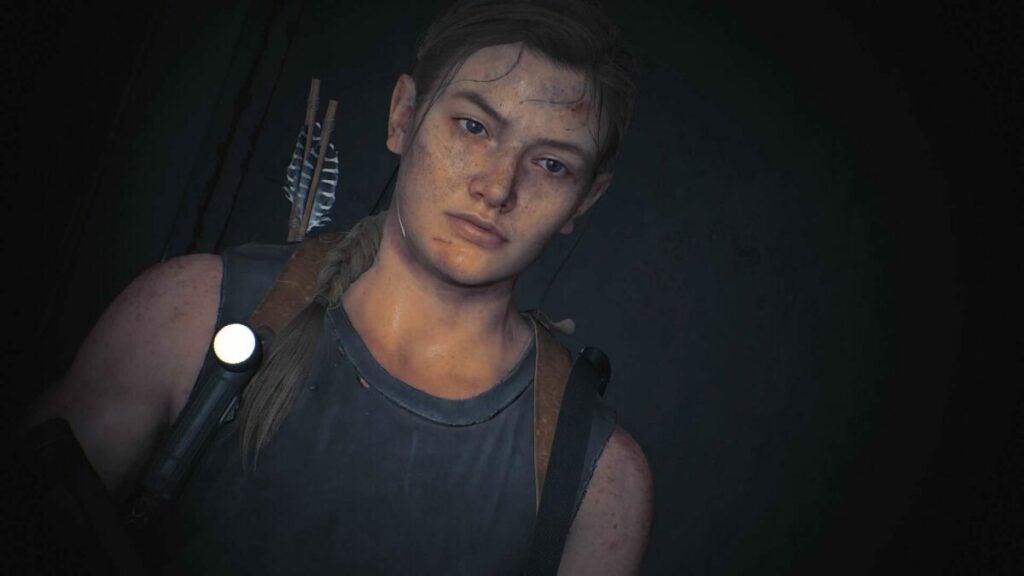
Many men are unable to accept that there are leading female characters in video games. What is this about? Thats what we answer.
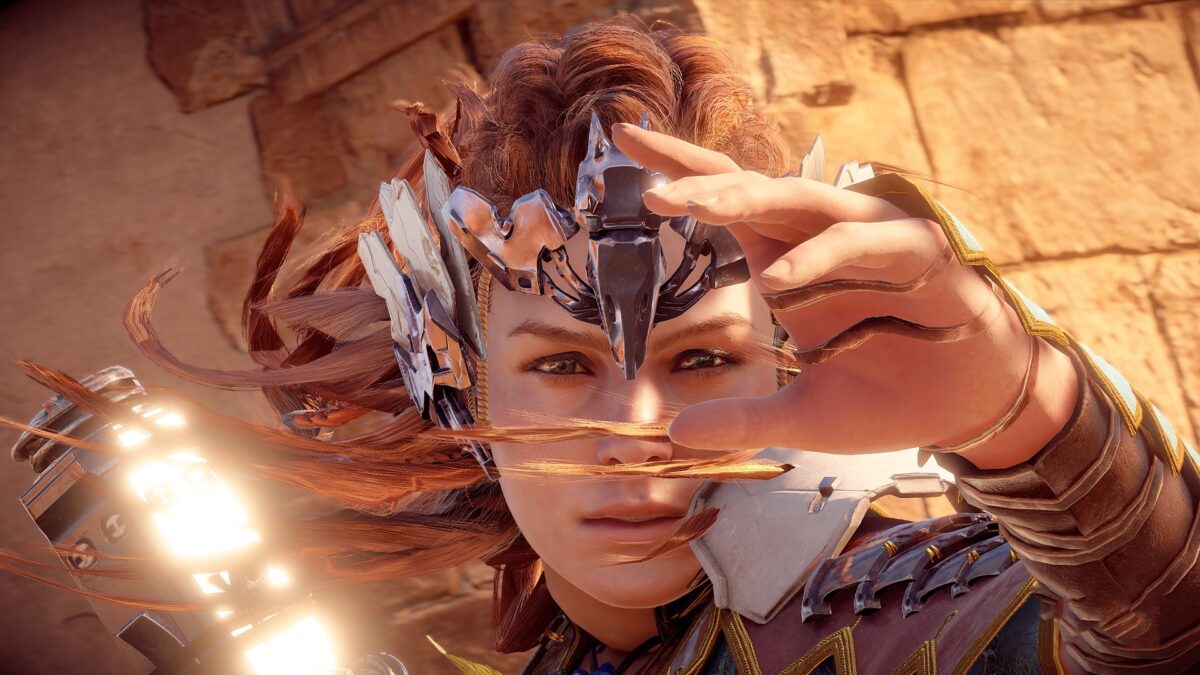
We live in a pluralistic society. That means that there are different expressions of gender, race, sexuality, ideology and culture. Different people are represented in different identities and that is good. It brings diversity. It brings richness. So it is understandable that culture has also changed over time. For example, in video games, we have more and more female protagonist characters. Women who are not just narrative excuses, prizes for protagonists, but key characters with motivations and a heroic arc just like any man’s. Even if there are many people out there who can’t accept it.
Why does this happen? This is a very interesting question. If we ask people who complain about female representation in video gaming, they will probably give us a series of arguments that we have all heard. That women don’t really play video games. That a character’s identity doesn’t matter when it comes to feeling represented. That they make all women ugly now because the feminist agenda hates female beauty. And regardless of whether these are good arguments or bad arguments, they are arguments. And to answer the question that really interests us, why is representation, female or otherwise, important to the video game and to all media, let’s answer these three arguments with as much good faith as we can muster.
Do women play video games?
The argument that women don’t play video games is not as old as many people may think. Although it is true that there has always been a certain air of suspicion towards them, it wasn’t until the mid 90s, and particularly the early 00s, that the argument that women don’t play video games became strong among gamers. Mainly because that is what was sold by the specialized press and the industry itself: video games were a boy’s thing.
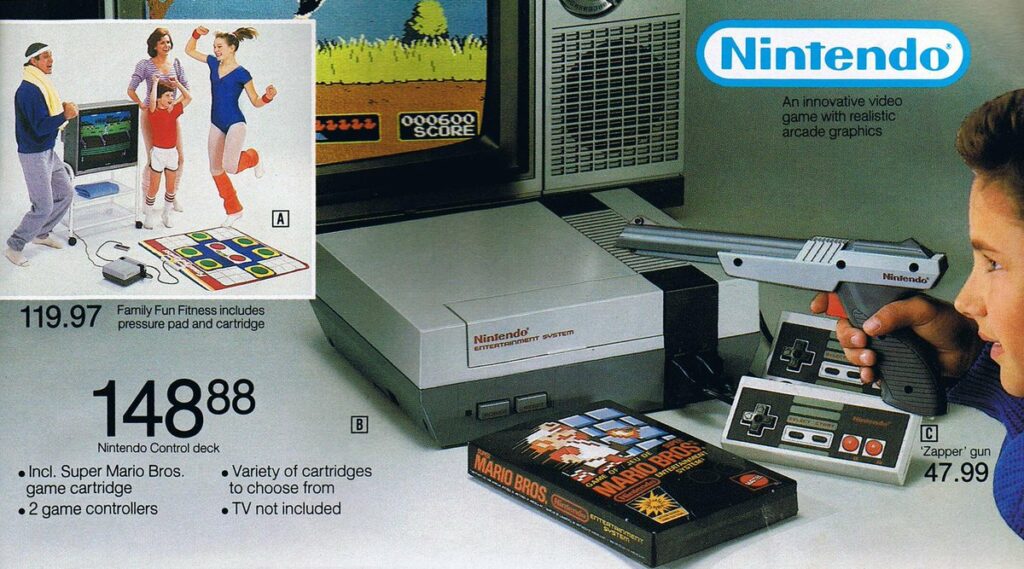
If we look at the ads up to that time, they were virtually all starring boys and girls equally. There wasn’t such a clear gender bias. The kind of games weren’t even that segmented, even games, particularly on consoles, didn’t seem to have a gender focus. F-Zero wasn’t a boy’s game. Pokémon wasn’t a girl’s game. Mega Drive was not a boy’s console. Game Boy was not a girl’s console. But the marketing and press began to shift from the PlayStation and Nintendo 64 generation onwards, focusing more and more on a genre segmentation of the market, which reached its culmination in the PlayStation 2, Game Cube and Nintendo DS generation, where it became clear that there were boys’ games and girls’ games. That the former were more valuable than the latter and that by extension, it would end up becoming that girls don’t play games. Or that what they play are not real video games.
The Sims today may be considered a “girl’s” game, but it is not as it was perceived upon its release on January 31, 2000. In the same way, girls today may be perceived as not playing video games. What the data says, however, is that the reality is quite the opposite.
According to a study by Mat Piscatella, CEO and video game industry analyst at Circana, 47% of console gamers are women, 50% of PC gamers are women and 54% of mobile gamers are women. There are as many women as men playing video games. Many men might then ask, where are these women, why are they absent, never appearing under their radar, making them believe they don’t exist? While the answer is obvious – no woman wants to be perceived as a woman when she knows that’s a reason to hate her – the following questions will help us develop it.
Is the identity of a character important when playing a video game?
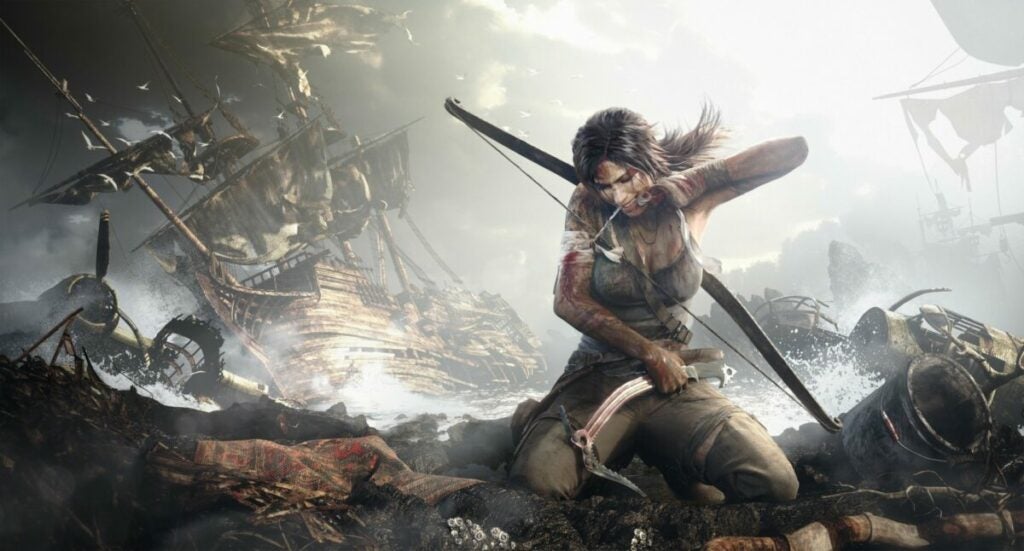
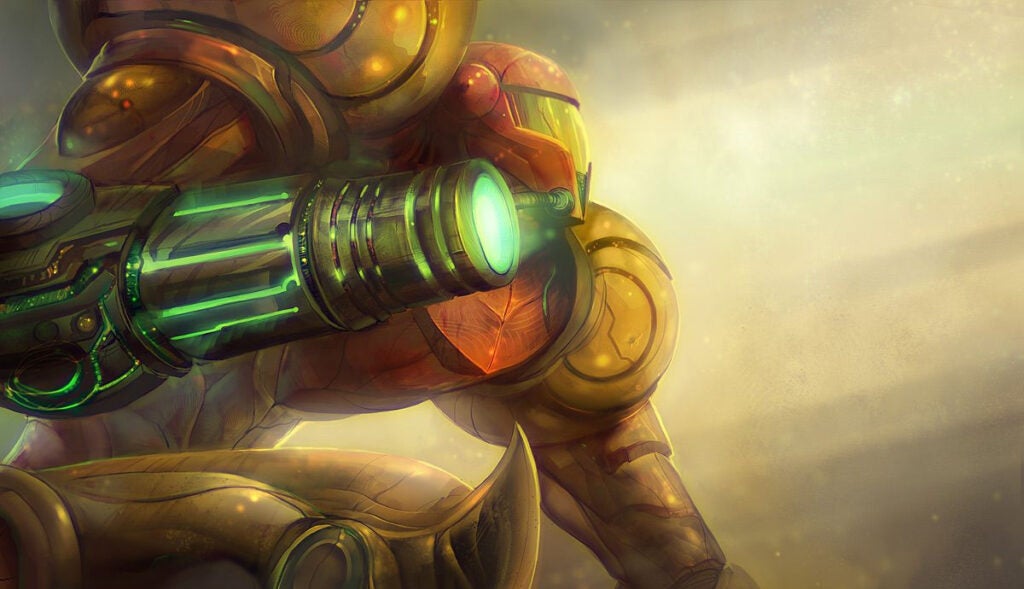
Historically, most video game protagonists have been male. When they have not been names, they have been coded with masculine traits. Aliens or monsters or entities with deep voices, relatively square in appearance and given to violence. Even when they have been female, they have shared male traits – violent, lethal and with a quip always on their lips. Lara Croft may be a great female character, but the problem is that she’s a woman coded with the traits befitting a man; she’s exactly like all the other protagonists of the era, but sexy. Where male protagonists didn’t need to be sexy and yes it is Lara’s main attribute.
That means that boys have a mirror to look into and girls don’t. Or worse, the mirror they have is broken and distorted. Or worse, the mirror they do have is broken and distorted. They have manly figures to imitate, for better or worse, and they have either passive objects to be rescued or coded male protagonists, which if imitated would be considered “unfeminine and unacceptable” behavior. In other words, since the second half of the 90s, the space of interest for women in video games has been greatly reduced.
What is the point of having female protagonists? So that girls can have mirrors in which to look at themselves. Examples they can identify with. To prove that women can be strong, funny, intelligent, cultured, good, sweet, candid, but also evil, cruel, brutal, ironic, weak, or any other positive or negative trait, as men can be. That’s what having more female protagonists is for. Or black. Or Asians. Or gay. Or trans. So that people can relate and can know that their life, what they are, is something normal, not an anomaly, where the protagonist is always a middle-aged white man with a square jaw.
Why can’t a female character be sexy?
That brings us to answer the last question, why aren’t female characters sexy by default anymore? But at this point the answer is easier by asking the reverse question, why aren’t male characters sexy by default?
If today’s female lead characters are not necessarily attractive to the average heterosexual male’s canons of beauty, it is because they are not there to be attractive. Neither have male lead characters ever been. They are there for people to project themselves onto them, to feel represented and to conceive of themselves as an ideal to aspire to. Can that ideal be one of beauty? Yes, but it doesn’t have to be. The classic hypermuscled male protagonist, unlike what many men believe, is not an ideal of beauty, but a fantasy of power. By the same token, female lead characters don’t have to be sexy. Or spectacularly beautiful. They have to be aspirational for a female audience. Something where the male perspective counts less than how women perceive it.
A protagonist character is, practically always, aspirational. That’s why they can have attributes other than physical attractiveness to create a connection with the player. If this can be understood with male characters, it is not difficult to understand why the same happens with female characters. And while it is true that we can empathize with characters regardless of gender, it is no less true that, living in a society divided by gender, it is easier to do so with those of our own identity.
Brief conclusions (or why it’s good to have female protagonists)
That’s why it’s important to understand why video games need female protagonists. They are half of the players. They need role models. They need to see themselves represented just as men do. In the same terms. It’s not hard to understand and, when you remove the veil of misunderstanding, it’s easy to see: they need that space too.
Those who are unable to understand this are people who refuse to understand anything that escapes their perception of reality. People who want to believe a very specific account of reality, where they are the heroes or the victims of some sort of conspiracy. The reality is that when there are more and more female protagonist characters and more women are declaring themselves gamers it is not because of any kind of political struggle or attempt to appropriate something that is not theirs, but because of something much simpler: because there is a group of people who want to feel represented and are willing to make an effort to achieve it. There are no conspiracies. It’s not an attempt to erase men or women as men like them. It is simply a matter of fairness. But to understand what is justice, you first have to want to listen to how others feel, not just what suits us.
Some of the links added in the article are part of affiliate campaigns and may represent benefits for Softonic.