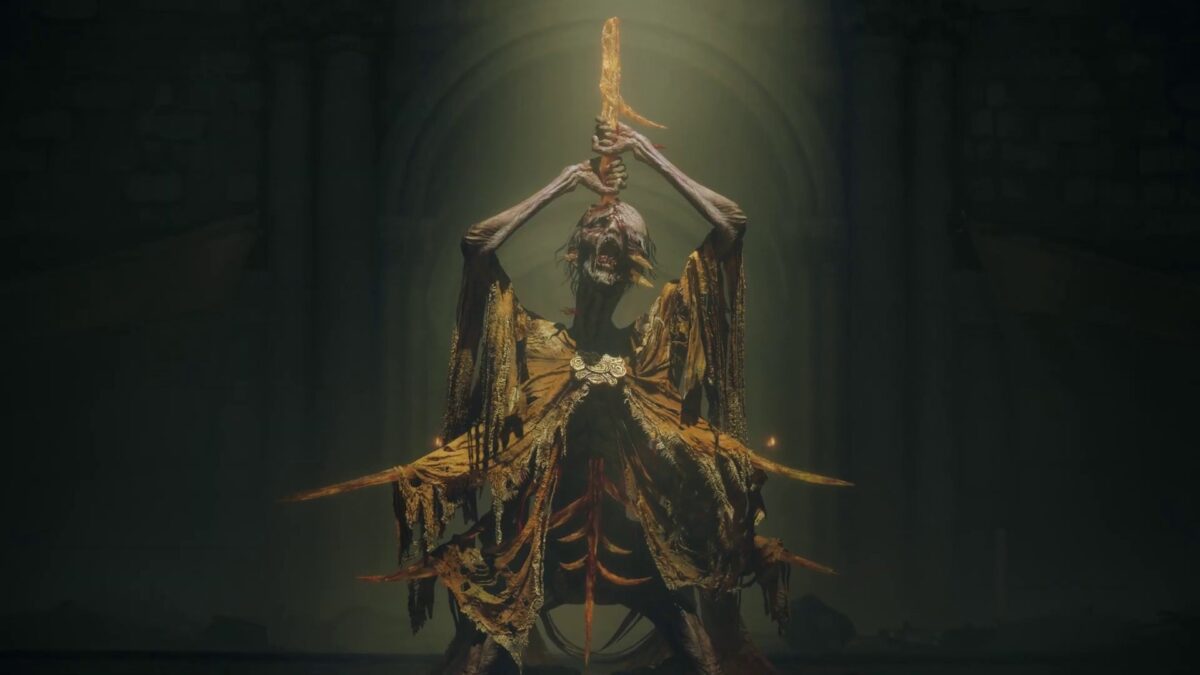
Shadow of the Erdtree will be the only DLC for Elden Ring, as confirmed by the president of From Software, but he does not rule out making a sequel in the future.
Shadow of the Erdtree, the DLC for Elden Ring, will be released on June 21st. This is generating a lot of excitement, as Elden Ring was one of the biggest games of 2022. If not the biggest. That’s why there is a tremendous curiosity about what it will contain, what things it will change, and above all, if it will be the last time we hear about the Intermediate Lands. Something that the game director and CEO of From Software has come out to clarify.
In an interview with Campfire Camp, a Chinese media outlet, Hidetaka Miyazaki has commented on the possibility of there being more DLCs for Elden Ring in the future. While the company has a history of releasing multiple DLCs for their games, it has been confirmed that this will not be one of those cases. Shadow of the Erdtree will be the only DLC that Elden Ring will receive, confirming it as the game’s only official expansion.
Does that mean this will be the last time we return to the Intermediate Lands? Not necessarily. The reason they have specified for not making more DLCs is that they have not ruled out the possibility of making a sequel to Elden Ring. This is because, due to From Software’s game development approach, they always leave the door open to making sequels to their games. This neither confirms nor denies the existence of Elden Ring 2, but it leaves the possibility hanging, if it were to happen in the future.
All of this adds up to the fact that Bandai Namco, the game’s distributor, confirmed that Elden Ring is the beginning of a franchise “that goes beyond the game itself”. So far, this has translated into an art book and figures, as well as a manga: Elden Ring: The Second of the Golden Tree. But for now, that’s all that Elden Ring has expanded beyond the game.
What we do know for sure is that, due to the success of Elden Ring and Armored Core 6, From Software is currently working on several new projects. Whether one of them is related to Elden Ring in any way, we do not know. But it is a fact that we will have new games from From Software in the years to come, with or without it. And just for that, we celebrate.
Some of the links added in the article are part of affiliate campaigns and may represent benefits for Softonic.
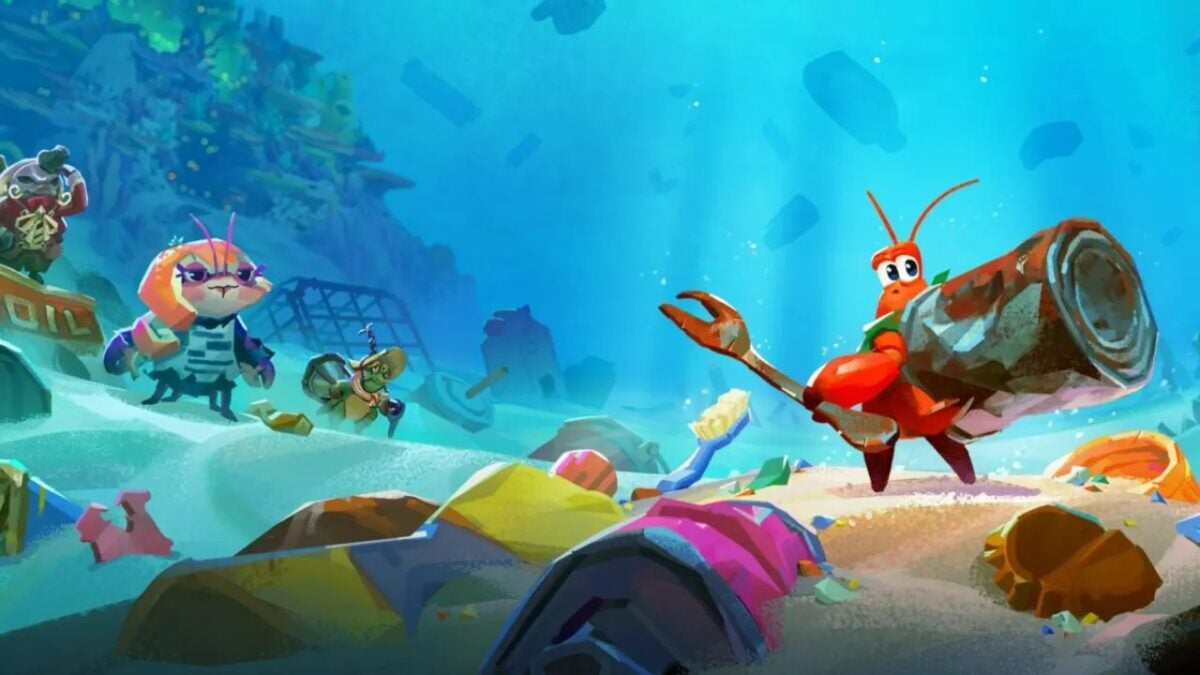
Another Crab’s Treasure is a Dark Souls-style game that invites us to step into the shoes of the most unlikely hero of the ocean: a hermit crab.
If there is a trend in the world of video games that everyone imitates, it is that of From Software. Everyone wants to make their own soulslike. The game that is like a Dark Souls, but with a little twist of their own. The reality is that it seems that no one knows how to do it gracefully. Practically all attempts so far have been disappointing, showing that From Software has something special. Unique. That, or other studios have limited themselves to copying where they should be inspired.
Because, recently, a small indie study has shown that it is possible to make a soulslike with personality and that truly feels satisfying. Not as a mere copy, but something else. Because at Aggro Crab, when they decided to make their indie soulslike, they decided to follow the path that no one had followed: that of parody.
Another Crab’s Treasure puts us in the shoes of a hermit crab, named Kril, who one day is told that he has a huge debt with the baroness who controls those lands. Because he has been unintentionally evading taxes, his house and shell are expropriated, and Kril decides to go to the ocean to discuss with the baroness the possibility of recovering his house. But between the baroness’ refusal to return his shell and the environmental pollution that is destroying and driving the other animals crazy, Kril will become the unlikely hero that the ocean needs.
One of the main charms of Another Crab’s Treasure is that it is a delightful game with a great sense of humor. It has constant wordplay, visual jokes, and a fair amount of slapstick, making it an excellent comedy game. But all of this is enhanced when we accept that, in addition, it is a parody of the Souls games. It looks at them with as much admiration as affection, not allowing itself to be trapped by their influence.
By parody here we don’t mean satire. A parody doesn’t have to be mocking; it can simply imitate what is being parodied, giving it a twist. Which is the case of Another Crab’s Treasure. A game where deranged knights attack us from so far away that it takes almost ten seconds for them to reach us. Huge shells allow us to level up or travel between them. Or in general, characters give us cryptic references and the game invites us to think about it through the environmental narrative that Dark Souls integrated so well into the collective unconscious.
In fact, Another Crab’s Treasure, at its core, is a soulslike. If you know the button configuration of any From Software game, you know the one of Another Crab’s Treasure. Instead of souls, there are microplastics, instead of bonfires, there are magical shells. But there is one thing that sets the game apart. The shells.
As Kril is a hermit crab, it doesn’t wear armor, but different shells. To protect ourselves, we will have to hide inside it, which will cause structural damage. If it suffers too much, our shell will break. In addition, each shell has its own associated magical power, which we can use by spending umami, making the selection of the shell an important strategic element. We not only want the shell with the most defense for its weight, but we also have to consider how we are going to play and what spells each one offers us.
Another thing that sets it apart from From Software games is its platforming. With many jumping sections, with a Sekiro-style grappling hook, in the game we will have to do a lot of platforming throughout its 12-15 hours. The problem is that the jumps are usually very tight and the controls are not always perfect, making some of these sections a bit more complex. Although never anything so important as to be serious.
In addition, this is a game by Aggro Crab. An indie studio of 12 people. It is normal for it not to have the same finesse as a game by From Software, a studio of 288 people with 28 years of experience. Its small control frictions and slightly crazy jumps are a logical price to pay for the wonderfulness of the rest of the game.
Because Another Crab’s Treasure can say something that most soulslikes can’t: it has personality. It wants to talk about capitalism, the environment, what it means to have a home. It wants to have a dark touch, but it wants to be a cute, fun, and funny game; sometimes even with a quite dark humor, reminiscent of Monty Python. Because it’s not just another attempt to be Dark Souls. It’s something else. And something that any Souls fan, who wants a true twist on the concept, should try.
Another Crab’s Treasure is available for Nintendo Switch, PlayStation 5, Xbox One, Xbox Series X, Xbox Series S, Xbox Cloud Gaming, PC, and GamePass. And it is the perfect game to alleviate the wait until the arrival of the Elden Ring expansion.
Some of the links added in the article are part of affiliate campaigns and may represent benefits for Softonic.
The best soulslike of the year has confirmed that it will have a sequel, DLC and a new balancing patch, thus securing its throne
For years, it seemed impossible to create a soulslike game capable of rivaling From Software’s titles. Not without reason. The excellence achieved by the Japanese studio in defining and shaping the genre made all its imitators appear to be just that: imitators. It didn’t feel like anyone was bringing something new to the table or doing their own thing. At least, until Neowiz Games came along to shake things up.
Lies of P has been a sales success, receiving notable acclaim from critics, and it doesn’t seem like the buzz will die down anytime soon. This is according to the game’s director, Ji Won Choi, in a video where he discussed the franchise’s future.
The most important points revealed are that, due to its success, we can expect Lies of P to have a sequel at some point in the future. Although no specific release date was given, he mentioned that they are already working on it. Additionally, he confirmed that they are simultaneously working on a new balance patch and a DLC for Lies of P, about which he could provide a bit more information.
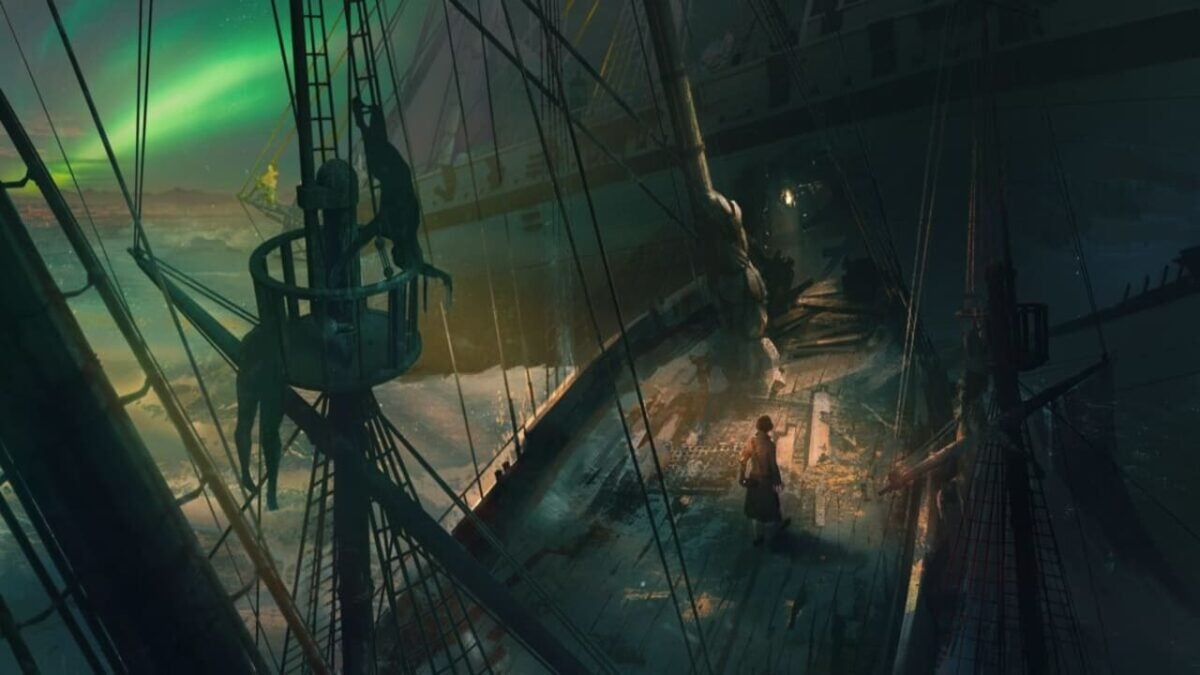
Regarding the balance patch, he has mentioned that it is expected to arrive during this month of November, and they have focused on listening to player feedback. They will continue refining the difficulty of the early moments of the game, adjusting the difficulty of some enemies, and unlocking certain abilities for players to start with. As for the DLC, Choi has shared two images, featuring a large water turbine and two stranded ships, which will be part of the DLC content.
Lies of P was released on September 14th and has sold around one million copies in just a month. It is available on PC, PlayStation 4, PlayStation 5, Xbox One, Xbox Series S, Xbox Series X, and Game Pass.
Armored Core VI: Fires of Rubicon is an excellent game, but it’s also a game that can be difficult, so here are some tips.
While summer usually isn’t the best time of year for video games, this year is an honorable exception. Due to delays, the avoidance of competing with other major titles, and specific decisions from certain big studios, we have a very eventful August full of announcements that would typically have occurred between February and April or between September and November. That’s why it’s impossible for anyone not to have something to sink their teeth into during the holidays. Even if what excites them are giant robots.
The latest from From Software, the creators of Dark Souls and Elden Ring, is a mecha game. For the uninitiated, that means giant piloted robots. Although calling it new is a bit misleading. Armored Core is a franchise that has been around since the first PlayStation era and is revered as one of the deepest when it comes to customizing these giant robots. That’s why, at first glance, it might seem intimidating. But it doesn’t have to be! Not if you have our help.
That’s why we’re going to provide you with five tips to make sure the game doesn’t give you a hard time. Because while it’s true that Armored Core VI: Fires of Rubicon is a rather unique game with a rich history, it’s not necessarily a difficult game. You just need to learn to speak its language. And we’re going to show you how to do it.
The thruster is your best friend
You’re piloting a several-ton machine. Moreover, it doesn’t have wheels; it has legs. That means its movement is slow and very, very heavy. If you try to move like in a shooter game, using the left stick to achieve agile and smooth movement, you’ll die constantly. The first thing you need to learn is that if mechs have thrusters on their back, it’s meant to be used. To be used constantly. What do we mean by “constantly”? Literally every second of gameplay. That’s why we’ll provide you with a summary of each and every one of them.
Just remember one thing: all of this consumes EN (and you won’t be able to do it if you don’t have EN), unless we say otherwise. The EN bar recharges when we are on the ground and not using any ability that consumes EN.
Vertical Thruster (Hold A/X Button): Similar to jumping, but by holding it, you stay in the air for a certain amount of time. Necessary to avoid the blast radius of missile explosions and to move in the air to engage airborne enemies in melee attacks.
Quick Thruster (Press X/Square Button and a direction): Perform a quick dodge, highly useful for evading melee strikes and projectiles.
Assault Thruster (Press Left Stick): Propel forward rapidly. This not only makes you move much faster but also catches your enemies off guard, quickly positions you, and deals more damage—essential if you want to engage in close combat or land a shotgun blast.
Movement Thrust (Press B/Circle Button): Your mech activates the thrusters to move instead of its mechanical steps. This significantly increases your speed and doesn’t consume EN. Always activate movement thrust to navigate the environment and stay mobile in combat while you recharge the EN bar. You don’t want to be dodging bullets with a robot limited to leg movement speed.
Don’t skip the tutorials
You might think that you’ve played enough action games in your life to never need another tutorial again. Well, you’re mistaken. Unless you’re a veteran of the series, you need the tutorials because Armored Core operates on its own terms. Its customization system is quite complex, and when you add to that an equally complex mechanical system, learning it takes a more than reasonable amount of time.
After all, it’s not just about learning the specifics of each limb controlling a weapon or the different types of propulsion. It’s also about understanding the different configurations, weapons, radars, and heads. Even the fact that this is a game where movement is 100% in 3D. If you don’t learn to fly and control the amount of EN you have left, don’t expect to get any platinum medals. Let alone defeat any bosses. That’s why you shouldn’t skip the tutorials — don’t say we didn’t warn you.
We understand that in other games, legs might not be something you even consider, but seriously, we’re not joking: legs are important in Armored Core. So much so that your mech’s gameplay style will completely change based on the type of legs you equip. Bipedal legs are all-around, capable of doing a bit of everything without excelling in any particular aspect. Inverted limbs are excellent for quickly transitioning between ground and aerial combat, making them outstanding targets that are hard for distant foes to hit. Quadrupedal legs allow for extended periods of floating, turning into mini battle stations. Tank legs allow you to carry much more weight and heavier equipment, turning them into walking fortresses of cataclysmic power.
What are the best legs? It depends on the mission’s requirements and your play style. When in doubt, bipedal mechs will always get the job done gracefully. But a well-configured specialized mech will easily accomplish what a biped might struggle to achieve.
Save your settings
Armored Core is a game that, from its origins, has been based on spending more time designing mechs than using them in combat. And that’s perfectly fine—it’s part of the charm. Therefore, please, save every mech design you create. You have 100 save slots, so running out of space is unlikely. Save every mech configuration that has helped you overcome a particular mission, because it’s almost certain that it will come in handy in the future. That’s the essence of the game—constantly switching between mechs and configurations. Don’t be afraid to change. The beauty of this game lies in adapting your mech to suit each mission. The idea of getting attached to a single build and never changing it is reserved for games from other companies, not From Software.
Auto-lock is what keeps you alive
This may sound sacrilegious to anyone who is not a veteran of the franchise —for the veterans, not so much because, well: they’re used to entries where manual aiming doesn’t even exist as such—, but you’re going to have to put your gamer pride aside. Auto-lock is going to save your life in practically every situation.
You can choose not to use it. We understand that if you come from Souls or Elden Ring, and you’ve spent many hours, you’ve already gotten used to not using it, but Armored Core is a different beast. Manual control is much more delicate and complex, highly dependent on the particular parts of your mech. That’s why you should take advantage of the auto-lock feature, which you can use by clicking the right stick. You’ll have plenty of time to switch to manual aiming once you get used to the wonders of this fascinating game.