The Splatterhouse video game series, known for its gothic horror approach, has taken an unexpected turn with the discovery of a playable ROM of an unreleased title: Splatterhouse: World. Originally scheduled for release in 1993 for the Famicom, this dark JRPG was finally presented to the public in October 2023, placing special emphasis on its rarity within the genre. A particularly unique spinoff This title, which combines JRPG mechanics with terrifying elements, sparks the interest of fans due to the scarcity of horror-themed role-playing games at that time, being Capcom’s […]
The Splatterhouse video game series, known for its gothic horror approach, has taken an unexpected turn with the discovery of a playable ROM of an unreleased title: Splatterhouse: World. Originally scheduled for release in 1993 for the Famicom, this dark JRPG was finally presented to the public in October 2023, placing special emphasis on its rarity within the genre.
A very particular spinoff
This title, which combines JRPG mechanics with terrifying elements, piques the interest of fans due to the scarcity of horror-themed role-playing games at that time, with Capcom’s Sweet Home being one of the few notable examples. The story behind Splatterhouse: World is intriguing, as a promotional video that circulated among retailers in 1992 indicated that the game was very close to its official release, but it was canceled for reasons still unknown.
The release of the ROM on October 31 was a turning point for fans, who quickly mobilized to translate the game into English. This task was carried out by the Aeon Genesis group, allowing non-Japanese players to now enjoy this piece of video game history. The translation, completed in record time after the release of the ROM, has generated a stir in the Splatterhouse fan community.
Despite the fact that the series has fallen somewhat into obscurity, its legacy remains alive thanks to a small but dedicated community of fans. These enthusiasts not only value the game’s story, but also strive to revive the franchise as much as possible. It tells a context in which Splatterhouse: World, despite its unknown trajectory, has found a way into modern life.
Since its release in 1995, Mortal Kombat 3 was considered a good title within the fighting genre, but it failed to capture the spirit that had made the saga famous. The removal of iconic characters like Raiden and Johnny Cage, along with the introduction of new fighters considered clichéd, left many fans disappointed. Acknowledging its shortcomings, Midway released Ultimate Mortal Kombat 3 just six months later, bringing back emblematic characters like Scorpion and adding a wealth of secrets and content that was well received by players. A very peculiar version of Mortal Kombat 3 An aspect less […]
Since its release in 1995, Mortal Kombat 3 was considered a good title within the fighting genre, but it failed to capture the spirit that had made the saga famous. The removal of iconic characters like Raiden and Johnny Cage, along with the introduction of new fighters considered clichéd, left many fans disappointed. Acknowledging its shortcomings, Midway released Ultimate Mortal Kombat 3 just six months later, bringing back iconic characters like Scorpion and adding a wealth of secrets and content that was well received by players.
A very peculiar version of Mortal Kombat 3
A lesser-known aspect of this story is the Ultimate Mortal Kombat 3 WaveNet version, which incorporated online gaming technology through a dedicated system called WaveNet. This technology, although advanced for its time, was only used in a limited number of arcades in Chicago and San Francisco, allowing approximately 500 people to experience what could be considered the precursor to modern online gaming. This version was thought to be lost in the history of video games, but it is mentioned that Midway preserved its existence as the saga evolved towards new technological directions.
Recently, Digital Eclipse, known for restoring and revitalizing classics of the fighting genre, announced that it plans to revive Ultimate Mortal Kombat 3 WaveNet, in addition to enabling online gameplay with modern adjustments. This initiative not only seeks to honor the legacy of the game but also to adapt it to the current reality, where online gaming is essential in the competition of fighting video games.
Despite the fact that some players prefer the experience of original arcade machines, the evolution of the digital realm suggests that the arrival of restored versions, including the WaveNet system, can add a new level of accessibility and competitiveness to the beloved Mortal Kombat saga.
Nightdive Studios has surprised the gaming community with the release of remasters for two classics from the 90s: Heretic and Hexen. These improvements make both titles not only have sharper graphics but also offer optimized gameplay to modern standards, allowing play at 120 fps and with widescreen support. Two games that needed a good facelift Heretic, originally released in 1994 by Raven Software, is a title that combines action and fantasy, offering levels with more sophisticated architectural design compared to its contemporary, Doom. The remaster updates its […]
Nightdive Studios has surprised the gaming community with the release of remasters for two classics from the 90s: Heretic and Hexen. These enhancements make both titles not only have sharper graphics but also offer gameplay optimized to modern standards, allowing play at 120 fps and with widescreen support.
Two games that needed a good facelift
Heretic, originally released in 1994 by Raven Software, is a title that combines action and fantasy, offering levels with a more sophisticated architectural design compared to its contemporary, Doom. The remaster updates its gameplay, enhancing iconic areas like The Guard Tower and The Citadel, which has led some players to reevaluate its legacy. Although it did not fully capture attention at its launch, many agree that this new version stands out for providing a more cohesive and engaging approach to level design.
On the other hand, Hexen, which followed Heretic in 1995, features a hub-based level structure, resulting in a more diverse gameplay experience, although it has been criticized for its confusing navigation. Nightdive has implemented significant changes that facilitate exploration, improving the game map and adding indicators that clarify missions and objectives. Although it remains a title with some limitations, the remastering makes it more accessible and enjoyable for current players.
Although both games were not the favorites in their time, the combination of Heretic and Hexen in this remastered package offers an appealing opportunity to revive two classic pieces from the past of video games with a fresh and contemporary approach. Nightdive Studios moves away from mere cosmetic work, focusing on gameplay and user experience.
Veteran programmer Koji Sugimoto, known for his work on iconic titles like Chrono Trigger and Final Fantasy X, has expressed his discontent with the recent trend in modern video games that seeks to emulate the visual errors of the PlayStation 1 era. Sugimoto believes that this practice, fueled by the release of a new tool by Unity Japan that makes it easier for developers to replicate the characteristic texture distortion of the PS1 hardware, is unnecessary and goes against his work as a developer. There are no longer limitations, why imitate them? In a comment reacting to […]
The veteran programmer Koji Sugimoto, known for his work on iconic titles such as Chrono Trigger and Final Fantasy X, has expressed his discontent with the recent trend in modern video games that seeks to emulate the visual errors of the PlayStation 1 era. Sugimoto believes that this practice, fueled by the release of a new tool by Unity Japan, which makes it easier for developers to replicate the characteristic texture distortion of the PS1 hardware, is unnecessary and goes against his work as a developer.
There are no limitations anymore, why imitate them?
In a comment reacting to a tweet from Unity Japan, Sugimoto reflected on the hard work he and his team dedicated to avoiding texture distortion, something that is now glorified as a “charming” aspect of retro video games. “Back then, we put in exhausting effort to avoid this distortion, only for it to be considered a character trait today,” Sugimoto stated, emphasizing his bewilderment at this current appreciation.
The criticism is not new; as early as 2019, Sugimoto had described the trend of intentionally replicating such imperfections as “detestable,” arguing that he had spent hours of work struggling against the problem. Despite his frustration, the interest in visual defects evokes a broader debate about the value of imperfections in digital media.
The renowned musician and composer Brian Eno has also addressed this phenomenon. In his book A Year With Swollen Appendices, he argues that elements that now seem strange or ugly in a new medium, such as CD distortion or 8-bit sound, will eventually be valued and emulated over time. This trend reflects a nostalgic look at the aesthetics of the past, which continues to influence the artistic direction of contemporary video games.
The Stop Killing Games initiative has garnered over a million signatures in Europe, a significant effort to defend online video games that become unplayable once developers stop providing support. The movement, which opposes planned obsolescence practices, has found a strong public response, although it has been dismissed by the lobbying group Video Games Europe, which considers the initiative to be “disproportionate.” Warner Bros. and Microsoft are among those fighting against its advancement. In a recent statement, Video Games Europe, which represents major publishers like Warner Bros. and Microsoft, questioned […]
The Stop Killing Games initiative has garnered over a million signatures in Europe, a significant effort to defend online video games that become unplayable once developers stop providing support. The movement, which opposes planned obsolescence practices, has found a strong public response, although it has been dismissed by the lobbying group Video Games Europe, which considers the initiative to be “disproportionate”.
Warner Bros. and Microsoft among those fighting to prevent it from moving forward
In a recent statement, Video Games Europe, which represents major publishers like Warner Bros. and Microsoft, questioned the legal objectives of the promoters of Stop Killing Games. The group argues that the lawsuits, which include maintaining online services indefinitely and allowing private servers, would be detrimental to the video game industry. “Requiring companies to maintain online services beyond their commercial viability would create a deterrent effect on game design,” they stated.
The movement, although lacking clarity in certain areas, has resonated with many players who feel they acquire products that become unusable when the company withdraws support. On its FAQ page, Stop Killing Games states that it seeks to keep the demand simple to avoid misunderstandings. However, Video Games Europe believes that this vagueness could hinder the interpretation of the proposal and that the initiative as a whole lacks solid foundations.
Despite the resistance from Video Games Europe, the public response has been largely positive towards the initiative. Comments on social media have been critical of the organization’s stance, highlighting support for the cause. Stop Killing Games aims to continue collecting signatures, warning that there is a possibility that a significant portion of those that have reached a million may not be authentic, which could affect the legitimacy of the movement.
The entertainment and video game platform Steam has excited retro fans with the release of 3dSen, an innovative emulator that allows playing NES titles in 3D. This emulator, which has been in early access for five years, is characterized by its ability to create custom profiles for each game, allowing it to transform 2D graphics into 3D for a unique visual experience. Currently, 3dSen supports 100 NES games, including classics like Contra, Super Mario Bros, Castlevania, and Gradius. A new way to play the classics In addition to its 3D conversion, 3dSen includes […]
The entertainment and video game platform Steam has excited retro fans with the release of 3dSen, an innovative emulator that allows playing NES titles in 3D. This emulator, which has been in early access for five years, is characterized by its ability to create custom profiles for each game, allowing it to transform 2D graphics into 3D for a unique visual experience. Currently, 3dSen supports 100 NES games, including classics like Contra, Super Mario Bros, Castlevania, and Gradius.
A new way to play the classics
In addition to its 3D conversion, 3dSen includes modern features that enhance gameplay, such as quick saving, rewind, and fast forward. These tools are especially useful for players who want to complete time-consuming sections of games, such as some levels of Final Fantasy. The combination of nostalgia and technology makes this emulator stand out among its competitors.
3dSen was the first emulator to be sold on Steam, with prices of $9 USD for the standard version and $15 USD for the VR version, which also includes the standard version. VR compatibility allows players to enjoy titles like Duck Hunt and Punch-Out!! using motion controls; however, this option is more expensive and may not be accessible to all users.
It is important to highlight that the use of emulators like 3dSen is not illegal, as long as players provide their own ROMs. This offers relief to users concerned about potential legal implications, especially as the rise of emulators on official platforms like Steam is observed. With the modernization of classics in this format, players can rediscover their favorite childhood games in a completely new and exciting way.
La preservación de los videojuegos se ha convertido en un tema crucial para los fanáticos, especialmente al considerar que muchos títulos clásicos no están disponibles para los jugadores. En este contexto, SEGA ha tomado una decisión significativa de descontinuar su iniciativa SEGA Forever, lanzada en 2017, que ofrecía una colección de … Continúa leyendo “”
The preservation of video games has become a crucial topic for fans, especially considering that many classic titles are currently not available to players. In this context, SEGA has made a significant decision to discontinue its SEGA Forever initiative, launched in 2017, which offered a collection of retro games on mobile devices. As of 2023, only nine classic titles remain that will soon disappear from download platforms.
A decision that can be patched, if you hurry
In light of this imminent disappearance, SEGA has decided to give away these nine classic games, providing players the opportunity to download them for free before they are removed from the Play Store and the App Store. To obtain these games, users must search for and download each title individually. Once installed, the games will be available to play offline, even after they have been removed from the digital stores.
It is important to highlight that, although SEGA has removed microtransactions from these games, they will continue to include advertisements until their definitive removal. Therefore, players who venture to download these classics should prepare to encounter ads during their gaming experience. However, the possibility of holding a part of SEGA’s history in the palm of their hand is a considerable attraction.
With the imminent disappearance of these titles, interested parties are advised to act quickly. Although no exact date has been specified for their removal, notices in the games warn that their elimination is imminent. This gesture from SEGA highlights the importance of video game preservation, an aspect that still requires greater commitment from companies in the sector.
Although the first digital camera in history became operational in 1973 (for six years it took more than 300,000 images of the Earth while orbiting in a space shuttle), the first one that was small enough to fit in our pocket arrived in the mid-80s: it could take up to 10 photos, which were stored on a 2-megabyte memory card, and the quality was rather questionable. In any case, these early models were not designed for the everyday consumer, because after all, no one had a computer in their […]
Although the first digital camera in history came into operation in 1973 (for six years it took more than 300,000 images of the Earth while orbiting in a space shuttle), the first one that was small enough to fit in our pocket arrived in the mid-80s: it could take up to 10 photos, which were stored on a 2-megabyte memory card, and the quality was rather questionable. In any case, these early models were not designed for the everyday consumer, because after all, no one had a computer at home. It had to be Nintendo, of course, to show us the way.
Say “Nintendo!”
On February 21, 1998, thousands of Japanese children watched the future unfold on their Game Boy with a gadget that now seems like a relic of the past but at that time was the height of modernity: a camera that attached to the cartridge slot of the console and allowed you to take black and white photos with a resolution of 128 pixels by 128 pixels. But the important thing was not the photos themselves, but what you could do with them.
You could not only take photos, but you could also add all kinds of stickers, use filters (of the time, of course, nothing like Instagram. Think more along the lines of visual tricks) and even draw on them. Additionally, you could create your own animations by combining several photos, play, using your face, the four mini-games that came with the cartridge, and even, oh surprise, print the images.
Think that, back then, if you wanted a photograph in your hand, and unless you already had an expensive digital camera, you had to take the film to be developed and come back a few days later, only to find out that half of the photos turned out poorly. With the Game Boy Camera, all you needed was to buy an additional Game Boy Printer (along with the necessary thermal photo paper), six batteries, and enjoy. Because, in addition to being able to print your photos, you could stick them around! For a ten-year-old, you won’t find many greater joys.
Send a photopixel
The Game Boy Camera was more than just a fad. In fact, even in Japan they were able to use the external disk 64DD to create animated 3D avatars of themselves based on photos from the camera. I won’t lie to you: they weren’t very good, but back then they were the Sistine Chapel of fun. These avatars could later be included as avatars in games like SimCity 64, and modified with Mario Artist. Not bad at all.
It was so popular that, when Game Boy Advance was released, they decided it couldn’t come out alone, and they planned the GameEye, which could take color photos and even had a dedicated game for it on GameCube, Stage Debut. In the end, by that time, real digital cameras were taking over the rest of the market, and they decided to cancel it before it flopped. However, Game Boy Camera has been very present in history, with hundreds of artists using it to create their works.
It is no coincidence that the Game Boy Camera is considered the first contact for an entire generation with digital editing, file transfer, and even the possibilities that the future opened up before us. Some artists who continue to use the add-on along with the Game Boy Printer for their projects are Jim Lockey and Jean-Jacques Calbayrac, who have found a vein in that unique and distinctive tone evoked by black and white pixels.
In the end, Nintendo DSi and Nintendo 3DS already came with a built-in camera showing that, deep down, nothing has been invented and by the late 90s we already had everything in a small device that was as excessively expensive as it was incredibly fascinating. And if you had one, you know exactly what I mean. Oh, by the way! If reading this has made you curious about selling yours or buying another, don’t forget to check what saved photos might be there, because current buyers have encountered all kinds of craziness. Yes, exactly what you’re thinking. Yikes.
In the world of video games, few things generate as much excitement as the word free. Currently, PC players have the opportunity to download and enjoy Furi Demake: The Chain, an 8-bit reinterpretation of the first boss from the acclaimed title Furi. This demake, which offers a warm nostalgic experience, is available for free on Steam until June 23, and can be completed in about 30 minutes. A visually simpler version, but not gameplay-wise Developed with careful pixel art and accompanied by a brief but effective soundtrack, Furi Demake: The […]
In the world of video games, few things generate as much excitement as the word free. Currently, PC players have the opportunity to download and enjoy Furi Demake: The Chain, an 8-bit reinterpretation of the first boss from the acclaimed title Furi. This demake, which offers a warm nostalgic experience, is available for free on Steam until June 23, and can be completed in approximately 30 minutes.
A visually simpler version, but not gameplay-wise
Developed with careful pixel art and accompanied by a brief but effective soundtrack, Furi Demake: The Chain pays homage to the original game while providing a fresh and light approach. However, the developers have announced that, after the deadline of June 23, the game will adopt a paid model. The decision is based on the need to increase its visibility by participating in more events and festivals within the Steam platform.
The price of the game after the indicated date is expected to be affordable, likely around one euro. According to the creators, this change will allow them to enroll the game in additional events, apply discounts, and increase its reach to a broader audience. “The game has not had much visibility since its launch, and we want as many players as possible to have the opportunity to try it,” they stated. Additionally, measuring interest in this version will help them consider adding more content in the future, including new bosses, a prospect that excites fans of the original game.
This strategy aims not only to attract more players, but also to foster the growth of a community around Furi Demake, which could result in future updates and expanded content for enthusiasts of retro titles.
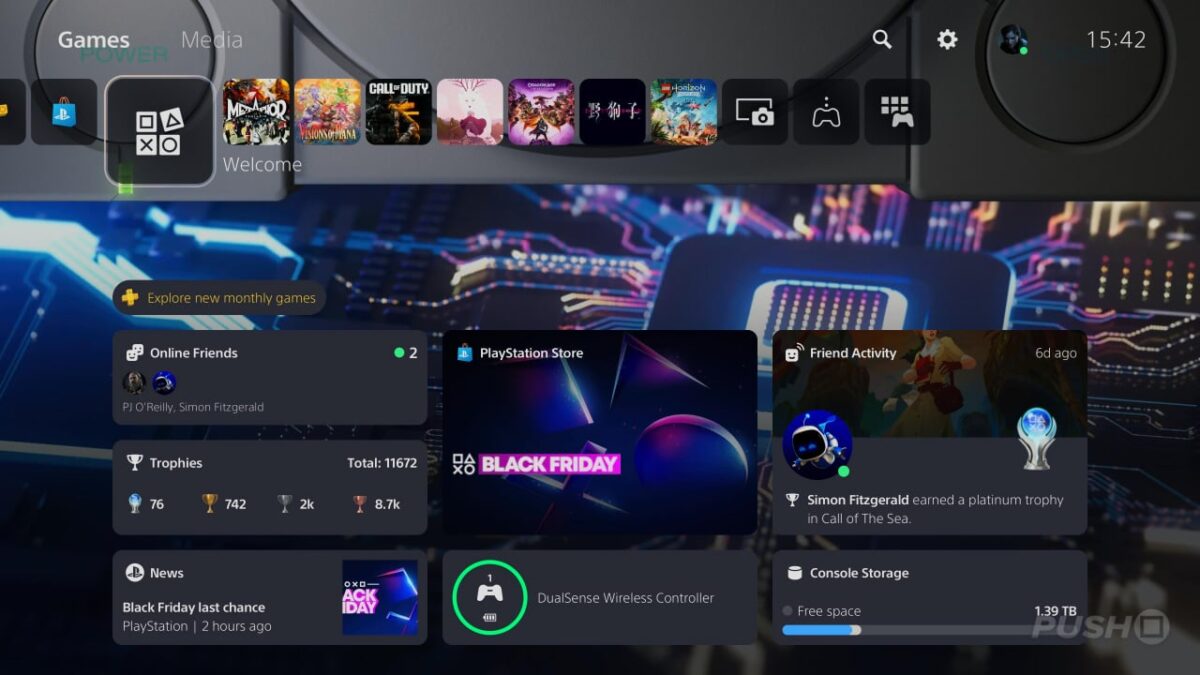
Sony has decided to restore the wallpapers, sounds, and boot videos from its previous consoles on the PlayStation 5, after having removed them in December 2022. This decision responds to user requests, who expressed their dissatisfaction with the removal of these nostalgic elements, which are an important part of PlayStation’s history. Customization options that should not have been removed Since the Japanese company celebrated its 30 years in the market, fans of the saga had enjoyed this functionality, which included customization options inspired by the first PlayStation, PS2, PS3, and […]
Sony has decided to restore the wallpapers, sounds, and boot videos from its previous consoles on the PlayStation 5, after having removed them in December 2022. This decision responds to user requests, who expressed their dissatisfaction with the removal of these nostalgic elements, which are an important part of PlayStation’s history.
Customization options that shouldn’t have gone away
Since the Japanese company celebrated its 30th anniversary in the market, fans of the saga had enjoyed this feature, which included customization options inspired by the first PlayStation, PS2, PS3, and PS4. However, at the end of last year, Sony made the controversial decision to delete this content, generating a strong reaction among the gaming community.
The restoration has been received as a recognition towards the players, as the reinstated elements hold a high sentimental value. Despite the initial excuse that the removal was a move related to the celebration of their anniversary, it is now clear that the effective and ongoing demand from users has influenced the return of these features.
It is worth mentioning that the decision to reintroduce the content took several months, which has raised speculations about the reasons behind this delay. Some wonder if the delay was due to technical limitations, or if it was a deliberate strategy by Sony to generate more interest and dialogue among its user base. However, the company has finally rectified, acknowledging the weight of nostalgia that these elements bring with them.
Users can now activate the new themes through the Home menu on the PS5, adjusting the appearance and sounds from the System option. This way, players have the opportunity to relive iconic moments in their gaming experience, choosing their preferred startup and design, which is a much-appreciated gesture in the competitive world of video games.