This weekend has been very busy in the world of artificial intelligence, although to be fair, every day since 2022 AI has been making headlines, news, and reports. And today’s is a powerful one, as Elon Musk is reportedly working on a super-powerful and secret AI image generator. Grok, the AI of X, had a new image generator, at least for a few hours this weekend, when some X users stumbled upon Aurora, a photorealistic image generator apparently developed to operate within the social network. Fortunately for […]
This weekend has been very busy in the world of artificial intelligence, although to be fair, every day since 2022 AI has been making headlines, news, and reports. And today’s is a powerful one, as Elon Musk is reportedly working on a super powerful and secret AI image generator.
Subscribe to the Softonic newsletter and get the latest in tech, gaming, entertainment and deals right in your inbox.
Grok, the AI of X, had a new image generator, at least for a few hours this weekend, when some X users stumbled upon Aurora, a photorealistic image generator apparently developed to operate within the social network.
Luckily for those who discovered it, Aurora offered fun to users for a while… before disappearing as quickly as it arrived, which makes us suspect it was either an error by X or a good marketing campaign.
Muy impresionante Aurora, la función hiperrealista de Grok para generar imágenes por IA con rostros conocidos pic.twitter.com/cdq9eYAVuq
The brief appearance of Aurora represented a significant improvement compared to the current Flux AI image creator. One thing they have in common is that, judging by what has been shared online, they do not take copyright and trademark rules too seriously.
It is still unclear if the lawyers have asked users to remove the images of Mario they post, as happened with Flux. That said, even the most impressive images featured the usual peculiarities, subtle or not, of AI creation, such as strangely long or short limbs and poreless faces. The only thing it apparently wouldn’t show is nudity.
Just the beta version, but it will improve very fast
Musk’s response to the unexpected and temporary launch of Aurora? A message downplaying it: “It’s just the beta version, but it will improve very quickly,” he posted in response to a fan’s praise of the model.
That comment suggests that the development of Aurora is far from over, and that this small test was probably an unpolished preview of what is to come.
For a model that is not ready for full release, it is still quite obvious that X wants Aurora to compete with DALL-E and other AI image models. The goal is likely to keep X users willing to pay for premium services like Grok with the help of high-quality AI images.
Aurora would fit perfectly with other moves made by Musk for X to expand access to Grok with a new free tier offering limited access to the AI chatbot. We will see when this new tool, as interesting as it is dangerous, officially arrives.
We have talked a lot about Sora in this magazine, and for good reason. The tool that converts text into video from OpenAI is one of the major concerns for Hollywood and journalism. Its progress seems unstoppable, and today we have discovered that the new update makes it almost infallible. OpenAI has launched a new version of its text-to-video AI model, Sora, for ChatGPT Plus and Pro users, marking another step in its expansion towards multimodal AI technologies. The original Sora model, introduced earlier this year, […]
We’ve talked a lot about Sora in this magazine, and for good reason. The tool that converts text into video from OpenAi is one of the major concerns of Hollywood and journalism. Its progress seems unstoppable, and today we have discovered that the new update makes it almost infallible.
Subscribe to the Softonic Newsletter and receive the latest news in tech, games, entertainment in your inbox
OpenAI has launched a new version of its text-to-video AI model, Sora, for ChatGPT Plus and Pro users, marking another step in its expansion into multimodal AI technologies.
The original Sora model, presented earlier this year, was restricted to safety testers in the preliminary research phase, which limited its availability.
Increasingly difficult to trust our eyes and a regulation to track content
The new version Sora Turbo offers significantly superior performance compared to its predecessor, claims OpenAI in a blog post.
This move positions OpenAI to compete with similar offerings from rivals like Meta, Google, and Stability AI. However, both Google and Meta were ahead of OpenAI in making their models publicly reviewable, even though Sora was first introduced in discussions back in February.
Integration remains a work in progress, although OpenAI is expected to eventually provide data integration for Sora comparable to that of its other models.
The rumors are true – SORA, OpenAI's AI video generator, is launching for the public today…
The videos generated by Sora will include C2PA metadata, which will allow users to identify the origin of the content and verify its authenticity. This is important amid global regulatory efforts to ensure that AI companies adhere to compliance requirements.
“Although imperfect, we have added safeguards such as visible watermarks by default, and we have created an internal search tool that uses technical attributes of the generations to help verify if the content comes from Sora,” states OpenAI in the post.
Even with these safeguards, the use of data to train AI models continues to raise debates about intellectual property rights.
Currently, Sora is available to users in all regions where ChatGPT operates, except in the United Kingdom, Switzerland, and the European Economic Area, where OpenAI plans to expand access in the coming months.
Since Elon Musk left the OpenAI project, where he was not only one of the first people involved but also one of its biggest investors in the early years. Back then, Elon Musk trusted in the human and good work of AI and OpenAI. For the past year, everything has been lawsuits and complaints against those who were his colleagues and partners. The lawyers of the tech billionaire Elon Musk have requested a preliminary injunction against OpenAI, several of its co-founders, and its investor and close collaborator, Microsoft, to prevent OpenAI and other named defendants from participating in […]
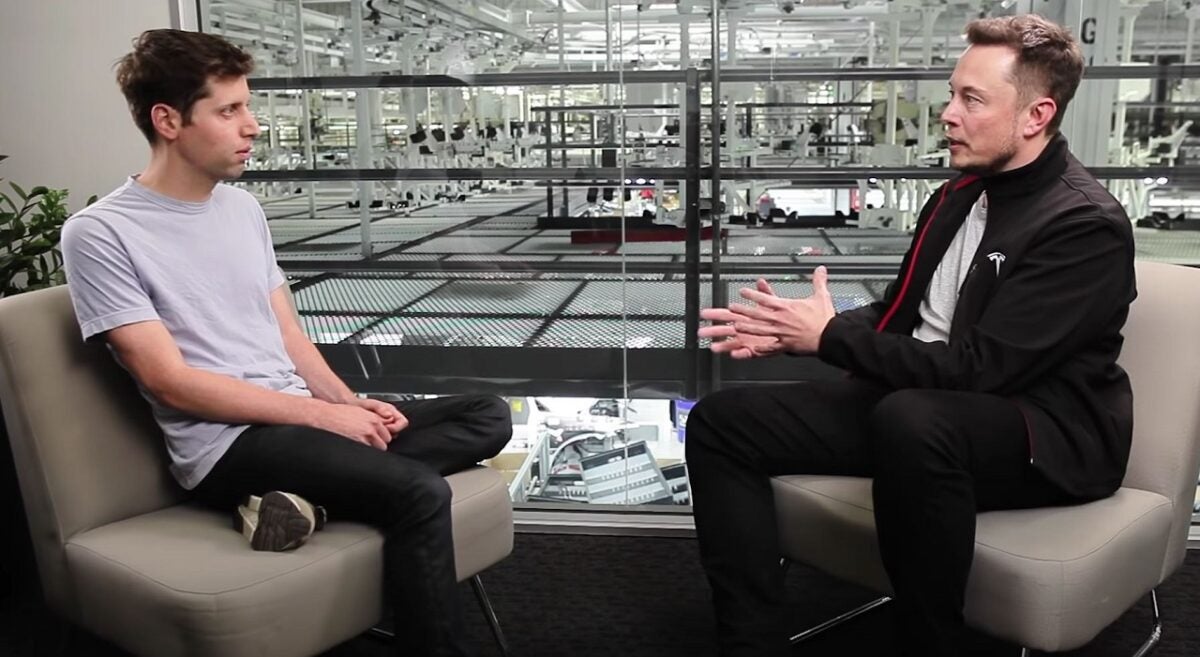
Since Elon Musk left the OpenAI project, where he was not only one of the first people involved but also one of its biggest investors in the early years. At that time, Elon Musk trusted in the human and good work of AI and OpenAI. For the past year, it’s been all lawsuits and complaints for those who were his colleagues and partners.
Subscribe to the Softonic newsletter and get the latest in tech, gaming, entertainment and deals right in your inbox.
The lawyers of tech billionaire Elon Musk have requesteda preliminary injunction against OpenAI, several of its co-founders, and its investor and close collaborator, Microsoft, to prevent OpenAI and other named defendants from engaging in what Musk’s lawyer claims is anticompetitive behavior.
The request for a precautionary measure, filed late Friday in the U.S. District Court for the Northern District of California, accuses OpenAI, its CEO Sam Altman, its president Greg Brockman, Microsoft, LinkedIn co-founder and former OpenAI board member Reid Hoffman, and former OpenAI board member and Microsoft vice president Dee Templeton of various illicit activities, and seeks to stop them.
Elon Musk files for injunction to halt OpenAI’s transition to a for-profit https://t.co/WMoN08EdZ0
The accusations included in the lawsuit, as we have read, are:
Dissuade investors from backing OpenAI rivals like Musk’s own AI company, xAI.
Benefit from “competitively sensitive information improperly obtained” through OpenAI’s connections with Microsoft.
Convert OpenAI’s governance structure into a for-profit company and “transfer any material assets, including intellectual property owned, possessed, or controlled by OpenAI, Inc., its subsidiaries, or affiliates.”
Make OpenAI do business with organizations in which any defendant has a “material financial interest.”
Musk’s lawyers claim that “irreparable harm” will occur if the injunction is not granted.
“The plaintiffs and the public need a pause,” they wrote in the filing. “A court order to preserve what remains of OpenAI’s non-profit character, free from self-dealing, is the only appropriate remedy.” Otherwise, the OpenAI promised to Musk and the public will have disappeared by the time the court gets to the bottom of the matter.
The motion is the latest salvo in Musk’s legal battle against OpenAI, which fundamentally accuses the company of abandoning its original non-profit mission to make the fruits of its AI research available to everyone. Musk withdrew the lawsuit in July, but revived it later this summer. Earlier this month, an amended lawsuit included new defendants, including Microsoft, Hoffman, and Templeton, and two new plaintiffs: Shivon Zilis, a Neuralink executive and former OpenAI board member, and xAI.
Musk has claimed in previous lawsuits that he has been defrauded of more than 44 million dollars that he says he donated to OpenAI taking advantage of his “well-known concern for existential damages” of AI. Musk, one of the co-founders of OpenAI, left the company in 2018 due to disagreements about its direction.
History of OpenAI, from 2015 to 2024
OpenAI was launched in 2015 as a non-profit organization and, in 2019, it became a capped-profit where the non-profit organization became the governing entity of a for-profit subsidiary. The company is in the process of becoming a fully for-profit corporation, which reportedly would allow OpenAI to maintain its non-profit status as a separate entity.
Elon Musk created his response to OpenAI, xAI, last year. Shortly after, the company launched Grok, an artificial intelligence model that now powers a series of features on Musk’s social network, X (formerly known as Twitter). xAI also offers an API that allows customers to integrate Grok into third-party applications, platforms, and services.
In the request for a precautionary measure, Musk’s lawyers argue that OpenAI is depriving xAI of capital by obtaining promises from investors not to finance it or its competitors. In October, the Financial Times reported that OpenAI demanded investors in its latest funding round to also refrain from financing any of OpenAI’s rivals, including xAI.
Musk’s petition also alleges that Microsoft and OpenAI continue to illegally share proprietary information and resources, and that several of the defendants, including Altman, are conducting business on their own that harms competition in the market.
In a statement sent by email, a spokesperson for OpenAI said: “Elon’s fourth attempt, which once again recycles the same unfounded complaints, remains completely without merit.” The company had already tried to dismiss Musk’s lawsuit, calling it “bluster” and unfounded. We’ll see how all this ends now that Elon Musk is Donald Trump’s right-hand man.
AI systems are integrated into almost every facet of modern life. They suggest which shows and movies you should watch, and even help business owners decide whom they want to hire. But what happens when these systems, often considered neutral, start making decisions that disadvantage certain groups or, worse yet, cause harm in the real world? This question is being asked by thousands of professionals. The consequences of AI applications, which are often overlooked, demand regulatory frameworks that can keep pace with this rapidly evolving technology. […]
AI systems are integrated into almost every facet of modern life. They suggest which shows and movies you should watch, even help employers decide who they want to hire.
Subscribe to the Softonic newsletter and get the latest in tech, gaming, entertainment and deals right in your inbox.
But, what happens when these systems, often considered neutral, start making decisions that disadvantage certain groups or, worse yet, cause harm in the real world? This question is asked by thousands of professionals.
The often overlooked consequences of AI applications demand regulatory frameworks that can keep pace with this rapidly evolving technology. And an expert in this field, Sylvia Lu, has studied the intersection between law and technology to outline a legal framework to do just that.
Regulation that never moves as fast as innovation
Despite these growing dangers, legal frameworks around the world have struggled to keep up. In the United States, a regulatory approach that emphasizes innovation has made it difficult to impose strict standards on how these systems are used in multiple contexts.
Courts and regulatory bodies are accustomed to dealing with concrete damages, but algorithmic damages are often more subtle, cumulative, and difficult to detect. Regulations often do not address the broader effects that AI systems can have over time.
The algorithms of social networks, for example, can gradually erode users’ mental health, but since these damages accumulate slowly, they are difficult to address within the limits of current legal norms.
AI harms aren't obvious or immediate. They're insidious, building over time. https://t.co/xSrWkflVQL
Categorizing the types of algorithmic damages outlines the legal boundaries of AI regulation and presents possible legal reforms to close this liability gap.
The changes that the expert believes would help include mandatory algorithmic impact assessments that require companies to document and address the immediate and cumulative harms of an AI application to privacy, autonomy, equality, and security, before and after its deployment.
For example, companies that use facial recognition systems would have to assess the impact of these systems throughout their lifecycle.
Another useful change would be the strengthening of individual rights regarding the use of AI systems, allowing people to opt out of harmful practices and making certain AI applications opt-in.
New study finds that AI models consistently escalated to war and would deploy nukes without warning in a series of conflict simulations
For example, require an opt-in regime for data processing by companies using facial recognition systems and allow users to opt-out at any time.
Finally, the expert suggests requiring companies to disclose the use of AI technology and its anticipated harms. For example, this could include notifying customers about the use of facial recognition systems and the anticipated harms in the areas described in the typology.
As the use of AI systems in critical social functions becomes widespread (from healthcare to education and employment), the need to regulate the harms they can cause becomes more urgent. Without intervention, it is likely that these invisible harms will continue to accumulate, affecting almost everyone and disproportionately impacting the most vulnerable.
#AI harm is often behind the scenes and builds over time – a legal scholar explains how the law can adapt to respond
With generative AI multiplying and exacerbating the harms of AI, the expert believes that it is important for policymakers, courts, technology developers, and civil society to recognize the legal harms of AI. This requires not only better laws but a more thoughtful approach to cutting-edge AI technology, prioritizing civil rights and justice in the face of rapid technological advances.
As Sylvia Lu says in her article, the future of AI is incredibly promising, but without the proper legal frameworks, it could also entrench inequality and erode the very civil rights that, in many cases, it is designed to enhance.
OpenAI has given ChatGPT-4o, the large language model (LLM) available to ChatGPT Plus subscribers, an upgrade called “creative writing.” Its scope can be incredible and terrifying in equal parts. In a brief tweet, OpenAI described the update by saying: “The model’s creative writing ability has leveled up: more natural, engaging writing tailored to improve relevance and readability.” OpenAI also claims that the new ChatGPT-4o works better with uploaded files, providing deeper insights and more comprehensive responses. For those who don’t know, ChatGPT has long offered the ability to upload […]
OpenAI has given ChatGPT-4o, the large language model (LLM) available for ChatGPT Plus subscribers, an enhancement called “creative writing.” Its scope can be incredible and terrifying in equal parts.
In a brief tweet, OpenAI described the update saying: “The model’s creative writing ability has leveled up: more natural, engaging, and tailored writing to enhance relevance and readability.”
OpenAI also claims that the new ChatGPT-4o works better with uploaded files, providing deeper insights and more comprehensive responses. For those who don’t know, ChatGPT has long offered the ability to upload and analyze files, and it works especially well for uploading data in the form of spreadsheets or images to use in questions.
GPT-4o got an update ?
The model’s creative writing ability has leveled up–more natural, engaging, and tailored writing to improve relevance & readability.
It’s also better at working with uploaded files, providing deeper insights & more thorough responses.
Creative writing, the subject where ChatGPT already shines
ChatGPT has always been good at creative writing. If you add a few interesting characters and ask it to tell you a story, it is capable of weaving a very fine tale. But the new update means it should be even better.
It is difficult to quantify an update that aims to improve the quality of writing, but so far the user reaction has been positive. On Twitter, @kyleshannon tweeted “Hey @OpenAI your @ChatGPTapp 4th “Creative Writing” update today is crazy!”
Hey @OpenAI your @ChatGPTapp 4o "Creative Writing" upgrade today is INSANE!
My test prompt for two years has been some version of "write an Eminem style cipher about quantum mechanics."
ChatGPT has always been the best at this, but NO LLM has ever captured the sophisticated… pic.twitter.com/XJIlXF98jL
There is nothing you need to do or install to make use of the “creative writing” update in ChatGPT-4o, as everything happens behind the scenes, so simply head to their website or app and ask whatever you want.
However, the update does not apply to people who are on the free level of ChatGPT, which is limited to the ChatGPT-4 LLM, its legacy model. Only ChatGPT Plus subscribers can access it.
While Google and Microsoft have made huge strides in generative AI and conversational chatbots, there is a big name in the world of smart assistants that we haven’t heard anything about. Yes, we’re talking about Amazon and its globally used service called Alexa. And it seems that now we know why. According to reports, Amazon is working on deploying an Alexa AI, but it is too slow to respond to queries to be launched yet. Fortune magazine has shared leaked internal documents highlighting some critical flaws of Alexa, the main […]
While Google and Microsoft have made huge strides in generative AI and conversational chatbots, there is a big name in the world of smart assistants from which we haven’t heard anything. Yes, we are talking about Amazon and its globally used service called Alexa.
Subscribe to the Softonic newsletter and get the latest in tech, gaming, entertainment and deals right in your inbox.
And it seems that now we know why. According to reports, Amazon is working on the deployment of an Alexa AI, but it is too slow to respond to queries to be launched yet.
The magazine Fortune has shared leaked internal documents highlighting some critical flaws of Alexa, the main one being latency: the AI takes too long to respond when given an instruction or asked a question.
Latency issues are plaguing Amazon's already-delayed AI reboot of Alexa, according to leaked internal docs seen by @DelReyhttps://t.co/WOdBQs0PWh
Very high latency and incompatibility with older Alexa models
Apparently, this issue has led to low satisfaction among users. It seems that before the launch, Amazon wanted to achieve an average satisfaction score of 5.5 out of 7, but the test participants rated the AI service with only 4.57 points. For this reason, it appears that Amazon has missed its three planned launch dates for 2024, the most recent being November 14.
Another cause for concern, which is not considered a critical issue like latency, but still remains, is that Alexa’s AI may be incompatible with some older models, which could force many users to upgrade their technology to access the new AI.
It is true that this is not a big surprise, given that in many phones only the latest models are receiving some AI improvements, but Amazon might fear that this will upset customers who have been waiting for this type of update for years.
In any case, as with all leaks, these details should be taken with caution, as issues such as Alexa’s AI latency could be much better now than when the note was written.
Amazon wants its AI-enhanced Alexa to perform more tasks on its own, instead of delegating to a third-party app on the phone, as it does with some tasks. This way, you could ask the smart speaker to take you to the movies or reorder last week’s takeout, and it could, using data from your linked accounts, perform those tasks for you without you having to do anything.
It is an intriguing idea, but the success of this strategy will depend on whether users trust that artificial intelligence gets it completely right and that it doesn’t accidentally place a food delivery order for something it hears on the television. Everything points to a launch in 2025, assuming it doesn’t encounter more bumps along the way.
OpenAI is about to launch its own autonomous artificial intelligence agent, designed to control computers and perform tasks independently. Known as “Operator,” the new system from the ChatGPT company will be introduced in January as a research and development tool, according to Bloomberg. Other companies in the sector, such as Anthropic and Google, are already making progress in this area and have introduced their own AI agents, capable of taking control of your browser or even your entire PC. Operator marks a shift in AI development, being an agent capable of interacting with […]
OpenAI is about to launch its own autonomous artificial intelligence agent, designed to control computers and perform tasks independently. Known as “Operator”, the new system from the ChatGPT company will be introduced in January as a research and development tool, according to Bloomberg. Other companies in the sector, such as Anthropic and Google, are already making progress in this area and have introduced their own AI agents, capable of taking control of your browser or even your entire PC.
Subscribe to the Softonic newsletter and get the latest in tech, gaming, entertainment and deals right in your inbox.
Operator marks a change in the development of AI, being an agent capable of actively interacting with computer interfaces, beyond simple text and image processing. According to Sam Altman, CEO of OpenAI, agents represent the next big breakthrough in this field, and he was optimistic in stating that we will see “increasingly better models.”
Additionally, Kevin Weil, product director at OpenAI, anticipated just a month ago that 2025 will be the year when “agentic systems” will consolidate. AI labs need to monetize their advancements as soon as possible, with autonomous agents being the potential answer to that need. Operator has the potential to become the company’s next big success, taking a step forward in interaction with advanced AI systems.
AI has a lot of potential uses, many of them bad and many good. Today’s case is one of the good ones. Or rather, one of the brilliant ones, as creating an avatar of a grandmother managed by AI to drive phone scammers crazy is brilliant. Let’s tell the story. Daisy, or dAIsy, is an AI created by O2, the largest mobile phone operator in the UK, to trick scammers into believing they are talking to a real grandmother who likes to go off on tangents. When the AI […]
AI has a lot of potential uses, many of them bad and many good. Today’s case is one of the good ones. Or rather, one of the brilliant ones, as creating an avatar of a grandmother managed by AI to drive phone scammers crazy is brilliant. Let’s tell the story.
Subscribe to the Softonic newsletter and get the latest in tech, gaming, entertainment and deals right in your inbox.
Daisy, or dAIsy, is an AI created by O2, the largest mobile operator in the United Kingdom, to trick scammers into believing they are talking to a real grandmother who likes to go off on tangents. When the AI provides the requested bank details, it reads out loud fake numbers and names.
And the software is designed to keep people online as long as possible. This not only means less time for scammers to target real people, but O2 also uses the conversations to learn the favorite tricks and techniques used in these scams.
As you can hear in the video, the scammers are not happy about being tricked: they get increasingly angry and start swearing. The bot is so convincing that it has managed to keep some people on the phone for 40 minutes straight.
If you have seen any of the several YouTube channels that scam scammers, sometimes using a voice changer to sound like an elderly woman, you will know what to expect. Daisy has been trained with the help of one of the most popular scammers on the platform, Jim Browning.
How Daisy works, the Grandma who trolls scammers
Daisy listens to the caller and transcribes their voice to text. The responses are generated through a custom LLM with a personality layer (of a grandmother in this case) and are then returned through a custom AI text-to-speech model to generate a voice response. All in real-time.
O2 customers do not have access to Daisy to launch their own revenge campaign against scammers. Instead, the AI tool has been added to a list of “easy target” numbers used by scammers. Daisy is capable of interacting with callers 24/7 without human operator intervention.
Meet the latest @O2 recruit – Daisy – the ‘Head of Scammer Relations’ created by state-of-the-art AI to answer calls in real-time from fraudsters, keeping them on the phone and away from customers.
Working alongside former Love Islander and scam victim Amy Hart, Daisy has been… pic.twitter.com/z2AVrCMOna
Daisy was created in response to an O2 study which found that 71% of Britons would like to get back at scammers who have deceived them or their loved ones, but most said they wouldn’t engage in scamming because they didn’t want to waste time.
Although the work done by AI should be applauded, its ability to converse with someone so convincingly is unsettling. Ironically, scammers also use similar technology to trick people into believing they are talking to their relatives. In this war, we only wish for the scammers to lose.
Fortunately for millions of children, young people, and adults (because learning has no age limit and curiosity is the great virtue of human beings), Google is pivoting in a direction with a new experimental tool called Learn About, which focuses on enhancing learning through more engaging and interactive images. This AI tool, more focused on education, marks a significant step and could change the way people learn and engage in research by making the process more effective and enjoyable. At a time when all the […]
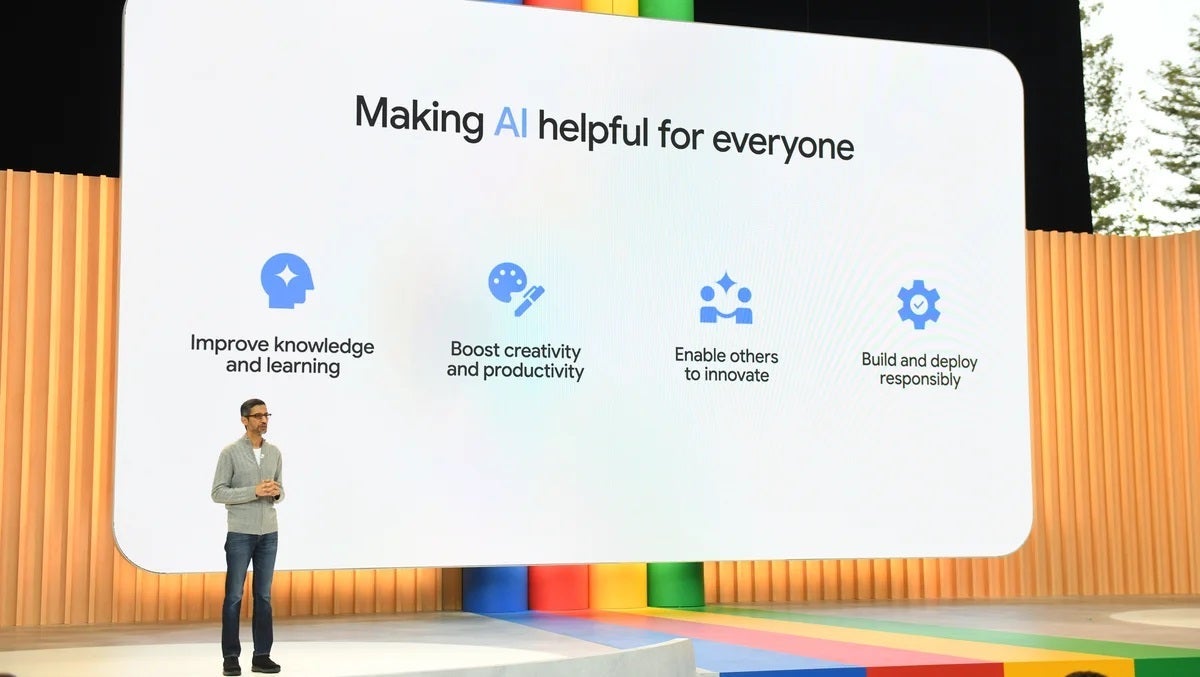
Fortunately for millions of children, young people, and adults (because learning has no age and curiosity is the great virtue of the human being), Google is pivoting in a direction with a new experimental tool called Learn About, which focuses on enhancing learning through more attractive and interactive images.
This artificial intelligence tool, more focused on education, marks a significant step and could change the way people learn and engage in research by making the process more efficient and enjoyable.
At a time when all major companies want to profit from artificial intelligence with increasingly bizarre tools, Google has stopped the train to focus on something crucial for all humanity: education. And if it can be free and of quality, even better.
I am genuinely impressed
Google has quietly released “Learn about” a genius new AI tool:
You can enter any topic you want to learn and you'll be able to dive right in VERY easily.
What we know about Learn About, Google’s new feature
Google has launched a new experimental AI tool, called Learn About, which moves away from traditional chatbots and is more focused on education and learning. The tool is based on the LearnLM model, introduced in early May and refined to specifically respond to questions related to various topics or those that fall into the category of educational research.
The LearnLM model has been more closely aligned with the way people learn effectively, with engaging visual elements to enhance the way information is acquired and then used.
Google’s AI ‘learning companion’ takes chatbot answers a step further https://t.co/R2ulOi9Oba
The AI tool is presented as a conversational learning companion. It helps users delve deeper into the knowledge of certain topics by providing information more tailored to their queries and responses in a textbook-like style. It even guides you through new topics to enhance the learning experience.
Some of the users who tested the tool made comparisons with Gemini and suggested that, while Gemini focused more on providing data and figures, the Learn More feature extended further by adding related content and relevant images.
There are textbook-style boxes that provide additional information for users who want to delve deeper, and additional topics are offered in the sidebar to enhance the learning experience.
Google’s experimental AI tool looks promising, especially because it has specifically focused on education and related queries. This experiment may come to fruition with a more visually appealing learning experience.
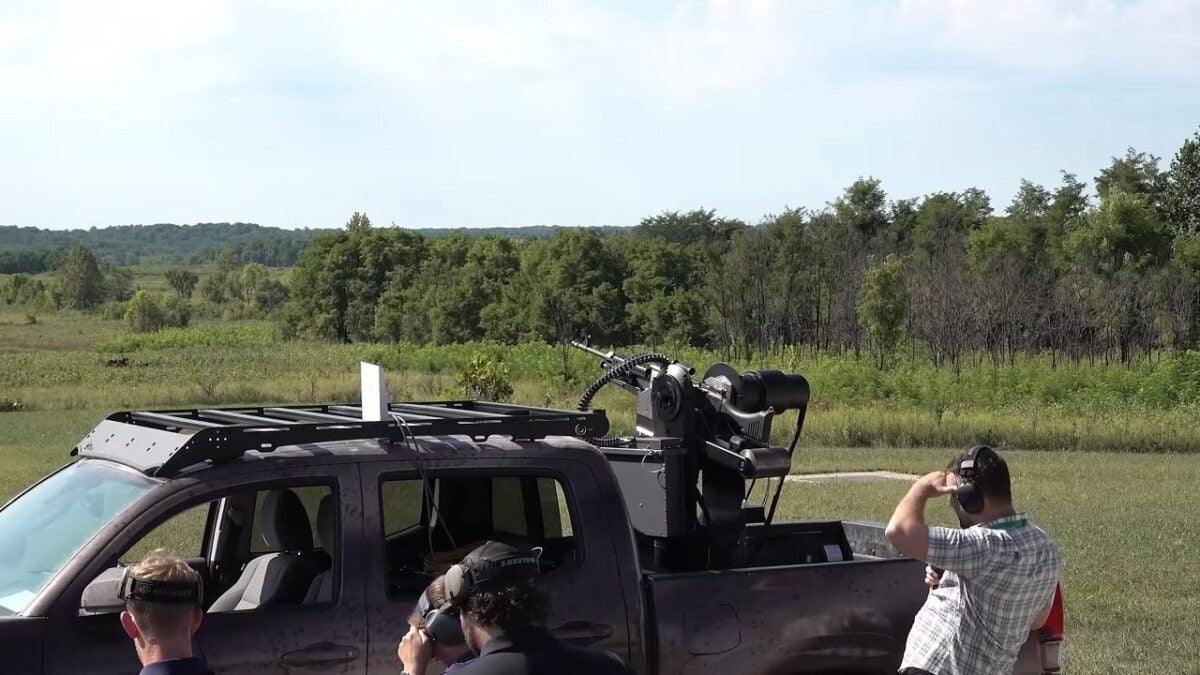
The U.S. Army is doing everything possible to protect its troops, and the present state of war is marked by low-budget drones that only bring death and destruction. Ukraine, for example, is employing this technique in its defense against Russia. At the Technology Readiness Experimentation (T-REX) event held in August, the U.S. Department of Defense tested an autonomous robotic cannon system equipped with artificial intelligence developed by the emerging defense contractor Allen Control Systems and named Bullfrog. It consists of a 7.62 mm M240 machine gun mounted on a […]
The U.S. military is doing everything possible to protect its troops, and the present of war is marked by low-budget drones that only bring death and destruction. Ukraine, for example, is using this technique in its defense against Russia.
At the Technology Readiness Experimentation (T-REX) event held in August, the United States Department of Defense tested an autonomous robotic gun system equipped with artificial intelligence, named Bullfrog, developed by the emerging defense contractorAllen Control Systems.
Composed of a 7.62 mm M240 machine gun mounted on a specially designed rotating turret and equipped with an electro-optical sensor, its own artificial intelligence, and computer vision software, Bullfrog was designed to fire light weapons at unmanned targets with much more precision than an average U.S. soldier can achieve with a standard weapon like the M4 carbine or the next-generation XM7 rifle.
A machine gun with AI to shoot down enemy drones
In fact, the images of Bullfrog in action published by ACS show how the truck-mounted system targets small drones and shoots them down from the sky with a few shots.
Bullfrog seems to be effective enough against unmanned targets to impress Department of Defense officials: according to Defense Daily, Alex Lovett, Deputy Assistant Secretary of Defense for Prototyping and Experimentation in the Pentagon’s Research and Engineering office, told reporters at a demonstration event in August that tests of the “low-cost” Bullfrog solution had “gone really well.”
TL;DR
90% of drones are made in China, they're easily weaponized and it'll take a ~decade to catch up
*While we catch up*, we need to learn to defeat SWARMS of incoming drones; accuracy and lethality are measured by cost efficiency
In case the Pentagon adopts the system, it would represent the first publicly known lethal autonomous weapon in the U.S. military arsenal, according to the Congressional Research Service.
Shooting down small and fast drones with conventional firearms is a significant challenge even for the most skilled shooter, and the U.S. military has been seeking various ways to make its small arms more effective against unmanned aerial threats.
These efforts include the acquisition of small and medium caliber ammunition and pellet-like ammunition, capable of reproducing the effects of shotguns that have proven effective against drones during the Russian invasion of Ukraine.