How to look for a new job without your boss finding out

Ready to find a new job? Here’s how to scout for a new one without jeopardizing your current gig.

We’ve talked about it before; it’s essential to have a strong online presence if you’re looking for a new job. That’s all well and good, when you’re unemployed, self-employed, or not being monitored by your boss.

But, attempting to job hop while employed in a full-time situation is a whole other story.

Sure, most employers aren’t completely blindsided when an employee gives notice. It’s the way of the world, especially in 2019, when no one stays at a job for long.

Still, looking for a job while on the job can be a minefield. Will you get fired if you get caught? How will you schedule interviews? What happens if your employer finds out you’re looking for greener pastures and the search takes longer than expected?

Below, we’ll dive into some of the concerns job hunters have while keeping up the charade at a job they’re not exactly thrilled about.

Doing a secret job search — how to find work on the DL

hiding worker

Don’t search at work

If you work in an office, it’s hard to fight the urge to do some job hunting while you’re on the clock. But, by all means — don’t do it. Write your cover letters at home, fill out your applications at the coffee shop, and stay off of company networks.

For one, you’ll still need to be respectful of your company while you’re on the clock. They are still paying you to work for them, not going out and wooing some new company.

Second, employers are increasingly spying on their staff. In some cases, companies are looking at internet histories, keeping tabs on social accounts, and reading their emails. As such, it’s smart to avoid using any company equipment for personal business. Like anything else in this digital age, your online activity can affect your reputation down the road. Tread carefully.

For timely responses, limit your email replies to your phone. Or pack your personal laptop and have lunch in a local coffee shop.

TL/DR, do the heavy lifting at home.

Social media precautions

Again, social media is an essential tool for job hunters. Secret job hunters, not so much. Where freelancers and the unemployed can benefit from sharing their goals publically, employed seekers must err on the side of discretion.

LinkedIn will be one of the first places that a hiring manager will visit before deciding to schedule a call. Make sure your photos are in good shape, current, and that your job information is up to date.

Beyond keeping your social media sites clean and current, be careful about what you’re posting online. This means no Facebook posts about your job hunting process, no tweeting at potential employers, and so forth. Even if your boss doesn’t look at your profiles, someone else might pass the word along and blow your cover.

Building on staying mum on social, we should also mention that it’s smart to avoid posting your resume in any public settings.

What if interview times conflict with your real job?

This is a hard one.

One of the best parts of being alive in the digital era is that it’s super easy to submit online applications — rather than running your resume around town. Still, if you plan on working in an office setting at least some of the time, prospective employers and recruiters will want to meet you in person.

You’ll want to schedule your interviews carefully — early in the morning or at the tail end of the day make the most sense — as these short absences are easier to explain — you have to pick up your kid, go to the doctor, etc. Another smart idea is to schedule a few interviews on the same day — and use a vacation day.

If you do plan on leaving early or coming in late, you’ll want to bring a change of clothes. Many offices tend toward the casual and showing up in a suit when you’re usually a jeans person will draw some unwanted attention to yourself.

Recruiters can blow your cover

coworker spying

Most recruiters will say that they’ll be discreet, but they may accidentally blow your cover if you aren’t careful. Make sure you let them know your situation and be completely upfront about not revealing your name unless a prospect is serious.

Another concern is, the recruiter might work for your current employer. Recruiters, of course, don’t work for the job seekers. They get paid by the employer that uses them to find qualified candidates. As such, you need to remember these folks aren’t on your side. Be careful about what you tell the recruiter about your salary requirements, other prospects, and current job situation.

What if you do get caught?

Letting your employer know you’re thinking about moving on isn’t an easy conversation. But, if someone sees through your stealth attempts to duck out of the office for the latest “dental” appointment, it’s not a bad idea to clue your employer into your plan.

If you have a good relationship with the management team, they may try to convince you to stay — but they’ll likely understand this is the best move for your career.

Alternatively, it might be an awkward situation for the next few weeks, months, and so on.

As far as whether or not you can get fired, it depends. Hourly employees are getting paid for their time, so getting caught scrolling for openings while on the clock can undoubtedly result in loss of employment. Salaried employees might have an easier time, as schedules are often flexible so long as projects are completed.

Finally, make sure you don’t give notice until you have a firm offer and you’ve accepted it. In some cases, the new employer might withdraw an offer, so don’t put in your two weeks’ until you’ve signed a contract.


How to ace your next job interview

When the interviewer asks “Why are you the best person for the job?” here’s how to answer it.

Are you really the best person for the job? There’s no way to know for sure. You might have a long list of top-notch credentials, glowing recommendations, and a knack for getting results from any team.

Still, “why are you the best person for the job?” is a question that sends chills down the spines of seasoned job hunters and fresh college grads alike.

The question sounds pretty straightforward, but the goal here is to understand how you’ll fit in with your new team and add value to the role.

Below, we’ll look more closely at this question and how to use it to your advantage during your next big interview.

“Why are you the best person for the job?”

job interview

Why do interviewers ask this question?

Some experts say that this question is a test. It’s a way to figure out how you interact with people and how you handle being put on the spot. It’s both awkward and vague — the perfect way to make you squirm in the hot seat.

The best person question also functions as a way to establish whether you fit in with the company culture and can be an opportunity to showcase how you stand to add value to the organization.

What it means to sell yourself

Selling yourself might not be the best name for this exercise in job hunting discomfort. Selling yourself, is, of course, a key component of the job hunting process, but it’s awkward.

But from an employer perspective, their role is to find the best person for the job. Should they fail, well, it makes them look bad. So, you need to convince them that:

  • You can do the work and do it well.
  • You fit in with the team, but bring something new/valuable to the mix
  • You’ll make your prospective boss’ life easier
  • Your skills and experience are a cut above the rest

That’s a tall order.

Rattling off your list of accomplishments and skills can easily cross that thin line between confident and arrogant.

Job hunters often go into the interview with the mindset that they need to talk managers into hiring them. And they do, but your goal is to come up with roughly 3-4 bullet point accomplishments that relate to the role. These can be industry awards, education, soft skills, technical skills, or the results you’ve achieved in your previous role.

Tread carefully, because these things you mention should be measurable and framed in the way that you are there to solve a problem.

The thing is, your interviewer doesn’t really care what you think about yourself. They care about where you, your skills, and experience come together to solve their problems.

This might sound familiar if you’ve worked in sales before. The idea is to listen to the interviewer’s needs, then focus on where you reduce the burden.

Easy, right? Well, yes and no. Nerves are bound to take over. If you’re shy, modest, or don’t do well on the spot, practice and preparation are your BFFs.

Let’s look at how to tackle self-selling and land that role.

How to sell yourself

job interview

Prepare

Before the interview, you’ll want to understand what the company does and how your specific strengths can help the organization. Candidates that do their research always impress employers, but you’re doing yourself a favor, too. Learn about the company’s culture, as well as their mission, their customers, and their goals.

Review the job listing again and scan for specific qualifications or skills they’ve mentioned. Compare those skill keywords to your resume and jot down some “times where you’ve done X” and how it’s prepared you for this role.

The second part of the preparation process is preparing a response based on the research you’ve gathered. Those bullet points we mentioned? Use those to craft a sales pitch. Your pitch should be a minute or two and should highlight the things that make you stand out the most.

Be specific

It’s not good enough to say that you’re a team player, a hard worker, a pro multitasker. To really position yourself as the best person for the job, you need to do more.

Use examples to illustrate your strengths. This is a chance to tie things back to the desired qualifications in the original posting. So, if the role requires strong collaboration skills, it might be a nice opportunity to tell a story about a time you demonstrated your ability to be collaborative.

Anyone can say that they’re great at communicating, thinking on their feet, or spotting the tiniest details. But few people can spin these buzzwords into a bonafide story.

Storytelling has become an increasingly valuable skill. As such, you should practice articulating your skills and accomplishments in an engaging, enthusiastic, and authentic manner.

Don’t make the focus on how much you need the job

Okay, this might sound counterintuitive  But, again, we’re looking at how you can add value to the company. From an interviewer perspective, no one cares that this is your dream job or that you’re running low on savings and need to land a role—any role—ASAP.

While it’s kind of annoying, interviewers don’t love it when you appear to be all about the paycheck and the flex benefits. Of course, you wouldn’t be there if you didn’t need a job—however, the candidate that demonstrates excitement about the opportunity is the one that likely gets the job.

Talk about what you expect to accomplish

Granted, this often is another common interview question; the old what do you hope to get done within your first 30, 60, or 90 days on the job?

But, this is another example of where you can prove yourself as someone who can solve problems and think ahead. Prepare by looking at the job description and coming up with a plan of attack; how might you increase sales by 20%? What leadership style will you bring to the workplace?

In short, bringing specific examples for how you plan to enact change will serve you well.

Finally, make sure you are the right person for the job

Before you go to the interview, consider this: does the job align with your goals and values? Does the role match up with your strengths? Will it challenge you? And does it fit your working style?

Ultimately, the “why are you the right person for the job” question serves as a means of figuring out whether you’re a fit or not.

It’s important to remember that selling yourself is not about convincing someone you’re right for the job when there’s a mismatch. A lack of chemistry means that you’ll struggle in that role no matter how many accolades you’ve racked up in the past.

Trending jobs in 2019

Discover which careers are booming this year.

Digital transformation is well underway.

Machine learning, chatbots, blockchain applications have all become part of the work landscape, all while stirring up fears of our pending irrelevance.

Obviously, healthcare tops the charts in most cases — surgeons, nurses, dentists, and orthodontists are always in high demand — so we opted to leave them out of our list of jobs on the rise.

In 2019, in-demand jobs are fairly diverse, but have something in common — many emphasize the human side of an automation strategy. As LinkedIn found in 2018, you don’t necessarily need to be in a highly technical role to see success. Sales, marketing, and communications professionals have a promising outlook, too.

Skills like leadership, project and product management and roles with a strategic component are sought after by employers. And of course — hard skills in the STEM purview are needed to develop and maintain this new wave of tech.

Here, we’ll look at some of the top jobs in 2019 — and likely beyond.

Trending jobs for 2019

data scientist

Data scientist

A data scientist is a person who gathers, processes, and analyzes data. With the hordes of data coming in thanks to advancing data collection methods, humans skilled in breaking these massive sets into usable insights are major assets for companies.

Database administrator

Database administrators are becoming increasingly in demand, as companies start using more software solutions that include AI and machine learning components. The ability to maintain clean, secure databases will be essential for ensuring software can be leveraged to meet an organization’s goals.

Product Manager

A product manager knows how to make a product sell. They work with multiple teams, as well as members of the public to make sure that products are at their best before going to market.

Product managers conduct market research, determine specifications, set pricing, and develop marketing strategies. While this isn’t a highly technical role, product managers often work in tech companies and will do well if they can “speak the language.”

Machine learning engineer

machine learning

Machine learning engineers are programmers with advanced knowledge in the areas of AI and machine learning. They work to develop AI technology and work with complex algorithms and datasets to train systems. As more companies invest in these technologies, engineers can expect to have their pick of opportunities.

Statistician

Statisticians are in demand, with growth expected to rise by 34% through 2024. Statisticians collect and analyze data, looking for patterns that explain human behavior or uncover insights that address a range of public and private sector concerns. Today’s businesses basically run on these massive datasets, so those with a firm grasp on statistics are a major asset to any company.

Sales director

Sales professionals will still be in demand this year, and likely moving forward. Recruiters have long been having trouble filling sales positions with skilled workers who can keep pace with change.

That change can be attributed to CRMs and other analytics tools that are now industry standards. There’s also a shift in buyer demographics, as millennials take on the lion’s share of B2B purchasing decisions.

Still, technology, combined with the ability to read the room and connect with others makes a good salesperson hard to replace with a machine.

Marketing Managers

Marketing managers stand to stick around for the long haul, though their role may change in the coming years. As it stands, your average marketing manager is in charge of marketing campaigns, branding, social media, and content strategy.

Successful marketing managers should also be project managers, critical thinkers, and have the ability to monitor ad performance and other metrics. As marketing tech advances, this role may begin to evolve into a more analytic, decision-making focused role.

And, moving forward, privacy concerns and a crowded social media market may make marketing more challenging. Those who can roll with the punches–and get around new rules and shifting algorithms will likely see success.

Financial Manager

financial planner

Financial managers are looking at a bright future, too. Because of the aging Boomer population, there is a huge demand for good financial advice. Financial managers help clients plan for short and longterm goals, like retirement, college funds, and buying a home. They also break down tax laws, investments, and monetary rules and regulations.

Job seekers — what to expect

Flexibility, improvisation, and a willingness to learn are all important qualities in a job candidate.

While the top tech jobs often require specialized education, tech-savvy marketers, managers, and writers all have transferrable skills required to supplement AI and machine learning applications.

Improve your prospects by earning certifications — in marketing or project management, as well as coding and software-specific training.  The point is, change is the only constant.

Best online classes for leveling up your tech skills

Bulk up your resume from the comfort of your couch.

Best Online Classes for Leveling Up Your Tech Skills

If you work in marketing, tech, or really any industry, change is the only constant. So, the idea that education stops upon earning a certain number of credits is just plain silly.

But while most of us can acknowledge the benefits of becoming a lifelong learner, it can be hard to find the time or the money to head back to school. Luckily, there are plenty of online courses that allow you to level up your skills in just about any topic you could think of.

With that in mind, here are some valuable opportunities for anyone looking to add a few more lines to their resume that will actually make a difference.

Best online classes for leveling up your tech skills

Introduction to Artificial Intelligence, EDX

This course provides a high-level overview of AI and machine learning, explaining how AI is becoming the driving force behind smarter apps and more efficient organizations.

As part one of the Microsoft Professional Program in AI, the course will show you have to build basic machine learning models. You’ll use Azure Machine Learning and the Microsoft Bot Framework. While this all sounds super high-tech, you don’t need to be a coding expert to start playing around with the technology. The EDX website mentions that a high-school level statistics understanding and a working knowledge of Python are recommended, though not required.

Learn to Code for Data Analysis, Future Learn

Coding for Data Analytics

Data analysis is becoming an in-demand skill that may come in handy when you try to negotiate your next raise. Still, Learn to Code for Data Analysis will be easier to grasp if you know your way around a spreadsheet and are fairly good with numbers.

This course focuses primarily on Python–covering assignments, variables, expressions, functions, basic data types, and if-statements. You’ll practice programming in Jupyter Notebooks, writing and testing your own code.

The final component of the course is analysis. Students will use pandas to read Excel and CSV files, as well as clean, aggregate, and filter data into simple, readable charts.

Of course, the class will be easier if you have some knowledge of coding or data analytics. However, we like that this is an approachable “in” for data science beginners hoping to keep up with the latest technologies.

Video Editing, Lynda

Video Editing Course -- Intro Lynda

Lynda is a good source of online classes of all stripes. But, the video editing course stands out, because no matter your industry, this interactive medium has become essential for marketing and engagement across all channels.

Even small businesses need to learn to run a camera and splice together some behind-the-scenes clips or video tutorial here and there.

Lynda’s video editing course is about three hours and shows you the basics of good video editing. You’ll learn about transitions, composition, pacing, and post-production effects.

While you’ll need to continue your video education after the course is over, this is a great primer for people looking to build on their online content skills.

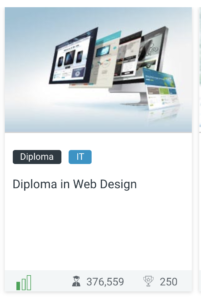
Diploma in Web Design, ALISON

Diploma in Web Design

ALISON is something of an aggregate for online courses. The site is a central hub that showcases courses from colleges and digital learning platforms, so it’s easy to compare programs during the research phase.

ALISON’s module allows you to sort through their courses based on career goals, which makes it easy to find a new skill that will come in handy down the road.

This particular program allows you to learn web design at your convenience, free of charge. Here, you’ll learn how to use Dreamweaver to create websites with HTML, CSS, Flash, and JavaScript. You’ll also learn the basic basics like registering a domain name and choosing a hosting provider.

Like Hubspot, Google Academy, and MOOCs from MIT, Harvard, and others, ALISON allows you to purchase a digital diploma, which you can show to potential employers.

General Assembly Dash Program

General Assembly is a for-profit educational resource with locations based around the US. Unlike Trump University or ITT Technical Institute, General Assembly provides workshops and longer-term programs that allow professionals to get their tech skills up to speed.

The Dash program, however, is an online course, offered free that teaches development in HTML, CSS, and JavaScript. We like Dash, as it’s a nice starting point for those who don’t know much about coding—build your foundation before signing up for more advanced courses.

Code Academy Web Development

Web development continues to be an in-demand skill, and Code Academy’s user-friendly approach to teaching you the basics of building web apps and sites is one of our top picks.

This course follows a structured curriculum, they’ll teach you HTML first, then venture into CSS fundamentals, JavaScript basics and go from there. By the end of the course, you’ll be able to put together interactive sites.

What’s more, the website promotes these self-paced paths that allow you to customize your coding journey.

Courses are offered on a subscription basis—$19.99 per month or you can pay $199 per course.

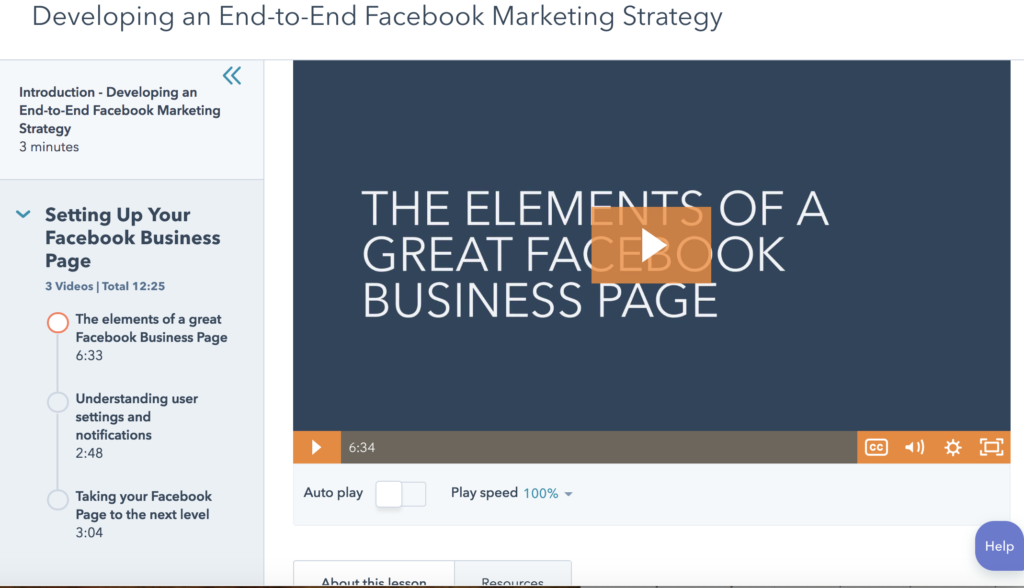
Hubspot Social Media Certification

Hubspot Dashboard Social Media Certification

Hubspot offers a number of certification programs on their site for free, but the social media course is a good one for marketers—or anyone—who wants to gain a better understanding of how to use social media to drive business.

The curriculum is broken down into eight chapters, each with a few short video lessons. You’ll learn to develop a social media strategy, understand the importance of social listening, and learn to expand your reach on social. You’ll also look at things like digital advertising and how to measure your return on investment.

While you might know the basics already, it’s nice to get a quick refresher on just what metrics we should be measuring and how to hone in on a strategy that aligns with your brand.

Wrapping Up

Beyond the courses listed above, each of their home platforms, as well as Coursera, MIT Open Courseware and others provide a long list of options to professionals looking to expand their skillset.

And, with many of these courses being either free or fairly low-cost, there’s no excuse not to explore some new pathways. You may just find a new passion.