Mentally control your devices with a brain chip

Would you allow an object in your brain if you could talk to computers?

“Even in a benign AI scenario, we will be left behind,” Elon Musk spoke glumly of our pathetic odds in the wake of an AI apocalypse like something out of “Terminator” or “Avengers: Age of Ultron.” While we’re not enlisting the help of The Vision or Sarah Connor just yet, there is a kernel of truth here: We’re integrating more sophisticated tech into our phones, our appliances, our houses, and our cars – but we’re leaving behind one valuable part of the equation – us.

Mass Effect synthesis ending
Integrating AI and organic life? Mass Effect did it first.

Musk’s strategy is not to try and one-up ourselves over tech; in his eyes, that’s a lost cause. But if you can’t beat ’em, Musk advises we join them.

“I think with a machine interface we can go along for the ride and effectively have the option of merging with AI,” he said. He’s proposing a (very ambitious) concept of how to do just that.

The idea

Symbiosis between human and machine has been a sci-fi concept since the days of Doctor Who and Star Trek, and because (or despite?) of its mainstream appeal, we’ve largely dismissed notions of making science fiction into science fact. Elon Musk is heading a new project to insert a computer connection directly into a human brain, creating a true cybernetic future, and have already taken the first steps with chimpanzees.

“The monkey was able to control the computer with his brain, just FYI,” Musk said proudly. The team expects to be ready to move testing to human subjects by next year, and the process is allegedly as safe and painless as Lasik eye surgery.
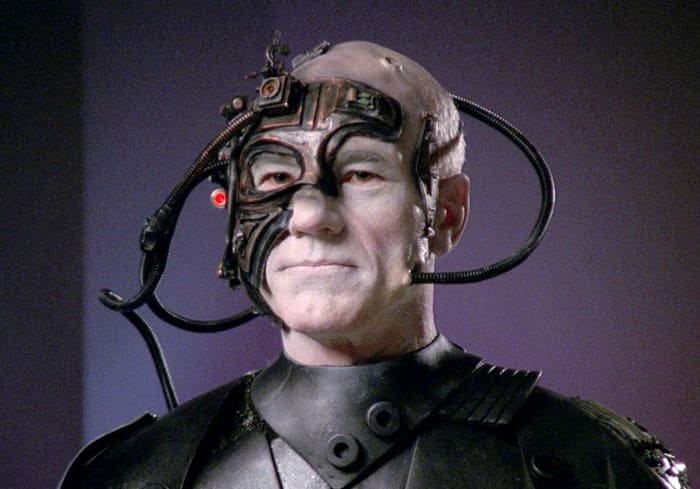
Star Trek Next Generation Picard
Picard rocking an early prototype of Elon Musk’s chip

Why this is new

If you’ve heard of similar tech, that’s because it (sort of) already exists: There are scattered FDA-approved devices that are intended for the disabled. Examples include a deep-brain stimulation device that helps people with Parkinson’s disease control their tremors.

Musk’s new implant chip would be created by Neuralink, his own brain-computer interface start-up. Neuralink is Musk’s own private company that he created back in 2016, and is based out of San Francisco. There’s one major difference that will bring Musk’s project to the forefront: The process.

The process

The chip itself is a thread-like device that’s thinner than a human hair. It’s so thin that the grafting procedure looks almost like sewing. Neuralink has a computer system set up so that during this process the grafting avoids blood vessels on the surface of the brain.

These flexible threads are actually a thin cellophane-like material that insulates the conductive wires which link to a series of tiny electrodes.

“One of the big bottlenecks is that a mechanical drill couples vibration through the skull,” said Max Hodak, Neuralink’s president and one of the company’s founders, “which is unpleasant, whereas a laser drill, you wouldn’t feel.” Since the device itself is so thin, it would far less invasive than our current tech.
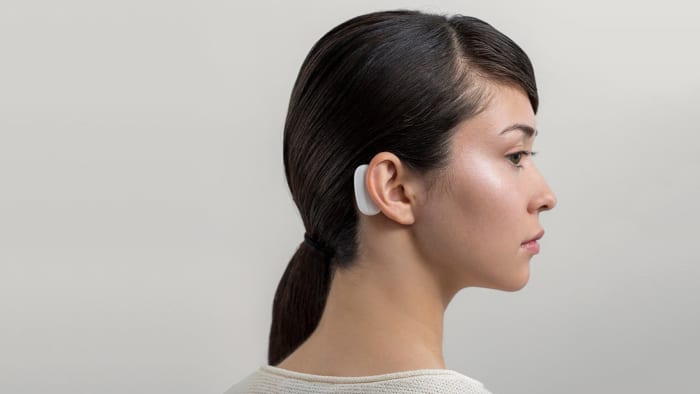
Elon Musk brain chip
The new chip would be as subtle as a hearing aid.

Once the procedure is complete, the implant is wirelessly connected to a receiver worn behind the ear. The receiver communicates with a computer or smart device, and voila! You can talk with electronic appliances with your mind.

A whole can of worms

While this is some serious next-gen, cutting-edge thinking, is it really for the best? We’re up to our eyeballs in privacy issues with email, messaging, texting, and phone calls. Do we really want people to access cloud data with a chip in their brain?

Facebook had to wade through red tape just to give us a new camera. This is a thousand times more invasive! If any of this tech comes to fruition, we need to seriously evaluate what it means about our consent and privacy.

Facebook Portal
Remember when we were mad at Zuckerberg about Facebook Portal? Imagine that you control that screen with your mind.

For better or worse, there are some definite roadblocks for Neuralink to tackle in the coming year. Researchers still need proof that the insulation of the neural threads can survive long periods (plastic can deteriorate in the salt solution of the brain’s environment!), and moreover they’re not the only company trying their hand at the puzzle.

Facebook’s been working on a “non-invasive” device that lets you send messages with your mind, and even the Pentagon’s been financing similar research. They’ve already created interfaces that allow for quadriplegics to independently manipulate robotic limbs in order to accomplish tasks like drinking or picking up small items.
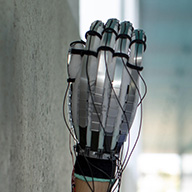
On the other hand, Elon Musk is no pushover. We’re talking about a guy who successfully launched and landed heavy rockets and has a lot of financial backing to push his projects to completion. As of July 2019, Neuralink has received $158 million in funding (of which, $100 million came from Musk himself) and is employing a staff of 90+ people.

Do you think this is a crackpot pipe dream, or are we heading towards a future where we can turn on the TV just by thinking it? Let us know if you’d be interested in getting this brain chip, and stick with Softonic for the latest in tech news!


Complete guide to advancing your career

From building your resume to acing your interview to succeeding in an office, here’s everything you need to know to grow your career.

Ready to take the next step in your career? Just getting started? Looking for a side-hustle to make some extra money? Or maybe you’re ready to strike out on your own and start your own business. Whatever the case, we’ve got some excellent articles to help you on your journey.

Guide to advancing your career

career guide

Looking for a traditional job

Interviewing

job interview

At the office

office work

Productivity tips

Personal tips

staying calm

Working remotely

remote working

Entrepreneurs, freelance, and self-promotion

entrepreneur

Make yourself more valuable

skills learning

The future

future work

Can we (and should we) build a new internet?

We know today’s internet is broken. Are we ready for something new?

future internet

The idea of a new internet goes beyond being a key plot point in “Silicon Valley.”

With data breaches, ISP monopolies, and the whole fake news trash fire taking over the digital space, it’s understandable that one might want to hit delete on the whole internet.

We technically have the technology to make a new internet. It’s here, and chugging along like a clunky prototype. But the point is, we could pull a re-do on the web if we really wanted.

The problem is getting people to switch away from an existing system with oh, just 3.2 billion+ users is no small feat. And those aforementioned prototypes tend to come with a blockchain component — which sounds all well and good. BUT — a good chunk of that 3.2 billion truly has no idea what a blockchain is — much less how it works.

So… some challenges stand in the way. Still, there are some advantages to a hypothetical clean slate.

Here are a few reasons that maybe, starting over isn’t such a bad idea.

Why we might want to consider a total re-do of the internet

The net neutrality factor

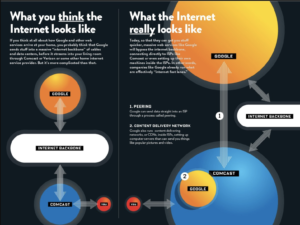
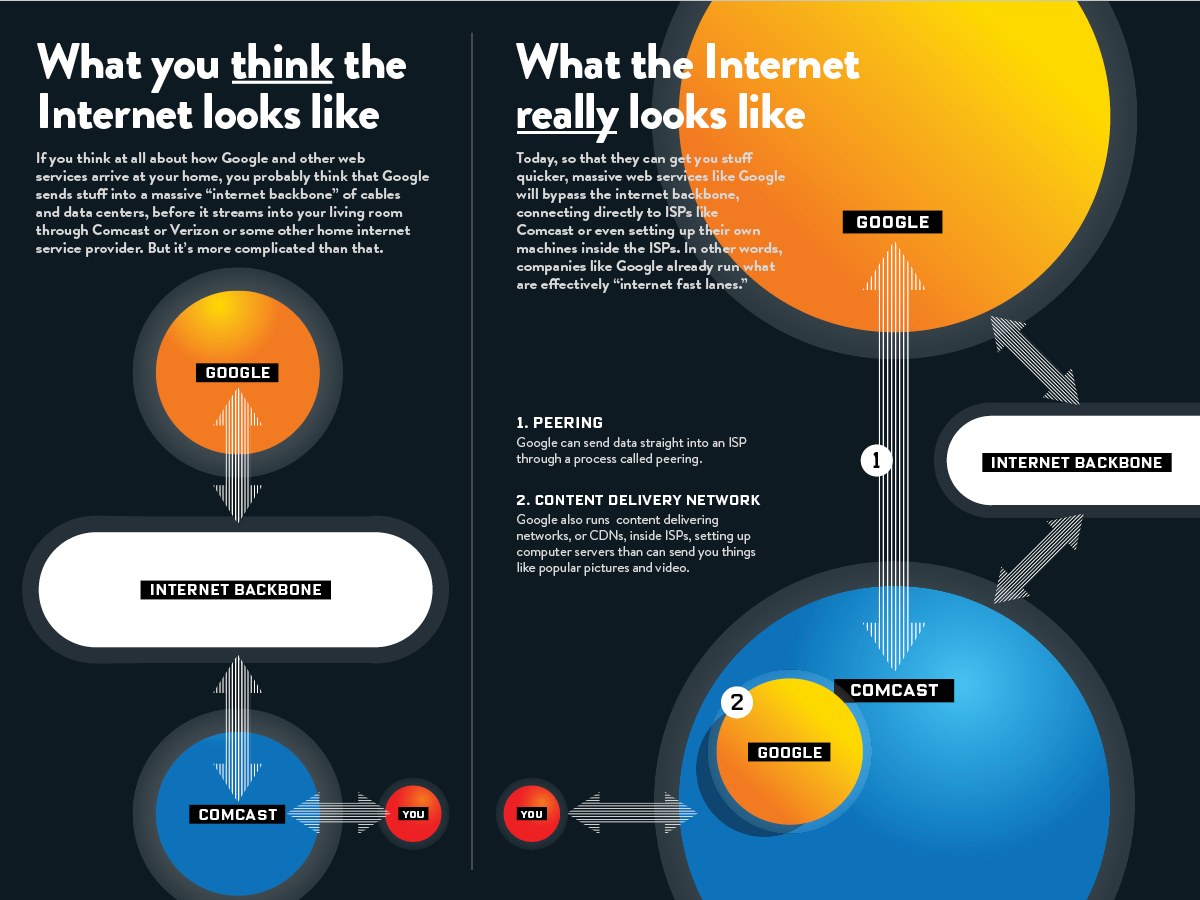
Technically, no one owns the internet. But, a select few companies make up the “backbone” of the internet. The backbone is the primary data route that provides networking access to a handful of companies like AT&T, Comcast, Google, and others. The way that it’s set up is, we need to sign up with a provider to access the internet.

If that doesn’t make sense, refer to this “backbone graphic” courtesy of High Tech Forum:

internet backbone graphic

These ISPs don’t necessarily run the internet, but they do control how you can access it. The end of net neutrality means that all web traffic is no longer treated equally. The old rules prevented ISPs from offering paid access to digital fast lanes or blocking traffic.

Now, ISPs can collect more data and can search and share user search history.

Since the ruling, people have begun looking at “new internets” more seriously.

In some cases, communities are banding together to break free of ISP control. Take for example the Equitable Internet Initiative, a community-owned wireless internet that bypasses ISP control.

If you’d like to learn more about the project, you can check out this short video:

Users don’t come first anymore

The idea of a user-first internet is an exciting one. Even Mr. Internet himself, Tim Berners-Lee, is behind it and working to create an open sourced project, Solid, which seeks to restore the power and agency of web users.

We’re at a strange crossroads where the biggest tech companies — and now, even smaller ones — are collecting data about us and using that to drive profits under the guise of better engagement.

The challenge with adoption lies in the fact that while we can get angry reading about black box data storage systems, we generally don’t notice that there’s any violation taking place. Some of the high profile breaches have captured the public’s attention, but there’s still this issue of convenience and resistance to change.

Do we want to change from Google Docs to Graphite Docs, from Twitter to Mastodon? Or get used to an encrypted email system?

Well, some of us might.

And there are some obvious benefits. But the average internet user often feels that they don’t have much to hide — so what if Facebook knows where I shop or the same ads keep stalking me around the web? No biggie.

Back to the idea of Solid. Berners-Lee says that the platform is designed to work on our existing internet, but that users will create their own pods — essentially a personal data store — allowing them to decide where their data lives and who has access.

Developers will need to integrate Solid into their apps and websites. As of now, there are only a handful of developers doing so. Still, this vision paints a picture of users adding a layer of active consent into their internet activity.

Decentralized internet

internet

There’s an awful lot of promise associated with the idea of the decentralized internet. Those proponents of the idea — from startup founders to activists — talk about decentralization as this beacon of hope. It’s a digital utopia that aims to solve all of our social justice woes and keep our online activity super secure.

One of the key benefits of a decentralized internet is the idea that artists, coders, and writers can share their creations with the world, without the risk of someone stealing their work. Blockchain-based internet could help keep digital assets secure — released if and when someone pays up.

On the flip side, there’s something about the method of creating a permanent online identity that’s a bit unsettling.

Like the idea that a blockchain record could hypothetically stick around permanently is great if you’re looking at it through the lens of severe internet bullying or criminal activity.

But when you consider it in the context of — say, an embarrassing comment or bad review, it could hurt you down the line. When stuff like that happens in the real world, it’s generally limited to a smaller circle and forgotten.

To succeed, the new internet must learn from old mistakes

The internet once represented this positive force of global connectivity.

Today, it’s become the scapegoat for our most pressing social problems. We’re talking about inequality, hate speech, violence, and of course, social isolation.

While net neutrality alone makes a strong case for starting over, we still need to face the mess we made on our current internet, lest we make the same mistakes.

Maybe it comes down to new regulations that limit the reach of tech giants like Facebook. Perhaps it’s creating better decentralized tools that connect with all users, not just the super techy among us.

In the end, the internet is a digital reflection of the world — something we can make better, sure — but there’s no quick fix.

Trending jobs in 2019

Discover which careers are booming this year.

Digital transformation is well underway.

Machine learning, chatbots, blockchain applications have all become part of the work landscape, all while stirring up fears of our pending irrelevance.

Obviously, healthcare tops the charts in most cases — surgeons, nurses, dentists, and orthodontists are always in high demand — so we opted to leave them out of our list of jobs on the rise.

In 2019, in-demand jobs are fairly diverse, but have something in common — many emphasize the human side of an automation strategy. As LinkedIn found in 2018, you don’t necessarily need to be in a highly technical role to see success. Sales, marketing, and communications professionals have a promising outlook, too.

Skills like leadership, project and product management and roles with a strategic component are sought after by employers. And of course — hard skills in the STEM purview are needed to develop and maintain this new wave of tech.

Here, we’ll look at some of the top jobs in 2019 — and likely beyond.

Trending jobs for 2019

data scientist

Data scientist

A data scientist is a person who gathers, processes, and analyzes data. With the hordes of data coming in thanks to advancing data collection methods, humans skilled in breaking these massive sets into usable insights are major assets for companies.

Database administrator

Database administrators are becoming increasingly in demand, as companies start using more software solutions that include AI and machine learning components. The ability to maintain clean, secure databases will be essential for ensuring software can be leveraged to meet an organization’s goals.

Product Manager

A product manager knows how to make a product sell. They work with multiple teams, as well as members of the public to make sure that products are at their best before going to market.

Product managers conduct market research, determine specifications, set pricing, and develop marketing strategies. While this isn’t a highly technical role, product managers often work in tech companies and will do well if they can “speak the language.”

Machine learning engineer

machine learning

Machine learning engineers are programmers with advanced knowledge in the areas of AI and machine learning. They work to develop AI technology and work with complex algorithms and datasets to train systems. As more companies invest in these technologies, engineers can expect to have their pick of opportunities.

Statistician

Statisticians are in demand, with growth expected to rise by 34% through 2024. Statisticians collect and analyze data, looking for patterns that explain human behavior or uncover insights that address a range of public and private sector concerns. Today’s businesses basically run on these massive datasets, so those with a firm grasp on statistics are a major asset to any company.

Sales director

Sales professionals will still be in demand this year, and likely moving forward. Recruiters have long been having trouble filling sales positions with skilled workers who can keep pace with change.

That change can be attributed to CRMs and other analytics tools that are now industry standards. There’s also a shift in buyer demographics, as millennials take on the lion’s share of B2B purchasing decisions.

Still, technology, combined with the ability to read the room and connect with others makes a good salesperson hard to replace with a machine.

Marketing Managers

Marketing managers stand to stick around for the long haul, though their role may change in the coming years. As it stands, your average marketing manager is in charge of marketing campaigns, branding, social media, and content strategy.

Successful marketing managers should also be project managers, critical thinkers, and have the ability to monitor ad performance and other metrics. As marketing tech advances, this role may begin to evolve into a more analytic, decision-making focused role.

And, moving forward, privacy concerns and a crowded social media market may make marketing more challenging. Those who can roll with the punches–and get around new rules and shifting algorithms will likely see success.

Financial Manager

financial planner

Financial managers are looking at a bright future, too. Because of the aging Boomer population, there is a huge demand for good financial advice. Financial managers help clients plan for short and longterm goals, like retirement, college funds, and buying a home. They also break down tax laws, investments, and monetary rules and regulations.

Job seekers — what to expect

Flexibility, improvisation, and a willingness to learn are all important qualities in a job candidate.

While the top tech jobs often require specialized education, tech-savvy marketers, managers, and writers all have transferrable skills required to supplement AI and machine learning applications.

Improve your prospects by earning certifications — in marketing or project management, as well as coding and software-specific training.  The point is, change is the only constant.

Should we teach robots to analyze body language?

If a robot can scan your body language, what will that mean for your future?

robots

The idea of robots learning body language is at once terrifying and potentially very cool.

On the one hand, the idea that there are these public-facing machines that can analyze subtle cues at work or in a social setting is unsettling.

We’ve all been subject to the amateur body language expert who likes to tell people how they feel. The worst, right?

Now, robots are increasingly learning more about our subtle facial expressions and closed-off stance. But it’s not all bad. See, this next step in understanding could make it easier to work with our future colleagues.

Here’s a little more about where we’re at with robots and body language.

The next phase in natural language processing

Natural Language Processing (NLP) is gaining a lot of traction these days. The market is expected to grow to over $16 billion by the year 2021, as more businesses get wise to the benefits of NLP.

Much of this growth can be chalked up to marketing efforts — where companies who can afford it are incorporating customer service chatbots, mining reviews for sentiment, and collecting as much data as they can — faster than ever.

But, increasingly, researchers have started paying attention to body language, too. Humans communicate with more than the written word, and robots stand to help us more if they fully understand our language.

Better collaboration is on the horizon

robot coworker

Robots are already in the mix. But, they’ve long been confined to performing pre-programmed functions. As Cornell engineering professor, Guy Hoffman told MIT’s Sloan Review, researchers are increasingly exploring how machines can work with us.

Hoffman says that subtle changes (like programming robots to nod when receiving instructions) can have a positive impact on the humans working with the machine. Whether we’re conscious of it or not, robots have the ability to affect our behavior.

So, programming some human-like behaviors into bots could give us more positive feelings about the changes associated with integrating AI into our lives.

Artist Madeline Gannon has echoed this same idea, albeit in a different way. Gannon is an installation artist interested in how we interact with machines — which she refers to as “animals.” Through these interactive art projects, Gannon explores how humans and bots relate to one another, as well as how programming body language can help us become more comfortable with robots.

Essentially, Gannon programs robots to respond to human behavior—and while she admits it’s something of a one-sided relationship, that little tweak makes them more accessible — not necessarily a cold and mechanical job-stealing machine.

It’s essential that robot body language is used for good

This piece from Carnegie Mellon University looks at the process of training robots to recognize hand signals and other nonverbal cues. This technology can help machines detect the nuances that exist in nonverbal communications.

One key benefit is the potential use in group settings, allowing robots to detect peoples’ moods or determine whether it’s appropriate to interrupt someone.

There’s also the potential to help people with dyslexia or autism quickly analyze others’ behavior — picking up on cues they otherwise might not notice.

The article mentions that this technology could be used to enable new approaches to treating behavioral issues or conditions such as depression, as well.

Ultimately, this concept initially made us bristle, as algorithmic analyses have made their way into the job hunting process in some dark ways. If robots are scanning us — they better be friendly, right?

In any case, the idea of a friendly coworker is better than the one who doesn’t quite understand context or stares blankly when you say something. Whether we deal with humans or robots, we feel better when our conversation partner “hits the ball back.” Because we’re inevitably going to deal with machines in a more personal way, pre-programmed cues may be able to help us cope with the changes.