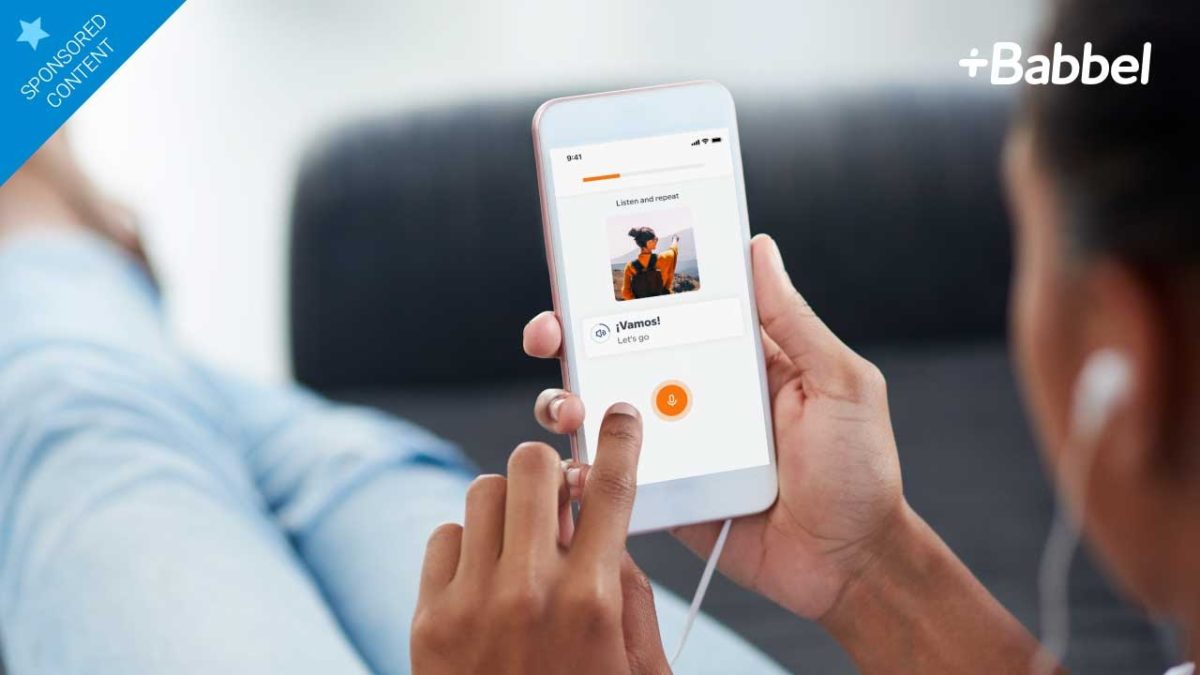
Learning a second language can help you with everything from getting a better job to having a great vacation experience. But most of us don’t have time to sit in stuffy classrooms for hours a week using old methods to try to grasp the language basics. It’s much more fun, efficient and effective to learn a language using the one tool that’s usually by your side – your smartphone. And we’ve simply not found a better mobile language-learning app than Babbel. Here’s why.
Babbel
Start Now!1. Start speaking right away
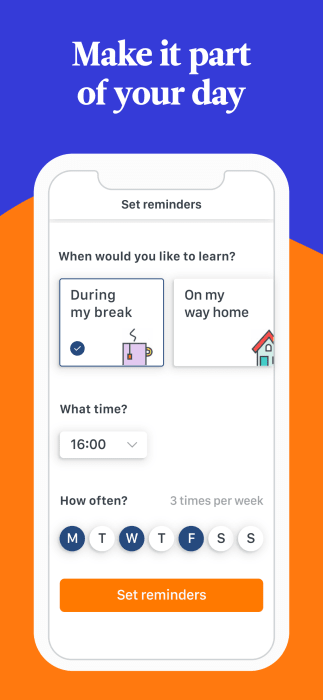
Babbel gets you speaking immediately with practical phrases and vocabulary that you’ll actually use. You’ll go from “Hello, how are you?” to “When is the next train?” quicker than you thought possible thanks to lessons tailored by native speakers. Plus, with handy reminders, you can fit lessons in whenever you have the time – whether it’s during your lunch break, on your way to work, or before you fall asleep at night.
2. Short lessons wherever you are
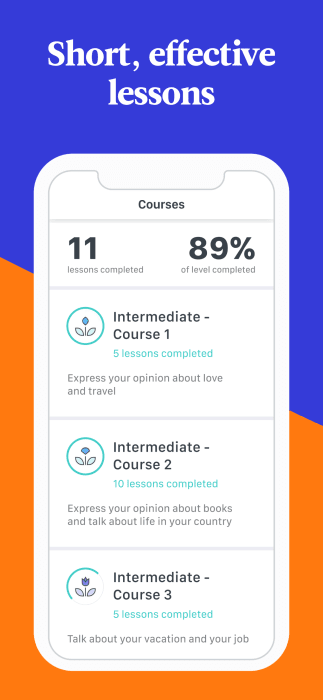
Babbel’s lessons take only 5-10 minutes and can be enjoyed on your smartphone, tablet or desktop computer. But even though the lessons are short, the method works remarkably well. In fact, according to researchers from the City University of New York and the University of South Carolina, Babbel users were able to cover the requirements of a semester-long college Spanish course in just 21 hours of study with Babbel over a two-month period.
3. Learn according to your own needs
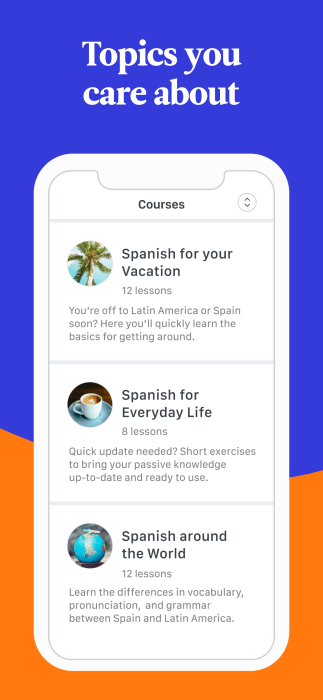
As you know, we all learn differently and have different vocabulary needs. A business traveler will need one set of terms to be successful, while a tourist will need another. Babble not only allows you to focus on the topics you need, but it also combines a mix of reading, writing, speaking, seeing and listening exercises that let you use whichever method works best for you.
4. Get results….for real!
According to the university studies mentioned above, 9 out of 10 Babbel users improved their Spanish proficiency in just two months. That’s partly because the app uses a specially developed learning system that reviews vocabulary words at just the right times to move them from your short-term to your long-term memory. But don’t take our word for it, check out the thousands of positive reviews our app has gotten on the Google Play and Apple stores, including this one …
“Excellent App and truly a full course to learn languages fast! There is nothing that can compete on the market and the App is worth every cent! Just start learning a common language to improve yourself, even if you don’t feel an immediate use. You’ll enjoy it! There is so much to learn about culture at the same time. The App covers it all in a very clever way.” – Sarah Bremmer
5. Free Trial
While we’re convinced that Babbel is the premiere best way to learn another language, you can find out for yourself without spending a dime by trying the app’s demo, which entitles you to a completely free lesson from any one of 14 languages.
Once your free lesson is complete, you can sign up for a variety of packages as low as just €9,95 per month. All packages come with a 20-day money back guarantee as well, so if you find that Babbel is not right for you at any time during that period, a full refund is just a click away. You’ve got nothing to lose and the power of unlocking a second language to gain!
Babbel
Start Now!