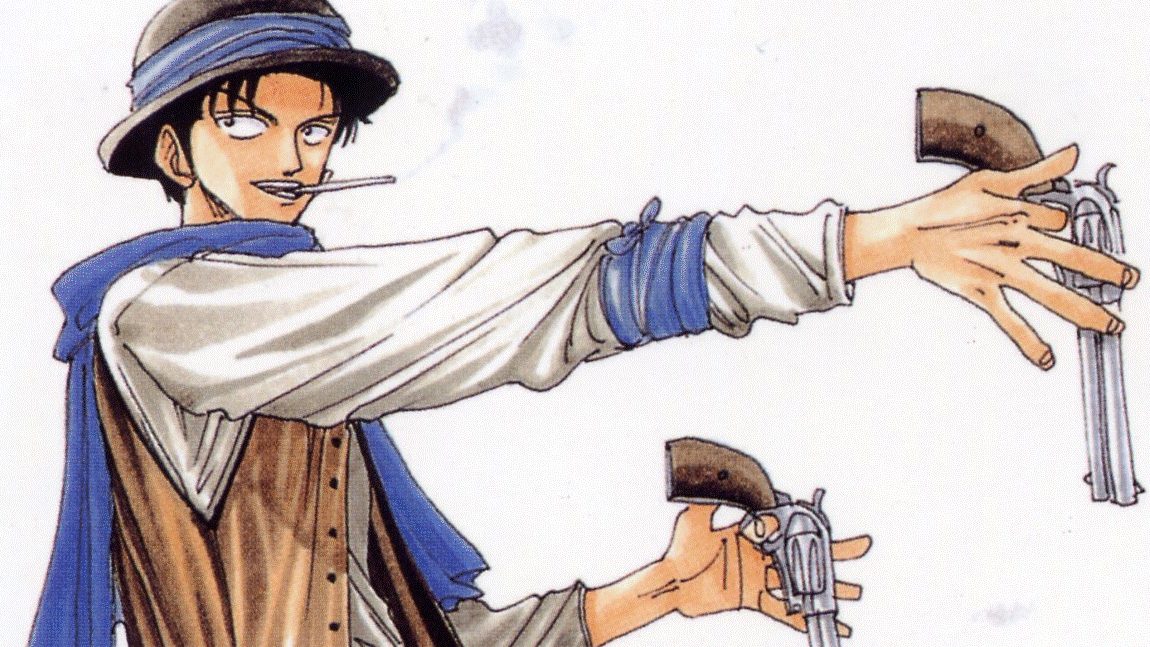
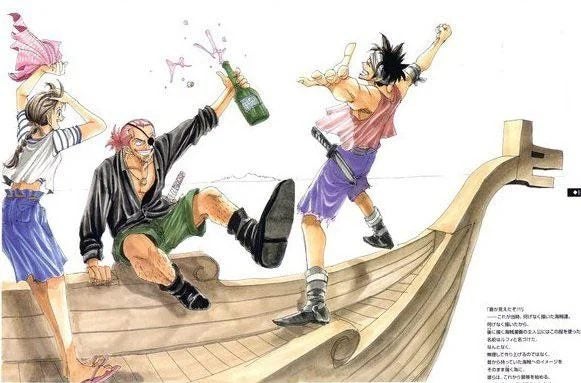
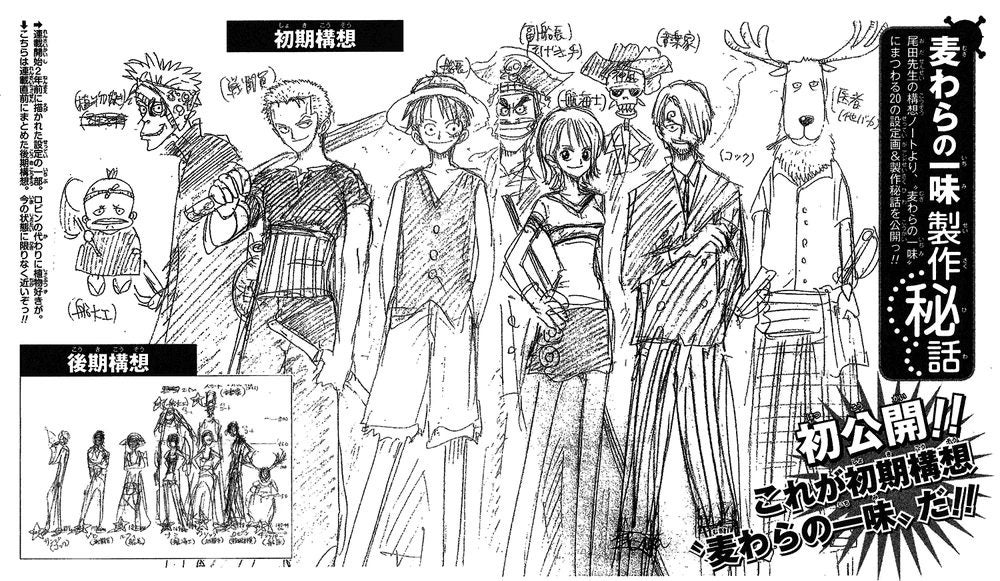
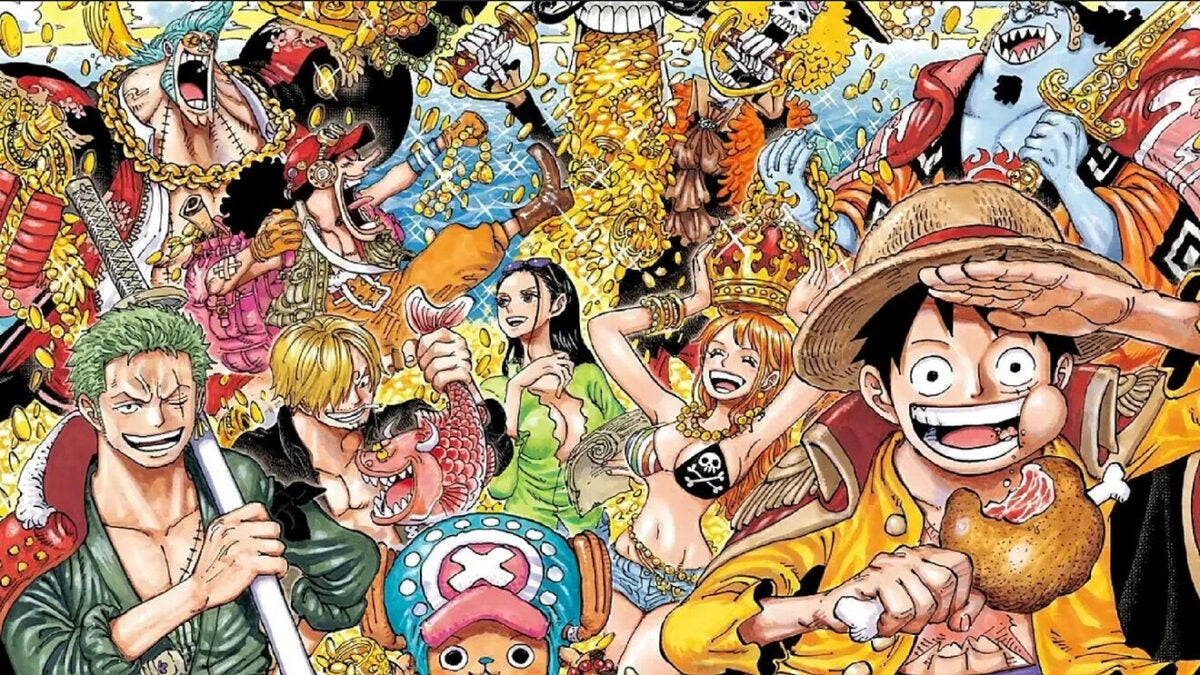
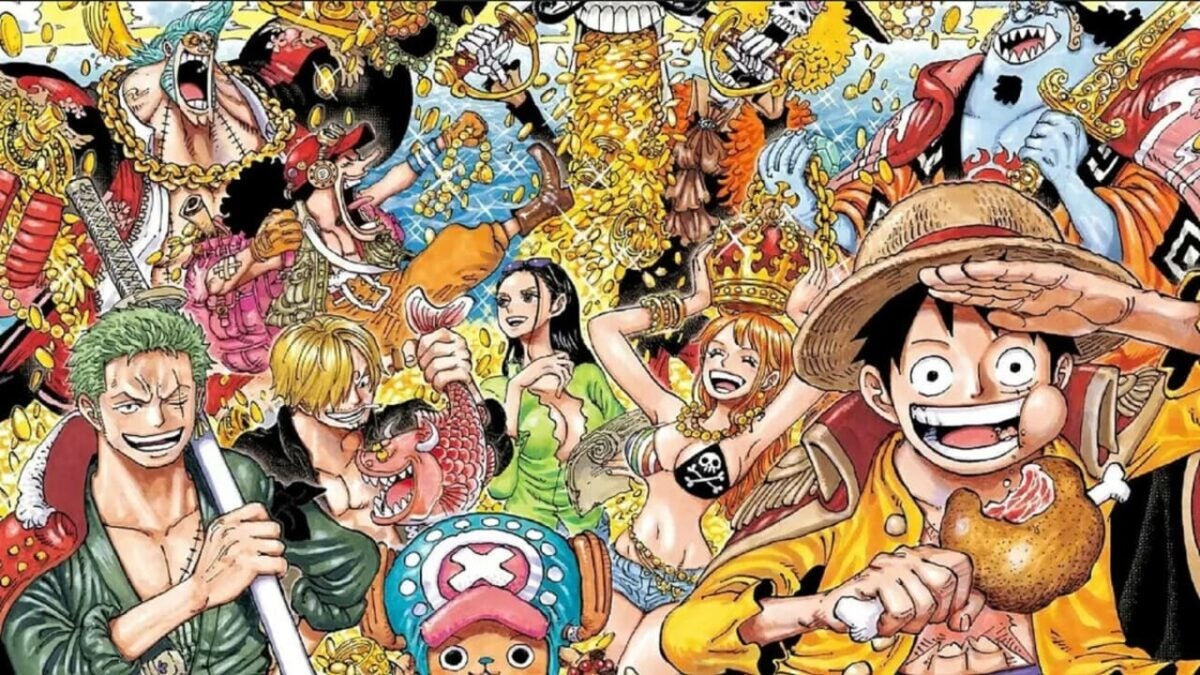
Some of them were very clear (Luffy, Zoro, Nami and Sanji) and the rest… let’s say they were polished. For example, Chopper was, in the first group image, a smoking human-reindeer and Usopp was an adult pirate captain.
Few things have lasted as successfully in the popular imagination as ‘One Piece’. 26 years of almost uninterrupted publication (quite possibly 30), the life’s work of Eiichiro Oda that, surprisingly, began with a story that he told three times over the years, refining characters, style and plot, but in which everything that would follow was already included: ‘Romance dawn’.
Luffy is already in the first vignette of ‘Romance dawn’, and would last until the end as the key piece of all this gigantic plot. However, in the third story we can also see Nami alongside the Pirate King: in the first two stories she is accompanied by a certain Spiel and Ann. These are small subtle changes: for example, although Oda knew that, at the time of making the long story (five years, according to initial calculations), Shanks would give his straw hat to Luffy, in this first manga who gives it to him is his own grandfather (who in the manga did not appear until much later… And we already know how that ended).
But the most interesting thing to see the evolution of ‘One Piece‘ is to see the original designs in the different artbooks, where you can see that from the beginning it was clear that there would be ten crew members. Some were very clear (Luffy, Zoro, Nami and Sanji) and the rest… let’s say they were polished. For example, Chopper was, in the first group image, a smoking human-reno and Usopp an adult pirate captain.
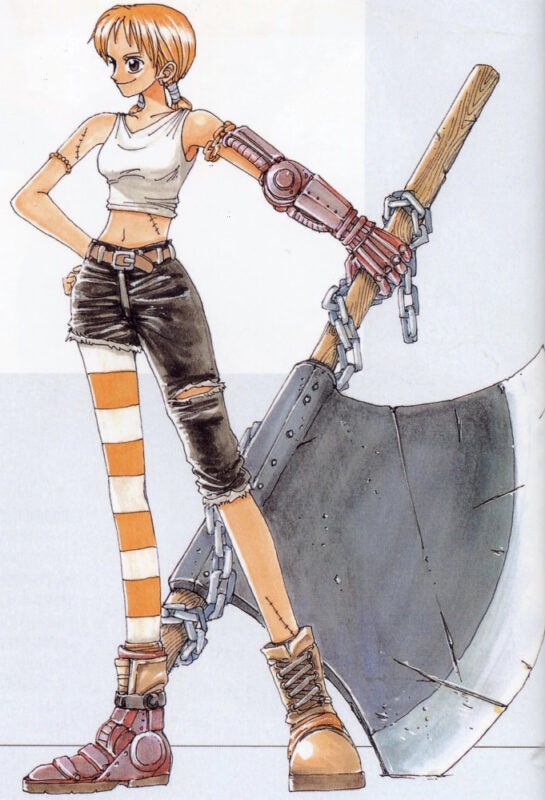
The rest of the crew has been directly changed, sometimes for the worse. This is the case of Nami, who in her first designs was a thief with a mechanical arm and a gigantic axe. Not very useful to have to draw her every week, of course, but I just want you to imagine her giving giant axes left and right to get a few berris. Oda, you still have time to do it.
Instead of rushing like a man possessed into the unknown, Eiichiro Oda created, tweaked, reworked, replayed, moved and changed to his heart’s content to create his great masterpiece. And now that the end of the adventure is finally in sight, it’s time to remember the beginning. How we’ve changed, Luffy!
The problem is that, speaking with his Shueisha editors, he has stated that he wouldn’t mind hanging up the pencils for once and simply focusing on telling his story and having someone else draw it.
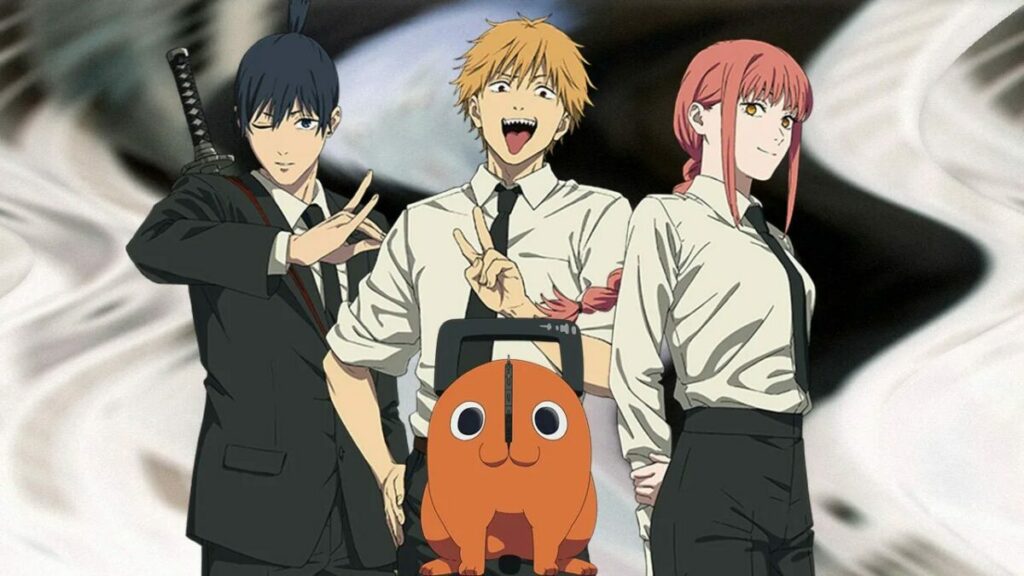
Chainsaw Man’ is, undeniably, one of the most famous manga of recent times. Although from the outside it looks like a Japanese nonsense, the truth is that as soon as you start reading it you enter the world that its author, Tatsuki Fujimoto, offers and that has complex personalities, extreme situations, fun without complexes and the feeling that this is not just another manga. The problem is that you’re already tired of it.
Chainsaw man’ lasted only two years after which Fujimoto was able to take a well-deserved rest (the life of mangakas is terrifying and is based on work and sleep), but now he has started with the second part of the misadventures of Denji and company. The problem is that talking to his editors at Shueisha, he has stated that he wouldn’t mind hanging up his pencils for good and simply focus on telling his story and having someone else draw it.
He gives as an example the author of ‘Oshi no ko’, Aka Akasaka (an incredible name, by the way) who after achieving success as a mangaka with his previous work has retired from drawing and is only dedicated to being a scriptwriter. “I think it’s more fun that way,” he says. Although he hasn’t thought about who to give it to or how to do it, the truth is that he hardly uses assistants because they cost a lot of money that he has to pay, as he showed in his manga ‘Look Back’.
In the end, Fujimoto has to deliver 20 pages every Tuesday to continue ‘Chainsaw Man’, which means about three a day. Scripting, drawing, inking and plotting: it may look easy from the outside if you’ve never drawn before, but it’s not. It’s a stressful job and one that causes a number of mental and physical problems, so if the body asks you to leave, the vast majority of fans agree.
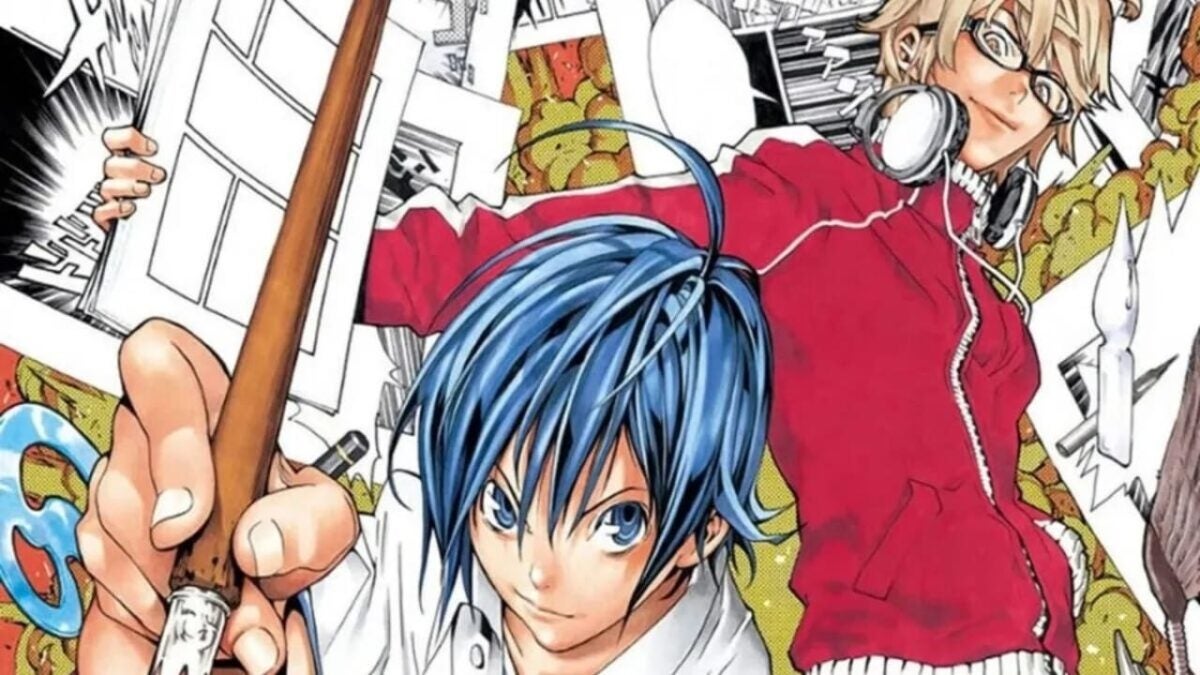
He won’t be the first or the last manga to have different authors for script and drawing (‘Bakuman’, ‘Death note’) and there’s nothing to be ashamed of. In fact, there are plenty of up-and-coming mangakas who copy his style and could very well be in charge of delivering the pages every week while he goes about, well, living his life a little better. Which is no small thing.
Otakus live up to date with the cancellation of their favorite manga for one reason or another. In fact, some of the best known in history will never have an end. We tell you the story behind five of them!
We’ve all experienced at some point that something we loved remained unfinished and will never continue. It’s the expression fans of ‘A Song of Ice and Fire’ are starting to wear, and one that followers of ‘Firefly’ or ‘Freaks and Geeks’ once rehearsed well. But if there’s a group of people who know all too well what it’s like to lose hope of their favorite work returning, it’s the otakus, who live day by day with the cancellation of their beloved manga for one reason or another. In fact, some of the most well-known ones in history will never have a conclusion. Let us tell you the story behind five of them!
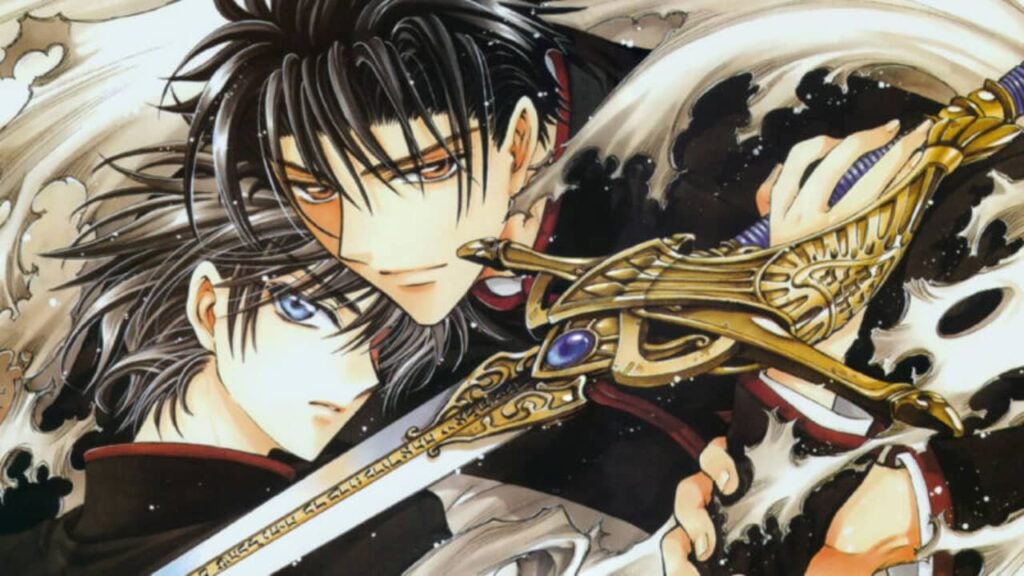
For eleven years, from 1992 to 2003, the group of mangakas Clamp (‘Card Captor Sakura’, ‘Chobits’) took to culminate their masterpiece, ‘X/1999’, compiled in 18 volumes. Or that’s what we would say if… it had ended. In March 2003, the mangakas decided to distance themselves from the work and take some time to think about how it could conclude, and that’s how we have been for twenty years. Both the anime series and the movies had to come up with their respective endings, which will have to suffice. To add salt to the wound, it’s supposed that only three volumes were left to finish the story. Painful.
‘Phoenix’ (Osamu Tezuka)
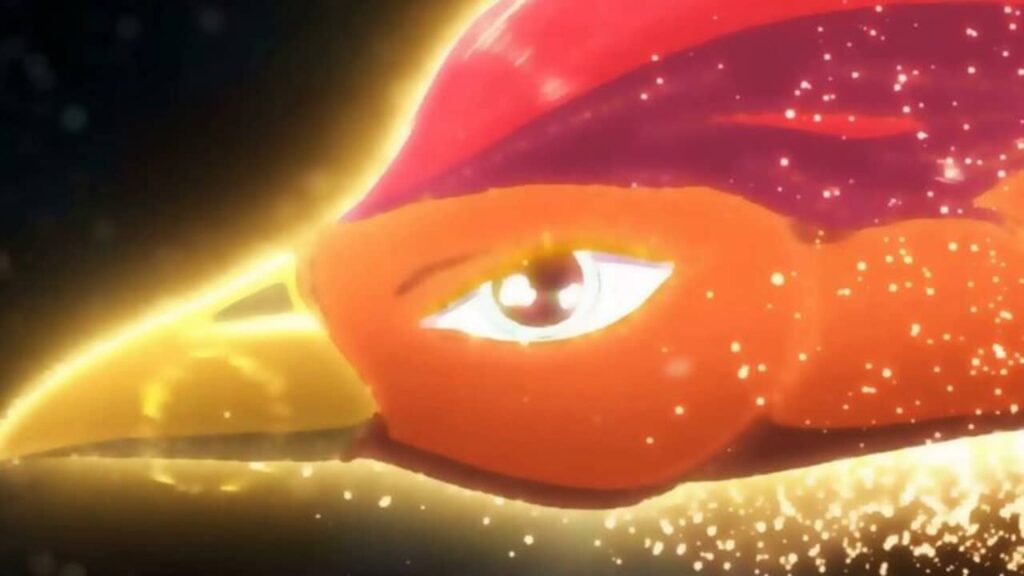
For me, one of the greatest masterpieces in the history of comics is ‘Phoenix.’ It was the work that accompanied Tezuka throughout his entire life: it began in 1954, and its last episode was published in 1988, just before his death. After his passing, nobody dared to touch a single line of this inconceivable and immortal manga that spans across all eras of humanity (after all, it deals with reincarnation). Even though it lacks an ending, if you have the opportunity, take a look at it: you won’t regret it.
‘Vagabond’ (Takehiko Inoue)
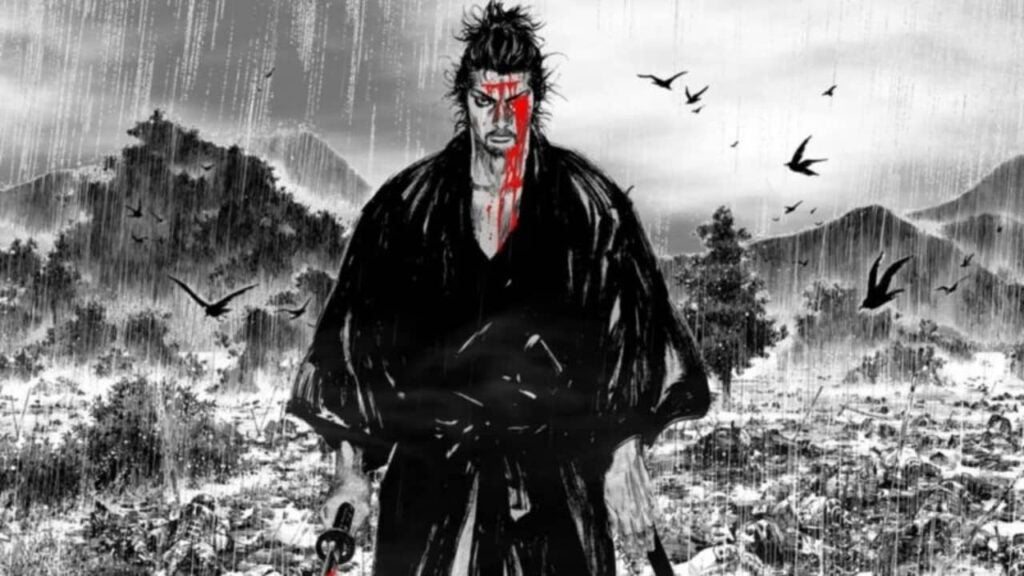
From 1998 to 2015, Inoue focused all his efforts on this fantastic martial arts and samurai story that spares no violence and brutality. That hasn’t stopped it from becoming one of the best-selling manga of all time… even though it lacks an ending, and there’s no sign of it coming. Considering how ‘Slam Dunk’ ended, we know that Inoue isn’t particularly good at bidding farewell to his characters, but leaving them hanging is just too much… especially since in 2009, he stated that ‘Vagabond’ would conclude within a couple of years. Since then, the series has been plagued by hiatuses, some lasting a year and a half. However, eight years later, fans have lost all hope of seeing how it ends, especially now that Inoue has ventured into directing with ‘The first Slam Dunk.’
‘Berserk’ (Kentaro Miura)
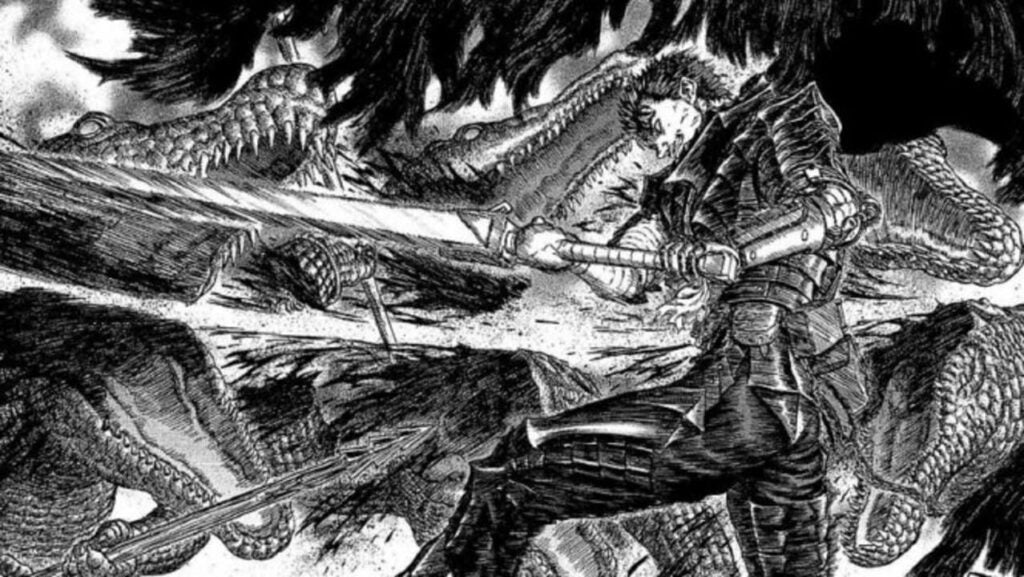
It’s curious how ‘Berserk,’ a magnificent work that began in 1989, only concluded 22 years later with the death of its author at the age of 54. At that time, it was assumed that the manga, which already had 41 volumes, would not continue. However, Kouji Mori, the friend who helped him create the entire story, episode by episode, insisted on finishing at least the ongoing saga, and the manga was resumed as an epitaph to Miura. It remains to be seen if after 2023, any new chapters will be published or if it will remain incomplete forever.
‘Nana’ (Ai Yazawa)
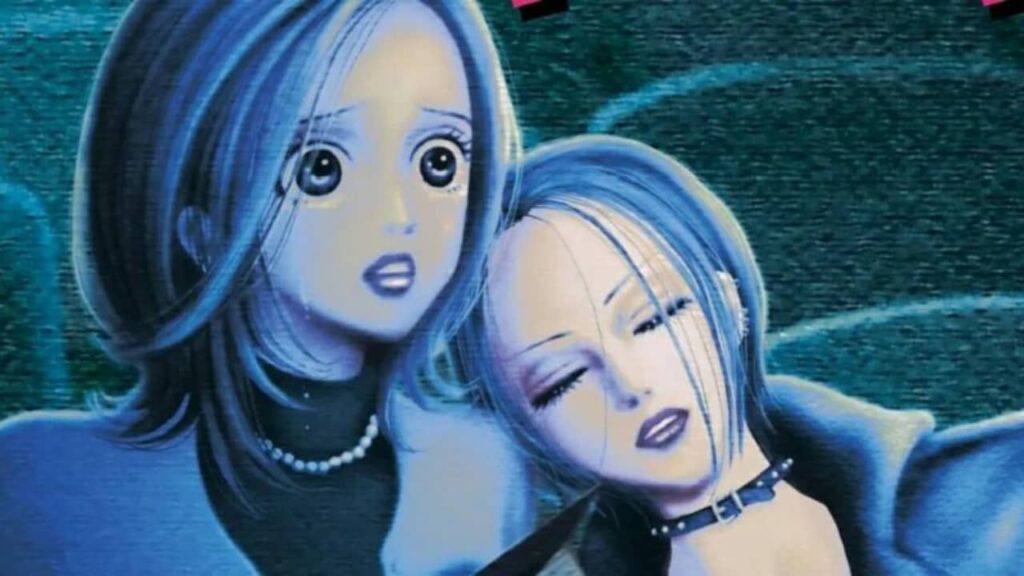
Indeed, ‘Phoenix’ is a masterpiece, but nothing pains me more than ‘Nana,’ the manga that Yazawa conceived after ‘Paradise Kiss,’ which became a true revolution in adult shojo. With 21 volumes published over 9 years, it told the parallel stories of two women named Nana in Tokyo and introduced time jumps that only raised more questions… questions that will never be answered due to the health issues of its author. She hasn’t been able to maintain the pace required by weekly magazines since then. In light of what happened to Miura, it’s not a bad idea for her to ease off the accelerator. It’s better to have a living mangaka than a finished manga.
Rediscover the toys of your childhood and learn how you were taught technology, science and creativity in a unique way.
The nineties were a time full of changes in which analog was opening up to digital and everything seemed to be possible. With the internet just around the corner, the video game revolution present, and the arrival of the futuristic year 2000, everything changed for those of us who grew up in those years, and that is something that also directly affected what we played as children.
Beyond the classic Action Man or the Barbies that continued to lead the market, in the nineties, dozens of toys emerged that integrated technology, science, and completely original formats to surprise the kids of the time. They were toys that challenged simplicity to bring completely new ways that challenged the imagination of children… and that marked us irremediably in the future.
From castles with hidden secrets to private diaries you could only see with a password, the imagination of toy companies in this era seemed to have no limits. Well, they did have a limit: batteries. Every innovative toy that integrated some technology required batteries, the biggest problem for children in the nineties. But, once equipped with them, the possibilities were endless.
Then we leave you with the most recognizable toys of the nineties that challenged the creativity of the master toy makers of the time and caused the quality of this industry to increase a lot. The nineties were a decade of stimulus, and much of the blame went to these products.
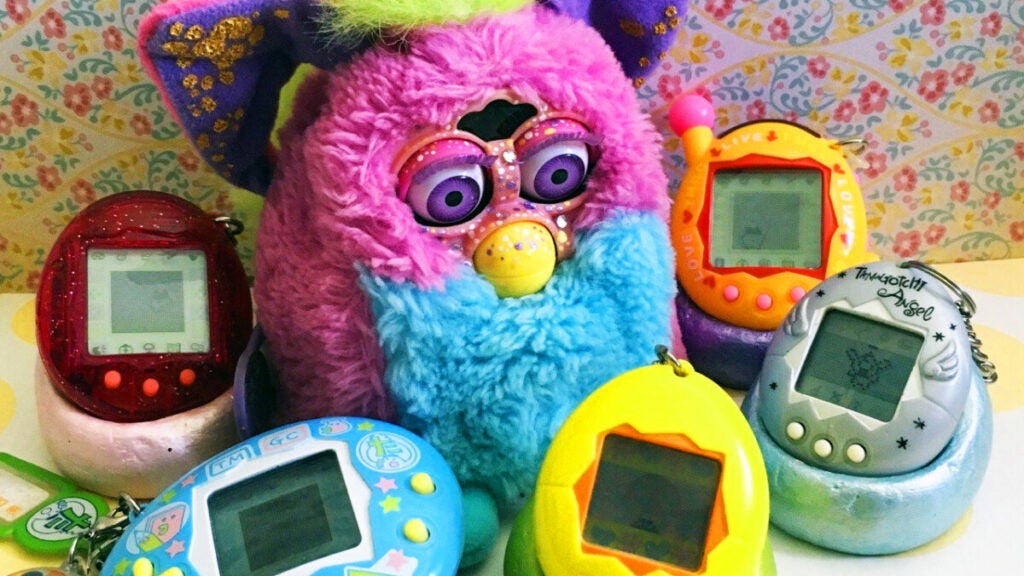
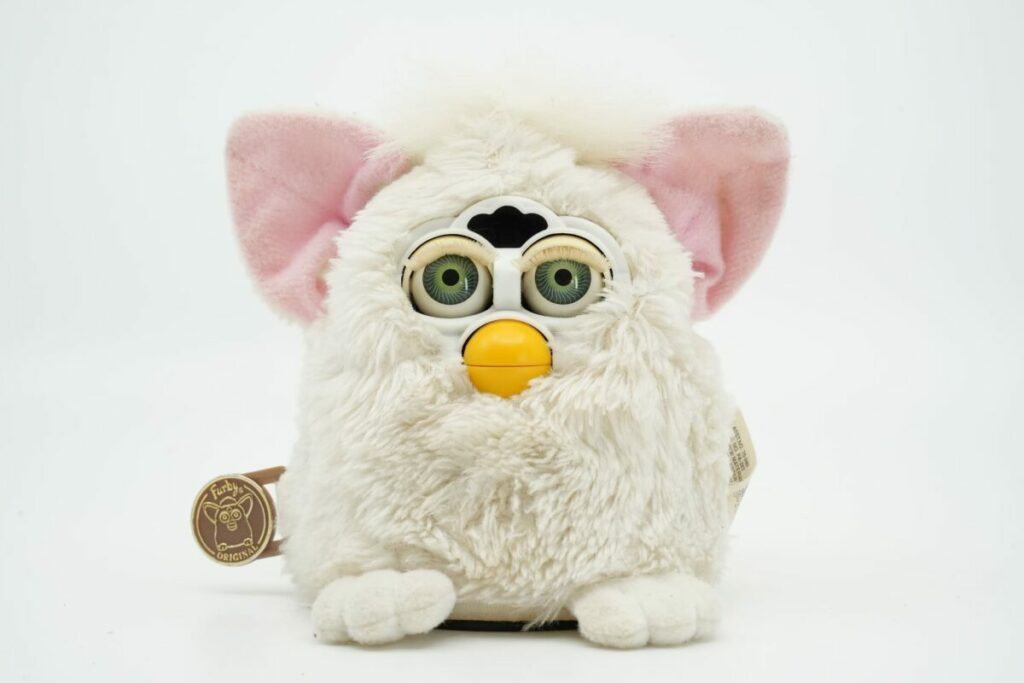
1. Furby
We couldn’t start the list with any toy other than the Furby. The toy to which we dedicate an entire article forever changed our perception of robots, and it is the first real virtual pet we could have. The Furby was a kind of stuffed animal whose design gave quite bad vibes but to which we took affection to be able to have small conversations with him in his own language: the furbish. Although now it seems to be nothing more than a robot come to less and that reminds more of 5 Nights at Freddy’s than bucolic imagery, at that time they promised a revolution that seemed to come from the future.
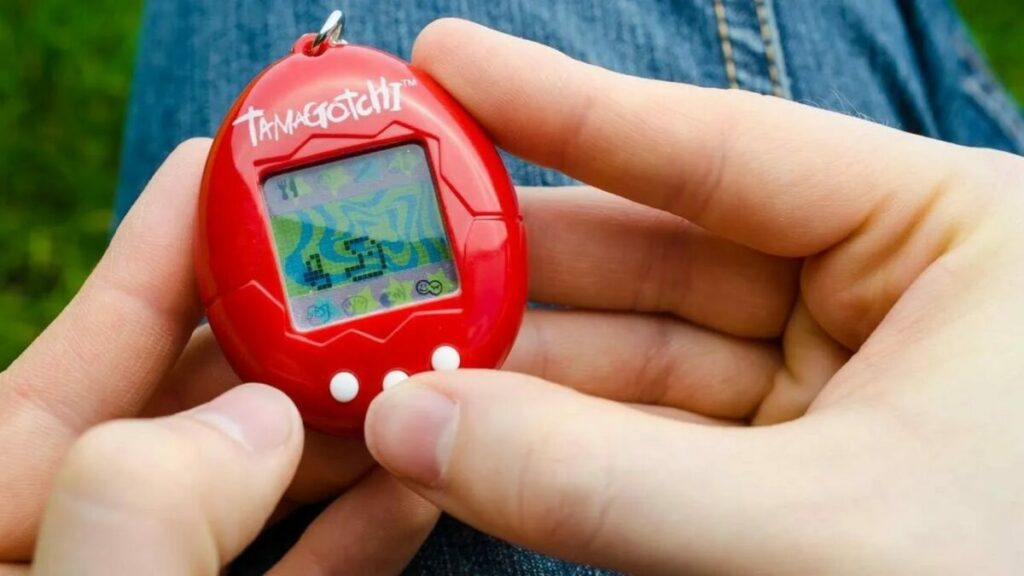
2. Tamagotchi
But if we talk about an icon of the nineties, this can be none other than the Tamagotchi. For many, the Tamagotchi was our first mascot. Created by engineer Aki Maita, it was a small device, similar to a console, that presented us with a virtual pet that we had to take care of completely. The heaviest drama of the time was when we died the Tamagotchi … Our first link with death that we could only fix by inserting a toothpick into a tiny hole in the back. It should also be noted that, although the official Tamagotchi were the most popular, during this decade pirated versions did not stop emerging that also proliferated among less affluent children.
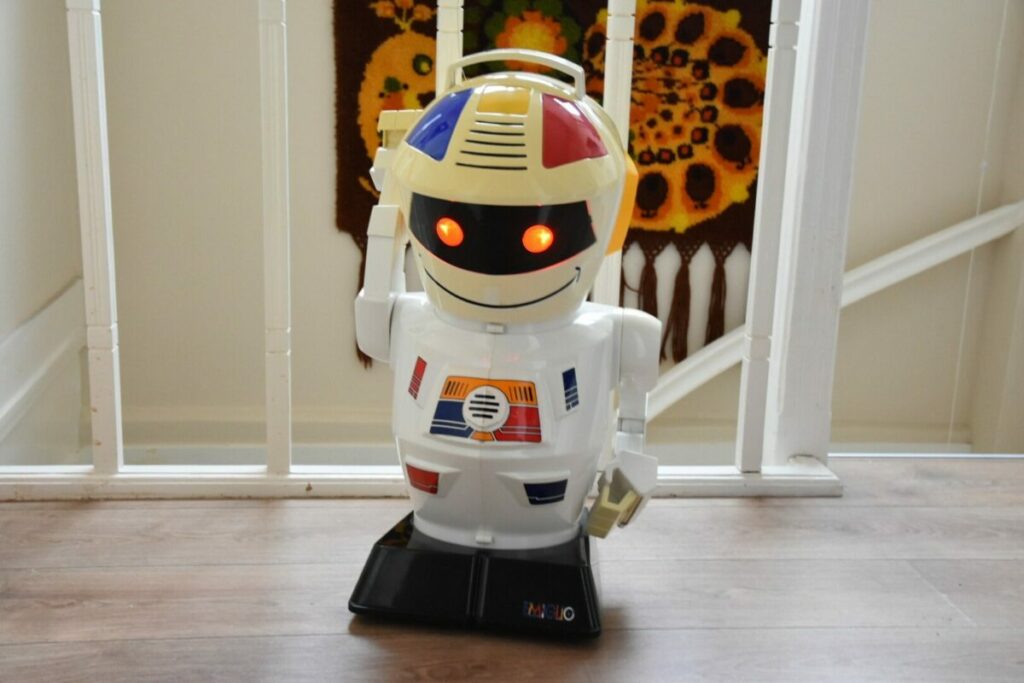
3. Emilio Robot
There is a robot, literally, that took over the Christmas gifts of several years during the nineties: the Robot Emilio. Created by Giochi Preziosi, the name of this robot was actually an acronym: [E] lectronic [M] echanical [I] ndustrial [G] enerated for [L] ogical [I] nfiltration and [O] bservation. Actually, what he meant was that it was a robot that mimicked human behavior… although it was actually not as satisfying as expected. Be that as it may, the robot Emilio was a clear example of what we would do in the future with robots: use them as servants and / or slaves. Poor Emilios, for what you will have been through.
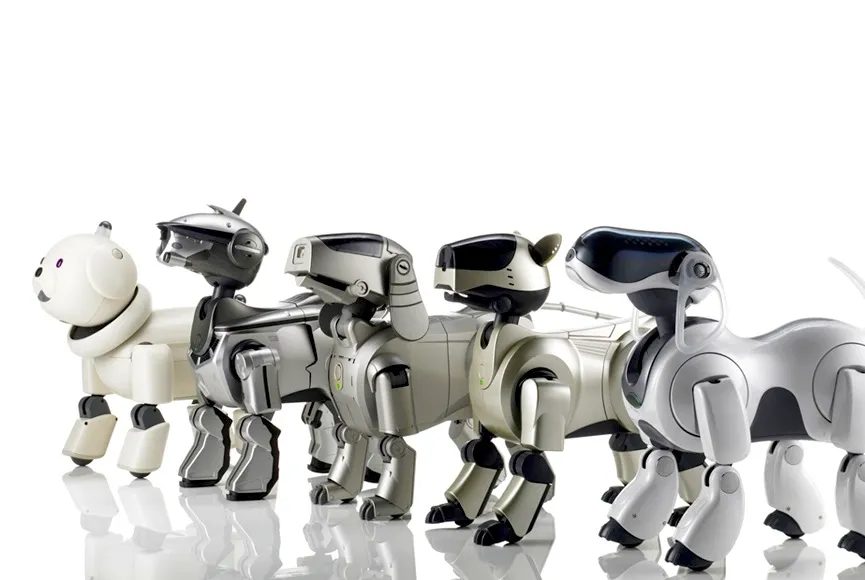
4. Aibo Dog
We continue with the robots with Sony’s personal bet to enter this competition: the dog Aibo. Again, its name is an acronym, Artificial Intelligence [Ro]bot, and it is one of the first allusions to AI in the toy world. Basically, it was a brand of robotic puppies that did different tasks, and they were manufactured every year through new versions until 2005. From the Aibo emerged many other pet robots of this style, and there came a time when it seemed that there were more robots of this style than real cats and dogs.
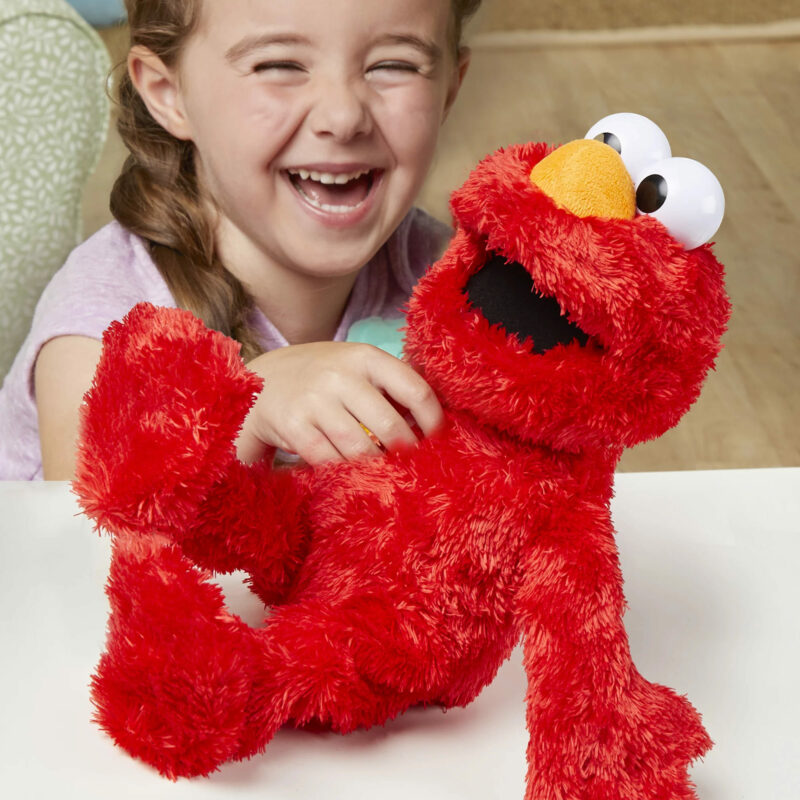
5. Elmo Tickles
This toy was much more basic than the previous ones, but also more common among the homes of those born in the nineties. Elmo Tickle presented the character of Sesame Street with a peculiarity: when he “tickled”, that is, touching his belly, the toy trembled thanks to a vibration system similar to that of the controls of the consoles. Elmo Tickle was only the previous to many other toys of the style, being Epi Volteretas one of my favorites. Sesame Street has never gone out of style, and in the nineties, they were in their prime.
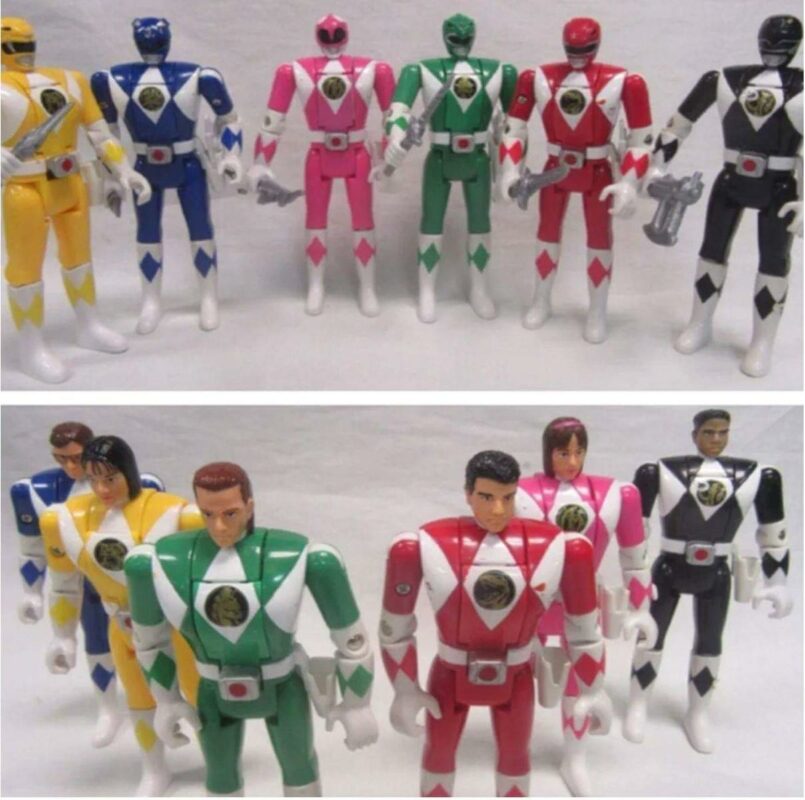
6. Power Rangers with rotating heads
The most mundane toys were also full of originality during the nineties, and one of the most mythical was the Power Rangers whose heads could be turned to make it have a human face or Power Ranger helmet. A milestone of the toy store that was in millions of homes around the world. Although Power Rangers has become a brand more nostalgic than current, I have no doubt that if they relaunched these toys again they would take over the market.
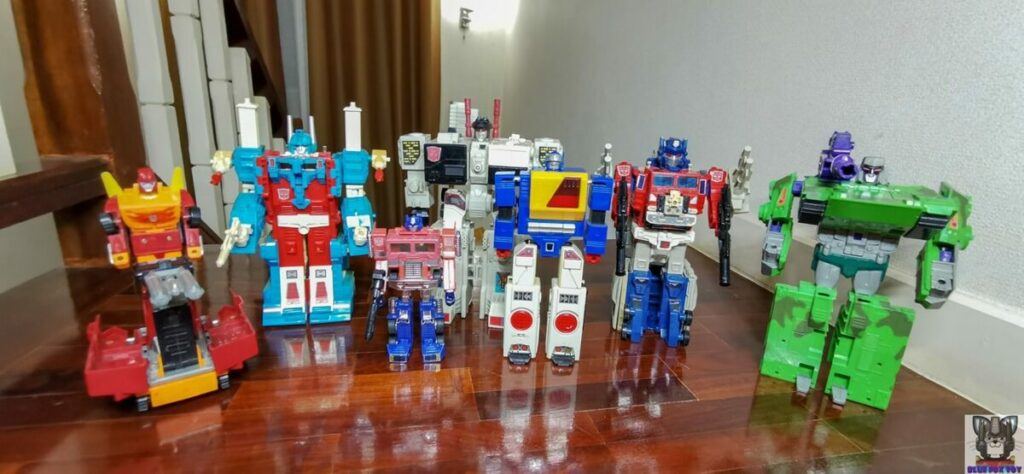
7. Toy Transformers
If you didn’t just have a turn of your head, you could always do a lot more with toy Transformers. Going from a car to a robot had never been so simple, and certainly in the nineties they were a hit that could only be equated with the success that Michael Bay’s films had later. It is a pity that, despite the triumph of the movies, the fashion of Transformers toys has not been repeated. Of course, at the time they were crazy.
8. Polly Pockets
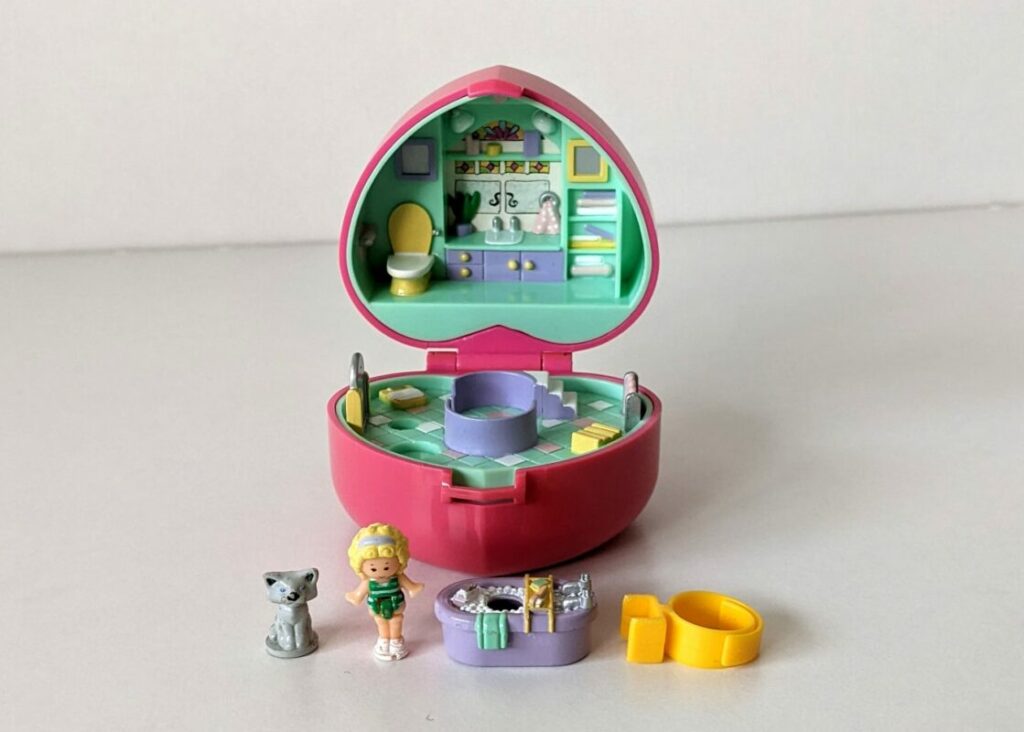
During the nineties we not only learned technology or science, but also organization and architecture. At least, on a very small scale. Much of the blame for this was the Polly Pockets, “pocket” dolls whose main attraction was their incredible homes in small spaces. Polly Pockets collectors come to have huge rooms made up of cities created by these toys… There has to be everything in the world.
9. Remote control cars
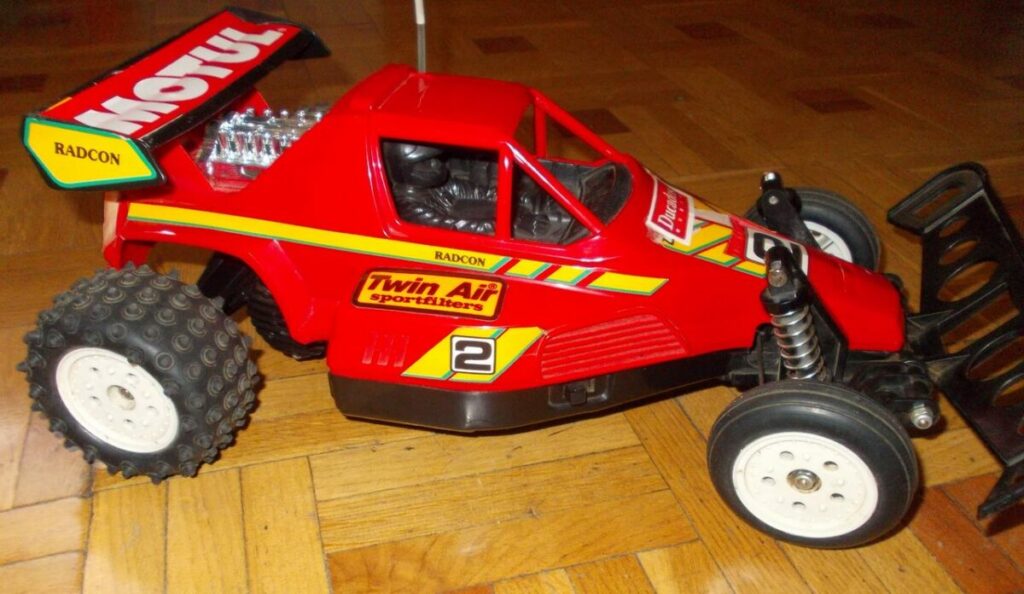
A toy that became very popular in the nineties was the remote control car (or RC). Although they had been wandering for years, it was in this decade when technology reached its peak to make all children have one that caught a great speed … and lead to accidents of all kinds. Without a doubt, it was a fun entry into the motor world that coincided, in addition, with the proliferation of Formula 1 in Europe. Special mention to the Scalextric, which despite being something a little different managed to have a great impact in the nineties. Who hasn’t ever asked the Magi for a Scalextric?
10. Meccano Cars
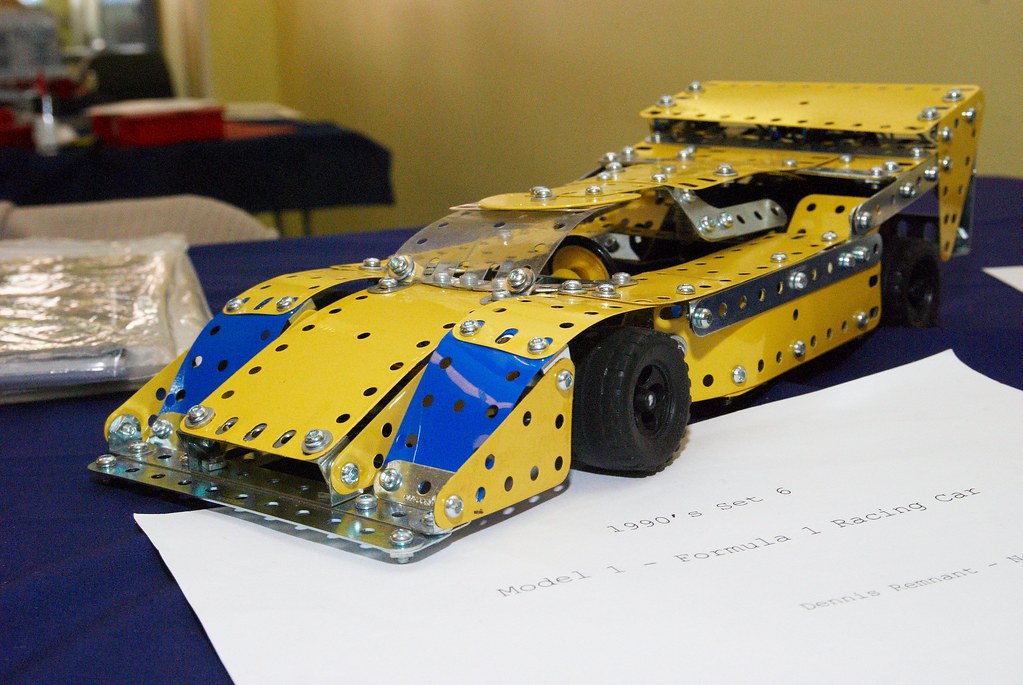
Continuing with the cars, it also became very fashionable to build these vehicles in pieces, making the Meccano brand (nothing to do with the group of Ana Torroja) great popularity. They had already been with these constructions for decades, but the automotive boom led to their figures growing much more.
11. Hot Wheels
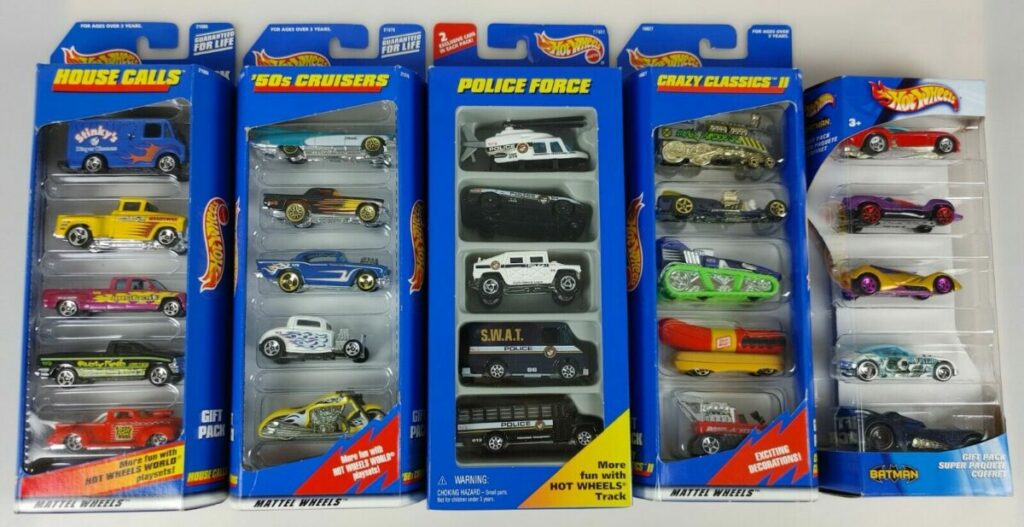
Speed at the top! This slogan that continues to sound today became fashionable in the nineties thanks to Hot Wheels, the best-known toy car brand so far. Defying the laws of physics, Hot Wheels promised spectacular turns and all sorts of stunts. Then it was not so much, but the hype was already created. Today, Hot Wheels remains one of the most purchased brands of toy cars. It is not surprising, since its logo and slogan get cool no matter how many years pass.
12. Yo-yo with light
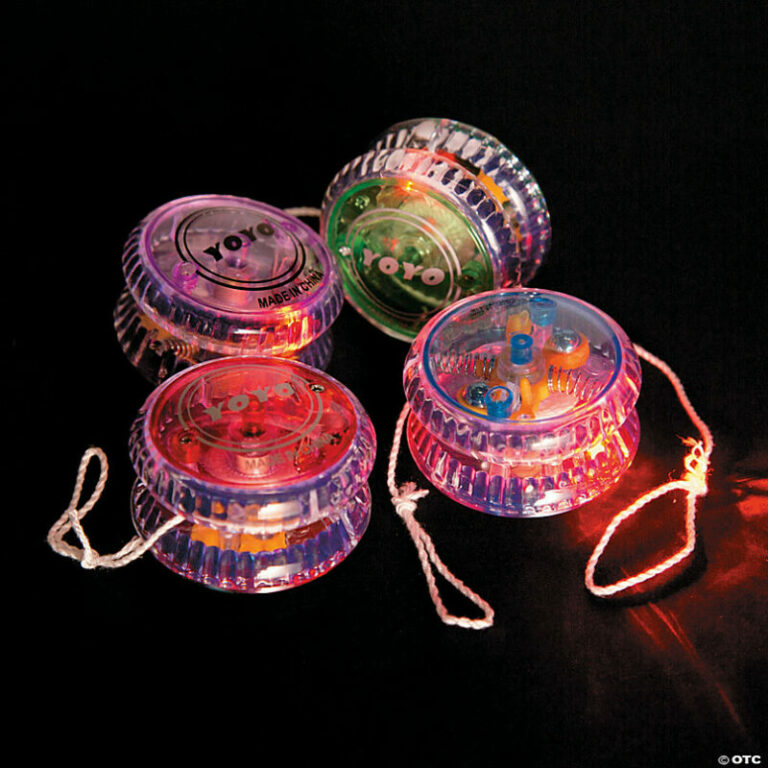
Technology and brilli brilli were the daily bread of this decade, and how it was not going to affect classic toys. By simply adding a light, the yo-yo turned from something boring and classic to an incredible fantasy. Of course, fashion lasted as long as it had to, but the yo-yo always comes back, and these toys have repeatedly returned to the homes of children around the world.
13. Rubik’s Cube
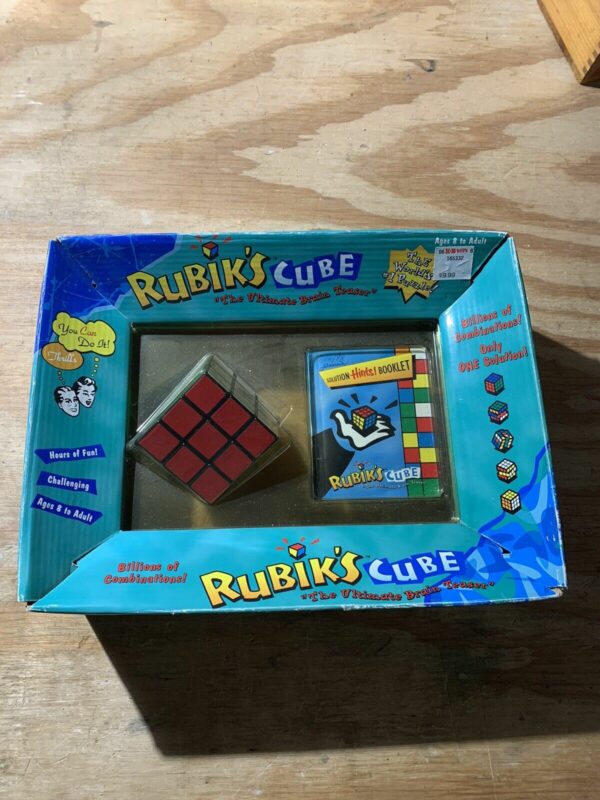
Although it was an invention in 1974, the Rubik’s Cube became extremely popular between the late eighties and early nineties. Without a doubt, his ability to challenge our wits caused us all to try him at some point… most without the luck of completing a single face. In addition, not only did the classic Rubik’s exist, but at this time all kinds of similar cubes began to emerge: with four faces, with three, shaped like snakes, and so on.
14. Turbo Spinning Tops
As if we did not have enough with the Rubik and Yo-Yo, someone thought it was a good idea to resurrect the tops by making them have colors, lights and look spectacular. It worked so much that some Japanese later gave the idea of creating the Beyblade, which also had a great impact in the 2000s. Not suitable for children who will get dizzy easily.
15. Game Boy
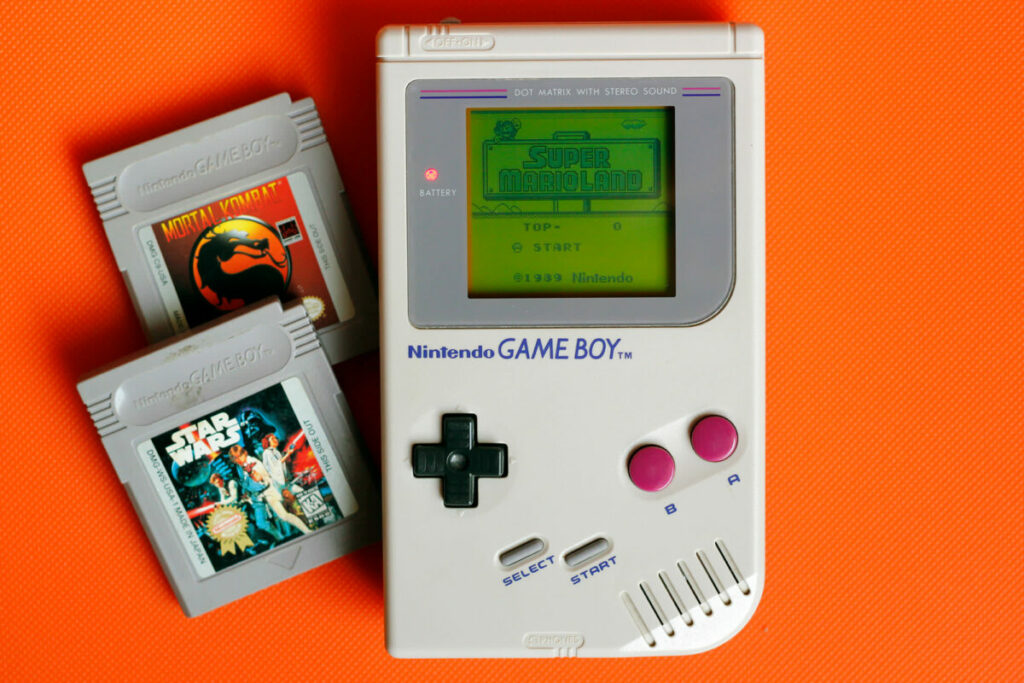
Of course, video games were another separate matter in the nineties. With the proliferation of portable consoles and the creation of the PlayStation, there was no kid of the time who did not play video games. But the case of the Game Boy was unique: it became the best-selling console in history, and although it was later surpassed, it marked forever the future of the nineties. Of course, nobody takes away the great times we spent glued to the screen of our Game Boy.
16. Game Gear
But the Game Boy wasn’t alone… even if it seemed so. Sega tried its luck with its own portable console, the Game Gear, and although it did not have even a tenth of the sales of the previous one, it sold more than 10 million units and left a marked memory in many gamers of the time. Later, many of the forgotten titles on this console were recovered on later consoles… and some are a real gem.
17. Pokédex
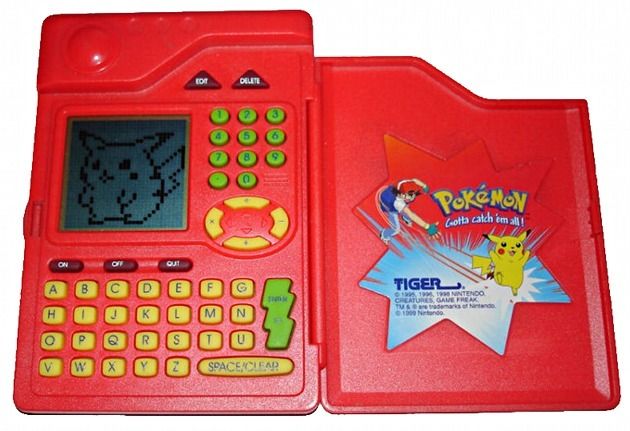
At the end of the nineties, Pokémon landed strongly in homes around the world and became the biggest phenomenon that ushered in the new millennium. And, of course, their toy merchandising could not be left behind. Specifically, at this time came a toy that dazzled fans of the saga: a pokédex like Ash Ketchum’s that allowed us to play and learn about Pokémon. Of course, it was the perfect way to learn the names of the 151 Pokémon of the moment… And not only that but then later versions emerged that added many more to the main roster.
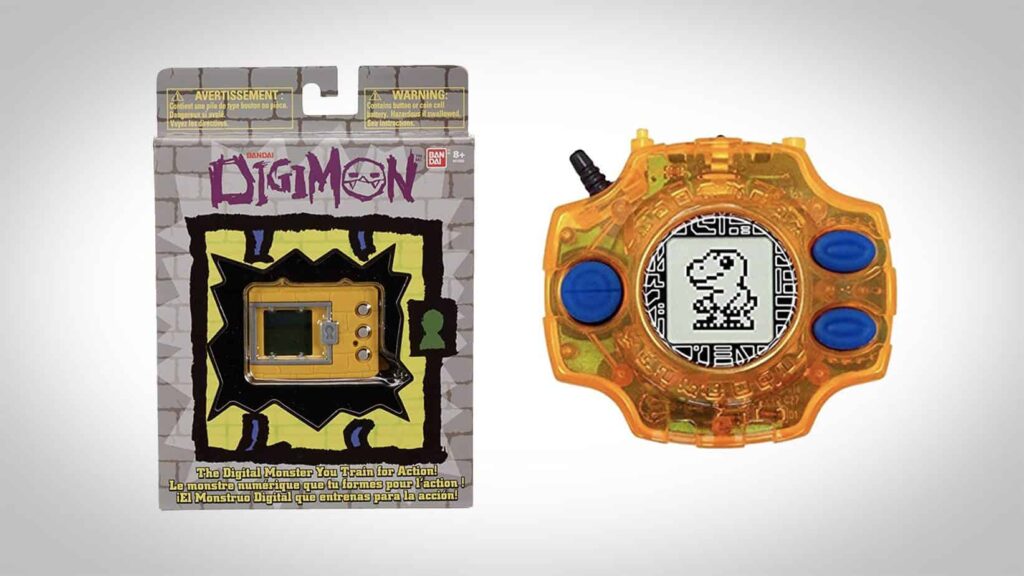
18. Digivice
Although they actually started from different origins, Pokémon’s automatic response was Digimon. For many, Digimon anime was better than Pokémon and vice versa with video games. But, be that as it may, they also created their own “pokédex”, which was actually a device called Digivice that served as a minigame of the saga. Throughout the anime seasons, as with Pokémon, new Digivices emerged that integrated new details into the system. Oh, and don’t forget that to advance in the game you had to move the device… which caused longer walks than in Pokémon Go.
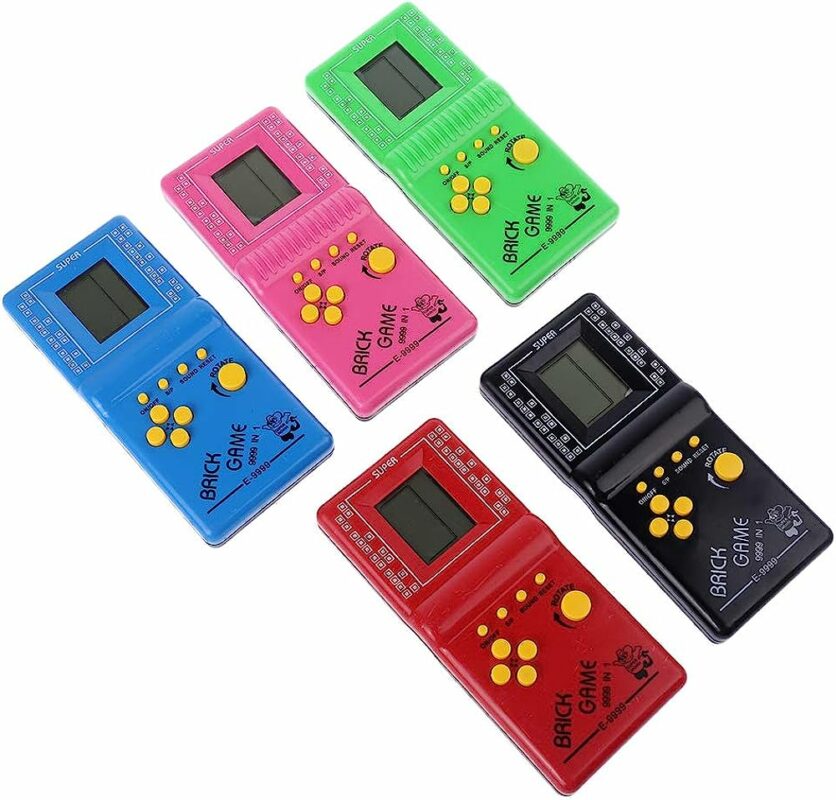
19. Tetris Brick Game
Tetris was a phenomenon in itself of the nineties, and in general, got its popularity thanks to the fact that it came included with the Game Boy. However, not everyone was lucky enough to have a Nintendo console, so they had to try methods… Alternative. Many of us had such a console in our homes, and they didn’t always have a legal mark behind them… But how much fun did we have?
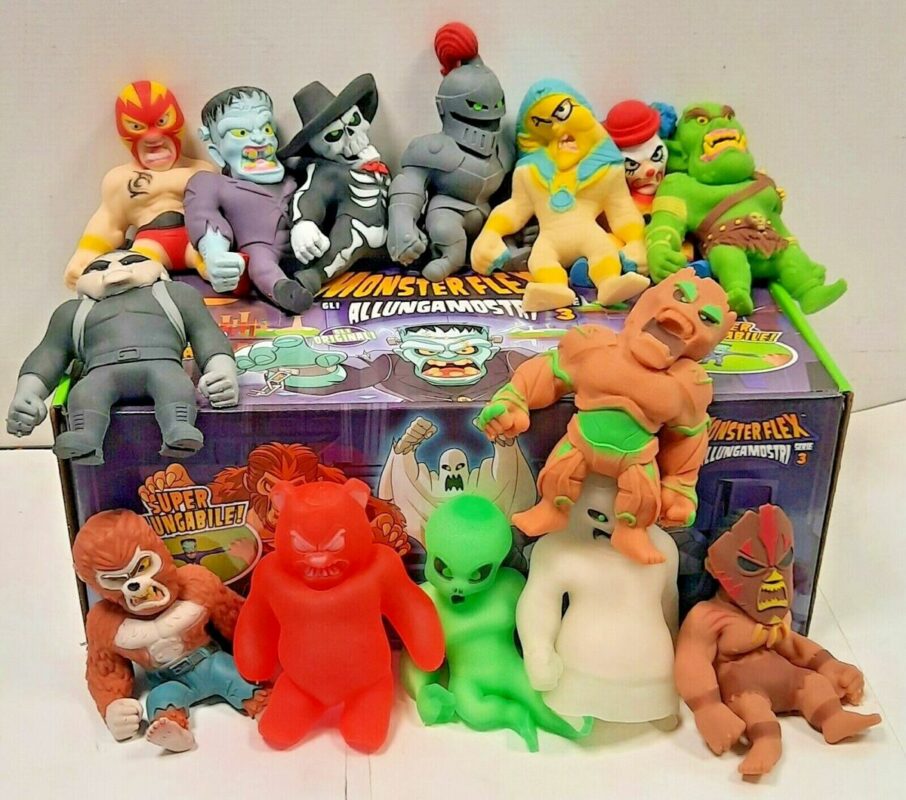
20. Monster Flex
In the nineties, there was also a fashion that does not make much sense but that can respond to the success of the 1997 film Flubber: elastic and somewhat disgusting gelatinous toys. One of the most popular was the Monster Flex, monsters, and warriors who fought each other by stretching their limbs and swelling. Of course, it was something that nobody understands very well why it worked, but that made a hole in the time in a rather funny way.
21. Crazy Hand
Continuing with the “Flubber toys” whose basis seemed to be in science but seemed more like an excuse to sell, we continue with the Crazy Hand … which was basically a hand that you threw and stuck to places. It was funny as a punctual toy, but the truth is that it soon filled with roña and stopped sticking. It was not the favorite toy of mothers, really, but the children had a great time.
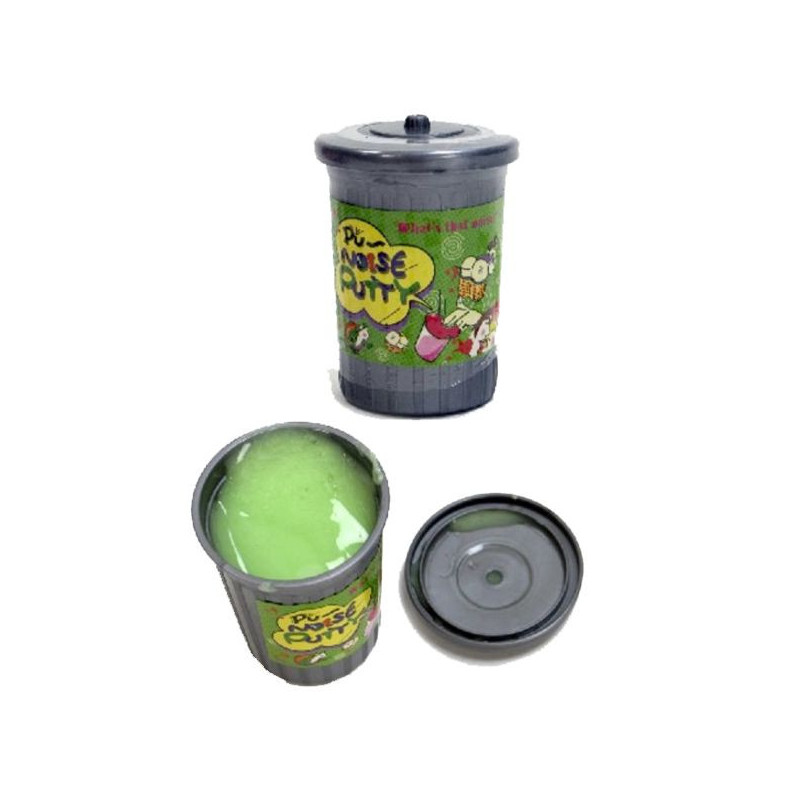
22. Fart Cube
To finish with the trilogy of Toys Flubber -although in reality there were many more and we could be here for quite a while-, another that became very popular in the nineties, and without a doubt was the peak of the slut, was the fart cube. Basically, it was slime stuffed into a kind of tiny garbage can that you squeezed and sounded pedorretas. Well, you wouldn’t expect our humor to be very refined at 10 years old, would you?
23. Hotline
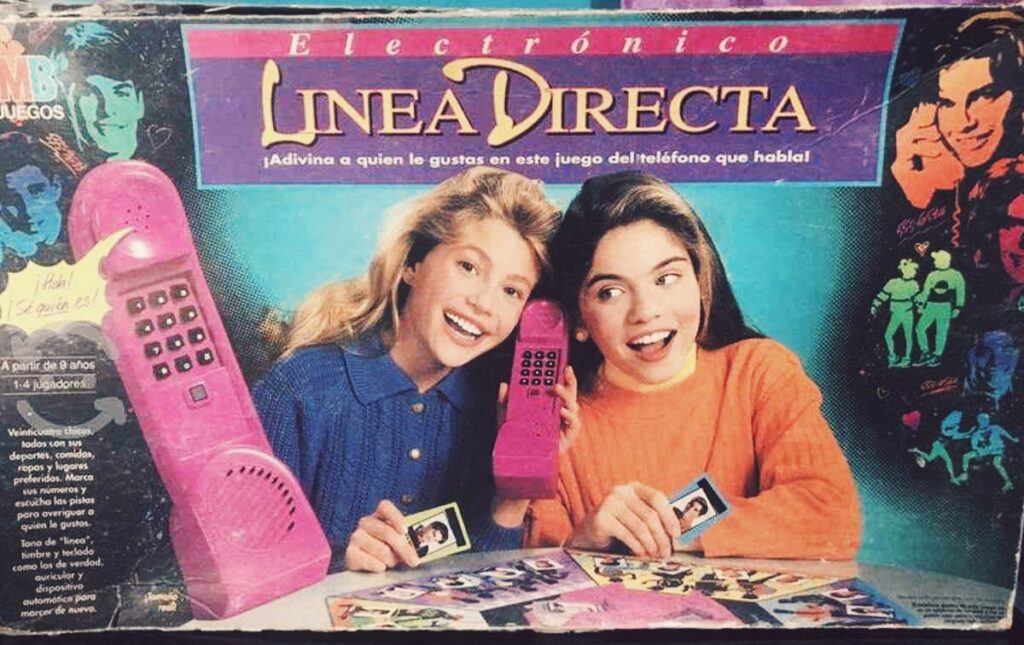
Technology crushed us like cockroaches during the nineties, and toy companies began to use it to their advantage. Specifically, in board games, it began to be used in quite curious ways. In this basically, a phone was used (what an invention!) to have a direct line to your crush. Who knew that we would then be anxious to take calls… a blessed time before WhatsApp.
24. Simon
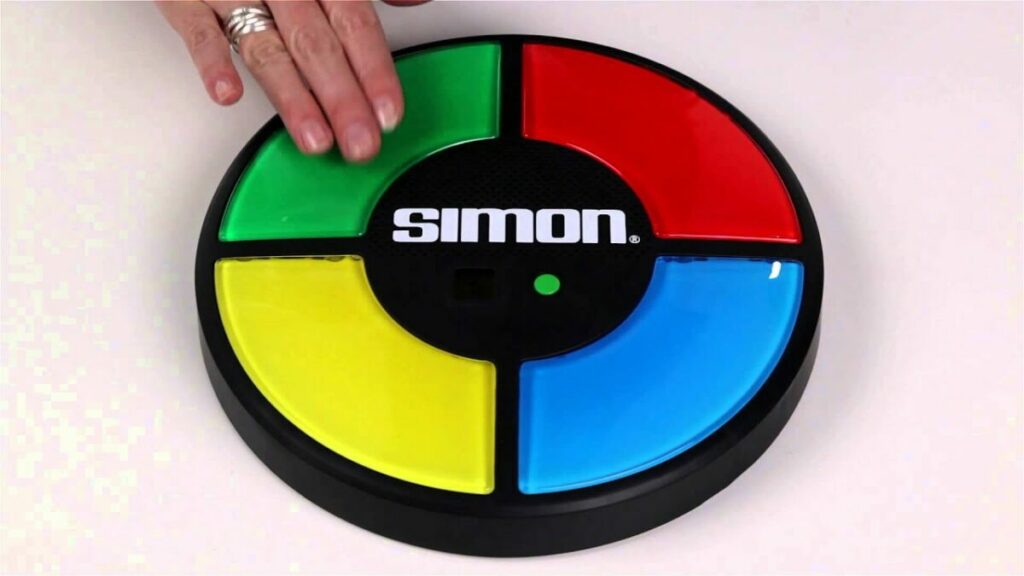
Another classic game of the 90s that was based on a basic system of lights is Simon (or Simon Says). Basically, the game was a device with four different buttons that were lit indistinctly, and your role was to repeat the sequence without making mistakes. Like many games of this style, what began as innocent training could lead to many fights between families and friends. But therein, in reality, lay the magic of the game.
25. Casper Castle
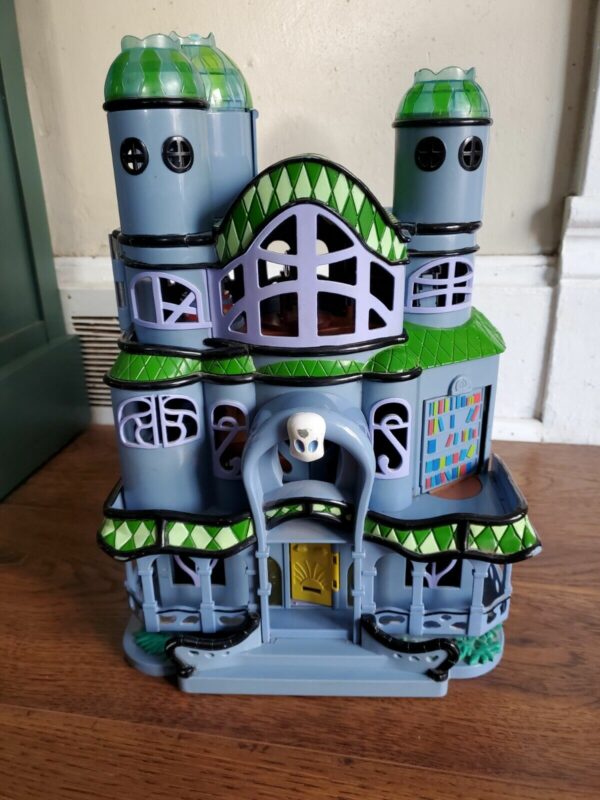
One of the protagonists of Christmas in the late nineties was Casper’s Castle, a toy that seemed taken from the future with as many possibilities as you wanted. This “dollhouse” was actually a free copy of the castle from the movie, but the funny thing was that it had ghostly traps everywhere and some little technological milestones like an ultraviolet light hidden in one of the towers. It was a foolproof method of entertaining children who would later become goths, emos, darks, or fans of Tim Burton’s cinema.
26. Paratroopers
Another simple but creative toy of the time was soldiers equipped with parachutes that you could launch and watch them land gracefully. Although toy soldiers were already famous much earlier, as we can see represented in Toy Story, adding this compliment was key to making them fashionable again. War has never been so much fun.
27. My little pony
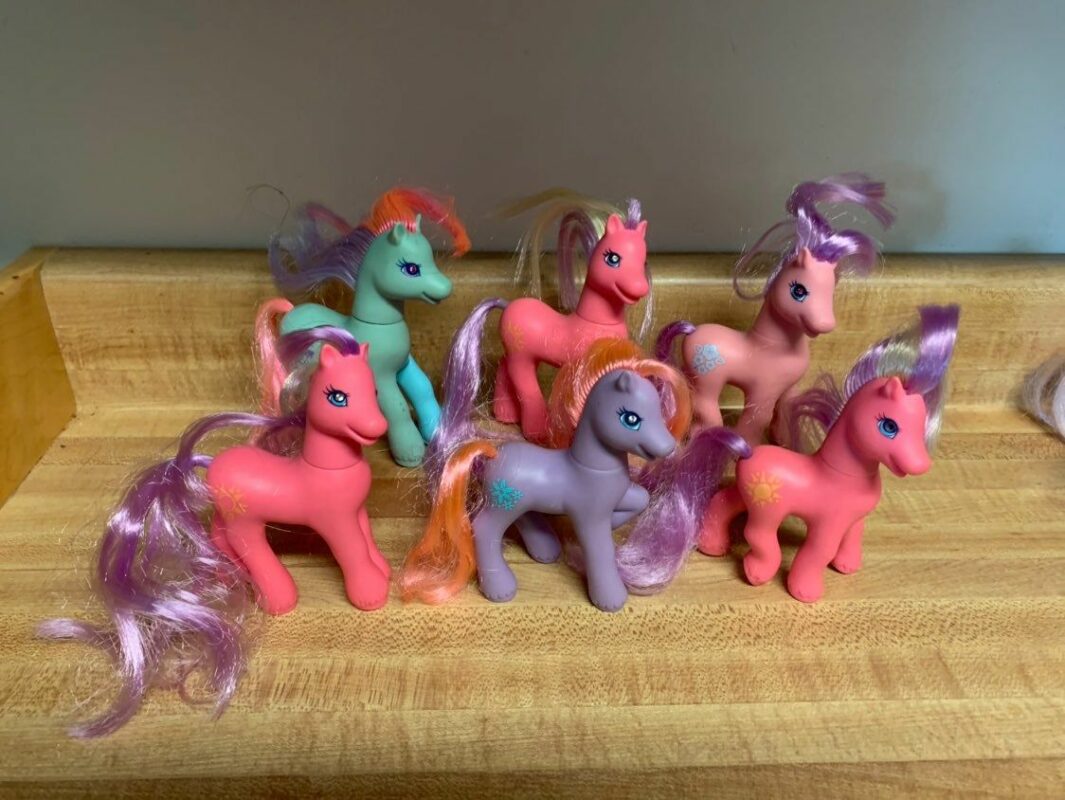
The fantasy horses of My little pony were a phenomenon that had a great impact during the eighties, but it was during the nineties that they evolved into much more creative and original toys, with all kinds of accessories and colors for all tastes. To this day, they continue to have a great impact among the specialized public thanks to the series of the brand that has been launched since the 2000s, although it has become a somewhat murkier fandom than it was at the time…
28. K’Net
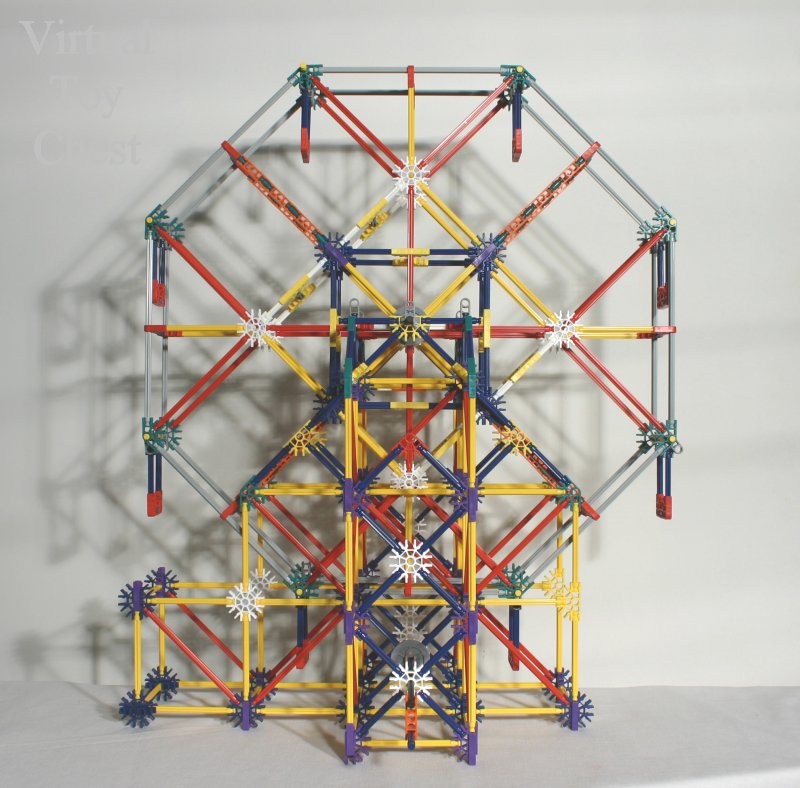
Construction toys were a great phenomenon in the nineties, and we are not only talking about LEGOs that had been conquering the general public for some time. One of the best-known was K’Net, a buildable that gave rise to all kinds of shapes through connectors. It was a quick way to get into the world of technology and connections before they gave you the badge in high school, and certainly, for many kids, it was their entry into a world that they never left afterward.
29. Braid machine
Between the 90s and the 2000s, different versions of a very practical toy for girls of the time proliferated: braid machines. It didn’t have much mystery; It was a kind of spinning mixer that made braids in your hair. The experience provoked more than one pull and two… But sometimes it left spectacular results. A way to get into the curious hairdresser at least, and another clear example of the creativity that the brand was taken through technology toy companies of the moment.
30. My dear diary
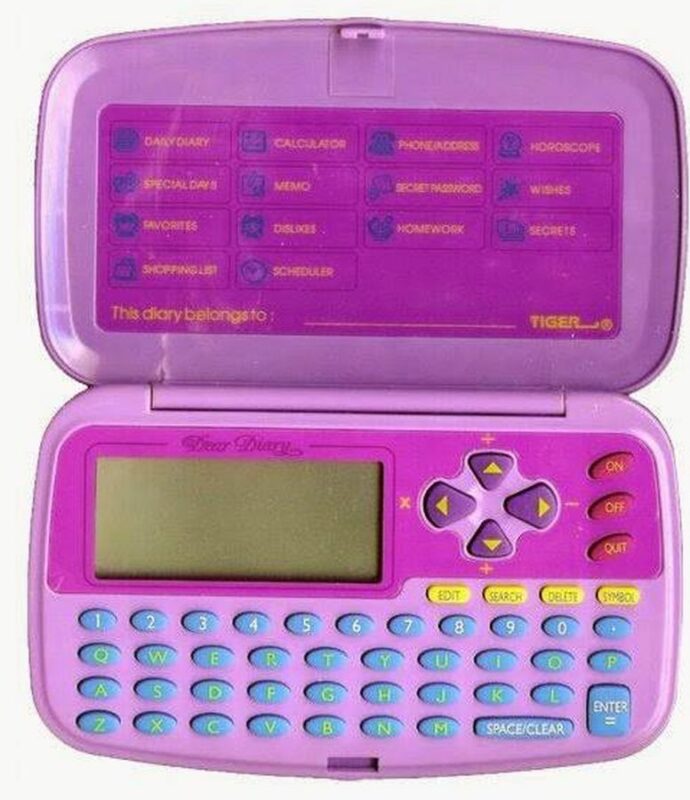
Something that we children of the nineties began to appreciate clearly was private newspapers. There were all kinds: from notebooks with padlocks to others with invisible ink whose handwriting you could only read through a special flashlight. But one of the most popular and revolutionary was My Dear Diary, a kind of small tablet on which you could write your thoughts freely and which could only be accessed through a password. Mobile phones before mobile version 1000, which was complemented by consoles, games like Direct Line, and many other portable experiments of the time.
There is no doubt that the nineties left us, beyond many memories and emotions, a brutal creativity as far as toys are concerned that has not been seen since then. Undoubtedly, the rise of technology as we know it today is due, in large part, to how much the toy makers of the moment squeezed their heads.
The AI has learned the plot structure and character relationships of Black Jack and is supposed to be ready to make its own episode.
“Hey, ChatGPT, make me a chapter of the manga ‘Black Jack'”. Osamu Tezuka’s heirs don’t seem to have as much respect as they seem to have for the so-called “god of manga” now that it’s almost 35 years since his death. The artist, who in his death throes asked to be allowed to work a little longer and who drew some 150,000 pages of manga by himself, would surely be delighted with artificial intelligence writing an extra chapter of his most remembered manga. Oh, yes. Almost for sure.
That artificial intelligence is supposed to have come to take away our jobs, salaries and lives is not news, but that the authors themselves (or the distant family of the same) agree to have their work studied by a machine and passed through filters to have something more or less new. In this case, the AI has learned the plot structure and character relationships of ‘Black Jack’ and is supposed to be ready to make its own episode.
To add insult to injury, it will be the first chapter since the last manga was published in 1983 in Shukan Shonen Champion magazine. Tezuka’s son Makoto is not entirely convinced, though: “Although I proposed it myself, I’m aware that it’s outrageous and, even today, I’m hesitant about whether it will work.” Just the words of encouragement you want to hear from your leader.
However, in another statement he has pulled out of his sleeve that his father would use AI if he were alive and that’s enough to try to do the creative Ouija board. To demonstrate what artificial intelligence is capable of doing they showed drawings in which the doctor uses a cell phone as proof of what machines are capable of doing.
It is not the first time that an AI creates a work, precisely, by Osamu Tezuka: in 2020 ‘Paidon’ was already published with his style and his way of making the arguments but without the express permission of the family. What is known as “stealing”. Anyway, we know that this project will use ChatGPT-4 and that it will mark a new barrier in artistic ethics that, to tell the truth, nobody seems to care too much about. Strange times.
Only eight years after its creation, the Hulk was already launching his own manga preparing the Marvel landing in Japan. Only that of Bruce Banner there was little left.
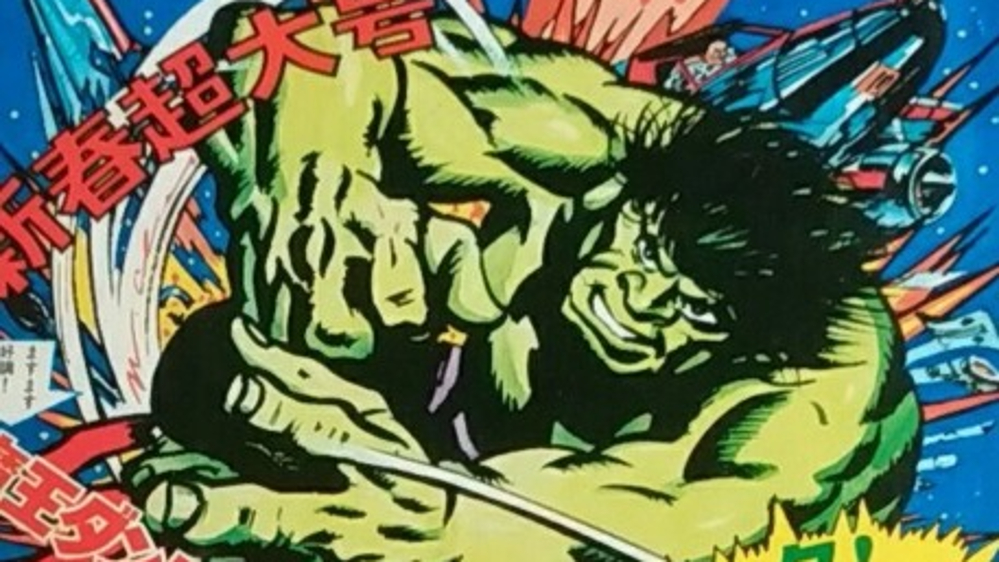
Marvel has always looked to Japan, believing that there was a whole world there to develop. First it was with the tokusatsu TV series Spider-man or Battle Fever J, and then with an attempt to reach a new audience by telling new stories they would understand. In the early 70’s, Spidey tried to become a Japanese hero by changing Peter Parker for a certain Yu Komori, who was much more violent than the original. Let’s not fool ourselves: it was really a bit more of the same as the first issues of Lee and Ditko, but with a new design. Of course, at the same time, the Emerald Giant made his appearance in a manga so obscure that it has not even been attempted to be published outside the country.
Hulk was born in 1962 at the dawn of the cold war and atomic fear, and his first comics, where his gray complexion hid a kind of Doctor Jeckyll and Mister Hyde on the cheap, did not make you imagine that he would become a key character to understand the comics (and life) of the XXI century. And yet, only eight years later, he was already releasing his ownmanga in preparation for Marvel’s landing in Japan. Only Bruce Banner had very little left.
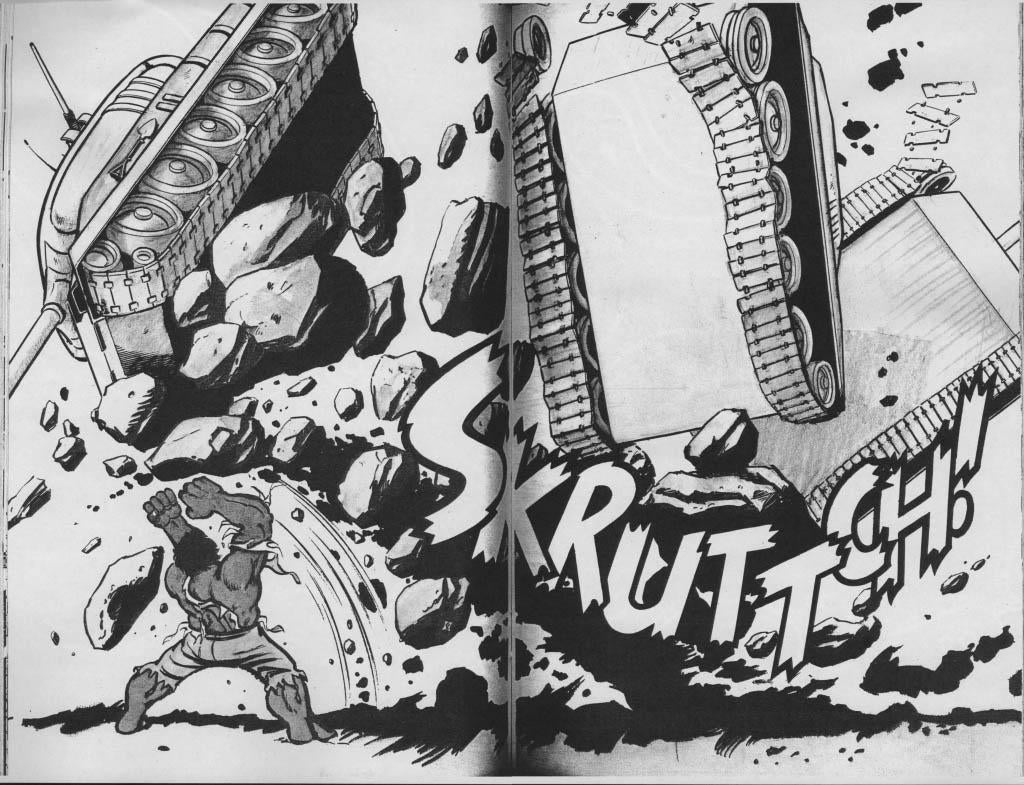
In ‘Haruku: Monsutaa Komiku’ the protagonist was Doctor Araki, a survivor of Hiroshima whose parents died in the nuclear blast. In a cluster of bad luck (and a bit of masochism), he goes to Nevada to work on the gamma bomb, where he meets Ricky Tendo (Rick Jones) and Mitsuko (Betty Ross). The story of the monster’s creation is the same, but not so much what came after.
And this Hulk cries. A lot. He rages, becomes super strong and does not stop crying over and over again, with stories similar and at the same time radically different from those written by Stan Lee in his day. And the fact is that the comic is unknown even to the company’s biggest fans. So much so, that not even in this period where the fans need to have absolutely everything has it been reissued in English, remaining a distant point in the history of the great M.
Curiously, although it could pass for a desperate commercial maneuver, behind this manga is Kazuo Koike, the author of that masterpiece that is ‘Lone Wolf and his cub‘, while the drawings, with an undeniable Tezuka-like air, are by Yoshihiro Morifuji. Morifuji took advantage of the fact that Hulk was not known in Japan to plagiarize cartoons and covers to taste, by the way, including the sound effects in English. He who doesn’t succeed is because he doesn’t want to.
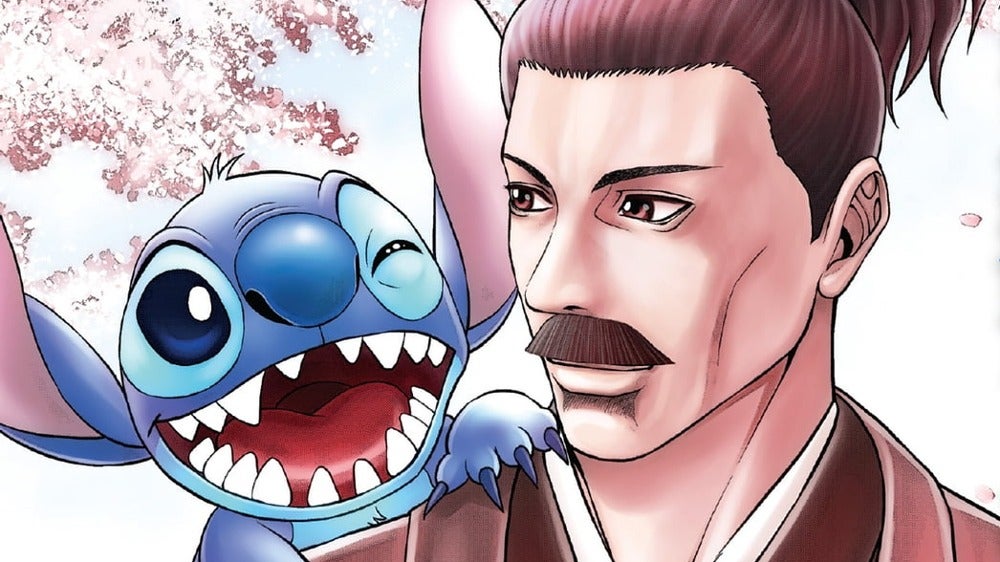
After its success, the franchise trunk was opened: if Square’s game is worth it, why not make a sequel series to ‘Up’? And what about a ‘Lilo and Stitch’ manga?
One already had a feeling that something was changing in Disney when ‘Kingdom Hearts’ appeared. The most classic characters in the company’s history fighting alongside those from ‘Final Fantasy’ and doing crossovers? It sounded, certainly, risky, more than what the company is usually willing to be. But it worked. And afterwards, following its success, the treasure trove of franchises was opened: if Square’s game is worth it, why not make a sequel series of ‘Up’? And what about a ‘Lilo and Stitch’ manga, what do you think?
Succeeding in Japan for an American company is not always easy, and that’s why when they achieve it, they always try to squeeze the product to the maximum until it’s completely dry. After the 2002 film, Stitch became an overnight sensation in Japan, so important that it soon got licensed in all kinds of merchandise, from lunch boxes and plush toys with a design that emphasized his cuteness (or “kawaii” in Japanese) to specific products tailored for the Japanese market.
‘Stitch and the Samurai’ is not the first manga that Disney has released in Japan. In addition to adaptations of ‘Wall-E’ or ‘Finding Nemo’, they have made forays into the craziest crossovers. For example, in 2015, ‘Miriya & Marie’ was born, featuring a Japanese girl transported to 1910 Paris who meets the cat from ‘The Aristocats’ (yes, you read that right). A decade earlier, in 2005, ‘Kilala Princess’ introduced characters from ‘Snow White,’ ‘Aladdin,’ and ‘Beauty and the Beast,’ teaching a girl what it means to be a Disney Princess in a shojo (girls’ manga) style, akin to ‘Kingdom Hearts,’ for better understanding.
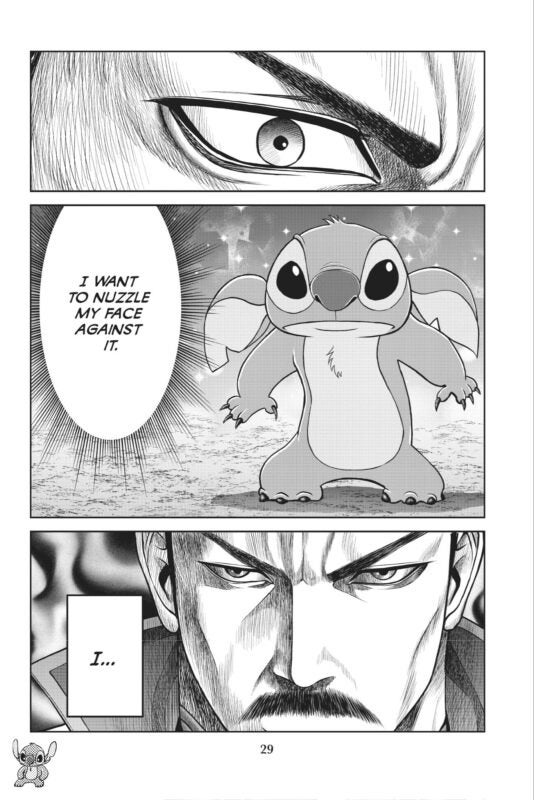
But none as wonderfully crazy as ‘Stitch and the Samurai’ (‘Tono & Stitch’ in its original version), in which the creature, years before meeting Lilo, escapes from the base and, due to a critical error in his spaceship, crash-lands in… the Sengoku era of Japan, which took place in the 15th and 16th centuries. There, the creature encounters a group of warlords who are captivated by its beauty.
Interestingly, the manga starts off with brutality, not unlike ‘Lone Wolf and Cub’ (with some differences, of course): Stitch feels like he’s truly breaking into a completely different story, and boy, does he succeed. By the end of volume 2, the warlords find themselves in a futuristic city, encountering vending machines without understanding what the heck is going on.
Surprisingly, all three volumes were published in Spain by Planeta, but the author, Hiroto Wada, wasn’t there to celebrate: he passed away shortly after completing the final episode at the age of 46 due to a cerebral hemorrhage. He leaves behind a crossover as strange as it is truly fabulous. Aren’t you intrigued? Come on, it can’t be worse than ‘Leroy & Stitch’ after all.
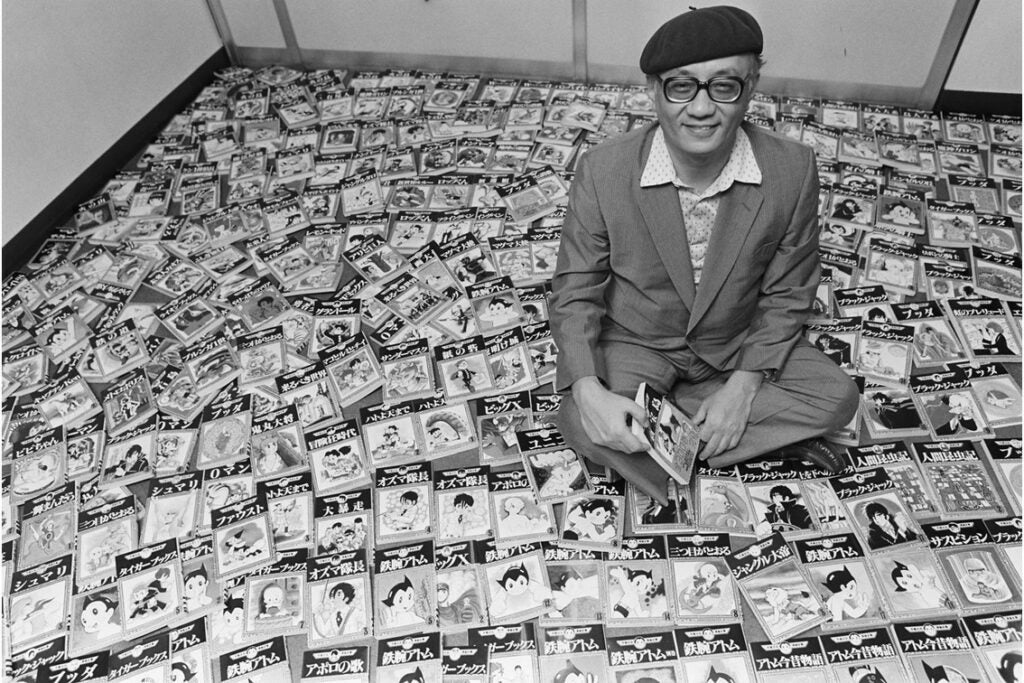
After him he left 700 different titles and about 60 anime: a total of 150,000 pages. Doing a quick calculation, it is about ten a day throughout his life. And still wanted to do more.
On February 9, 1989, the god of manga left us forever. Osamu Tezuka, who started creating his own stories professionally in 1945, never stopped working until the very moment of his death. He left “Ludwig B” unfinished, a fictionalized biography of Beethoven. Behind him, he left 700 different titles and around 60 animes, totaling 150,000 pages. Doing a quick calculation, that’s about ten pages per day throughout his entire life. And he still wanted to do more.
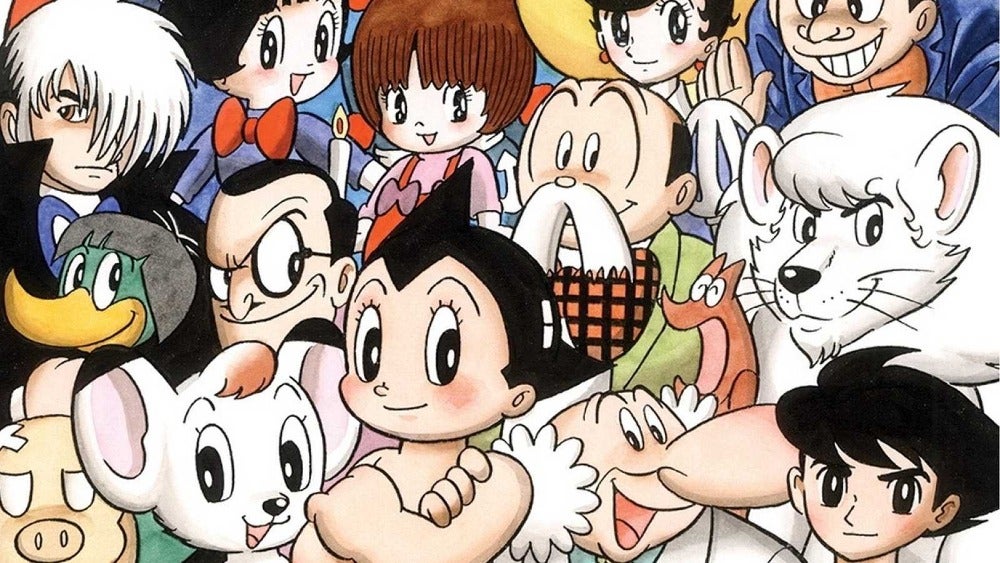
It is curious that Tezuka drew inspiration from Disney films to add more expressiveness to his designs because later on, it was the American company that “got inspired” (to put it mildly, shamelessly copied) one of his works, ‘Kimba the White Lion’. From Kimba to Simba, they didn’t put much thought into it.
Before Rumiko Takahashi, Eiichiro Oda, Clamp, or Tite Kubo, there was Tezuka, who always refused to confine himself to a single genre. He created shonen (manga for boys), seinen (for adult readers), and shojo (his unforgettable ‘Princess Knight’). Although he enjoyed creating, he had so many ongoing projects that he often escaped from editors to have a peaceful drink.
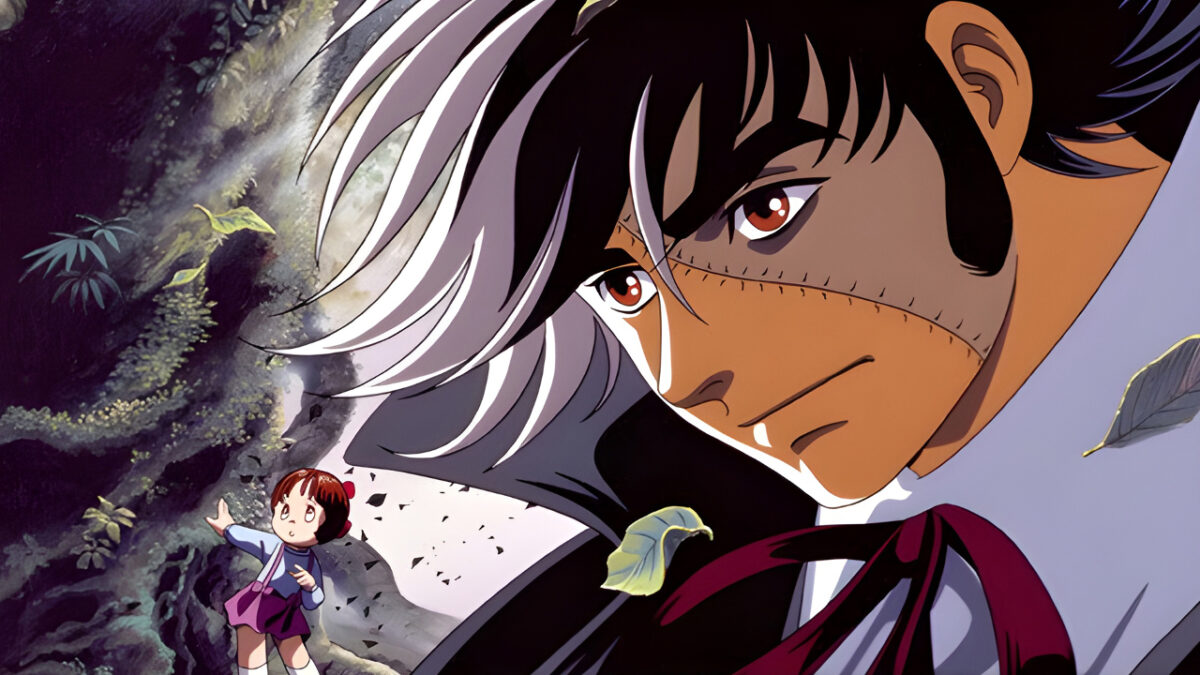
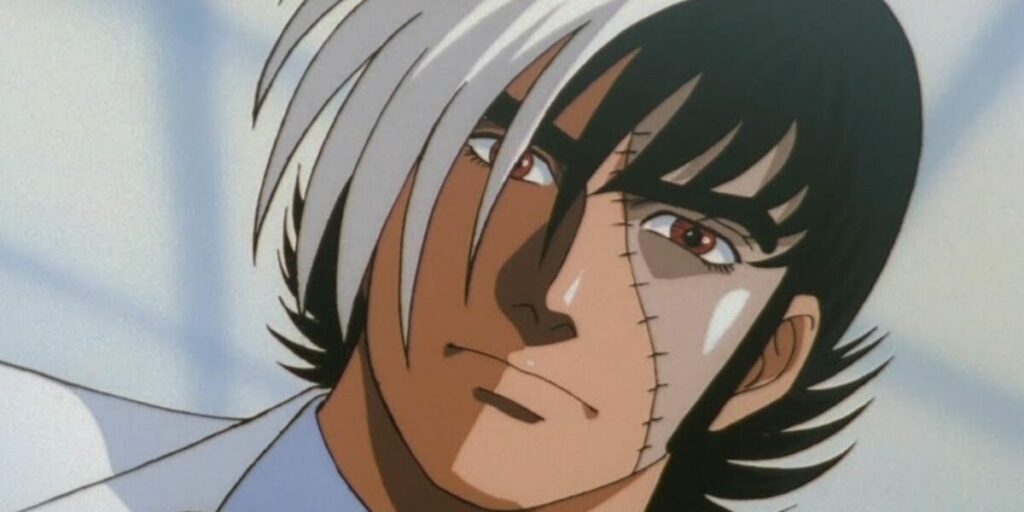
Tezuka’s life was filled with paradoxes and coincidences. He started his adult life by obtaining a medical degree, and his career as a mangaka was built on a work about medicine (the fantastic ‘Black Jack’). Finally, his last words were spoken to a nurse. It is said that when he was lying in bed, suffering from terminal stomach cancer, a professional removed his drawing equipment.
“Please, let me work!” were the last words spoken by the god of manga at the age of 60, knowing that he still had many more stories to tell. His legacy continues to this day with works like ‘Pluto,’ which presents ‘Astroboy’ from a modern perspective. But perhaps the most intriguing aspect of his posthumous career was the discovery made by his daughter. In 1994, five years after his death, she opened a drawer that had remained closed since then.
Inside, she found a half-eaten ounce of chocolate, an essay about Katsuhiro Otomo and his work on ‘Akira,’ various sketches… and a significant number of erotic drawings featuring anthropomorphic animals. Frankly, even forty more years would have been too few for Tezuka.
Do you want to start in the hobby? We have selected ten perfect sleeves to start with. The bad thing is that you never want to leave it.
Some say that the first manga is to be found in the scrolls of the twelfth century, but the truth is that it is generally agreed that the first Japanese comic as such has its origin two hundred years ago, with the publication of ‘Hokusai manga’, by Hokusai (the author of the famous wave of Kanagawa). It consisted of unconnected drawings that had no narrative, but it established the importance that visual iconography was to be given in Japan.
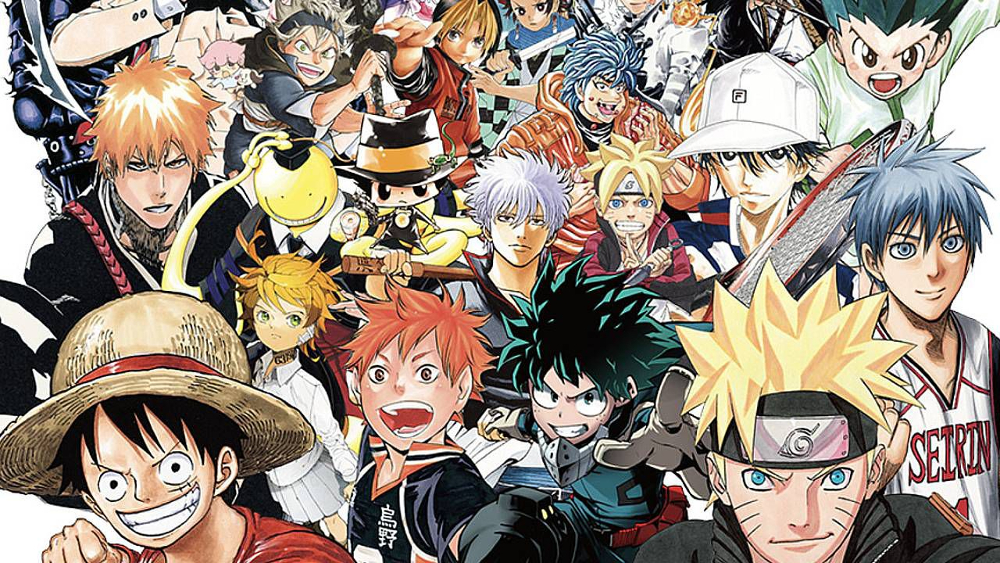
From then until now, millions of manga have been published and the otaku public is in a constant state of ferment: there are about 150 weekly or monthly magazines full of different series, which are then compiled in volumes, of which the most important ones usually reach us in Europe. We can talk all we want about Marvel, DC and independent comics, but what kids really read is here, among people with outstretched arms, high school sweethearts and people turned into chainsaws. Want to get started in the hobby? We’ve selected ten perfect manga to get you started. The bad news is that you’ll never want to quit.
From its inception in 1997 until now, ‘One Piece‘ has become more than just the trendy shonen (for boys) manga: it is pure pop culture and one of the greatest adventures in the history of fiction. What started out as something very simple has become entangled with hundreds of characters whose lives, careers and fights are intertwined and you never know when they will become important again. Comedy, drama, fights and a lot of heart in the manga that, if you don’t feel lazy, you have to read. In Spain it is published in two different editions: one volume by volume and another one, which has just started, that joins three in one. As difficult to read as it is easy to collect.
Monster (Naoki Urasawa)
Volumes: 9
Naoki Urasawa’s work is counted by masterpieces more than by manga: ’20th century boys’, ‘Pluto’, ‘Asadora!’ and, of course, ‘Monster’, the first one that came to Spain and possibly the most remembered. A story full of folds, unexpected twists and an exquisite drawing that will surprise you. Also, in case you find it hard to read things set in Japan, you should know that almost all of its 162 episodes take place in Germany and the Czech Republic. Ah! You can find it in kanzenban (fat) volumes published by Planeta.
Adolf (Osamu Tezuka)
Volumes: 1, 2 or 5
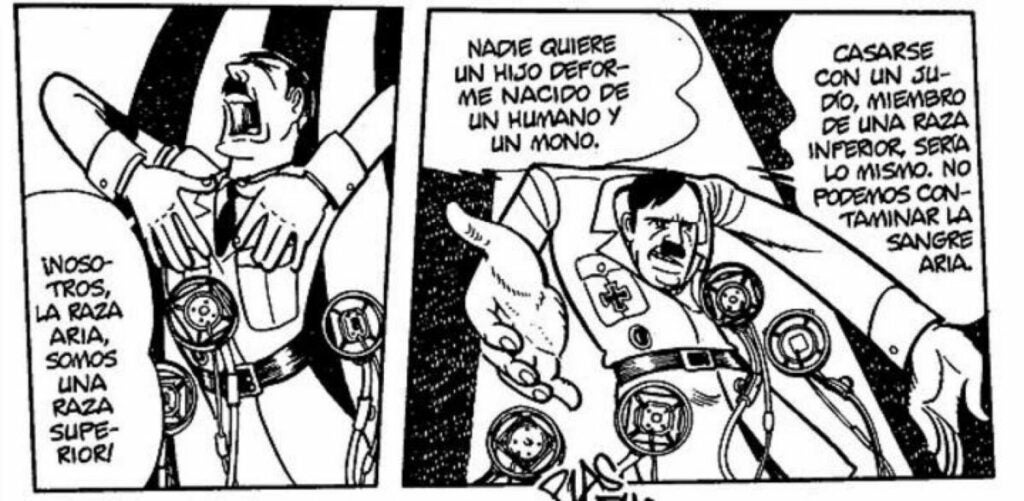
Osamu Tezuka is considered the “god of manga” and it’s not an appellation given by chance. It’s practically impossible for you to read everything he wrote and drew during his lifetime, but there is one manga in particular that you should check out as a fabulous chronicle of Nazism: ‘Adolf’ was published in the mangaka’s mature stage, in 1982, and tells the story of three different Adolfs who will have parallel lives. Including, of course, Hitler. A real pearl that you can find in full volume format, in two large volumes or five more transportable ones. You choose, but read it anyway.
Maison Ikkoku (Rumiko Takahashi)
Volumes: 10
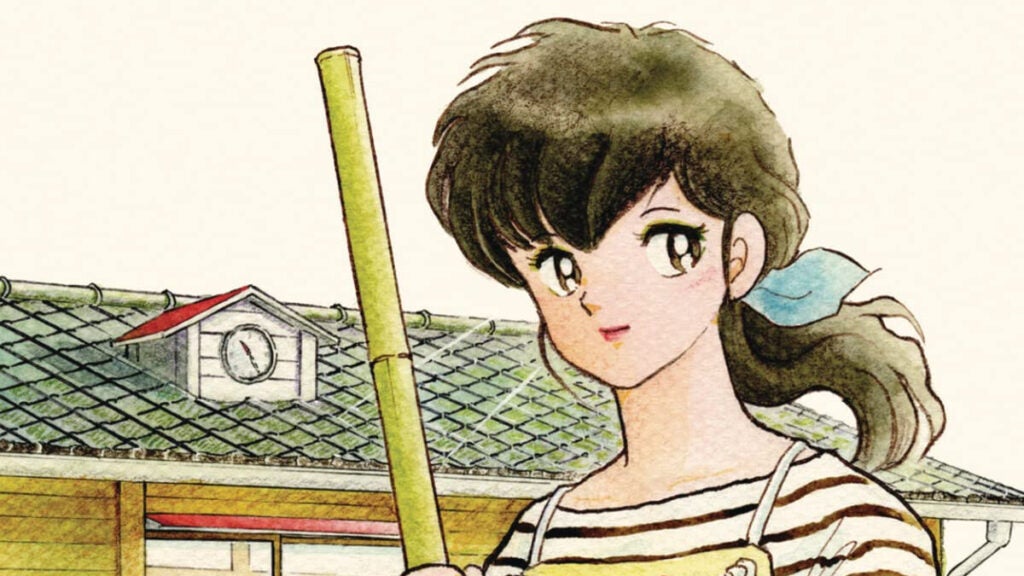
It’s hard to choose something from Rumiko Takahashi, the author of works like ‘Ranma 1/2’, ‘Inu Yasha’ or ‘Lamu’, but we’ll take one of her first titles, an adult romance manga with a lot of crazy comedy that will make you fall in love with each of the characters of that crazy house, but especially with Kyôko and Godai, who will live encounters, misunderstandings, continuous love and heartbreak until, probably, the most satisfying ending of an author who finds it hard to finish her stories. Just now it has just begun to be republished in ten large volumes, but if you are very old you may remember its first edition as ‘Juliette je t’aime’.
Video Girl Ai (Masakazu Katsura)
Volumes: 9 or 15
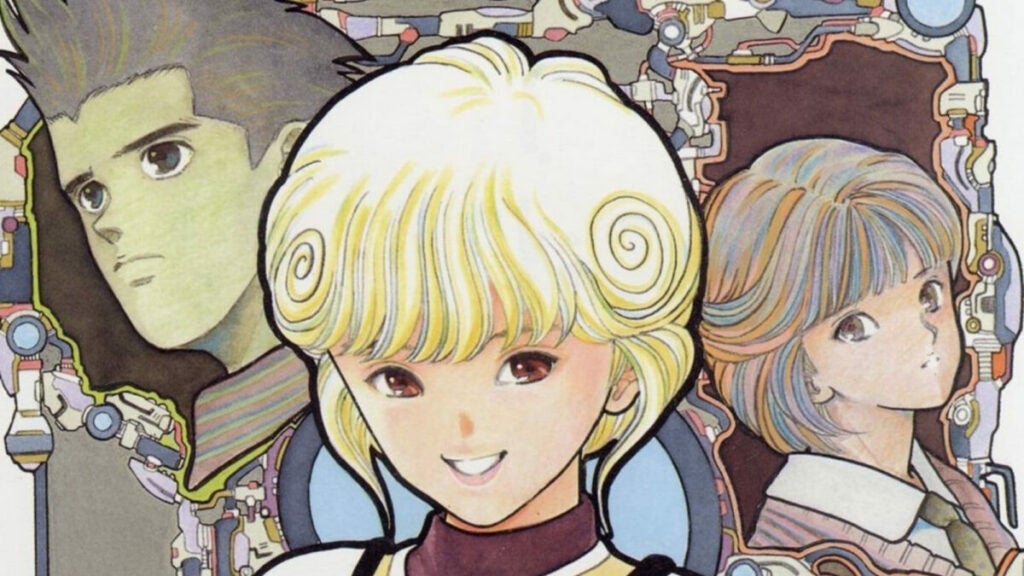
Maybe it’s because it’s the first manga I ever read, but I’ve always found a purity in ‘Video Girl Ai’ that I don’t see in other romantic shonen. Yes, it exaggerates the sexual attributes of its protagonists. Yes, it drags on a little bit. But it’s so dramatic, so adolescent, so hopelessly romantic, so racy and so funny that you just have to read it to realize what manga in the 90’s was all about in one work. If you like it, it goes together with another mythical work by Katsura, ‘I “s’. You can find it in a series of 15 volumes that came out a long time ago and included its sequel ‘Video Girl Len’ or in a reprint in 9 volumes that will begin soon by Planeta.
Good evening, Punpun (Inio Asano)
Volumes: 13
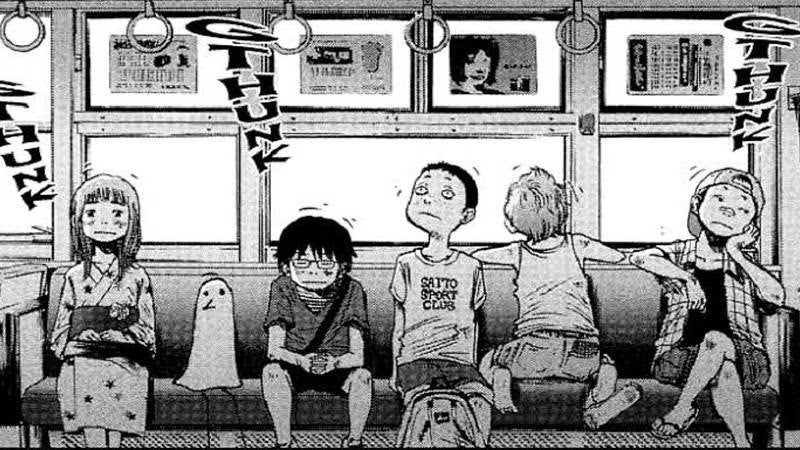
Inio Asano is one of the most interesting adult voices in manga. His are ‘Solanin’ or ‘Dead Dead Demons Dededede Destruction’: he is a specialist in, under a layer of sweetness and innocence, breaking your heart into a thousand pieces. And nowhere as in Punpun, the series about a dysfunctional character who grows from childhood to his twenties: the manga begins as the profile of a strange character in a world he doesn’t understand and ends up delving into philosophy and nihilism in an unforgettable and emotionally catastrophic final stretch. A marvel.
Uzumaki (Junji Ito)
Volumes: 1
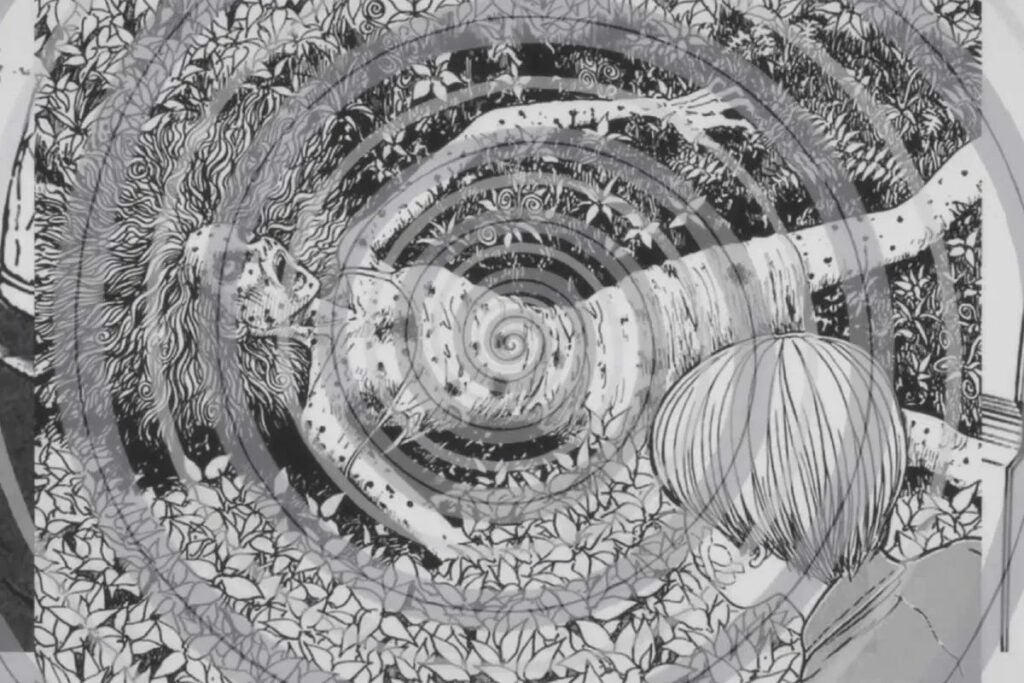
When talking about influential authors in contemporary horror, Junji Ito has to appear. His convoluted images, languid stories, threadbare characters and devastating black and white make stories like ‘Uzumaki’ authentic windows to nightmares. In a single volume (or 6 if you have the old edition) you will see a people gradually becoming obsessed with spirals until, suddenly, they are the only thing that matters in their lives….. And you will enter a state of madness from which there is no return. If you like it, don’t miss the rest of his work, published extensively over the years (but especially the terrific ‘Tomie’. You’re welcome).
My Father’s Almanac (Jiro Taniguchi)
Volumes: 1
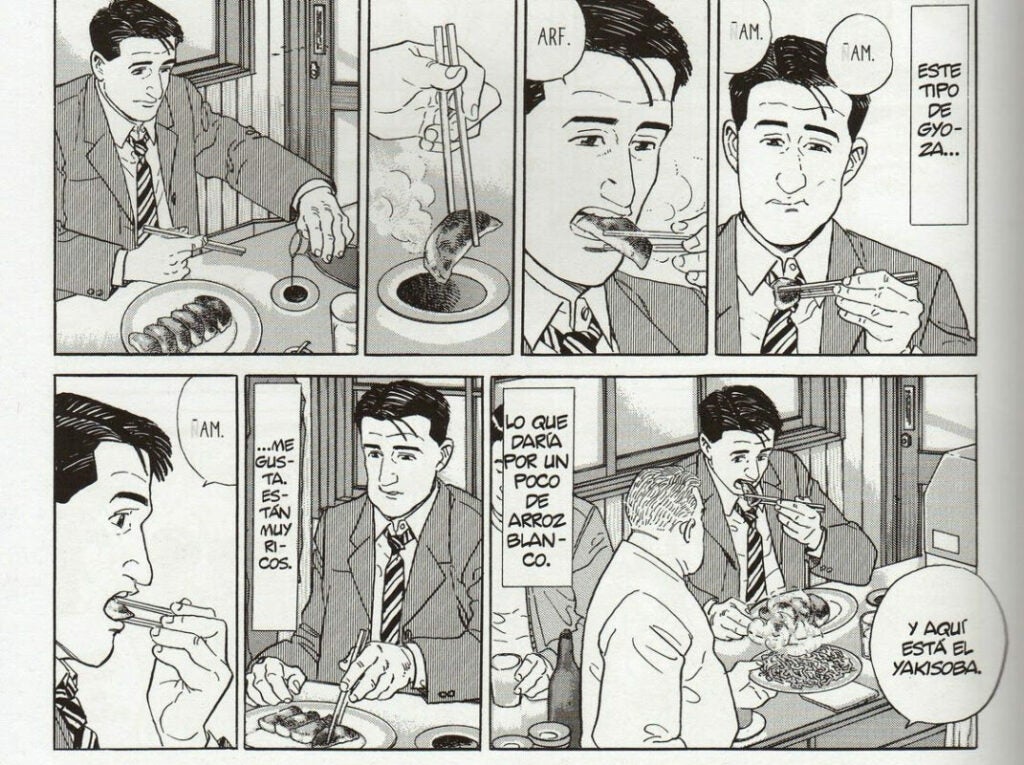
And the exact counterpoint to Ito is Jiro Taniguchi, an author focused on tranquility, landscapes, walks and melancholy who reached his masterpiece in ‘My Father’s Almanac’, a twist on nostalgia that reflects the transformation of Japan represented in a family, and in particular a father, who, like all people, is full of edges and is much more complex than he seems. If you want to delve into his work, ‘The Wayfarer’ and ‘Distant Neighborhood’ will fill you with joy and, at the same time, sadness. This is the magic of Taniguchi.
My Lesbian Experience with Loneliness (Kabi Nagata)
Volumes: 1
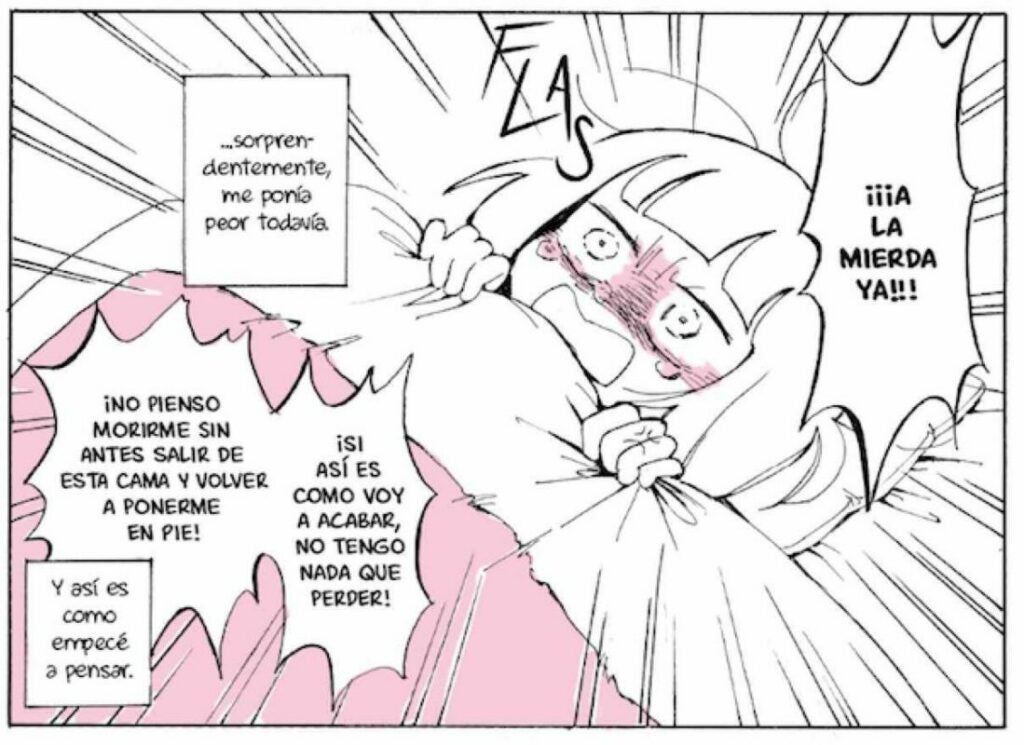
Kabi Nagata is a mangaka with mental problems who has depicted her life in several manga, the most famous of which is this one, in which she tells how she overcame her shyness to hire a lesbian prostitute… And the mistake it was. Nagata is direct, honest, funny and although she falls into self-hatred more times than we, as readers, would like to read, it is more than understandable seeing the life she tells us about. As you will probably want more after reading the volume edited by Fandogamia, you also have ‘Exchange diary (with myself)’, ‘I ended up in a rag running away from reality’ and ‘Kabi Nagata, wandering warrior’. They never reach the refreshing novelty of this volume but they are great all the same.
Yotsuba! (Kiyohiko Azuma)
Volumes: 15 (and counting)
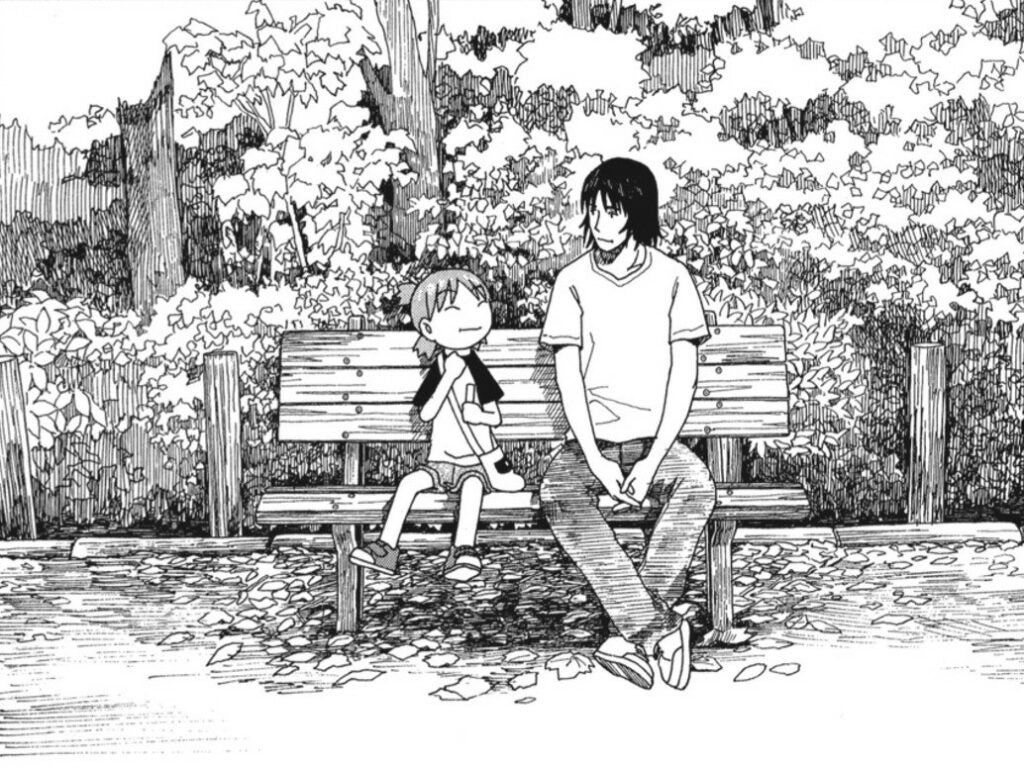
Yotsuba is a girl who discovers the world. That’s the manga. That’s all there is to it. It’s the cutest and cutest thing you’ll ever read in your life, thanks to some kind and well-defined characters, a funny and adorable drawing, Azuma’s perfect understanding of the childish mind and the absolute love that is her protagonist. There is no choice but to end up loving it. Unlike many other series, each chapter of the manga is monthly, which prevents volumes coming out at full speed. Better: it’s a chance to take life easy. Just like Yotsuba.
It is now, after almost 1100 chapters, when we finally begin to look, very distantly, at the end of the adventure.
If you don’t know ‘One Piece’ yet, it’s probably because the barrier of more than a thousand episodes is pushing you back. If you’re already a fan, you’re probably one of those who have uttered the phrase “Well, but they go by in no time, little by little you get there, it’s worth it”. Eiichiro Oda’s manga was born in the pages of Shonen Jump on July 22, 1997 and since then until today have continued to be published almost without rest. But… What if we told you that it would have ended twenty years ago?
For Oda, the story of a pirate who stretches himself and his crazy crew was not enough for more than five years: one of presentation where all the companions would join, three in Grand Line and one of the final saga. But as good as the mangaka is at telling stories, he is not good at calculating time: after 101 episodes, the group of only five crew members (out of the ten planned) managed to reach the beginning of the main adventure. It is now, after almost 1100 episodes, that we finally begin to glimpse, very distantly, the end of the adventure.
It is surprising that the creator of one of the most influential manga of all time is so absent-minded. For example, in 2003 he said that a crew member would die that year: it would happen three years later with the destruction of the Going Merry. He also wanted to kill Ace, Luffy’s brother, the same year of his appearance, and if you’ve read the manga or watched the anime you already know how the matter ended. So when he says there are only three years left for the adventure to end, it’s best to take it with a grain of salt.
Although it may surprise us when a manga exceeds 1,000 episodes, in Japan it is quite normal. For example, ‘Kobo-chan’, a strip by Masashi Ueda that has been published for forty years, exceeds 13,300, and ‘Sazae-san’, which saw its protagonist grow from 1946 to 1994, ended its run with a whopping 6,477 episodes (more than 8,000 in the anime, which is still being broadcast). It is possible that Oda’s work will eventually overtake classics like ‘Doraemon’ (1,345 issues) or ‘Detective Conan’ (1,125 so far) in length, but it remains to be seen. It will depend on the mangaka’s calculation, fight up fight down.
For the time being, we’ll settle for holding on to Luffy’s arms, shifting into fourth gear and letting ourselves be surprised until we become those people who recommend anime that anyone would take five years to watch. Or is it that only Eiichiro Oda has the right to change his mind?