Pixar is no longer what it used to be. It’s not that their movies don’t work or are bad, but they don’t have the same impact they used to have. Maybe it’s due to self-awareness, maybe it’s because they no longer have the magic they once had, but for years they haven’t been able to create the masterpieces of the past. They can make good or notable movies, but they alternate them with failures that, while never disastrous, no longer make us feel that the Pixar of the past exists. Now, it seems that things might change. Or at least, they have changed on one occasion. Because now […]
Pixar is no longer what it used to be. It’s not that their movies don’t work or are bad, but they don’t have the same impact they once did. Perhaps it’s due to self-awareness, perhaps it’s because they no longer have the magic they once had, but for years they haven’t been able to create the masterpieces of the past. They can make good or notable movies, but they alternate them with failures that, while never disastrous, no longer make us feel that the Pixar of the past exists.
Now, it seems that things can change. Or at least, they have changed on one occasion. Because now a movie is coming to Disney+ that, although it comes from Pixar, has captivated both critics and audiences and works remarkably in a way that seemed impossible for them: to make a movie for children that also enchants adults, instead of the other way around. That’s why Hoppers has been successful.
A different Pixar, because it is the old one
Directed by Daniel Chong, creator of the series We Are Bears, and written by Jesse Andrews, the film has a very simple premise: Mabel discovers a way to insert her mind into a beaver-shaped robot to infiltrate the animals in her town to find out why they are disappearing. She is concerned about the fact that the mayor of the city wants to end the town’s nature reserve to build a highway, and the animals living there seem to be helping with that.
Although this could very well have served for a story about emotions or environmentalism, as they have been doing for ten years, where the theme would overshadow the story, the charm of Hoppers is that it is an animated film above all. With excellent comic timing, good action scenes, and at times bordering on slapstick, the brilliance of the film is that it does not aim to be, first, a discourse and then a story, but rather tells a story and lets themes emerge from it. Specifically, the importance of caring for nature and animals.
This is something, in fact, that makes the movie more attractive and interesting. With charismatic and hilarious characters, children have something to fall in love with the movie: fun adventures, charming characters, and an ending with a lesson, but not a moral. Something that adults can also enjoy, because it is so well done, so fun and well polished, that there is no reason for adults not to enjoy it along with the little ones at home.
Critics and audience agree
The movie has also performed well on all possible metrics by which it can be measured. With a budget of 150 million dollars, it has grossed 387 million. A figure that may not seem particularly impressive, but it means that it has been more than profitable. Especially considering that it is the highest-grossing animated film in its opening weekend since Coco in 2017.
Similarly, both critics and audiences have received the film with great enthusiasm. With 94% positive reviews on Rotten Tomatoes, an average score of 7.7, and a 73 on Metacritic, it is a film that has been very well received by critics. Considering that the audience has given it an A in CinemaScore, it is undoubtedly one of the most unanimously acclaimed animated films by both critics and audiences in recent times. This makes it more than interesting.
Now, if you’re interested in watching it, or watching it again, Hoppers is available on Disney+. Additionally, its director, Daniel Chong, has confirmed that he is interested in making a sequel. So every streaming view of the movie is one step closer to making that Hoppers 2 happen, if you needed any other excuse to watch it.
Disney has acknowledged that they are having trouble reaching the young audience. Star Wars appeals to the audience over 30 years old, but it seems that it no longer captures the attention of children as it used to. If we add to that the fact that the series are performing much worse than they expected, it seems they have a creative crisis on their hands. Especially considering that it has been seven years since we had a new Star Wars movie, leading to the thought that this very, very distant universe may be in crisis. Especially because The Mandalorian and Grogu have been openly despised by the […]
Disney has acknowledged that they are having trouble reaching the young audience. Star Wars appeals to the audience over 30 years old, but it seems that it no longer captures the attention of children as it used to. If we add to that the fact that the series are performing much worse than they expected, it seems they have a creative crisis on their hands. Especially considering that it has been seven years since we had a new Star Wars movie, leading one to think that this very, very distant universe may be in crisis. Especially because The Mandalorian and Grogu has been openly despised by critics.
A Movie with Little Sense
The Mandalorian is a series that, upon its release, was highly appreciated. Directed by Jon Favreau, it knew how to do everything a science fiction franchise needs today to be relevant. Having a charismatic character, an adorable pet that people want to cuddle, making an intelligent mix of genres, and having a hopeful tone more anchored in adventure than anything else. A winning formula that has systematically worked in recent years, as Project Hail Mary has demonstrated.
In fact, the first two seasons were a great success. Both critics and audiences greatly enjoyed the adventures of the Mandalorian and Grogu, affectionately dubbed Baby Yoda by the public. The problem is that in the third season, things started to go awry. The critics were less than enthusiastic about an erratic season that seemed unclear about where it wanted to go, and the audience responded in a similarly lukewarm manner: the numbers were not terrible, but they were not those of the first two seasons. And the public discourse was not as enthusiastic as in the first two seasons, beginning to show signs of fatigue.
The Mandalorian and Grogu is a conclusion for the series in the form of a movie. With everyone involved in it, it aims to be a big celebration for the fans. But the question is, are there still fans of The Mandalorian to justify it? And above all, does it make sense as a movie?
It seems that the answer, especially for the second part, is no. The critics have slammed the movie, accusing it of being like an extended episode, but worse produced, without really being satisfying in any possible sense. Except for the aspects where there have never been complaints. The Mandalorian is great, Grogu is adorable, and the music is excellent, but the CGI, the action, and the aesthetics do not seem like those of a movie, with a quality far below what one would expect from a high-budget film. Not to mention a production from Disney. Especially from a series that stood out precisely for the care of all these aspects.
A galaxy far, far away that does not excite
That criticism and the audience do not always go hand in hand is not something unknown. But with The Mandalorian and with Star Wars, in general, there tends to be some overlap. Something that is not good news for Disney, even with extremely pessimistic projections from experts.
According to analysts, the movie will make 80 million dollars in its first four days of screening. An excellent figure for any other movie, but disastrous for a Star Wars film: no movie in the franchise has ever made less than 100 million. Some of them have been considered failures because of this. Something that suggests that The Mandalorian and Grogu may be the beginning of something that was already being noticed in the series. People may not be as into Star Wars as they were ten years ago.
The numbers after its premiere, in any case, have been somewhat better than expected. With 12 million dollars on its first day, forecasts have now increased to 90 million. Does this mean that The Mandalorian and Grogu is on its way to being a surprise success? No. It means it could be a smaller failure than expected. But unless it ends up making much larger numbers, it seems that it will spawn a conversation that no one wants to have. That perhaps Disney is exhausting its franchises.
Perhaps the audience is no longer there. They are tired of Star Wars. It has been decades of the same franchise, of cultural supremacy, and not always quality that lives up to the myth. It is possible that it just needs a break or to find the right key. It is impossible to know. Perhaps, yes, Star Wars is exhausted and is no longer as interesting as before. But what seems evident is that The Mandalorian and Grogu are no longer as captivating as in their first two seasons. And Disney must start to consider what they are doing with Star Wars.
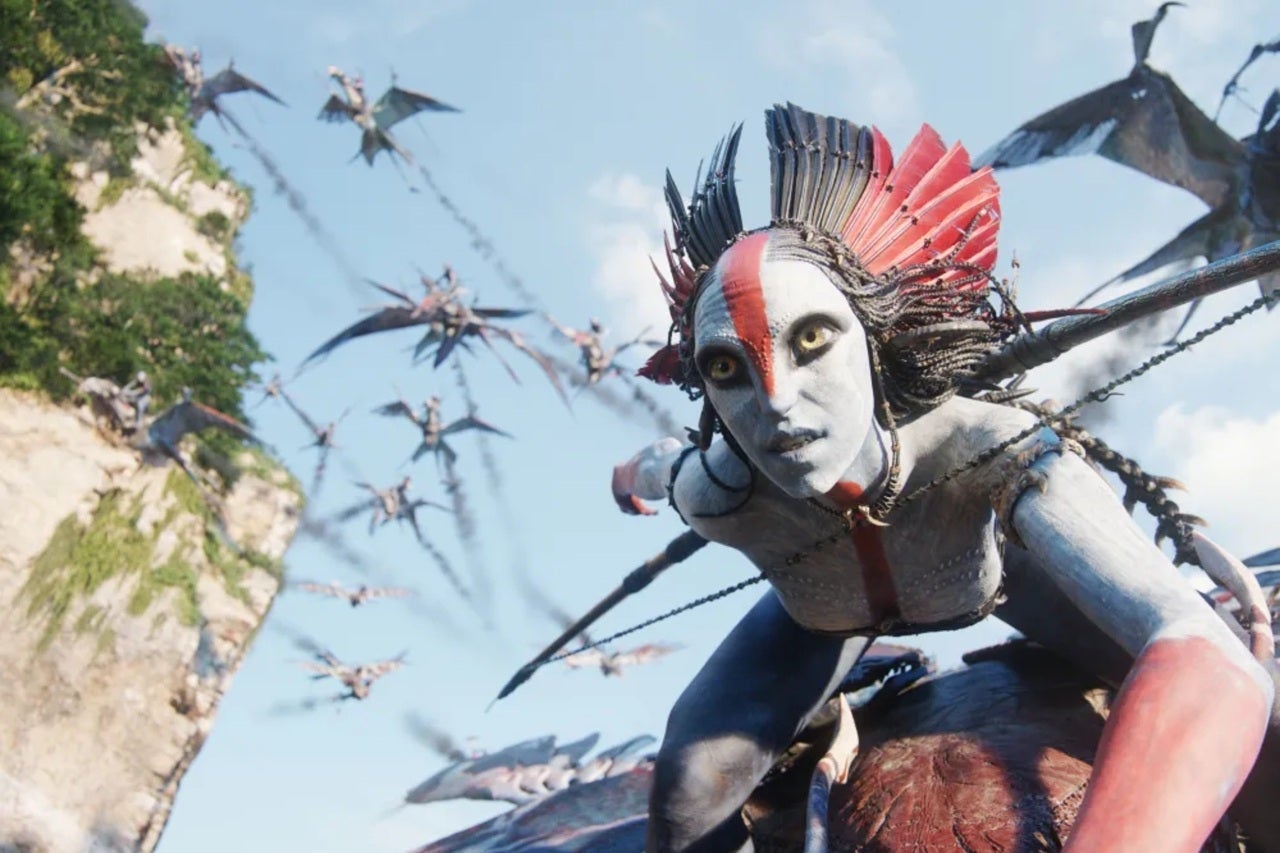
Avatar: Fire and Ash, the third installment of the popular James Cameron franchise, will arrive on streaming exclusively on Disney+ on June 24. This falls within the normal window for any popular release, allowing movies the opportunity to perform well at the box office before being released in home format or streaming. In fact, Cameron’s film has performed extraordinarily well at the box office. Grossing $1.485 billion, the only downside that can be pointed out is that it has earned well below its predecessors. Both Avatar and Avatar: The Way of Water, […]
Avatar: Fire and Ash, the third installment of the popular franchise by James Cameron, will arrive on streaming exclusively on Disney+ on June 24. This falls within the normal range for any popular release, allowing movies the opportunity to perform well at the box office before being released in home format or streaming.
In fact, Cameron’s movie has performed extraordinarily well at the box office. Grossing $1.485 billion, the only downside is that it has earned well below its predecessors. Both Avatar and Avatar: The Way of Water, the first and second installments, managed to surpass $2 billion by a wide margin with practically half of their budget. This could very well lead to a reassessment by Disney for future sequels.
Well, although it hasn’t performed as well as previous films, it is far from being a failure. Avatar 4 and 5 already have scheduled release dates for December 21, 2029, and December 19, 2031, respectively. Therefore, it seems that Disney continues to bet heavily on Cameron’s blue aliens, although with a series of conditions: they must be cheaper and shorter films. Something that Cameron does not agree with.
As it seems difficult for both parties to reach an agreement, it is likely that we will have Avatar for a while. And for now, we have to wait just over a week to be able to watch the movie again from the comfort of our home.
Star Wars returns to theaters with The Mandalorian and Grogu, and analysts do not expect it to be a big success. Forecasts suggest it could have an initial box office of 80 million dollars in its first four days, a very good figure, but absolutely disastrous for a Star Wars franchise film. Especially considering that no franchise release has dropped below 100 million dollars, even those considered failures. A franchise that operates on different levels. The least successful case for Star Wars so far has been that of Han Solo: a […]
Star Wars returns to theaters with The Mandalorian and Grogu, and analysts do not expect it to be a big success. Forecasts suggest it could have an initial gross of 80 million dollars in its first four days, a very good figure, but absolutely disastrous for a Star Wars franchise film. Especially considering that no franchise release has dropped below 100 million dollars, even those considered failures.
A franchise that operates on other levels
The least successful case for Star Wars so far has been that of Han Solo: a Star Wars story, which made 103 million dollars in its first four days. Although it made an acceptable box office of almost 400 million dollars worldwide, a production filled with problems and virtually no enthusiasm from fans led to it being an unmitigated failure for Disney.
In contrast, the last movie released on these same dates, the live-action film of Lilo & Stitch, was an absolute success. Making 182 million dollars over the same four-day holiday weekend, this is the figure they would aim to achieve with Star Wars, given the popularity of The Mandalorian over the years, which has turned both the titular character and Grogu, the wrongly named Baby Yoda, into some of the most popular characters in the franchise.
At Disney, they are confident that they can reverse these numbers before the upcoming May 22, the official worldwide release date of the movie. But perhaps both the Mandalorian and Baby Yoda, after all these years, have simply lost the appeal they once had with the audience.
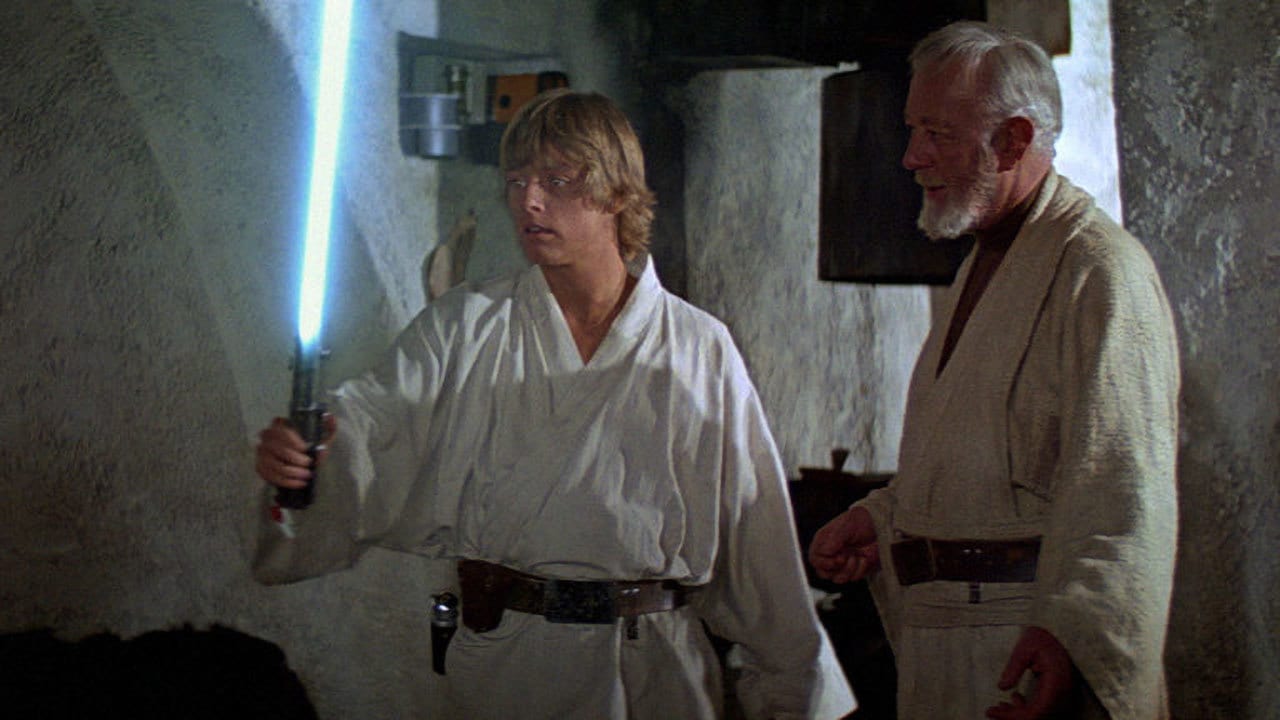
Mark Hamill, the iconic interpreter of Luke Skywalker in the Star Wars saga, has once again generated controversy by suggesting that the character does not have a clear sexual identity in George Lucas’s original script, allowing for various interpretations by the audience. In recent statements, Hamill said: “If you want Luke to be gay, he is; if you don’t want him to be, he isn’t,” a comment that resonates with his flexible view of the saga’s narrative. It’s whatever you want it to be This perspective contrasts sharply with the character’s development in the Expanded Universe, now referred to […]
Mark Hamill, the iconic interpreter of Luke Skywalker in the Star Wars saga, has once again sparked controversy by suggesting that the character does not have a clear sexual identity in George Lucas’s original script, allowing for various interpretations by the audience. In recent statements, Hamill claimed: “If you want Luke to be gay, he is; if you don’t want him to be, he isn’t,” a comment that resonates with his flexible view of the saga’s narrative.
It is what you want it to be
This perspective contrasts sharply with the character’s development in the Expanded Universe, now referred to as “Legends” following Disney’s acquisition of Lucasfilm in 2012. In that context, Luke develops as an architect of a new Jedi Order, with deep family relationships and significant connections, including his marriage to Mara Jade and his relationship with his son, Ben Skywalker. These emotional dynamics provide a narrative richness that has often been overlooked in the modern canon.
Since the narrative of the Expanded Universe was eliminated, Luke’s evolution has taken a turn towards isolation and a crisis of faith, characteristics that are solidified in the sequel trilogy. This solitary Luke, marked by the failure of his Jedi academy, distances himself drastically from the familiar hero who built a shared legacy in previous tales. Instead, he is presented as a symbol of loss, reflecting a key creative decision in the current direction of the saga.
The contemporary narrative, which emphasizes its loneliness and disillusionment with the Jedi Order, contrasts sharply with the way earlier stories expanded the Skywalker legacy through emotional family ties. This duality raises questions about the character’s future and its possible reinterpretation in upcoming projects, including the new films centered on Rey Skywalker, which could open the door to a richer exploration of the Jedi legacy.
Disney is carrying out significant layoffs this week, affecting approximately 1000 employees. This decision is part of a strategy aimed at “optimizing our operations” in various areas of the company, as indicated by CEO Josh D’Amaro in a memo to employees last Tuesday. The mouse is also laying off employees. The layoffs are largely related to the creation of a new consolidated corporate marketing division, which will be led by Asad Ayaz, the current head of marketing. This restructuring aims to simplify the way Disney conducts its promotion and communication in the […]
Disney is carrying out significant layoffs this week, affecting approximately 1000 employees. This decision is part of a strategy aimed at “optimizing our operations” in various areas of the company, as indicated by CEO Josh D’Amaro in a memo to employees last Tuesday.
The mouse also releases
The layoffs are largely related to the creation of a new consolidated corporate marketing division, which will be led by Asad Ayaz, the current head of marketing. This restructuring aims to simplify the way Disney conducts its promotion and communication in the market, highlighting the need for greater efficiency in an increasingly competitive contemporary era.
In addition to the layoffs, this reorganization could involve adjustments to the company’s marketing strategies, which could affect different divisions and the way Disney engages with its audiences across multiple platforms. Ayaz, who will take the lead of this new division, has already expressed the importance of aligning Disney’s marketing efforts to reach consumers more effectively.
This movement adds to a broader context within the entertainment industry, where companies like Disney have faced challenges in adapting to rapid changes in market preferences and technology. However, at this time, no additional rumors have been spread about other possible layoffs or broader restructuring within the company.
Disney, widely recognized for its influence on popular culture and entertainment, seeks to strengthen its position and optimize its resources in the face of a constantly evolving landscape. The measures adopted this week are a direct reflection of this willingness to adapt and find new ways to operate efficiently in the future.
Pokémon is a franchise that has been dominating for years. It has everything to do so. Tremendously charismatic characters, a company with the financial and logistical muscle to carry it forward, and a fandom willing to forgive the missteps that are never so loud as to be a problem. At The Pokémon Company, they have what Disney, Sanrio, and practically no one else has: a franchise of eternal success and the intelligence to know how to exploit it. That is not the only reason for Pokémon’s popularity. Another is that its video games are good in a very peculiar way. They are accessible and enjoyable […]
Pokémon is a franchise that has been dominating for years. It has everything to do so. Tremendously charismatic characters, a company with the financial and logistical muscle to carry it forward, and a fandom willing to forgive the missteps that are never so loud as to be a problem. At The Pokémon Company, they have what Disney, Sanrio, and practically no one else has: a franchise of eternal success and the intelligence to know how to exploit it.
That is not the only reason for the popularity of Pokémon. Another is that its video games are good in a very peculiar way. They are accessible and enjoyable for casual and child audiences, for whom they are designed, but they are also deep enough for a whole competitive scene to emerge around them. One that is sanctioned by The Pokémon Company itself. Something they have wanted to exploit more deeply with Pokémon Champions.
Pokémon Champions shows that competitive play is for everyone
Launched on April 8 on Nintendo Switch and Nintendo Switch 2, with a mobile version announced for a later time this year, Pokémon Champions aims to be the centerpiece of competitive Pokémon gaming. This is evident from the moment we start the game.
Here there is barely any story. We don’t capture Pokémon, but rather obtain them through a kind of gacha system or transfer them from other Pokémon titles. We can’t even deeply customize our main character. The central part of the game is combat. With ranked, friendly, and tournament modes, everything revolves around battles, and after a series of tutorials to teach us the absolute basics of the game, we are given a choice of a Pokémon, provided with five others that align with it, and thrown into the arena to fight.
Pokémon Champions feels like it wants to convince players that competitive play is for everyone. And it succeeds. Because while it makes some concessions along the way to achieve this, what it does, to this day, adds more than it takes away from the game and its future possibilities.
If Pokémon’s competitive scene had two problems, they were, first, that it was completely inaccessible for newcomers, and second, that being connected to the main franchise games, they had to adhere to the rules and systems designed primarily for a casual experience. With Champions, specifically focused on providing a competitive game centered on combat, they have managed to address both issues. How? By doing something tremendously unpopular that has cost them a lot of criticism, somewhat unfairly: drastically cutting content.
In Pokémon Champions, there are 187 Pokémon and only mega evolutions as combat mechanics, of which there are 59. Items, a little over 100. Considering that there are currently 1,025 Pokémon, mega evolutions, Z-moves, Dynamax, Teracristalization, and moves +, in addition to a little over 300 items, many players have felt disappointed by the tremendous scarcity compared to what has been available so far. Especially because the next competitive season will already be played in Pokémon Champions.
But this change is positive. With fewer Pokémon and fewer items, it is easier to deal with for players who are entering competitive play for the first time, allowing for a simpler learning process. It also allows Pokémon Company to create tighter metas, where they delicately control the power level they want to achieve at any given moment, being able to combine different battle mechanics or items if they want to add an extra level of complexity at any given time. Giving them greater flexibility in shaping the competitive scene, and opening the possibility for a richer and more varied meta, thanks to that constraint. Because sometimes, less is more.
The problem of being free-to-play
That said, not everything is good. It is true that the absence of many key items and the focus on most items being mega-evolution stones, with most items being berries of one kind or another, makes item-based strategies excessively poor. This is something they should correct by adding in future updates, if not the most popular items from the competitive scene, then at least a dozen items that would make this strategic layer of the game richer and more complex.
The issue of monetization is more problematic. Because while it is not a problem now, it is easy to see how it could become one.
Pokémon Champions is very generous. Almost too generous. But that’s the trick. All free-to-play games start off being very generous only to end up not being so, and it’s easy to see how this can turn into a money pit. To begin with, the monthly battle passes, which mainly correspond to cosmetics, already represent a more than generous expense for anyone who wants to complete them monthly.
But, who wants to play completely free-to-play? They can, in theory. There is only one in-game currency and two types of different tickets, which are obtained through paid subscriptions, which, as we mentioned, have been distributed generously so far. And even more generously if you pay the 8 euros for the starter pack that gives a small advantage in that sense, but which is in no way necessary.
The problem is that the game has a subscription. For 50 euros annually, or 5 euros monthly, it offers great advantages in in-game currency and tickets. Although it remains to be seen whether it will really be necessary to keep up with the game’s updates, that is not the only subscription we will need. If we want to import our Pokémon from other installments of the franchise, we will have to bring them from Pokémon Home, a free app where we can store our Pokémon. As long as there are no more than 30.
Here is the trap that will surely end up costing money to its players. The Pokémon from Pokémon Home are not transferred to Pokémon Champions, but rather lent: they can be used in Champions, but they remain in Home. They take up space in both Home and Champions. This means that if we bring our previously optimized Pokémon from other games to save money, we will be testing the limits of our Home account. And if we exceed it, we will have to pay a monthly or annual subscription that, while not very expensive, is another subscription to add to the one for Champions. Or if we wanted to play free-to-play, one that we have to pay for, at least.
That is the big problem with the game. You can already see where they want to take our money. The most expensive thing by far is catching Pokémon, as obtaining Pokémon permanently is really costly, but bringing them from Home requires a permanent space that may lead us to have to pay a subscription, whether we want to or not. And that could very well end up being exactly what kills the game: The Pokémon Company’s need to get our money.
Director Stephen Soderbergh has confirmed that he has no intention of reviving the movie The Hunt for Ben Solo under Disney’s new direction. This statement came during an interview with The Playlist in the context of promoting his latest work, The Christophers. When asked if he would be willing to reconsider the project, Soderbergh simply responded with a firm “nope.” The movie is not coming back. The news adds a new chapter to the narrative surrounding the famous Star Wars franchise, which has been constantly evolving since its acquisition […]
Director Stephen Soderbergh has confirmed that he has no intention of reviving the movie The Hunt for Ben Solo under Disney’s new direction. This statement came during an interview with The Playlist in the context of promoting his latest work, The Christophers. When asked if he would be willing to reconsider the project, Soderbergh simply responded with a firm “nope.”
The movie is not coming back
The news adds a new chapter to the narrative surrounding the famous Star Wars franchise, which has been constantly evolving since its acquisition by Disney. Since the arrival of new leadership in the company, changes in project planning have emerged, which may have played a crucial role in Soderbergh’s decision not to continue with the film. If it had happened, it probably would have happened, the director commented, emphasizing that there are no plans in place to revive the production.
While The Hunt for Ben Solo was a project that generated excitement among fans of the saga, its future is becoming uncertain. The recent restructuring at Disney also suggests a renewed focus on the direction of its franchises, raising questions about what other projects are at risk or could be revisited in the future. The changes in creative direction and content strategy at Disney have led to speculation about the future of several productions in the Star Wars universe.
In summary, Soderbergh has closed the door on The Hunt for Ben Solo, at least for the moment, leaving Star Wars fans waiting for news about the future developments of the franchise. The recalibration of projects under Disney’s new leadership will surely continue to be a topic to watch closely on the entertainment horizon.
A brief teaser for The Punisher: One Last Kill, the upcoming Disney Plus special, has been released, generating great anticipation among fans of the popular character. Despite its short duration, the teaser promises a good dose of the characteristic action of Frank Castle, once again played by Jon Bernthal, which is a relief for those who have been waiting for his return since his last appearance. The upcoming companion of Spider-Man will not only return in The Punisher: One Last Kill, which will premiere on May 12, 2026, but will also participate in Spider-Man: Brand New […]
A brief teaser has been released for The Punisher: One Last Kill, the upcoming special on Disney Plus, generating great anticipation among fans of the popular character. Despite its short duration, the teaser promises a good dose of the characteristic action of Frank Castle, played again by Jon Bernthal, which is a relief for those who have been waiting for his return since his last appearance.
The next Spiderman companion
Not only will he return in The Punisher: One Last Kill, which will premiere on May 12, 2026, but he will also participate in Spider-Man: Brand New Day, scheduled for July 31, 2026. This crossover between both works highlights the growing interconnectedness of the Marvel Cinematic Universe, which promises to enrich the narrative of both projects.
In Spider-Man: Brand New Day, it is anticipated that Frank Castle will develop an interesting relationship with Peter Parker, which has generated excitement among the actors involved. Tom Holland, who plays Spider-Man, has expressed his enthusiasm for Bernthal’s performance, stating: “He comes from a very different world, you know, the R-rated one, and we basically brought him into our world. And he really shines in this movie. It’s amazing.”
So far, details about The Punisher: One Last Kill are limited, leaving fans speculating about which aspects of the story will be explored. However, the teaser has already generated renewed fervor for the character and his apparent integration into a broader superhero universe. With Daredevil: Born Again still airing and these upcoming projects on the horizon, the summer of 2026 is shaping up to be an exciting time for Marvel followers.
Disney has been on a roll for a few years, as it dominates at the box office, but it is having a relatively limited cultural impact. Its live-action adaptations of classics may make astonishing numbers, but neither critics nor audiences seem to be impressed. If we add to that the fact that Pixar has gone from being the infallible studio to one that can make great movies but doesn’t always hit the mark, and that both Marvel and Star Wars don’t seem to be the successes they once were, Disney doesn’t seem like the superpower it was not long ago. That doesn’t mean that from time to time it is still capable of […]
Disney has been on a roll at the box office for a few years now, but its cultural impact seems to be quite relative. Its live-action adaptations of classics may be raking in astonishing numbers, but neither critics nor audiences seem to be impressed. If we add to that the fact that Pixar has gone from being the infallible studio to one that can make great movies but doesn’t always hit the mark, and that both Marvel and Star Wars don’t seem to be the successes they once were, Disney doesn’t appear to be the superpower it was not long ago.
This does not prevent it from occasionally being able to create true milestones. Cultural phenomena that transcend cinema and end up becoming mass phenomena, with their characters becoming part of popular culture. The latest case of this, which has been a critical and public success while demonstrating the capability of that old Disney, has been Zootopia. Its second part is now arriving on streaming services.
A Disney movie with impact
Zootopia, Zootropolis in its original version, is an animated comedy about a universe of anthropomorphic animals inspired by film noir. When carnivorous animals start to lose their minds and attack herbivores, challenging the social peace on which the coexistence of Zootopia is built, a city where both classes of animals live in harmony, police officer Judy Hopps, a rabbit, will have to find out why this is happening. For this, she will have the help of the sarcastic and distrustful Gideon Grey, a street-smart fox with as many problems as he has heart.
The movie perfectly combined an interesting universe with hilarious comedy and classic tropes from both film noir and buddy movies. All of this well marinated by some classic Disney plots, including the tendency to make something enjoyable for both children and adults. Something that led to a surprising success.
With a budget of 150 million dollars, it was not exactly a small production with which they tried to test the waters: it was a big gamble. And it paid off. Grossing over 1 billion dollars just at the global box office, being the twenty-fourth highest-grossing film in history worldwide and the fourth highest-grossing of 2016, the film was a complete commercial success. But other Disney films with zero impact outside of the commercial realm have also been successful. How did it perform among critics and audiences? Even better.
With a 98% approval rating on Rotten Tomatoes, an average score of 81, and a 78 on Metacritic, it is one of the best-received Disney films of the last decade. Additionally, the awards poured in from all sides. Winning the Oscar and the Golden Globe for Best Animated Feature, as well as 8 of its 10 nominations for the Annie Awards, the most prestigious awards in the animation industry, it was an absolute success. This led to the production of endless merchandise for the film and also an anthology series for Disney+ featuring the supporting characters called Zootopia+ that repeated the success.
The success was such that, last year, its second part was released. Zootopia 2 once again put Judy and Nick at the forefront, who have decided to become detectives since the police do not seem to take them seriously. With the same sarcastic tone and combining the buddy movie and film noir tropes, the movie reinforces everything that the first one did well, but focusing on a new plot and new characters. This is more than enough to replicate the success of the first installment.
With a budget of another 150 million dollars, this time the revenue was even greater, exceeding 1850 million dollars worldwide. If we add to that the fact that it was once again critically acclaimed, albeit with a bit more lukewarm reception, holding a 93% positive rating on Rotten Tomatoes and having a small division of opinions on whether it was as good as the original or not, Zootopia has proven to be one of the major bets of modern Disney.
Because as we said, it is now available on streaming services. Since Wednesday, March 11, it is possible to watch the second part of Zootopia on Disney+, in addition to the first Zootopia and Zootopia+. This is something we highly recommend to any Disney fan, animation lover, or buddy movie enthusiast, because Disney has rarely been so inspired in recent years.