Find out why puzzle gamers need to add these titles to their list.
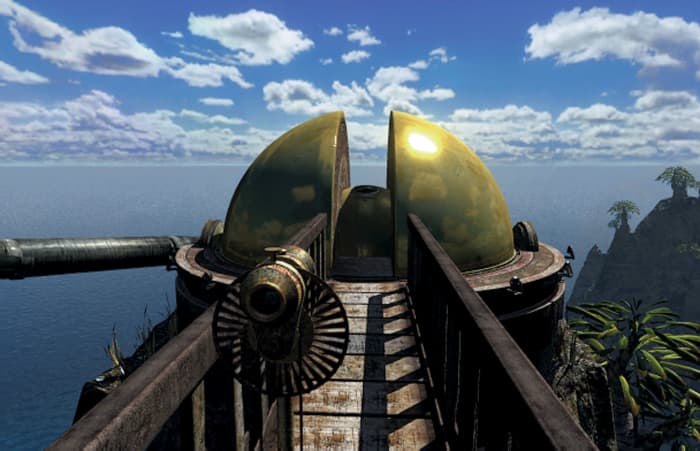
It’s been over 25 years since Cyan revolutionized the puzzle gaming genre with Myst. At a time where point-and-click adventure titles were leading the market, Myst was a clever first-person exploration game that centered around unlocking and traversing new Ages solving puzzles in order to correct a wrong made many years ago. If you’ve never played Myst, check it out here:
The gaming industry has exploded since Myst came out (way back in 1993!), and games of its ilk that blend easy controls with complex puzzles are few and far between. If you know where to look, though, there’s the rare gem that might let you relive the mind-bending puzzle of this classic game. Check out our list!
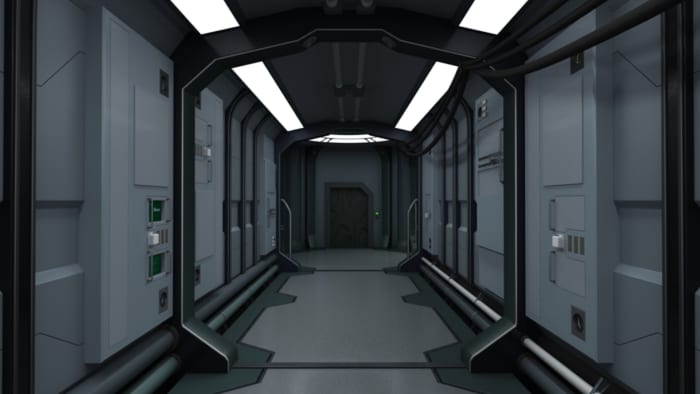
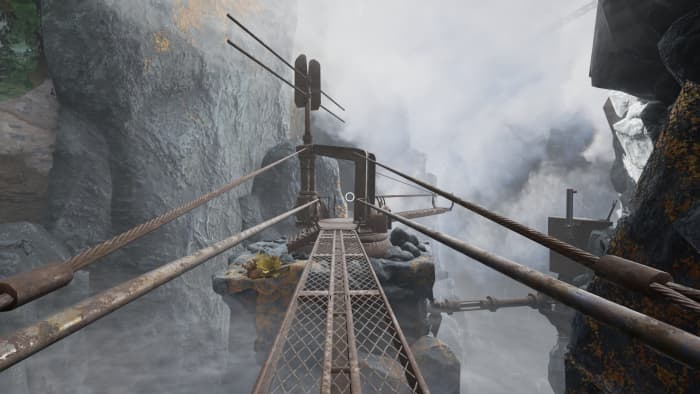
Prominence is similar to Myst in that it’s a first-person puzzle game with compelling character arcs, a captivating narrative, and a rich atmosphere that keeps you excited to see what’s waiting around the next corner.
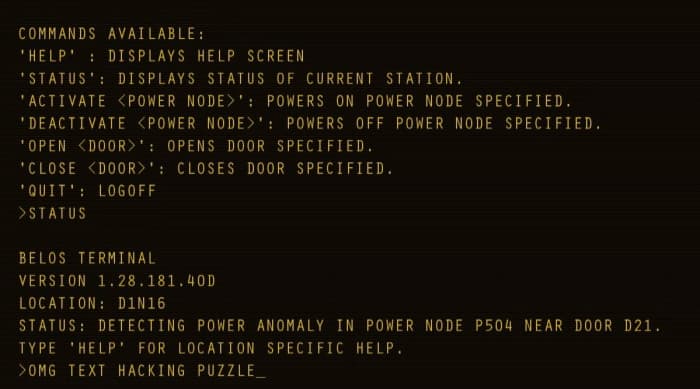
It’s a very different setting than Myst (Prominence is heavier sci-fi and takes place on an abandoned spaceship), and relies more on listening to messages and hacking terminals to progress and gather clues. There’s even a text-based interface that makes you feel like a La Forge from Star Trek.
“Shall we play a game?”
Some of the puzzles in Prominence are more difficult than others, but they’re arranged in a satisfying way; none feel illogical or forced. They all fit appropriately within the context of the story as it unfurls around you, and you as the character rise to meet them.
The soundtrack is exceptional, breathing life into the walking back-and-forth that might otherwise seem tiresome. If you want a more claustrophobic, space-faring Myst experience, Prominence will not disappoint!
Explore and unlock a rich, artistic world island brimming with mystery.
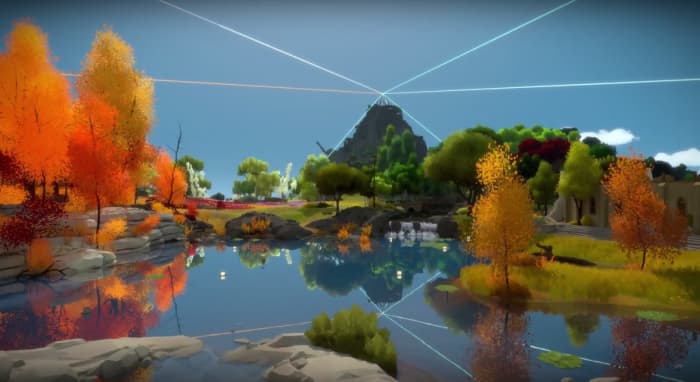
The tagline for The Witness is “you wake up, alone, on a strange island full of puzzles that will challenge and surprise you.” If that doesn’t sound like Myst nostalgia, nothing does! The moment you boot up the game and set foot on the gorgeous, expansive, island you’ll want to explore it fully. Thankfully there are over 500 puzzles to occupy your time, and bright, vivid colors to reward your travails.
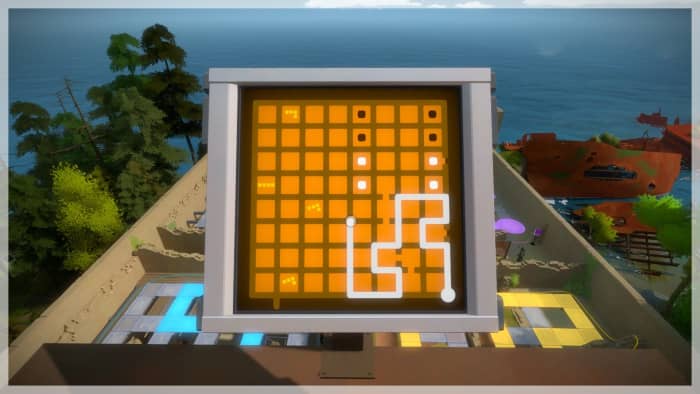
Each small puzzle solved is a step closer to the truth.
The Witness differs from Myst in that in Myst the game was divided into separate Ages tied together with the theme of the island. The Ages of Myst all had their different quirks (using sound for Selenetic, or diverting water for Channelwood and Stoneship) that held the Age together and made it feel unique.
Conversely, The Witness is not a game where the player interacts with a puzzle per se. Rather you’re solving singular puzzles to make individual things work, kind of like Sudoku or crosswords. The game is still goal-oriented at its core, however, and you’ll still have plenty of incentive to explore new ground, discover new clues, regain your lost memory, and hopefully make your way back home.
Probably the most critically-acclaimed title in our list, The Room is simply a must-play, even for the less hardcore puzzle gamers. Why? It’s full of content, there’s a cohesive plot, the puzzles are delightful, the atmosphere is beautiful and dramatic, and we savored every moment of it.
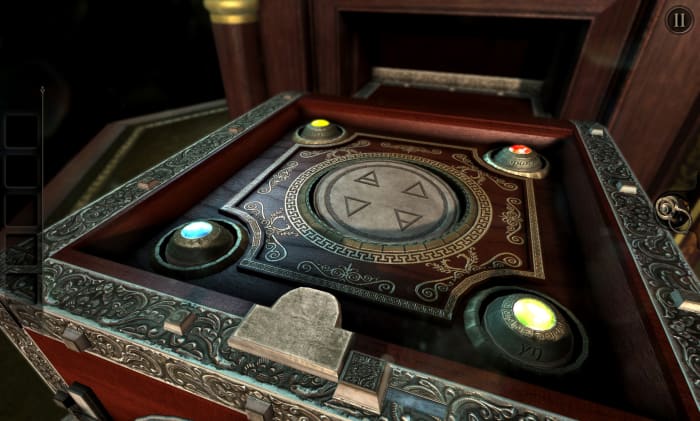
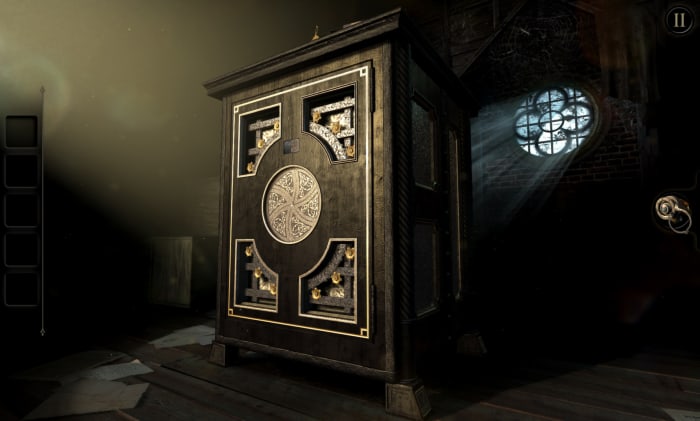
The Room takes place in the steampunk-inspired attic of an abandoned house. A cast-iron safe looms ominously in the foreground and promises something wondrous and ancient concealed within. Can you figure out how to open it?
Stuck? Try looking from a different angle.
The Room won a BAFTA and also spawned two more games, The Room Two and The Room Three, both of which also received overwhelmingly positive reviews on Steam. We’d say more about the game, but frankly, we don’t want to give anything away! Suffice it to say that all three games in the series are well worth your while, and we can’t wait for The Room Four!
Follow in the footsteps of the enlightened Professor Maythorn
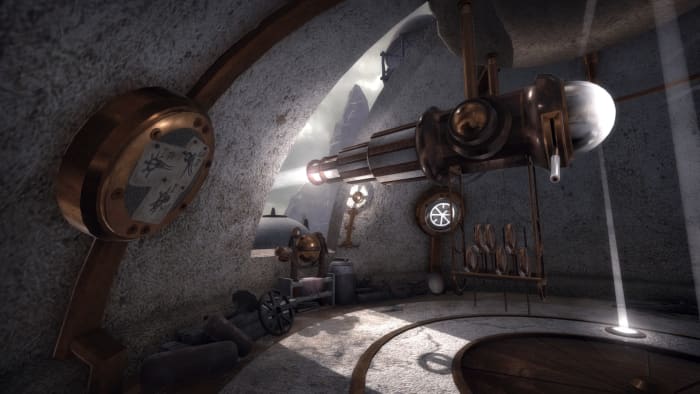
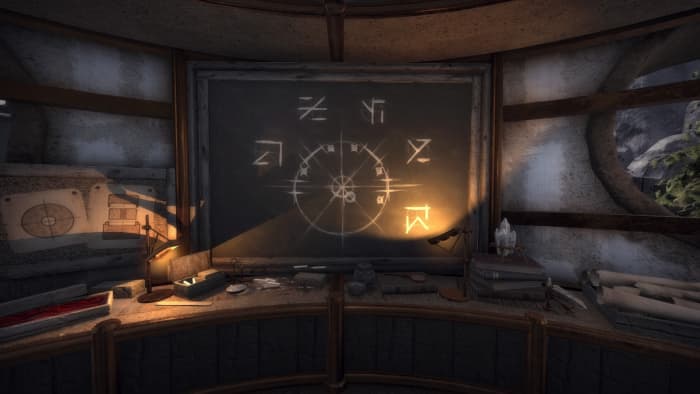
Quern is one of our favorite games on this list because not only does it play like Myst (welcome back to an island full of unsolved puzzles!), it also looks and feels like it. The soundtrack and SFX are on point, and the UI is a step above and beyond the expectation.
As for its puzzles, Quern takes a different approach from most games. Rather than giving individual smaller puzzles like The Witness or wider, more macro puzzles like Myst sequels Riven or Exile, Quern teaches you mechanics that evolve and grow more complex as you explore further and further on the island.
Look important? Take a snapshot with your in-game notebook!
Early on you’ll also receive an in-game notebook that you can write in and use to sketch. While this system isn’t completely revolutionary, it is polished to perfection. Simply point your mouse and press a button, and a drawing of what you’re looking at will appear in your notebook for you to reference later on. It saves a lot of needless running back and forth that other games of the genre suffer from. After playing Quern, this was a feature we definitely missed in other games!
Robyn Miller dazzles with an original soundtrack reminiscent of Myst
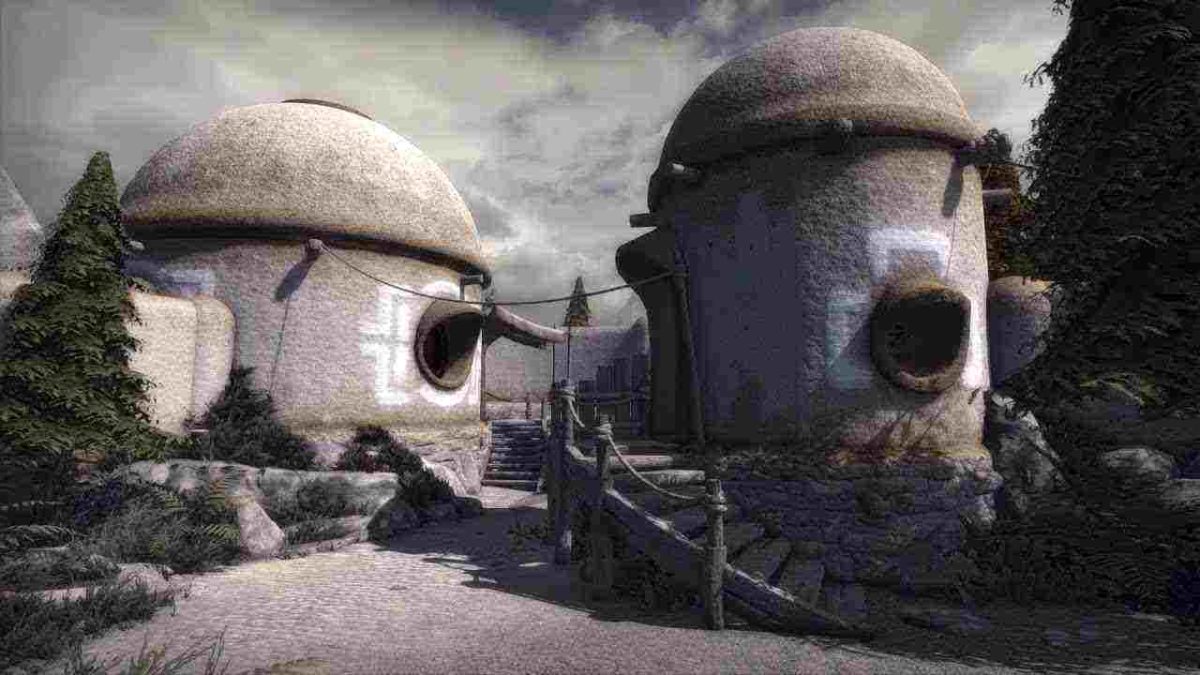
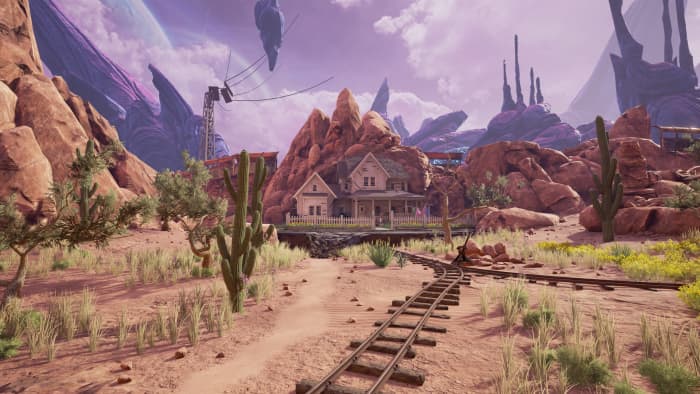
If you’re looking for the experience closest to Myst, look no further than Obduction. Not only is it another expansive first-person puzzle game, it was even designed by the same company! As such you’ll see a lot of similarities to Myst, including a lot of world-hopping, extraterrestrial encounters, and heavy use of tracks and trolleys.
Obduction was even scored by the same composer (the outstanding Robyn Miller) which adds another layer to the nostalgia factor for any Myst fan.
Explore alien planets and connect four different worlds
Similar to Myst, many of Obduction’s puzzles involve transporting between worlds, and the core of the game is finding a way to connect them to each other. That means you’ll be exploring a variety of memorable, colorful landscapes and vistas as you solve puzzles, open new doors, and uncover the secrets of what makes each location tick. If you love Myst, your collection simply isn’t complete without Obduction.
Riven still looks gorgeous over 20 years later
Lastly, it goes without saying that if you enjoyed Myst you should definitely give the sequel games a shot. Myst grew into a six-game series and if you’re like us you’ll be happy to see similar themes (Atrus, linking books, Ages, and puzzles galore) as you go through. As for other games worth your while, you might also want to put Discolored and Memorrha on your Steam wishlist. They look to be similar games as well, and both are coming out later this year!
In the meantime, let us know in the comments below which of these games in our list is your favorite, and stick with Softonic for more Myst!
The Capcom Home Arcade Machine comes loaded with 16 classic Capcom games.
Ever since Nintendo released the NES Classic Mini, a nostalgic ripple has spread throughout the games industry. We’ve since seen classic mini-consoles come out from almost all the major players from Atari to Sony. Some have been excellent, spurring budding DIY enthusiasts to build their own, while others like the PlayStation mini haven’t really caught the public’s imagination.
Now, a new retro console has been announced. This one, however, is a little different to the mini consoles we’ve become accustomed to. Capcom is entering the fray with its Capcom Home Arcade machine.
The Capcom Home Arcade Machine is housed in a dual joystick arcade machine setup and comes loaded with 16 classic Capcom games
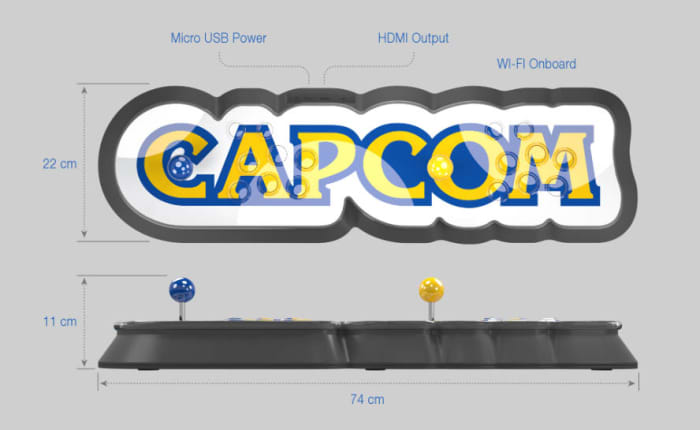
Capcom’s foray into the mini-console market immediately stands out from the rest due to the size of the thing. OK, technically it is still a mini console if you’re comparing it to an arcade machine, but it dwarfs all other mini-consoles, coming it at 74 cm in length and 22 cm wide. As the tagline “Play, Compete, Cooperate” makes out, the machine is built for multiplayer use and these dimensions ensure two players will be able to stand side-by-side without bothering each other’s play.
This all makes sense when you consider that Capcom is trying to recreate the days spent down the arcade playing games on your feet. All the mini-Capcom needs to tap into those days is power via USB and an HDMI cable running into a TV. With larger HD screens being the norm these days, this could create an arcade-like experience on a much bigger screen than the games were originally played on.
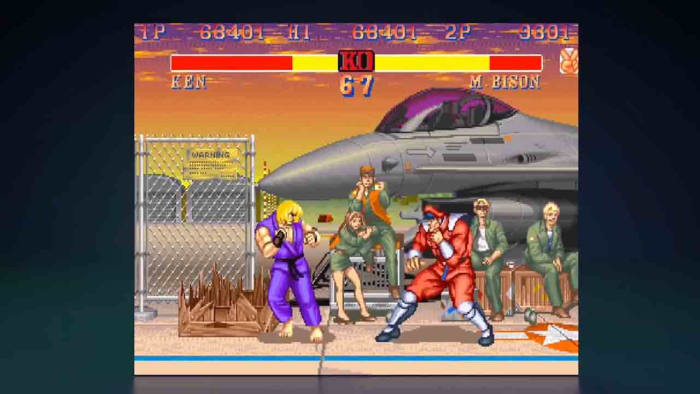
Capcom is behind some stellar arcade games like Street Fighter II: Hyper Fighting and Megaman: The Power Battle. Both come loaded on the mini-Capcom alongside 14 other titles spanning various different gaming genres. You can see the full list of all included games below:
The mini-Capcom also sports onboard Wi-Fi so your high scores will go directly into a “Worldwide High Score Leaderboard.” This means even if you can’t find anybody to play against at home you can still go up against players from around the world.
All of this makes the Capcom Home Arcade Machine a very attractive prospect. The only downside is the price and availability of the thing. The Capcom website says the machine will be available in Europe on October 25 and will cost around €230 (about $260), which it puts it in a considerably higher price bracket than other mini-retro consoles. On top of that, it is currently only available for pre-order via the Capcom website, although Capcom says other retailers will come on board soon, and as yet there is no news of a North American release date.
Discover why this 1994 classic might be the deepest game ever created.
Even if you’ve never played Earthbound, you’ve almost certainly heard about it. You may know its protagonist Ness as that annoying kid from Super Smash Bros. that screams and throws fire everywhere. It’s also possible that you’ve heard rumblings from the Earthbound fanbase, a dedicated group of diehard fans that exists in spite of Nintendo’s lack of acknowledgment. People go on and on about how Earthbound’s a cult classic and one of the best RPGs of the 16-bit era.
You might not get what all the hype is about at first glance. The simple “Peanuts”-esque art style and Dragon’s Quest-like gameplay show a standard if quirky RPG that has a unique setting and amusing dialogue. However, if you actually sit down and play the game you’ll embark on a nuanced, introspective adventure that has you questioning the balance between wide-eyed wonder and cynicism, love and distance, and the reframing of our lives as “adventures.” While I’d have to think about calling it the deepest Nintendo game ever made, it is without question the most personal.
And yes, the game is worth the hype.
The World Beyond Your Front Yard: when the mundane meets the surreal
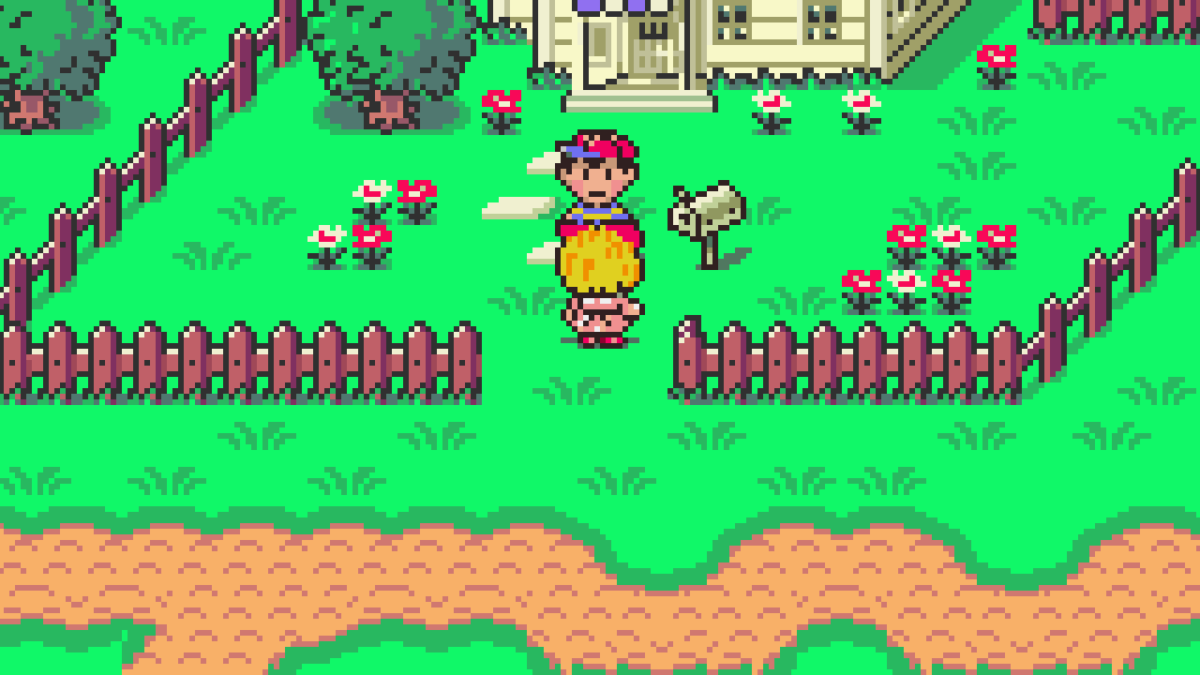
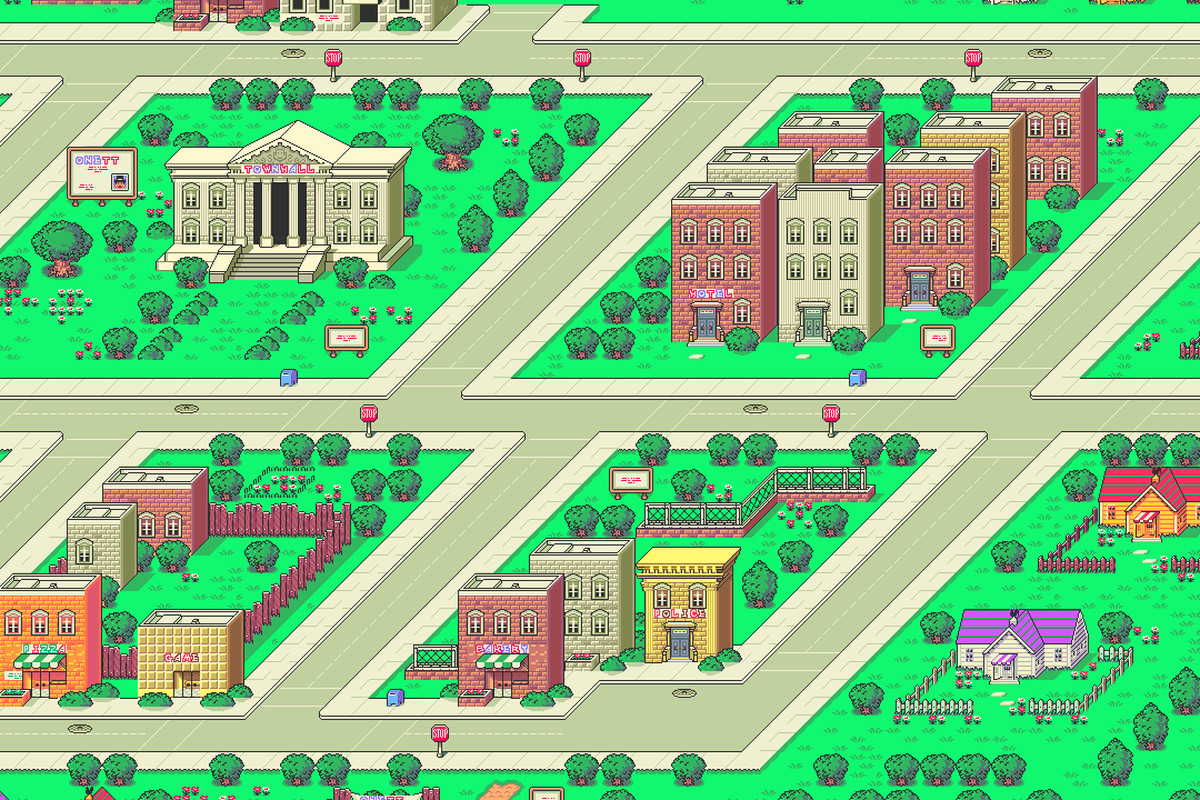
To understand Earthbound we must first understand its setting. Most RPGs of the ’90s took place in fantasy settings, with swords, spells, dragons, and the like. Earthbound instead takes place primarily in Eagleland, a pastiche of the United States.
Instead of playing as some hero of legend, you play as Ness, a typical 13-year-old boy who likes baseball and riding his bike. After a meteor crashes into the mountains behind your house, you set off to investigate. It’s here that you see your first truly bizarre character: Buzz Buzz. Buzz Buzz is a fly from the future who tells you that you need to save the world from Giygas, an indescribable being of pure evil. From here you say goodbye to your mom and sister, you leave home, and your quest begins.
This idealized, Rockwell-esque setting further satirizes RPG tropes by replacing items like swords and potions with baseball bats and burgers. In the beginning of the game, the enemies you encounter are unspectacular animals like wild dogs, snakes, and crows. It’s certainly funny seeing a typical small American town recontextualized as an area from an RPG. This setting serves as more than just a humorous reframing of an RPG, it serves one of the main themes of the game: the relationship between the mundane and the surreal.
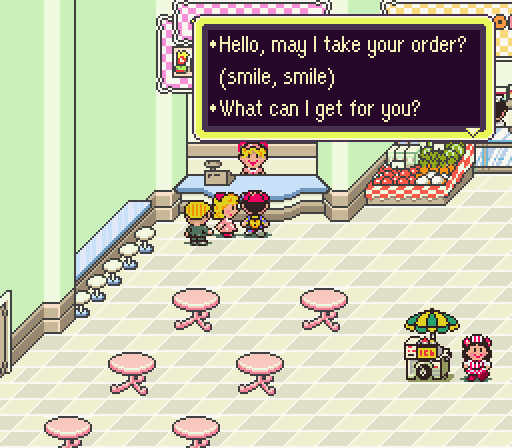
Healing items include burgers, fries, and coffee.
By starting with a normal, relatable setting and diving further and further into the bizarre, Earthbound plays out like a kid’s imagination running wild. As the kid makes stuff up as he goes along, his friends join him with their own ideas, leading to far out settings like a town with a zombie-infested circus, a neon city where “no” means “yes,” and a pyramid populated by angry hieroglyphics.
Think back to when you were a kid, and leaving your backyard was the beginning of an adventure. When you were with your friends exploring and playing, there was no telling what you’d come up with that day. Early on in your adventure, you encounter human adult enemies, such as mean old ladies, cops, and local punks. When you encounter people like this as a kid, you don’t think of these people as people with their own thoughts and lives. As a kid, they only seem like greedy, evil people who exist solely to ruin your fun.
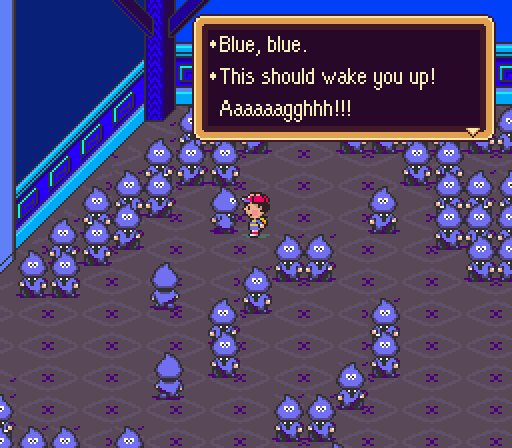
Sometimes the human enemies are weirder than the supernatural ones. The Happy Happyism Cult is obsessed with the color blue.
Earthbound recontextualizes the mundane (the real world) by presenting it as an adventure. In doing this, the game can present relatable, real issues through the lens of a child. The game pits Ness against the literal embodiment of evil, and Ness believes he can save the world armed with only a baseball bat and his psychic powers (Ness and his friends prove to be no match for Giygas). Ness and his friends aren’t fighting some evil dictator or greedy businessman or something, they set off to fight the very concept of evil itself.
As a kid, it’s common to believe highly in your ability to change the world for the better. We all think we’ll be good people who help others and act selflessly. However, as the pressures of adulthood slowly seep in, you become wearier and more bitter, limiting both your ability and desire to actually do good. For most people, their adventure against evil ends there.
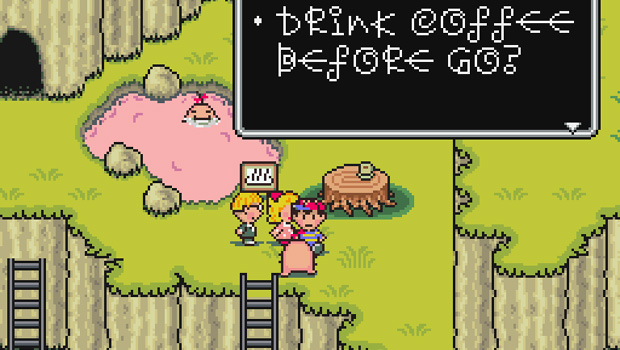
This is not to say that the game presents the struggle to find meaning and goodness in the world as some childish, naive pursuit. Quite the opposite, actually. While trying to fight evil head on and find the ultimate meaning of life is a daunting and exhausting task, the game encourages people to find meaning and joy in the little things. The greatest example of this in-game is the cup of coffee.
At an early point in your adventure, you encounter a friendly person who offers you a cup of coffee. If you drink it, the screen fades out into this psychedelic blue haze as relaxing music plays. Text then slowly scrolls up the screen telling you to relax, take a breather, and feel good about all you’ve accomplished so far. It tells you that you have done amazing things, and though you’ve felt plenty of pain and will feel more, if you keep your courage and sense of humor then you’re going to be fine. By recontextualizing mundane everyday acts, like relaxing with a cup of coffee, Earthbound helps show the player that their own lives are worth living as exciting adventures.
Giygas Attacks: When childhood and adulthood clash
While Earthbound presents itself like a child’s imaginary story, the game itself is the brainchild of designer Shigesato Itoi. This perspective is key: the game is a childhood adventure created by an adult. As the game progresses, it becomes clear that Itoi filled Earthbound with not only all of the whimsies of childhood but some of the more uncomfortable truths of adulthood. With this in mind, I believe that it’s best that you play Earthbound when you’re at some sort of transitioning period in life. Whether that be entering or leaving high school, going off to college, or entering the workforce, the sense that you’re being pulled in multiple directions with no right answer is essential to the themes of the game. The harsher realities of adulthood only really start becoming apparent towards the end of the game.
For example, lousy fatherhood is a running theme throughout the game. Ness’ neighbor Pokey is an obnoxious bully who lacks friends, but it can be argued that his behavior stems from his father abusing him. Pokey’s gradual transformation from annoying neighbor to Giygas’ reality warping right-hand man stems from a desire to control things for once in his life.
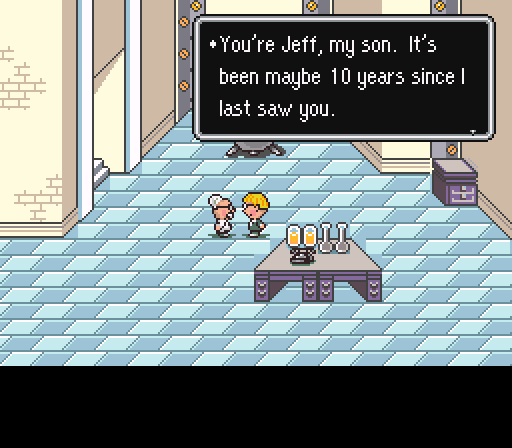
Ness’ friend Jeff is the party’s tech whiz who relies on gadgets and his own intuition instead of psychic powers. You encounter Jeff’s father, Dr. Andonauts, multiple times throughout the game. Like Jeff, Dr. Andonauts is a supergenius inventor. He is cold and distant toward Jeff, however, only visiting him once every few years. They’re so distant that Jeff refers to his father as “Dr. Andonauts” rather than “Dad.”
Dad of the year
Ness’ own dad isn’t exactly a shining beacon of fatherhood either. He is never shown throughout the game, being constantly busy with work. Ness’ father can only be talked to on the phone, and while he clearly loves Ness, he never stops work to make time for him, even as Ness is quite literally saving the world. Because of this, Ness quite literally views his dad as just a voice on the phone. Being a child, Ness only vaguely understands the nuances between raising and balancing a family, but he is old enough to feel disappointment and loneliness at his father’s lack of presence.
This is literally all you see of Ness’ dad
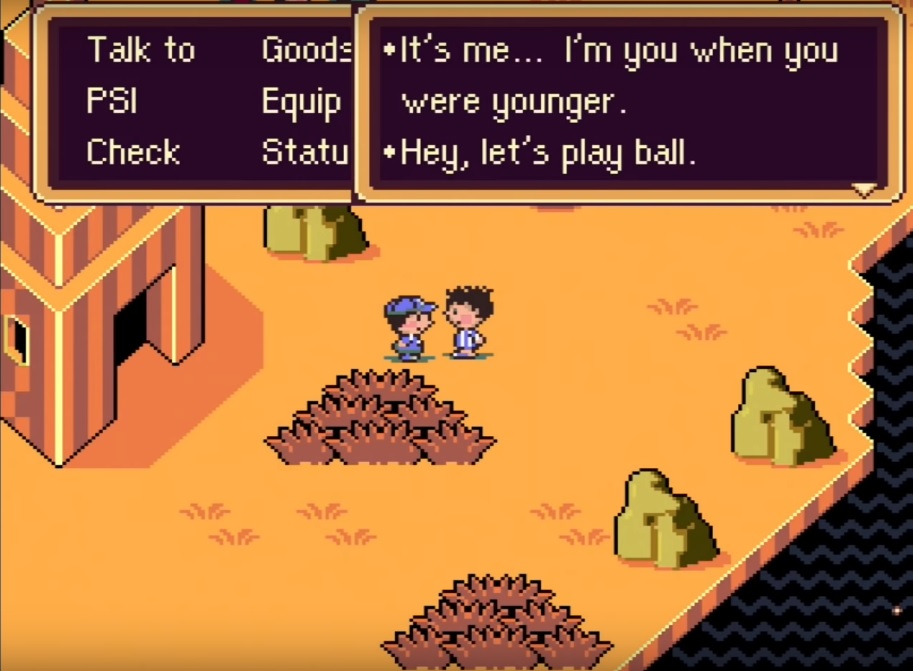
Toward the end of the game, Ness is knocked unconscious and enters a place called Magicant. Magicant is easily the most cerebral and introspective part of the game. It is Ness’ own subconscious, filled with little snippets of your adventure and Ness’ past, such as a snowman that Ness once made as a child that eventually melted away. You encounter both enemies and allies while exploring, and some enemies even comment on how much it hurt when you killed them. The most startling person that pops up in Magicant is Ness’ younger self. When spoken to, young Ness says this:
“It’s me… I’m you when you were younger.
Hey, let’s play ball.
Do you prefer reading comics or playing games?
What? You’re busy?“
Ness meets little Ness
Even Ness, who is still a child himself with an absent father figure, can’t make time for his younger childhood self. Kids are always trying to appear grown up in any way they can, quickly discarding things they think will make them look childish. This segment shows that the struggle against adulthood takes place at every point in a person’s life.
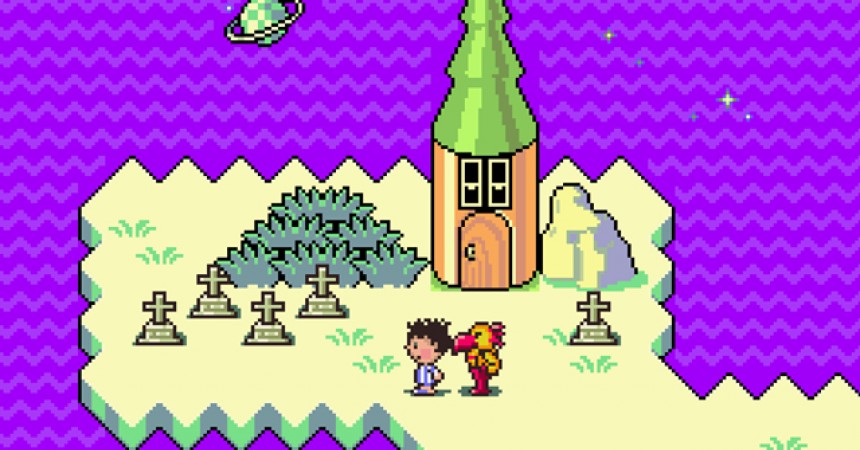
Further along in Magicant, Ness finds the Flying Men. The Flying Men are muscular birdlike creatures who say that they represent Ness’ courage. These Flying Men join Ness one at a time in Magicant and are essential allies in dealing with the level’s tough enemies. There are only a limited amount of Flying Men, however, and if enough die, they scold Ness for treating them like trash. After each one dies its gravestone appears near their house, explicitly displaying the gradual death of Ness’ courage in the face of adulthood issues he doesn’t understand. At the end of Magicant lies Ness’ Nightmare, the manifestation of Ness’ evil thoughts. He is an extremely difficult boss that has access to all of Ness’ abilities.
Ness and a Flying Man look at their fallen friends.
A surreal place like Magicant sends the mind racing. What would your Magicant look like? What essential people from your past and present would you find there? What precious memories would you relive? What would your childhood self say to you, and how would you respond? Could you beat your own nightmare?
Warning: ending battle spoilers follow!
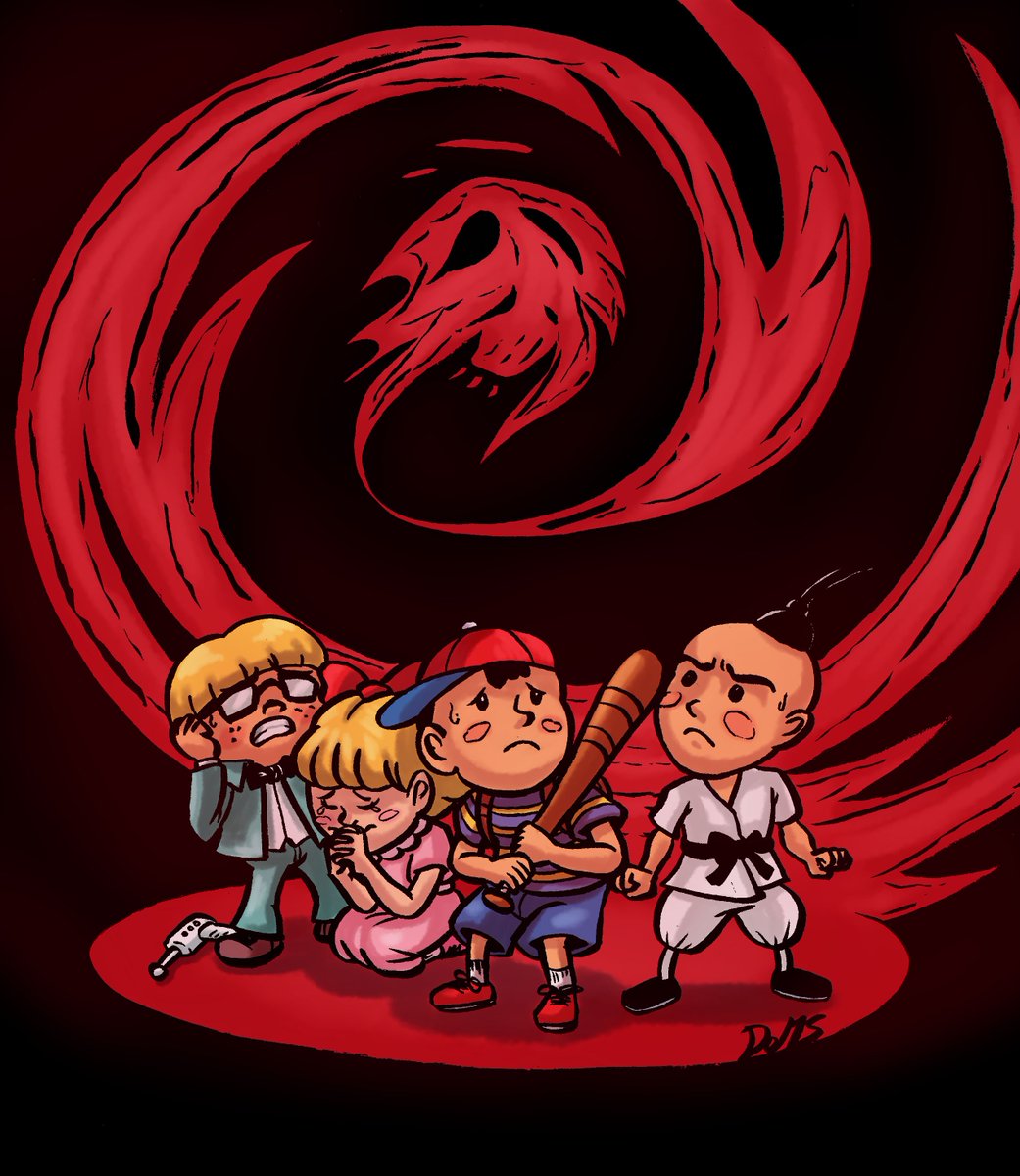
The climactic battle against Giygas is where the duality of childhood and adulthood come to a head. When Ness and his party finally get to face Giygas head-on, the player quickly realizes that they can’t hurt it at all. Giygas’ attacks are beyond comprehension (“You cannot grasp the true form of Giygas’ attack!”) and do obscene amounts of damage, sometimes wiping out party members in a single blow. Giygas’ attacks represent the entirety of the evils of the adult world crashing into a child at once, with the child having no idea what’s going on.
Giygas’ incomprehensible evil is based on a real traumatic event experienced by Shigesato Itoi. As a kid, Itoi once accidentally stumbled into the wrong movie at the theater. He watched a scene depicting a woman being brutally murdered and sexually assaulted, a moment that Itoi specifically points to as when his childhood ended. As a child, Itoi did not understand what he was seeing in the film, but he knew it was horrifying and damaging. Giygas reflects this assault in its dialogue (“It hurts… It hurts…”) and is a dramatic representation of the moment a person’s childhood dies in front of them.
The only thing the player can do to fight back is to pray. As the player prays, the game cuts to various characters you met earlier in the game. They sense something is wrong and pray for Ness and his friends, dealing massive amounts of damage to Giygas. If you haven’t played the game and ignored the spoiler warning, then I won’t reveal who the final person who prays for Ness is, it is something that truly needs to be experienced blind.
Through this battle, Itoi is trying to show that for many the transition to adulthood is sometimes sudden rather than gradual, and can be a confusing and painful experience, especially if one goes through a traumatic event. But by invoking all of your life experiences, from small joys to major milestones, and the strength of those who love you, you can make the leap to adulthood and fight against the fear and malice that would otherwise consume you.
Spoilers end here
The Legend of Zelda: Ocarina of Time turns 20. Here’s how it changed gaming forever
Itoi is not trying to equate adulthood with evil in Earthbound. Instead, he is trying to show that the sudden injection of adulthood into a child’s life can be a jarring, confusing, and distressing experience. Adulthood is not evil, and the pressures that come alongside it are normal. At first, the mundanities seem soul-crushingly boring and the new experiences are disheartening and confusing. However, like Earthbound, as you lean on your collective life experiences and those who love you, the mundane and the surreal combine with childhood and adulthood, reframing your life as the memorable adventure that it truly is. This adventure is often funny, heartbreaking, bizarre, confusing, exhausting, and touching, but it’s wholly your own. Like Earthbound, this adventure is personal.