Google has recently implemented a feature in Germany that allows users to see the number of reviews that have been removed from business profiles due to defamation complaints. This novelty has become notable after the observation of Benjamin Szturmaj, who shared a screenshot on the X platform, pointing out that more than 250 reviews had been removed in this context. This marks a significant change in the management of negative reviews, which can have a considerable impact on the public perception of companies. No one can be deceived anymore The laws in Germany allow […]
This novelty has become notable after the observation of Benjamin Szturmaj, who shared a screenshot on the X platform, pointing out that more than 250 reviews had been removed in this context. This marks a significant change in the management of negative reviews, which can have a considerable impact on the public perception of businesses.
No one can be fooled anymore
The laws in Germany allow law firms to request the removal of negative reviews without the direct intervention of the affected user. Unlike reviews that are deleted for violating Google’s guidelines, removals for legal reasons are only notified through an email, resulting in a less transparent process for users. Michael Blumenthal, a local SEO expert, highlighted that Germany presents a unique case due to the proliferation of legal dialogues regarding the removal of negative reviews.
The effectiveness of this system has led to questions about whether Google will implement something similar in other countries. However, experts like Joy Hawkins suggest that such a measure is unlikely unless other countries adopt similar laws. “I don’t think Google wants to do this, I think they have to do it”, Hawkins noted, hinting that the company may feel pressured to act according to local regulations.
This situation reflects a distinctive approach to online content moderation, where the regulations of each country can significantly influence how companies manage their digital reputation. With such a change in the dynamics of reviews, businesses could be more protected from unfounded criticism, although it also opens the door to potential abuses of the legal system.
The reviews for Death Stranding 2, the highly anticipated title from Hideo Kojima, are mostly positive, with various publications highlighting the quality of the game. GamesRadar and Digital Trends give it a score of 4/5, IGN an impressive 9/10, and Game Informer sits at 8.75/10. These scores reflect the game’s ability to tackle themes of spirituality, human connection, and isolation in the digital age, resonating especially with current experiences stemming from the pandemic. Endless praise, although there are also a few criticisms. The game features an expansion in its arsenal of combat tools and a […]
The criticism of Death Stranding 2, the highly anticipated title by Hideo Kojima, is mostly positive, with various publications highlighting the quality of the game. GamesRadar and Digital Trends give it a score of 4/5, IGN an impressive 9/10, and Game Informer stands at 8.75/10. These scores reflect the game’s ability to tackle themes of spirituality, human connection, and isolation in the digital age, resonating particularly with current experiences stemming from the pandemic.
Endless praise, although also a few criticisms
The game features an expansion in its arsenal of combat tools and an evolution in its delivery mechanics, which has led several critics to compare it to a “bottomless toy box” in terms of diversity of options. Despite its release on consoles, some believe that Death Stranding 2 has a PC game feel, thanks to its mechanical complexity. Norm Reedus, who reprises his leading role, delivers deeper and more emotional performances, elevating the narrative by giving the characters more personal stakes.
However, some reviewers have expressed frustrations with the filler missions, as well as a narrative that, at certain moments, lacks surprises or shocking twists. The criticism agrees that Death Stranding 2 feels like a linear expansion of the first game, increasing the action but diluting unique aspects of the original’s design. Despite this, the work has managed to capture the essence of Kojima’s message, indicating that the world’s problems cannot be solved just by communicating through the Internet.
With the lifting of the review embargo, it is clear that Kojima and his team have maintained their ability to weave complex ideas while providing fun and accessible gameplay for new players.
If you need an eSignature program that gives you more bang for your buck, signNow might just be the app for you. Acquired by PDFfiller in 2017, signNow offers more features than ever before. Though it rose to prominence thanks to its eSignature feature, the program can benefit your company in new ways.
Let’s take a look at the key features of signNow, its history, and its competitors to see what it’s all about.
What is signNow?
signNow offers cloud-based electronic signature services. The SaaS platform lets people and businesses engage with and manage documents using any computer with an internet connection.
The app serves many platforms including Windows and Mac devices. It’s also available for Android, iPad, and iPhone devices as it uses the device’s camera, email, or your Dropbox account for your signature.
The app aims to improve many aspects of business such as:
Workflow automation and robotic process automation
Contract management and negotiation
Document generation and PDF editing
Utilizing advanced analytics
Payment streamlining
Offering mobile-first web forms
Key features in signNow
signNow features all kinds of important elements that keep your information safe while still providing excellent service. Chiefly, it includes the following features:
Conditional, actionable, formula, and template fields
Sending documents for eSignature
Adding fillable fields in PDF files
Field validation
PDF editing and annotations
In editor comments
Sending documents using links
Recipient attachments
The company primarily serves its eSignature functionality under the product umbrella of airSlate — a direct competitor to programs like DocuSign with more features than just eSignature now.
Is signNow free?
While the mobile version has a free trial for 7 days, signNow for business starts at $8 USD per month per user with the option of monthly or annual billing. This ranges up to $50 per user per month with a minimum of 5 users for their Business Cloud service.
Of course, the higher tiers have more tools and capabilities, as well as a free trial option which the lower tier offerings lack.
$8 USDper user/per month – up to 10 users, basic fields, mobile app, threat protection, and document sending
$15 USD per user/per month – all listed features plus bulk sending, reminders and notifications, branding, and signing link invites
$30 USDper user/per month – all listed features plus payment requests, conditional documents and fields, calculated fields, and signer attachments
$50 USD per user/per month – the enterprise level tier withs lots of additional features such as phone support, HIPAA compliance, Kiosk mode, and more
Other signNow elements
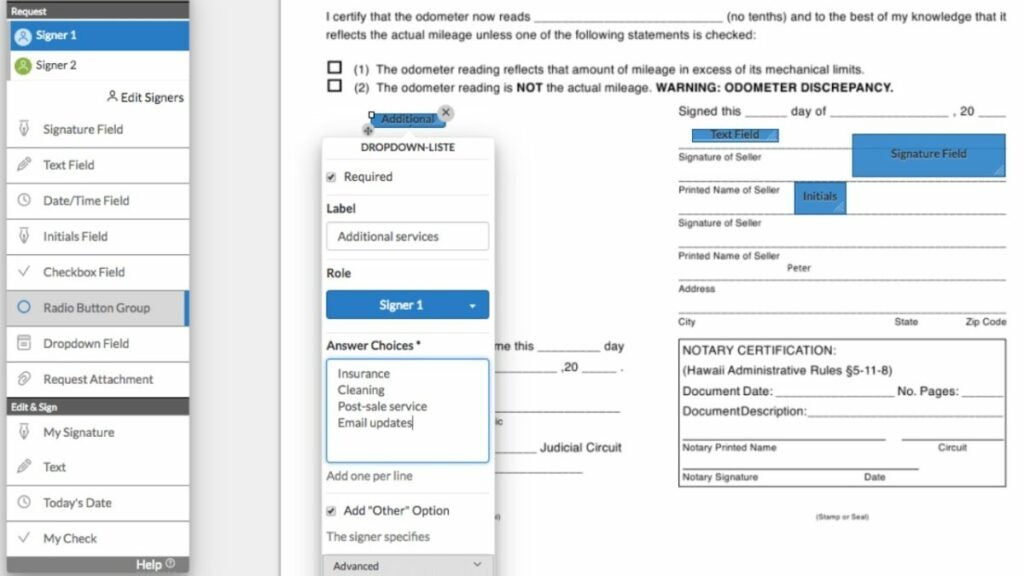
Thanks to the additional programs like PDFfiller controls, signNow can integrate with more programs than before. In fact, the image above is how the app integrates with Microsoft Word. When it comes to competing with programs like Adobe, that counts for a great deal.
Beyond that, this program offers a mobile-ready private eSignature solution — something vital in today’s digital ecosystem. The access to 85,000 state-specific legal forms doesn’t hurt either. It ensures that your contracts, payments, and documents will be safe and accurate.
signNow Competitors
HelloSign
HelloSign bills itself as the easiest way to do eSignature with “little to no training required”. It offers many of the same services that signNow does with the following price structure:
$15 USD – single user, unlimited signature requests, 5 templates, audit trail, signer fields, mobile app, multiple languages, reminders and notifications, and template links
$24.99 USD – single user plan with all listed features plus 3 TB storage, mobile offline folders, priority chat support, sending files up to 100 GB, document watermarking, and file recovery within 180 days
$25 USDper user/per month -for 2 to 4 users with all listed features plus 15 total templates, SharePoint integration, bulk send, branding, team features, Salesforce integration, and more
Premium – enterprise level plan that starts at 5 users with unlimited templates, data validation, multi-teams, performance dashboards, single sign-on, and more
While HelloSign has a free trial like signNow, it lacks some features that airSlate and signNow offer such as conditional fields, recipient attachments, PDF editing, and more. User reviews cite concerns over team control and poor integration, as well.
eversign
First off, eversign has a free option — an obvious win over signNow by airSlate. Many users also report loving the simplicity of eversign’s UI in comparison to DocuSign or signNow. This program has the following price schema:
Free – 5 documents per month, 2 SMS credits, 3 API documents
$9.99 USDper user/per month – unlimited documents, 10 SMS credits, 10 API documents, 3 templates, 1 team member, premium support, and app integrations
$39.99 USDper user/per month – all listed features plus in-person signing, and additional templates, API documents, and SMS credits
$79.99 USDper user/per month – all listed features plus branding and additional templates, API documents, and SMS credits
Custom – a tailored solution for your needs
However, eversign does not handle contracts that need multiple signatures well. In addition, users will have to potentially pay more to gain access to more features in comparison to signNow’s payment tiers.
DocuSign
Many large companies opt for DocuSign thanks to its familiar UI and suite of solutions. signNow may offer more integrations now, but DocuSign has more than 350 integration options. Users have also reported preferring DocuSign’s support system thanks to paid support plans. The app has the following price structure:
$10 USDper user/per month – single user, audit trail, mobile app, reusable templates, document sending, reminders and notifications, and integration with many programs
$ 25 USDper user/per month – up to 5 online users with all listed features plus comments, team reports, shared templates and documents, branding, and in-person eSignatures
$40 USDper user/per month – up to 5 online users with all listed features plus single click consent, payment collection, SMS authentication, bulk send, PowerForms, signer attachments, and additional field types
Enhanced Plans – comparable enterprise level plans with tons more features
While DocuSign has those benefits, it does differ from signNow in key ways. For instance, certain features such as sending documents via hyperlink or PDF editing cost extra. Other features, such as actionable fields, are not functions offered in DocuSign.
Adobe Acrobat Sign
Adobe products such as Photoshop have that big name brand factor going for them. They also tend to have very slick UI design. However, as is common with products backed by a powerful corporation, the software may be more powerful than some users require. Adobe Acrobat Sign has the following price schema:
$12.99 USD (Standard)per user/per month – Windows integration, reminders and notifications, send and collect an unlimited number of signatures, PDF editing, conversion, and exporting, and many other features
$14.99 USD (Pro)per user/per month – adds turning scanned documents into PDFs, PDF creation and validation, redaction capabilities, document version comparison, and more
In comparison, Adobe Signlacks template and actionable fields, PDF annotations and editing, and in editor comments. Many users also cite the price as being a bit high for their needs if they are a smaller business or individual.
Verdict: a solid choice for eSignature
signNow offers a great deal for users who are willing to pay for one of the tiers. The fact that it integrates easily with Microsoft Word and allows for contract management across multiple platforms and devices is fantastic.
However, the lack of a free option may be a barrier to entry for some would-be users. And other reviews have reported that the UI can feel cluttered or non-intuitive to beginner users or in comparison to rival apps.
Looking to try a new eSignature process for your small business? Try the signNowfree trial to see if the base plan works for your needs.
PROS
Integrates with many popular programs
Includes a team collaboration feature
Users can add fillable test fields to any place in a document
App features two-factor authentication and password protection
Easier multiple document e-signature management
Multiple platform options
CONS
No free option (only a free trial)
Lackluster customer support
Doesn’t have signature tracking
Certain features may not be available on all platforms
Some users prefer the UI of other programs to signNow’s UI
The meme-worthy and chuckle-inducing title Garry’s Mod is almost irrevocably tied with Valve and, by proxy, the Steam shop. However, the funny little sandbox game came from a single designer and programmer: Garry Newman. Hence the name Garry’s Mod.
Since it is a sandbox game, users can do a great deal with it. You can just play games created by others, create addons or maps for games, or create your own unique title within Garry’s Mod. Though out for about 15 years, the game finally hit 20 million units sold in 2021. But the sustained interest in Garry’s Mod has helped the studio commit to new titles like Rust.
So what is it about this game that keeps players coming back? Let’s review all of the features in Garry’s Mod and see how it stacks up to similar sandbox games.
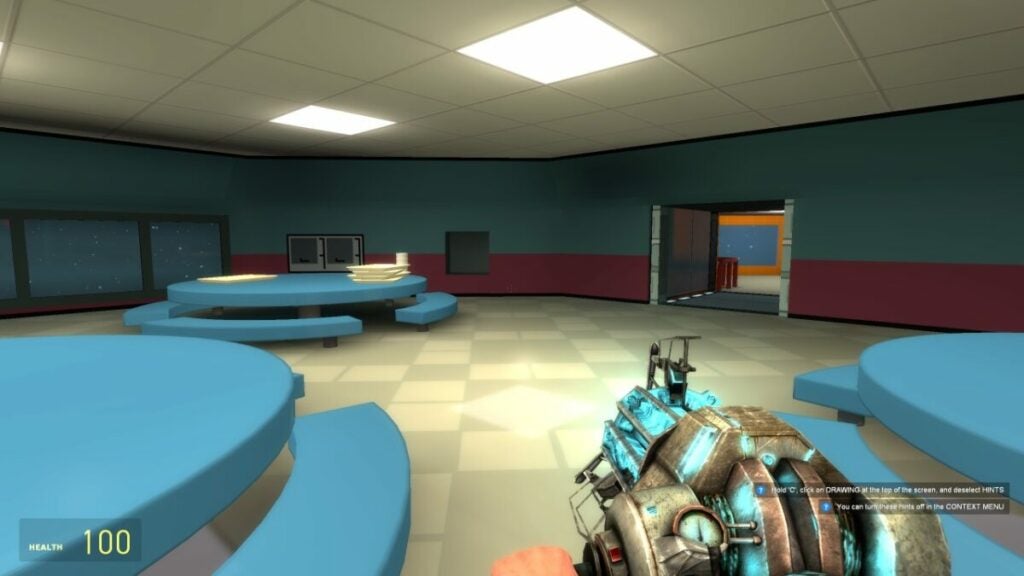
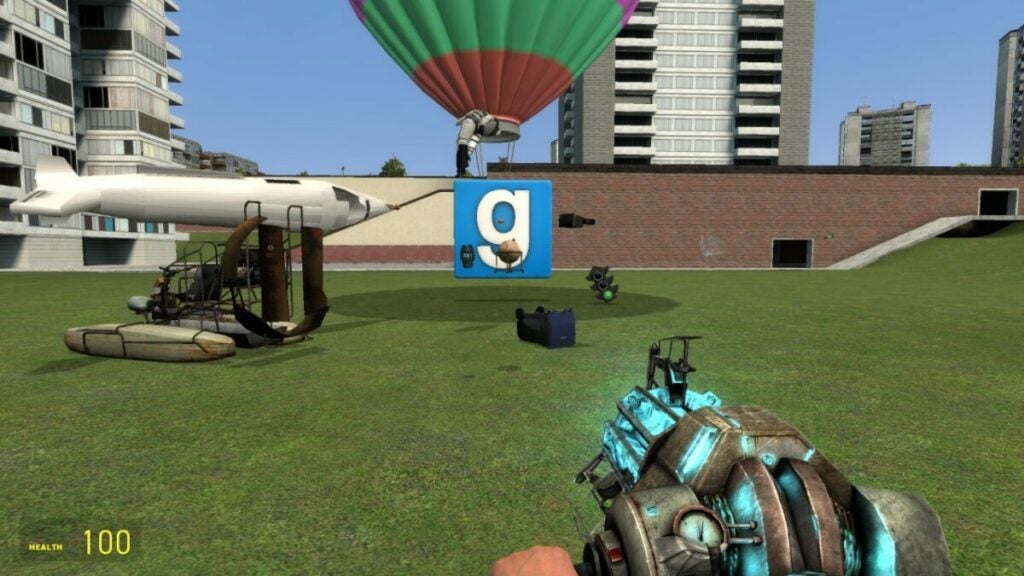
Released in2006, Garry’s Mod base game mode featured no objectives and just allowed players to manipulate objects in space. Players can spawn as NPCs, props, and other interactive items then manipulate them with the “physics gun”. Other modes such as Prop Hunt came from mods from other developers as found in the Steam Workshop.
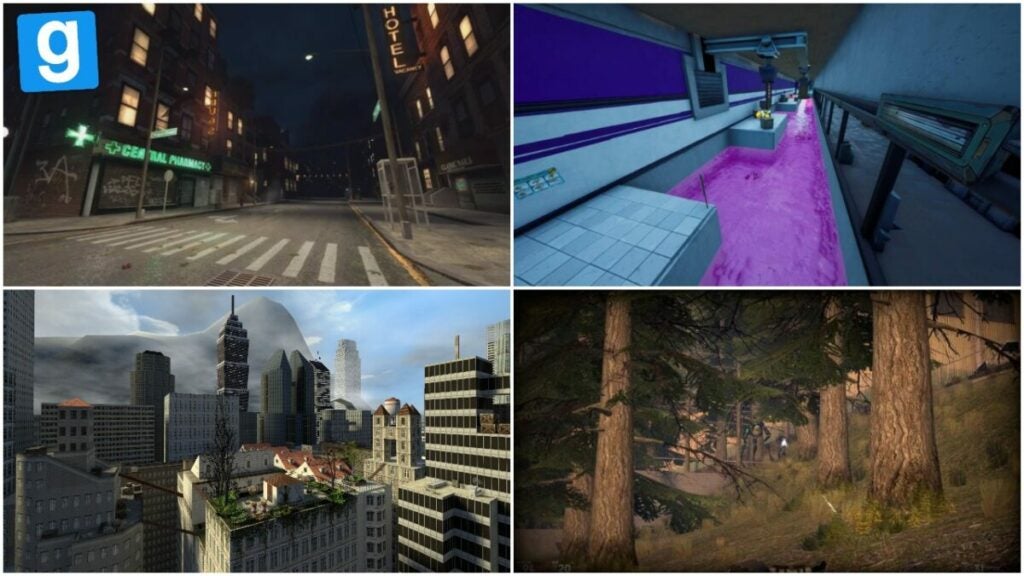
But user-created content really made Garry’s Mod shine with popular mods that came to be known as “addons”. Roleplay became a popular option, as well, with people creating custom in-universe characters then interacting in that universe. Half-Life and Star Wars remain two of the most popular roleplay servers.
Garry’s Mod machinima
The term “machinima” or “machinema” is a bit of a portmanteau on “machine” and “cinema”. It’s where users take game universes and assets then use those to create animated “films”. These can be sweeping tales or something as silly as this Team Fortress 2 universe “Wonderwall” parodyby Neil Cicierega.
Garry’s Mod remains a popular option for machinima thanks to how easily users can craft scenes and manipulate environments and characters.
Half-Life and Team Fortress 2 connections
Since Valve published the sandbox game and it uses the Source engine, it makes sense that Valve titles are found in it. The game also uses a “physics gun” not unlike Gordon Freeman’s Gravity Gun in Half-Life.
But Half-Life and Team Fortress 2 both have such large cult followings and have been out for about the same amount of time as Garry’s Mod. Since these fans have the most experience, demand for assets from those games remains popular.
Physics engine and gameplay
At its core, Garry’s Mod is a sandbox game and physics playground. You can spawn in any number of items from a fan boat to a hamburger or a hot air balloon. Moreover, you can pose individual limbs of whatever creatures or people you decide to put into your game.
When considering the creative freedoms users have when using Garry’s Mod, there is hardly something equal. Players can construct worlds from the ground up to craft something truly unique from Harry Potter roleplay servers to 3D Among Us or Attack on Titan games.
The “gameplay” is the construction and the experience of whatever you create. In essence, your experience is only limited by your imagination and your knowledge of how the controls work in Garry’s Mod.
Game modes
Garry’s Mod features single-player and multiplayer experiences. While the base game mode had no objectives, others had simple goals which made customizing and augmenting those modes so much fun.
The base game modes along with popular addons in Garry’s Mod are:
Sandbox – the base game mode where players can fiddle with physics and game assets.
Flood – players fight each other in a “last man standing” competition in dangerous waters.
Trouble in Terrorist Town (TTT) – though the name has not aged well, this game mode emulates the game mafia with Innocents, Traitors, and Detectives.
GMod Tower – this network of servers functioned as a social media outlet for socializing and minigames. It has since been replaced with Tower Unite.
Prop Hunt – as seen in many AAA games like Fortnite and Call of Duty, one player or team disguises themselves as various props while the other player or team hunts them.
DarkRP – described as a “non-serious” roleplay mode, players adopt various identities from firefighter to black-market dealer on servers.
Spacebuild – this addon lets players construct spaceships to travel to distant planets, found settlements, build space stations, and more.
Elevator: Source – co-op narrative experience with 28 randomized floors. Players choose when to get off (if at all).
Half-Life 2 Roleplay – HL2:RP became popular since it let players create custom characters, join factions, and otherwise interact within that game universe.
Garry’s Mod games
Frequently known as mods or addons, user-created games in Garry’s Mod across all genres and polish levels. While some games look like they could have been made by a studio, others feel more home-grown and “just for fun”. This is entirely the point of Garry’s Mod, so it pays to see what everyone makes.
Though a popular home for horror game mods for titles like Five Nights at Freddy’s, players create riffs on other sandbox games like Minecraft, along with narrative experiences, too.
Maps – variety is everywhere
There are so many maps in GMod that it can be a bit overwhelming for new players. Some maps feature stories while others are just for exploration. Some are intricately tied to their game modes such as TTT or zombie survival.
The trick is to see what the game mode is for the map and if it’s what you want. After all, you might not want to play a scary, Slenderman-themed horror map if you’re alone in the house on a Saturday night.
Characters – you might find some of your favorites
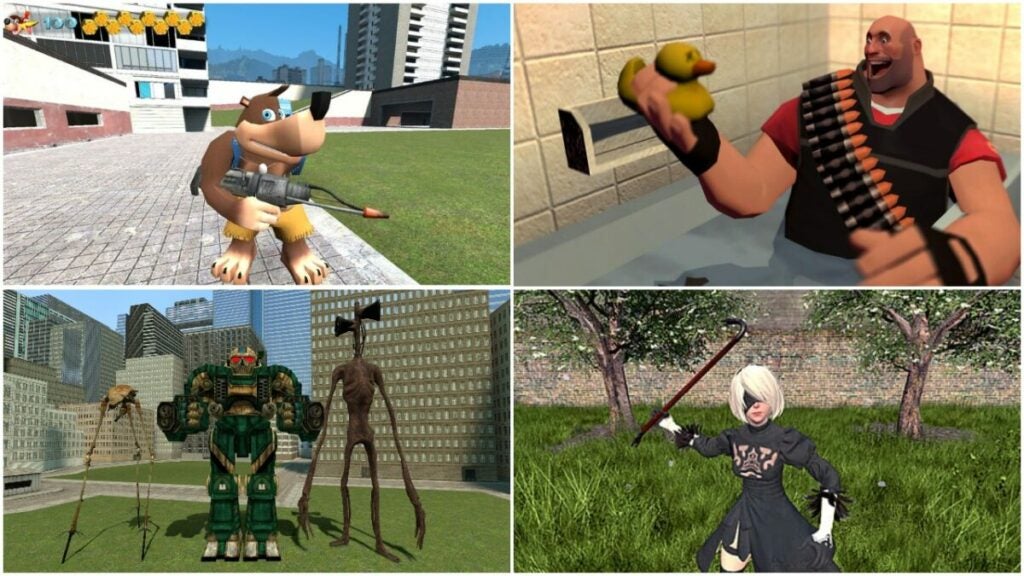
Since the game relies on user-generated content, you can find tons of new characters every time you pop into the game. For instance, in 2017, Steam user Kuma added character 2B from NieR: Automata as you can see in the bottom right corner of the above photo. The addon includes her player model, ragdoll, and NPC.
Of course, fan-favorite characters like the Heavy from TF2 feature in all varieties, but so do nostalgic options like Banjo Kazooie. You’ll even find Warhammer-themed inclusions, too. You will want to check back regularly to see if you find new characters.
Mods – think outside the sandbox
Mods for this game aren’t usually things like “prettier grass” or adding a jukebox to gameplay. It’s more like tools to enhance building capabilities or make certain features more intuitive.
Some popular examples include “Improved Weight” which makes weight-based objects feel more natural or “Wiremod” which adds a catalog of entities players can connect using data wires.
There is just as much variety for mods as there is for maps, so it could take a while to pin down what variables add up to your ideal Garry’s Mod formula.
Known issues
Every game has its bugs and challenges — including a game like this that has no inherent storyline. The user-focused nature of the game can lead to great things…or not-so-great things. Here are a few of the issues with Garry’s Mod.
Accessibility
Not all gamers will be able to get into Garry’s Mod. After all, it’s a physics sandbox vs. a game with overt objectives like Rocket League, Counter-Strike, or even Minecraft — another sandbox title. Reddit user BestServerNA put it best with the question “So Garry’s Mod just changes/modifies things in a certain game? not actually a game itself?”
Trolls and “Minges”
All multiplayer games will have their fair share of toxic players and problematic people. But Garry’s Mod has a unique term for this in the words “minges” and “minging”. This relates to users who break server rules which can sometimes be very strict.
Crashes, ads, and visual bugs — oh my!
Although Valve published the game, support for bug reports is mostly user-operated. There’s even a common list of bugs pinned to the Community tab of the game on Steam.
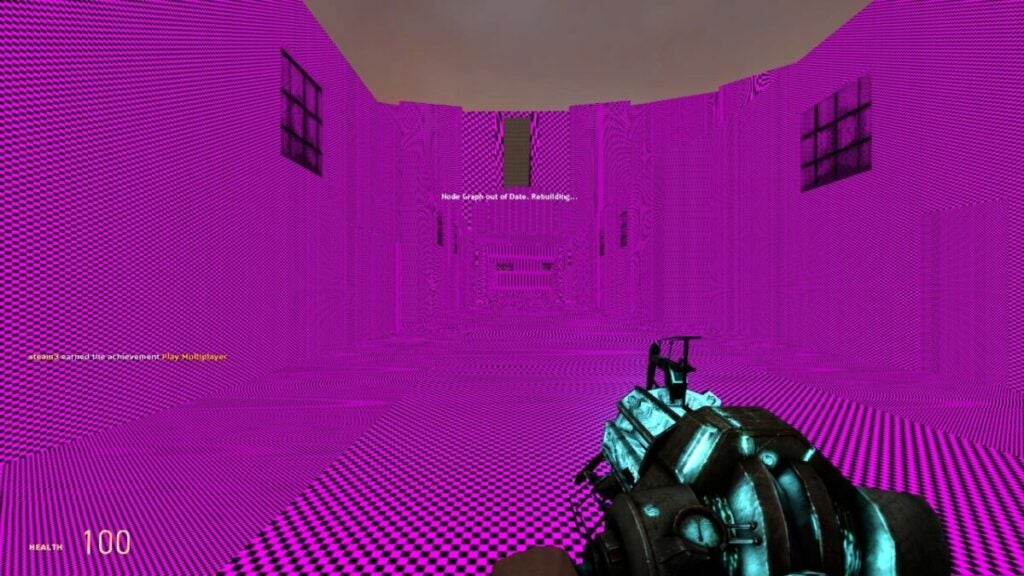
Everything from crashes to missing UIs to ads appearing in people’s games is on this list. Not connecting to servers is another big issue that is a huge problem given that many games on Garry’s Mod are multiplayer.
Sandbox game competitors
The beautiful thing about sandbox games is their endless nature. Players can consistently revisit them for wildly unique experiences each time. But not all of them offer quality experiences. Moreover, some offer more “sand” in the box i.e. more features for users to create with.
Minecraft vs. Garry’s Mod
Everyone who is even a little bit into video games (or has kids who are) knows about Minecraft. The sandbox game lets users craft incredible worlds or just play along with the in-game story and explore. It also has a free-to-play mode, unlike Garry’s Mod.
However, more robust or persistent realms require monetary transactions. But don’t let that deter you; Minecraft is a fantastic game to play with friends or share with younger siblings or your kids. The game also benefits from a ton of user-generated content from in-game items to guides and Let’s Plays on YouTube.
Roblox vs. Garry’s Mod
Some refer toRoblox as “Garry’s Mod 2.0” and it is in some ways. Both games provide users with tools to create their own digital experiences. You can build maps, characters, story narratives, and more. However, Garry’s Mod does not feature the same kind of money-making aspect that Roblox does.
Roblox is also much more targeted toward a younger audience than Garry’s Mod is. In fact, some mods and games available are adult in nature — a direct departure from Roblox despite some bad actors. If you want something more kid-friendly than Garry’s Mod, Roblox is a wonderful alternative.
Kerbal Space Program vs. Garry’s Mod
Although Kerbal Space Program focuses on aeronautics and space, it is just as much of a sandbox as Garry’s Mod. On top of that, it has the adorable, if totally doomed Kerbals, who carry out experiments.
The game also teaches players similarly to Garry’s Mod. It’s a solid game to pick up if you want something more focusedvs. the extremely open-ended experience of Garry’s Mod.
Review verdict
If you’re looking for a produced game with a firm narrative, Garry’s Mod is not for you. It is an open-ended, objective-less physics sandbox and user-powered community. In that vein, if you want to learn the very basics of game development or roleplay in Half-Life, Garry’s Mod is the game for you.
Total War: Warhammer III is the highly anticipated final entry into the franchise. However, the Total War franchise made its first debut in the year 2000 with the game Shogun: Total War. Since then, the series courted many staunch fans including Henry Cavill of Witcher and Superman fame.
But this game has tons of systems, factions, abilities maps, and game modes to learn about. Let’s break down the game into an in-depth review for long-time fans and newcomers alike.
Total War: Warhammer III background
The Total War franchise has a huge catalog of games in many settings and time periods. But the general mechanics remain the same in principle. Players control and manage resources across turn-based and real-time situations.
The game is not available for any console currently. But players can choose to play on Microsoft Windows, macOS, or Linux computer setups. But beware: it does take up about 120 GB of storage space.
For the first time in the series, there’s a dedicated tutorial – a great addition to attract new players to the franchise. There are tons of controls to learn and TW Warhammer 3 gives players a much more transparent experience to enhance accessibility.
However, many of the additions that newcomers will find helpful will make veterans of the franchise cringe or balk. The developers had this in mind so you can disable all of the help-oriented features at your leisure.
Setting and tone
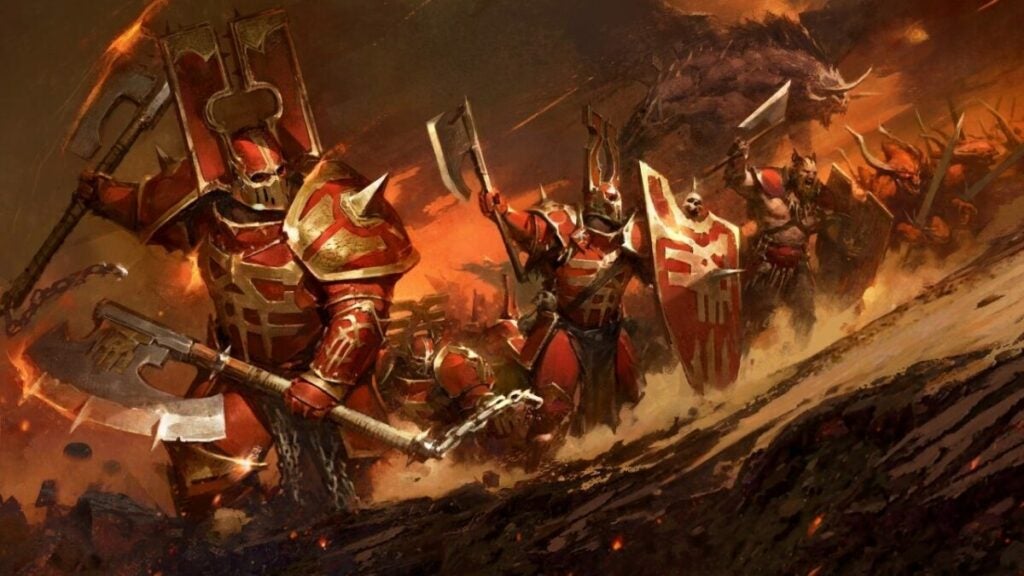
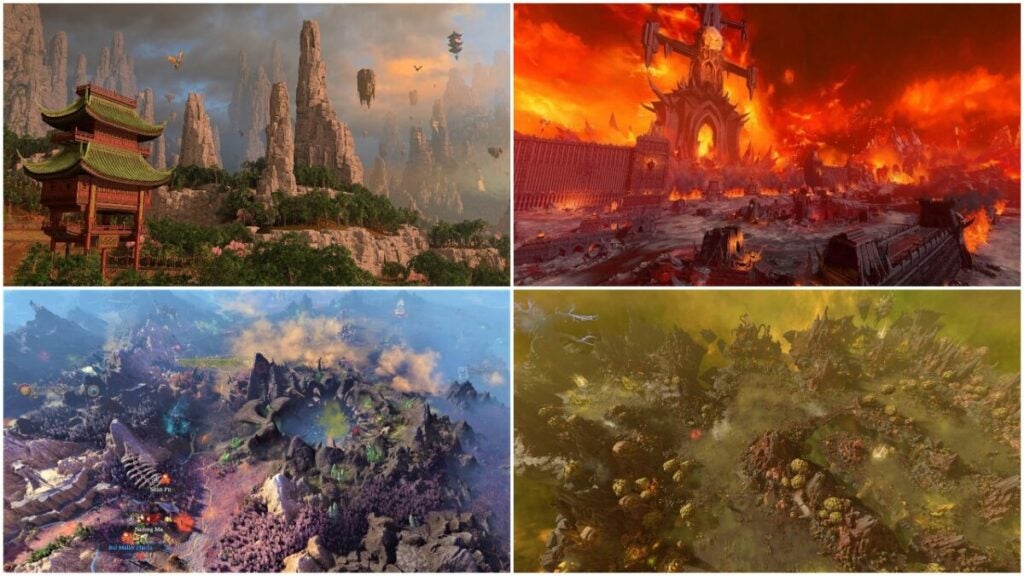
Defining the setting of Total War: Warhammer III is difficult since there are maps for each faction. However, you could say that the story mode setting is fairly consistent. You have Kislev – the snowy realm, Grand Cathay – a lush yet arid empire, and the realms of Chaos according to four ruinous Gods.
The four Gods are the plague god Nurgle, lord of pain and excess Slaanesh, the “changer of ways” Tzeentch, and god of violence and blood Khorne. Each faction map features unique designs, atmosphere, and music that fits them. The tone can shift wildly as a result with Slaanesh’s settings feeling creepy and suffocating while Nurgle’s realm just makes you really want a bath.
Story
Longtime fans of the Warhammer world will find the story fulfilling and engaging. It centers around preventing the total Chaos apocalypse from coming to the world. Players must claim four daemon prince souls and choose what to do with the bear god Ursun – worshipped by the Kislev peoples.
The tutorial also includes a wonderful storyline about a Kislev Prince named Yuri seeking out said bear god. It serves as a fantastic introduction to the gameplay, but also a great narrative that introduces people to a previously underdeveloped region of Warhammer, setting up the game’s main campaign.
How long to beat Total War: Warhammer III
Obviously, you can’t “beat” multiplayer mode except for winning, losing, or otherwise completing matches. However, how long to beat Total War: Warhammer III boils down to individual playstyle and which faction you choose.
Main Story: ~20 – 30 hours
Main Story and extras: ~40 – 50 hours
Performance
No game is without its issues and bugs; Total War: Warhammer III has some serious problems, too. Alt-tabbing can cause a crash, certain hardware can interfere with framerates, Game Pass players may not see text in the game...the list goes on.
Outside of these game-breaking issues, the game gets regular balance patches starting with its first patch in mid-March. As with all games that feature individual units with distinct abilities, tweaking damage numbers, health amounts, spell costs, etc. will be an ongoing process.
Potential players with less than high-end computers can still enjoy the game at 720p though. Just remember that you need 120 GB of storage space for the game. That is just one of the things it pays to know before starting the game.
Total War: Warhammer III gameplay and functions
UI and interface
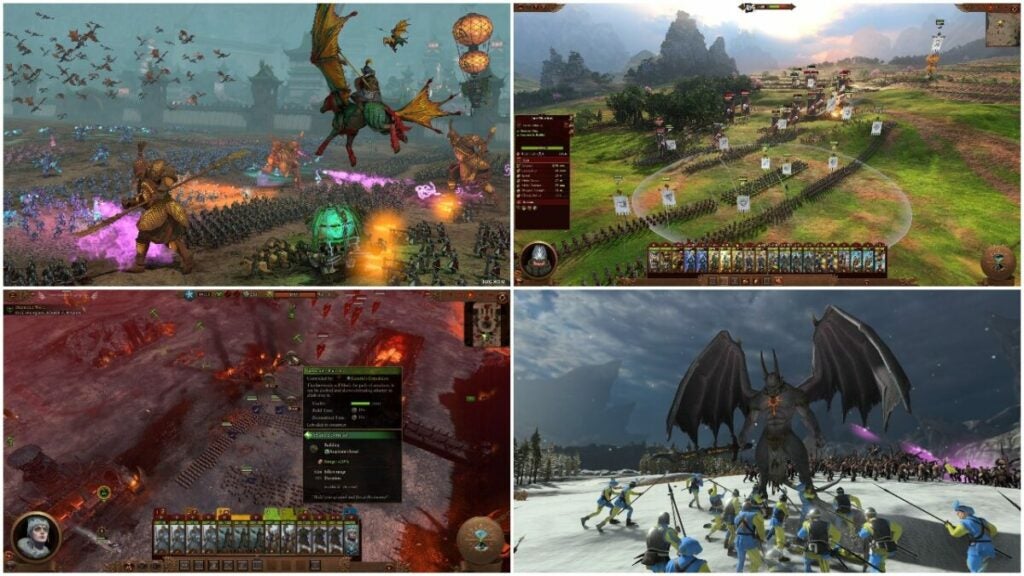
Quality of life changes are the main theme for the UI in Total War: Warhammer III. There are lots of improvements – especially when it comes to single-player mode. However, Creative Assembly made the choice to have a majority red color theme. This may not work for every player.
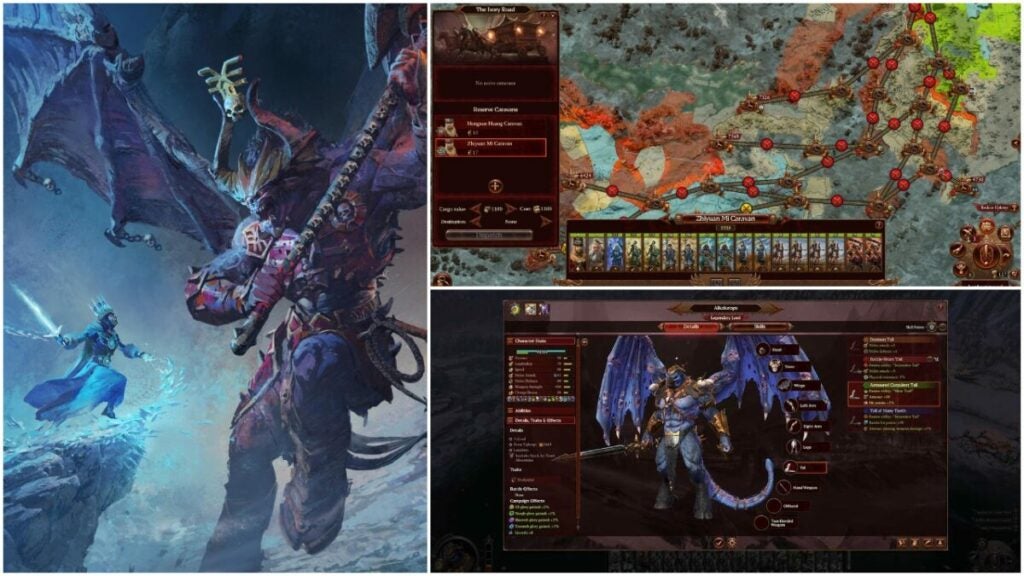
Many fans of the series were delighted to see a new in-game encyclopedia included. Gone are the days where you had to look things up on a second monitor, cellphone, or alt-tabbed web browser. Instead, you can read about enemy types, units, spells, and more using this feature.
Combat mechanics
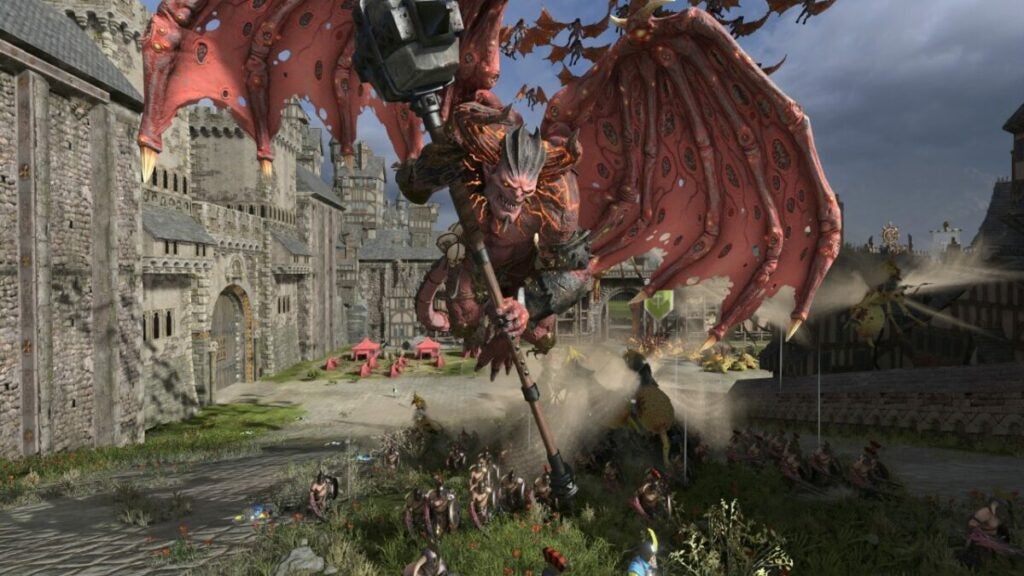
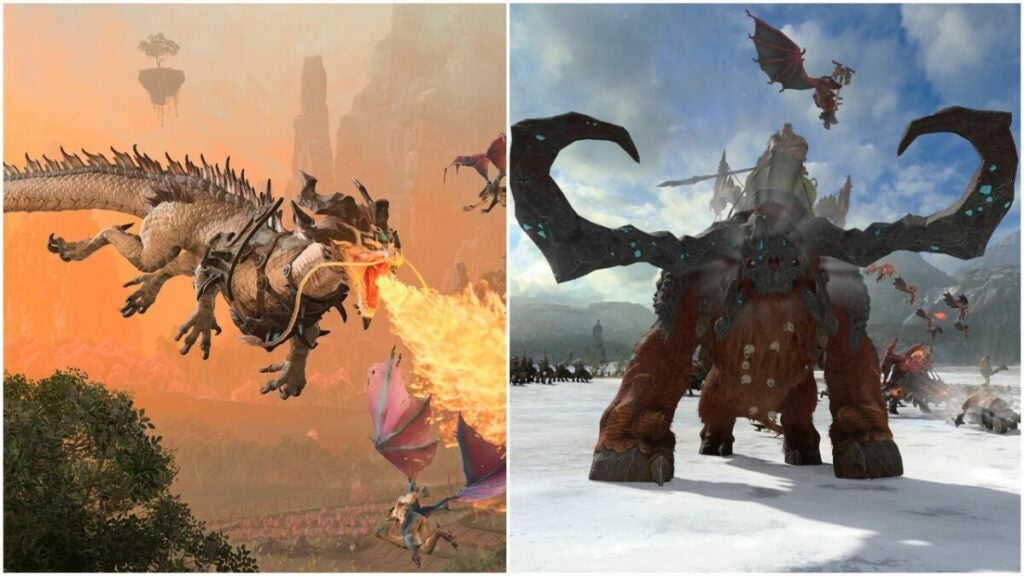
Overall, the combat remains very similar to that of previous entries in the series. You control various units in grand campaigns against enemies. However, there are some new inclusions for the latest game. For instance, flying units can take to the sky or attack on the ground.
The good:
Small UI changes such as the shield icon over units show different states such as being “braced” which helps reduce damage.
Lazy health bars also enhance damage readability throughout combat.
The slow-motion casting options make magic much more accessible in the game, as well.
The Idle Unit hotkey seems especially useful as it can quickly show you any units without orders.
The new “Favor” system lets you borrow army stacks from allies. This lets you fill any holes you find such as ranged units or heavy units to better build out your armies.
The not so good:
The AI can be a bit unreliable as they can ignore your directions, get stuck on geometry, or just stay in the same place entirely.
Sometimes, things that should disappear like battering rams will instead block an entrance you just made instead. It can be a frustrating detriment to the experience.
Defensive structuresdon’t seem as effective at repelling enemies as they should.
Total War: Warhammer III factions, heroes, and playstyles
As always, there are tons of character factions in Total War: Warhammer III. Though there are only 8 factions so far, Creative Assembly is sure to add more as time goes on. Let’s break down each faction, their heroes, and the kinds of units and strategies they benefit from most.
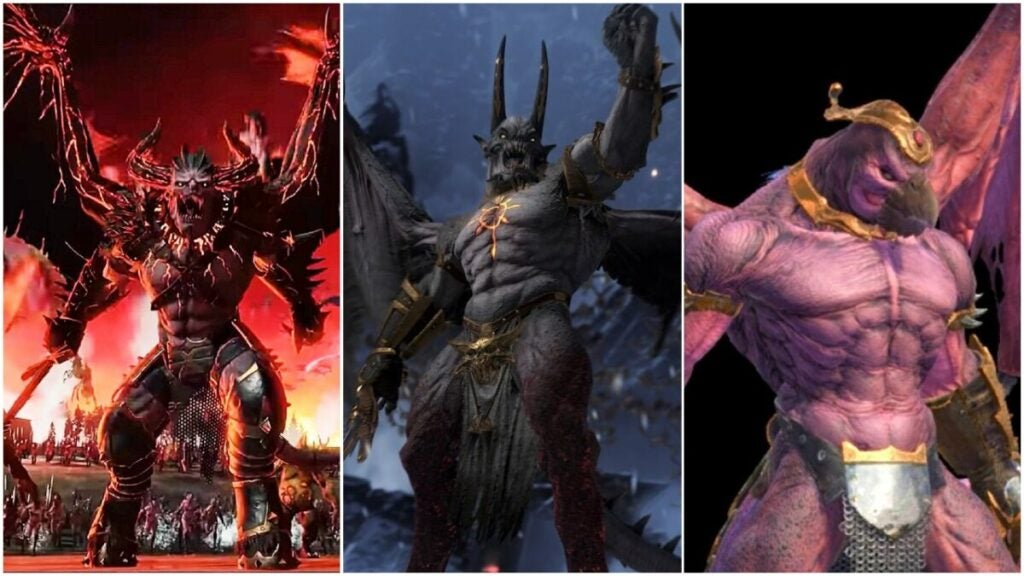
Legions of Chaos – don’t talk to me or my dress up demon son Ragnar ever again
Main resource: Daemonic Glory. Use glory gained to worship and honor one of the four Ruinous Gods to unlock more abilities and gear. Main Hero: Daemon Prince Ragnar
This faction serves as a kind of choose-your-own-adventure situation. But instead, you build a daemon prince named Ragnar who worships a different ruinous power and can be customized in abilities and aesthetics. As you dedicate actions to various Chaos Gods, you’ll receive buffs, war gear, and special units.
From there, you can choose to commit to one God or remain “Undivided” and the game doesn’t really incentivize you to pick just one God. You have access to all units while Undivided and don’t gain access to anything special for trimming down.
Kislev-bear-god worshipping pseudo-religious warriors and ice mages
Main resource: Devotion. Defeating Chaos armies grants this resource that can be spent to honor one of four deities. However, two sub-factions compete for control within Kislev – the Great Orthodoxy and the Ice Court.
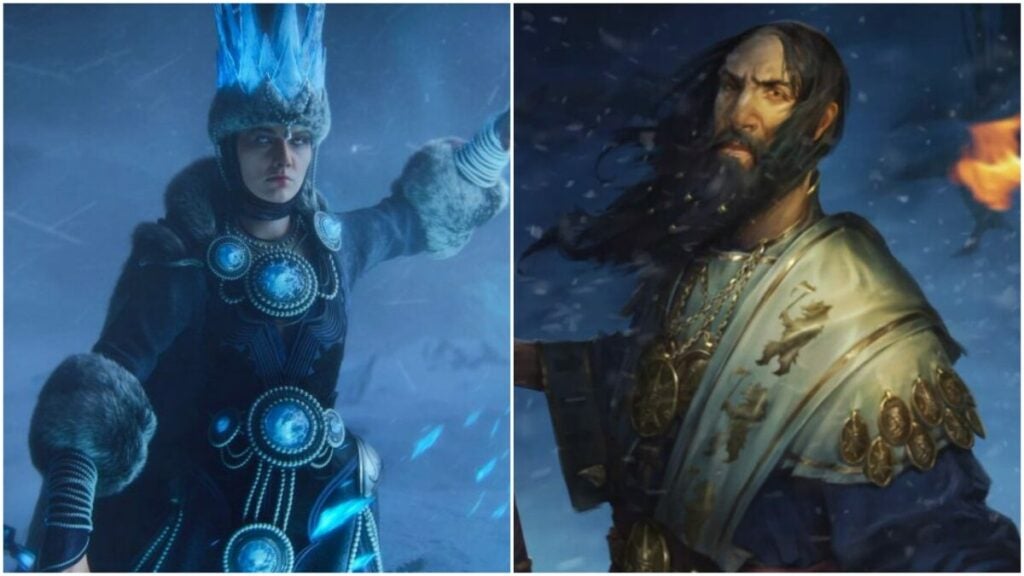
Main Hero: TzarinaKatarin and Kostaltyn of the Great Orthodoxy
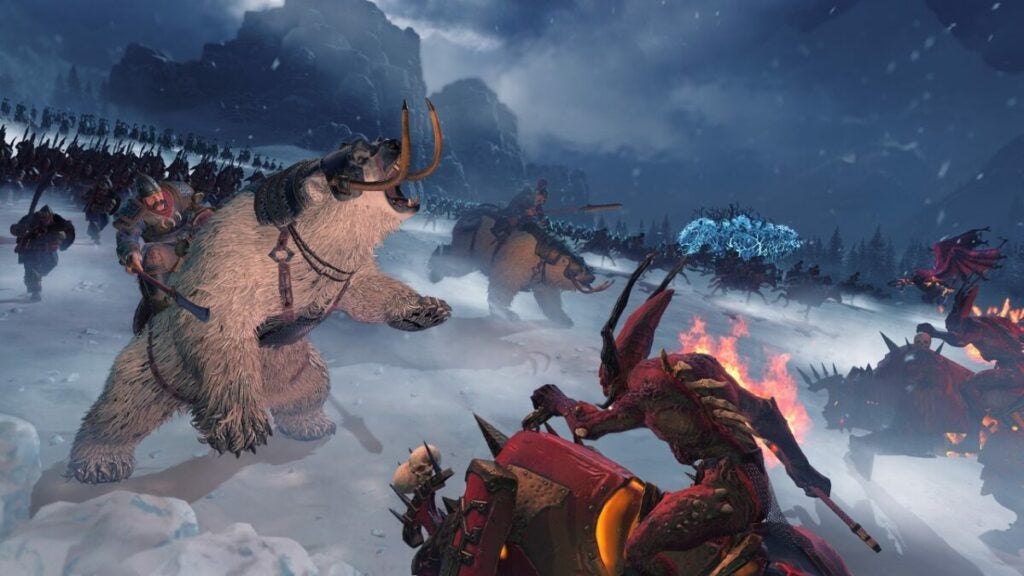
Modeled after Russian and Slavic cultures, the Kislev people reside in an extremely snowy landscape. The demanding environment has made its people hard, but it’s the routine interdimensional invasions that keep things interesting. The Ice Witch Queen Katarin faces trouble from the Rasputin-esque Orthodoxy leader Kostaltyn.
From a lore perspective and skill selection, Katarin seems like the optimum choice. Kostaltyn still has access to ice magic even though he views Katarin’s approach as heresy. Despite this odd choice, the Kislev faction is very fun to play with lots of options for gaining supporters, buffs, and more.
Their units serve great hybrid roles, often being able to attack at range and hold their own in melee combat. The heavy units also have handguns for shiggles and the mounted polar bear units can smash epically through smaller units. Then, of course, there’s the new ice magic you have access to, as well.
Players who like to adapt in each battle should try the Kislev faction for lots of variety. Plus, you get a sweet and enormous ice bear if Katarin and Kostaltyn place nicely for long enough.
Tzeentch – “tricksy hobbitses, a short story by H.P. Lovecraft”
Main resource: Grimoires. Unlock “Ways of Change” with them to enact diplomatic incidents, spy on others, and generally plot.
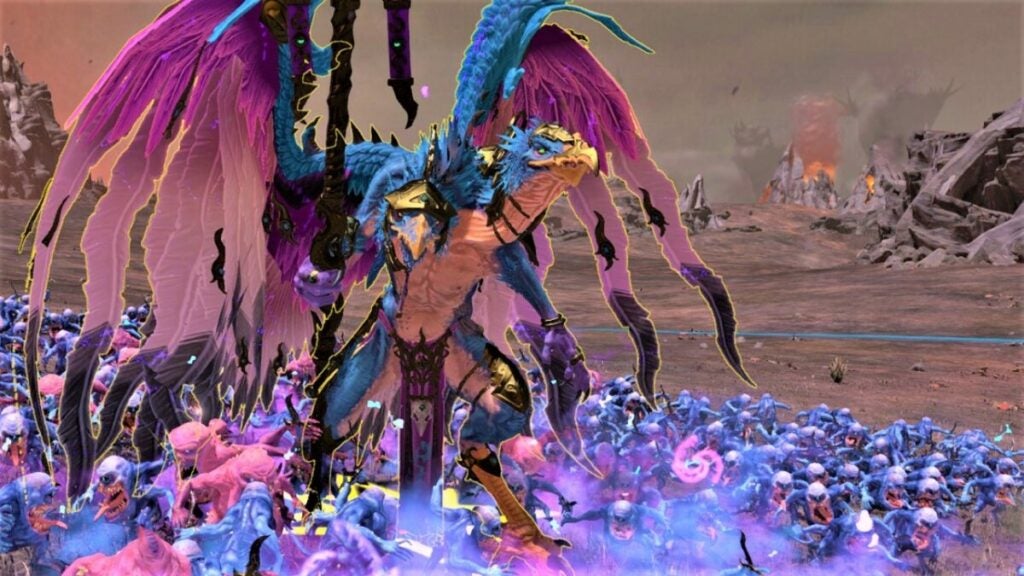
Main Hero: Kairos Fateweaver
Like a combination of Ravenclaw and Slytherin, Tzeentchfocuses on manipulation, knowledge, plotting, and magic. The faction’s hero Kairos Fateweaver trades in trickery and misdirection with “Changing of the Ways”. Use this to look into the future and play around with faction expectations. This incentivizes players to sow chaos among and within other factions via settlement takeovers.
The units mainly focus on ranged attacks including a unit that resembles a fleshy, beaked arm that slings purple fire. The Lore of Metal takes this to another level causing tons of damage with spells to satisfying ends. But each unit also has an innate shield generator in tandem with HP that benefits from buffs. Once broken, they can also recharge.
The downsides to this faction are its limited variety of units and straightforward combat strategies. Some fans have also called the faction designs for Tzeentch less inspired and unique compared to other factions.
Khorne-battle-obsessed demons with a very simple request: your skull
Main resource: Skulls. Blood for the blood god, but also skulls for the skull throne.
Main Hero: Skarbrand
Known as a god of violence and blood, Khorne’s faction feature Skarbrand as its leader. The savage, demonic-looking giant thrives on the battlefield and he wants to get more skulls for Khorne’s skull throne. If you want to battle, battle, battle, and battle some more, this is the faction for you. However, you can also scavenge battlefields for skulls, as well.
Then, use these skulls to unlock different technologic advancements that make rage more worthwhile. Unlocking more technologies means that blood armies last longer and spawn in larger sizes. But you must keep fighting for these armies to stay spawned.
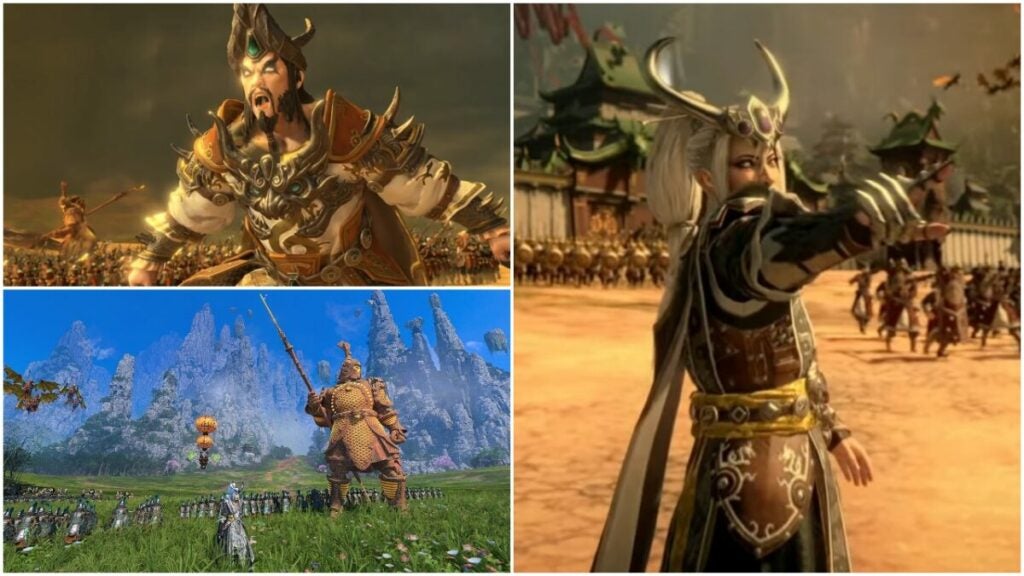
Grand Cathay – everything changed when the Chaos nations attacked
Main resource: None. Instead of using a dedicated resource, players must maintain a balance between Yin and Yang. Choosing abilities and technologies assigns Yin or Yang scores, causing debuffs on your units and buildings if not in balance.
Main Hero: Miao Ying and Zhao Ming
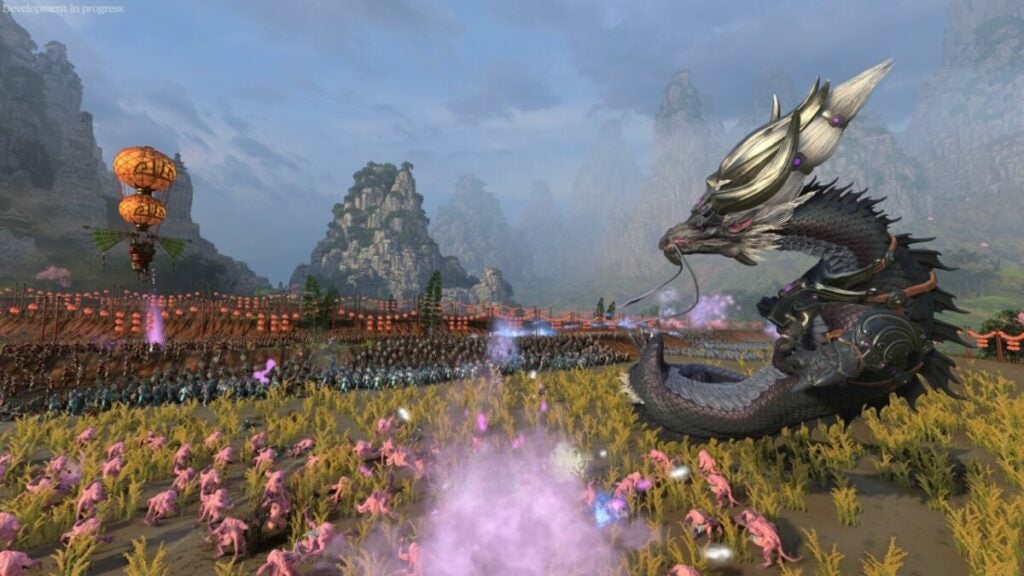
Serving as the largest human empire, Grand Cathay has one of the most unique units available in the form of immortal dragons. Players can control two dragons known as the Storm Dragon or Miao Ying from the Northern Provinces and Zhao Ming or the Iron Dragon ruling over West Cathay and the Sky Road. Canonically, the region prospers despite attacks from Chaos Realms, thanks in part, to the Bastion of Cathay. It’s a bit like the Great Wall of China.
This faction benefits from players who like grand strategies as the Yin/Yang balance mechanic requires more forethought and planning. It also makes use of Trade Caravans for players who like to turtle defensively or reach out via non-violent means. Defending Bastion gates against Chaos forces serves as the main conflict.
Pairing the right units together matters a great deal as many of them are highly specialized. But the faction boasts one of the best special units with the Terracotta General.
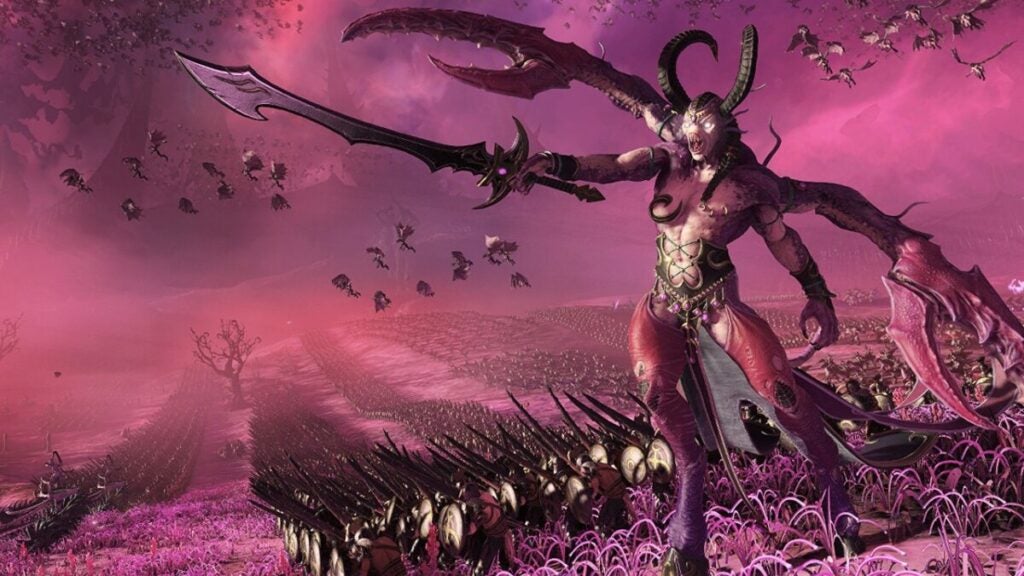
Slaanesh – like MK Ultra but with more leather
Main resource: Devotees. Leverage the power, love, and existence of thralls to collect upgrades and then repeat the process. Recruit others to fight for you since your own units are quite brittle.
Main Hero: N’kari
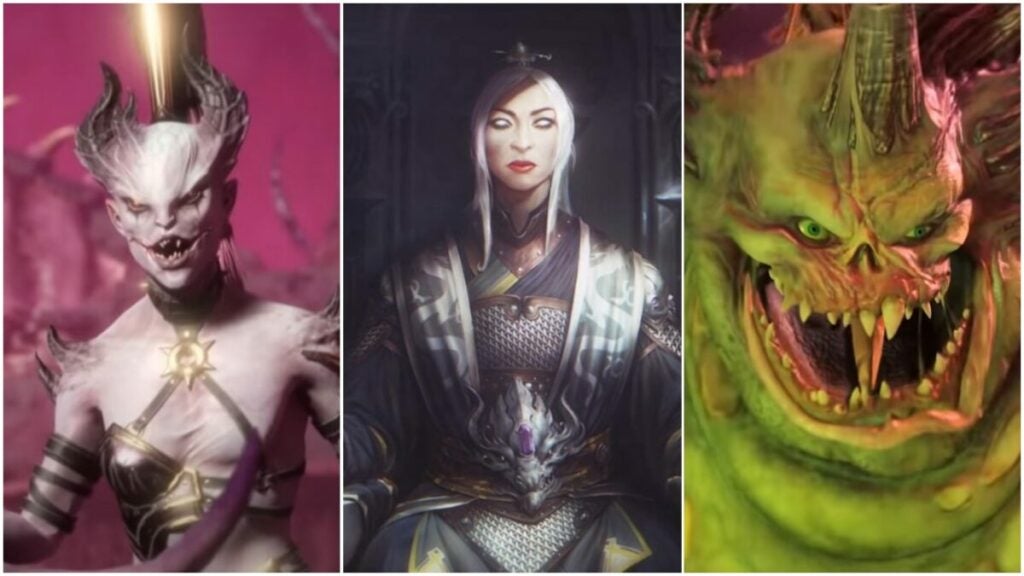
Led by N’kari (a daemon), the Slaanesh faction serves the god of debauchery and pain. You’ll find mortal followers, daemons, and other creatures in the mix with this faction. On top of quick units, this faction has access to Lore of Shadows magic. Players who favor debuffs, area of effect spells, and an overpowered giant slashing attack will like it.
This faction thrives most when you focus on flanking, attacks from the rear, and identifying weak points in opposing forces. Units tend to be very fast, as well, only reinforcing the focus on movement and positioning for the Slaanesh faction. A quick strategy is to corral your enemy into position and then charge them with your cavalry.
On the non-combat side of things, players will want to build influence with other races. They can leverage this to manipulate them until you can mindbreak or overtake them. Then, control these thralls diplomatically and use their units for extra support.
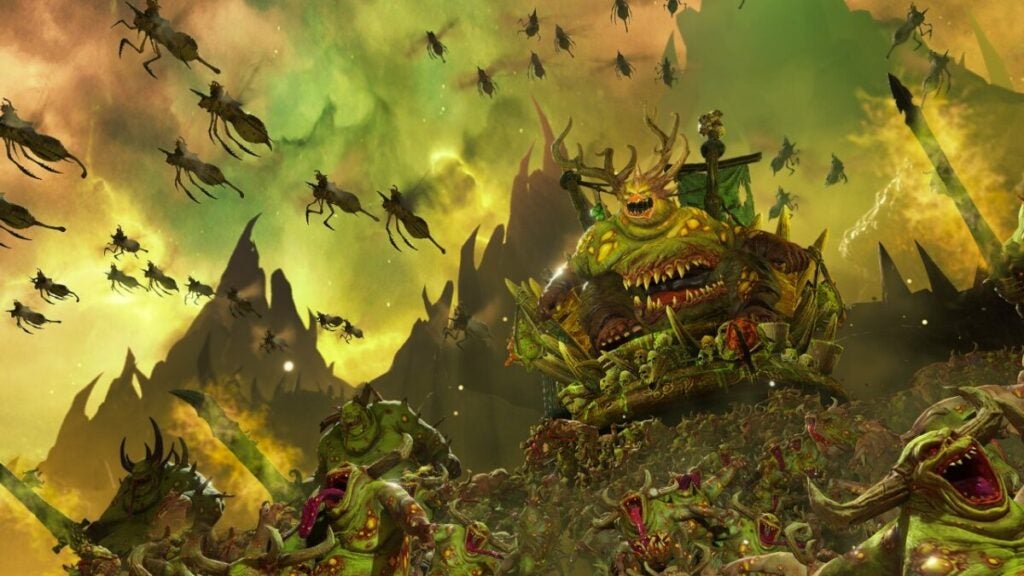
Nurgle – burping, biting, and lots of bodily fluids
Main resource:Plagues. Though not a spendable or even a collectible resource, how you modify your plagues will impact how successful your faction becomes. Infecting other settlements helps you grow your own power and spread more corruption. But this faction also benefits from Unholy Manifestations and cults.
Main Hero: Ku’gath Plaguefeather
Disease is life for Nurgle and Nurgle followers. This faction is all about city growth, plague generation, and infecting other cities. You can even have Nurgle cults unleash random plagues on people and unlock new sub-symptoms. Technology makes it easier to spread plagues, thereby growing your faction power. In addition, you can create custom plagues in your Plague Cauldron after unlocking plague recipes.
In keeping with Nurgle’s themes of the life, death, and rebirth cycle, the faction buildings follow this process, too. This makes it necessary to regularly check up on them as you don’t really know what they might be doing. Growing units can take time, but you can summon them instantly after growth. Players who like to build robust economies can parlay that into fast army recovery.
It’s all about weakening an enemy and sustaining that battle until they can be overtaken. Your army is slow but steady and you have lots of area-of-effect options, so use that to your advantage.
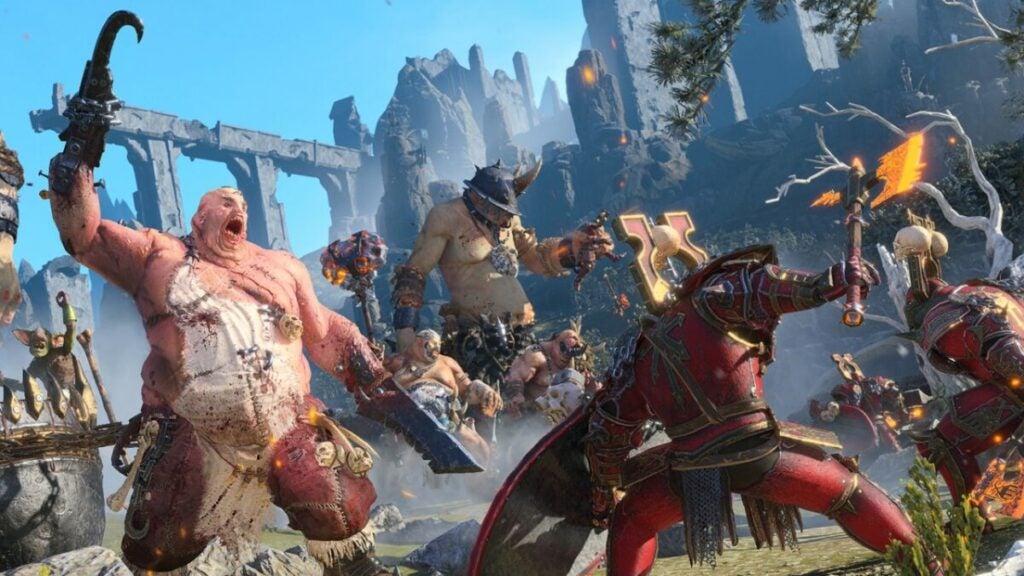
Ogres – smash, gnosh, trash talk, and repeat
Main resource:Meat. Yes, you read that right: meat.
Main Hero: Greasus Goldtooth
Ogres aren’t generally known for their sweeping intellect and that rings true in Total War: Warhammer III. Some have modified arms with giant knives for hands and all of them love to do two things: eat and fight. All of this is done in service to the Great Maw which apparently taught the Ogres magic. In fact, one spell unique to Ogres is “Fist” where a giant gauntlet appears over enemy units and punches down.
This makes them brutal combatants while also being savvy traders, as well. For example, Ogres can take on mercenary contracts from other factions to get extra resources. You can also just raid trade convoys, too. Pro-tip: if Ogres don’t have enough of their unique resource (meat), they will eat each other.
However, this faction does offer more unique customization options for more diverse strategies and playstyles. Charging is the name of the game for Ogres with their large units and heavy attacks.
Total War: Warhammer III Game modes
Singleplayer
The singleplayer campaign focuses on the Kislev deity Ursun and his capture. Though many veteran players might skip the tutorial, it is worth playing to get that extra bit of lore and story.
Multiplayer
In comparison to past Total War entries, Total War: Warhammer III has some of the most robust multiplayer features yet. Simultaneous turns represent a huge game-changer, but so does the addition of multiple kinds of multiplayer matches.
Please note: many players have reported issues with multiplayer lobbies, regional disconnects, and lagging. If you’ve encountered bugs, reporting it to the developer is the best option.
Realms of Chaos Mode – Rifts into the Chaos Realms appear across the map, spawning enemies along with distinct problems and challenges from rogue armies to tantalizing rewards if you leave sooner. In order to “win” the incursion, players must battle all enemies, overcome a realm trial, and defeat a Daemon Prince. If you fail, you cannot re-enter the realm until all other rifts come back. Staying in Chaos Realms causes characters to acquire negative traits that impact combat.
Standard Campaign Match – this co-op style of multiplayer has room for up to 8 players to go through the main campaign, siding with various factions along the way. What’s quite cool about this is that you can see your friends make their decisions in almost real-time thanks to simultaneous turns. The only downside is that this approach can cause games to hang while the engine resolves turns.
Darkness and Disharmony – save or doom Grand Cathay from/to the oncoming demonic hordes with up to 8 players. Consider it a territory race with settlements granting a single victory point per turn. Getting to 40 points first fulfills thewin condition and ends the game.
Something Rotten in Kislev – designed for just 1 to 3 players, this game mode has players defending Kislev from demon armies for a simpler, shorter campaign.
Immortal Empires – this “mega campaign” evolved from Total War: Warhammer II’s “Mortal Empires” mode. It combines maps and factions from other games. While not available at launch, Creative Assembly said it will be made available soon.
Ranked – play against other players in a competitive mode with a ranking system.
Visuals, sound, and enemy design
Sound design
Music and combat sounds can take a game from a fun experience to a work of art. When it comes to a game in the Total War franchise, this matters even more considering players traverse multiple realms and countries of the Warhammer universe. That said, this game’s sound design makes for an exceptional experience when wearing headphones.
Panning around the battlefield has shouts, screams, and the clashing of weapons grow and fade. The hooves of horses, crunching of bones, and even General speeches can be heard clearly. It’s just one more feature that helps to immerse players in the world experience.
In contrast, the music in Total War: Warhammer III remains more in the background as with previous entries in the franchise. But there is a greater variety of music across factions that adds excitement and diversity. Across the whole Total War series, Total War: Warhammer III has some of the best music and sound design so far.
Enemy design
Total War games always feature many original and tailored character designs. But given the fantastical nature of the Warhammer universe, the units in the game tend to feature more…esoteric traits.
For instance, N’Kari, the Slaaneshi Hero, has cloven feet and a mixed-gender body. But then you’ve got Ragnar who has thousands of potential visual combinations.
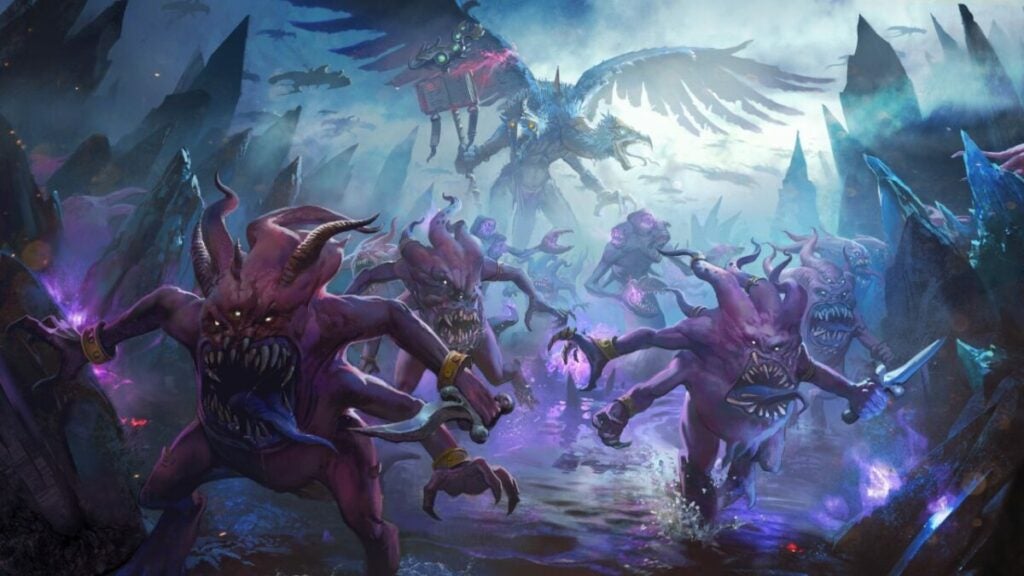
This third entry in the franchise took many old unit designs and animations to the next level. Things like Nurglings have tons of unique animations from idling to combat while creatures from the Ogres toss around huge artillery cannons like they’re feather dusters.
However, some of the mortal followers feel like afterthoughts in comparison to the more fantastical units.
World design
This new entry employs a different art style than the previous entry. As MandaloreGaming noted in his lengthy review of the game, certain elements and color palettes can read “cartoony” in comparison. However, many of the changes do make it easier to digest visual information on the map more quickly.
Each faction has unique maps and the battle maps are incredible. Creative Assembly wanted players to feel the scale of these realms – chaotic or not – and they did a great job of establishing that grandeur for each faction. As an example, city grids are nowhere near as common for sieges and different races now have more distinct building styles.
You might have a methodical Dwarf map vs. a haphazard Orc map or a winding Vampire map vs. a defensive Empire map. That said, as beautiful and full as many of the maps are, there are very few environmental combat variables.
For instance, the realm of Nurgle has poisonous swamps, butyour units don’t have to deal with poisonous gas damage. Including these kinds of environment-based variables could really improve and increase the number of viable strategies in battle.
Total War: Warhammer III Review: verdict and wrap-up
More of a good thing is never bad. Total War: Warhammer IIIdelivers exactly that with a few changes here and there. The new factions make wonderful additions to the catalog with fans already clamoring for more updates and factions.
If you loved the previous game, get Total War: Warhammer III. If you are a newcomer to the hybrid turn-based and real-time strategy genre, this offers a good introduction with its dedicated tutorial. However, veteran players may still find the unreliable AI, bizarre UI changes, and inconsistent designs irksome.
Download the game today and see if you have what it takes to fight off the chaotic storm.
PROS
Many quality-of-life features were added over previous titles in the franchise
Dedicated tutorial for beginners
Unique animations for factions and unit types
Sweeping, huge, and distinct battle maps for different factions
Lots of game modes
Fantastic sound design, music, and voice acting
Great potential for LAN parties
CONS
Can be difficult for newcomers
Some factions are locked behind paid DLC
Difficult-to-read UI at times due to similar color themes
Redundant UI elements that can lead to disorganization or confusion
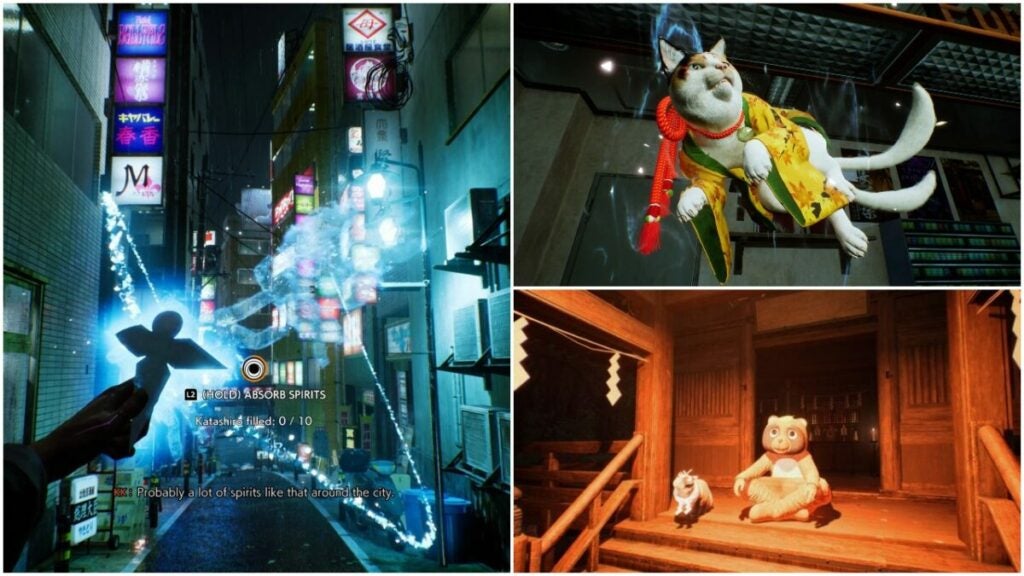
This Ghostwire: Tokyo review has everything you need from story background to combat mechanics to how it performs on console vs. PC. The game features a very unique world plagued by Japanese Yokai or spirits from Japanese folklore. Human people have vanished, replaced with these often unnerving creatures.
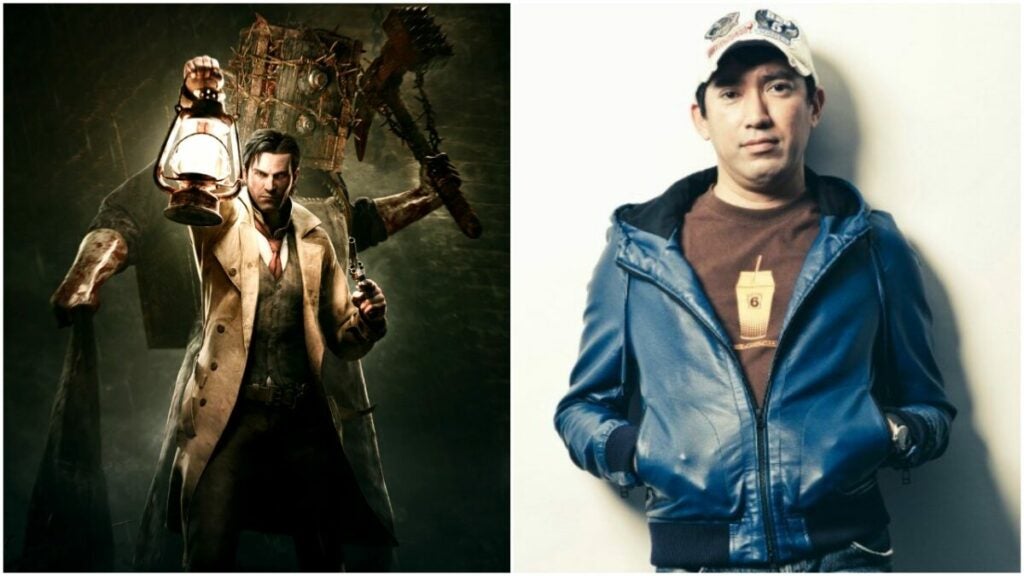
Developer Tango Gameworks gained traction with its series The Evil Within beginning in 2014. Since the team has not released anything from 2017, fans of the studio were eager to pick up their latest release which also comes backed by publisher Bethesda Softworks. Fans know of Bethesda for several high-profile franchises such as Elder Scrolls and Fallout. These single-player RPG experiences appeal to players thanks to their incredible world-building and usually long play-times.
While Ghostwire: Tokyo carries a shorter run-time, the lore of the world is just as deep and engaging. Now let’s dive into the spooky realm full of spirits for a full Ghostwire: Tokyo review.
Ghostwire: Tokyo background
The Evil Within carries a very somber and eerie tone with the main character investigating a mass murder at a mental hospital. Game director Shinji Mikami stated that he had wanted to create a survival horror game that focused more on survival than action with that series. In contrast, Ghostwire: Tokyo features more action as it is an action-adventure game that uses horror elements.
Doom veteran Shinichirō Hara helped develop the game’s combat using inspiration from martial arts like Kuji-kiri. Recent smash Sifu also drew combat inspiration from real-world martial arts, too. This lends the combat an intuitive, natural feel where the hands feel like “organic extensions of the character” as Hara said.
Setting and tone
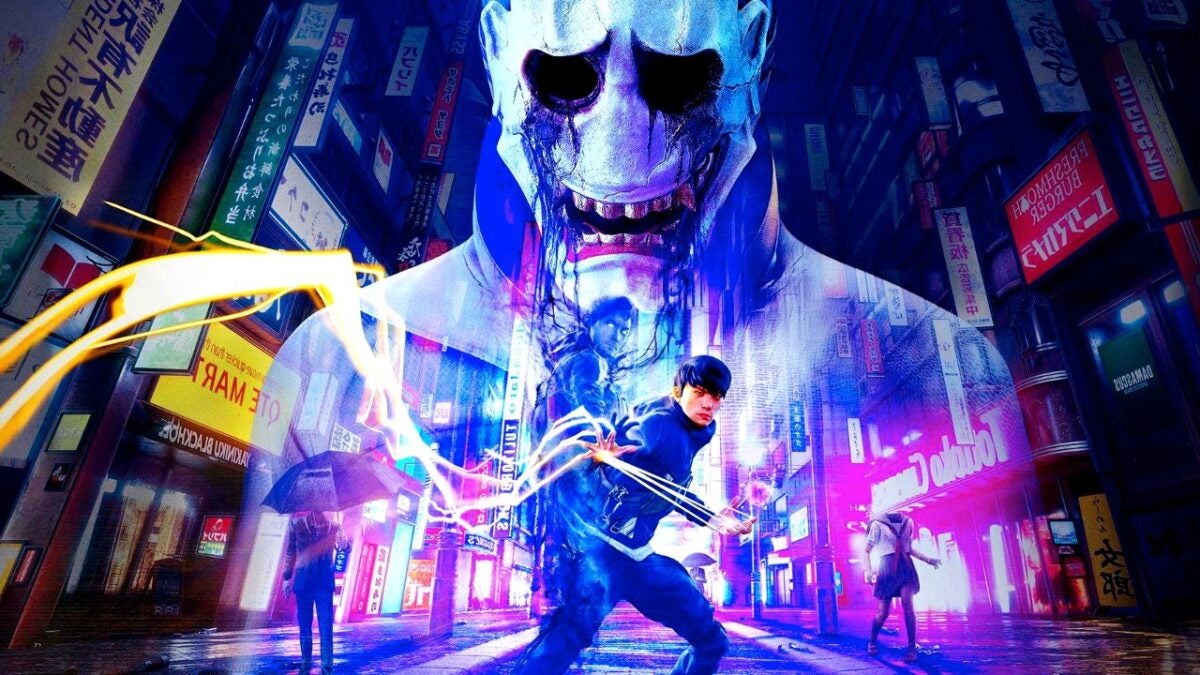
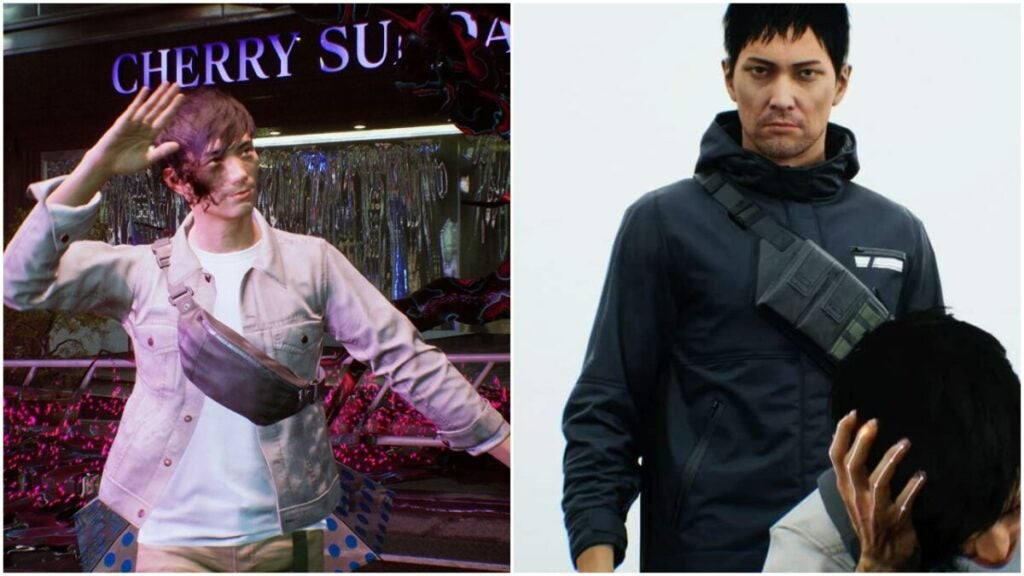
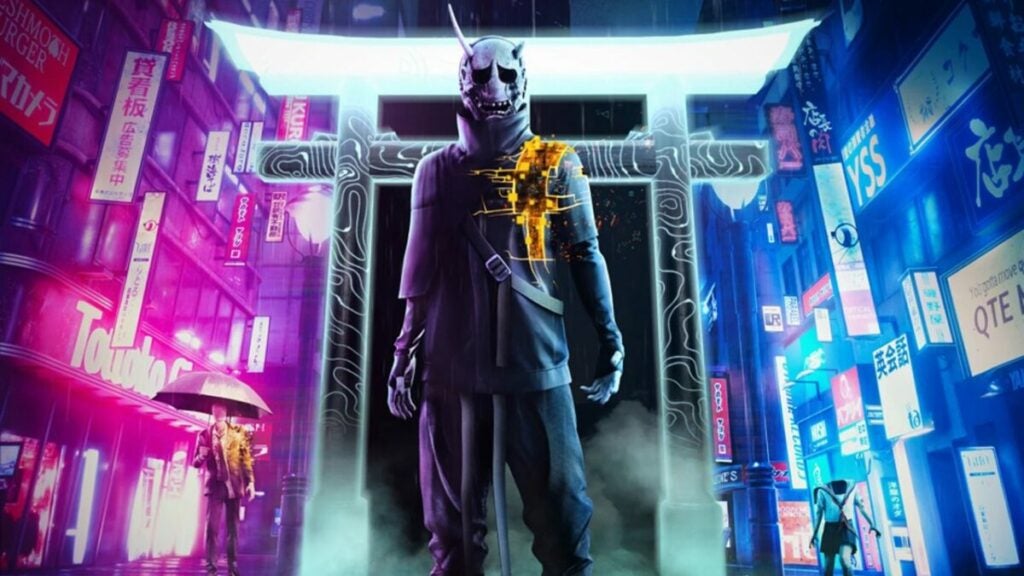
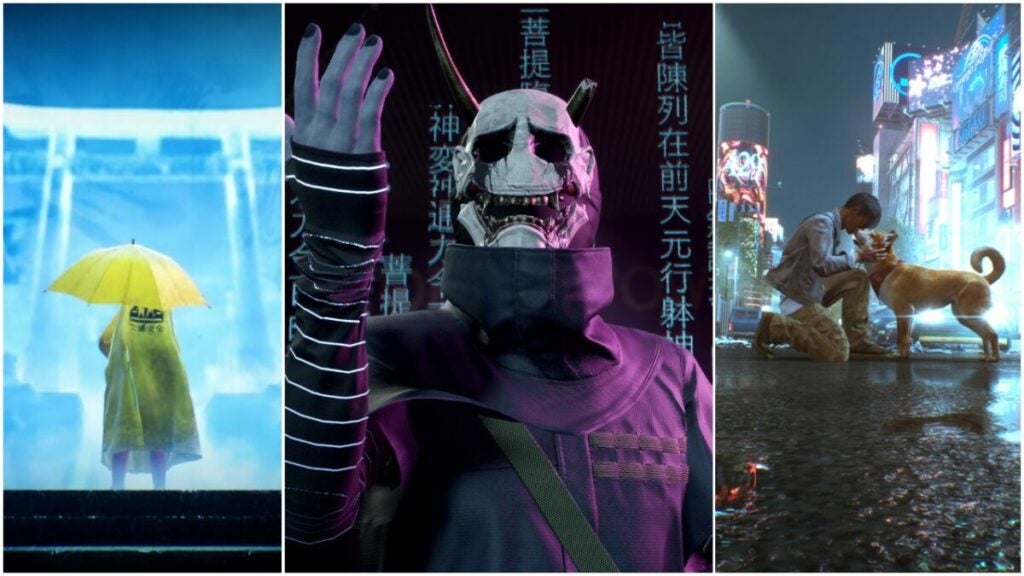
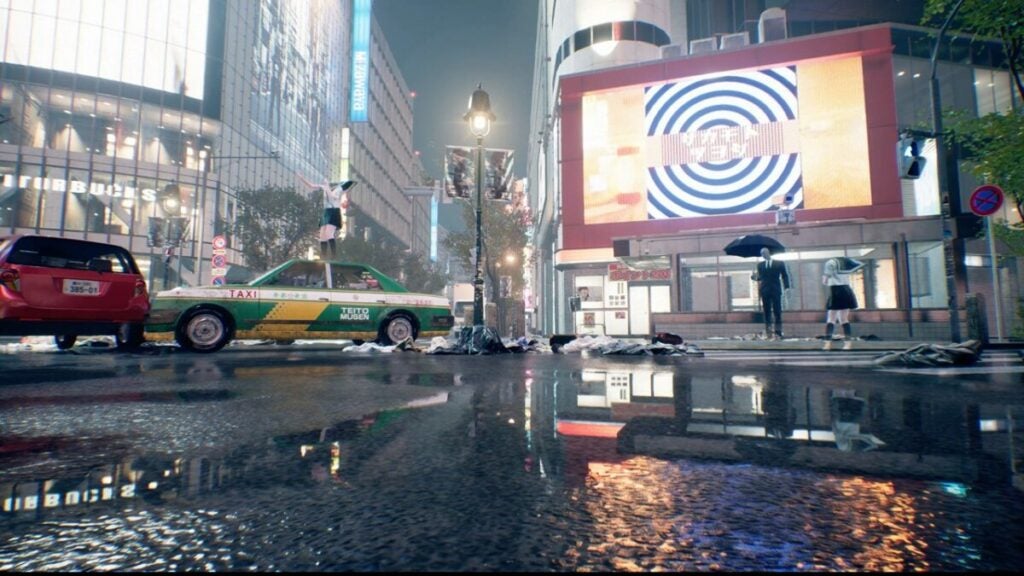
Set in a ghostly Shibuya City, this game juxtaposes the neon lights of a bustling Japanese city against the spine-shuddering visuals of eerie Japanese-inspired spirits. The main character, Akito, must discover what has transpired after a thick fog causes any who touched it to vanish. The clothes of those who disappear litter the ground while different Visitors assault Akito.
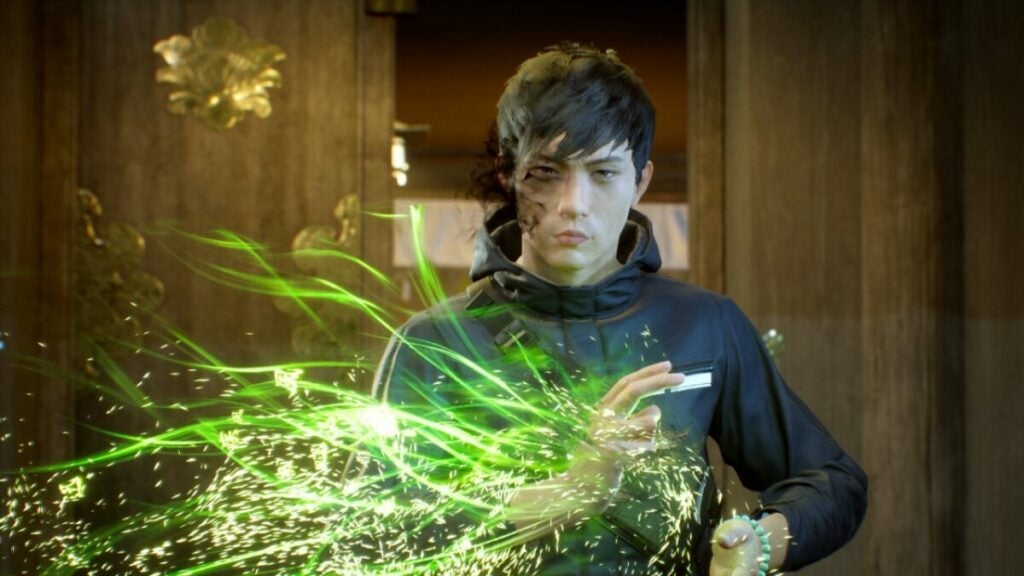
Curiously, a ghost and seeming spirit detective by the name of KK seems to have possessed Akito. This gives him the power to dispel the Yokai-themed Visitors – all based on various Japanese urban legends – and learn why all of this has happened.
Story
While Akito just wants to find his sister, KK seeks out the Hannya mask-wearing group that seems to be behind the disappearance of everyone. Pro-tip: Hannya masks are traditionally used in Japanese Noh theatre to represent jealous female demons or “hungry ghosts”. The story unfolds as the two battle for control over Akito’s body, fighting through hoards of Visitors, and trackingthe Hannya.
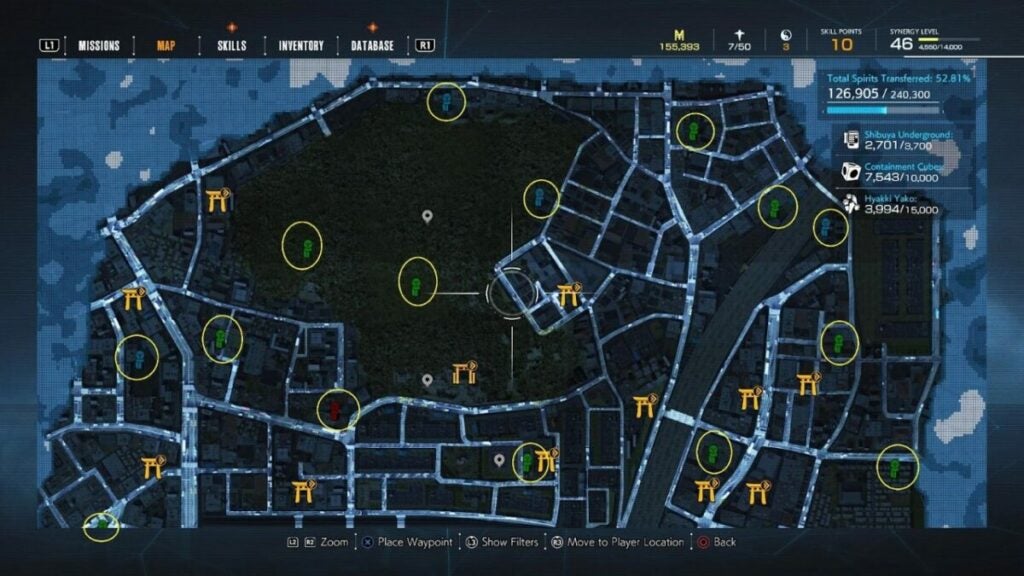
ClearingTorii gates throughout Shibuya city clears fog to reveal new areas, leading Akito and KK closer to the final enemy. However, along the way, the regrets these characters share regarding life choices come to the light. As a result, family features heavily as a running theme in Ghostwire: Tokyo
How long to beat Ghostwire: Tokyo
The game is still rather new, so not everyone has discovered all it has to offer as of yet. However, the developers gave players a guide as to how long it takes to beat Ghostwire: Tokyo.
Main missions: ~15 hours
Main missions with side quests: ~30 – 40 hours
Ghostwire: Tokyo performance
All games released for next-gen consoles tend to deliver stunning graphics. However, better graphics means they also have higher technical requirements. This rings true in this Ghostwire: Tokyo review, as well. If your PC falls below the minimum required specifications from the developers, here are a few tips to help the game run better:
Install it on an SSD (solid state drive) for more consistent and faster reading and writing of data.
Play on lower graphics settings.
Upgrade your hardware such as a new CPU or GPU.
Install more RAM to better help your computer run multiple processes.
PC vs. PlayStation 5
As with many recent games, Ghostwire: Tokyo was only released on PlayStation 5 vs. PlayStation 4 or even Xbox. This could be due to the demanding graphical requirements of the game as it offers six options on PS5 alone. PC gamers can look forward to DLSS and ray tracing supportalong with support for ultrawide displays.
As for which experience you might prefer, high-end PCs will offer a crisper experience, but lower-end PCs with older graphics cards or processors may struggle a bit. Whereas, PS5 players will enjoy top-notch graphics in any mode.
Ghostwire: Tokyo gameplay and functions
Battling against Visitors, the Faceless, and even the Masked Occultist himself requires combat savvy and powered-up skills. Ghostwire: Tokyo delivers these well with an intuitive UI that is relatively uncluttered.
The combat features real-world inspired movements while the first-person perspective puts players right in the action. Let’s break down some of the best Ghostwire: Tokyo skills, important items, quests, and more.
UI and interface
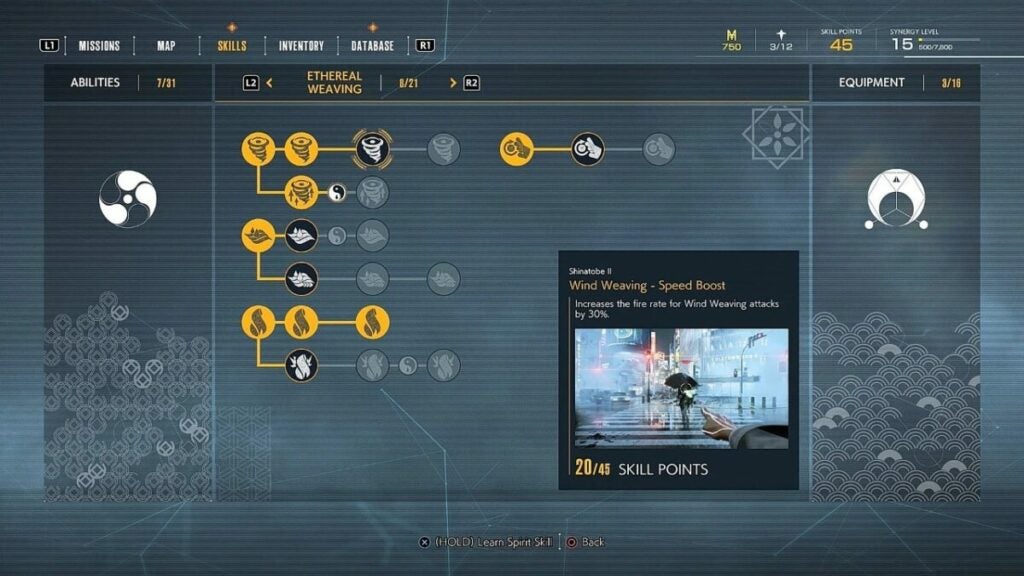
The in-game menu and UI are decently intuitive and familiar. The tabs are very familiar offering a Mission journal, map, skill tree, database of information, and inventory.
The skill tree illustrates skills and describes them well. Players can also view their outfits and buildout in the “Inventory” tab to check their drip.
During combat, the UI remains decently minimal with a minimap in the lower-left corner and a health gauge on the bottom right. Subtitles and prompts will appear in the bottom center of the screen.
Combat mechanics and Skills
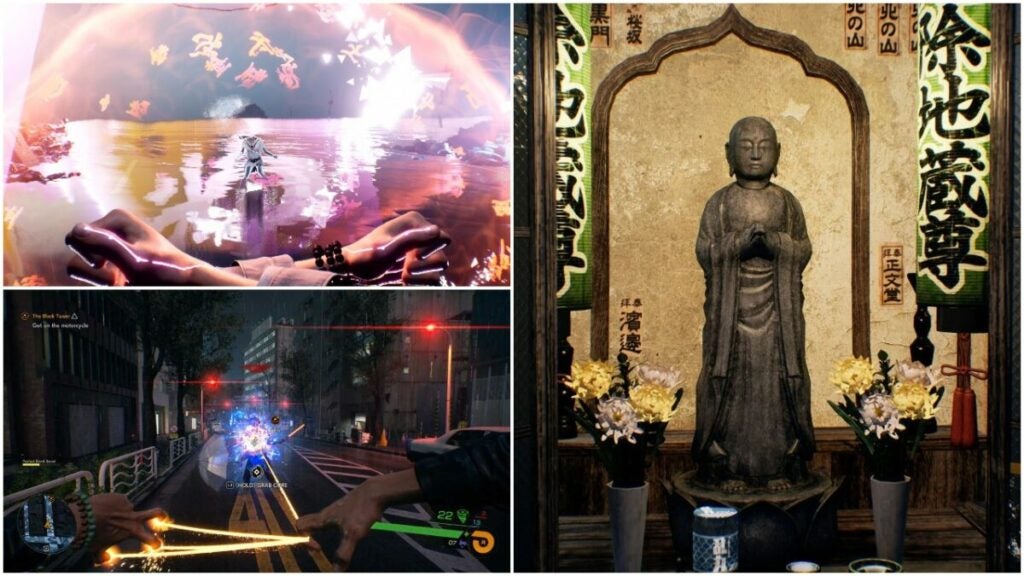
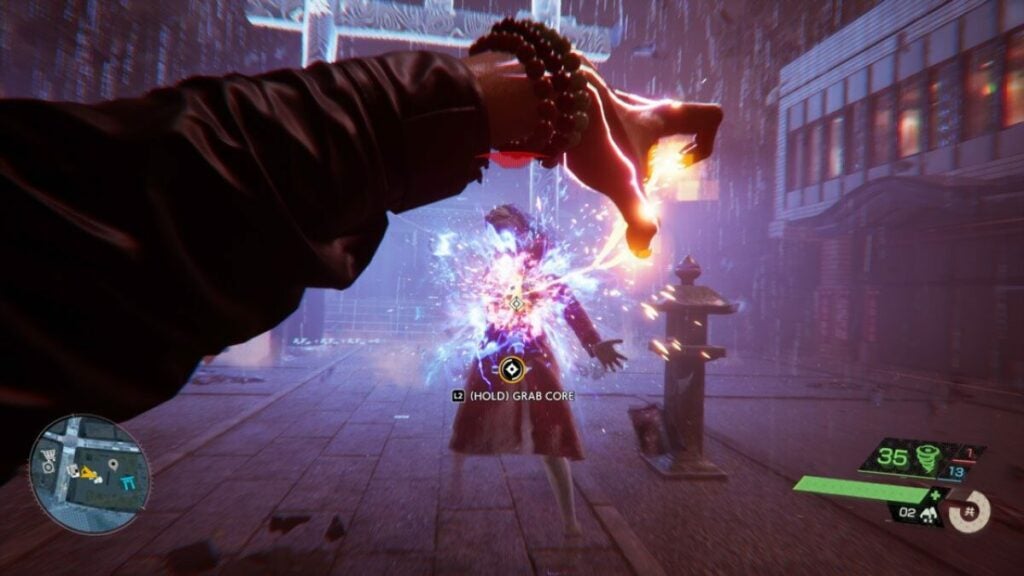
The first-person game features a “Karate meets magic” approach to combat design with Ethereal Weaving. Players can watch their players execute skills via various hand movements and motions. These feel especially visceral and satisfying as you watch Akito rip out enemy cores to destroy them.
The game employs several different elemental attacks that use “Ether” to power them. But Akito only has limited ammo or SP (powers special abilities) for each attack. He does also have a Bow weapon and can upgrade all kinds of Ghost abilities and skills. He can also block using theTatenui ability – something that becomes crucial in the game as it grants you Ether upon use.
Ghostwire: Tokyo seems to incentivize using stealth above all else as you can highlight enemies, purge them silently, and remain undetected in an area. It rings very similar to some Assassin’s Creed games where staying in stealth mode is much better than “going loud”. Using skills like “Faster Sneaking” and gear for Stealth only make it more overpowered.
Ghostwire: Tokyo important items:
Phone booths: used to release and save spirits
Jizo statues: used to upgrade elemental ammo capacity
Golden Ether crystals: grant Akito Meika — the game’s currency
Red Ether crystals: these explode when you shatter then, dealing damage to you and nearby enemies
Ether: the power behind Akito and KK’s attacks. You can find more by destroying corrupted objects highlighted by your “Spectral Vision” pulse
Katashiro: small paper idols used to absorb spirits
Shrines: drawing paper fortunes called “omikuji” can grant Akito certain buffs or debuffs based on luck
What you need to know about Ghostwire: Tokyo Combat:
Wind attacks: swift attacks using weaker projectiles with more ammo available
Water attacks: lower ammo quantity and damage with a wider attack area
Fire attacks: low ammo capacity with slow dispersal rate. However, it has incredibly useful offensive attacks including the “Big Fireball Grenade” that acts like how a shotgun would in a game like Doom
Talismans: these provide varying boons such as stunning enemies, summoning bushes to hide in, and other useful boons
Bow: a traditional bow with arrows for ammo
Strike Attack: attack enemies without using SP
Quick Purge: lets Akito stealth kill an enemy or deal heavy damage to it without being noticed
Tatenui: a skill that lets you block attacks and grants Ether on use
Spectral Vision: lets Akito locate objects like collectibles, animals, points of interest, spirits, enemies, and more
Stealth kills: keep you hidden in densely populated enemy areas
Finishers: how Akito and KK rip out enemy cores
Quests and gameplay
Players looking for a grand, epic ending will be disappointed by the ultimate bad guy in Ghostwire: Tokyo. Though the many Visitors are unsettling and somewhat challenging, the Hunnya leader just wants to absorb souls for power. But this kind of straightforward approach to character motivations can be seen throughout the game.
Many of the quests for the Yokai involve fetching things including toilet paper – yes, toilet paper. One unfortunate spirit is having a very tough time in a bathroom stall. But juxtaposing these kinds of simple, mundane tasks against stopping the Hunnya leader from absorbing souls feels unbalanced.
Though many of the game’s most intriguing details are found in the side missions, the game does not incentivize completing them from a lore perspective.
Ghostwire: Tokyo visuals, sound, and enemy design
As players saw The Evil Within games, Tangoworks created atmospheric gameplay that seriously freaks you out. Everything from the weather to the creaking of the floor beneath your feet and light blinking on a street corner feels lovingly crafted and intentional.
Though parts of the world feels a bit procedural in Ghostwire: Tokyo, the scale of the game is large and the city feels lived-in. The fog that Akito must clear grants an extra aura of eeriness while the Visitors’ unsettling designs make for constant anxiety. The uncanny resemblance to humans with just something slightly off never ceases to send shivers up your spine.
Sound design
Ghostwire: Tokyo is not a shooter, but it still kind of feels like one when it comes to sound design. Akito’s abilities “fire off”, making sounds as they charge up, disperse, and then explode or impact. The ability to interact with the environment also adds to this similarity.
But what really sticks out in Ghostwire: Tokyo from a sound design perspective is the remnants of a once vibrant Tokyo city. Akito can hear music blasting from stores as he walks through the city despite there being no one around. He can hear the buzzing of streetlights or the rushing of water at a shrine.
Then, of course, there’s the unholy whispers or shrieks from various Yokai. When wearing headphones, this makes for an especially spooky experience. The only disappointment has to be the voices of the benevolent spirits that Akito can assist. The pitched voices don’t do much to add to the atmosphere and also feel a bit cliche in comparison to everything else.
Enemy and character design
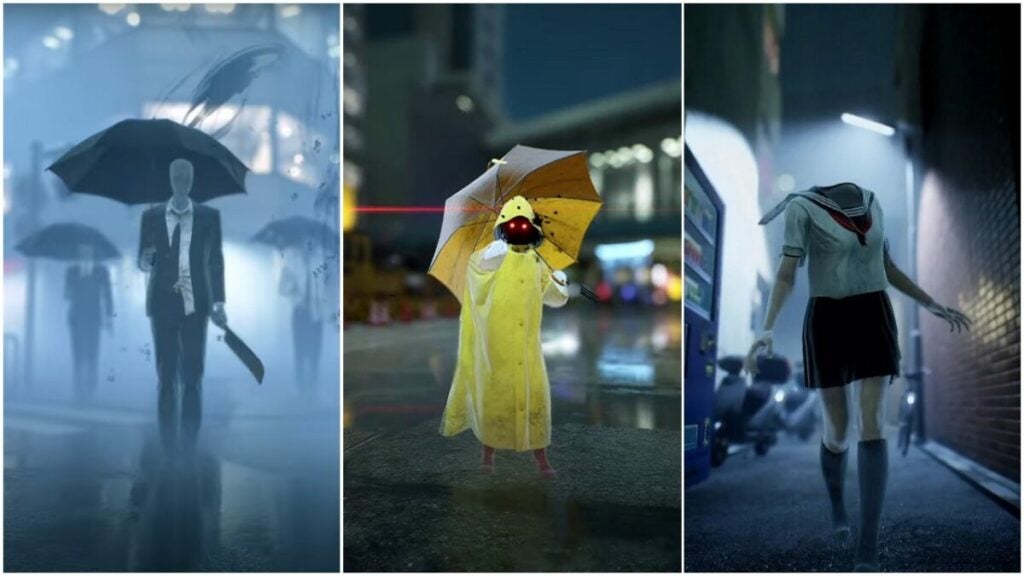
Given that the game takes place in one of the busiest places in Japan, the enemies mirror those very humans who disappeared. Many of them will wear school uniforms or business attire. What’s more: all of these enemies have unique combat abilities and approaches.
For instance, enemies that have umbrellas will use them as shields while headless schoolgirls will perform rush attacks. Deciding how to navigate fights with multiple types of enemies requires knowing their preferredattack methods. Players can tell how close a spirit is to death by how damaged they look — enemies look more damaged as you successfully attack them.
Non-violent spirits
Once discovered, all Yokai remain marked on the map – including floating merchant cats. But Akito and KK will also encounter non-violent spirits that can grant quests.
Though the Visitors are animated distinctly (like the sentient umbrella), the spirits you help are typically spectral outlines that fade in and out of existence. These characters also feature weirdly pitched voices to drive home the point that they are “not of this world”. Although consistent, these spirits stick out as a bit of a letdown in comparison to other Yokai in the game.
World design
The world never seems quite real in Ghostwire: Tokyo. Street signs will begin to float above the pavement. Doors will grow or shrink in size or even lead to a different place altogether than what they showed you before walking in. These touches, along with the grim and foggy atmosphere, go a very long way in creating the mood for the game.
But the game does more than establish an eerie mood and incredibly immersive recreation of Tokyo. It plays with the verticality of the city – requiring Akito to visit building rooftops regularly. There is a “Glide” mechanic that lets Akito float in the air momentarily, but Tengu Spirits are your best bet to get to rooftops.
Tanuki hunt, collectibles, and more
Rely on the ability of “Spectral Vision” to find collectibles. This pulse highlights everything worth checking out in an area such as collectibles, single-use items, Ether, and more.
There are tons and tons of things to discover, so exploring really pays off.
Ghostwire: Tokyo review: verdict and wrap-up
Overall, Ghostwire: Tokyo offers a solid, immersive experience with consistent gameplay mechanics and unique character designs. The game’s graphics are beautiful, rendering Shibuya City and other parts of Tokyo in lovely if unnerving elegance. For players who love collectible hunting or Japanese culture, it offers an especially fun experience.
But the game is at its best when it leads you through segments in an almost fatalistic manner. Though Akito and KK don’t know why the Hannya are doing this, they unravel their own inner turmoil as they discover why. It’s those interactions and the various spirits they encounter and help or dispel that make Ghostwire: Tokyo worth picking up. The game officially launches on March 25, 2022; pre-orders yours today!
Pros
Engaging combat with real-world influences
Enticing stealth mechanics
Incredibly unique character designs based on Japanese urban legends
Immersive recreation of Shibuya and many other aspects of Japanese culture and infrastructure
Open-world feels alive and lived-in (despite the mass disappearance of humans)
Bizarre visual features and environmental effects that enhance the atmosphere
Consistent combat mechanics
Cons
A bit formulaic at first before more unique enemies appear in combat
Enemy AI can be very rudimentary at times, making it easier to take them out without much dexterity or difficulty
Focus on stealth may not be for everyone
Perfunctory-feeling sidequests at times
Muddled motivation for the final boss results in a somewhat hollow ending