On June 12, a very unique feature film will premiere on Netflix. Its name is Soy Frankelda and it is a Mexican animated film that has captivated everyone who has seen it. And there are multiple reasons for this. To begin with, it is the first stop motion animated feature film made in Mexico, but also because it is backed by a great name in cinema not only Mexican but international: Guillermo del Toro. A very interesting animation With more than a hundred hand-built puppets, this film produced by the Mexican studio Cinema Fantasma, founded by the brothers […]
On June 12, a most unique feature film will premiere on Netflix. Its name is I Am Frankelda and it is a Mexican animated film that has captivated everyone who has seen it. And there are multiple reasons for this.
To begin with, it is the first stop motion animated feature film made in Mexico, but also because it is backed by a great name in cinema not only in Mexico but internationally: Guillermo del Toro.
A very interesting animation
With more than a hundred handcrafted puppets, this film produced by the Mexican studio Cinema Fantasma, founded by brothers Arturo and Roy Ambriz, will introduce us to Francisca Imelda, a 19th-century horror story writer who has been overlooked.
At least until, after adopting the pseudonym Frankelda, she meets a prince with a supernatural appearance named Herneval, who takes her on a fantastic journey where reality and fiction will intertwine.
Since Guillermo del Toro’s Pinocchio was a tremendously successful film both among critics, the public, and the awards circuit, it seems logical that Netflix has decided to invest in this film. And it also might end up being one of the surprises of the year. Moreover, we won’t have to wait to find out how it performs, with an imminent release and to discover what this Soy Frankelda and this fascinating blossoming of Mexican animation cinema has in store for us.
The western genre, traditionally narrated from male perspectives, has faced significant challenges in its evolution, limiting diversity in stories and characters. However, independent cinema has begun to offer new narratives, allowing works like First Cow to rethink the conventions of the genre. This film, directed by Kelly Reichardt, has been recognized as one of the best in recent times, bringing a unique and authorial approach to the narrative of the western. An excellent example of slow cinema, set in the American Northwest during the 19th century, First Cow tells the story of a cook and a fugitive of origin […]
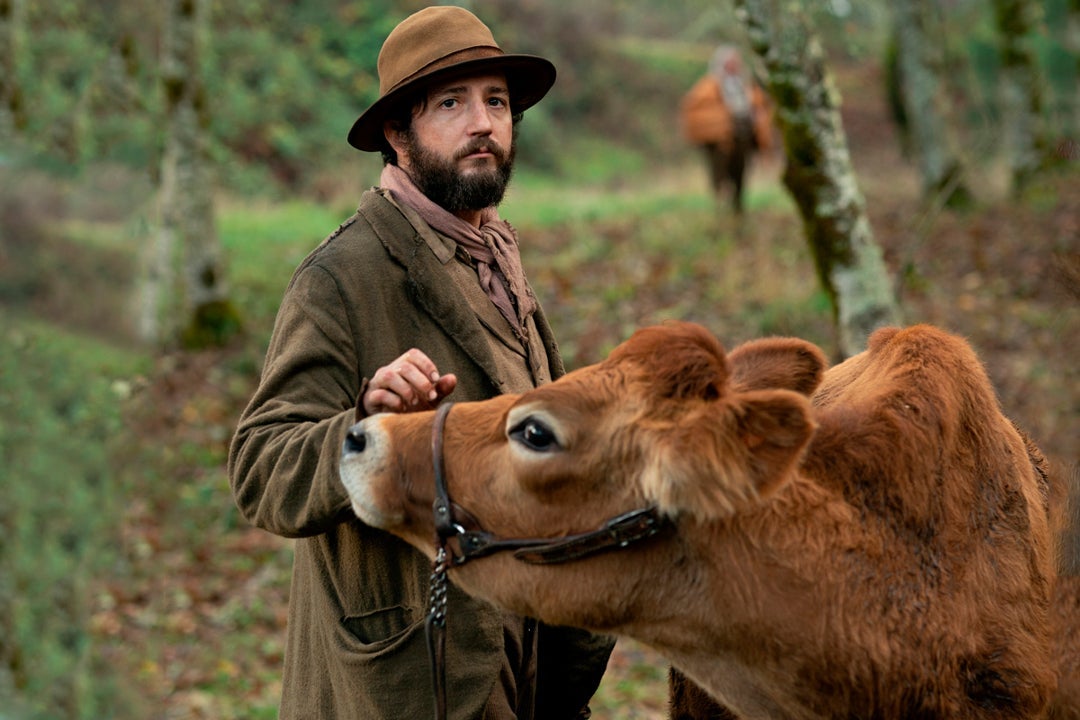
The western genre, traditionally narrated from male perspectives, has faced significant challenges in its evolution, limiting diversity in stories and characters. However, independent cinema has begun to offer new narratives, allowing works like First Cow to rethink the conventions of the genre. This film, directed by Kelly Reichardt, has been recognized as one of the best in recent times, bringing a unique and authorial approach to the narrative of the western.
An excellent example of slow cinema
Set in the American Northwest during the 19th century, First Cow tells the story of a cook and an Asian fugitive who seek to thrive through an unconventional business centered around cooking. Throughout the story, Reichardt explores unusual masculinities for the genre, offering a new dimension that challenges traditional stereotypes of the western.
The film not only stands out for its innovative storytelling but also for its visual style, which falls within the ‘slow cinema’ school. This approach allows viewers to contemplate subtle details and experience the story at a leisurely pace, thus challenging the expectations of an audience more eager for rapid narrative development. In this sense, the narrative becomes a means to explore the complexities of rural life in the United States, areas that are often absent in typical cinematic narratives.
First Cow reinforces the possibilities of independent cinema, offering a critique of capitalism in an ingenious way, where the outsider is embodied by a cow and the main threat is presented in the context of a latent social conflict. Through a careful and eloquent representation of human realities, Reichardt’s work stands as a testament to the narrative richness that cinema can offer beyond the established conventions of the past.
Historical dramas often focus on very specific historical periods. In Europe, any medieval era is acceptable, but if not, the Regency and Victorian ages are highly valued. In the US, anything from the 19th century onwards is fair game. In Japan, both the 19th century and the Tokugawa era stand out in a very particular way. And now that Korea is starting to gain weight in popular culture, the final part of the Joseon Dynasty, between the 18th and 19th centuries, is often highly appreciated. Outside of that, it is difficult to find historical dramas. That is why those who dare to make series or […]
Historical dramas often focus on very specific historical periods. In Europe, any medieval era is acceptable, but the Regency and Victorian ages are particularly appreciated. In the US, anything from the 19th century onwards is valid. In Japan, both the 19th century and the Tokugawa era stand out in a very particular way. And now that Korea is beginning to gain weight in popular culture, the final part of the Joseon Dynasty, between the 18th and 19th centuries, is often highly valued.
Aside from that, it is difficult to find historical dramas. That is why those who dare to make series or movies outside of those parameters tend to stand out. Whether from those regions or from those very specific historical periods. This is exactly what happens with the new Apple TV+ series, The Great Warrior.
A historical drama of an emerging Hawaii
At the beginning of the 19th century, the four great kingdoms of the Hawaiian Islands were at war. This is the context in which Ka’iana, a warlord from the kingdom of Kaua’i, decides to travel beyond the islands to become the most famous Hawaiian in the world. Upon returning home, he will join a bloody military campaign, rebelling at the last minute against the unification of Hawaii, under the command of Kamehameha I.
This is the premise of the series, which will take us to know the story of Ka’iana and, perhaps even more importantly, the unification of Hawaii. An inevitable fact, but one that led to a war of almost 28 years that, it seems, will provide material for a historical drama of nine episodes in which to narrate the story of this warlord who could not prevent the unification of all the islands under one mantle. Although we won’t tell you the reasons for it, because for that you’ll have to watch the miniseries.
Jason Momoa like you’ve never seen him
One of the great attractions of the series is that Ka’iana will not be just anyone, but will likely be the most famous Hawaiian in the world today. Jason Momoa, strikingly shaved and with his hair tied up, plays the most celebrated Hawaiian of his time until Kamehameha took that title from him, promising to draw many eyes to this series.
Because although it is true that the premise is interesting, let’s not kid ourselves: the history of Hawaii is not very well known. It is not the kind of story that will attract the audience at first glance. But a name and a face like Momoa’s, even unrecognizable as he is in the promotional images of the series, could very well be a good excuse to give the series a chance. Something you should do, because the story of the unification of Hawaii in general and that of Ka’iana in particular has the makings of a great television series.
Apple TV+, synonymous with quality
Being one of Apple TV+’s major bets for this summer, it shouldn’t surprise us that they will be airing them weekly. Unlike the competition, Apple believes it’s better to let people savor the stories and make them their own, something they have demonstrated with the great critical and public success of most of their original productions.
Pending the result of The Great Warrior, this miniseries presents itself as one of the major premieres of the season. Now we have to see if it also becomes one of the great premieres of the year, thanks to the presence of Momoa and the interesting story it wants to tell us. But coming from Apple TV+, one thing we are sure of is that the quality is guaranteed.