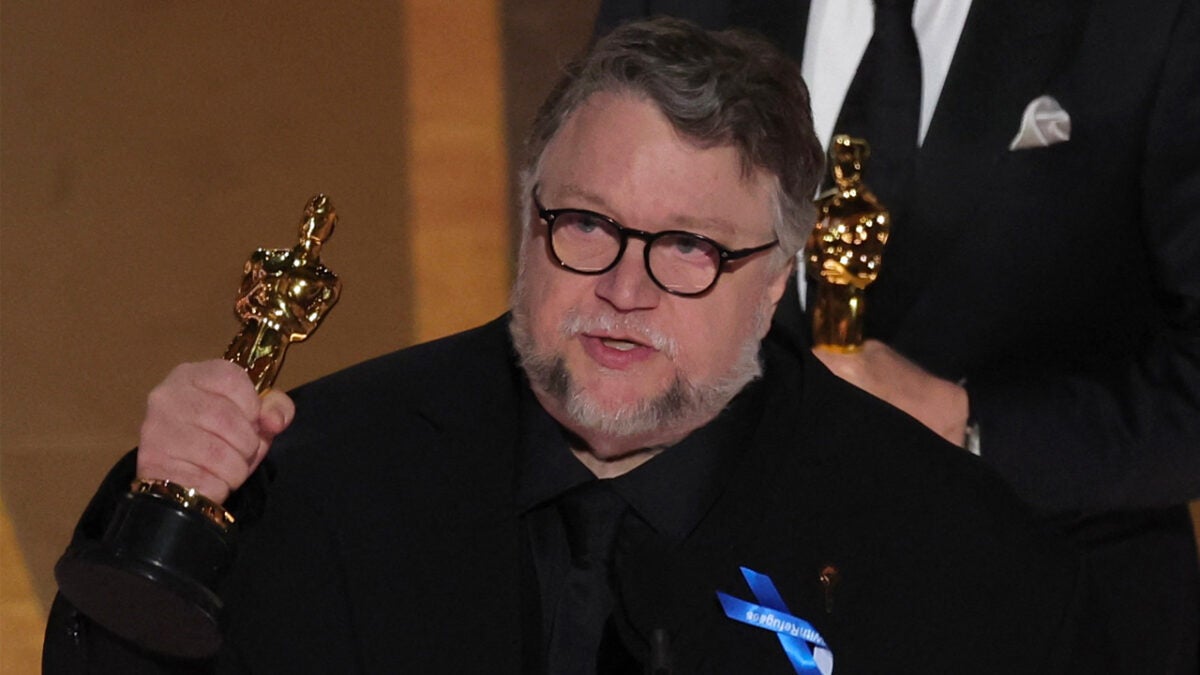
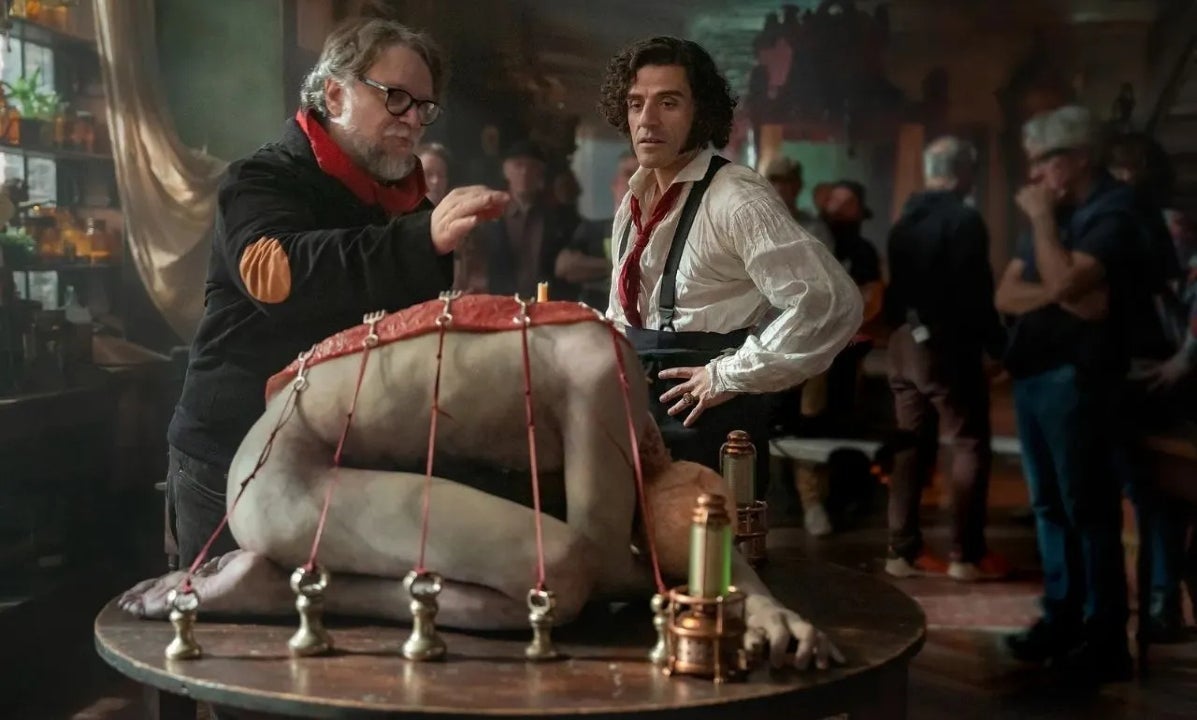
On June 12, a very unique feature film will premiere on Netflix. Its name is Soy Frankelda and it is a Mexican animated film that has captivated everyone who has seen it. And there are multiple reasons for this. To begin with, it is the first stop motion animated feature film made in Mexico, but also because it is backed by a great name in cinema not only Mexican but international: Guillermo del Toro. A very interesting animation With more than a hundred hand-built puppets, this film produced by the Mexican studio Cinema Fantasma, founded by the brothers […]
On June 12, a most unique feature film will premiere on Netflix. Its name is I Am Frankelda and it is a Mexican animated film that has captivated everyone who has seen it. And there are multiple reasons for this.
To begin with, it is the first stop motion animated feature film made in Mexico, but also because it is backed by a great name in cinema not only in Mexico but internationally: Guillermo del Toro.
A very interesting animation
With more than a hundred handcrafted puppets, this film produced by the Mexican studio Cinema Fantasma, founded by brothers Arturo and Roy Ambriz, will introduce us to Francisca Imelda, a 19th-century horror story writer who has been overlooked.
At least until, after adopting the pseudonym Frankelda, she meets a prince with a supernatural appearance named Herneval, who takes her on a fantastic journey where reality and fiction will intertwine.
Since Guillermo del Toro’s Pinocchio was a tremendously successful film both among critics, the public, and the awards circuit, it seems logical that Netflix has decided to invest in this film. And it also might end up being one of the surprises of the year. Moreover, we won’t have to wait to find out how it performs, with an imminent release and to discover what this Soy Frankelda and this fascinating blossoming of Mexican animation cinema has in store for us.
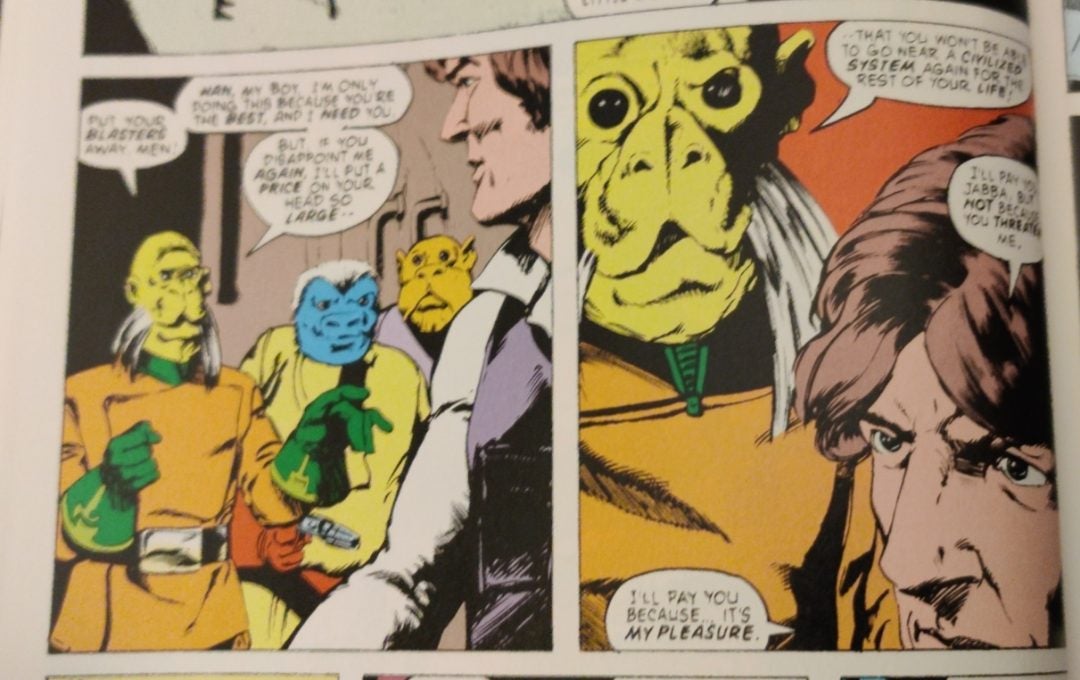
Jabba the Hutt’s first appearance in Star Wars was not, as is commonly believed, in Return of the Jedi, but in the Marvel comics based on the first movie released in 1977, where, instead of being a giant slug, he was depicted very differently. Jabba the Hutt was a human with a walrus-like face and a yellow uniform. In fact, his creator, Howard Chaykin, was inspired by a character that appeared in the background of the Mos Eisley cantina and that we now know as Mosep Binneed. Years later, everyone would forget about this […]
The first appearance of Jabba the Hutt in Star Wars was not, as is commonly believed, in Return of the Jedi, but in the Marvel comics based on the first movie released in 1977, where, instead of being a giant slug, he was depicted very differently. Jabba the Hutt was a human with a walrus face and a yellow uniform. In fact, his creator, Howard Chaykin, was inspired by a character that appeared in the background of the Mos Eisley cantina, now known as Mosep Binneed. Years later, everyone would forget about this version of Jabba (and rightly so).
I will make you a galactic offer that you cannot refuse
Although the 1977 novelization only described him as “a huge mass of muscle and fat crowned by a hairy, scarred skull,” he quickly became popular among fans, regardless of the fact that he only appeared for a few minutes throughout the saga (not counting the special editions, of course). So much so that when LucasFilm asked Guillermo del Toro if he had any ideas to revitalize the saga, he did not hesitate to respond that yes, definitely: a spin-off just for Jabba the Hutt.
The movie would be titled The Rise And Fall of Jabba The Hutt and would be a sort of version of The Godfather in the galaxy. However, as the creator himself acknowledges, Disney wasn’t exactly excited: “I was super happy. We were doing a lot of things, but it’s not my property, it’s not my money, and it’s one of those 30 scripts that just disappear“. If someone at Disney knew what they were doing, they would call him back immediately. Guillermo del Toro bringing his personal version of a galaxy far, far away? What fool would say no?
Yes, this is not the only ambitious Star Wars project that has fallen through over the years. In fact, we have had more canceled projects than completed ones, including the Boba Fett movie, Rian Johnson’s trilogy, the sequel to the new trilogy with Ben Solo as the protagonist, or the film that was to be directed by Kevin Feige. However, there is something that inevitably frustrates us when we see that one of the best directors of recent times has had the misfortune of falling into the hell of producing a mega-franchise like this.
The movie would have entered development back in 2017, and Del Toro himself shared what we could have seen: “Jabba the Hutt has to gain control. He is the character that resembles me the most, and I like him. I love the idea of a kind of Hutt mafia, a very complex heist. I just love the character”. The idea was pitched in 2015, and apparently it went further, even though at the time, as he acknowledged, it was just a geeky thought in his head. Probably, the failure of the Han Solo spin-off made them afraid to launch individual movies of their protagonists and, therefore, it stopped being in development even though, apparently, they already had drawings, art, and a nearly finished script. Honestly, Lucasfilm, it’s still not too late!
For now, it seems that Dave Filoni has eagerly taken the helm of Star Wars, and he is preparing not only for the arrival of The Mandalorian and Grogu but also a new movie for 2027, Starfighter. Whether it will be the renewal of the most beloved franchise title or another nail in its coffin remains to be seen. May the Force be with you.
Although many of us are hoping for a new John Carpenter movie, what few expected was a video game from the legendary director. But that is what we get with John Carpenter’s Toxic Commando, a video game with the spirit of a completely crazy B-movie that has us on the edge of our seats. Because if there is one thing Carpenter specializes in, it is taking something that seems cheap and absurd and turning it into something tremendously interesting. Now, while it may seem that Carpenter is the first film director to make the leap to video games, that is not the case. Many others have done it […]
Although many of us are hoping for a new John Carpenter movie, what few expected was a video game from the legendary director.But that is what we get with John Carpenter’s Toxic Commando, a video game with the spirit of an absolutely crazy B-movie that has us on the edge of our seats. Because if there is one thing Carpenter specializes in, it is taking something that seems cheap and absurd and turning it into something tremendously interesting.
Now, while it may seem that Carpenter is the first film director to make the leap into video games, that is not the case. Many others have done so before him. And today we are going to talk about that. Directors who have made video games, or at least have been involved in their production. Some of them are surprising because they are not the kind of people you would say have any interest in the medium. But that’s life. It surprises you when you least expect it. Sometimes, discovering that your favorite director has a video game.
Clive Barker
Writer and film director known especially for the Hellraiser series, but also for the incredible Books of Blood, he is one of the great horror authors of his generation. And he has been very involved with video games. Giving his name and being very involved in four of them, two of which are based on his movie and novel Nightbreed, the two most interesting are undoubtedly Clive Barker’s Undying and Clive Barker’s Jericho. The first is a fascinating first-person horror shooter that caused absolute fascination in its time, turning it into a cult gem, and the second is a clumsy but interesting game that deserves recognition. Additionally, he is involved in the production of the first video game of his most famous franchise, Clive Barker’s Hellraiser: Revival, which promises to bring us all the sex, gore, and BDSM we expect from Hellraiser.
Steven Spielberg
If a name doesn’t seem to fit with video games, it’s Spielberg’s, but the reality is that there was a time when he had a great interest in what could come from them. So much so that he was involved in three revolutionary projects. The first of these was Medal of Honor, the legendary first-person shooter franchise with which he wanted to create the most realistic experience possible of World War II. The second was Boom Blox, a series of physics-based puzzle games for Wii where he served as a designer. And the most ambitious of all, LMNO, an action-adventure game that aimed to revolutionize video game narrative, but that we would never get to see. And given that Spielberg himself has declared himself a hardcore gamer, we have no doubt it would have been revolutionary.
JJ Abrams
One of the people who is easiest to imagine playing video games and getting involved in them is JJ Abrams. And although he hasn’t done it directly, his studio, Bad Robot Productions, has ventured into video game production. The first game they produced was the modest Action Movie FX for iOS, with their first major game being Weird West: a very strange immersive sim set in the West by Raphaël Colantonio, the creator of Dishonored. Since then, they have been involved in the disappointing Moonbreaker and Silent Hill: Ascension, the latter considered the worst Silent Hill in history, and they are currently working on 4:Loop: the new game from the creator of Left 4 Dead. This demonstrates that Abrams’ interest in video games is diverse and far from fleeting.
Spike Lee
Spike Lee’s foray into video games was brief, yet impactful. In 2015, at one of his highest peaks of popularity, 2K approached him to take charge of the My Career mode of the video game NBA 2K16. Directing, writing, and producing it, the result was a mode much more focused on the story, seeking to replicate the real evolution of a basketball player from high school to professional competition. Although the result was spectacular, it was heavily criticized for being a very restrictive mode, as 2K fans were looking for something different from Lee’s artistic experience. This led NBA2K to never experiment with something similar again. And neither did Spike Lee.
Vin Diesel
The least surprising on the list is Vin Diesel because it is well documented that he is not only a fan of video games but also an avid player of Dungeons & Dragons. He is also the founder of a video game studio called Tigon Studios.Co-developers of the absolutely spectacular The Chronicles of Riddick: Escape from Butcher Bay and The Chronicles of Riddick: Assault on Dark Athena and the less spectacular but equally interesting Wheelman, they are a recognized studio that years later made other lesser-known games related to Vin Diesel franchises. He has currently lent his appearance, his voice, and is even a developer on Ark 2, so it seems that Vin Diesel remains very involved in video game development, despite everything.
Guillermo del Toro
Guillermo del Toro is the most tragic story here, because despite his efforts to make a video game, he has never been able to achieve it. Not completely. Together with Hideo Kojima, he created P.T, the demo for Silent Hills, the ninth installment of Silent Hill that Konami would cancel after firing Kojima. And while Del Toro would appear in both installments of Death Stranding as a character, he claims he will never be involved in the development of a video game again. Or at least not for now. Who knows what the future holds for him, even though he has stated that he does not want to make any video games in the future. But what seems evident is that the crossover between film and video games exists and is prolific. And it is not going to end anytime soon.
In a recent interview with Joshua Horowitz for the show Happy Sad Confused, Guillermo del Toro expressed his admiration for video games, considering them a legitimate artistic medium that influences his cinematic vision. Throughout the conversation, he highlighted titles such as BioShock, Death Stranding, Metal Gear, Left 4 Dead, Red Dead Redemption, God of War, and Shadow of the Colossus, describing them as reflections of his narrative and aesthetic obsessions. A man with excellent taste, Del Toro emphasized how games like BioShock present a mix of beauty and grotesque, resonating with the aesthetic of his own films, like […]
In a recent interview with Joshua Horowitz for the show Happy Sad Confused, Guillermo del Toro expressed his admiration for video games, considering them a legitimate artistic medium that influences his cinematic vision. Throughout the conversation, he highlighted titles such as BioShock, Death Stranding, Metal Gear, Left 4 Dead, Red Dead Redemption, God of War, and Shadow of the Colossus, describing them as reflections of his narrative and aesthetic obsessions.
A man with excellent taste
Del Toro highlighted how games like BioShock present a blend of beauty and grotesque, resonating with the aesthetic of his own films, such as Pan’s Labyrinth and Crimson Peak, where the duality between the sublime and the macabre evokes a deep emotion. This notion of exploring complex themes, such as loneliness and human connection, is also found in Death Stranding, where the narrative revolves around the construction of emotional and physical bridges, a recurring theme in the director’s filmography.
The Metal Gear saga, of which he is a staunch admirer, also connects with his work through the dilemma between personal destiny and institutional manipulation. Del Toro reflects in his characters the same type of anguish found in Kojima’s games, where internal struggle and moral decisions are crucial. Likewise, his choice of Left 4 Dead highlights his interest in group dynamics in chaotic situations, a theme he has explored in several of his films.
Finally, the majesty and poetic tone of Shadow of the Colossus resonate with his appreciation for the tragic in the characters and creatures that inhabit its stories, showing that for Del Toro, video games are not mere distractions, but extensions of his creativity and reflections on the human condition.
In a recent appearance on the podcast The Joe Rogan Experience, Matt Damon revealed a concerning aspect about the narrative in Netflix productions. According to the actor, the series and movies on the platform seem to be designed to capture the attention of viewers who, distracted by their phones, require over-explanations and simplistic narratives, which reduces the subtlety of the content. This approach could compromise the quality of the stories presented, prioritizing accessibility and immediate appeal over narrative complexity. Movies are becoming increasingly simple Damon emphasized that traditionally, action cinema […]
In a recent appearance on the podcast The Joe Rogan Experience, Matt Damon revealed a concerning aspect about the narrative in Netflix productions. According to the actor, the series and movies on the platform seem to be designed to capture the attention of viewers who, distracted by their phones, require over-explanations and simplistic narratives, which reduces the subtlety of the content. This approach could compromise the quality of the stories presented, prioritizing accessibility and immediate appeal over narrative complexity.
Movies are becoming simpler
Damon emphasized that traditionally, action movies followed a classic structure with three key scenes spread throughout the film. However, this scheme seems to be falling out of favor within Netflix’s strategy. Ben Affleck, joining Damon in the conversation, highlighted the success of the series Adolescence, which breaks these commercial norms and has been very well received, despite its darker and more intense approach. Affleck expressed surprise at the series’ ability to attract an audience without resorting to the platform’s usual tactics.
Despite the criticism regarding the lack of depth in many productions, Netflix has maintained a steady commercial success, suggesting that its approach might be working. However, some creative talents like Rian Johnson and Guillermo del Toro find the possibility to explore more complex narratives under the platform’s mantle. In this context, the question arises: can mass-produced productions coexist with those that prioritize narrative quality? The story of Adolescencia suggests that, indeed, there is room for the success of unconventional projects in a world where the viewer may be more focused on their mobile than on the screen.
During the Palm Springs International Film Festival, Guillermo del Toro highlighted the importance of art in society, warning about the dangers of dismissing its relevance. In the context of a ceremony where he was recognized for his work as a director, del Toro urged emerging filmmakers not to pay attention to voices that argue that art is not important. According to him, such claims are always a precursor to authoritarian regimes. A man in love with culture The acclaimed Mexican director emphasized that the devaluation of art can undermine the foundations of a free and creative society. “Be kind, […]
During the Palm Springs International Film Festival, Guillermo del Toro emphasized the importance of art in society, warning about the dangers of dismissing its relevance. In the context of a ceremony where he was recognized for his work as a director, del Toro urged emerging filmmakers not to pay attention to voices that argue that art is not important. According to him, such claims are always a precursor to authoritarian regimes.
A man in love with culture
The acclaimed Mexican director emphasized that the devaluation of art can undermine the foundations of a free and creative society. “Be kind, stay involved,” he highlighted, pointing out that kindness and empathy are essential in the creative process. His message resonated with a group of new talents in cinema, whom he urged to collaborate and to take an active stance in defending art and culture.
“Culture plays a crucial role in society,” commented del Toro, suggesting that artists have the responsibility to engage and support their communities instead of succumbing to complacency. His speech comes at a time when the entertainment industry faces tensions related to censorship and cultural criticism.
Del Toro, known for his cinematic step that fuses horror and fantasy, continues to be a passionate advocate for art in all its forms. With this recognition, he reinforced his stance that the construction of good cinema or any form of artistic expression must be accompanied by a strong foundation of ethical and collaborative values. In an increasingly tense global climate, his message resonates especially strongly among those voices seeking to make a significant change through visual storytelling.
Guillermo del Toro, acclaimed filmmaker known for his work on iconic projects like Blade and Hellboy, has had his fair share of successes and failures in the film industry. One of his most anticipated yet frustrating projects for superhero fans has been the adaptation of Justice League Dark, which has been stuck in development limbo for several years. Although del Toro stepped away from the project in 2015, it has remained a source of interest among followers of the DC universe. A movie that could have been legendary In […]
Guillermo del Toro, acclaimed filmmaker known for his work on iconic projects like Blade and Hellboy, has had his fair share of successes and failures in the film industry. One of his most anticipated yet frustrating projects for superhero fans has been the adaptation of Justice League Dark, which has been stuck in development limbo for several years. Although del Toro stepped away from the project in 2015, it has remained a source of interest among followers of the DC universe.
A movie that could have been legendary
In 2020, J.J. Abrams tried to revitalize the idea with a television approach, but that initiative also ended up being canceled. Before Abrams, Doug Liman had made an attempt in 2015 to bring the story to the big screen, just after del Toro left the project. During that process, the director mentioned in the Happy Sad Confused podcast that he already had an actor in mind to play Deadman and that a cameo of an iconic hero from the DC universe would be included.
Despite the fact that del Toro has expressed his interest in Justice League Dark,as well as a conversation with James Gunn about the possibility of reviving the project, there are still no confirmations about its continuity. The director, known for his unique style and elaborate narratives, has praised the recent Superman movie, but has not given concrete hints about the future of the dark adaptation.
For the moment, fans will have to settle for the animated version of Justice League Dark, released in 2017, which offered a refreshing look at DC’s less conventional characters. The community hopes that, someday, del Toro can bring his vision of this intriguing group of heroes and anti-heroes to the big screen.
Mexican filmmaker Guillermo del Toro has been selected to receive a Fellowship from the British Film Institute (BFI), the highest honor awarded by this prestigious film organization. This recognition will celebrate del Toro’s “extraordinary contribution” to cinema, as well as his “distinctive artistry,” which encompasses both animation and live action. An honor that is awarded only to the greatest talents in film, del Toro, known for masterpieces such as Pan’s Labyrinth and The Shape of Water, has achieved international acclaim thanks to his ability to tell stories that blend elements of horror […]
Mexican filmmaker Guillermo del Toro has been selected to receive a Fellowship from the British Film Institute (BFI), the highest honor awarded by this prestigious film organization. This recognition will celebrate del Toro’s “extraordinary contribution” to cinema, as well as his “distinctive artistry,” which encompasses both animation and live action.
An honor awarded only to the greatest talents in cinema
Del Toro, known for masterpieces like Pan’s Labyrinth and The Shape of Water, has achieved international acclaim thanks to his ability to tell stories that blend elements of horror and fantasy with deeply human themes. His work has not only been critically acclaimed but has also resonated with audiences from diverse backgrounds, reflecting the richness of the cultural diversity that finds its expression in his filmography.
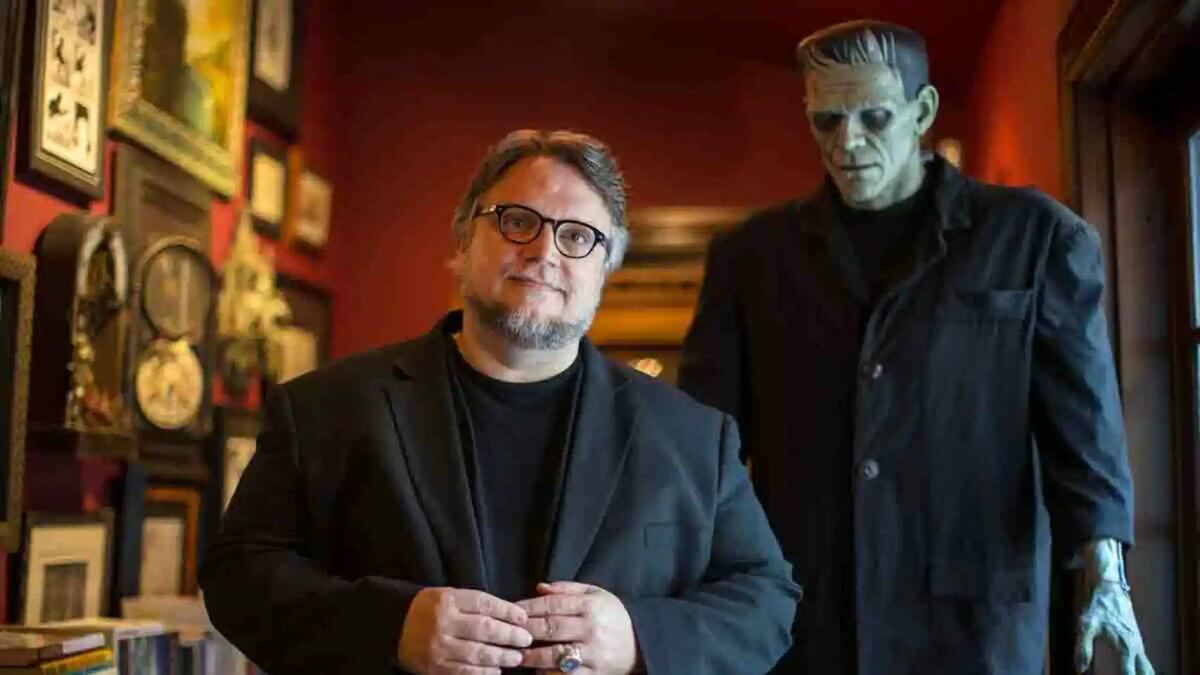
This award is given at a time when del Toro’s talent remains in the spotlight, with his upcoming project on Frankenstein generating great anticipation. Del Toro’s work stands out for its ability to cross linguistic boundaries, having worked in both Spanish and English, which amplifies its impact on the global cinematic landscape.
The BFI Fellowship will be awarded at a ceremony scheduled for this year, where del Toro is expected to share his experience and creative vision with the film community. This recognition is not only a tribute to his extensive career, but also a testament to the vital role filmmakers play in contemporary culture.
Upon receiving this honor, del Toro reaffirms his position as a central figure in world cinema, highlighting the importance of inclusive storytelling and representation in the industry. With his unique talent, he continues to inspire new generations of filmmakers, both in Mexico and other parts of the world.
During the recent Gotham Awards ceremony, Guillermo del Toro spoke out strongly against the use of artificial intelligence in the film industry. Upon receiving the Vanguard Tribute Award, the renowned director did not hesitate to express his opinion stating, “Fuck AI.” This message resonated at a highly relevant event, where the achievements of various figures in the industry were highlighted. Del Toro was joined on stage by stars Jacob Elordi and Oscar Isaac, who emphasized his impact and influence in the world of cinema. A man who knows no limits in his […]
During the recent Gotham Awards ceremony, Guillermo del Toro spoke out strongly against the use of artificial intelligence in the film industry. Upon receiving the Vanguard Tribute Award, the renowned director did not hesitate to express his opinion stating: “Fuck AI”. This message resonated at a highly relevant event, where the achievements of various figures in the industry were highlighted. Del Toro was joined on stage by stars Jacob Elordi and Oscar Isaac, who emphasized his impact and influence in the world of cinema.
A man who knows no limits in his hatred
In his speech, del Toro paid tribute to the writer Mary Shelley, in commemoration of her masterpiece Frankenstein, a story that has left an indelible mark on the horror genre. In evoking Shelley’s figure, del Toro emphasized the importance of human creativity in contrast to the growing use of technologies such as artificial intelligence, which he believes could threaten the essence of cinematic art.
Del Toro’s statement comes at a time when the film industry is facing debates about the inclusion of AI tools in creative processes, from screenwriting to the production of visual effects. While some voices claim that AI can be a useful tool, many filmmakers, like Del Toro, warn about the risks involved in losing the human element in narrative art.
The recognition awarded to del Toro at the Gotham Awards not only celebrates his career but also invites reflection on the future of cinema and the role that technology should play in it. In an industry where innovation is increasingly sought after, del Toro’s voice stands as a reminder of the need to preserve the essence of cinematic art in the face of technological advancements.
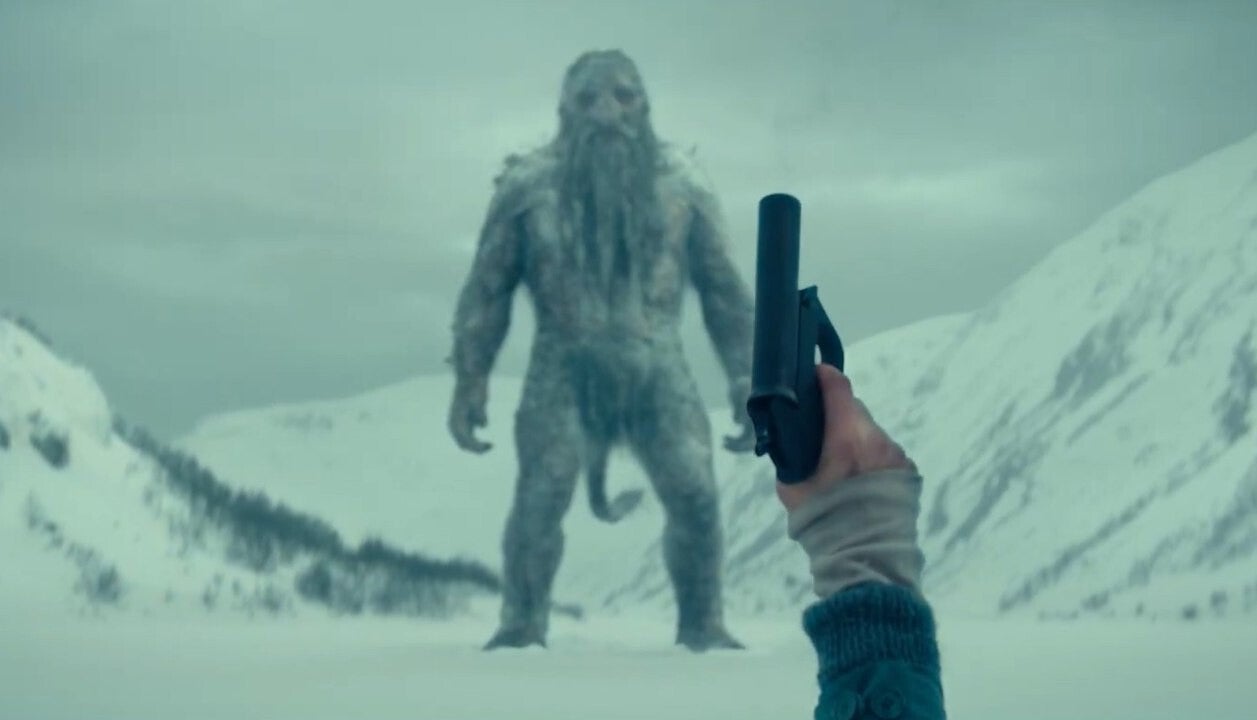
The renowned director Guillermo del Toro has praised Roar Uthaug for his film Troll, highlighting the effective combination of Norwegian sensitivity and American cinematic style that Uthaug managed to capture in his work. This appreciation from Del Toro resonates in the context of contemporary cultural narrative, where the fusion of different styles and traditions is essential to connect with global audiences. A film with a surprising combination of sensibilities The highly anticipated sequel to Troll, titled Troll 2, will be released next Monday on Netflix. This continuation promises to expand the universe of the first film, which already captured the […]
The renowned director Guillermo del Toro has praised Roar Uthaug for his film Troll, noting the effective combination of Norwegian sensitivity and the American cinematic style that Uthaug managed to capture in his work. This appreciation from Del Toro resonates in the context of contemporary cultural narrative, where the fusion of different styles and traditions is essential to connect with global audiences.
A movie with a surprising combination of sensibilities
The highly anticipated sequel to Troll, titled Troll 2, will be released next Monday on Netflix. This continuation promises to expand the universe of the first film, which already captured the attention of viewers with its originality and impressive special effects. Uthaug, known for his ability to tell impactful stories, has been eager to share what he has created in this new installment.
Roar Uthaug revealed that his love for cinema was nurtured by the science fiction and disaster movies of the 90s, which not only marked his childhood but have also greatly influenced his career as a director. This inspiration is reflected in Troll, where typical elements of Hollywood classics are blended with a Nordic cultural background, managing to resonate with both local and international audiences.
With the great interest generated by Troll 2, fans and new viewers are expected to discover a narrative that promises to maintain the balance between exciting action and moments of genuine emotion. The filmmaker has expressed his enthusiasm for the final result and is eager to hear the audience’s reactions. Poetically, it can be said that Troll 2 is more than a sequel; it is a bridge between generations of adventure cinema, reaffirming that monsters can also be part of our most cherished stories.