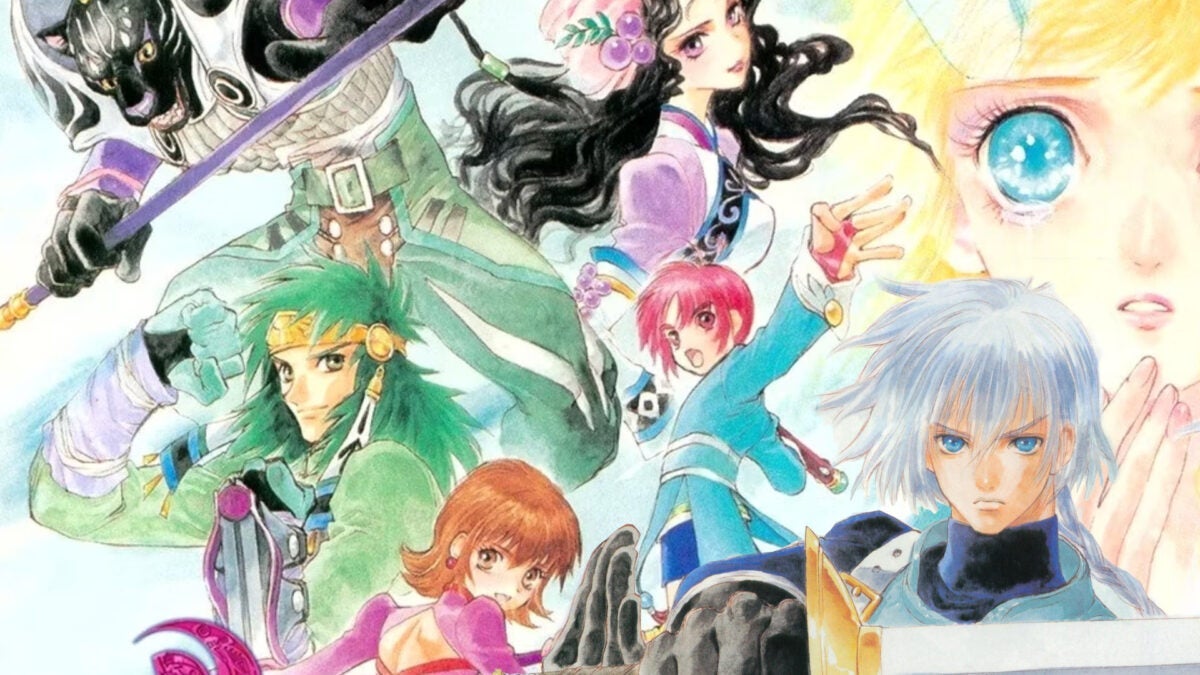
Today marks 30 years since the release of Tales of Phantasia, a game that not only revolutionized the RPG genre but also laid the groundwork for one of the most enduring and successful franchises in the medium. Developed by Wolf Team, the title was originally released on the Super Famicom during a period considered the “golden age” of RPGs, alongside classics like Chrono Trigger and Final Fantasy VI. An absolute rarity that marked an era. Over the last three decades, Tales of Phantasia has been acclaimed for its innovative Linear Motion Battle System, which […]
Today marks the 30th anniversary of the release of Tales of Phantasia, a game that not only revolutionized the RPG genre but also laid the groundwork for one of the most enduring and successful franchises in the medium. Developed by Wolf Team, the title was originally released on the Super Famicom during a period considered the “golden age” of RPGs, alongside classics like Chrono Trigger and Final Fantasy VI.
An absolute rarity that marked an era
Over the last three decades, Tales of Phantasia has been acclaimed for its innovative Linear Motion Battle System, which introduced real-time combat, breaking away from the traditional turn-based combat structures of the time. This system allowed players to execute combos of unique arts, giving each character their own fighting style. This approach has influenced dozens of sequels and spin-offs within the franchise, as well as other titles like Star Ocean.
Despite a narrative that starts off simply, the story becomes darker and more complex as it progresses, trapping players in a world full of conflict and deep characters. From the beginning, Cress Albane, the protagonist, faces personal tragedies that transform him and lead him to question his family legacy. This focus on complex characters and their individual development is complemented by the Skit system, which offers optional conversations that enrich the narrative experience.
The striking duality between the colorful appearance of the game and its dark narrative has left an indelible mark on the RPG genre. As time goes by, Tales of Phantasia remains a pillar in the evolution of video games, demonstrating that a title can age gracefully and remain relevant. Undoubtedly, its legacy lives on in every new installment of the Tales saga.
Tales of is the great RPG franchise from Bandai Namco. Although it hasn’t managed to shine on its own in the West until the success of Tales of Arise in 2021, that doesn’t mean it isn’t a beloved franchise. Games like Tales of Vesperia and especially Tales of Symphonia were also highly regarded outside of Japan. That’s why it’s not surprising that they have decided to start systematically remastering their previous games. This is great news because it gives us the opportunity to play some games from the franchise that never […]
Tales of is the great RPG franchise from Bandai Namco. Although it did not shine brightly in the West until the success of Tales of Arise in 2021, that does not mean it is not a beloved franchise. Games like Tales of Vesperia and especially Tales of Symphonia were also highly valued outside of Japan. Therefore, it is not surprising that they have decided to start systematically remastering their previous games.
This is great news because it offers us the possibility to play some games from the franchise that we never got to play in the West. Also, because it means being able to play some of the games that might be more difficult to play today. And that’s why today we’re going to talk about five Tales of. Of the five we would want to be their next five remasters. And if you ask us, they are not too crazy bets: they are the ones most likely to sell like hotcakes.
Tales of Phantasia
Published on December 15, 1995, this was the first Tales of. Developed by Wolf Team and directed by Eiji Kikuchi, everything that defines the franchise was already here. And although it is true that it can be a bit tough to play, it remains an extremely interesting and very beautiful RPG, especially for being a Super Nintendo game.
Why should they do a remaster? To begin with, because it’s the first one. But also, because it’s the game they always return to. They re-released it on the first PlayStation and made a remaster for Game Boy Advance that later also came to PSP and mobile phones. So it wouldn’t be surprising if once they’ve fired up the engines, they decided that returning to the game they always come back to is the most logical and natural move. And given the success of their games, it would make perfect sense.
Tales of the Abyss
Published in 2005 for PlayStation 2, Tales of the Abyss is a divisive game that never made it to Europe. Why was it divisive? Its story was filled with extremely complex concepts, its protagonist wasn’t necessarily likable, and its combat system was quite a peculiar twist compared to what was seen in Tales of Symphonia. But all of this has made it one of the most beloved titles in the franchise, being passionately defended by its supporters.
The reason for making a remaster of Tales of the Abyss is evident: today it would be better understood than in 2005. Where in 2005 it lived in the shadow of Tales of Symphonia and its own ambition, today all its complexity and the parts considered more generic would be celebrated as inherent to the genre. A remaster could prove that its defenders, perhaps, were right all along and Tales of the Abyss is the best Tales of.
Tales of Rebirth
Another PlayStation 2 title, this one exclusive to Japan. In terms of gameplay, it managed to refine many aspects that had been becoming outdated or were clearly hindering the genre. But that’s not the best part of the game. The best part was the spectacular animations developed by Production I.G for it and its spectacular and complex story, based on racial and ethnic conflicts, inspired by the Yugoslav wars. Which had ended just a few years earlier.
If they only had to remaster one game, it would have to be this one. The first reason is that it was never released in the West. The second, is that it is surely the most complex and revolutionary Tales of until the arrival of Tales of the Abyss and from there, almost until Berseria. This makes it an essential title to preserve.
Tales of Hearts
At this point, we enter the peculiar choices of the list. The elections with flavor. But choosing Tales of Hearts has several reasons. To begin with, it is a title that originally came out on Nintendo DS, which later had a remake on PlayStation Vita. And that is the most interesting part. A remaster of the PlayStation Vita version could give it all the weight it deserves.
The reason why it would be interesting to see this remaster is that PlayStation Vita was an exceptional console that almost no one bought. Tales of Hearts is certainly not the greatest Tales of, but it is a very interesting installment of the franchise that has barely been played. And offering the possibility for it to be played more and reach more people is precisely what remasters are for. Making it a more than obvious candidate for this treatment.
Tales of the Tempest
If choosing Tales of Heart was a peculiar but understandable selection, here many people have lost us. And we can understand that. But we can defend it. Tales of Tempest is a Nintendo DS game that has everything that can be attributed to a DS game: it is a reduced and somewhat watered-down version of what a Tales of is. It doesn’t even take much advantage of the console’s capabilities. Now then. Is it a bad game? Absolutely not.
Tales of the Tempest is a good Tales of game that never left Japan. It is not the best Tales of, nor will it likely be anyone’s favorite, but it serves its purpose. Being a competent version of the game for handhelds. And a remaster would achieve what remasters should: make accessible and preserve a game that today is inaccessible to anyone who doesn’t know Japanese and has a DS. Therefore, Tales of the Tempest is a perfect candidate for a remaster. Even if it is not the Tales of that would excite us the most.