The impossible (but true) relationship between Batman… and Paris Hilton

As you read it: the 42-year-old billionaire could, technically, walk through the pages of Batman at any time because it is more than stipulated that both live in the same universe.

Batman. Lord of the Night. Guardian of Gotham. Friend of Paris Hilton’s great-grandfather. Okay, no, wait a minute, what?! Just as you read it: the 42-year-old billionaire could, technically, stroll through the pages of the Batman at any time because it is more than stipulated that the two live together in the same universe. Don’t believe it? Fasten your bat-belt because this story is not to be believed.

Batman Arkham Knight DOWNLOAD

Holy Hiltons, Batman!

Surely you remember some of the ridiculous ‘Batman’ covers from the 50s: Batman and Robin meet the three musketeers, fight against El Papagayo in South America, adopt the Bat-dog, become a mermaid… Every month, three absolutely bizarre adventures awaited children at a time when superhero comics were nothing more than a diversion for kids. The good thing is that the hero was not a universal icon, and these absurdities remained only in children’s playgrounds… Until 1966 came along.

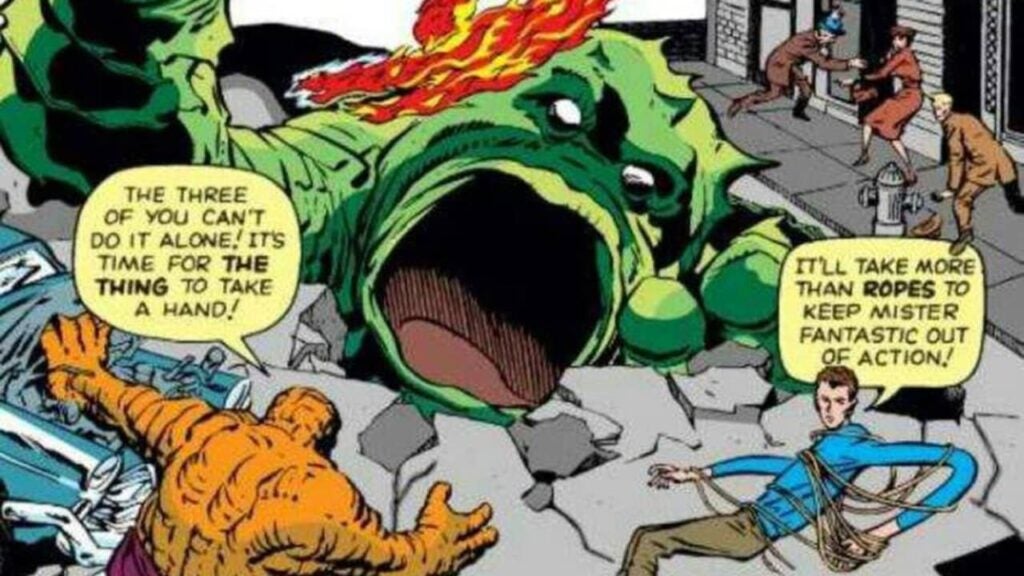
A few years earlier, the arrival of ‘The Fantastic Four’ broke superhero comics in two: for the first time, Marvel showed that more or less mature stories could be made, even if they were aimed at children. Comic books crossed the borders of schools and reached universities: DC could not be left behind, and in 1964 Carmine Infantino reimagined Batman with a darker, more realistic tone and a new costume that could not show off enough. The culprit, William Dozier, an ABC producer tasked with making a series about a certain masked superhero I had never heard of.
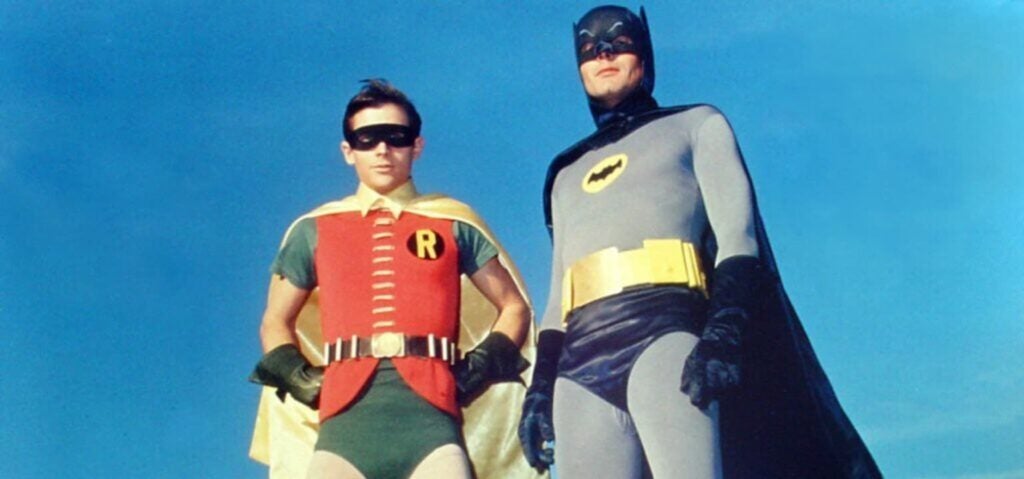
It mattered little that Infantino and John Broome were changing the history of comics at the time: Dozier bought a dozen Batman comics, including a compilation of stories from the 1950s (the 1965 ‘Giant Batman Annual’), and assumed that the character had not evolved at all. Said and done: the 1966 series starring Adam West would be exactly that campy, absurd and unabashed. But that’s another story. For the moment let’s use it to understand the context.

Press that presses you

The TV series changed everything. Suddenly, Batman was born for many people who began to wear his logo on T-shirts, hats, cards, toys and every kind of merchandising imaginable. It was such a success that, as if it were ‘The Simpsons’ now, celebrities began to line up to have a part in the series. Bruce Lee, Otto Preminger, Jerry Lewis, Joan Collins, Zsa Zsa Gabor… Everyone who was anyone in the 60’s consciously made a fool of themselves in ‘Batman’.

The series was such a success that it managed to revive newspaper strips that had not appeared in American newspapers for a couple of decades. Only that, this time, they would be based on television episodes. Whitney Ellsworth and Joe Giella were in charge of it and, above all, of drawing the guest stars. If they were on TV, they had to be in the comics too, right?

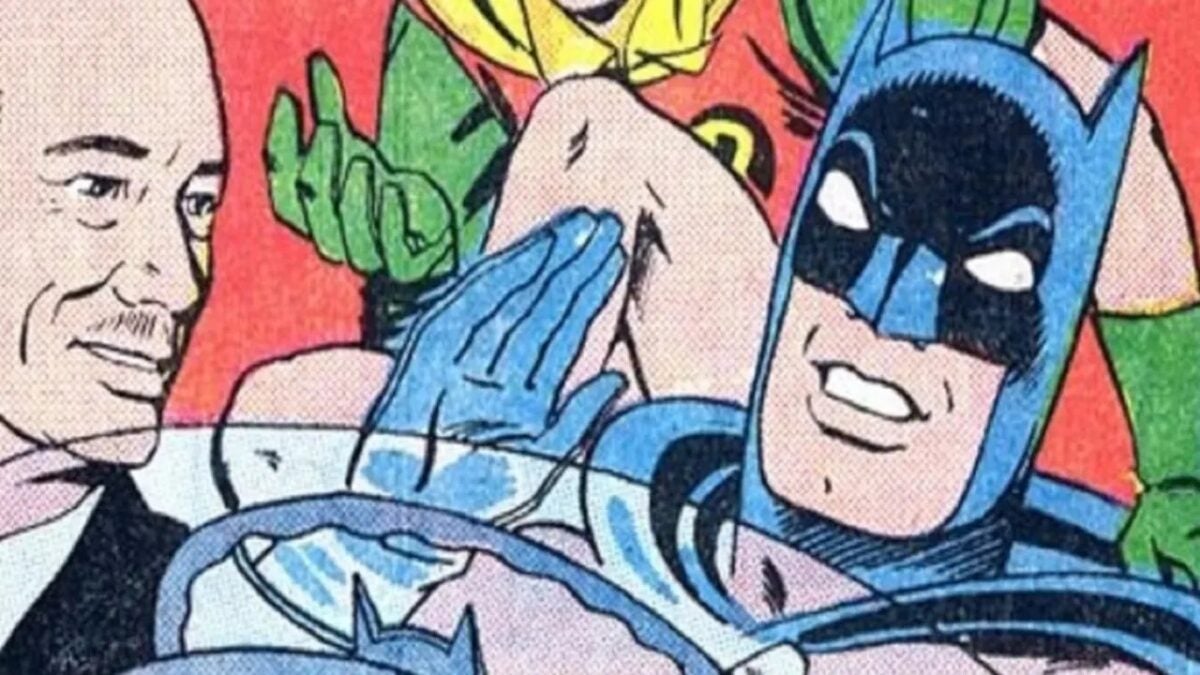
January 1967. Batman and Robin encounter a man sitting in the Batmobile (“Strange! Who would do such a thing in Gotham City?” says our hero). His name would remain a mystery until the next day, but the more seasoned reader would get to see the realistic caricature of Conrad Hilton. Hilton was born in 1887 and at the age of twenty was already in the hotel business. In fact, the world’s first hotel chain was (and is) named after him: he was famous to everyone… even Batman!
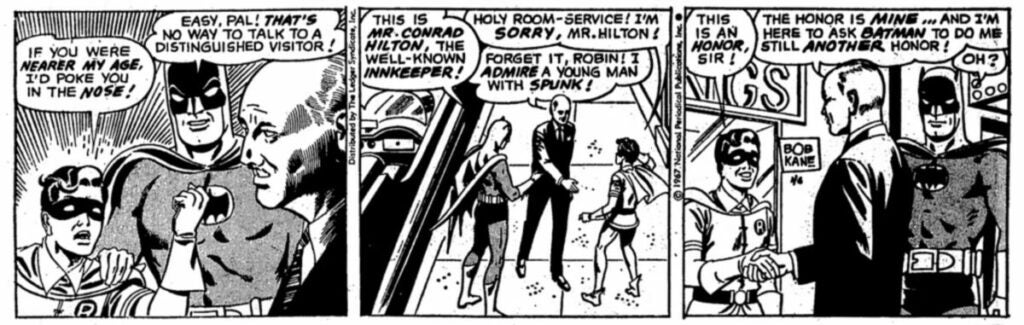
Bat-hotel, sweet Bat-hotel

Hilton appeared in the strip to ask for help with the Batman Hotel he had designed (“Holy Taj Mahal!” says Robin) in which the waitresses wore Robin-inspired uniforms and the five-square-mile lake was designed with the Masked Crusader’s logo. It even had a golf bat-car that, as Batman notes, “It runs on BATs, surely.” This Batman, the things he has.
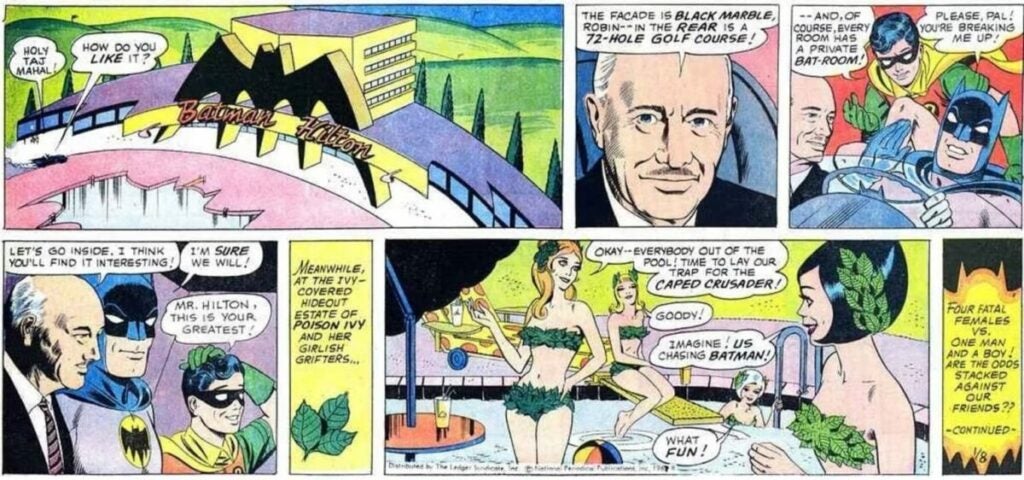
In reality, as you can see, it’s all a plan by Poison Ivy to rob the hotel guests, but that’s not what matters to us. What is certain is that Conrad Hilton’s appearance in the comic book caused an uproar in the hotel industry. After all, this was free publicity for his chain… And, apparently, advertising was denied in the press that brought out the daily strip. Don’t think that, after the controversy, he would say little: from January to March, Paris Hilton’s great-great-grandfather became a regular in the adventures of the Dynamic Duo.
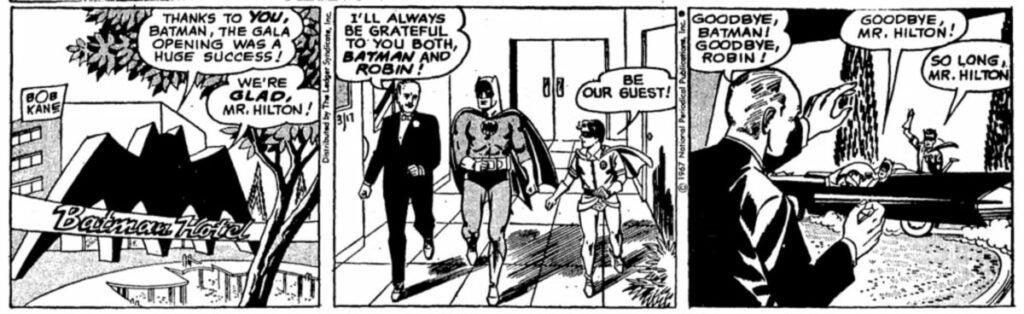
Specifically, March 17 was the end of Conrad Hilton in the Batman strips, once Poison Ivy was caught. He never came out again and the role of guest star was taken by the comic Jack Benny. It’s clear, then: Paris Hilton and Batman could still team up in a crazy crossover – who knows? Stranger things have happened.
The disturbing case of Blake Leibel: Comic book writer turned killer

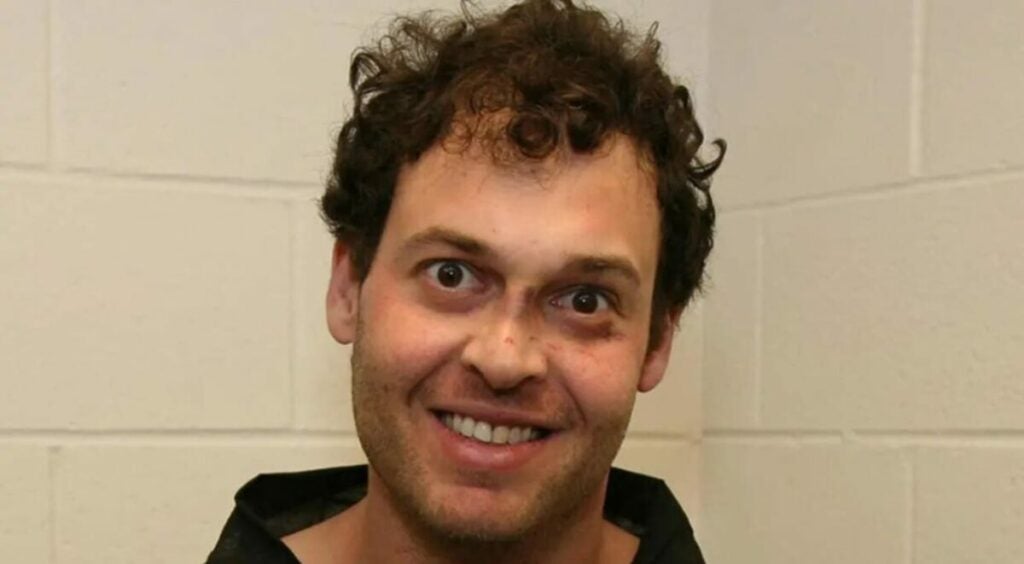
There is a screenwriter who decided to go one step further… And he committed, based on his own comic, one of the worst crimes in Hollywood history.

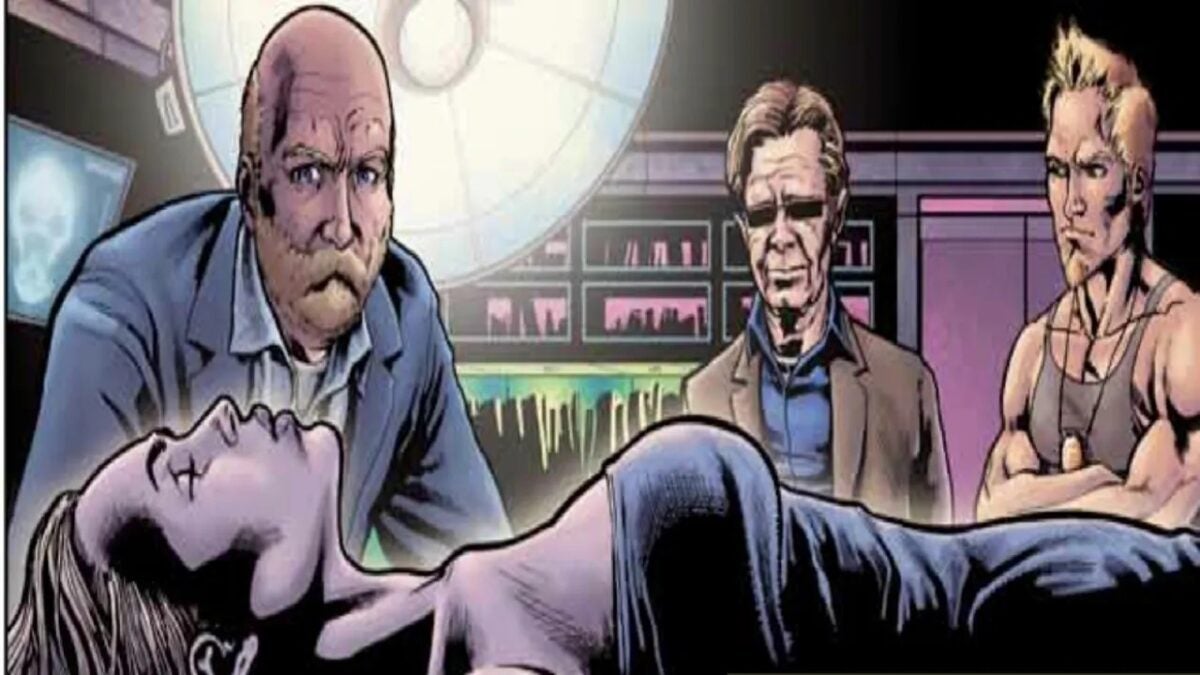
In 1994, issue 54 of DC‘s Green Lantern featured an image that eventually became unfortunately iconic: Kyle Rayner’s girlfriend, who had been killed by Force Majeure, had her body stuffed in the fridge. This moment gave name to a comic book cliché coined by Gail Simone: women in refrigerators. The list of names of female characters killed, tortured or mutilated in comics is endless, ranging from Elektra herself to Gwen Stacy. However, as terrible as this topic is, there is a scriptwriter who decided to go one step further… And he committed, based on his own comic book, one of the worst crimes in the history of Hollywood.

Warning: if you are very squeamish, it is better not to read any further because the story of ‘Syndrome’ is worthy of a true crime.

The wealthy screenwriter

If there are two words that don’t usually go together in real life, it’s “screenwriter” and “rich.” Yet Blake Leibel was. Born in 1981, his family was one of the most powerful in all of Canada. His father was a construction magnate. His mother, meanwhile, was part of the Chitels, founders of one of Toronto’s most powerful plastics factories. Everything was going well, until one day they decided to separate and both siblings split up with their parents.

Blake stayed with Eleanor, while Cody went to live with his father (who, interestingly, was the first Olympic sailor to test positive for doping in 1976). Blake’s salary when he came of age in 1999 was 18,000 euros a month. Nothing, about the same as any of us. So, he wouldn’t have much of a problem moving to Los Angeles and pursuing a career as an artist, not even as a hobby.

The thing is, he had some luck: in 2008 he became the director of three episodes of the animated series of ‘The Mad History of the Galaxies’ and in 2009 he was able to direct and script ‘Bald’, a film promoted with the slogan “No money. No hair. No shame” in which a college student started an erotic website with the hottest girls on campus to earn money and give a hair transplant to his roommate. In fact, it’s described as if “the worst parts of Annie Hall met the worst parts of American Pie.” But we’re not here to judge her career, we’re here to understand how and why she became The Comic Book Killer.

Comics Book Reader DOWNLOAD

The boundary between fiction and reality

Leibel had already written some comics before 2010, such as ‘When Kingdoms Collide’, ‘Operation: Redux’ or ‘United free worlds’. These were ultra-violent comics, but nothing out of the ordinary. Other authors like Mark Millar also recreate themselves in violence and in their real life they are still good people. However, Blake Leibel was no Mark Millar. When in 2010 he released ‘Syndrome’, a graphic novel created by him, scripted by Daniel Quantz and RJ Ryan and illustrated by David Marquez (who has gone through Marvel, DC and anywhere you can imagine). None of his co-workers noticed anything unusual about him despite the gruesome nature of the story.

The first page of the comic posed the question “Why should we spare the life of an unrepentant murderer?”, to which the answer was given “Because you don’t do good by doing evil”. Throughout the comic, grotesque situations (a beheaded woman, a whole family murdered, a person hanged and bled to death…) are intertwined in a story about a serial killer and the obsession of four characters.

The comic didn’t have much of a run (it didn’t matter, Leibel launched it with his own publishing house and let’s remember that he received $18,000 a month to cover any expenses). Four years after his departure, Iana Kasian, a young Ukrainian woman, emigrates to the United States to work as a model in California. There she meets Leibel, who had just broken up with his wife, Amanda Braun, after a few erratic weeks: fate, it seemed, had brought them together. Expensive gifts followed (including a Mercedes convertible), the two moved in together, and finally, on May 3, 2016, their daughter Diana was born. 23 days later, Iana would be dead.

Taken from the vignettes

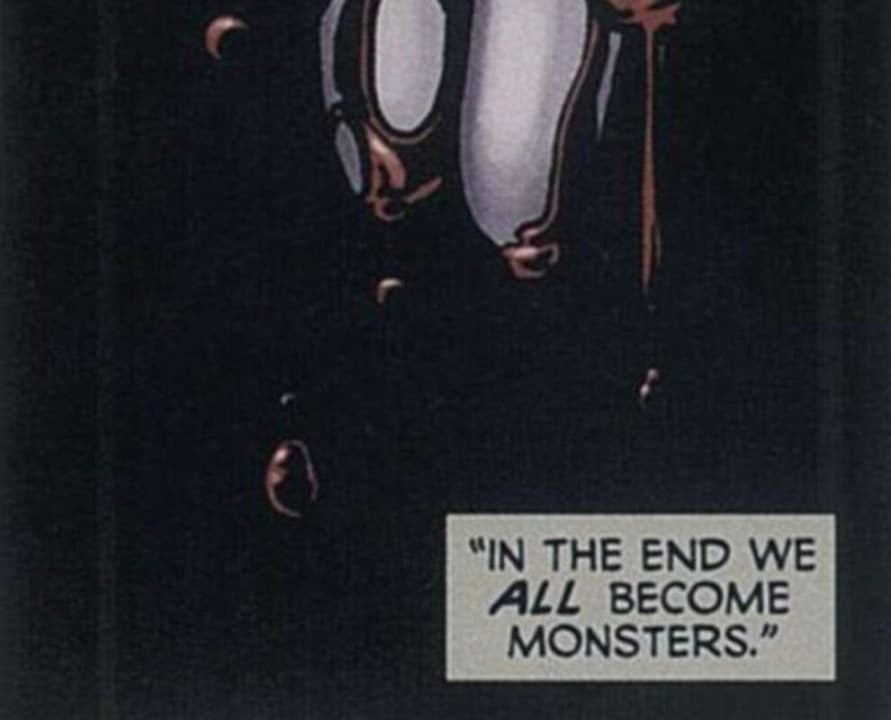
“They kill. We kill. In the end we all become monsters”. Another person to meet in this story is Constance Buccafurri, Leibel’s mistress (of whom Iana, of course, knew nothing). In mid-May, with their newborn daughter, the screenwriter went to his lover’s house and sexually abused her. It all happened in a single day: he got out of jail by paying $100,000 but by the time he returned to his apartment, the Ukrainian woman had left with her daughter and her mother, who was visiting, to a nearby hotel.

Imagine for a moment the life of Blake Leibel, a person who had always had absolutely everything: money, career as a screenwriter, women… who is suddenly thrown in jail and, when he gets out, discovers that his girlfriend has refused to see him. The man feigned repentance and insisted on spending more time with her, asking her to come back to the apartment to sort out their problems. Luckily, Diana and Iana’s mother stayed at the hotel waiting for him to return. But she never ever came back.

We won’t go into details because they are too gruesome, but suffice it to say that on May 24 Leibel committed an agonizing and brutal murder that seemed inspired by those in ‘Syndrome’. He drained the blood from her body and scalped her: that was only the beginning of the horrible torture Iana Kasian suffered. When the police arrived, alerted by Iana’s mother, the screenwriter told them she was fine, just resting. On May 26, finally, a patrol car broke down the door and entered a house that instead of a floor had blood on it. Blake, who had shielded his room with closets and mattresses, sat in shock next to a mutilated, grotesque corpse.

As luck would have it, Leibel ended up in jail sentenced to life in prison without the possibility of review, despite maintaining that he was innocent. The coroner stated, in examining the facts, “I’ve never seen anything like this before. And I doubt if any coroner in this country or beyond has ever seen anything like this outside of, perhaps, wartime”. The prisoner is serving his sentence in California, thus putting an end to one of the blackest episodes in the history of comics… And, probably, of Hollywood.

Some of the links added in the article are part of affiliate campaigns and maand represent benefits for Softonic.

From Invisibility to Power: The Evolution of Sue Storm in Marvel Comics

How has he survived to this day as the most important and powerful character in Marvel’s First Family?

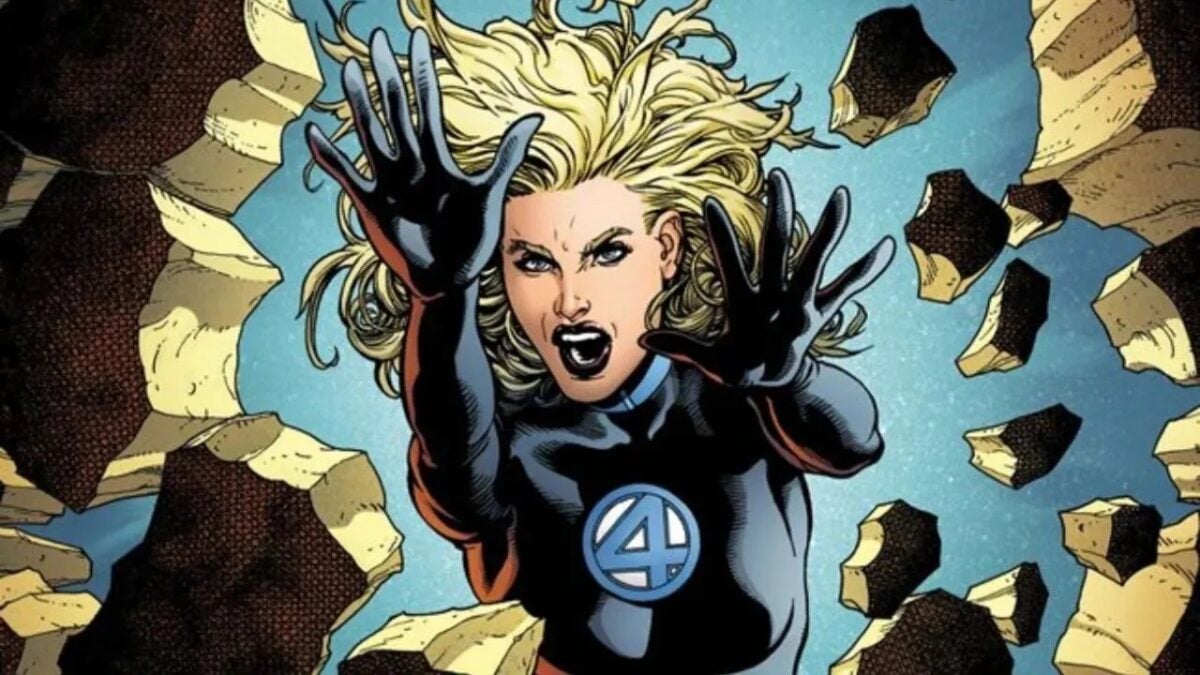
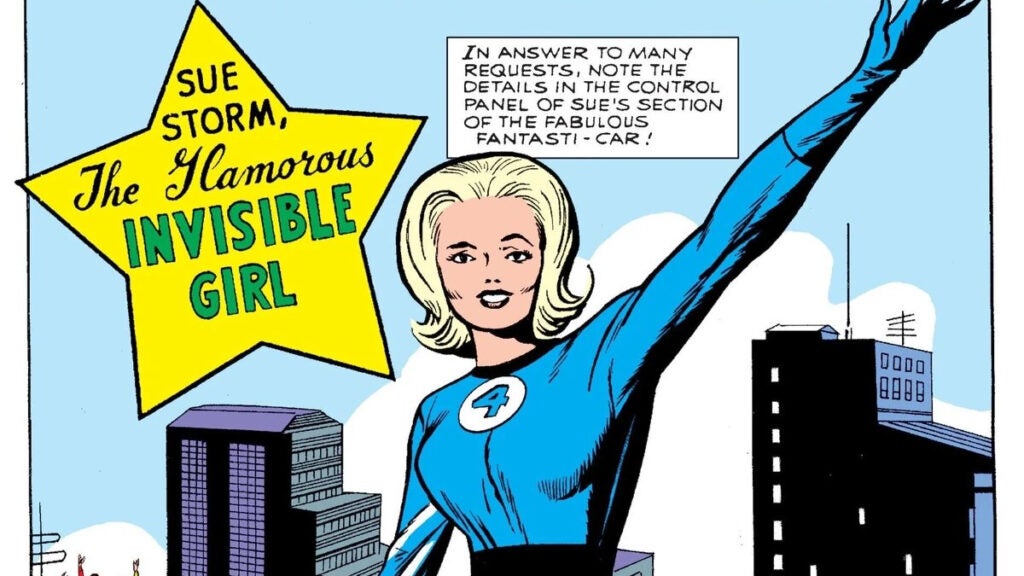
“Sue Storm, The Invisible Girl. Favorite hobbies: fashion, cooking, cosmetics and reading romance novels“; “If she marries, will she leave The Fantastic Four? Your guess will be as good as ours – it’ll probably depend on who she marries!”. The first annual Fantastic Four comic book created a profile of the girl in the group that even at the time gave some pause. Stan Lee didn’t know what to do with the character, her power was the weakest and readers didn’t want her on the team. So how has she survived to this day as the most important and powerful character in Marvel’s First Family?

Having tea and looking at dresses

The Fantastic Four were born in 1961, at the height of the Yankee economic boom: World War II had ended fifteen years earlier and Vietnam was still an exotic country that most Americans had never heard of. Superman had been flying over the skies of Metropolis for 23 years and in the offices of Marvel, a company that had just changed its name from the classic Timely, Jack Kirby and Stan Lee were preparing the first comic book of a collection that would change everything.

The Fantastic Four is the first superhero comic in which the heroes are, within their capabilities… human. They show imperfections, they are everyday people and, in addition, they fight against strange alien villains or, in a propaganda twist that bordered on the absurd, from beyond the Iron Curtain. A family of superheroes. Reed Richards, the adult; Johnny Storm, the teenager; Ben Grimm, the bronco… And Susan Storm, who under Stan Lee’s rule had the personality of “the girl”.

Do you know why Sue gets into the space trip that would later give them powers? Because Reed “is her fiancé, and where you go, I go.” In her day, with a female stereotype sustained by I Love Lucy and romance comics, this was what was expected of her. A woman who, paradoxically, made herself… invisible. While her companions could boast extravagant powers (the Human Torch, Mister Fantastic, the Thing), she stood aside, usually adopting the role of damsel in distress. And the public began to take notice.

You should throw her out

On the mailing page of issue #6 it’s a Martin Ross who opens fire on Sue: “She’s the greatest! But I think you should kick Susan Storm out. She never does anything”. These two lines – who said Twitter invented being a hater? – led to an explosion of people for and against that culminated in a little story where the characters read the letters and tried to explain that she was essential to the group.

“Some readers say I don’t contribute enough, that you’d be better off without me! And maybe they’re right,” Sue lamented before Reed and Ben set the record straight, comparing the superheroine to Abraham Lincoln’s mother, culminating with “If you want to see women fighting, go watch women’s wrestling!” and presenting “our favorite sidekick” with a birthday cake. Not before leaving her not knowing what to say and the Thing surprised (“First time I’ve ever heard a woman say something like that!”). It was the time.

Marvel Unlimited DOWNLOAD

Sue Storm was gaining importance in the plots, especially as the focal point of the love triangle between Reed and Namor, but mostly as a comic counterpoint who always made references to cleaning or buying high-end dresses. Sue was a superheroine in a world of heroes where she could only be compared to The Wasp, Ant-Man’s sidekick. She could save the day from time to time, but not even the advancement of women’s rights could prevent that, once she gave birth to Franklin in 1968, no one at Marvel knew what to do with her.

The invisible woman

Sue became a housewife, a character who listened to others and who, at any given moment, could change the course of a battle with her force fields or her psionic rays, but it took John Byrne to turn everything upside down and give her the role she deserved in the Marvel Universe. Not as a mother or a wife, but as one of the most powerful women in the world.

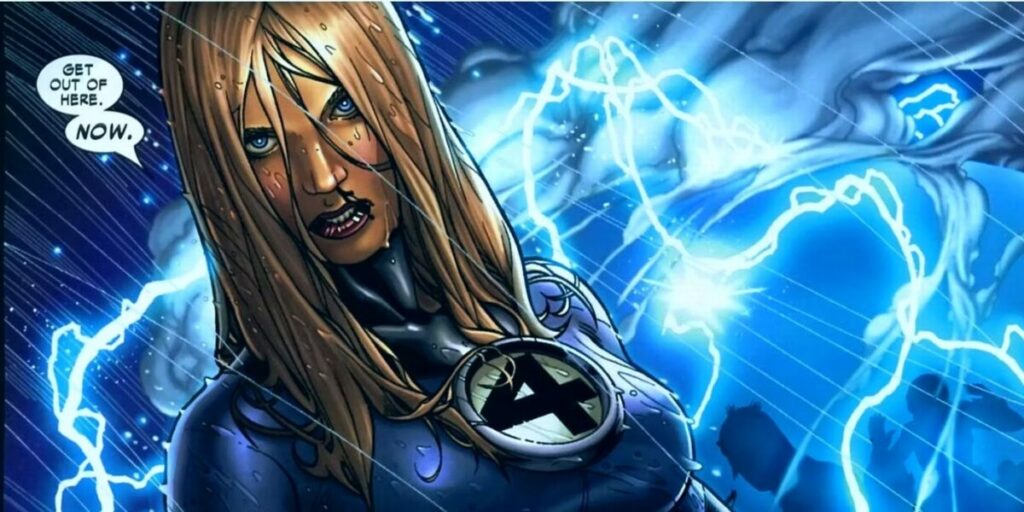
The Invisible Girl became The Invisible Woman, her powers grew in intensity, she began to develop her own personality beyond Reed and Johnny… And finally, in Civil War, they decided to turn her into everything she was and more. Confronted in the superheroic battle, Sue ended up writing a letter to Reed where she made her intentions clear: “Johnny and I will be working underground from now on, and obviously there is no room for Franklin and Valeria. That’s why I’m leaving you to look after them and asking you to give them the time you’ve so often denied them in the past.” Boom.

Civil War may not have been the best comic book in the world, but it was, 45 years after its creation, the final awakening of a character who would never again wear an apron and keep quiet behind her husband. From the teenager obsessed with dresses to the independent woman, dozens of writers and cartoonists have shaped her over the years. The submissive Sue of the early 60s made sense in her context, but we live better knowing that the Invisible Woman was always the most fantastic of the four. Now it just remains to be seen if the next Marvel movie will be able to understand that.