Netflix has reached a definitive agreement to acquire the Warner Bros. Discovery studios and the HBO Max business for a total of $27.75 per share. This move, officially announced last Tuesday, marks a significant milestone in the competition among major players in the entertainment and technology industry. Final bid completed! Netflix’s decision to modify its agreement, turning it into a fully cash transaction, not only involves a greater monetary outlay but also underscores the platform’s urgency to strengthen its position against the growing rival control campaign of […]
Netflix has reached a definitive agreement to acquire the Warner Bros. Discovery studios and the HBO Max business for a total of $27.75 per share. This move, officially announced last Tuesday, marks a significant milestone in the competition among major players in the entertainment and technology industry.
Bidding has ended!
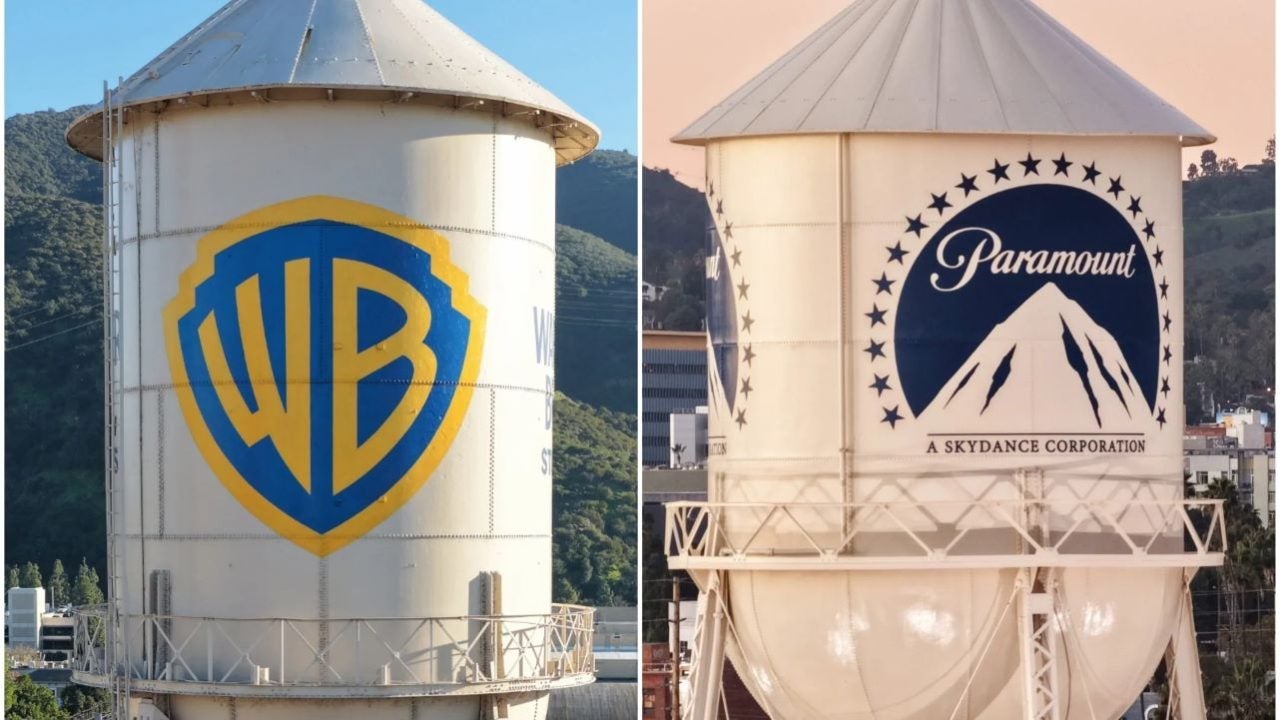
Netflix’s decision to modify its agreement, turning it into a completely cash transaction, not only involves a greater monetary outlay, but also underscores the platform’s urgency to strengthen its position against the growing rival control campaign from Paramount Skydance. This development occurs in a context of consolidation where platforms seek to expand their catalogs and subscriber bases.
Industry analysts suggest that this acquisition could redefine the streaming landscape, allowing Netflix to integrate a broader range of content and potentially attract new subscribers. The move is seen as a strategy to mitigate competitive pressure, especially given that Paramount Skydance has been ramping up its activities in the sector.
With the incorporation of the resources and talents of Warner Bros. and HBO Max, Netflix could strengthen its ability to offer original productions and exclusive series that are increasingly attractive to the global audience. In this way, Netflix positions itself not only as a pioneer in creating distinctive content but also as a formidable competitor seeking to stay at the forefront in an increasingly saturated market.
This agreement, which still requires approval from regulatory authorities, could be a catalyst for future mergers and acquisitions in the entertainment sector, highlighting the dynamic and changing nature of the industry.
Paramount Skydance has intensified its effort to acquire Warner Bros. Discovery (WBD) through legal actions. In a lawsuit filed on Monday, David Ellison’s company seeks to compel WBD to disclose financial details related to the $83 billion deal that the latter signed with Netflix. That’s all, folks One of the central points of the lawsuit is WBD’s lack of transparency regarding how the Global Networks stub was valued in its contract with Netflix. This aspect is crucial to understanding the viability and financial impact of the deal, which makes […]
Paramount Skydance has intensified its effort to acquire Warner Bros. Discovery (WBD) through legal action. In a lawsuit filed on Monday, David Ellison’s company seeks to compel WBD to disclose financial details related to the $83 billion deal that the latter signed with Netflix.
That’s all, folks
One of the central points of the lawsuit is the lack of transparency from WBD regarding how the Global Networks stub was valued in its contract with Netflix. This aspect is crucial for understanding the viability and financial impact of the agreement, making the disclosure of this information of interest not only to Paramount Skydance but also to investors and analysts in the industry.
The Paramount Skydance move is not just an acquisition attempt, but also highlights a growing tension in the entertainment industry where mergers and acquisitions have become increasingly common. With the rising competition among streaming platforms, clarity regarding these types of transactions becomes vital for all parties involved.
According to close sources, WBD has been reluctant to provide the requested information, which has led Paramount Skydance to consider that its actions are an obstruction to transparency. This litigation could set an important precedent in the relationship between entertainment companies and their financial disclosure obligations, especially in an era where large-scale deals dominate the market landscape.
In this scenario, it can be speculated that the pressure exerted by this demand could force WBD to reconsider its stance on the disclosure of information, which could have significant implications not only for this particular dispute but also for future negotiations within the industry.
Warner Bros. Discovery (WBD) has rejected the latest acquisition offer made by Paramount Skydance, which amounted to $30 per share in cash. This move marks the eighth purchase proposal that David Ellison’s company has made to acquire WBD, highlighting Paramount’s sustained interest in the integration of both media conglomerates. Clear path for Netflix Despite these requests, the board of Warner Bros. Discovery has reaffirmed its support for the current agreement with Netflix, indicating that the company has long-term strategic plans that do not contemplate […]
Warner Bros. Discovery (WBD) has rejected the latest acquisition offer made by Paramount Skydance, which amounted to 30 dollars per share in cash. This move marks the eighth purchase proposal that David Ellison’s company has made to acquire WBD, highlighting Paramount’s sustained interest in the integration of both media conglomerates.
Clear path for Netflix
Despite these requests, the Warner Bros. Discovery board has reaffirmed its support for the current agreement with Netflix, indicating that the company has long-term strategic plans that do not include an acquisition by Paramount. This agreement with Netflix, which remains a key part of WBD’s positioning in the competitive world of entertainment, reinforces its commitment to the streaming platform and its focus on creating original content.
The rejection of this offer by WBD not only reflects its firm stance against acquisition attempts but also the perception of the company’s value in a constantly evolving media market. The entertainment industry has been the subject of numerous mergers and acquisitions in recent years, which adds a level of complexity to negotiations between large conglomerates.
The situation also sparked speculation about the stability and future direction of Warner Bros. Discovery. Some analysts believe that, if current trends continue, we may see more moves of this kind in the future, which could further fuel competition in the sector. WBD’s response to this latest offer suggests that they are determined to maintain their independence and continue developing their relationship with Netflix, despite the tempting proposals from Paramount Skydance.
In 2025, the news of Netflix’s acquisition of Warner Bros has sparked extensive debate in the entertainment industry. The purchase has raised concerns about the possibility of a monopoly in the sector, given the growing dominance of streaming platforms and their impact on the traditional cinematic experience. Few days to see premieres in theaters One of the main concerns that have been raised is the possible decrease in attendance at cinemas. With the announcement that Warner Bros movies will be available on streaming platforms for a maximum […]
In 2025, the news of the acquisition of Warner Bros by Netflix has sparked extensive debate in the entertainment industry. The purchase has raised concerns about the possibility of a monopoly in the sector, given the growing dominance of streaming platforms and their impact on the traditional cinematic experience.
Few days left to see the movie premieres
One of the main concerns that have been raised is the possible decrease in attendance at cinemas. With the announcement that Warner Bros movies will be available on streaming platforms a maximum of 17 days after their release in theaters, many fear that viewers will prefer to wait to see the premieres from the comfort of their homes, which could lead to a reduction in box office revenue for cinemas.
Despite Netflix’s assurance that the acquisition would not affect theatrical releases, the new release policy has revealed a contradiction in that promise. Although, in theory, Warner’s films will continue to be shown in theaters alongside their debut on the platform, this short period of exclusivity may not be enough to maintain the public’s interest in attending theaters.
Industry analysts have begun to question the viability of cinemas against the temptation to watch movies at home. The convenience of streaming services could lead a significant portion of the audience to choose to wait a few weeks to enjoy movies from their home, a shift that has been intensifying in recent years.
With the acquisition, Netflix positions itself even stronger in the competitive entertainment market, but it remains to be seen how the dynamics between cinema and streaming will evolve in the coming years. Critics’ concerns insist that this could be another step towards transforming the way we consume cinematic content.
The board of directors of Warner Bros. Discovery (WBD) is preparing to reject the modified purchase offer presented by Paramount Skydance. According to sources from Bloomberg News, this decision is expected to be made official in the coming days, highlighting the growing media attention surrounding this corporate move in the entertainment world. Goodbye forever, Paramount David Ellison, head of Paramount Skydance, continues his search for assets that he considers essential to consolidate a powerful company in Hollywood in the 21st century. His strategy seems to focus on securing content and intellectual properties that will allow him to compete effectively […]
The board of directors of Warner Bros. Discovery (WBD) is preparing to reject the modified acquisition offer presented by Paramount Skydance. According to sources from Bloomberg News, this decision is expected to be made official in the coming days, highlighting the increasing media attention surrounding this corporate move in the entertainment world.
Goodbye, Paramount
David Ellison, head of Paramount Skydance, continues his search for assets that he considers essential to consolidate a strong company in Hollywood in the 21st century. His strategy seems to focus on securing content and intellectual properties that will allow him to compete more effectively in an increasingly saturated and competitive market.
The revised purchase offer from Paramount Skydance had been seen as a significant move in a context where major studios are constantly evolving and adapting. However, the likely rejection by the WBD board highlights the differing visions that both entities have regarding the future of entertainment. WBD’s decision may be influenced by a desire to maintain control over its valuable assets and continue developing its own content strategy.
The implications of this rejection could be significant for the industry, as it underscores the difficulty large corporations face in reaching agreements in an environment where mergers and acquisitions are becoming increasingly common. Moreover, the growth of Paramount Skydance under Ellison’s leadership may encounter a significant obstacle if it fails to secure the resources it deems vital.
In summary, the rejection of the offer proposed by Paramount Skydance is a critical development in the sector, and the movements of both companies are being closely monitored as they navigate an increasingly complex business landscape.
This is pure fantastic speculation, of course. Warner was determined from the first minute to accept the genuine windfall that Netflix has thrown for having its entire catalog and (above all) its intellectual properties, and there has been no spending by Paramount that convinced them otherwise. What’s the result? Who knows. Maybe everything will suddenly explode and cinema will disappear, as some say, or perhaps Warner’s properties will increase in value and Ted Sarandos will keep his word to release in theaters. And yet, in this climate of tense calm, there might be a way out that would satisfy […]
This is pure fantastic speculation, of course. Warner was determined from the first minute to accept the genuine fortune that Netflix has shelled out to have its entire catalog and (above all) its intellectual properties, and there has been no spending by Paramount that convinced them otherwise. What’s the result? Who knows. Maybe everything will suddenly blow up and cinema will disappear, as some say, or perhaps Warner’s properties will increase in value and Ted Sarandos will keep his word to release films in theaters. And yet, in this climate of tense calm, there might be a solution that satisfies everyone: the wealthy and film lovers.
Solomonic Decision
The problem is more than obvious: Netflix wants to take over the streaming part, and Paramount mainly wants to focus on theater distribution. The former have never had any real interest in getting into the distribution business (beyond a few movies they release a couple of weeks before appearing on the platform), and the latter still haven’t managed to boost Paramount+, their VOD service with 79.1 million subscribers worldwide, which pales in comparison to HBO Max’s 128 million or Netflix’s more than 300 million.
It’s not that easy, of course, because no one is willing to give up a piece of the pie and Warner is being sold, as has already been mentioned, whole and uncut. And no one is willing to back down and allow two companies as different as Paramount (the conservative wing) and Netflix (the liberal wing) to control the same IPs and be able to create a new Harry Potter saga at the same time as a reinvention in the form of a series, or to treat Superman in two absolutely antagonistic ways. It’s all or nothing.
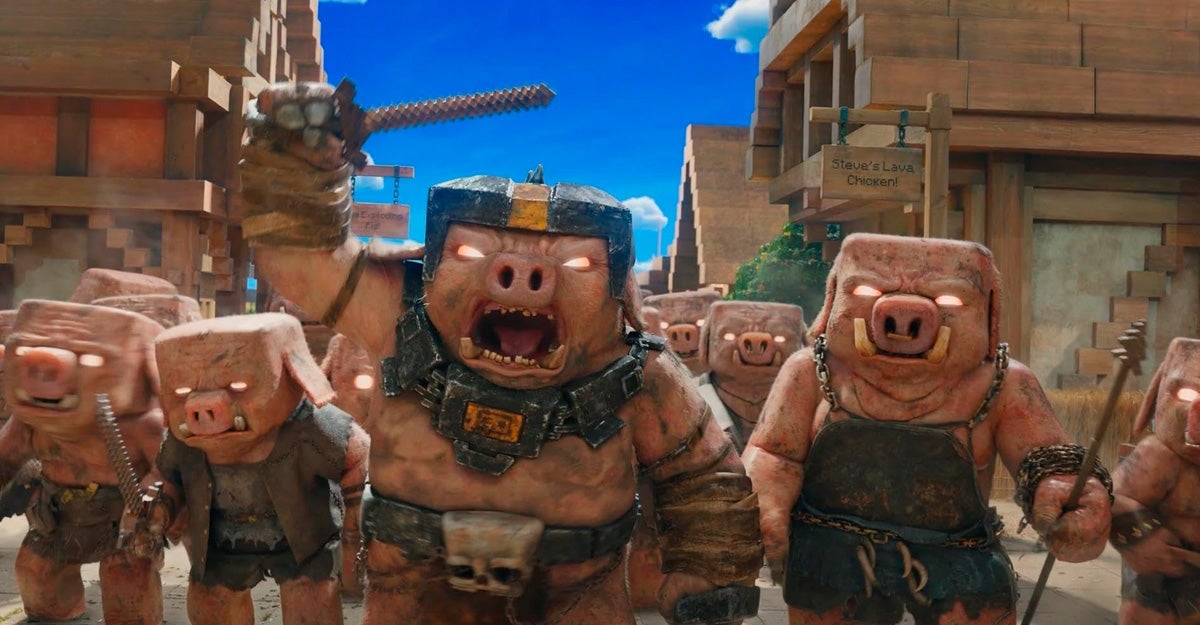
Netflix is quite clear that the bet is going to pay off, and that it can not only cover the $82.7 billion it has shelled out for Warner, but that it will also start generating profits very soon, adding more and more subscribers. Or, who knows, maybe they will look at Warner’s box office numbers this year, with things like a Minecraft movie or Superman, and decide to give big screen opportunities a chance instead of just limiting themselves to premieres on your television. However, while Paramount can indeed release in theaters without issues, its liquidity is a problem and it depends solely on how long David Ellison, its new director and one of the richest men in the world, can keep throwing money into the fire.
People who, instead of seeing the cold fabric of the Hollywood industry, prefer to think of an unreal “Why can’t we be friends?”, believe that they can divide the roles, why not. That Warner continues to make movies and series, some take care of distribution in theaters and others on the Internet, and everyone is happy. The idea wouldn’t be bad, if it weren’t because in this case everyone would win and lose at the same time: Why spend billions of dollars to buy one of the most famous production companies in Hollywood if afterwards you have to share the pie with someone else? Who would want to have the rights to DC and have to tread carefully with every decision in case your partner disagrees? It’s nonsensical. Nice, but nonsensical.
The reality is what it is, and we must accept it: Netflix has practically smashed cinema as we know it with a hammer, leaving everything on pause until it communicates what its measures will be from next year. Paramount is angry, Warner has bowed its head and accepted, and we are all holding our breath. Yes, it would be nice if someone took care of the distribution in theaters, but right now it only depends on a board of directors. And, no matter what they have said to reassure David Zaslav, the current CEO of Warner, things do not look good. Whether this is the requiem for a death foretold or a new rebirth, we will know sooner than we would like.
Paramount has launched a $108 billion acquisition offer for Warner Bros. Discovery, which has raised considerable attention in the entertainment industry. This proposal is part of a series of strategic moves aimed at consolidating power in the media content sector. However, Warner Bros. Discovery has urged its shareholders to reject Paramount’s offer, arguing that the previously accepted proposal from Netflix is superior in terms of value and conditions. To Paramount, not even water In a letter addressed to its shareholders, which spans three pages, Warner […]
Paramount has launched a $108 billion acquisition offer for Warner Bros. Discovery, which has garnered considerable attention in the entertainment industry. This proposal is part of a series of strategic moves aimed at consolidating power in the media content sector. However, Warner Bros. Discovery has urged its shareholders to reject Paramount’s offer, arguing that the previously accepted proposal from Netflix is superior in terms of value and conditions.
At Paramount, not even water
In a letter addressed to its shareholders, spanning three pages, Warner Bros. Discovery outlines its concerns regarding several aspects of the offer presented by Paramount. Among the highlighted issues is Paramount’s insistence that its proposal has solid financial backing, a point that WBD finds questionable. The letter also mentions that the terms of the Netflix agreement, which has already been accepted, offer greater security and long-term benefits for shareholders.
The situation has sparked a debate about the power dynamics within the entertainment industry, as well as the future of Warner Bros. Discovery and its catalog of intellectual properties. There is a marked interest from investors, who are watching the repercussions of this acquisition attempt and how it would affect competition in an increasingly competitive sector.
Additionally, analysts indicate that Paramount may face additional difficulties in trying to persuade WBD shareholders. The rejection of this offer could provide Warner Bros. Discovery the opportunity to continue strengthening its position in the market, while the pressure on Paramount to justify its proposal will increase. As negotiations progress, the situation could result in a significant shift in the digital entertainment landscape.
David Ellison, CEO of Paramount, attempted to acquire Warner Bros. over a three-month period, but the negotiations did not yield positive results. Despite offering $19 per share and a co-director position to David Zaslav, CEO of Warner, the approach was not enough to finalize the deal. Finally, on December 5, Warner chose to collaborate with Netflix, thus breaking off negotiations with Paramount. Not only do they ghost you after a Saturday night The courtship process began on September 14, when Ellison, accompanied by his father Larry Ellison, organized a dinner with […]
David Ellison, CEO of Paramount, attempted to acquire Warner Bros. over a three-month period, but the negotiations did not yield positive results. Despite offering $19 per share and a co-director position to David Zaslav, CEO of Warner, the approach was not enough to finalize the deal. Finally, on December 5, Warner chose to collaborate with Netflix, thus breaking off negotiations with Paramount.
They don’t just ghost you after a Saturday night
The courting process began on September 14, when Ellison, accompanied by his father Larry Ellison, organized a dinner with Zaslav to discuss the potential acquisition. During this meeting, Ellison demonstrated his commitment by extending a generous and strategic offer, which included the possibility of a shared leadership position in the new entity resulting from the acquisition. However, by the end of the year, everything collapsed when Warner chose its direct competitor, Netflix, for its future alliance, leaving Paramount adrift.
After the breakdown of negotiations, Ellison tried to reach out to Zaslav to present a new proposal. However, his attempts to make contact were ignored, which has been described as ‘ghosting’ in the business world. Messages like “I tried to call you about a new figure we sent” and “Please call me back to discuss it in detail” went unanswered, leaving Ellison in an uncomfortable and frustrating situation.
Now, after the failure of these negotiations, rumors have begun to circulate about the possibilities of Paramount considering a hostile takeover of Warner. This move, although risky and potentially controversial in today’s dynamic business world, could be the next step in Ellison’s pursuit to realize his vision of expansion. However, history has shown us that such maneuvers rarely end well for those involved in the sector.
Netflix has announced the acquisition of Warner Bros. for $82.7 billion, a move that has generated a wave of uncertainty in the market and among viewers. However, this acquisition has been challenged by Paramount, which has launched a hostile takeover bid valued at $108.4 billion to block the deal. The situation, which resembles a business thriller, has both companies in an intense battle not only for Warner but for the future of the business model in the entertainment industry. Whatever you want, Warner Ted Sarandos, Netflix’s chief content officer, […]
Netflix has announced the acquisition of Warner Bros. for $82.7 billion, a move that has generated a wave of uncertainty in the market and among viewers. However, this acquisition has been challenged by Paramount, which has launched a hostile takeover bid valued at $108.4 billion to block the deal. The situation, which resembles a business thriller, has both companies in an intense battle not only for Warner but for the future of the business model in the entertainment industry.
Whatever you want, Warner
Ted Sarandos, Netflix’s Chief Content Officer, has reaffirmed the platform’s commitment to theatrical releases, although doubts remain about the length of the exhibition window before arriving on streaming. Despite his claims of wanting to enter the movie theater business, experts indicate that the key lies in the time movies will be available in theaters before coming to Netflix. According to Sarandos, redundancies in this acquisition have not been planned, arguing that it is essential to maintain the value of creativity and entertainment.
Despite Sarandos’ optimism, the pressure from Paramount’s hostile takeover bid should not be underestimated. Industry observers point out that any agreement is conditioned on public perception and social media response, which further complicates the situation. While Netflix claims that the deal will benefit shareholders and consumers, it is unclear how the distribution of films in theaters will be handled in the future.
The tension between the two companies continues to grow, and many are wondering who will prevail in this corporate love triangle. Analysts believe that, although the deal between Netflix and Warner is likely to materialize, the future is fraught with uncertainties.
The recent success of the movie The Good, the Bad and the Ugly, the iconic western by Clint Eastwood, has surprised many by reaching 4.1 million hours viewed and an estimated 2.3 million views on Netflix. This film ranked in the Top 10 in 17 countries, including Argentina, Chile, and Jamaica, highlighting its positive reception internationally and not just in specific markets. A movie over 50 years old that is popular again The situation raises questions about Netflix’s current strategy, which has traditionally focused on offering contemporary content, relegating productions […]
The recent success of the movie Infierno de cobardes, the iconic western by Clint Eastwood, has surprised many by reaching 4.1 million hours streamed and an estimated 2.3 million views on Netflix. This film ranked in the Top 10 in 17 countries, including Argentina, Chile, and Jamaica, highlighting its positive reception internationally and not just in specific markets.
A movie over 50 years old that is becoming popular again
The situation raises questions about Netflix’s current strategy, which has traditionally focused on offering contemporary content, relegating classic productions to the background. However, the remarkable performance of Infierno de cobardes could be an indication that the platform is considering the inclusion of more classic film titles in its catalog. This could provide an opportunity for other masterpieces by Eastwood and other renowned filmmakers, thus increasing the diversity of its offerings.
The recent interest in this classic could prompt Netflix to consider a greater variety of titles to attract a broader audience, including fans of classic cinema, who continue to seek thrills in productions from past eras. Among the possibilities being considered are titles like Escape from Alcatraz, Unforgiven, and Mystic River.
Additionally, it is speculated that Netflix may be considering the addition of more Warner works to its catalog, which would provide limited but significant options for movie lovers. In this sense, some critics point out that, although the platform has focused on recent productions, consumer demand could change this trend.
If Netflix decides to strengthen its classic film catalog, it will not only diversify its offerings but could also connect more effectively with audience segments that value the history of the seventh art.