Xbox has given the best conference of the Summer Game Fest, presenting an interesting lineup of games for its near future, but that doesn’t seem to be enough to regain the faith of its fans. Or of gamers in general. Being the third party in contention for two generations now, they are having very serious problems positioning themselves as serious competition against Sony and Nintendo, even with the missteps of the latter, and it seems that even their successes are more reactions than anything else. A business with serious problems Matthew Ball has spoken with Chris Dring, head of […]
Xbox has given the best conference of the Summer Game Fest, presenting an interesting lineup of games for its near future, but that doesn’t seem to be enough to regain the faith of its fans. Or of gamers in general. Being the third player in the game for two generations now, they are having very serious problems positioning themselves as serious competition against Sony and Nintendo, even with their missteps, and it seems that even their successes are more reactions than anything else.
A business with serious problems
Matthew Ball has spoken with Chris Dring, head of the specialized video game newsletter The Game Business, about the situation that Xbox is currently facing. Highlighting some of the challenges and issues the brand is experiencing. The first of these is that, both in Spain and the US, there is no stock of Xbox Series. This is something Ball has addressed without hesitation.
“I can definitively say that the demand for our console exceeds the supply. We are bringing it to as many stores as possible, and we are producing it as quickly as we can. There is a serious limitation on how fast we can do this.” Although this does not translate into the number of console sales, which remains far lower than those of Sony and Nintendo, it seems to also be related to the issue of rising component prices, which is forcing them to ‘rethink everything we can about Helix’, their next console.
All of this reveals a contradictory picture of Xbox. Although Ball constantly tries to assert that Xbox is better than ever and in a winning position, all it conveys is that the company is constantly reacting to questionable decisions they themselves have made in the past. Without an apparent clear roadmap, which includes the inability to define which games will be exclusive to Xbox and which will not and why, the brand’s fans remain marked by the uncertainty of a company that, although it claims to be more transparent now, still is not at all.
Jason Schreier, a video game journalist from Bloomberg who already talked about this information last March, has confirmed on Bluesky that the CEO of PlayStation Studio, Hermen Hulst, told his employees last Monday that the company will release its narrative games exclusively for PlayStation consoles. This will only affect games that provide a single-player experience, like Ghost of Yotei or the recent Saros, but not games that are multiplayer experiences, like Marathon or the anticipated Marvel Tokon. PlayStation wants you to play its games on its console This is […]
This will only affect games that provide a single-player experience, such as Ghost of Yotei or the recent Saros, but not games that are multiplayer experiences, like Marathon or the anticipated Marvel Tokon.
PlayStation wants you to play its games on its console
This is something that has been rumored for months, but there was no confirmation until now. This means that anyone who has played Sony games on PC, such as God of War or Ghost of Tsushima, will need a PlayStation 5 to play their sequels.
Although it is a commercially sensible measure, as it provides reasons to buy their hardware, it is also being perceived among users as a move against PC gamers. Many of them have invested their time and money in the games they have released on PC and have no interest in switching to console, even if they are interested in the franchises they have developed. This demonstrates a disconnect between the player base and Sony’s business interests.
Moreover, it does not seem to fit the economic reality of these titles. All of Sony’s narrative titles have sold millions on PC, extending their lifespan.While it is true that they have also faced, on more than one occasion, compatibility issues and less than optimal performance.
Pending official confirmation, it seems that PC users will no longer be able to enjoy Sony titles on their platform.
GameStop is no longer what it used to be. It’s not just that the prices they offer do not correspond to the reality of the video game market, but in general, it seems that they are only talked about to discuss controversies. But it’s for good reason. It seems they are always getting involved in a new one. This year had not been the case yet, but their CEO, Ryan Cohen, has decided to change that, with what is probably the most outlandish idea of the year: to buy eBay. And today we are going to tell you all about this odyssey. A seamless plan Last 3 […]
GameStop is no longer what it used to be. It’s not just that the prices they offer do not correspond to the reality of the video game market, but in general, it seems that they are only talked about to discuss controversies. But it’s for good reason. It seems they are always getting involved in a new one. This year had not been the case yet, but their CEO, Ryan Cohen, has decided to change that, with what is probably the most outlandish idea of the year: to buy eBay. And today we are going to tell you all about this odyssey.
A seamless plan
On May 3rd, the CEO of GameStop, the already mentioned Ryan Cohen, made a striking public promise. He promised that he was going to buy eBay. Putting on the table $56 billion, the market valuation of the company, his intention was to acquire the famous online store to create a new company capable of competing in volume and importance with Amazon. A very eye-catching goal that caught the attention of everyone. Not for his interest in buying eBay, but for how he intended to do it.
His explanation was simple. GameStop already owns 5% of eBay’s shares. His idea was to invest $28 billion in cash, of which $20 billion would come from TD Bank, the eleventh largest bank in the US, with which they would buy the board’s stakes. Then, they would issue another billion in shares and thus control 70% of the company.
The problem is that none of this makes sense. To begin with, GameStop’s valuation is at $12 billion, so investing $8 billion is illogical. How TD Bank or any other bank would invest more than double what the interested company itself invests and under what conditions is something that also remained unclear and, moreover, does not make sense on paper. And how they were going to get the shares sold to them and take control of the board of directors was also not clear at any point.
So, Cohen decided to do the most logical thing in these cases: go on television to explain himself. In a regrettable spectacle lasting almost thirty minutes where the CEO of GameStop seemed not to be in his right mind, he was constantly dodging all the questions from the host and his collaborators, not clarifying any of the doubts. Leaving any kind of plausibility about the possibility of the purchase up in the air.
eBay says no
All of this culminated with eBay issuing a statement on April 12. In it, they stated that “we have considered your proposal to be neither credible nor attractive.” Not stopping there and wanting to confirm their thoughts on the matter, they emphasized that “the board, with the help of independent advisors, has studied your proposal and has determined to reject it”. Cutting off any possibility of this purchase taking place.
But to be realistic, this purchase has never been able to take place. There was no material evidence that they had the means to make it, no matter how much hypothetical interest existed. So, why did they do this? It’s hard to know. But it doesn’t seem like they are going to stop here.
Because in fact, the odyssey is not over yet. Cohen has expressed his desire, after eBay’s outright refusal, that “the eBay shareholders themselves deserve the opportunity to evaluate them.” Stating that it is irresponsible to dismiss a proposal of 125 dollars per share, “I don’t want to make hasty decisions because we are dealing with people who make a lot of money and are not owners of the business, but we will do whatever it takes to present this proposal to the true owners of the company”. Therefore, it seems he still has an ace up his sleeve. Or something to gain by continuing with this.
What is the reason for all this? No one is clear about it. Some people want to see in this movement an attempt by GameStop to increase the value of its shares, but, in reality, its shares fell in the market after the announcement of the purchase of eBay. Others have wanted to see an attempt to become relevant at a time when it is becoming an increasingly irrelevant company. But the only thing certain is that GameStop is not going to buy eBay. Not for now. It also doesn’t seem like they will stop trying even though they lack the credibility or the means for this small fish to eat this big whale.
Chris Cook, CEO of Hasbro, has revealed the new policy for Dungeons & Dragons in a recent interview with GamesRadar. Stating that the future of the game lies in resembling video games and their business model more closely, he asserted that players must come to terms with the fact that “Dungeons & Dragons is a game as a service” and that this will be the policy they will follow from now on with the game. A man with a business model in mind While Cook does not clarify in the interview what exactly he means by thinking of Dungeons […]
While Cook does not clarify in the interview what he exactly means by thinking of Dungeons & Dragons as a game as a service, it seems he is referring exactly to this. Instead of having to wait for the release of the books, we can receive small periodic updates that keep us engaged and consuming constantly without having to wait a year and a half or two years until the book is ready. Thus articulating the game both in large seasonal events and smaller, more constant updates.
Something that fits perfectly with the two new initiatives from Wizards of the Coast, the developer of Dungeons & Dragons. On one hand, a seasonal release model focused on a particular event. On the other hand, weekly drops of new rules, different items, or digital cosmetics for your D&D Beyond account.
This aligns perfectly with both Cook’s policies and the decisions they have made for the near future of the game. When Cook took office, the first thing he did was declare his ambitions for Dungeons & Dragons to be digitized and to have a greater presence in the digital realm over the physical, emphasizing the need to give greater value to the computer and online game. Something that has only increased over time.
According to Cook, “books will always be an important part of Dungeons & Dragons,” but it seems he wants to change that process. Making books less important.And if that’s the case, and if games as a service like Fortnite and its microtransactions are any example, it is to be feared that he also wants to start charging us for things that until now he hasn’t been charging us for.
D&D has fans across the globe, from those who played the first pen and paper editions to those who follow the many comics, movies, video games and board games that arose from this iconic fantasy setting. D&D Beyond is a brand-new era for the game, a digital toolset which allows players to read all about the setting, make characters and plan games entirely on the web or on devices. All the elements of the hard copy books are there, but now you can edit on the fly as if building a character for a computer game.
Ryan Cohen, owner of GameStop, has been claiming for a few days his intention to buy eBay for 56 billion dollars. Given that the total value of GameStop does not exceed 6 billion dollars and they generate less than 3.8 billion dollars in annual gross revenue, this seemed like a completely unrealistic possibility. Something that has been confirmed at eBay in the most brutal way possible: by saying that they do not consider it possible or realistic. In fact, those have been the almost literal words from Paul Pressler, the chairman of eBay’s shareholder board. “We have considered that your proposal does not
Ryan Cohen, owner of GameStop, has been claiming his intention to buy eBay for $56 billion for a few days now. Given that the total value of GameStop does not exceed $6 billion and they generate less than $3.8 billion in annual gross revenue, this seemed like a completely unrealistic possibility. Something that has been confirmed by eBay in the most brutal way possible: saying that they do not consider it possible or realistic.
In fact, those have been the almost literal words of Paul Pressler, the chairman of the eBay shareholders’ board. “We have considered that your proposal is neither credible nor attractive” in one of the most forceful statements in the history of public negotiations. Continuing with a direct “the board, with the help of independent advisors, has studied your proposal and has decided to reject it.”
A baseless movement
This should not surprise us, because eBay is a giant worth over 17 million dollars, generating more than 11 million dollars annually. Thus quadrupling the value of GameStop.
Does this mean that Ryan Cohen is going to give up his dream of buying eBay and creating the ultimate competitor to Amazon? It doesn’t seem likely. The possibility of a hostile takeover still exists on paper. Even if it’s just to declare his intention, even if it’s impossible. But for now, it doesn’t seem like we’re going to hear more about the eBay matter.
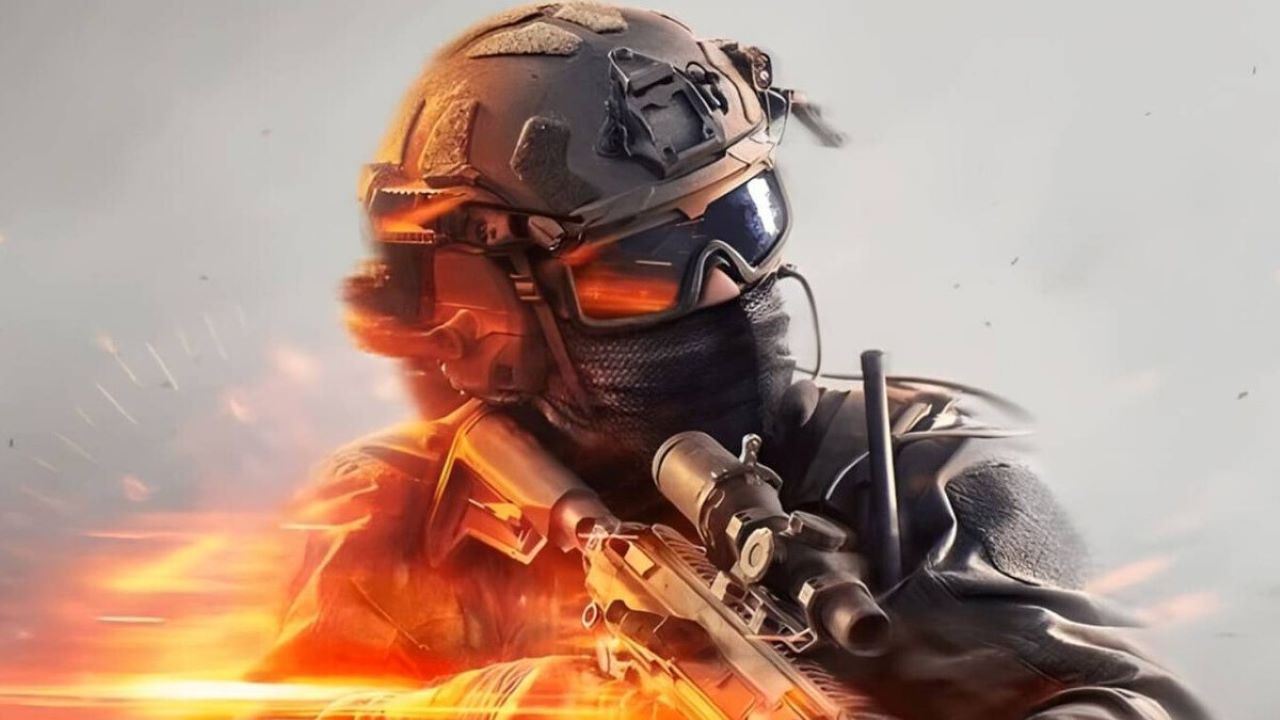
Electronic Arts, better known as EA, has presented its results for the past fiscal year, which covers from April 1, 2025, to March 31, 2026. Increasing its revenue to $8.026 billion, they have earned 9% more than in the previous fiscal year, all thanks to Battlefield. Stating that it is the best-performing Battlefield in a single fiscal year and that it has set numerous records for the franchise in a single fiscal year, the reason they have achieved these results has been thanks to this franchise. The game continues to perform […]
Electronic Arts, better known as EA, has presented its results for the past fiscal year, covering from April 1, 2025, to March 31, 2026. Increasing its revenue to $8.026 billion, they have earned 9% more than in the previous fiscal year, all thanks to Battlefield. Stating that it is the best-performing Battlefield in a single fiscal year and that it has set numerous records for the franchise in a single fiscal year, the reason they have achieved these results has been due to this franchise.
The game continues to run like a charm
This has not prevented EA from making mass layoffs at Battlefield Studios less than two months ago. Even though the game sold 7 million copies in three days, EA considered that the game performed below their expectations.
According to Andrew Wilson, CEO of EA, the credit for the company’s success this year particularly lies in “the incredibly successful launch of our flagship franchise Battlefield.” This is ironic considering they laid off a good part of the studio responsible for the game. The studio continues to release patches and seasons, building on that initial success.
Other important elements of EA’s strategy have been its football titles, EA SPORTS FC 26, FC Online, and FC Mobile, which have grown by about 5% collectively. Meanwhile, Apex Legend, a video game that faced some serious issues during 2024 and 2025, has managed to increase its revenue by 10% thanks to a change in monetization strategy and engagement in the game. Figures that make the layoffs at Battlefield Studios even more incomprehensible.
Ubisoft has started 2026 in a turbulent manner, marking a new chapter of challenges and restructuring within the company. The publisher has announced the cancellation of six games, including the highly anticipated remake of Prince of Persia: The Sands of Time, and has delayed the release of another seven titles. Additionally, the closure of its studios in Halifax and Stockholm has been confirmed, adding to the 55 previous layoffs at Massive Entertainment, which represents a severe blow to its workforce. A reorganization with potentially catastrophic results As part of this strategic reset process, Ubisoft has decided to order to […]
Ubisoft has started 2026 in a turbulent manner, marking a new chapter of challenges and restructuring within the company. The publisher has announced the cancellation of six games, including the highly anticipated remake of Prince of Persia: The Sands of Time, and has delayed the release of another seven titles. Additionally, the closure of its studios in Halifax and Stockholm has been confirmed, adding to the 55 previous layoffs at Massive Entertainment, which represents a severe blow to its workforce.
A reorganization with potentially catastrophic results
As part of this strategic reset process, Ubisoft has decided to order its employees to return to the office full-time. This change has caused discomfort among workers, who perceive the measure as a setback regarding the work flexibilities implemented during the pandemic. The Solidaires Informatique union has described the plan as “disastrous,” calling for strikes and demanding not only the expansion of remote work but also salary adjustments that reflect adequate living conditions.
Ubisoft justifies the return to an in-person model under the argument of improving collaboration and fostering a more dynamic work environment, in order to maintain its competitiveness in the AAA market. However, this policy is not well received. Employees have expressed their disagreement and have threatened with mobilizations, including a half-day strike that could include other future actions.
The CEO of Ubisoft has acknowledged that the company will face potential strikes and will seek negotiations with unions to define the conditions for returning to in-person work. The combination of studio closures and restructuring amid a tense work environment presents an uncertain outlook for the future of Ubisoft, one of the major publishers in the video game industry.
Christina Hodson, known for her work on the 2023 fiasco, The Flash, has been chosen as the new writer for the upcoming Batman movie, titled The Brave and the Bold. The news was reported by The Hollywood Reporter (THR), although there has been no official comment from DC Studios regarding this hiring. This move has raised skepticism, given that The Flash, directed by Andy Muschietti, is considered one of the major box office disappointments in the DC universe. An… interesting choice James Gunn, co-CEO of DC Studios, has stated on numerous occasions the importance of having […]
Christina Hodson, known for her work on the 2023 fiasco, The Flash, has been chosen as the new writer for the upcoming Batman movie, titled The Brave and the Bold. The news was reported by The Hollywood Reporter (THR), although there has been no official comment from DC Studios regarding this hiring. This move has raised skepticism, given that The Flash, directed by Andy Muschietti, is considered one of the major box office disappointments in the DC universe.
An… interesting choice
James Gunn, co-CEO of DC Studios, has stated on numerous occasions the importance of having fully completed and exciting scripts before moving forward with projects in the DC Universe. In this context, Gunn has pointed out that The Brave and the Bold will not begin production until after The Batman: Part Two, which is scheduled to be released in 2027, in order to avoid overlapping releases.
The appointment of Hodson and Muschietti has raised concerns among fans, as their previous film failed to capture the audience’s interest, even though Michael Keaton’s presence as Batman generated expectations. Despite their successes in the horror genre, Muschietti’s recent film did not meet expectations, raising doubts about his ability to tackle such an iconic project as Batman.
Although a release date for The Brave and the Bold has not yet been announced, viewers are eagerly awaiting more information about this and other DC productions. In the meantime, it can be expected that the news of the selection of Hodson and Muschietti will continue to generate debate and speculation among fans. Given both of their backgrounds, it can be anticipated that the film may take a darker, character-focused approach to Batman, which could result in a more promising direction.
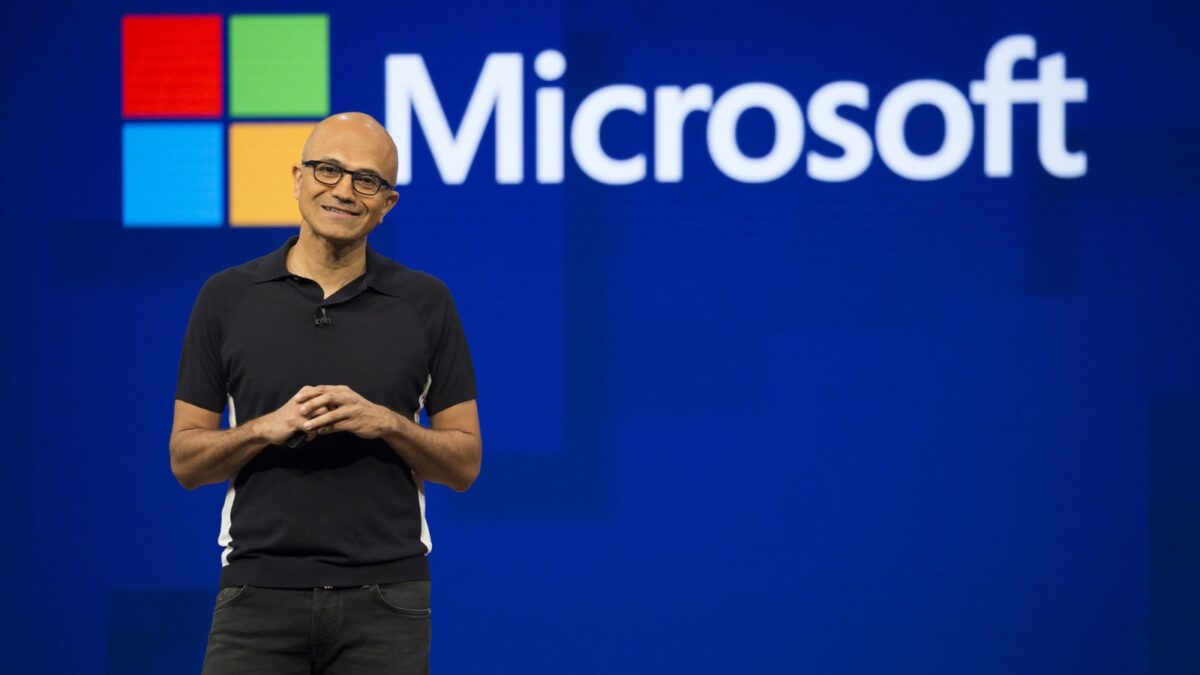
During recent statements at the World Economic Forum, Microsoft CEO Satya Nadella warned that artificial intelligence (AI) could lose public support if it is not used to improve outcomes in key areas such as health, education, and competitiveness. Nadella emphasized that both companies and job seekers must adopt AI skills to foster productivity and adapt to a constantly evolving labor market. So far, AI has not lived up to its promises. The executive also highlighted the importance of establishing a “ubiquitous energy network and […]
During recent statements at the World Economic Forum, Microsoft CEO Satya Nadella warned that artificial intelligence (AI) could lose public support if it is not used to improve outcomes in key areas such as health, education, and competitiveness. Nadella emphasized that both companies and job seekers must adopt AI skills to foster productivity and adapt to a constantly evolving labor market.
So far, AI has not lived up to the promises
The executive also highlighted the importance of establishing a “ubiquitous network of energy and tokens” for the optimal functioning of AI companies. This challenge is affecting the availability of hardware, such as RAM, which has become scarce and expensive. Based on this, Nadella explained that organizations must actively engage in the adoption of AI technologies to avoid falling behind.
A notable example he provided was that of doctors who, by using AI for administrative tasks such as transcribing notes and managing records, can spend more time with their patients. This, according to Nadella, results in benefits for both healthcare providers and patients, improving the efficiency of the sector. Despite this, concerns about the effectiveness of AI persist; a recent report indicated that 95% of organizations have not achieved a significant return on investment after implementing these technologies.
Nadella closed his speech defending AI as a potential driver of global economic growth, insisting that its impact should not be limited to a technology bubble environment. This growth, according to him, should be reflected in a real increase in productivity worldwide, beyond mere investment in infrastructure and business partnerships. However, many remain skeptical about its effectiveness and the ability of AI to deliver on its promises.
The Epic Games Store, despite the massive investment it has made to attract players, does not seem to be the preferred option in the competitive market of digital PC game stores. Recent data suggests that, although the number of registered users on the platform has grown, revenues have not shown a proportional increase, raising serious doubts about the effectiveness of Epic Games’ strategy. A huge success giving it away The initial appeal of free video games has led to an increase in the user base, but this strategy does not result […]
The Epic Games Store, despite the massive investment it has made to attract players, does not seem to be the preferred option in the competitive market of digital PC game stores. Recent data suggests that, although the number of registered users on the platform has grown, revenues have not shown a proportional increase, raising serious doubts about the effectiveness of Epic Games’ strategy.
A huge success to give it away
The initial appeal of free video games has led to an increase in the user base, but this strategy is not enough to retain players. As Dave Oshry, CEO of New Blood, mentions, the promotion of free games like Blood West has resulted in a notable increase in Steam sales, indicating that players prefer to spend their money on direct competitors that often offer a more satisfying experience.
Developers like Adrian Chmielarz, creator of Painkiller, have emphasized that the differences in user experience between Steam and the Epic Games Store are vast. This comment reinforces the perception that the Epic Games Store faces a considerable challenge in competing in terms of convenience and user satisfaction. Despite significant investments, it seems that Epic is unable to close the existing gap with Steam.
The current data is a wake-up call for Tim Sweeney and his team, who must rethink their approach if they want to improve player retention and their revenue. The current situation reflects not only a struggle for consumer preference but also the need to innovate in a market where competition is fierce and player expectations are increasingly high.