Many of us were saved by the pandemic at its harshest moment, and it has been a crucial saga in the history of video games (cute and not cute) for 25 years. I am, of course, talking about Animal Crossing, which is not only one of the best Nintendo sagas, but has also given rise to some of the most beloved characters in the industry, the funniest memes, and, of course, the most incredible cuteness. Little did they expect, however, that in 2020 it would also suddenly become a political symbol that almost destabilized the government of China. Yes, just as it sounds.
¡Ha pasado mucho tiempo desde que viniste al pueblo! ¡Toma un banner!
It’s hard to imagine, amidst Rese T. Ado’s frustrations, the search for fossils for the museum, and the constant planting of apples and pears, that someone could be offended because of Animal Crossing. Since its birth in Dobutso no Mori on April 14, 2001, exclusively in Japan, the saga has always been there, with five main games and a handful of more or less successful spin-offs. In fact, it has practically survived without any controversies beyond microtransactions in its mobile version or some racist stereotypes and cultural appropriation.
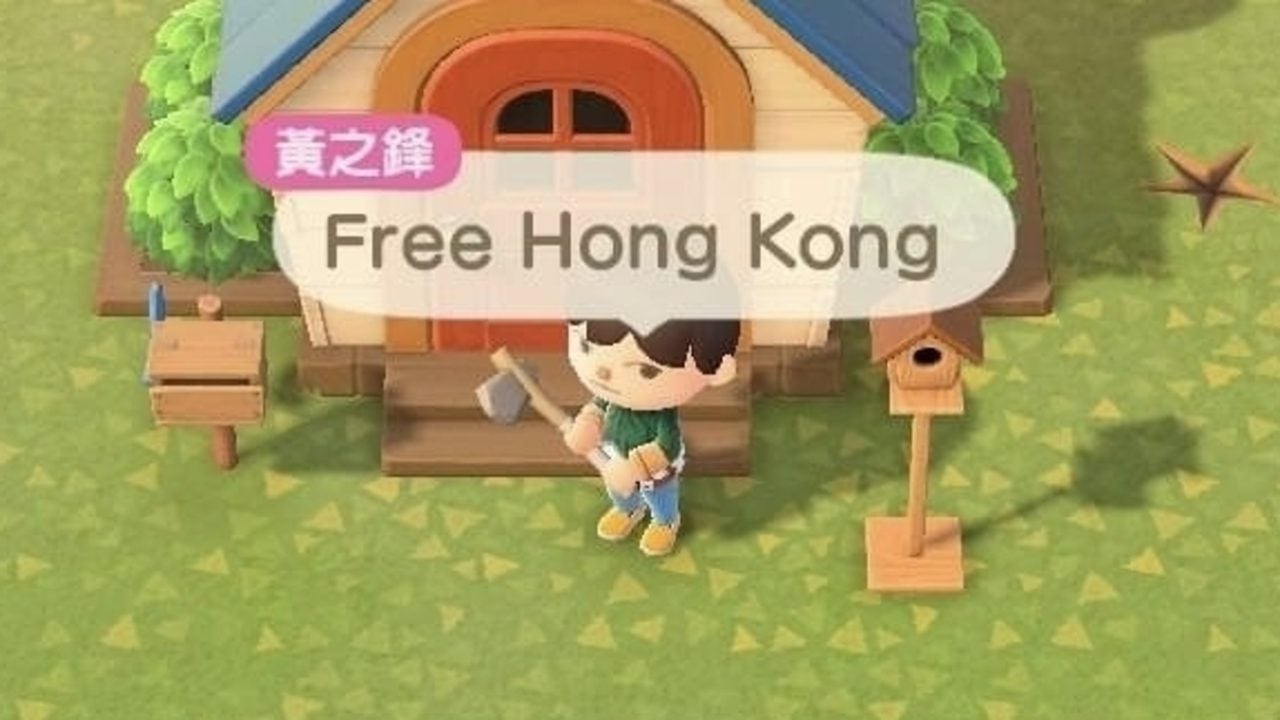
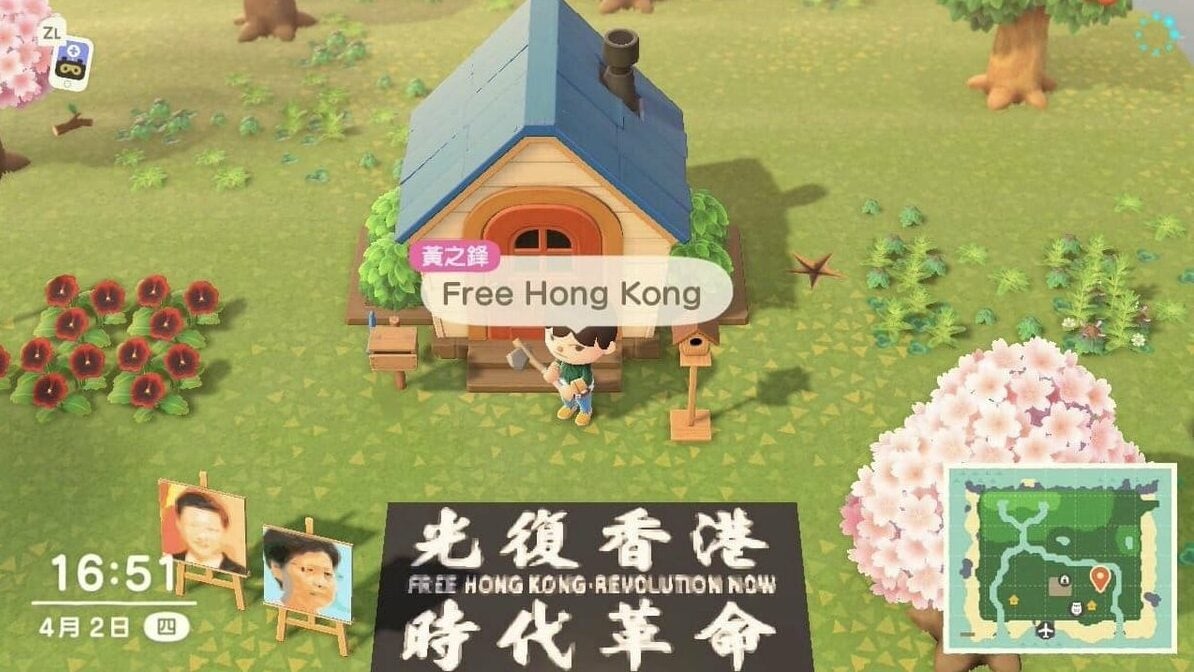
At least, that’s what we thought until, during the COVID-19 pandemic, China banned the sale of Animal Crossing: New Horizons for Switch because it was being used as a vehicle for protest in Hong Kong. Everything was fine until Nintendo allowed residents to travel to other islands: while the rest of the world used it to sell turnips at the best price, in Hong Kong they used it as a way to fight for their rights and organize, creating posters that read “Free Hong Kong, revolution now” or derogatory posters towards Xi Jinping and the authorities of the country. After the revolution, we can stop by the Able Sisters’ shop if that’s the case.
What happened? Well, for a while… Nothing. It’s true that Animal Crossing could no longer be sold as such, but on sites like TaoBao, it was renamed and no one in the government seemed to care. If you wanted the Nintendo game, you simply had to search for it as “Man picks up branches” and buy it normally. It’s not the first time something similar happened, of course, and the Chinese were prepared: for example, GTA V, which was banned by the government, was sold under the name “3 Guys 1 Dog”. In the end, the Chinese government did veto the alternative name and ordered the servers to be shut down to prevent an online uprising, so everyone was left alone on their island planting tulips.
Nintendo did not sit idly by, of course. If you are thinking “Of course! They fought for freedom of expression!” it means you don’t know Nintendo: on November 19, 2020, they imposed a code of conduct that explicitly prohibited using it for political activities. The game went back on sale and in Hong Kong they found other ways to rise up against the system (once COVID was over, they indeed did it in person).
This is not the first time that video games have been used for protest in Hong Kong: in December 2019, players used a VPN to access the Chinese servers of GTA Online, customized their avatars, and set out to commit virtual terrorism: they vandalized train stations, spilled oil, and caused all kinds of damage on the Chinese server, until players from the country reacted by re-customizing their characters as police and fighting against them. So, let them say that video games are not politics!
