Nowadays, Nintendo does not allow you to do anything with any of their characters if you haven’t licensed them before. And I’m not talking about cameos in TV shows or video games, but even in non-profit children’s plays or YouTube parodies. However, there was a time when they were selling them off, aware that the money they were making compensated for the bad time they would have if the game wasn’t good enough. And this is where the moment when Mario switched to MS-DOS comes in. And, indeed, it wasn’t good.

Mamma mia
In the 80s, it was normal for console games to be ported to other platforms sooner or later: ‘Donkey Kong’ and ‘Mario Bros’ were released on Atari, Commodore or Amstrad without any problem: many times they were minor versions of the original arcade, but as long as the money kept coming in, everything was fine.
There were games (versions of ‘Mario Bros’) that didn’t even make it to Nintendo consoles, like ‘Punch Ball Mario Bros’ or ‘Mario Bros Special’. Even the classic ‘Super Mario Bros’ ended up coming out on computers of the time in a “special edition”. And then, in the early 90s, with the Super Nintendo about to be released and Game Boy breaking all expectations, Mario made his first appearance on PC.
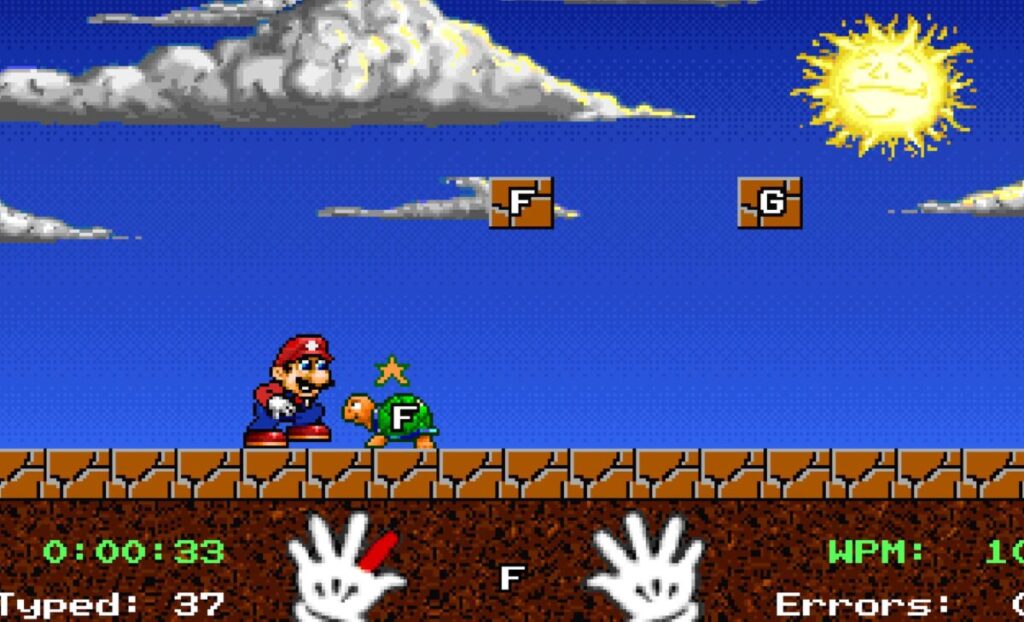
We all know -more or less- the misadventures of Nintendo’s mascot in MS-DOS: games like ‘Mario Teaches Typing’, ‘Mario is missing!’, ‘Mario’s Time Machine’ or the preschool games ‘Mario’s early years!’. All of them had an educational purpose: teaching history, numbers or typing. In 1996, ‘Mario FUNdamentals’, a strange compilation of board games like checkers, dominoes, backgammon or Yahtzee, put an end to the disastrous money-grabbing adventure.
Mario doesn’t paint anything
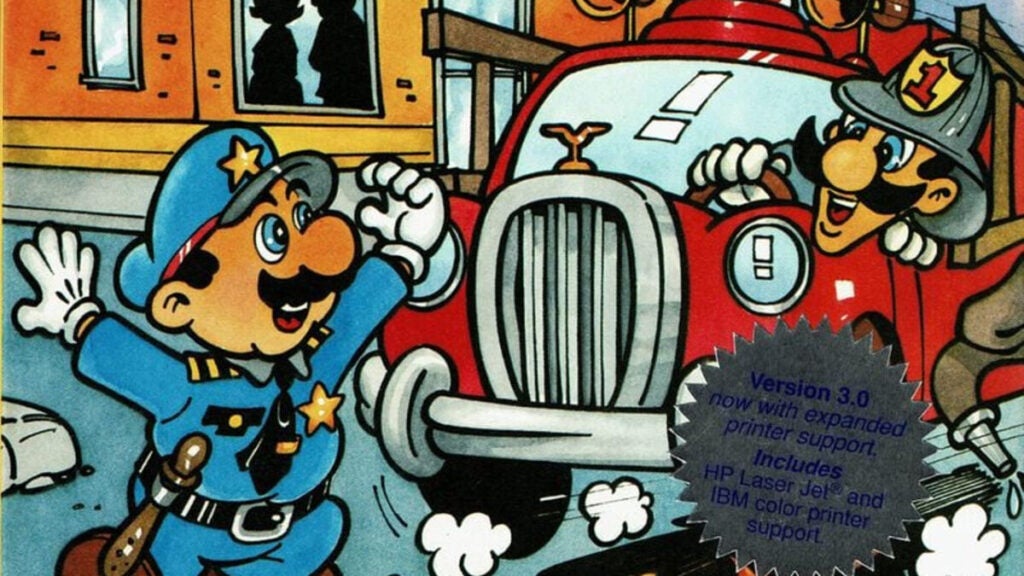
But do you know which was the first of these games for MS-DOS? Probably neither Nintendo nor Merit Software, who distributed the game (and ended up closing in 1996 with the highlight being the ‘Micro Machines’ for Game Boy), remember it. It was ‘Super Mario Bros & Friends: When I Grow Up’, on the cover of which we saw Mario, dressed as a traffic guard, stopping a fire truck driven by Luigi while in the background we could read “Doctor’s Office” and a dog ran away to avoid being run over. But what is this?
If they tell you “Think of a cheap game about Mario” it’s most likely that you think of a somewhat crappy platformer, or maybe even a RPG made without much effort. However, what Brian A. Rice came up with was much more disappointing: a game to paint Mario and company in different professions using the mouse. Look no further: this is what you get.
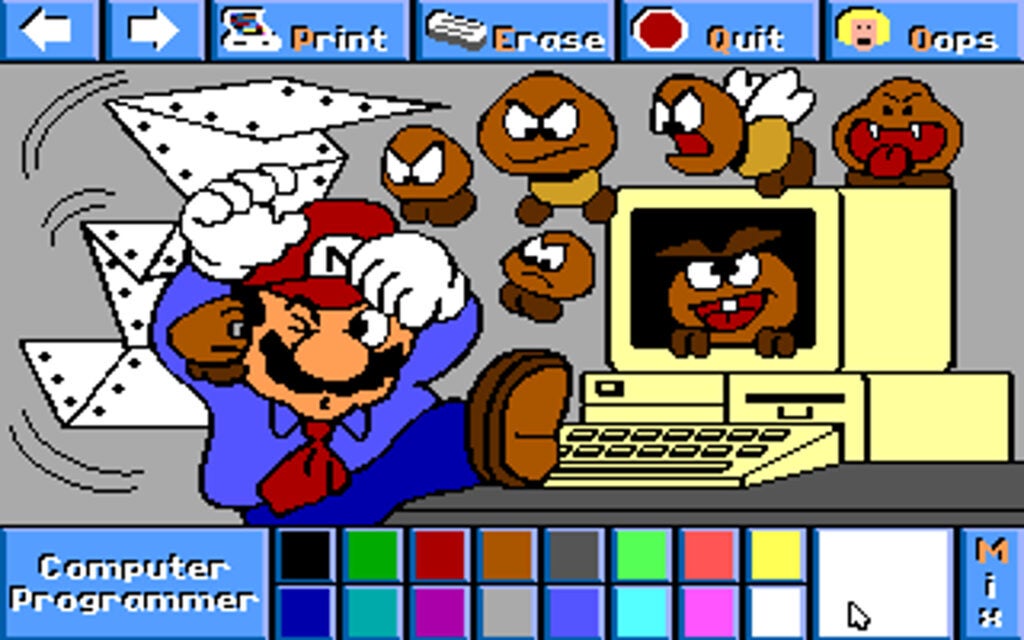
In total, ‘When I Grow Up’ showed a total of 31 images that displayed different professions, from veterinarian to journalists, passing through astronaut, farmer or professional athlete. All of them had their explanation and connection with the Mario world through a small text (for example, “Mario, the programmer, is having a hard time fighting against Goombas and other annoying bugs. He knew that programmers talked about having “bugs” in their programs from time to time, but this is ridiculous!”). At least they cared about connecting it, hey, something is something.
Mario, at the INEM
It was a professional illustrator who made these 31 images, Rick Incrocci, who according to his website is still active, and the animations that appeared when completing each drawing were made by Glenn Leszczak, who would continue to do game art like ‘World Class Fussball’ for a few more years before disappearing. That’s right: a non-game game created by only two people supervised by their boss, Brian A. Rice. It turned out as it did.
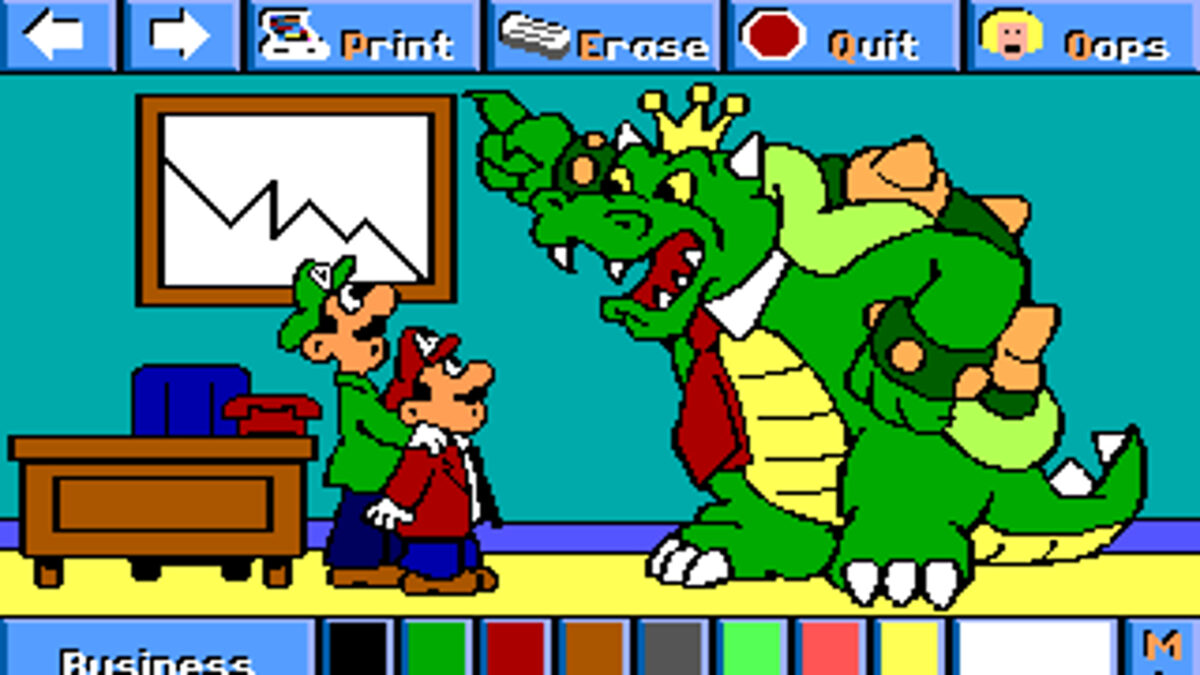
In some illustrations they even allowed themselves the luxury of taking out Link (as a “travel guide” or waiting for “Chef Mario’s” food) or imagining situations where Bowser was judged by Peach. Even in one of the illustrations, the househusband one, it is pointed out that Mario has children. Nowadays Nintendo would have said “Hold your horses”, but it was 1992 and anything goes.
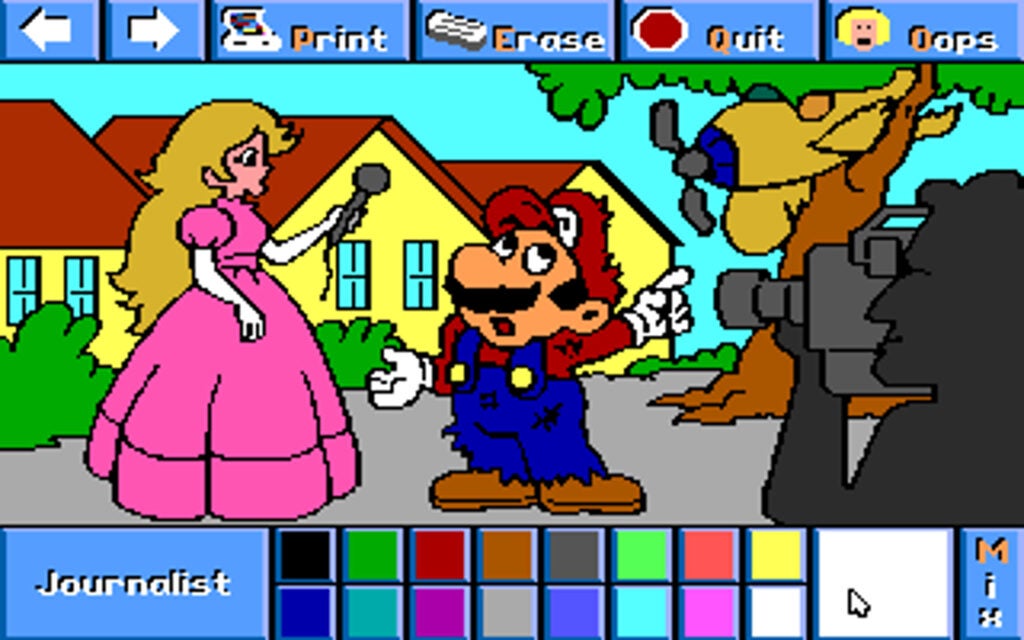
‘Super Mario Bros & Friends: When I Grow Up’ was released in 1991 and an improved version appeared on March 24, 1992 in the United States, where it never left. As a curiosity, it allowed the use of up to 256 colors (most of them repeated, it must be said) and did not allow drawing new lines to the pre-existing drawings. In July 1992, ‘Mario Paint’ appeared, forever making this pseudo-game disappear. One that has been lost in the ether of oblivion even for the biggest fans of Nintendo. Mamma mia!
