Android 16 will arrive much sooner than you think

This year, the Android world is somewhat agitated. The launch of Android 15 continues to face many problems and delays (brands like Samsung won’t adopt it until 2025). Amid this transition, Google has decided it was a good time to announce the development plan for Android 16. From the developers’ blog, Google states that from now on, Android will have more frequent releases. The first example of this will be Android 16, which would land in the second quarter of 2025. This change in strategy would serve to accelerate innovation in applications and devices, according to Google. Let’s remember that […]

This year, the Android world is somewhat agitated. The release of Android 15 continues to face many problems and delays (brands like Samsung will not adopt it until 2025). Amidst this transition, Google has decided it was a good time to announce the development plan for Android 16.

Android 14 DOWNLOAD

From the developer blog, Google states that from now on, Android will have more frequent releases. The first example of this will be Android 16, which would land in the second quarter of 2025. This change in strategy would serve to accelerate innovation in applications and devices, according to Google.

Let’s remember that the official release of Android 15 took place in September 2024, so there would be not even a year of separation with its next version. With this advancement, Android 16 would arrive alongside the upcoming Google Pixel, which will also be released in the second quarter of 2025.

android google pixel 9

Intel abandons its position after more than 20 years and Nvidia seizes the opportunity to take over

As we were saying, Intel has been removed from the Dow Jones Industrial Average after 25 years of being part of it, in the latest of a series of setbacks for the chip manufacturer that was recently speculated to be acquired by Qualcomm. Nvidia will take Intel’s place and join the list just a few weeks after reaching a market capitalization of 3 trillion dollars for the second time in 2024, currently ranking behind Apple as the second most valuable company in the world. Intel’s shares have lost 51% in 2024 up to the […]

As we mentioned, Intel has been removed from the Dow Jones Industrial Average index after 25 years of presence, in the latest of a series of setbacks for the chip manufacturer that until recently was speculated to be acquired by Qualcomm.

GeForce Experience DOWNLOAD

Nvidia will take Intel’s place and join the list just a few weeks after reaching a market capitalization of 3 trillion dollars for the second time in 2024, currently ranking behind Apple as the second most valuable company in the world.

Intel’s shares have lost 51% in 2024 to date, making them the worst-performing in the entire Dow Jones index. Its market capitalization is slightly below 99 billion dollars.

What does leaving the index mean for Intel?

S&P Dow Jones Indices has confirmed that Nvidia, along with the paint manufacturing company Sherwin-Williams, will be added to the index. Sherwin-Williams will replace Down Inc.

Intel’s exit from the index and Nvidia’s inclusion highlight the company’s growing market dominance, driven by a significant increase in interest in artificial intelligence chips.

The price of Nvidia’s shares has gone from about 14 dollars in November 2022 to 135.37 dollars currently.

Intel, which was once one of the main players in the chip market, lost many of the early AI opportunities, which gave Nvidia room to dominate a section of the market that supplies the hyperscalers powering many of the AI servers we rely on.

In August 2024, Intel laid off 15,000 workers, 15% of its workforce, due to high costs and low margins, and its CEO, Pat Gelsinger, aimed to save 10 billion dollars by 2025. All these efforts have not been enough to keep the company competitive in the market, and it seems to be on a downward slope.

One of the best dark fantasy films in history, directed by Guillermo del Toro, arrives on Prime Video

November has arrived on streaming platforms with a huge amount of new additions to their catalog, and among all of them, the premieres on Amazon Prime Video stand out. With the new month, movies like Die Hard, Dune, Gladiator, or Men have been added. But among all of them, a dark fantasy gem stands out that reached the top during the 2000s and managed to elevate a director who has continued to rise as one of the best genre filmmakers in history. Pan’s Labyrinth, directed by the visionary filmmaker Guillermo del Toro, ends […]

November has arrived on streaming platforms with a huge amount of new content in its catalog, and among all of them, the premieres on Amazon Prime Video stand out. With the new month, movies like Die Hard, Dune, Gladiator, or Men have been added. But among all, a dark fantasy gem stands out that reached its peak during the 2000s and managed to elevate a director who has continued to rise as one of the best genre filmmakers in history.

The Labyrinth of the Faun, directed by visionary filmmaker Guillermo del Toro, has just landed on Prime Video to the delight of all fans of horror and fantasy. Released in 2006, the Spanish film is one of the great new classics that fans return to time and again. But what makes it so special and why is it worth revisiting on Prime Video?

A faun comes to see me

Set in Francoist Spain in 1944, Pan’s Labyrinth follows Ofelia (Ivana Baquero), a 10-year-old girl who moves to the countryside with her mother Carmen (Ariadna Gil), who is pregnant and married to a ruthless army captain. Soon, Ofelia creates her own secret and dangerous world, full of mythical creatures and trials she must face to escape her dark reality.

Amazon Prime Video DOWNLOAD

Guided by an enigmatic faun, Ofelia must complete a series of challenges that will lead her to discover if she truly is the princess of an underground world. However, Ofelia’s innocence and fantasy clash head-on with the brutality of the real world, in a war where the cruelty and oppression of adults reach chilling levels.

Undoubtedly, Pan’s Labyrinth is one of the most impressive works of recent cinema. At the time, it featured a Guillermo del Toro in a state of grace who put everything on the line in this gothic tale before moving forward with his filmography that continued with works like The Shape of Water.

Will Aperture return to Mac? What could happen now that Apple buys Pixelmator

The recent acquisition of Pixelmator by Apple has sparked great interest. With this acquisition, Apple takes over one of the most popular editing tools in its ecosystem. One that has already demonstrated its capability in the world of image and photo editing. The question many are now asking is: Could Apple be preparing the return of Aperture, its former professional editing application? Pixelmator, a company based in Vilnius, Lithuania, has developed applications over its 17-year history that have competed head-to-head with much […]

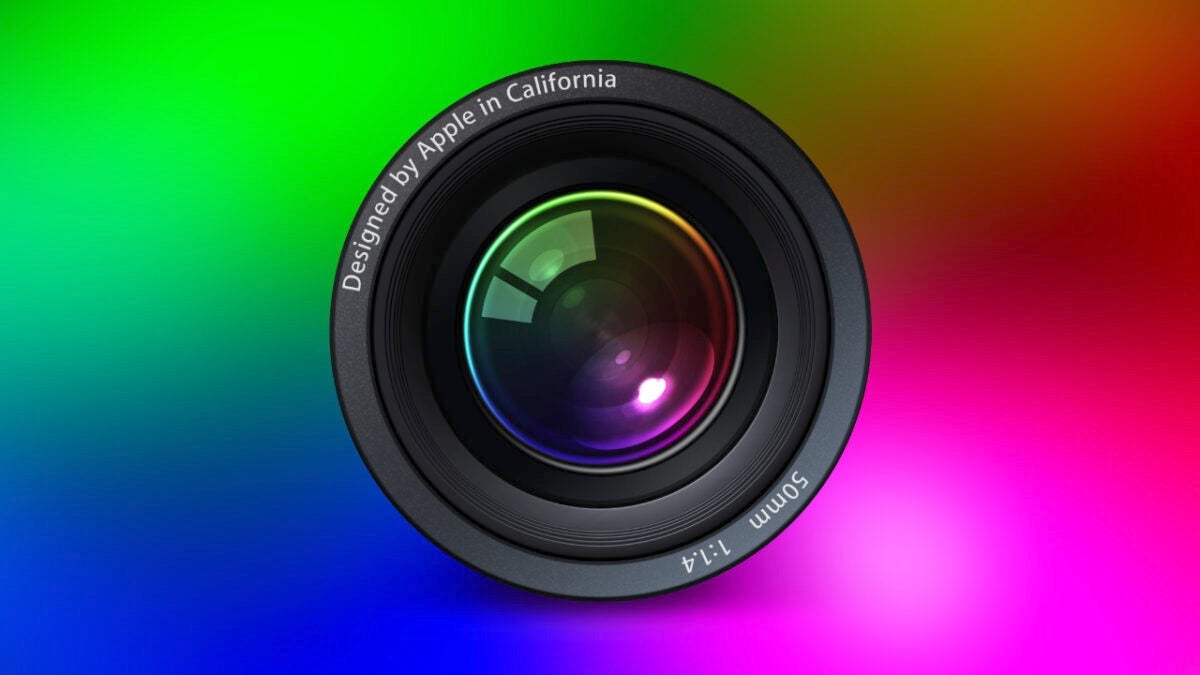
The recent acquisition of Pixelmator by Apple has sparked great interest. With this acquisition, Apple acquires one of the most popular editing tools in its ecosystem. One that has already proven its capability in the world of image and photo editing. The question many are now asking is: Could Apple be preparing the return of Aperture, its former professional editing application?

Apple TV+ SUBSCRIBE

Pixelmator, a company based in Vilnius, Lithuania, has developed applications over its 17-year history that have competed head-to-head with much more expensive alternatives. Pixelmator Pro and Photomator stand out for offering powerful image editing, artificial intelligence and machine learning features, and very deep integration with Apple devices. From background removal tools to super-resolution features, Pixelmator’s apps have caught attention, and with that, Apple’s decision to acquire Pixelmator opens up new possibilities for the evolution of its products and services aimed at photo editing.

Aperture, Apple’s professional approach to photography

Aperture, developed by Apple, was an application for photo management and editing aimed at professional photographers and advanced amateurs. Launched in 2005, Aperture offered us a variety of tools that competed with products like Adobe Lightroom, from organizing and classifying photos to editing in RAW.

In 2014, Apple decided to discontinue the development of Aperture, which left a gap in its ecosystem for those of us who needed a well-integrated professional solution. Apple chose to focus on the Photos app, which, although more than functional, powerful, and easy to use, is more oriented towards occasional use.

Over time, we have become accustomed to using third-party options for editing. Among these options, Pixelmator has been one of the most prominent, providing an extremely well-designed interface, a language and approach very similar to Apple’s, and truly powerful tools. Now, with the purchase of Pixelmator, the door opens for Apple to bring back Aperture.

Could Apple bring back Aperture?

Apple has shown in the past that its acquisitions are not merely a technology absorption, but an opportunity to enhance its ecosystem. We find examples in the acquisition of Dark Sky in 2020, which allowed the integration of better weather data into the Weather app, or Workflow in 2017, which resulted in the creation of Shortcuts, now central to the use of our devices and for the future use of Apple Intelligence and Siri. Following this pattern, the purchase of Pixelmator should not just result in the app being free and the responsibility for its evolution becoming Apple’s.

Initially yes, of course, the same statement from Pixelmator states that “for now there will be no material changes” in the apps, but that “we should stay alert to what is coming.”

The question here is, will we see a dedicated app or will Pixelmator integrate into the Photos app? It’s too early to draw conclusions, but the depth of the tools offered by Pixelmator calls for a dedicated tool. Apple could eventually integrate some of Pixelmator’s tools into its native applications, but it doesn’t seem like all of them.

Although it must be acknowledged that it seems unlikely that Apple will reclaim the name “Aperture” for its new professional photo editing software, what does seem clear is that we will go beyond Photos. Just as there is iMovie and then Final Cut, the result of this purchase would have to follow a similar path.

Apple TV+ SUBSCRIBE

We are in the realm of speculation, no doubt, but with some backing from past experiences. In any case, the acquisition of Pixelmator represents a great opportunity for Apple to once again offer photographers and professionals their own tool. Whether through an update to Photos, a new version of Aperture, or a completely new application, this purchase is set to mark a significant advancement for those of us who use Apple devices.