What happened to Chester Cheetah, the Cheetos mascot who had a crossover with Sonic and Angry Birds

With modernity and the obsession with adolescent health, we have gained many things (such as, for example, life expectancy), but in exchange, we have lost the pets of greasy food. Some still survive in cereal boxes, like Tony the Tiger, Coco the Monkey, or the frog from Smacks, but they are increasingly disappearing, especially in the European and Latin American markets. However, there is someone recognizable worldwide who, in some way, has managed to survive: a cheetah that is always modern and eternally cool, who was the star, for years, of the commercials […]

With modernity and the obsession with adolescent health, we have gained many things (such as, for example, life expectancy), but in exchange, we have lost our greasy food mascots. A few still survive in cereal boxes, like Tony the Tiger, Coco the Monkey, or the Smacks frog, but they are disappearing more and more, especially in the European and Latin American markets. However, there is someone recognizable worldwide who, in some way, has managed to survive: a always modern and eternally cool cheetah who was the star, for years, of the Cheetos commercials and packaging. However, do we really know who Chester Cheetah is and where the hell he came from? Come, because his story is much more incredible than it seems.

Where is Poochie?

Before Chester arrived at the brand’s packaging and advertising, the brand had another mascot: the Cheetos Mouse, which lasted throughout the 1970s and starred in all the marketing machinery until its gradual retirement. Interestingly, there are countries that resisted him. For example, in Spain, copying and modernizing his aesthetic, they created the Masqueseros, four mice who acted as musketeers: Torciditos, Bolitas, Ricitos, and the unfortunate Tubitos, who disappeared quickly (in addition to other characters like Count Drakis or the Gang). However, everything changed when the command center decided to standardize all the packaging in the world with the same mascot.

Chester was born in 1986, and was created by Brad Morgan (illustrator) and Stephen Kane (scriptwriter for the ads). In his first appearance, Chester was presented as a laid-back guy until he smelled a bag of Cheetos, because he had no choice but to do all kinds of crazy things to get it. “It’s not easy being cheesy“, he would conclude after giving himself a bump on the head. It was such a hit that it sparked a little “Chester-mania”: he totally matched the tone of the mid-80s and early 90s: he wore sunglasses, rode a skateboard, and did everything he could to be the coolest of all mascots.

At that time, Chester, drawn in 2D, was scheming all sorts of ways to get his hands on Cheetos, in the style of the Coyote trying to catch the Road Runner, and his success was so great that in 1992 he was about to star in his own television show for Fox Kids, Yo! It’s the Chester Cheetah Show!. Obviously, it was canceled before airing for an obvious reason: it was advertising. “It’s not a debate about quality. Any cartoon is fine, it’s legal, as long as it’s not an ad”, said television activist Peggy Carren at the time. In the series, Chester would have new friends, like a funky monkey, a rock dog, and a rapping hippo. However, as far as we know, it never got past the storyboard phase (although maybe someday, like good lost media, it will come to light).
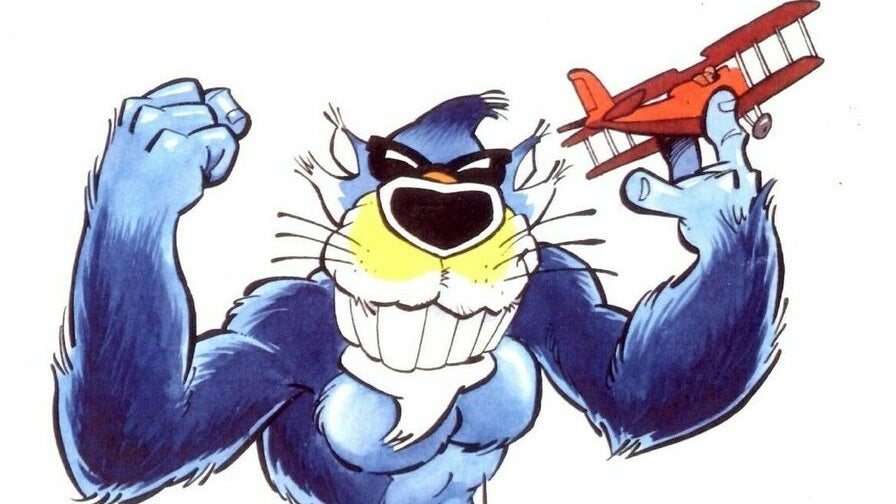
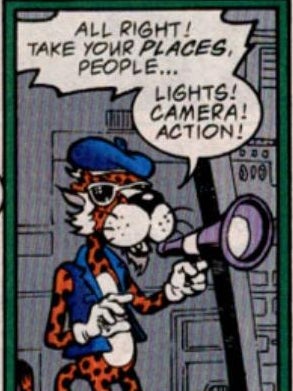
What it did have were two video games: Chester Cheetah: Too Cool to Fool and Chester Cheetah: Wild Wild Quest. It may seem normal if you’re a kid from the 90s, when everything was basically an advertisement, but right now it’s absolutely crazy to make video games about advertising mascots… and to make kids pay for them! But well, it was Chester, the mascot that managed to survive even the transition to CGI, making him the protagonist and finally allowing him to eat Cheetos at the end of the commercials. How could he not be allowed to do everything? He even had a crossover with Sonic in the blue hedgehog’s comics, acting as a film director. What? I already told you that Chester-mania went much further than anyone expected.
Moreover: just as famous characters now appear in Fortnite and Roblox, Chester appeared in Plants vs Zombies (adding the characters Chester Chomper and Dr. Chester) and even in Angry Birds, with several promotional games where the Cheetos mascot helped the birds recover their snack bags. There were a few free levels, but sufficient to make it clear that the Frito-Lay mascot was here to stay. And here we are: 40 years after his arrival and still having to see him everywhere every time you want to skip your diet. Yes, times are not good for fans of the Cheetos Mouse, I’m afraid.
Pluribus’ ending could have been much more bland, but an Apple executive suggested something else

The first season of Pluribus has ended, and it did so with an ending surprising enough that we’re still talking about it. Most interesting of all is that the final moment that has left us with so many questions wasn’t what the creators originally planned, and the reason it changed is directly tied to a recommendation from one of Apple’s executives. Let’s see how it went from a more restrained wrap-up to a full-blown “mic drop”.

Heads-up: from here on, there are major spoilers for the first season.

A much more restrained original ending

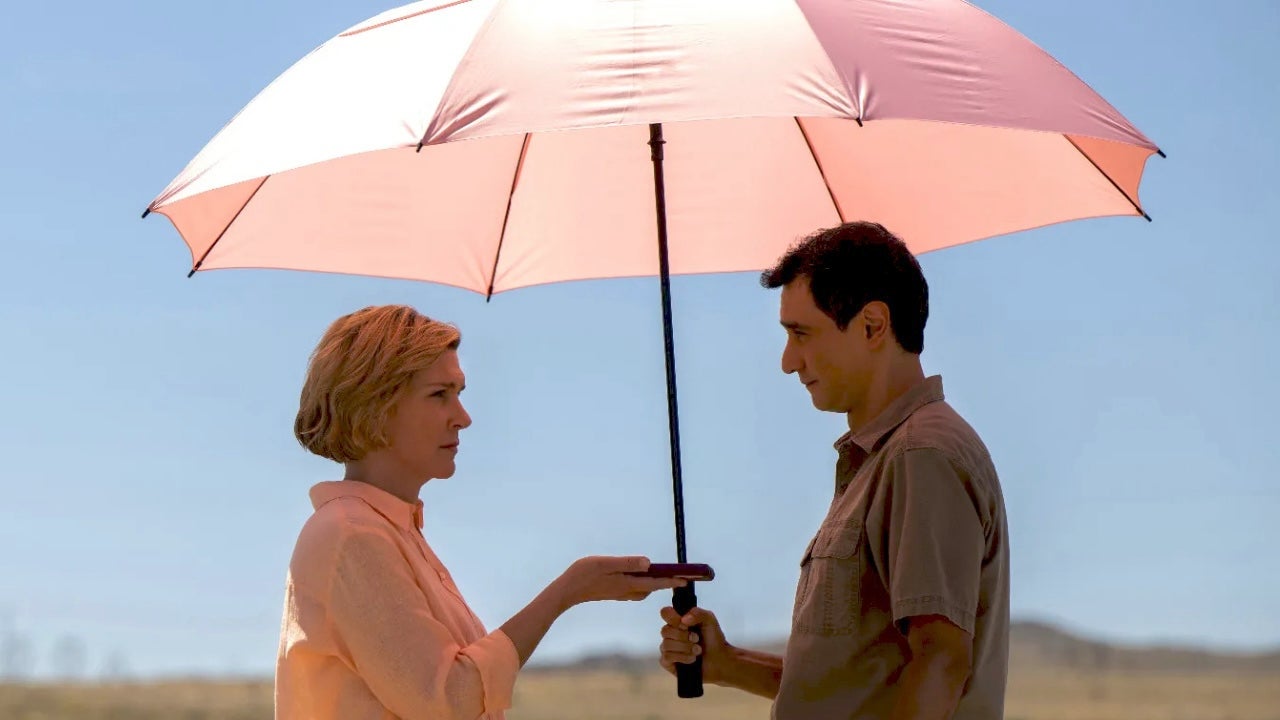
In its initial version, the season finale of Pluribus was a subtle, fairly quiet closing beat, focused on Carol’s development. As Gordon Smith, the show’s director, explained on the official podcast, the idea was for her to return home and silently accept Manousos’ plan. A kind of “secret handshake” that marked the beginning of their collaboration to save the world.

It was a coherent ending and, in a way, an elegant one, but it also left the season without a big moment that would make us look forward even more eagerly to the next. Carol’s relationship with the Others stayed implicit, without major twists or scenes. The scripts Apple received conveyed an interesting feeling, but not with enough punch for a season finale in a series of this scale, and Apple didn’t take long to point that out.

Apple’s question that changes everything

After reviewing the early scripts, Apple’s executives sent the creators a note with a simple thought: “We’re not sure this is a big enough ending for a season.” Vince Gilligan and Gordon Smith say Apple never forced any change, but it did raise the question of whether that outcome was enough for a show like Pluribus.

That nudge led the team to rethink the final sequence. Compared with the softer versions, the idea emerged that would end up defining the entire season: Carol asking for a weapon of mass destruction. The simple act of asking the Others to hand her an atomic bomb is, according to the creators, like “drawing a line in the sand”—a moment that doesn’t just surprise, but forcefully sets the show’s future.

The decision also links back to a detail from earlier episodes, making the ending fit with what we’d already seen. The creators acknowledge that Apple’s suggestion made the ending better than they had initially imagined, giving the season a climax that will keep people talking until the show returns.

An explosive ending and a long wait ahead

Carol, fully aware of what she’s doing, receives at her home the most unexpected delivery: a nuclear weapon. The scene is so direct and forceful that it redefines how we see the character and the world of Pluribus, and it makes clear that season two will begin from a very specific context.

So now all that’s left is to find out when we’ll see that ending start to make sense. Vince Gilligan has already hinted the wait will be long, since the team needs time to fine-tune every detail of the story, even though its second season was confirmed before the premiere.

While Apple TV has become the home of series on the level of Severance or Ted LassoPluribus now once again shows what the service is capable of. A series that has received all kinds of praise, and one in which the company’s own executives get involved to achieve the best results.

If there are no more Avatar movies, James Cameron knows how the story will continue

The production of ‘Avatar: Fire and Ash’ has achieved a worldwide gross of 760 million dollars. With these numbers, the film has positioned itself as the sixth highest-grossing of 2025, approaching ‘Jurassic World: The Rebirth’, which reached a total of 869 million. However, despite this box office success, its director, James Cameron, expresses uncertainty regarding the future of the franchise. The Seamless Plan In a recent interview with Entertainment Weekly, Cameron acknowledged that he is not sure he can carry out the planned sequels, ‘Avatar 4’ and ‘Avatar 5’. Despite […]

The production of ‘Avatar: Fire and Ash’ has achieved a worldwide gross of 760 million dollars. With these numbers, the film has positioned itself as the sixth highest-grossing of 2025, approaching ‘Jurassic World: The Rebirth’, which reached a total of 869 million. However, despite this box office success, its director, James Cameron, expresses uncertainty regarding the future of the franchise.

The Seamless Plan B

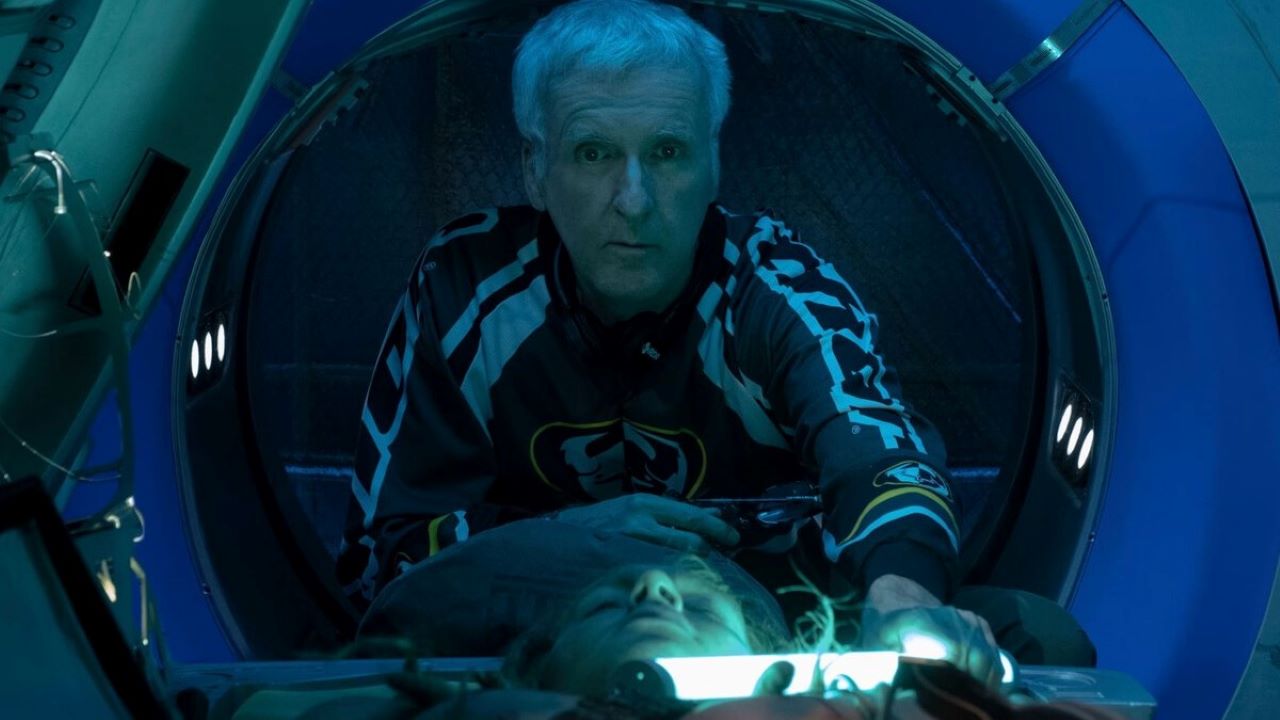
In a recent interview with Entertainment Weekly, Cameron acknowledged that he is not sure he can carry out the planned sequels, ‘Avatar 4’ and ‘Avatar 5’. Although the initial plans contemplated that these installments would take place on planet Earth, the filmmaker seems ready to adapt his ideas to a different format. If the sequels do not materialize, Cameron has suggested the possibility of turning the scripts into novels, ensuring that the narrative work done does not go to waste.

Despite these challenges, Cameron has opted for a cautious approach, preferring to move step by step in building the future of the ‘Avatar’ saga. This reflects his commitment to the franchise and his desire to offer a rich and satisfying narrative. While the outlook is uncertain for future films, the current installment continues to generate interest and discussion among fans and critics, demonstrating that the world of Pandora still has much to offer. Cameron has emphasized the importance of continuing to explore the ‘Avatar’ universe in a careful and thoughtful manner. We still have Avatar for a while.

Apple doesn't want its foldable iPhone to have wrinkles on the screen: is there a solution?

Apple has decided to delay the launch of its highly anticipated foldable iPhone due to concerns about the available materials that would ensure the quality feel characteristic of its devices. The company wants to ensure that the new model does not have visible folds or wrinkles to the touch, which represents a significant challenge in the design of foldable phones. According to reports from China, Apple is testing ultra-thin flexible glass (UFG) panels, an innovative material that adjusts its thickness according to the area of the screen, thus allowing for a continuous surface without perceptible blockages. The goal is […]

Apple has decided to delay the launch of its highly anticipated iPhone foldable due to concerns about the available materials that would ensure the quality feel that characterizes its devices.

The company wants to ensure that the new model does not have visible creases or wrinkles to the touch, which represents a significant challenge in the design of foldable phones.

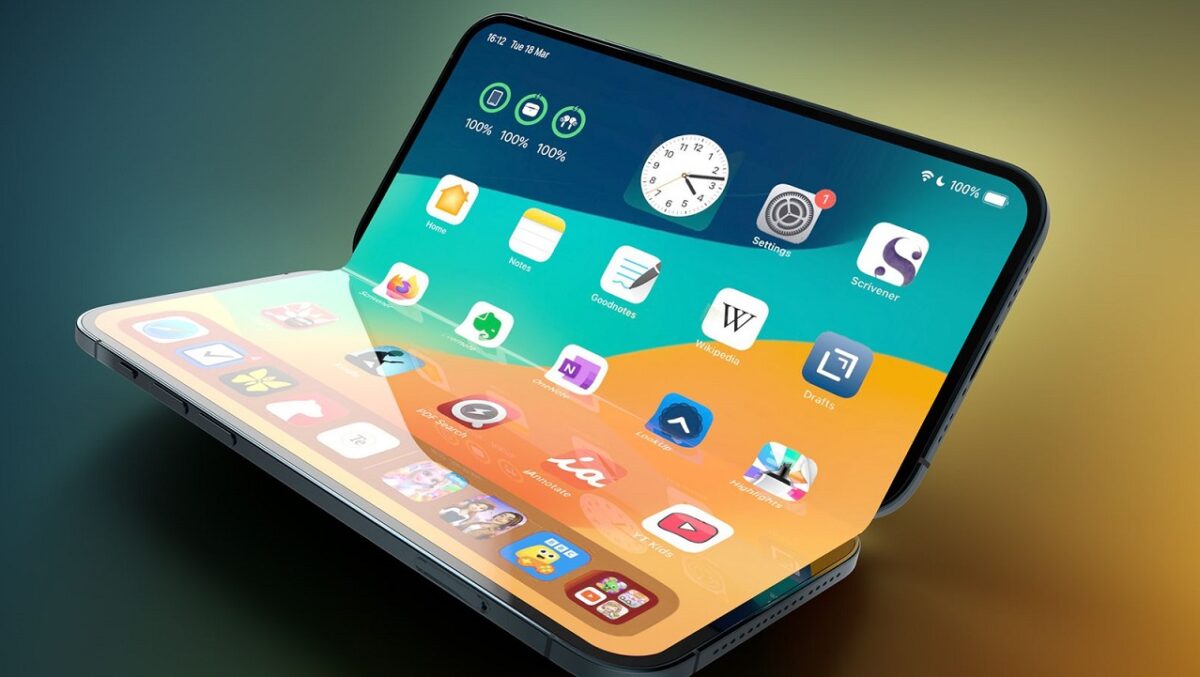
According to reports from China, Apple is testing ultra-thin flexible glass (UFG) panels, an innovative material that adjusts its thickness according to the area of the screen, thus allowing for a continuous surface with no noticeable blockages.

The goal is to defeat Samsung on its own turf

This development could make a substantial difference, as conventional ultra-thin crystals (UTG) tend to deform over time and are prone to generating visible wrinkles at the hinge area.

Currently, Apple is in the design and manufacturing validation phase, which indicates that the core hardware of the iPhone has been finalized.

This stage is critical, as it allows the company to evaluate high-risk components, such as the new flexible glass, without disrupting the production schedule. Rumors suggest that Apple’s first foldable iPhone will be unveiled in 2026, alongside the iPhone 18 Pro models.

The price of this device is expected to be around 2,000 euros, which would place it above any other iPhone released to date. Apple aims to launch a device that is not only a new foldable model but also redefines the standard in its category.

With a more square design compared to the current foldables from Samsung or Motorola, experts believe that Apple could once again demonstrate that arriving late to the market is not an obstacle to its success.

SkyShowtime premieres this A24 movie in streaming that went by without a hitch

Many productions do not reach certain territories, or they do so in such a discreet manner that they go unnoticed by the public. A clear example is The Death of the Unicorn, a fantasy film from A24 that, after its exclusive release on rental platforms, has found a new opportunity by arriving on streaming through SkyShowtime. A disappointment from A24? Starring Jenna Ortega and Paul Rudd, the story follows Ridley Kintner, a teenager who experiences psychedelic and cosmic visions after hitting a unicorn during a trip with her father. This unusual tale is in line with […]

Many productions do not reach certain territories, or they do so in such a discreet manner that they go unnoticed by the public. A clear example is The Death of the Unicorn, a fantasy film from A24 that, after its exclusive release on rental platforms, has found a new opportunity by arriving on streaming through SkyShowtime.

A Disappointment from A24?

Starring Jenna Ortega and Paul Rudd, the story follows Ridley Kintner, a teenager who experiences psychedelic and cosmic visions after hitting a unicorn during a trip with her father. This unusual tale is in line with anti-wealth satire, although critics have pointed out that the film lacks coherence and fails to convey a harmonious narrative.

Jenna Ortega seeks to establish herself as a young star beyond her phenomenon in Wednesday, collaborating on projects with the renowned distributor A24. However, The Death of the Unicorn seems unable to capitalize on the distinctive brand image that A24 has cultivated, being in many ways a proposal that does not meet the expectations of originality that this studio often promises.

The film was written and directed by Alex Scharfman, an author who, according to critics, fails to make an impact with his approach. Although it represents an attempt to innovate within auteur cinema, its final result has left much to be desired, suggesting that, despite the intention, it may remain one of those works that only stand out for their peculiar premise.

Kate Winslet opens up about her early intimate experiences: "Some were with girls"

In a recent appearance on the Team Deakins podcast, actress Kate Winslet recalled her film debut in Heavenly Creatures, an acclaimed movie directed by Peter Jackson in 1994. The film tells the story of two teenagers, played by Winslet and Melanie Lynskey, who develop an obsessive and dangerous friendship that leads them in unexpected and dramatic directions. Based on real experiences During the conversation, Winslet reflected on how she managed to connect with her character, Juliet. When asked what part of herself she had incorporated into this role, Winslet revealed that she had poured a lot of her own […]

In a recent appearance on the Team Deakins podcast, actress Kate Winslet recalled her film debut with Heavenly Creatures, an acclaimed movie directed by Peter Jackson in 1994. The film tells the story of two teenagers, played by Winslet and Melanie Lynskey, who develop an obsessive and dangerous friendship that leads them to unexpected and dramatic directions.

Based on real experiences

During the conversation, Winslet reflected on how she managed to connect with her character, Juliet. When asked what part of herself she had incorporated into this role, Winslet revealed that she had poured a lot of her own experiences and emotions into the performance. In fact, the actress has confessed that some of her first intimate experiences in adolescence were with girls.

Heavenly Creatures not only marked the beginning of Winslet’s film career, but it also presented a narrative that explored the dangers of youthful love and the creation of fantasy worlds. As the protagonists delve deeper into their obsession, the line between reality and imagination becomes a central element of the story.

Winslet concluded her participation in the podcast by talking about the impact that Heavenly Creatures had on her life and career, as well as the emotional depth she was able to explore through her character.