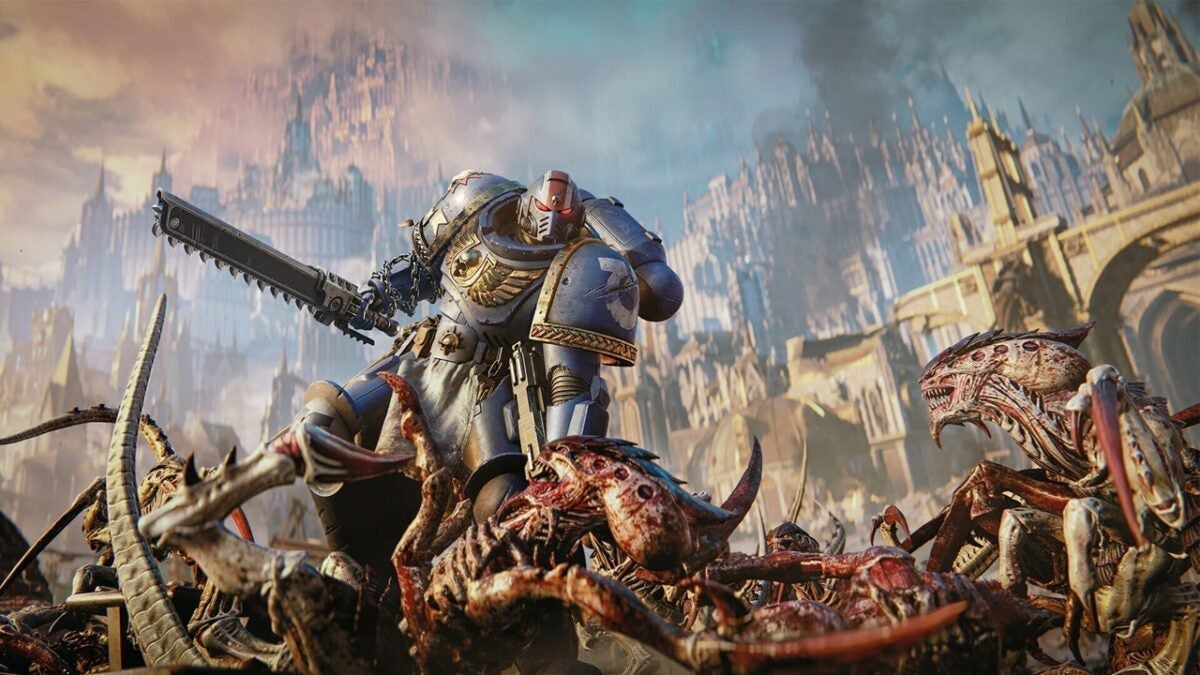
The new edition of Warhammer 40k has been officially revealed at AdeptiCon 2023, the annual Games Workshop event that serves as a platform for the latest news about their tabletop games. The 11th edition promises a series of significant changes that will attract both new players and veterans of the franchise. The Warhammer 40k starter box includes updated figures of Space Marines and Orks Among the most notable new features is an updated set of rules that, while modifying gameplay in relation to the 10th edition, will allow players to continue using the Codex […]
The new edition of Warhammer 40k has been officially revealed at AdeptiCon 2023, the annual Games Workshop event that serves as a platform for the latest news about their tabletop games.
The 11th edition promises a series of significant changes that will attract both new players and veterans of the franchise.
So 11th edition is now announced. Going to need to see these new rules and list building in action. Heres a few thoughts: Objective circles being removed is a win. I always prefer fighting over terrain instead of circles. I heard thousands of etsy objective sellers cry out in… pic.twitter.com/PkgdAacq1Y
The Warhammer 40k starter box includes updated figures of Space Marines and Orks
Among the most notable updates is a revised set of rules that, while changing gameplay in relation to the 10th edition, will allow players to continue using the Codex from the previous edition. This means that it will not be necessary to purchase new rulebooks to play with the existing factions.
The new edition will also include a set of updated models, with a Starter Box that will contain figures of Space Marines and Orks. This package is designed to be an excellent entry point for newcomers to the hobby, as well as a useful way for experienced players to expand their armies. In particular, the Blood Angels, supported by the Ultramarines and the Salamanders, lead the fight on the planet Armageddon against the Orks.
One of the most interesting changes is the implementation of new scoring mechanics, which will aim to make the matchups more competitive and balanced. A series of specific objectives will be introduced for each army, ensuring that all factions have equitable opportunities on the battlefield. Although not all concrete details have been revealed, Games Workshop promises to formulate a system that emphasizes objective-oriented gameplay.
In summary, the 11th edition of Warhammer 40k is shaping up to be a bold evolution of a classic tabletop game, with high expectations of changing the dynamics of the game in the coming years. Games Workshop plans to provide more details in the coming months.
Steam has implemented a little-known limit that prohibits users from spending more than $2,000 a day on its platform, a measure aimed at preventing malicious practices and protecting players with behavioral issues. Violating this rule has cost streamer Nicholas Stewart, known as Jynxzi, dearly, as he reached the cap set by Valve and attempted to evade the limit by asking a friend to send him a gift card to continue spending on ‘loot boxes’. Steam does not allow spending more than $2,000 a day on in-game purchases Despite the fact that most of […]
Steam has implemented a little-known limit that prohibits users from spending more than $2,000 a day on its platform, a measure aimed at preventing malicious practices and protecting players with behavioral issues.
The violation of this rule has cost the streamer Nicholas Stewart, known as Jynxzi, who, upon reaching the limit set by Valve, tried to evade the limit by asking a friend to send him a gift card to continue spending on ‘loot boxes’.
OhnePixel tricks Jynxzi into thinking he opened a $5,000 AK in CS… it was worth about $30😂
Steam does not allow spending more than $2,000 a day on in-game purchases
Although most players rarely approach this spending threshold, Steam has designed this rule to safeguard its ecosystem against potential theft or fraud, as well as to protect those players susceptible to addiction issues.
However, the streamer, who has an average of 50,000 viewers on his streams, sought a way to circumvent this restriction by accepting the gift card, disregarding the warnings that could lead to a temporary ban in the Steam community market.
Upon accepting the gift card with suspicious activity, Jynxzi encountered an unexpected three-day block on market access, which led him to create a humorous apology video, acknowledging his mistake.
Jynxzi got hit with a 3 day trade ban for surpassing the Steam limit and I don't think he's taking it too well 😭pic.twitter.com/Gs09funVR5
“I want to apologize for asking my friend to send me a $100 Steam gift card even though I knew perfectly well that I had exceeded your 24-hour limit,” the content creator shared in his video.
Despite its attempt at an apology, Valve has not lifted its sanction, highlighting the importance of knowing and respecting the platform’s rules. This episode has raised awareness among users about Steam’s security policies, emphasizing the complexity of operating in an environment where protective measures are rigorously monitored.
An iPhone XS user has turned to ChatGPT to address the issue of accelerated battery drain on their five-year-old device. The inquiry revealed that the battery capacity of the iPhone XS is at 77%, a level considered low that indicates the need for a replacement. This type of situation is common in older phones, as battery efficiency tends to decrease over time and with use. A simple battery change can revive your smartphone ChatGPT provided valuable tips and identified three clear signs that a […]
An iPhone XS user has turned to ChatGPT to address the issue of rapid battery drain on their five-year-old device.
The survey revealed that the battery capacity of the iPhone XS is at 77%, a level considered low that indicates the need for a replacement. This type of situation is common in older phones, as battery efficiency tends to decrease over time and with use.
A simple battery change can revive your smartphone
ChatGPT provided valuable advice and identified three clear signs that a battery is failing: excessive heating of the device, a rapid drop in battery level from 30% to 10%, and unexpected shutdowns even though the phone was charged.
These symptoms are indicative of battery deterioration, which can impact both the usability of the device and the user experience.
Aware of the state of his battery, the author decided to carry out a replacement for a cost of $89, which he considered reasonable to maintain a device that is familiar and comfortable to him.
This decision underscores a pragmatic approach to technology: opting for repairs instead of unnecessary replacements. After the change, the author applied ChatGPT’s advice to optimize battery performance, thus ensuring the longevity of their device.
For those who have similar problems with their phones, both iPhone and Android, ChatGPT’s tips can be a helpful solution. By following these recommendations, users can extend the lifespan of their devices and avoid the need for an expensive premature upgrade.The case of the iPhone XS is a reminder that sometimes, a simple battery replacement can revive a beloved device.
The film industry has faced a challenging landscape since the arrival of streaming, which has led to a growing sense of catastrophism regarding the future of movie theaters. However, there are elements that could offer hope to cinema enthusiasts in theaters. Among these, ‘event films’ stand out as productions capable of attracting large audiences, especially when they have a good promotional campaign, strong fan support, or ideally, word-of-mouth backing. A conscious actor One of the most resonant examples of this trend is Proyecto Salvación, a film based on […]
The film industry has faced a challenging landscape since the arrival of streaming, leading to a growing sense of doom regarding the future of movie theaters. However, there are elements that could offer hope to cinema enthusiasts. Among these, ‘event films’ stand out as productions capable of attracting large audiences, especially when they have a good promotional campaign, strong fan support, or ideally, the backing of word of mouth.
A Conscious Actor
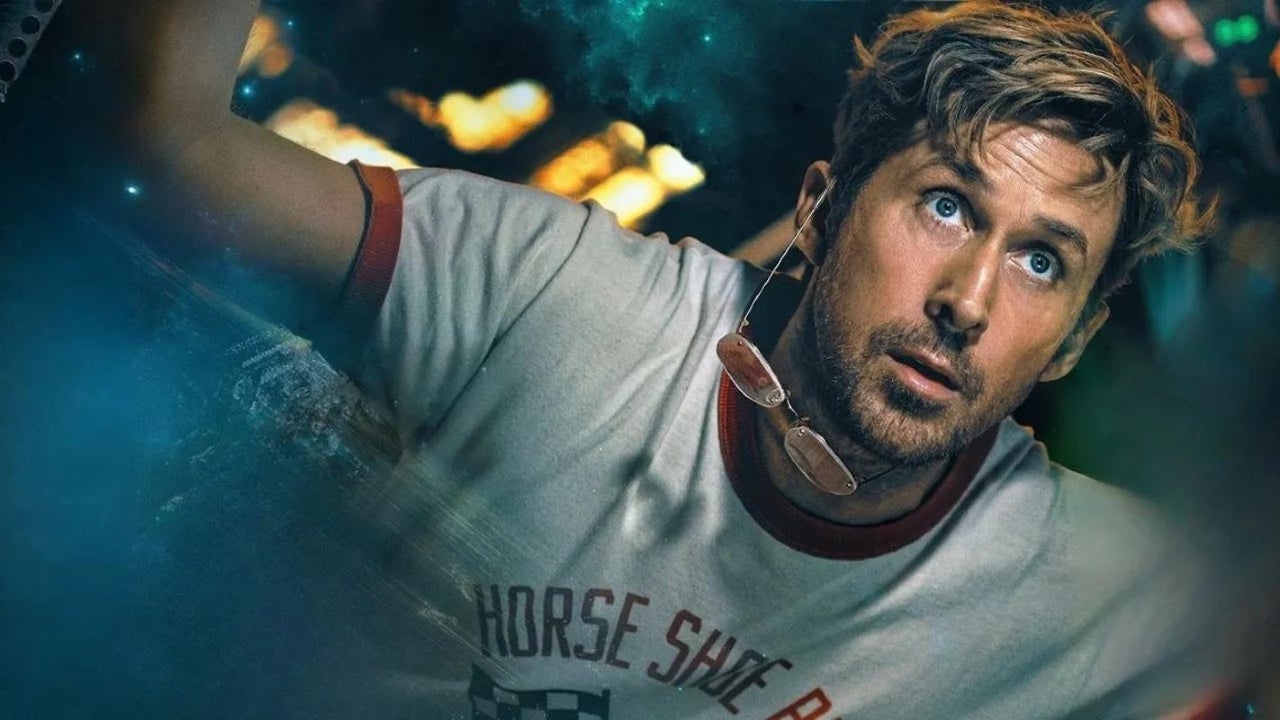
One of the most resonant examples of this trend is Proyecto Salvación, a film based on a popular science fiction novel that has already begun to generate positive interest after its initial screenings. With the charismatic Ryan Gosling in the lead role, the film has captured the attention of both audiences and critics, which could be considered a crucial factor for its success in theaters.
In a recent presentation of the film at the AMC theater in Lincoln Square, Gosling emphasized an important point: the responsibility of keeping the experience of cinema in theaters should not fall solely on the audience. Instead of begging for support for the big screen, filmmakers should focus on delivering quality productions. His message resonates at a time when box office data in the country shows an increase, which could be a promising sign for the future of movie theaters.
Despite the challenges facing the industry, the combination of engaging content and a renewed approach by filmmakers may be the key to revitalizing the cinematic experience in the traditional format. With Proyecto Salvación scheduled to premiere on March 27, movie lovers hope that the film meets expectations and contributes to a possible recovery of theaters.
There is no news that has impacted the world of technology more this week. OpenAI has confirmed that Sora will stop being supported in the coming months. Additionally, ChatGPT will no longer be able to create video content. Although they have assured that all content created with it can be saved before its closure, it seems that the decision is final: OpenAI is not satisfied with the results. The reasons seem evident. Disney has broken the contract that seemed secure to use OpenAI’s technology for AI video generation with a […]
There is no news that has impacted the world of technology more this week. OpenAI has confirmed that Sora will stop being supported in the coming months. Additionally, ChatGPT will no longer be able to create video content. Although they have assured that all content created with it can be saved before its closure, it seems that the decision is final: OpenAI is not satisfied with the results.
The reasons seem evident. Disney has broken the contract that seemed secure to use OpenAI’s technology for AI video generation worth one billion dollars, making the only source of income for this technology disappear overnight. Leading them to decide to end this feature of their technology. But does this mean the beginning of the end of the AI bubble? Or is it just a problem that many people have been pointing out for years, which is that all these companies do not have a business plan for this technology?
The elephant in the room: a technology in search of a problem
Sora was launched on December 9, 2024, under a basic promise: to be able to create your own videos, in any unimaginable style, from the comfort of your home. Fast, cheap, and efficient, you didn’t need to study or coordinate a team to create your own videos. You just needed the right prompts and to manipulate them to create exactly what you wanted, whenever you wanted. Within certain obvious limitations. The videos could be a maximum of one minute long and, generally, they tended to hallucinate too much to be coherent or sustainable over time.
To all this, another evident problem could be added: most users wanted to use Sora to create content protected either by copyright or by image rights. The latter had a difficult solution and sooner or later it was going to be legislated, as it is illegal to use other people’s images without their permission, but with the former, OpenAI believed they had found the solution: a deal with Disney for one billion dollars. Which, as we have already pointed out, has ultimately not materialized.
The problem with Sora is that it is a technology that offered solutions for a problem that does not exist. The only uses of the technology were either immoral and potentially illegal —using the image of other people without permission is wrong, using it to impersonate them and make them say things they haven’t said, creating porn or spreading hate messages is already illegal in many parts of the world—, or they are legally gray —you cannot use characters for whom you do not have the rights, and the one who would be sued for allowing it is the platform—, or they lacked sense —if you have the image rights or copyright, what prevents you from filming those videos yourself?
Sora was an interesting curiosity, but it did not offer a solution to a real problem. It could make video production cheaper, but even so, there was a problem that we have already pointed out: it had temporal limitations, hallucinated the results a lot, and was unable to maintain consistency between scenes. This made it essentially impossible to create a video longer than an advertisement or a short video of a quality far below any professional quality standard.
Where is the AI business?
The problem with Sora is that it doesn’t have a business plan. It has no reason to exist. The reason for someone to pay for the service is nonexistent. And this has been demonstrated by the fact that there has only been one interested company, and even that company has dropped out of negotiations.
Why? Because it doesn’t solve anything. The technology that is implemented in society and comes to have prevalence is the one that solves some kind of problem. Whether we knew it or not. Sometimes the problem is as simple as things could be done cheaper and faster, but that is also a solution to a problem: production costs. But Sora does not provide any kind of solution because, while it offered the creation of cheap and quick videos, it was always in a legally gray area that is hardly monetizable.
This makes us wonder, is this the future of the rest of AI technologies? And while it is tempting to say yes, it is better to be cautious. Although it is increasingly evident that AI is a bubble, it is also not prudent to claim that there is no real use for it. What is true is that its uses are much more limited, specific, and concrete than what is being sold. LLMs have proven to be tremendously useful for chemistry, weather prediction, and cancer detection, demonstrating where their strengths lie: in contrasting large volumes of information and discovering hidden patterns. Similarly, their particularly notable quality within AIs when it comes to programming has made them the main current tool for vibe coding among professionals and amateurs.
Within general consumption, the only ones that seem to have an efficient ongoing business are Anthropic, and Claude, although marketed as a general AI, is increasingly focused on specific uses derived from efficiency in the workplace. Allowing for automatic responses, summarizing meetings, texts, and videos, and other uses derived from bureaucratic office work, many companies are adopting it despite a relatively high premium subscription compared to its rivals. And they do so because its use feels useful, streamlining certain processes, even if it is questionable whether it truly is due to issues of hallucinations, biases, and the inherent limitations of these systems.
If the death of Sora teaches us anything, it is that AI is a bubble about to burst and that, while it won’t take down all of AI or all LLMs, it will ensure that only those that truly offer something of interest beyond the passing trend will survive. A technology to create videos out of nothing may be interesting, but it cannot be monetized and, above all, it does not contribute anything to society as a whole. And as long as OpenAI remains obsessed with creating something spectacular that reaches the public, whether it is monetizable or not, they will be closer to extinction than to a business that endures over time.
Every time the big figures in the world of technology step into the White House, experts pay close attention to what is said and how it is said. Since Trump’s arrival in the U.S. government, all visits from the CEOs of Big Tech to the Oval Office have been “very productive” and have made big headlines. Let’s remember that the last time Tim Cook was there, he gifted Trump a gold wafer. Well, now we have news about a kind of technology council, where some big names will have […]
Well, now we have news about a kind of technology council, where some big names will have to advise the President of the United States on complex issues such as artificial intelligence.
Mark Zuckerberg, Jensen Huang and Sergey Brin join Trump's tech advisory panel https://t.co/SJeZaOHFhh
A roster of names that will sound familiar from the first to the last
The CEOs of Meta, Mark Zuckerberg; Oracle, Larry Ellison; Nvidia, Jensen Huang; and Google co-founder, Sergey Brin, will be the first four members of the Presidential Advisory Council on Science and Technology (PCAST), according to the Wall Street Journal.
The panel, which “will speak on AI policy,” will initially have 13 members but could expand to 24. Trump’s AI and cryptocurrency lead, David Sacks, and the White House technology advisor, Michael Kratsios, will co-chair the panel.
U.S. President Donald Trump appointed Meta Platforms CEO Mark Zuckerberg, Oracle Executive Chairman Larry Ellison and Nvidia CEO Jensen Huang to a council that will weigh in on AI policy and other issues, the White House said on Wednesday. https://t.co/He5ZlaV1VS
According to the White House announcement in January about the panel, the PCAST “will advise the president on issues related to science, technology, education, and innovation policy.”
“The Council will also provide the president with the necessary scientific and technical information to support public policies related to the U.S. economy, American workers, national security, homeland security, and other issues,” they explain.
Trump appointed a similar panel during his first term, but it did not include as many tech sector executives. The first four members of the 2026 panel, especially Zuckerberg and Huang, have deep ties to the AI industry, which Trump has been pushing to prevent states from regulating over the past year.
JUST IN: President Trump plans to name Mark Zuckerberg, Larry Ellison, and Jensen Huang to his Council of Advisors on Science and Technology, per WSJ.
The panel will advise on AI policy and emerging tech. An initial batch of 13 industry members is expected. pic.twitter.com/1SvinRc1bH
Zuckerberg and Ellison also have a history with the Trump Administration. Meta, which is currently at the center of a legal battle over child safety on its platforms, has made donations to Trump in the past.
Oracle, from Ellison, was the backbone of Trump’s deal to divest from TikTok earlier this year. Zuckerberg and Sergey Brin also attended Trump’s inauguration in 2025. In this way, Trump has assembled a panel of experts who are donors to his political party and his campaign in particular.
The studio 1047 Games has been in the spotlight in recent months due to the notorious failures of its title Splitgate: Arena Reloaded. After an original launch that did not meet expectations, the relaunch of the game failed to salvage its image, quickly losing popularity and recording less than 1,000 simultaneous players on Steam, despite initial peaks that reached nearly 2,300. A game that has failed twice The CEO of 1047 Games, Ian Proulx, has revealed that, despite these setbacks, the team is working on a new “movement shooter” inspired by […]
After an original launch that did not meet expectations, the relaunch of the game failed to salvage its image, quickly losing popularity and recording less than 1,000 concurrent players on Steam, despite initial peaks that reached nearly 2,300.
A game that has failed twice
The CEO of 1047 Games, Ian Proulx, has revealed that, despite these setbacks, the team is working on a new “movement shooter” inspired by well-known franchises like Titanfall and Call of Duty: Black Ops 3. However, the concrete details about this project, including its official name and gameplay mechanics, remain a mystery.
Proulx mentioned in a YouTube video that part of the team has started developing this new title and that they are interested in receiving feedback from players, suggesting that there are already playable prototypes in progress.
The reception by the community has been mixed, with notable skepticism due to the recent history of the studio and the controversies surrounding the microtransactions implemented in Splitgate. This situation has raised doubts about 1047 Games’ ability to deliver a title that meets the expectations of the genre, especially after the criticism received during its presentation at the Summer Game Fest 2025.
It is still unknown whether this new project will manage to reverse the studio’s image, which has seen its previous release suffer a dramatic drop in its player base. The upcoming playtest sessions that the team plans to conduct could provide a first glimpse of what is to come and help rebuild the community’s trust.
Middle-earth is preparing for a new cinematic adventure with the announcement of a film developed by Peter Jackson and Stephen Colbert, a known fan of J.R.R. Tolkien’s work. Warner Bros. has confirmed this project, which aims to expand the universe of The Lord of the Rings by exploring events not adapted in the original trilogy. A film not based on any particular book The film, provisionally titled The Lord of the Rings: Shadows of the Past, will focus on episodes from The Fellowship of the Ring that were left out of the 2001 adaptation. In particular, Colbert has […]
Warner Bros. has confirmed this project, which aims to expand the universe of The Lord of the Rings by exploring events not adapted in the original trilogy.
A movie not based on any particular book
The film, provisionally titled The Lord of the Rings: Shadows of the Past, will focus on episodes from The Fellowship of the Ring that were left out of the 2001 adaptation. In particular, Colbert has highlighted that the narrative will be inspired by the chapters between Three is Company and Fog on the Barrow-downs, considered essential for understanding the essence of Tolkien.
With the involvement of Philippa Boyens, who played a crucial role in the Oscar-winning trilogy, the project promises to maintain a stylistic and narrative coherence with the previous films. Boyens, along with screenwriter Peter McGee, Colbert’s son, will bring a balance between the freshness of new voices and the established experience of the original team. Jackson, who introduced the project in an official video, will also be closely involved in its development.
The story is set fourteen years after Frodo’s death, where iconic characters like Sam, Merry, and Pippin embark on an adventure that reveals secrets from the past. This approach reflects the trend in the industry of telling stories with the passion of their creators, which promises to attract both old fans and new audiences. The combination of nostalgic elements and the exploration of new angles of the literary material heralds an interesting project that moves away from typical reboots or conventional sequels.
In addition, it is estimated that this premiere will arrive after The Hunt for Gollum, suggesting that Warner Bros. is building a new cycle of productions around the franchise.This new venture into Middle-earth is a demonstration of the creative potential that remains in the world of Tolkien, reaffirming its relevance in the cinematic field.
The Brentwood Police Department has concluded that actor Alan Ritchson acted in self-defense after being attacked by his neighbor, Ronnie Taylor. This determination was made public after reviewing evidence, including video recordings and witness statements. Authorities have decided that no criminal charges will be filed against Ritchson, who was involved in an altercation that quickly went viral on social media. His neighbor is to blame According to reports from TMZ, it all started when Taylor accused Ritchson of driving recklessly through the neighborhood, which […]
The Brentwood Police Department has concluded that actor Alan Ritchson acted in self-defense after being attacked by his neighbor, Ronnie Taylor. This determination was made public after reviewing evidence, including video recordings and witness statements.
Authorities have decided that no criminal charges will be filed against Ritchson, who was involved in an altercation that quickly went viral on social media.
JUST IN: Brentwood Police say 'Reacher' star Alan Ritchson acted in self-defense, say no charges will be filed.
The development comes as new footage appears to show Ritchson's neighbor blocking the road while he was on his motorcycle.
According to reports from TMZ, it all started when Taylor accused Ritchson of driving recklessly through the neighborhood, which led to the confrontation. Taylor decided to go out onto the road to stop Ritchson, who after a verbal exchange, pushed each other.
In the video of the incident, captured by a body camera, Ritchson can be seen delivering a series of blows to Taylor, who was trying to stop his advance. This incident took place in front of Ritchson’s young children, who witnessed the altercation.
The neighbor, Ronnie Taylor, could have faced charges for reckless endangerment due to his behavior in trying to stop the actor in the middle of the road. However, Ritchson decided not to press charges against him. The case has been closed in collaboration with the Prosecutor’s Office, which means that no further legal action will be taken at this time.
Since the controversy erupted, Ritchson has not made any public comments about the incident, although he recently posted a quote from Napoleon Bonaparte on his Instagram account that says: “Never interrupt your enemy when he is making a mistake.” This fact has left the community divided, and many are questioning the implications of the situation.
Disney has decided not to continue with its $1 billion investment in OpenAI, focused on developing user-generated videos for its platforms, including Disney Plus. This decision comes shortly after OpenAI announced the closure of its Sora app, which was only operational for four months. The cancellation of the agreement has sparked rumors about OpenAI’s future strategic directions in the audiovisual content space. Disney is not interested in Sora The Sora app, launched in December, was designed to encourage user-generated video creation, but its premature closure […]
Disney has decided not to continue with its $1 billion investment in OpenAI, focused on developing user-generated videos for its platforms, including Disney Plus. This decision comes shortly after the announcement from OpenAI about the closure of its Sora app, which was only operational for four months. The cancellation of the agreement has sparked rumors about future strategic directions for OpenAI in the audiovisual content space.
Disney is not interested in Sora
The Sora application, launched in December, was designed to encourage users to create videos, but its premature closure left many users disappointed. In a statement, OpenAI thanked the community active on Sora and highlighted that it will share more information about the preservation of the work created on the platform. However, no specific plans for a new video service have been announced, which could indicate a shift in OpenAI’s ambitions in this field.
Recent difficult developments in U.S. legislation, which have complicated the copyright of materials generated by artificial intelligence, may have influenced Disney’s decision. The company, known for being extremely protective of its intellectual property, may not be willing to take on the risks associated with the use of technology that could call into question the ownership of its iconic franchises, such as Disney, Marvel, and Star Wars.
Despite the cancellation of the agreement with OpenAI, Disney has expressed its intention to continue collaborating with other artificial intelligence platforms in the future. A Disney spokesperson stated that “we respect OpenAI’s decision to exit the video generation business,” emphasizing the importance of continuing to explore new technologies that respect creators’ rights.