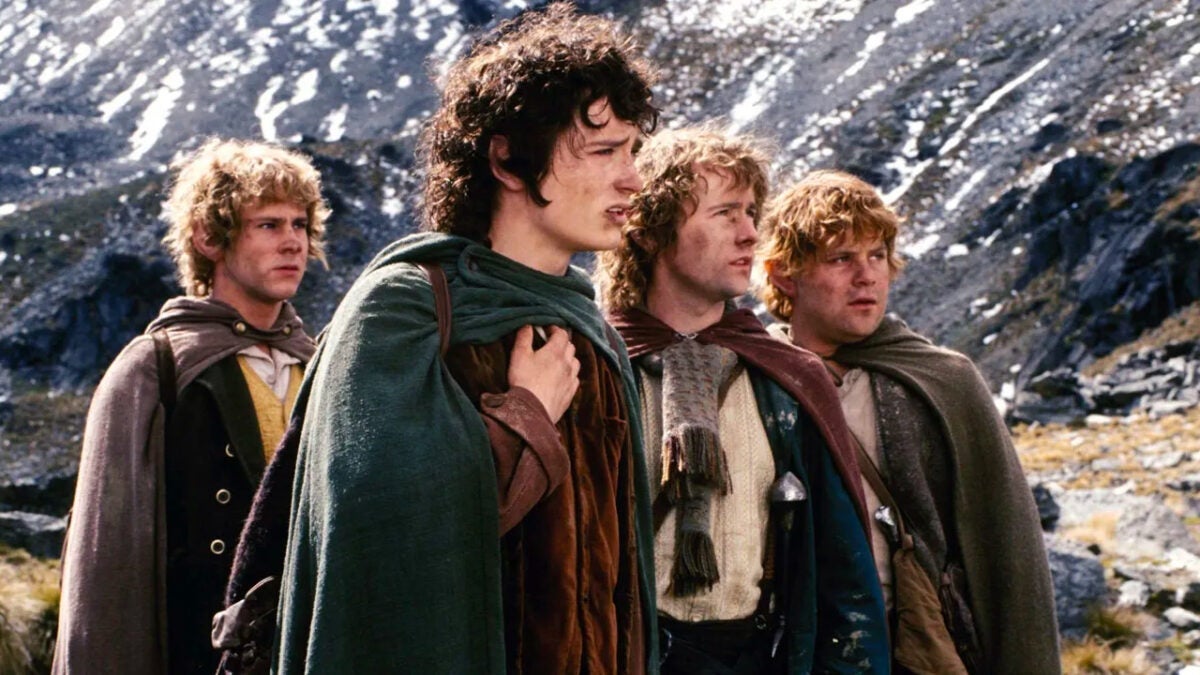
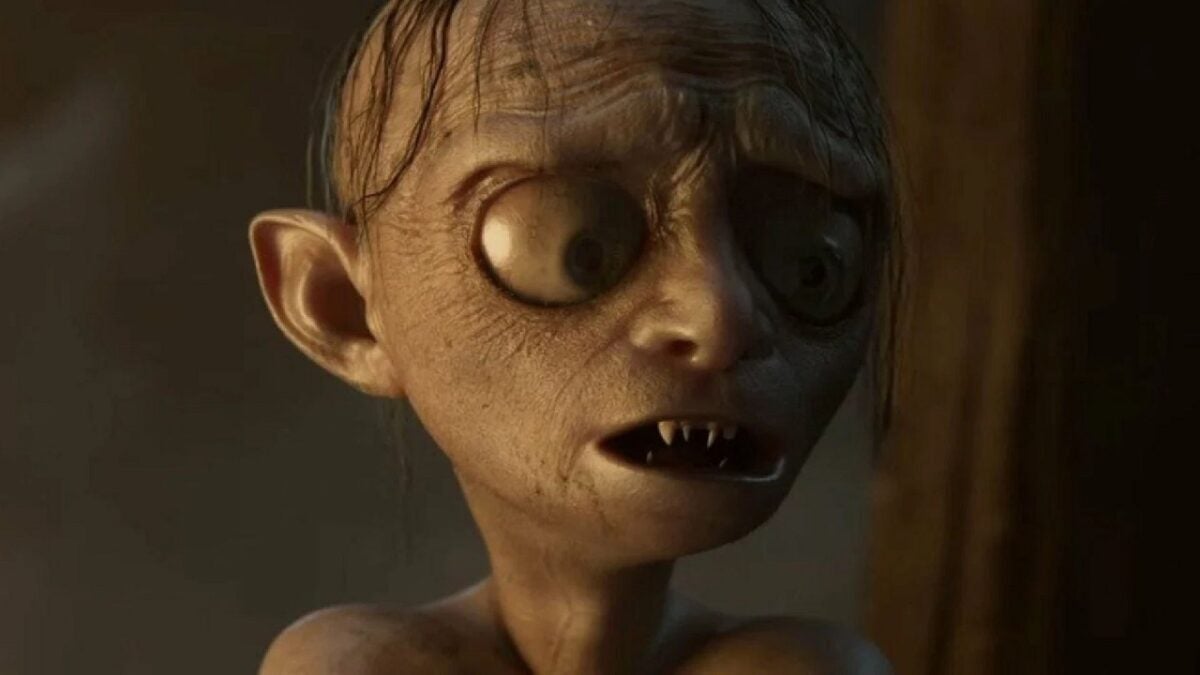
Middle-earth is preparing for a new cinematic adventure with the announcement of a film developed by Peter Jackson and Stephen Colbert, a known fan of J.R.R. Tolkien’s work. Warner Bros. has confirmed this project, which aims to expand the universe of The Lord of the Rings by exploring events not adapted in the original trilogy. A film not based on any particular book The film, provisionally titled The Lord of the Rings: Shadows of the Past, will focus on episodes from The Fellowship of the Ring that were left out of the 2001 adaptation. In particular, Colbert has […]
Warner Bros. has confirmed this project, which aims to expand the universe of The Lord of the Rings by exploring events not adapted in the original trilogy.
A movie not based on any particular book
The film, provisionally titled The Lord of the Rings: Shadows of the Past, will focus on episodes from The Fellowship of the Ring that were left out of the 2001 adaptation. In particular, Colbert has highlighted that the narrative will be inspired by the chapters between Three is Company and Fog on the Barrow-downs, considered essential for understanding the essence of Tolkien.
With the involvement of Philippa Boyens, who played a crucial role in the Oscar-winning trilogy, the project promises to maintain a stylistic and narrative coherence with the previous films. Boyens, along with screenwriter Peter McGee, Colbert’s son, will bring a balance between the freshness of new voices and the established experience of the original team. Jackson, who introduced the project in an official video, will also be closely involved in its development.
The story is set fourteen years after Frodo’s death, where iconic characters like Sam, Merry, and Pippin embark on an adventure that reveals secrets from the past. This approach reflects the trend in the industry of telling stories with the passion of their creators, which promises to attract both old fans and new audiences. The combination of nostalgic elements and the exploration of new angles of the literary material heralds an interesting project that moves away from typical reboots or conventional sequels.
In addition, it is estimated that this premiere will arrive after The Hunt for Gollum, suggesting that Warner Bros. is building a new cycle of productions around the franchise.This new venture into Middle-earth is a demonstration of the creative potential that remains in the world of Tolkien, reaffirming its relevance in the cinematic field.
Warner Bros. and New Line Cinema are searching for a new actor to play Aragorn in their upcoming film, The Lord of the Rings: The Hunt for Gollum, which has raised concerns among fans. Many fans have a strong identification with Viggo Mortensen, who portrayed the character in the original trilogy, and this change may not be well received by the fanbase. An actor who will have a difficult test ahead According to information from Knight Edge Media, the studio had initially considered the possibility of Mortensen returning using rejuvenation technology […]
Warner Bros. and New Line Cinema are searching for a new actor to play Aragorn in their upcoming film, The Lord of the Rings: The Hunt for Gollum, which has raised concerns among fans. Many fans have a strong identification with Viggo Mortensen, who portrayed the character in the original trilogy, and this change may not be well received by the fanbase.
An actor who will have a difficult test ahead
According to information from Knight Edge Media, the studio had initially considered the possibility of Mortensen returning using digital rejuvenation technology. However, that idea has been discarded due to narrative difficulties and public perception of this type of effects. At 67 years old, Mortensen is older than Ian McKellen during the filming of the original trilogy, and the impact of his age on the characterization of a young Aragorn is considerable.
The Lord of the Rings: Gollum’s Hunt will begin production in May 2026, with a scheduled release on December 17, 2027. Andy Serkis, known for his role as Gollum, will take on the direction of the project, while Peter Jackson will be involved as a producer. The film faces continuity challenges, as the time elapsed since the release of The Fellowship of the Ring has been significant.
The casting of a new Aragorn involves a monumental responsibility, given that the character has become an icon of modern cinema thanks to Mortensen’s portrayal. Auditions for other actors are underway, although no names have been revealed. The plot of this new installment is set before the events of The Fellowship of the Ring, making fidelity to the original character even more crucial. With the challenges of recasting in sight, the new production could divide opinions among the most loyal fans.
Anticipation is growing among fans of J.R.R. Tolkien’s saga with the announcement of the film The Hunt for Gollum, which will explore the events leading up to The Fellowship of the Ring. According to reports, filming is set to begin in 2026, with a release scheduled for December 17, 2027. This film promises to delve into Gollum’s obsession with the One Ring and his complex psychological duality, a narrative that has intrigued followers of the work for decades. More Gollum for the masses At a recent event called For the Love of Fantasy in London, […]
Anticipation is growing among fans of J.R.R. Tolkien’s saga with the announcement of the film The Hunt for Gollum, which will explore the events leading up to The Fellowship of the Ring. According to reports, filming is set to begin in 2026, with a release scheduled for December 17, 2027. This film promises to delve into Gollum’s obsession with the One Ring and his complex psychological duality, a narrative that has intrigued followers of the work for decades.
More Gollum for the masses
At a recent event called For the Love of Fantasy in London, the iconic Ian McKellen confirmed that he will return to portray Gandalf, adding a valuable element of nostalgia to the project. Additionally, it is rumored that Frodo Baggins, another central character from the original trilogy, will also make his return in this new installment, which has sparked great excitement among the event attendees. McKellen, with his characteristic humor, joked that ‘there is a character in the movie named Frodo, and another named Gandalf’, which was met with applause from the audience.
The Hunt for Gollum will be directed and starred by Andy Serkis, known for his innovative digital portrayal of the same Gollum in the previous films. The project is produced by the same team behind the original Lord of the Rings trilogy, including Peter Jackson, Fran Walsh, and Philippa Boyens, ensuring a faithful approach to Tolkien’s rich mythology.
The plot will focus on the dark years that separate The Hobbit from The Fellowship of the Ring, showing how Gollum, consumed by his desire to reclaim the Ring, embarks on a dangerous quest that will attract the attention of characters like Gandalf and Aragorn. With the approval of Warner Bros. Discovery CEO, David Zaslav, this film stands out as one of the studio’s top priorities, alongside other iconic projects in contemporary cinema.
If trilogies are so famous, it is because of The Lord of the Rings. No trilogy has had such an impact and has shaped a genre so radically. Thinking of fantasy without thinking of Tolkien’s work in general, and The Lord of the Rings in particular, is impossible. Without The Lord of the Rings, we wouldn’t have Dungeons & Dragons, nor 99% of contemporary fantasy stories. This demonstrates the power of its legacy: it created, by itself, what the genre is today. That makes […]
If trilogies are so famous, it’s because of The Lord of the Rings. No trilogy has had such an impact and has shaped a genre so radically. Thinking of fantasy without thinking of Tolkien’s work in general, and The Lord of the Rings in particular, is impossible. Without The Lord of the Rings, we wouldn’t have Dungeons & Dragons, nor 99% of contemporary fantasy stories. This demonstrates the power of its legacy: it created, by itself, what the genre is today.
This makes its importance crucial. And there are always people willing to bring back the trilogy in one way or another. Something that happened with particularly resounding success at the turn of the century when New Line Cinema decided to make the most epic and beloved trilogy of films in the history of cinema.
The film trilogy of The Lord of the Rings by Peter Jackson does not have the cultural impact that the novels had, because that is impossible, but they were a mass phenomenon. Everyone went to the cinema to see them, and it was a financial, critical, and awards success without absolutely any precedent. Something that made the absolute failure of its subsequent continuations even more surprising, something we are going to review today. Because we know you are eager to have an excuse to watch the movies again.
The Lord of the Rings trilogy premiered in 2001. Filmed simultaneously between October 11, 1999, and December 22, 2000, in New Zealand, it had a then-disproportionate budget of 281 million dollars, equivalent to about 530 million dollars when considering inflation. The three films were released in quick succession: The Fellowship of the Ring would premiere in 2001, The Two Towers in 2002, and The Return of the King in 2003. An exceptional fact, given that films are usually not shot simultaneously. But in this case, it helped to cement their success.
Upon their release with little waiting time, the films managed to capture the audience’s attention and the enthusiasm did not wane. Maintaining the interest of critics, the public, and the academy throughout the entire trilogy. Something that became evident through the numbers.
The Fellowship of the Ring grossed $887.8 million, The Two Towers reached $938.5 million, and The Return of the King made it to $1.1 billion. An exceptional fact, as it is normal for movie series to tend to earn less money with each new installment. But the rapid release of new installments, along with their quality, attracted more people to each new premiere, resulting in increased revenues.
What were the reasons for its success? Generally, it has been considered that fidelity to the novels, the strength of its direction, its enormous production values, and the quality of its performances are the main factors that captivated the general public. Although the fidelity to the novels was questioned at the beginning for not adapting certain parts of The Fellowship of the Ring, leaving out characters like Tom Bombadil, which later versions of the film showed were better off that way.
It swept even more in the houses
In fact, the movie was an even greater success in home formats. With numerous editions on DVD and Blu-ray, the three movies would have extended versions that would first be released in home format, but later would also be shown in theaters. This would extend the total runtime of the trilogy from 558 minutes to 683.
There are conflicting opinions about which of the two versions is better. According to some, the purest way to watch the movies is the extended versions, because they leave nothing out. According to others, the original versions are better because everything that was originally cut was for a reason, and it is noticeable in the excessively slow pace of the extended versions. A debate that still continues today among fans of the movie trilogy.
There was no doubt that they were masterpieces. Both critics and the academy agreed. With an average of over 90% on Rotten Tomatoes and a 9 on Metacritic, it is a tremendously respected trilogy. But nominated for 30 Academy Awards, with The Return of the King being the big winner, taking home 11 of them, including Best Director, Best Picture, and Best Adapted Screenplay, it demonstrates why they were an absolute cultural milestone. One that we have not experienced again and that, probably, we will never experience again: there was an absolute consensus on the quality of these films, and no one would have dared to question it.
A hobbit who couldn’t
That’s why everyone was eagerly awaiting the next from Peter Jackson and what would come from the Tolkien universe. Which was disappointing. Making several films in between, he released the Hobbit film trilogy between 2012 and 2014, resulting in a notable box office success, but a tremendous critical and awards fiasco. With the audience turning their backs shortly after.
What happened? To begin with, The Hobbit is a tale, not a trilogy of novels. The treatment as a trilogy of films made no sense. Furthermore, the excessive use of CGI, questionable direction, and performances that left much to be desired made it everything that the Lord of the Rings trilogy was not. It felt cheap, shabby, and not epic. Like one of those low-budget fantasy films where, instead of with enthusiasm, they try to disguise all the things where they lack imagination or money with second-rate effects.
After this, The Lord of the Rings spent several years dozing. It has had its ups and downs, with various series and movies, but nothing has achieved the success and significance of the original trilogy of The Lord of the Rings films. They are now returning to HBO Max so you can watch them in the comfort of your home, remembering something important: we are living through a historic event for culture, and we knew it. Because it was impossible not to know, when we were going to watch the trilogy of The Lord of the Rings films, that this was our Star Wars. And that only happens once per generation. If it happens at all.