Middle-earth is preparing for a new cinematic adventure with the announcement of a film developed by Peter Jackson and Stephen Colbert, a known fan of J.R.R. Tolkien’s work. Warner Bros. has confirmed this project, which aims to expand the universe of The Lord of the Rings by exploring events not adapted in the original trilogy. A film not based on any particular book The film, provisionally titled The Lord of the Rings: Shadows of the Past, will focus on episodes from The Fellowship of the Ring that were left out of the 2001 adaptation. In particular, Colbert has […]
Warner Bros. has confirmed this project, which aims to expand the universe of The Lord of the Rings by exploring events not adapted in the original trilogy.
A movie not based on any particular book
The film, provisionally titled The Lord of the Rings: Shadows of the Past, will focus on episodes from The Fellowship of the Ring that were left out of the 2001 adaptation. In particular, Colbert has highlighted that the narrative will be inspired by the chapters between Three is Company and Fog on the Barrow-downs, considered essential for understanding the essence of Tolkien.
With the involvement of Philippa Boyens, who played a crucial role in the Oscar-winning trilogy, the project promises to maintain a stylistic and narrative coherence with the previous films. Boyens, along with screenwriter Peter McGee, Colbert’s son, will bring a balance between the freshness of new voices and the established experience of the original team. Jackson, who introduced the project in an official video, will also be closely involved in its development.
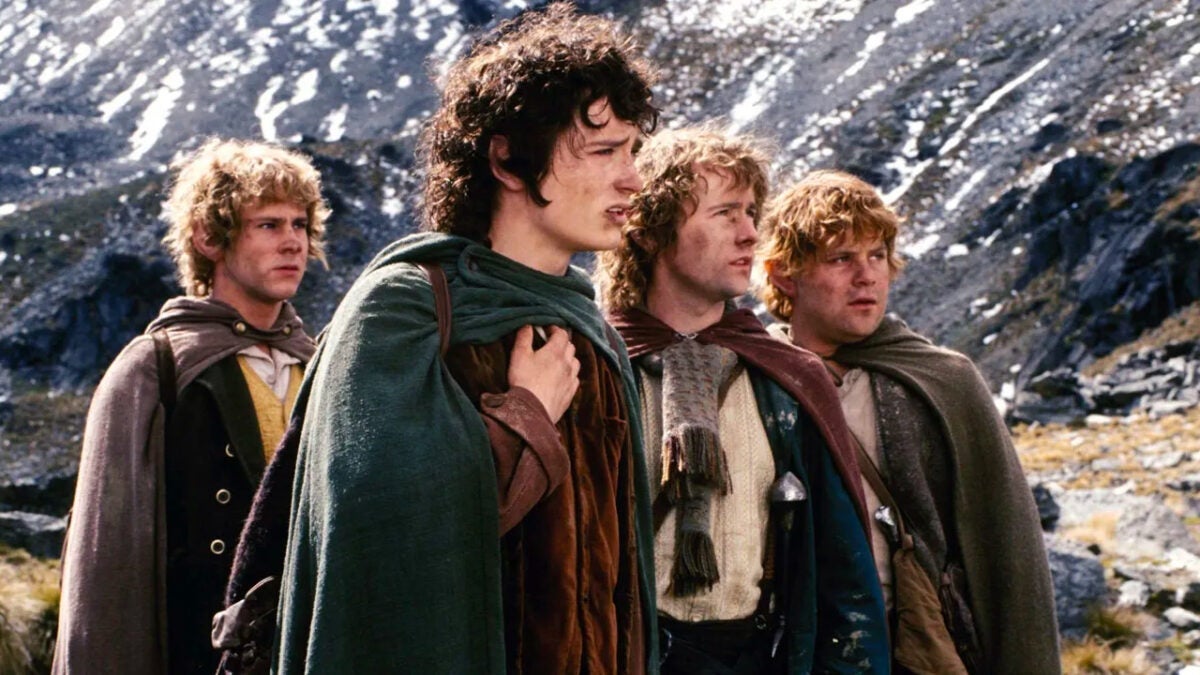
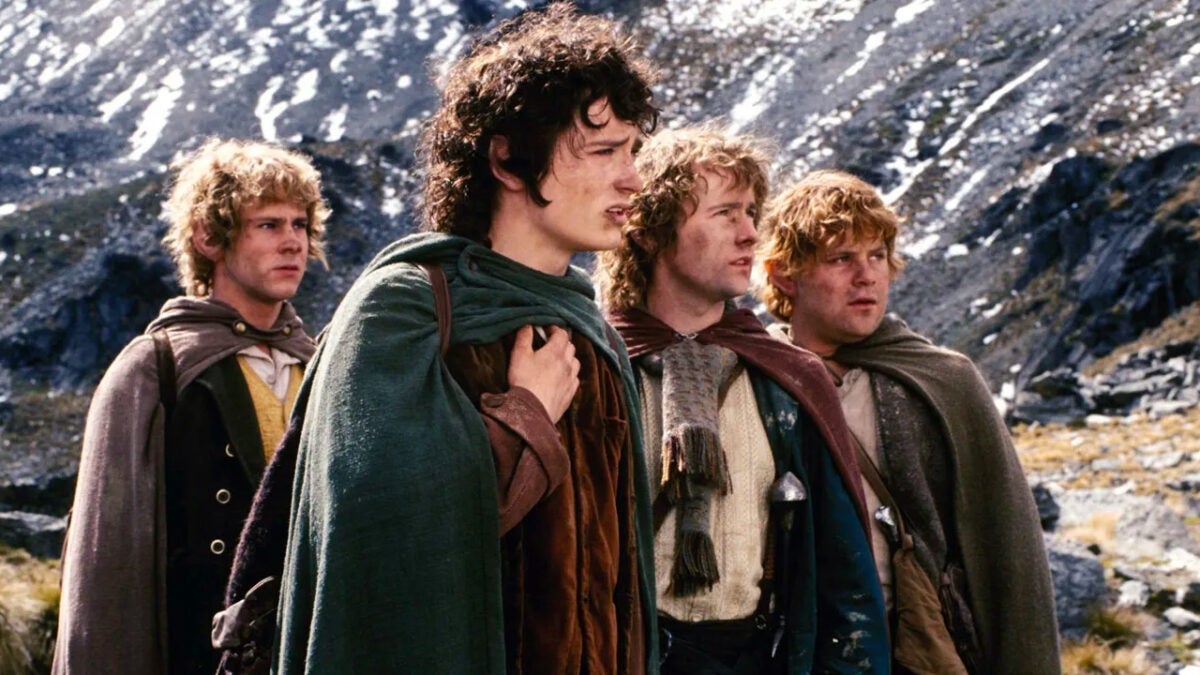
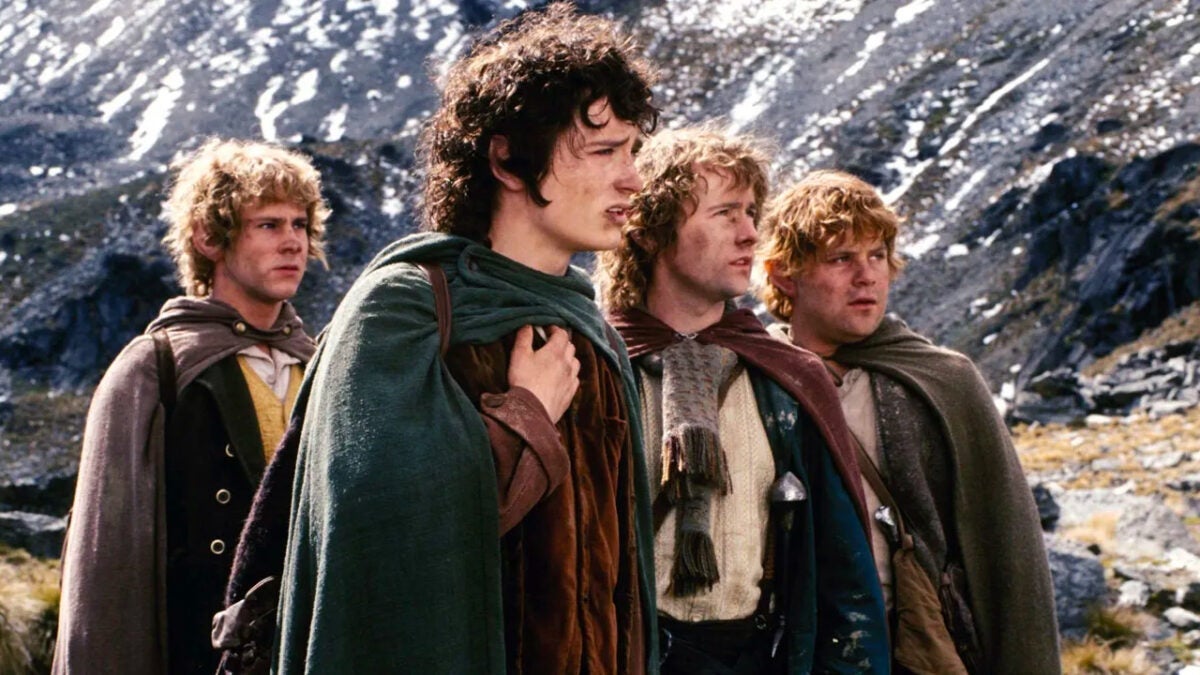
The story is set fourteen years after Frodo’s death, where iconic characters like Sam, Merry, and Pippin embark on an adventure that reveals secrets from the past. This approach reflects the trend in the industry of telling stories with the passion of their creators, which promises to attract both old fans and new audiences. The combination of nostalgic elements and the exploration of new angles of the literary material heralds an interesting project that moves away from typical reboots or conventional sequels.
In addition, it is estimated that this premiere will arrive after The Hunt for Gollum, suggesting that Warner Bros. is building a new cycle of productions around the franchise.This new venture into Middle-earth is a demonstration of the creative potential that remains in the world of Tolkien, reaffirming its relevance in the cinematic field.
Elijah Wood, known for his iconic role as Frodo in the Lord of the Rings trilogy, is back in the spotlight again, although this time due to the possibility of a return to his iconic character. In a recent statement, Wood has neither confirmed nor denied his participation in the upcoming film directed by Andy Serkis, titled The Lord of the Rings: The Hunt for Gollum. However, the actor emphasized that he would not like someone else to play Frodo while he is alive and able to do so. He is very attached to his character
Elijah Wood, known for his iconic role as Frodo in the trilogy of The Lord of the Rings, is back in the spotlight again, although this time for the possibility of a return to his iconic character.
In a recent statement, Wood has neither confirmed nor denied his participation in the upcoming film directed by Andy Serkis, titled The Lord of the Rings: The Hunt for Gollum. However, the actor emphasized that he would not like someone else to play Frodo while he is alive and able to do so.
He is very close to his character
The statement has fueled rumors about his return to Middle-earth, as fans of J.R.R. Tolkien’s world are eager for more cinematic content that explores the rich and vast narrative of the franchise.
Andy Serkis, who became famous for his portrayal of Gollum in the trilogy, is now stepping behind the camera to direct this new project, which has generated considerable interest within the fan community.
Although no further details about the plot or cast have been revealed, the possibility of seeing Wood again as Frodo offers a mix of nostalgia and anticipation. The actor’s involvement could undoubtedly bring an emotional connection and authenticity to the story, given that his original portrayal became a milestone for fans of fantasy cinema.
With the growth of the Lord of the Rings universe in the entertainment sector, many are wondering how this new movie will fit into the legacy established by its predecessors. Meanwhile, rumors continue, and fans will be on the lookout for any official announcement that could shape the future direction of the franchise.
The adaptation of literary works to film has always been a controversial topic, especially when it is perceived that the original material is not respected. This is a notable phenomenon in the realm of fantasy, exemplified by the famous trilogy of The Lord of the Rings, directed by Peter Jackson, which received eleven Academy Awards. However, the history of adaptations of J.R.R. Tolkien’s work is more complex, with examples like the animated film directed by Ralph Bakshi in 1978, which did not manage to replicate Jackson’s success. An adaptation that did not bear fruit The inherent complications […]
The adaptation of literary works to film has always been a controversial topic, especially when it is perceived that the original material is not respected. This is a notable phenomenon in the realm of fantasy, exemplified by the famous trilogy of The Lord of the Rings, directed by Peter Jackson, which received eleven Academy Awards. However, the history of adaptations of J.R.R. Tolkien’s work is more complex, with examples such as the animated film directed by Ralph Bakshi in 1978, which did not manage to replicate Jackson’s success.
An adaptation that did not bear fruit
The complications inherent in the adaptation process are abundant, not only due to logistical issues but also because of the pressure exerted by fans and the expectations of the author himself. In fact, Tolkien showed his disdain for a failed adaptation attempt made by Morton Grady Zimmerman in 1958, which elicited the author’s outright refusal. In correspondence, Tolkien expressed his displeasure, citing significant flaws such as the inclusion of a speaking Balrog and a trivial representation of elves as mere fairies, which led to his total rejection of the project.
Currently, a new movie titled The Hunt for Gollum is being developed, focusing on the famous character from Tolkien’s work. This prequel is directed by Andy Serkis, the same actor who portrayed Gollum in Jackson’s films. With a new vision of the iconic character, expectations are high among fans, who hope that the production respects the complexity of the universe created by Tolkien and offers a narrative that honors his legacy.
The debate about fidelity and respect for original materials continues to surface in the world of cinema, which suggests that each new adaptation must handle with careful delicacy the rich literary content it seeks to revive.
Since 1954, the debate about possible racial prejudices in the narrative of J.R.R. Tolkien has been present, especially in the representation of orcs and other peoples. A new course at the University of Nottingham, titled Imagining Britain: Decolonising Tolkien, has revived this controversy. Although the program does not directly accuse Tolkien of racism, it does address how British myths, including those of Tolkien, have shaped national identity and how they could be reinterpreted from a contemporary perspective. A question that has never ceased to be asked Critics point to the representation of orcs, often described as grotesque […]
Since 1954, the debate about possible racial prejudices in J.R.R. Tolkien’s narrative has been present, especially in the representation of orcs and other peoples. A new course at the University of Nottingham, titled Imagining Britain: Decolonising Tolkien, has revived this controversy. Although the program does not directly accuse Tolkien of racism, it does address how British myths, including those of Tolkien, have shaped national identity and how they could be reinterpreted from a contemporary perspective.
A question that has never stopped being asked
Critics point to the representation of orcs, often described as grotesque and morally inferior, as an example of dehumanization that facilitates the identification of these creatures with “races” considered inferior. This interpretation has been supported by recent studies highlighting the opposition between the West and the East in Tolkien’s work, suggesting that there may be an echo of British colonial concerns. However, researchers like Dr. Dimitra Fimi argue that Tolkien himself condemned ideologies of racial superiority and that his work reflects a moral complexity that should not be simplified into labels of racism.
Although some characters may seem like incarnations of absolute evil, others show an ethical depth that allows for redemption, complicating traditional readings. Moreover, the narrative core of The Lord of the Rings revolves around the cooperation of various races, showing that unity in diversity is fundamental in the fight against a common enemy.
With the imminent release of the new season of The Rings of Power, which promises to include actors of various ethnicities, the debate about interpretation and representation in Tolkien’s work could intensify even further. This phenomenon invites reflection on how contemporary readers perceive Middle-earth and its cultural implications in a current context.
The Lord of the Rings trilogy, directed by Peter Jackson, is recognized as a milestone in the history of cinema, but its path to success was marked by significant challenges, especially due to the intervention of producer Harvey Weinstein. In the late 1990s, Jackson had a clear ambition: to adapt J.R.R. Tolkien’s monumental work into three films, one for each book. However, Weinstein had other plans. He proposed to condense the story into a single two-and-a-half-hour film, compromising the integrity of the original material. Weinstein, evil to the core The resistance of […]
The Lord of the Rings trilogy, directed by Peter Jackson, is recognized as a milestone in the history of cinema, but its path to success was marked by significant challenges, especially due to the intervention of producer Harvey Weinstein. In the late 1990s, Jackson had a clear ambition: to adapt J.R.R. Tolkien’s monumental work into three films, one for each book. However, Weinstein had other plans. He proposed condensing the story into a single two-and-a-half-hour film, compromising the integrity of the original material.
Weinstein evil to the core
Jackson’s resistance to Weinstein’s dictates led to enormous pressure. The producer threatened to replace him with renowned directors like Quentin Tarantino or John Madden, which underscored the vulnerability of Jackson’s position in an industry dominated by big names. This situation reached a critical point when Weinstein gave Jackson a week to find another studio willing to finance the trilogy, jeopardizing one of the most anticipated projects in cinema.
Fortunately, luck smiled on Jackson when Bob Shaye, founder of New Line Cinema, decided to back the full vision of the project. The final result not only managed to faithfully adapt Tolkien’s work, but it also became a global phenomenon, grossing nearly 3 billion dollars and winning 17 Academy Awards. However, the memory of the treatment received from Weinstein lingered in Jackson’s mind, who even subtly included traits of the producer in the design of an orc in The Return of the King as a form of symbolic revenge.
Now, years later, it is evident that while Jackson’s legacy remains alive, Weinstein faces a completely different fate, serving a sentence for multiple sexual offenses, highlighting an important lesson about justice in Hollywood.
Prime Video has released the first official teaser for the third season of The Rings of Power, generating great anticipation among fans of J.R.R. Tolkien’s work. Although the images are brief, they highlight a crucial element: the sword Narsil, which was wielded by Elendil and later by his son Isildur to cut the One Ring from Sauron. This legacy will become a powerful symbol in the development of the plot, marking a connection between ancient history and the hope represented by Aragorn. Narsil, forged in the First Age, is not only an emblematic weapon, but […]
Prime Video has released the first official teaser for the third season of The Rings of Power, generating great anticipation among fans of J.R.R. Tolkien’s work. Although the images are brief, they highlight a crucial element: the sword Narsil, which was wielded by Elendil and later by his son Isildur to cut the One Ring from Sauron. This legacy will become a powerful symbol in the development of the plot, marking a connection between ancient history and the hope represented by Aragorn.
Narsil, forged in the First Age, is not only an iconic weapon, but its history is intrinsically linked to key events, including the final battle against Sauron. In the narrative of the series, the sword may be known as “The Sword of the Faithful,” which could reflect a narrative approach that associates it with the Númenóreans loyal to Elendil against the corrupt power of Ar-Pharazôn. The first teaser seems to reinforce its central role, also suggesting a more prominent role for Elendil in the series, within the framework of a conflict related to the creation of the One Ring and the war between elves and Sauron.
The series will address events that occur several years after those of the second season, with a narrative that promises a darker tone. According to the official synopsis, Sauron, after being banished by Galadriel, will be forced to rebuild his power and develop a master plan to subjugate all the peoples of Middle-earth. The season will feature the return of Lloyd Owen as Elendil and Charlie Vickers as Sauron, among other actors, and although there is still no confirmed release date, it is anticipated that the new installment will arrive in the second half of 2026 following its filming in the United Kingdom.
Anticipation is growing among fans of J.R.R. Tolkien’s saga with the announcement of the film The Hunt for Gollum, which will explore the events leading up to The Fellowship of the Ring. According to reports, filming is set to begin in 2026, with a release scheduled for December 17, 2027. This film promises to delve into Gollum’s obsession with the One Ring and his complex psychological duality, a narrative that has intrigued followers of the work for decades. More Gollum for the masses At a recent event called For the Love of Fantasy in London, […]
Anticipation is growing among fans of J.R.R. Tolkien’s saga with the announcement of the film The Hunt for Gollum, which will explore the events leading up to The Fellowship of the Ring. According to reports, filming is set to begin in 2026, with a release scheduled for December 17, 2027. This film promises to delve into Gollum’s obsession with the One Ring and his complex psychological duality, a narrative that has intrigued followers of the work for decades.
More Gollum for the masses
At a recent event called For the Love of Fantasy in London, the iconic Ian McKellen confirmed that he will return to portray Gandalf, adding a valuable element of nostalgia to the project. Additionally, it is rumored that Frodo Baggins, another central character from the original trilogy, will also make his return in this new installment, which has sparked great excitement among the event attendees. McKellen, with his characteristic humor, joked that ‘there is a character in the movie named Frodo, and another named Gandalf’, which was met with applause from the audience.
The Hunt for Gollum will be directed and starred by Andy Serkis, known for his innovative digital portrayal of the same Gollum in the previous films. The project is produced by the same team behind the original Lord of the Rings trilogy, including Peter Jackson, Fran Walsh, and Philippa Boyens, ensuring a faithful approach to Tolkien’s rich mythology.
The plot will focus on the dark years that separate The Hobbit from The Fellowship of the Ring, showing how Gollum, consumed by his desire to reclaim the Ring, embarks on a dangerous quest that will attract the attention of characters like Gandalf and Aragorn. With the approval of Warner Bros. Discovery CEO, David Zaslav, this film stands out as one of the studio’s top priorities, alongside other iconic projects in contemporary cinema.
If trilogies are so famous, it is because of The Lord of the Rings. No trilogy has had such an impact and has shaped a genre so radically. Thinking of fantasy without thinking of Tolkien’s work in general, and The Lord of the Rings in particular, is impossible. Without The Lord of the Rings, we wouldn’t have Dungeons & Dragons, nor 99% of contemporary fantasy stories. This demonstrates the power of its legacy: it created, by itself, what the genre is today. That makes […]
If trilogies are so famous, it’s because of The Lord of the Rings. No trilogy has had such an impact and has shaped a genre so radically. Thinking of fantasy without thinking of Tolkien’s work in general, and The Lord of the Rings in particular, is impossible. Without The Lord of the Rings, we wouldn’t have Dungeons & Dragons, nor 99% of contemporary fantasy stories. This demonstrates the power of its legacy: it created, by itself, what the genre is today.
This makes its importance crucial. And there are always people willing to bring back the trilogy in one way or another. Something that happened with particularly resounding success at the turn of the century when New Line Cinema decided to make the most epic and beloved trilogy of films in the history of cinema.
The film trilogy of The Lord of the Rings by Peter Jackson does not have the cultural impact that the novels had, because that is impossible, but they were a mass phenomenon. Everyone went to the cinema to see them, and it was a financial, critical, and awards success without absolutely any precedent. Something that made the absolute failure of its subsequent continuations even more surprising, something we are going to review today. Because we know you are eager to have an excuse to watch the movies again.
The Lord of the Rings trilogy premiered in 2001. Filmed simultaneously between October 11, 1999, and December 22, 2000, in New Zealand, it had a then-disproportionate budget of 281 million dollars, equivalent to about 530 million dollars when considering inflation. The three films were released in quick succession: The Fellowship of the Ring would premiere in 2001, The Two Towers in 2002, and The Return of the King in 2003. An exceptional fact, given that films are usually not shot simultaneously. But in this case, it helped to cement their success.
Upon their release with little waiting time, the films managed to capture the audience’s attention and the enthusiasm did not wane. Maintaining the interest of critics, the public, and the academy throughout the entire trilogy. Something that became evident through the numbers.
The Fellowship of the Ring grossed $887.8 million, The Two Towers reached $938.5 million, and The Return of the King made it to $1.1 billion. An exceptional fact, as it is normal for movie series to tend to earn less money with each new installment. But the rapid release of new installments, along with their quality, attracted more people to each new premiere, resulting in increased revenues.
What were the reasons for its success? Generally, it has been considered that fidelity to the novels, the strength of its direction, its enormous production values, and the quality of its performances are the main factors that captivated the general public. Although the fidelity to the novels was questioned at the beginning for not adapting certain parts of The Fellowship of the Ring, leaving out characters like Tom Bombadil, which later versions of the film showed were better off that way.
It swept even more in the houses
In fact, the movie was an even greater success in home formats. With numerous editions on DVD and Blu-ray, the three movies would have extended versions that would first be released in home format, but later would also be shown in theaters. This would extend the total runtime of the trilogy from 558 minutes to 683.
There are conflicting opinions about which of the two versions is better. According to some, the purest way to watch the movies is the extended versions, because they leave nothing out. According to others, the original versions are better because everything that was originally cut was for a reason, and it is noticeable in the excessively slow pace of the extended versions. A debate that still continues today among fans of the movie trilogy.
There was no doubt that they were masterpieces. Both critics and the academy agreed. With an average of over 90% on Rotten Tomatoes and a 9 on Metacritic, it is a tremendously respected trilogy. But nominated for 30 Academy Awards, with The Return of the King being the big winner, taking home 11 of them, including Best Director, Best Picture, and Best Adapted Screenplay, it demonstrates why they were an absolute cultural milestone. One that we have not experienced again and that, probably, we will never experience again: there was an absolute consensus on the quality of these films, and no one would have dared to question it.
A hobbit who couldn’t
That’s why everyone was eagerly awaiting the next from Peter Jackson and what would come from the Tolkien universe. Which was disappointing. Making several films in between, he released the Hobbit film trilogy between 2012 and 2014, resulting in a notable box office success, but a tremendous critical and awards fiasco. With the audience turning their backs shortly after.
What happened? To begin with, The Hobbit is a tale, not a trilogy of novels. The treatment as a trilogy of films made no sense. Furthermore, the excessive use of CGI, questionable direction, and performances that left much to be desired made it everything that the Lord of the Rings trilogy was not. It felt cheap, shabby, and not epic. Like one of those low-budget fantasy films where, instead of with enthusiasm, they try to disguise all the things where they lack imagination or money with second-rate effects.
After this, The Lord of the Rings spent several years dozing. It has had its ups and downs, with various series and movies, but nothing has achieved the success and significance of the original trilogy of The Lord of the Rings films. They are now returning to HBO Max so you can watch them in the comfort of your home, remembering something important: we are living through a historic event for culture, and we knew it. Because it was impossible not to know, when we were going to watch the trilogy of The Lord of the Rings films, that this was our Star Wars. And that only happens once per generation. If it happens at all.
In December 2001, the world of cinema witnessed the premiere of The Lord of the Rings: The Fellowship of the Ring, an ambitious adaptation directed by Peter Jackson of J.R.R. Tolkien’s masterpiece. This release marked the beginning of a trilogy that, in its three installments, grossed nearly 3 billion dollars and won 17 Academy Awards, cementing its place as one of the most iconic sagas in fantasy cinema. A golden era of fantasy and J.R.R. Tolkien The year 2001 stood out as a golden period for fans of the fantasy genre, as […]
In December 2001, the world of cinema witnessed the premiere of The Lord of the Rings: The Fellowship of the Ring, an ambitious adaptation directed by Peter Jackson of J.R.R. Tolkien’s masterpiece. This release marked the beginning of a trilogy that, across its three installments, grossed nearly 3 billion dollars and won 17 Academy Awards, cementing its place as one of the most iconic sagas in fantasy cinema.
A Golden Age of Fantasy and J.R.R. Tolkien
The year 2001 stood out as a golden period for fans of the fantasy genre, as Harry Potter and the Sorcerer’s Stone was also released in November. However, the first glimpse of The Lord of the Rings dates back to May 25 of that same year, when New Line Cinema unveiled the first trailer, increasing anticipation among fans and introducing renowned actors such as Elijah Wood, Ian McKellen, Orlando Bloom, and Viggo Mortensen. Despite initial doubts about the viability of such an ambitious project, the first images generated great hope that Jackson could meet the high expectations.
The trilogy was not only a box office success, but it was also praised for its fidelity to Tolkien’s work and its ability to attract both critics and fans. Since the success of The Lord of the Rings, Tolkien’s universe has expanded through various adaptations, including the Hobbit trilogy and the Amazon series The Rings of Power, which is currently in development for its third season.
With the ongoing adaptations, including the animated film The Lord of the Rings: The War of the Rohirrim released in 2024 and The Hunt for Gollum, directed and starring Andy Serkis, it can be anticipated that Tolkien’s legacy will continue to thrive in cinema and television in the years to come. And that they can now be enjoyed streaming on Amazon Prime Video.
The second season of The Rings of Power has experienced a significant 60% drop in viewing minutes compared to its inaugural season, according to Luminate’s annual streaming audience report. This notable decline has cast doubt on the ambitious expectations Amazon had for the series, which had already shown signs of disinterest during its first season, where only 37% of viewers completed all the episodes. The show’s poor performance has led to speculation about a possible reduction in development and production costs for the show, which already […]
The second season of The Rings of Power has experienced a significant 60% drop in viewing minutes compared to its inaugural season, according to Luminate’s annual streaming audience report. This notable decline has cast doubt on the ambitious expectations Amazon had for the series, which had already shown signs of disinterest during its first season, where only 37% of viewers completed all the episodes.
The low performance of the production has led to speculation about a possible reduction in the development and production costs of the show, which were already being discussed before the release of the second season. The company has not yet made an official announcement regarding the third season, although it has confirmed that it is in process, suggesting that there is still interest in moving forward with the project.
Amazon Prime fails to compete in the series market
Additionally, Nielsen’s data showed that The Rings of Power had completely disappeared from the top-10 most-watched series on the platform, adding to the growing concern about its future. In contrast, Fallout has established itself as the only Prime Video title on the popularity lists. In this situation, the question many are asking is whether the third season will maintain the same level of budget as the previous ones.
Fans of the franchise are eagerly awaiting news, as the upcoming release of new live-action movies could revitalize interest in The Rings of Power. The combination of these new releases with the series could be the key to regaining an audience that, so far, has shown significant disinterest. The coming months will be crucial in assessing the direction this ambitious series based on the universe of J.R.R. Tolkien will take.