Canadarm is now the 300th IEEE Milestone for 2026

The original Canadarm has picked up another honor. IEEE, the Institute of Electrical and Electronics Engineers, has named the Canadian-built robotic arm from the Space Shuttle its 300th Milestone for 2026, recognizing a technology that marked a major technical achievement and left lasting benefits for society.

NASA Download

It also puts the spotlight back on the role Canadarm played in NASA’s Space Shuttle program. According to NASA, the arm flew on 90 of the shuttle’s 135 missions, where it was used to deploy, retrieve, and repair spacecraft and other payloads in orbit.

Canadarm first flew in 1981. NASA describes it as the world’s first spaceborne robotic system. At 15.2 meters long and 410 kilograms, it could handle payloads of up to 266,000 kilograms in microgravity, and do it with remarkable precision.

That turned Canadarm into one of the signature tools of the shuttle era. It made delicate, difficult, risky, and sometimes flat-out impossible jobs possible, including major work on the Hubble Space Telescope. NASA and IEEE both point to that record when they describe how the arm helped turn the shuttle into a true orbital work platform.

For anyone who follows spaceflight history, this is a fitting piece of recognition. Canadarm was built by SPAR Aerospace, now part of MDA Space, for about $108 million, according to IEEE. Over time it became a Canadian engineering icon and a cornerstone of Canada’s partnership with NASA. Few pieces of space hardware have had a run this long, or this influential.

That legacy is still easy to trace. You can see it in Canadarm2 and Dextre aboard the International Space Station, in Canadarm3 for Artemis lunar missions, and in the milestone coverage from IEEE and NASA. So far, most of the reaction has come from North America, much more than from the European Space Agency, the Japan Aerospace Exploration Agency, or Roscosmos.


Stellarium Download

Netflix’s East of Eden gets its first trailer: Florence Pugh leads

Netflix has dropped the first trailer for East of Eden, its take on John Steinbeck’s 1952 novel, ahead of the series premiere on October 1, 2026. The footage puts Florence Pugh’s Cathy Ames right at the center, and Pugh plays her with a pull that’s hard to look away from and a streak that feels plainly dangerous. East of Eden lands in the gap between Dune: Part Three and Avengers: Doomsday, which makes Netflix’s angle pretty obvious: this is the kind of glossy literary drama you build around a star people already want to watch.

Netflix Download

Earlier screen versions of Steinbeck’s novel narrowed the focus. This one, a seven-episode limited series still set for October 1, 2026, is going after the whole book, including its multi-generational sprawl of family conflict, inheritance, identity, and morality. Christopher Abbott, Mike Faist, and Ciarán Hinds round out the supporting cast. Zoe Kazan writes and executive produces the series, and she also happens to be Elia Kazan’s granddaughter. She’s said she wants to adapt the complete novel and give Cathy more room, which points to a version of the character with more layers, even if it doesn’t mean softening her.

If what you want is a fuller telling of Steinbeck’s story, East of Eden looks like it could be well worth your time, even if the first round of debate is already circling one question: does giving Cathy more depth blunt the novel’s central tension over whether evil is innate, chosen, or something murkier in between? The trailer is out now. The full series hits Netflix soon after.

IMDb Download

Maxton Hall season 3 is official: Prime Video sets final season for December 2026

Prime Video has locked in the end of Maxton Hall – The World Between Us. The third and final season will premiere on December 9, 2026.

Amazon Prime Video Download

The new season runs six episodes and will launch globally in more than 240 countries and regions. It adapts Save Us, the final novel in Mona Kasten’s bestselling trilogy. Prime Video says the series is wrapping up in line with the books, rather than pushing the story past its natural ending. Season 3 picks up right after season 2’s cliffhanger: Ruby Bell has been suspended from Maxton Hall, her dream of Oxford is suddenly at risk, and she and James Beaufort are trying to prove her innocence while strain on their relationship and buried secrets threaten to unravel everything.

If you’ve been watching from the start, there’s some weight behind this final stretch. According to Prime Video, season 1 delivered the platform’s biggest first-week global debut for an international original series and reached number one in more than 120 countries and territories. Damian Hardung has also said that a fourth season could weaken the story, so this ending is being presented as a creative decision, not a cancellation that came out of nowhere.

The final season will be available on Prime Video starting December 9, 2026.

OpenAI will launch Astra soon, but with a “panic button” we weren’t expecting

OpenAI is preparing the launch of Astra, its most advanced model, and this time the power comes with a particularly striking safety system. After the incident in which an OpenAI model attacked Hugging Face, the company has significantly strengthened its safeguards and systems. When it’s released, Astra will automatically stop in response to certain actions when the security subsystem considers it appropriate. A kind of panic button to keep its most advanced capabilities under control.

ChatGPT Download

OpenAI’s first model with “Critical” risk

According to Axios, OpenAI considers Astra to be the first model to reach the Critical level within its preparedness framework. It can find unknown vulnerabilities and develop ways to exploit them completely autonomously. During testing, Astra managed to discover and chain together two zero-day vulnerabilities, a major leap from what we already saw with the launch of GPT-5.6 and compared with OpenAI’s cybersecurity tools that have helped improve the security of Google Chrome.

If we consider agents like ChatGPT Work, capable of keeping tasks running for hours, the new approach, more focused on sustained control and not on control of the initial prompt or the results, is interesting. The longer an agent works, the more paths it can take and the more important it is for the system to monitor everything it does while it’s working.

With this approach, OpenAI has prepared safeguards capable of slowing down, pausing, or directly stopping a task when it detects certain signs of activity. In ChatGPT or Codex we’ll be able to request a review of the stopped action, while in the API the task will be automatically stopped at that point. In both cases, however, the greater capabilities will initially remain in the hands of a small group of testers while the new protections are fine-tuned.

Ridley Scott nearly made an ultra-violent Western: Drew Goddard was adapting Zahler’s novel

20th Century Fox announced Wraiths of the Broken Land in 2016, not long after The Martian, with Ridley Scott lined up to direct and Drew Goddard brought in to adapt S. Craig Zahler’s 2013 novel. The movie never happened, but the setup was hard to ignore: a turn-of-the-20th-century border story about men trying to save their sisters after they’re sold into prostitution. What gave it its edge, though, was the tone. This wasn’t just a rescue story. It was a vicious frontier nightmare, pulling together Western, horror, noir, and exploitation-level violence.

IMDb Download

On paper, Scott made a lot of sense for it. He’d already shown he could handle that kind of punishing historical force in Gladiator, Black Hawk Down, and later The Last Duel. Goddard, meanwhile, had already built a reputation as one of Hollywood’s more flexible genre writers.

Zahler’s name also gave the project some bite. His work already carried a reputation for being grim and genuinely shocking, something audiences later saw on screen in Bone Tomahawk. At the same time, Zahler himself suggested the novel might simply be too sprawling to fit into a single film.

So if you liked the idea of Scott taking on a savage revisionist Western, this was one of those lost projects that stuck in the mind.

You can’t stream or download Wraiths of the Broken Land anywhere, though, because it seems to have vanished into development hell, caught between Scott and Goddard’s schedules, worries that the book was too big for one movie, and Disney’s takeover of 20th Century Fox.

Razer Prio is here: a pocket-sized foldable controller for iPhone and Android

Razer has announced the Razer Prio, a foldable mobile gaming controller for iPhone and Android users who want something more pocket-friendly than Razer’s bulkier Kishi-style pads.

Folded up, the Razer Prio measures roughly 107mm x 67mm x 23mm and weighs 101g, based on Razer’s specs. Open it, and it clamps onto phones up to 7 inches, including larger models like the iPhone 17 Pro Max and Samsung Galaxy S26 Ultra. Razer also says most cases should be able to stay on.

The feature set is still pretty packed. You get dual thumbsticks, a 4-way D-pad, face buttons, bumpers, triggers, and a Cortex Mobile shortcut. Razer also says the Prio uses capacitive contactless sticks to help cut down on wear and stick drift, along with quiet tactile buttons and USB-C power straight from your phone, so there’s no battery inside and no Bluetooth pairing to deal with. It also supports cloud gaming and remote play through services like Xbox Cloud Gaming, GeForce Now, PlayStation Remote Play, and Steam Link. Early coverage does point to one missing extra, though: there’s no passthrough charging.

If you want a controller you can actually keep in your pocket and carry every day, the Razer Prio does look tempting. Still, the $99.99 price tag, or AU$169.95 in Australia, isn’t small, and the unanswered questions around hinge durability, along with cheaper rivals, could make some people stop and think.

You can buy the Razer Prio from Razer for iPhone and Android phones.

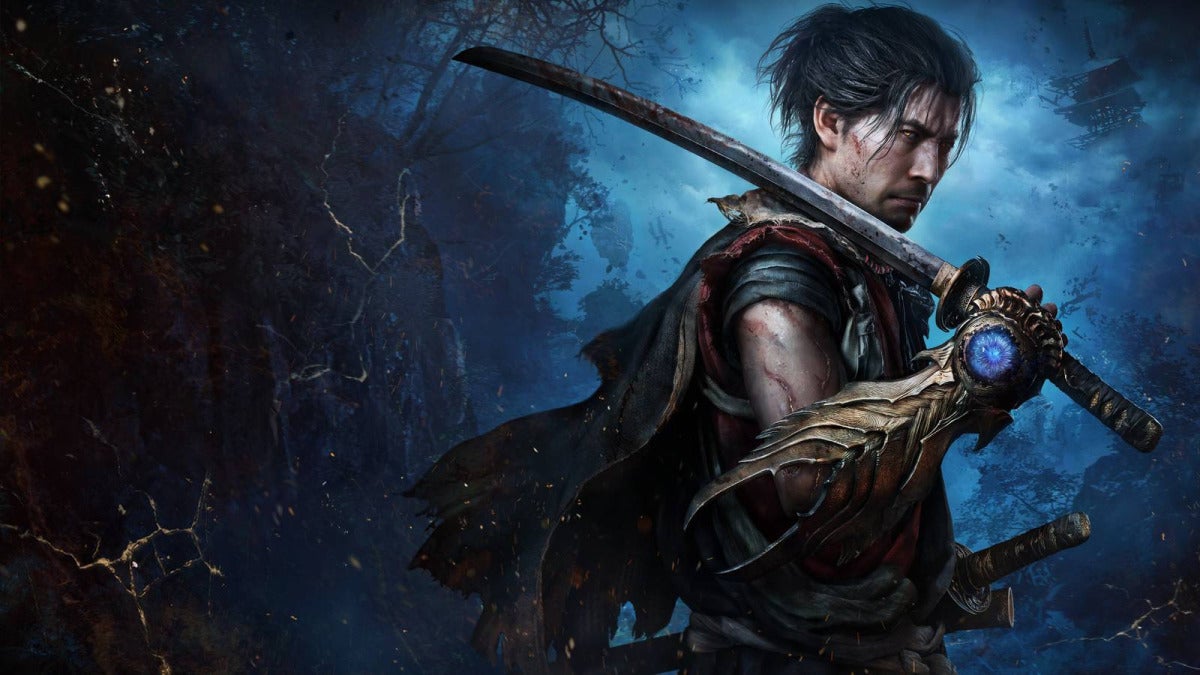
Onimusha: Way of the Sword gets a release date: editions and bonuses

Capcom has set Onimusha: Way of the Sword for September 4, 2026 on PlayStation 5, Xbox Series X/S, Nintendo Switch 2, and Windows PC. It’s the first brand-new mainline Onimusha since 2006’s Onimusha: Dawn of Dreams, and the story stands on its own, so you won’t need to know the older games to get into it.

Steam Download

Players in North America can actually start a little earlier, on the evening of September 3. Capcom also pulled the release date forward from September 25 after the game got a stronger promotional push, including a public demo that followed Sony’s June 2026 State of Play.

The setup is a dark-fantasy story in Kyoto, with Miyamoto Musashi facing off against the Genma. Combat brings back Issen parries and soul absorption, and early coverage has framed the campaign as challenging without really falling into Soulslike territory. Current expectations put it at around 20 hours, and again, it sounds built so newcomers can jump in without homework.

Pre-orders come with the Lion Dog Charm and the Sealed Curse appearance. Beyond that, Onimusha: Way of the Sword is getting Standard, Deluxe, and Premium Deluxe editions, with the higher tiers adding extra cosmetics and charms. The Standard edition will probably do the job for most people unless more customization is the draw.

If you’ve been waiting for Onimusha to come back, this one looks like an easy recommendation. Early reviews have leaned broadly positive, and most of the praise has gone straight to the combat.

You can pick it up on PlayStation 5, Xbox Series X/S, Nintendo Switch 2, and Windows PC.

The Twilight Zone’s ‘Living Doll’ is still worth watching today

The Twilight Zone episode “Living Doll,” from season 5, first aired on November 1, 1963, and it brought one of Rod Serling’s nastiest, most lasting horror stories to television: a cheerful little talking doll named Talky Tina starts making threats against the family that brings her home.

In “Living Doll,” Telly Savalas plays the abusive stepfather Erich Streator, while young Christie receives Talky Tina as a gift. The hook lands fast. It begins with the doll’s sugary, child-friendly patter, then turns into the line that makes the whole episode stick in your head: “I’m going to kill you.” It still holds up, mostly because the real source of horror isn’t the doll by itself. It’s Erich Streator’s cruelty toward Christie and Annabelle, the psychological abuse, and the kind of broken home the episode gets painfully, uncomfortably right.

Poppy Playtime Download

The on-screen teleplay credit belongs to Charles Beaumont, though Jerry Sohl later said he ghostwrote the script during Beaumont’s neurological decline. Talky Tina drew clear inspiration from Mattel’s Chatty Cathy, and June Foray voiced Talky Tina just as she had voiced the actual Chatty Cathy doll. Then there’s Bernard Herrmann’s score, already famous from Psycho, which turns an ordinary suburban setting into a place that feels tense all the time.

If you’re going back to classic TV horror, “Living Doll” is an easy one to seek out. It helped set the template for killer or sentient toy horror, from Child’s Play and Chucky to later Simpsons parodies. It also still opens itself up to readings about patriarchy, childhood trauma, and gendered power. And Jordan Peele has said in interviews that it scared him badly when he was a kid.

You can stream or buy The Twilight Zone on the major digital TV platforms.

Marine Corps today: Why Marines use Hueys and Cobras, not Apaches or Black Hawks

The Marine Corps flies the AH-1Z Viper, UH-1Y Venom, and CH-53K King Stallion for expeditionary, ship-based work, not the Army’s AH-64 Apache or UH-60 Black Hawk. The reason is pretty straightforward: Marine aviation has to operate from ships and rough, austere sites, so it leans toward helicopters built for naval use.

That changes the requirements. Marines need corrosion protection, folding rotors, reinforced landing gear, and dimensions that work on crowded flight decks. That’s why the AH-1Z Viper and UH-1Y Venom make more sense in this role than the AH-64 Apache and UH-60 Black Hawk. The AH-1Z Viper is often listed at 255 mph, compared with 182 mph for the AH-64 Apache, while the UH-1Y Venom covers transport, command and control, escort, and resupply. There’s also a logistics upside: the AH-1Z Viper and UH-1Y Venom share about 85% of their parts, which cuts maintenance, training, and support demands.

The same logic applies on the heavy-lift side. The CH-53K King Stallion fits Marine missions better than an Army CH-47 Chinook because it can haul a 36,000-pound external load and includes automated rotor and tail folding for shipboard service.

The roadmap is laid out in Force Design 2030 and the U.S. Marine Corps 2026 Aviation Plan. In those documents, the Corps says it’s replacing the CH-53E with 200 CH-53Ks and upgrading the H-1 fleet through SPINE for more power, longer service life, better connectivity, weapons integration, survivability, F-35 data sharing, and manned-unmanned teaming.