The last Olympics were an example of perseverance and sportsmanship. That never changes. But there was also a spectacle that won’t be remembered precisely for representing the best of sport and humanity. It happened during the breakdance exhibition, which had been decided before the Games would not become an Olympic sport in future Games, when one of the participants put on a display that shocked the entire world. And not exactly because of its quality.
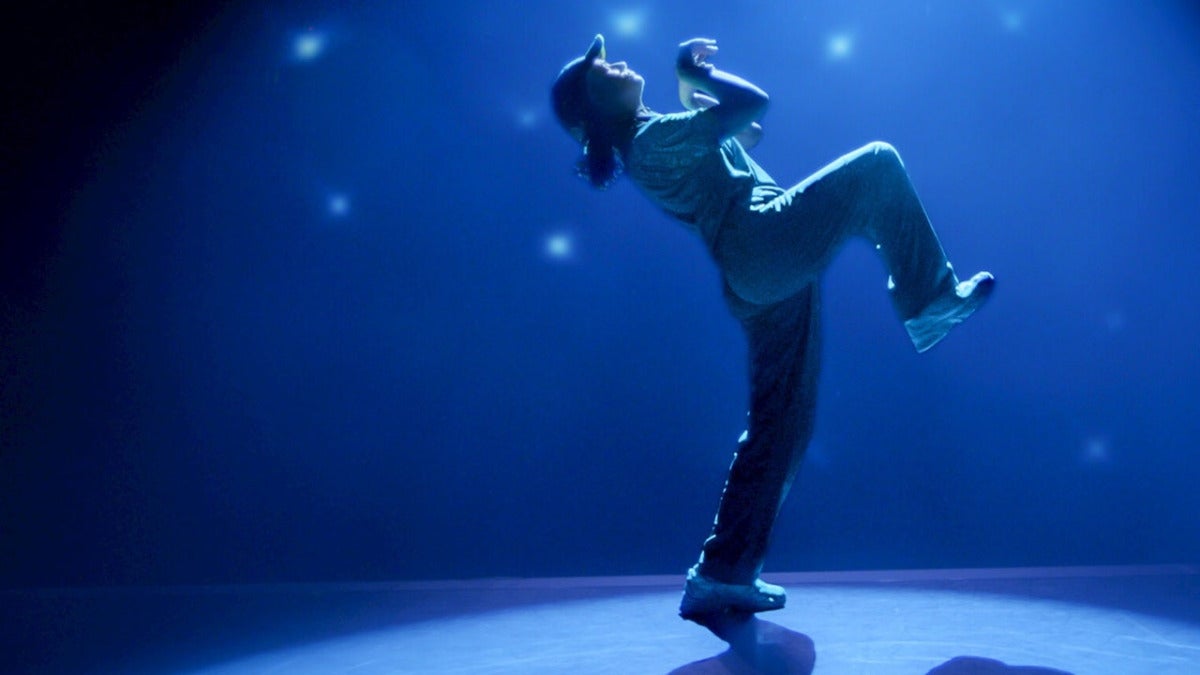
Raygun made her Olympic debut and left everyone dumbfounded with moves that didn’t look like breakdance. let alone anything even remotely artistic or athletic. Sparking days of debate over who, how, and why her performance had been allowed at the Olympics, she was one of the biggest talking points of those Games. And now Netflix is releasing a documentary about her, Untold Raygun: Breaking Badly, which is as controversial as its own protagonist.
A bit of context
The documentary puts a lot of emphasis on telling us where Raygun comes from, whose real name is Rachael Gunn. She discovered breaking through Samuel Free, the man who would become her coach and currently her husband, she would devote her time over the years to learning this combination of art and sport while competing in Australia. To show us her dedication, the documentary uses two people she has competed with for a decade: Flix and Tinylocks.
This isn’t very convincing when neither of the girls seems at any point to want to give Gunn any credit. Always avoiding any suggestion that she has talent, acknowledging her merits, and calling her “strange and unique” several times, the documentary, although it insists on casting Gunn in a positive light, never succeeds. Especially when both of them seem tremendously surprised when Gunn managed to qualify to represent Oceania at the Olympic Games after winning the qualifying tournament.
From here on, the documentary focuses on Gunn’s awareness that she isn’t up to the task. That all the other participants are far ahead of her technically and in their understanding of breaking to take part in the competition. Something that causes her tremendous anxiety.
This is where the documentary is most sincere and interesting. When it tries to show us a vulnerable woman who truly wasn’t aware of what she was doing as she realizes what’s happening. That’s where there is something genuine and interesting in this documentary and that sheds light on something we were all wondering, how could something like this happen at the Olympics? Unfortunately, that’s not what interests the documentary.
A catastrophic ending
The end of the documentary puts her coach and husband in front of the camera to say that “the performance connected with people, whether through genuine emotion and entertainment or through outrage. It generated debate and made the entire world talk about it,” as if that were the most important thing we have to take away from the whole Gunn episode. In fact ruining everything we’ve seen up to that point.
If the documentary has anything interesting, at least one part of it, it’s that it cancels out that perspective. It’s that it says not everything is acceptable. That generating debate, making people talk for no real reason, without trying to say anything specific, serves no purpose; art must seek to evoke a specific emotion or thought—otherwise it’s pointless. It is nothing more than the hollow gestures of a useless person or an idiot. But the end of the documentary shows they haven’t understood it. Neither the people behind the documentary nor Free nor Gunn herself: not everything goes.
That’s the saddest part. That despite going through everything, she still doesn’t understand it. That after taking a place that could have gone to someone better suited, who could have expressed something genuine and sincere and who truly wanted to communicate something concrete and specific, she still doesn’t understand what she did and why it isn’t okay. And she’s made a documentary to try to sell us on the idea that, deep down, it’s okay. That’s the saddest thing of all. That she still doesn’t understand her own misery, which she’s now selling on Netflix.