Elliot Page after ‘The Odyssey’: ‘I’m not getting calls’

Actor Elliot Page says new offers still aren’t coming in, even after Christopher Nolan’s The Odyssey blew past $1.5 billion at the box office.

IMDb Download

People can pretend otherwise now, but for months we had to hear the same line over and over: The Odyssey was doomed to flop because it was “woke” for casting Lupita Nyong’o and Elliot Page, a Black actress and a trans actor, appearing on screen while being exactly those things.

Regular moviegoers, obviously, did not care. The film has already cleared $1.5 billion, and pretty much everyone tied to it has landed on their feet. Well, nearly everyone.

No Work for Page

You’d think that after working with Christopher Nolan, Elliot Page’s phone would be blowing up. According to Page, that hasn’t happened at all.

Speaking on Kevin McCarthy’s podcast, Page said: “I’m not getting calls. So, if anyone wants to call me…”

McCarthy sounded genuinely taken aback. He asked Page what was next, and whether he had anything due out soon.

Page’s answer was blunt: “The truth is, no. I’d love to do a great job, that’s what I love doing”.

Apparently, Page has even started thinking he may need to call directors himself: “People used to see me one way before, and it’s different now. I think it’s for obvious reasons: I’m Canadian”.

If only. In a world where J.K. Rowling gets showered with praise, imagine if being born in Canada were the issue. Sigh.

For those of us who want to see Elliot Page do well and stick two fingers up at the world, there is at least one small consolation: he thinks he’s acting better now than ever. “I feel like I could do my best work now.”

Right now, the only credit listed on Elliot Page’s IMDb page is a voice role in a movie about dolphins. Is someone going to pick up the phone already?

Google launches Gmail Live: Gemini voice features come to Gmail, Docs, and Keep

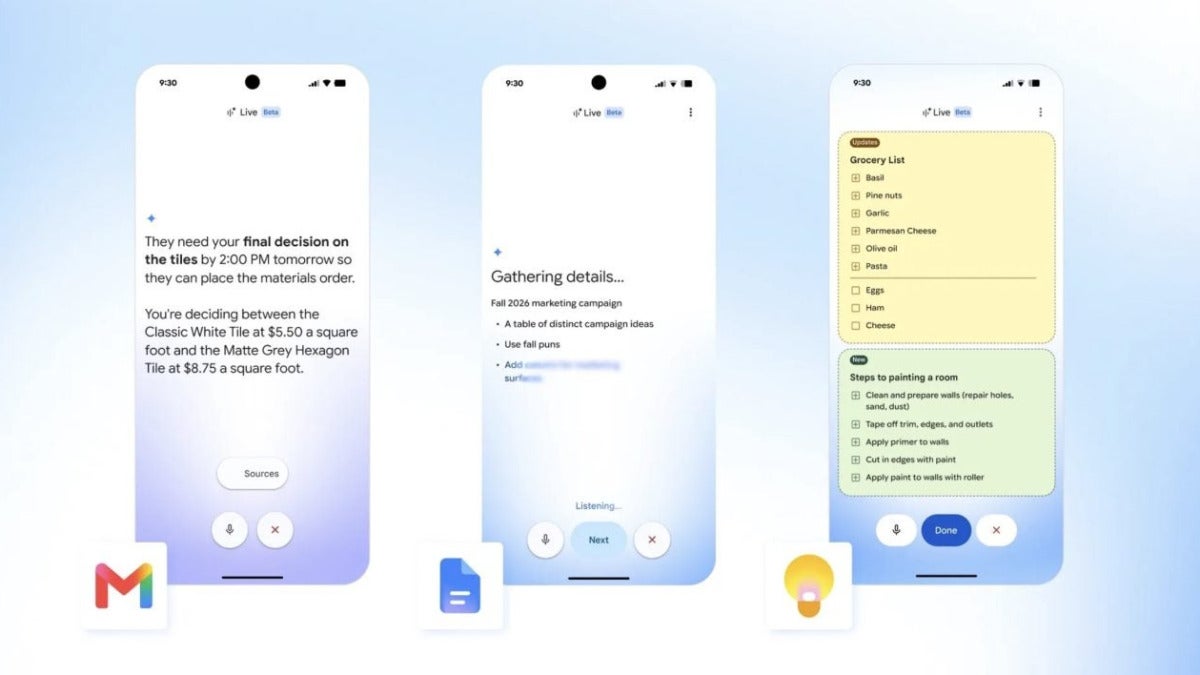
Google is rolling out Gmail Live, Docs Live, and Keep Live, three new features that let us talk to our apps to look up information, draft text, and sort through our ideas. All three run on Gemini, and they push Google a little further down a path it’s already been on for months: weaving Google Gemini into everyday products like Gmail and Google Docs, after a long stretch of teaching people to use AI inside those apps.

Gmail Live makes the inbox something we can talk through, and Docs Live and Keep Live follow the same idea

With Gmail Live, we can ask Google Gemini about what’s in our emails. That could mean pulling up details about a trip, finding a specific piece of information, or just asking follow-up questions about the answers while a live transcript appears on screen.

Gmail Download

TechCrunch reports that Google didn’t stop there, because the company is also adding this voice feature to Google Docs and Google Keep**.

In Docs Live, we can say what we want to write and Google Gemini will put together a first draft, using, if we allow it, context from Gmail, Drive, Chat, and the web. Keep Live takes a different angle. It turns Google Keep into a voice-driven notepad where we can organize ideas, lists, or even recipes.

Google says these features are rolling out in English on iOS and Android under different plans. Gmail Live is available with Google AI Plus, Google AI Pro, which students can get for free, and Google AI Ultra. Docs Live and Keep Live, on the other hand, require either a Google AI Pro or Google AI Ultra subscription.

What Google is trying to do here is pretty clear: bring AI into the tools people already use every day. This time, if we’d rather speak than dig through menus and tap our way around the screen, that option’s there.

GPT-6 Astra is here: OpenAI says it’s the start of AGI

OpenAI unveiled GPT-6 Astra exactly one year after it launched GPT-5. Yesterday, the company began rolling GPT-6 Astra out to a small group of organizations.

ChatGPT Download

OpenAI says GPT-6 Astra is its smartest model yet, and the one that’s most closely aligned with user intent. The company says the biggest jump shows up on the hardest professional work: programming, science, and autonomous computer use.

A model so capable that people are already talking about AGI

By OpenAI’s own numbers, Astra scores 98% on FrontierMath Tier 4, 99.9% on ARC-AGI-3, and 100% on ExploitBench. The company is pitching it as a major step up from GPT-5.6 Sol, Terra, and Luna, which were released just two months ago.

OpenAI also says ChatGPT with Astra can use applications, browse the web, and handle multi-step workflows like creating documents, spreadsheets, and presentations. On most tasks, the company says, it’s nearly twice as fast.

Greg Brockman serves as OpenAI’s president, and he believes we’re starting to move into the era of artificial general intelligence. Part of that claim comes from OpenAI’s own testing: Astra’s cybersecurity capabilities have reached the company’s “Critical” level. OpenAI has also put new security measures in place after the Hugging Face incident.

The rollout started yesterday with selected organizations and, OpenAI says, GPT-6 Astra will reach the rest of ChatGPT Plus, Pro, Business, and Enterprise users in the next few days, along with the API and AWS.

Luna Band launches globally at IFA 2026: a screenless tracker with no subscription

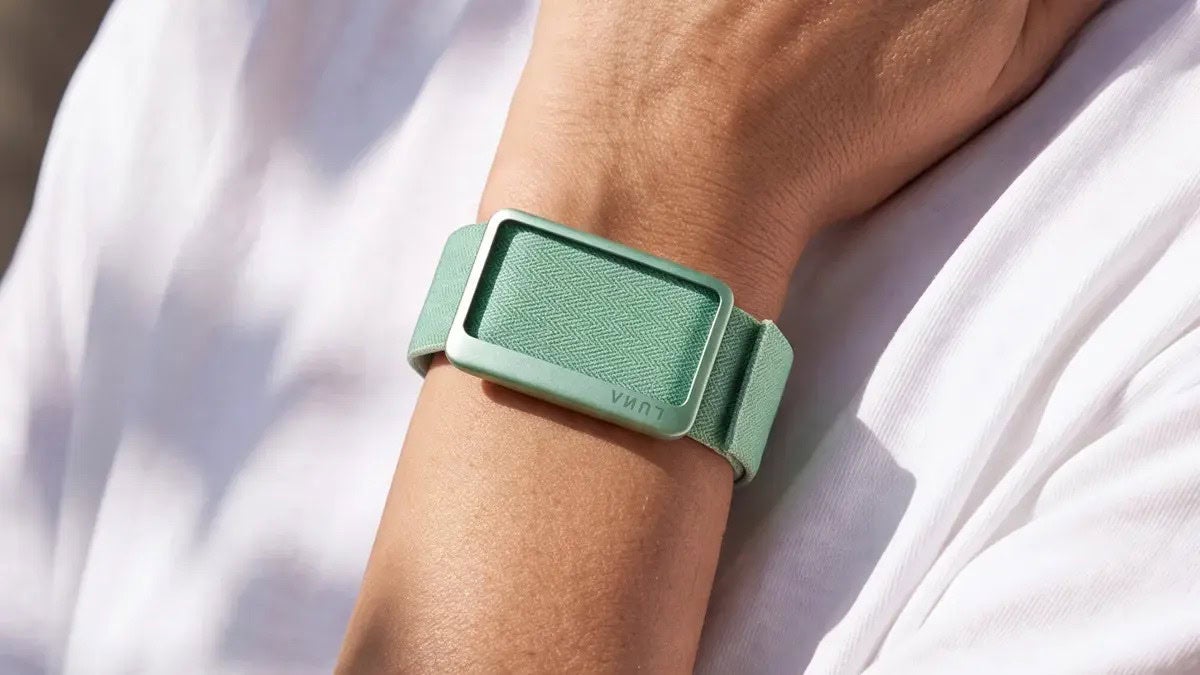
At IFA 2026, Luna took Luna Band global and pitched it as a screen-free fitness tracker, putting it head-to-head with Fitbit Air in one of the wearables market’s fastest-growing corners.

Fitbit Download

Luna’s pitch is pretty direct: pay once and get the full Luna Band feature set, including the company’s LifeOS health engine, rather than signing up for the subscription setup tied to Fitbit Air and Google Health Premium, at least according to Luna.

The company also says Luna Band can take voice input for meals, symptoms, and other wellness notes, then use that information to serve up more proactive prompts over time. That lines up with what showed up across IFA 2026 more broadly: a bigger push toward sleep, stress, recovery, and day-to-day lifestyle coaching. And it matters. The screen-free category jumped 122% year over year in Q2 2026, even while the broader wearable band market dipped 2%.

If you want something lighter on the wrist, less distracting, and free of another monthly charge, Luna Band looks like a product worth considering. Still, the real test hasn’t changed: sensor accuracy, the quality of its recommendations, day-to-day reliability, privacy, e-waste, and whether automated coaching actually holds up across different kinds of users and different regions.

Luna Band is available now through Luna’s invite-only global rollout, according to the company. We’ll probably get a much clearer read on it once more people outside North America and Europe are actually wearing it.

Claude Mythos flags 23,019 software flaws: 21,000 still await human review

By June 2026, Anthropic said its AI system, Claude Mythos, had produced 23,019 vulnerability reports across open-source software. Only about 1,900 had been reviewed by outside parties. That meant more than 21,000 findings were still unverified. Even so, Anthropic says 1,726 of the reviewed reports turned out to be real vulnerabilities, which helps explain why AI-driven bug hunting can feel like a real shift in security work. But people still have to do the hard part, because severity was often rated too high and the choke point is moving away from discovery and toward validation and patching.

That need for human review shows up pretty clearly in the severity calls. Across 27 Common Vulnerabilities and Exposures, or CVE, cases, Anthropic’s Claude Mythos labeled eight as critical. After review, only one of those still counted as critical, and 13 of the 27 original ratings were judged too high. Temporal Server is a good example. A flaw there was first tagged as critical, then later dropped to low because exploiting it depended on rare setups, unusual deployment conditions, or privileged access. At that point, maintainers still had to sort out exploitability, business impact, and patch priority.

Anyone who follows software security should keep an eye on this, because the bottleneck is shifting from finding bugs to checking them and fixing them, and monthly CVE disclosures rose 145% in the two years leading up to June 2026. These reports hit open-source projects, not some consumer app download page, and researchers are divided. On one side, cheaper and faster auditing. On the other, the risk that machine-generated disclosures will swamp teams, maintainers, and bug bounty programs as the number of discovered bugs keeps climbing.