Apple event on October 13?

Apple seems to be preparing a second event for this fall. After the unveiling of the iPhone Duo, all signs point to October 13 as the date for a new event focused entirely on the smart home. And, if the pieces fit, it will be one of the most interesting events of the year for Apple’s smart home ecosystem.

Apple TV Download

Three new products for the home

According to Bloomberg, Apple plans to unveil on the 13th three devices: its long-awaited smart home hub, which for now we’re calling HomePad, a second-generation HomePod mini, and a new Apple TV 4K.

The main star will be the Home Hub, of course, a screen of around six inches designed to bring together home automation, communication, and content in a single device. Apple would be building out its home hub with Siri AI as a key piece for recognizing us and showing us our personalized information.

Added to that are the new Apple TV 4K and a HomePod mini built for Siri AI. The full-size HomePod, meanwhile, would be left for later.

Add to that reports that Apple is also developing its own security camera for HomeKit, the pieces are starting to point to a particularly interesting smart-home lineup. For now we’ll have to wait to learn more, but the rumors around these products have been very consistent, so October 13 looks more and more likely for Apple’s next big event for this fall.

Micron gives us the date for when RAM will be cheap again

If you were hoping memory prices would come down soon, you were already expecting bad news, since nobody’s been giving good news lately. Micron, one of the world’s biggest memory manufacturers (although it no longer makes products for consumers, only for companies), has warned that the RAM shortage isn’t going away and could even get worse.

CPU-Z Download

According to The Register, Micron’s CEO and president, Sanjay Mehrotra, told investors during the company’s fiscal 2026 results presentation that most of next year’s memory production has already been sold. On top of that, buyers will have to pay “much higher prices” than this year’s. In other words, it’s going to be impossible to buy RAM or any product that uses RAM.

The biggest takeaway from the Micron call is probably that they expect supply in 2028 to be even tighter than in 2026.

Some Anal-ysts are claiming there will be oversupply in 2028. That’s absurd.

What this comment tells us is that a substantial portion of 2028 volume is…

— Jukan (@jukan05) October 1, 2026

How long will this RAM shortage last?

It’ll last longer than any of us would like. “In both calendar year 2027 and 2028, we expect demand to exceed supply,” Mehrotra said, adding that the shortage in those two years will be worse than the one we’re experiencing in 2026. And even more worrying, Micron doesn’t know when the situation will improve. “We don’t have a clear view of when supply and demand will come back into balance,” he admitted. Things look grim, honestly.

Micron is building new factories that should start producing in 2028, backed by planned spending of $25 billion for the first half of its new fiscal year. Unfortunately, no relief is expected when they open, since Micron executives warned that the new plants won’t immediately solve either availability or pricing problems.

AI is to blame, of course. The high-bandwidth memory (HBM) that powers AI hardware is in such demand that it’s outstripping the standard DRAM used by servers.

An American company will launch an AI server into lunar orbit, this is the incredible mission

Starcloud has committed to sending its artificial intelligence data-processing hardware to lunar orbit aboard a Firefly Aerospace spacecraft.

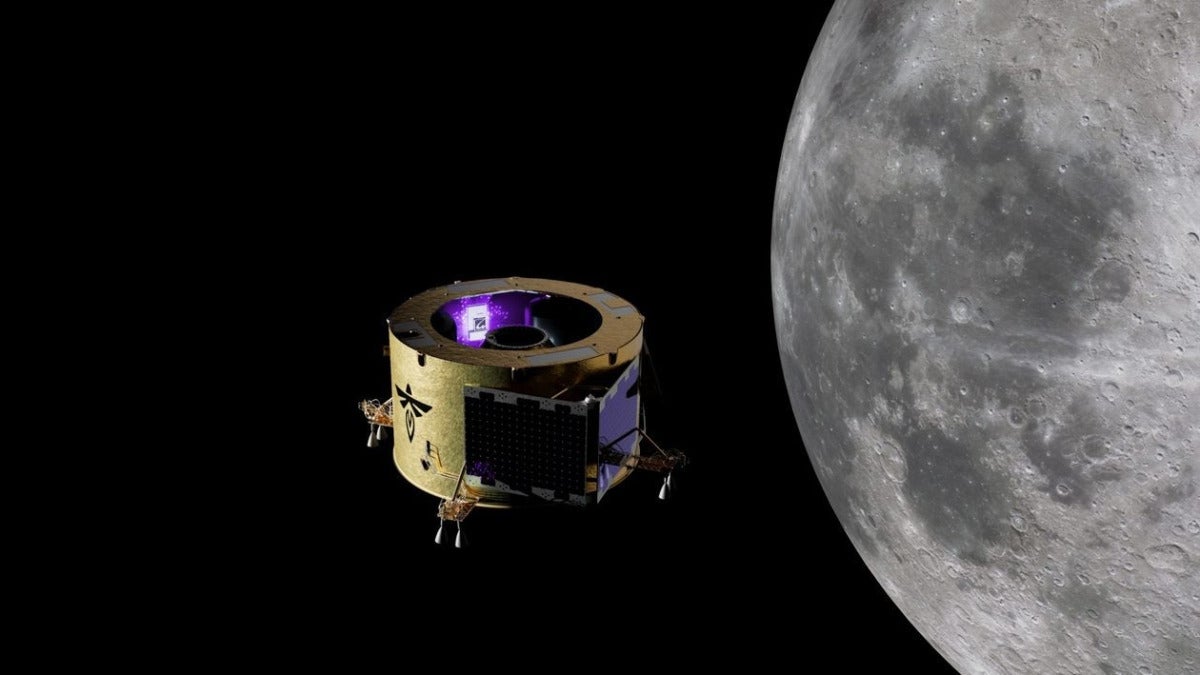
Starcloud’s payload, known as SC-1L, will fly aboard Firefly’s Elytra orbital vehicle during a NASA-backed mission whose launch is scheduled no earlier than 2028. The mission will demonstrate the technologies that Starcloud plans to use in AI data centers in Earth orbit, as well as around the Moon.

Stellarium Download

Starcloud is going to the moon! 🌚🚀

I’m excited to share that @Starcloud_ has signed an agreement with @FireflySpace to fly onboard Firefly’s Elytra spacecraft in lunar orbit, validating capabilities for a future orbital lunar data center.

Integrated on Elytra, Starcloud’s… pic.twitter.com/Xo4uds1r8M

— Philip Johnston (@PhilipJohnston) September 30, 2026

AI’s next destination: the Moon

“Space is the future of data centers, and the Moon is the next frontier for that vision,” Ezra Feilden, Starcloud’s co-founder and chief technology officer, said today in a press release.

Starcloud made its mark in Earth orbit last year with Starcloud-1, a satellite equipped with an Nvidia H100 chip. Starcloud-1 successfully trained a large language model called NanoGPT, which was a first in the field of orbital computing. “We have successfully validated our ability to run and train AI models on enterprise-grade GPUs in low Earth orbit, and now we are going to take this proven technology to lunar orbit,” Feilden said.

Starcloud’s SC-1L payload will be integrated aboard the Elytra vehicle for a mission that will take Firefly’s Blue Ghost lander to a lunar region known as the Gruithuisen Domes. Once the lander separates from Elytra and descends to the surface, the vehicle in orbit will serve as a data relay for Blue Ghost. The future looks exciting.

In California they’ve decided to put limits on AI: it won’t be able to fire you or monitor you in the bathroom

California has passed new legislation to protect workers from firings and surveillance driven by artificial intelligence (AI), Governor Gavin Newsom announced. We’ve come to that point, having to ask AI not to fire us, it’s hard to accept.

ChatGPT Download

The new laws are aimed mainly at companies that use AI to make layoffs or monitor employees, and not at those that take advantage of this technology to replace workers.

Even so, it is one of the first pieces of legislation in the country that grants employees a say in how AI can be used in the workplace.

AI should expand opportunity, not come at the expense of workers.

That’s why I just signed first-in-the-nation laws to protect California workers as businesses adopt AI.

We’re now requiring human review before AI-driven firings, transparency when AI leads to layoffs, and new… pic.twitter.com/XghxU2b8UR

— Governor Gavin Newsom (@CAgovernor) September 30, 2026

AI as a tool, never the decision-maker

Split across several bills, the new rules prohibit employers from relying exclusively on AI when taking disciplinary action or deciding to fire someone, and require companies to ensure transparency if an AI system causes any mass layoff, transfer, or termination.

It also protects against the use of surveillance tools in workplace bathrooms and prohibits lawyers from “completely handing over fundamental legal tasks,” such as drafting filings, to AI.

California’s new laws may have been motivated, in part, by complaints from Meta employees, who said the company was using biased AI tools that flagged people who had taken medical leave for firing.

Valve will change how Steam discounts work by 2027

Valve has been changing many aspects of Steam in recent years and it seems that the next big change is going to be how they present their deals. In particular, the daily deals, the recommended ones, and the personalized ones. According to the company, by early 2027, they plan to completely change how they handle these aspects of the store. The goal is to give it a “more dynamic and personalized for each customer” look.

A change in the presentation of deals

As they’ve explained in the blog post, their goals are “to show the right games to the right users. That’s why, over the last few months, we’ve been testing ways to replace some of the curated slots with dynamic and personalized recommendations. By featuring games in a more personalized way in the ‘Discounts and Events’ section, we managed to show customers in that section 10 times as many games over the course of a day”. That means more sales.

Steam Download

Although they say that “in the coming weeks, we’ll have a clearer idea of the release date for these changes” and that, by extension, still don’t know for certain when these changes will happen, they’ve already stated that it’ll be during 2027. Specifically, in the first half of next year.

Insisting that all this won’t affect all the marketing plans already planned, it seems Valve wants to push an algorithm-based approach similar to that of other similar stores and services. This has raised concerns in some quarters, because some fear it could be an excuse to introduce dynamic pricing, something Sony is also considering for the PlayStation Store, although Valve hasn’t confirmed anything about that. So we’ll have to wait to learn more about the exact implications of these discount changes.