Microsoft launch malware protection project

Malware Protection Center Portal logoMicrosoft have unveiled a new tool in the fight against malware with the launch of their Malware Protection Center Portal. The site is basically a combination of warnings about the latest threats, encyclopedic information on malware plus downloads of Microsoft’s anti-virus and anti-spyware software.

In a further step, the software giant has also announced it will begin publishing a Security Intelligence Report about the latest PC threats. They’re even encouraging users to upload infected files to their Protection Center Portal to conduct further analysis and help other affected users.

First impressions are that the portal certainly looks useful. The homepage presents a list of the top 10 security threats relating to desktops, e-mails, MSRT detections and Adware/Spyware. At the time of writing, it lists the top three desktop threats as Exploit:HTML/IframeRef.gen, TrojanDownloader:JS/Agent.FA and Trojan:Win32/Fotomoto.A.

However, this should have been launched years ago by Microsoft who’s software and operating systems have been subject to constant security issues. Many will also surely ask, if they can’t secure their own operating system, why trust them with security software? In addition, there are so many third party security software developers on the scene now that Microsoft have missed the boat somewhat although the site will at least be a decent reference point to keep track of the latest global security threats if nothing else.

By the way, the team behind the project also have a blog with commentary on the latest developments on the portal.
Google launch Picasa for mobiles

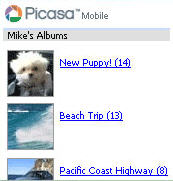
Picasa Mobile screenshotGood news for Picasa fans – Google have launched the first version of the photo software for mobile devices. Like the desktop version, it conveniently groups together all your images – including wallpapers – into easy to navigate groups. You can also click ‘My Favorites’ from the main screen to connect to the internet and see the latest photo albums that your contacts have posted to Picasa Web Albums and leave comments.

Google say there’s no messing around with resizing either – all images are automatically re-sized for your device’s screen so that they download quickly. There’s also a built-in search that lets you retrieve any photo you’ve posted online, find photos posted by your friends or simply just have fun exploring other people’s photos. Note that you’ll need a phone with a web browser and WAP plan to access the service.

Initial impressions seem very good and LetsGoDigital have an interesting review highlighting the convenient blogging function that allows those using Blogger to post photos directly from their phone. Google Blogoscoped meanwhile takes a more in-depth look at the mapping functions it offers allowing you to link photos to locations.

Zoho launches Facebook office app

ZohoAs American research recently revealed, Facebook is the social networking site of the intellectual, or at least the university student with rich parents.

So perhaps it’s no surprise that Zoho, an office suite provider, has launched a new Facebook application allowing users to create documents, spreadsheets and presentations while networking with their fraternity. The app offers editing facilities (both personal and shared) from Zoho Writer, Sheet and Show.Facebook app

There are plenty of applications for Facebook including music add-ons, graffiti, ‘zombies’ that bite your friends, a ‘where I’ve been map’ and a whole load of other stuff that makes keeping in contact with people you don’t really like more fun.

All this comes as Nielsen/NetRatings warns that MySpace may have jumped the shark after May saw a slump in its UK traffic while Facebook and Bebo continued to reel-in more new users. With Facebook poised to overtake MySpace’s Alexa ranking, could it be time for a major facelift?

Google launches news in images

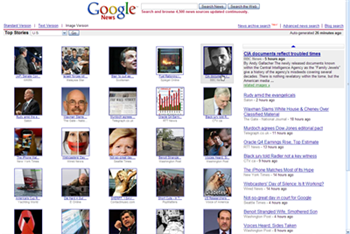
Google News Image VersionGoogle Operating System has the scoop on a new interface which the search giant has added to its news pages. ‘Google News Image Version‘ displays headlines as thumbnail images in the main panel and includes an animated sidebar which highlights your chosen story when you hover over an image.

The interface is attractive and easy to use. It definitely adds a new dimension to reading the news but it will be even better when it uses video. There is some criticism that claims that Google has gone slightly over the top with its implementation of AJAX on the page but we think the interface is pretty snazzy. Currently, the new look is only available for the US, Australian, Canadian and Chinese news sites.

YouTube launches mobile phone service

youtubemobileMobile phone users can at last enjoy the world’s most popular video file sharing website on their phones. YouTube Mobile has finally been launched as a super-streamlined version of the original site. The videos can be streamed on any phone that can view RTSP/3GP files with H263/AMR. Note that as yet, it does not work on Windows Mobile 5 or Palms.

The site itself is very sparse with a random selection of short clips running down the side of the page. You can sort them by various categories including Most Viewed, Featured and Top Rated. There is however an initial warning before entering the site warning that the service could put a severe dent in your mobile bill! It states:

YouTube Mobile is a data intensive application. We highly recommend that you upgrade to an unlimited data plan with your mobile service provider to avoid additional charges.

This is not the first time YouTube clips have been available on mobiles. Previously, the company had exclusive deals with Verizon in the USA and Vodafone in the UK but this is the first time they’ve stepped out alone. However, this new service is quite disappointing at the moment. The amount of clips is extremely limited and only a tiny fraction of the main site’s videos are on there. Searches for your favourite clips will invariably find no results and most of the clips are no longer than 3 minutes long. Once all the content has been made available, this is surely going to be one of the most visited mobile sites out there.

Microsoft to launch ‘Joost’ service?

MS TV logo?With Joost barely off the ground, it looks like Microsoft is planning its own assault on the P2P TV market based on a recently registered trademark and patent (number 1176435). The logo has been accompanied by a patent description that reads uncannily like the Joost P2P service. The patent definition includes:

Computer software for providing video-on-demand services; downloadable films and TV programs provided via video-on-demand. Broadcasting services, providing video and television programming over broadband, cable, satellite and wireless networks; video-on-demand services via broadband networks. Provision of non-downloadable films and TV programs via a video-on-demand service; distribution of television shows, movies and videos for others.

The patent was registered in Australia and it’s clear from the different logo (pictured) that this has nothing to do with Microsoft TV. However, it’s my guess that they’ll either revamp Microsoft TV to include the new service or introduce it into the next version of Windows Media Player. It’s also worth remembering that Microsoft already provide Video on Demand via the Xbox Live Video Marketplace. Intriguingly, the patent also includes:

Transmitting personal photos, video and music over broadband, cable, satellite and wireless networks.

This suggests that unlike Joost, the new service will try to go beyond just P2P TV although unless it can offer something extra in terms of ultra fast uploading speeds or huge free storage capacities, I don’t see why people will abandon the hugely popular Flickr and Picassa photo sharing sites. However, Microsoft don’t seem to be in any rush to get this service off the ground and maybe they are waiting to see how Joost fares before taking the plunge themselves – by which time it might already be too late.

Adobe Apollo, renamed as AIR, launches beta

adobe-apollo-air.jpgThe people at Adobe Labs are working hard on one of their most important goals for this year: the development of Adobe Apollo. Well, that was until now, because the project has just been renamed as AIR, which stands for Adobe Integrated Runtime. For those who feel a bit lost, let me remind you that AIR is a cross-platform system runtime that will allow web developers to create rich Internet applications for the desktop, acting as a kind of bridge between online and offline software tools.

Anyway, it seems that AIR is moving steadily onwards: after releasing an alpha version intended for developers, they’ve launched a beta version which you can download from the Adobe Labs site. This new version features full support for HTML and Ajax. Plus, Adobe confirms its aim to launch the final version by the end of this year.

I don’t know about you, but I’m really looking forward to seeing the impact of AIR in software development. I think the fact that software giants like Adobe and Microsoft (with their Silverlight project) have put so much effort in this area means that the lines between web and desktop apps get thinner everyday, something which will obviously influence the evolution of software as we now know it. Can you guess what software will be like in one, three, even five years time? I can’t wait to see!

IPv6, BootCamp etc – Vista news round up

Windows Vista logoThere are reports this week that IPv6, the ‘Next Generation Internet’ is suffering from some poor support in Windows Vista. Carolyn Duffy Marsan at Network World gets some great detail on the story. Apparently, it’s all about IPv4 and IPv6 not playing well together: the recommendation is that IPv6 be removed from workstations for the time being.
Microsoft has released an updated version of the Windows Mobile Device Centre, fixing a problem which prevented the latest WM6 devices from properly syncing with Vista. No more having to type in your PIN every time you try to sync!

LogonStudio has long been a popular way to customise the way your Windows login screen looks. They’ve got a new version out for Vista and the guys at WinCustomize.com have put together a nice guide to the new app.

Finally, some good news for Mac OS X Tiger users. Apple have revealed the latest version of their Boot Camp, the utility which allows users with the latest Macs to boot into Windows. Beta 1.3 includes some bugfixes, better support for Vista, improved graphics drivers, improved support for international keyboards and… that’s about it. Also updated is the popular alternative, Parallels, which lets users run alternative operating systems from their Mac OS desktop without restarting. The new version includes better CPU and RAM handling, but most importantly the new SmartSelect technology that allows seamless integration of Windows applications into the Mac OS environment.

Palm releases Foleo: mixed emotions ensue

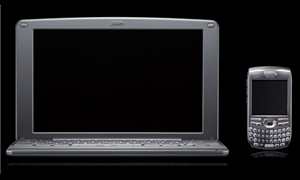
Palm FoleoPalm announced its latest device yesterday, aimed at filling a gap in the market that many of us didn’t know even existed. The Foleo is a ‘smartphone companion’, designed to connect wirelessly with your smartphone. It features a 10-inch screen, full size keyboard and an ‘open’ linux platform that promises future compatibility with devices other than the Treo range.Opinion on the announcement varies. Carlo Longino at Techdirt finds the Foleo to be ‘not exactly overwhelming’:

It’s hard to understand the point of the Foleo, or why [Palm founder] Hawkins and Palm think it’s so wonderful. There are two ways to see it: first, as an admission that Palm won’t ever be able to create a Treo that will satisfy users’ needs, or an admission that they think their Treos are perfect and this is the only way they can figure out to improve on it. Neither is particularly good for the company.

The argument that for $500, business users can have a laptop with more functions and connectivity than the Foleo is compelling. But at the same time, doesn’t this new device offer just what business users need, without the extraneous functionality (and extra bulk and weight) of a complete computer system? If a business user needs web, email and document access – and not much more – then perhaps the Foleo really is a viable product. The Guardian’s tech blog points out, however, that other products have flopped while trying to provide just this stripped-down capability.

The buzz on Palm user forums also seems to be split, with some users emphasising the fact that the Foleo could be used with other smartphones (by, say, Nokia or Sony Ericsson)… assuming their manufacturers can be bothered to develop APIs for it. But while opinion on the Foleo is split, it’s not split equally. Most coverage and commentary are pretty negative – but offer a sliver of hope based on certain provisos, particularly the openness of its ‘open’ system. If Palm ensures that outside developers and handset manufacturers start working with Foleo, it could succeed.

In other words, the future of Palm’s latest product depends not on its own potential user-base but on a series of other firms, some of which are direct competitors. That’s a risky strategy.

iTunes to launch new version with DRM-free tracks

itunes-logo.jpgToday Apple launches iTunes 7.2, which you may already have downloaded through the program’s Update feature. This wouldn’t be really any news if it weren’t for the main change included in this new version: “Support for iTunes Plus“.

Apparently this is how they’re going to call the new DRM-free tracks which Apple will be selling via the iTunes Store, after the deal they signed with EMI back in April. According to the terms of this agreement, the whole EMI music catalogue will be included in the iTunes store and sold without DRM, that is, without the limitations what prevent you from copying those tracks onto your portable MP3 player or recording them to a CD.

These DRM-free songs will be a little above the standard iTunes price ($1.29 each) but will also offer a higher sound quality, as they’re encoded at 256 kbps instead of the 128 kbps of current iTunes tracks.

The EMI-Apple agreement will turn the relationship between music and Internet upside down. While music companies seem to worry only about monetary profit and not so much about their clients –us music lovers, this deal will hopefully establish a precedent. In Steve Jobs’ words:

Selling digital music DRM-free is the right step forward for the music industry

I think the industry needs to understand that, in the battle for music rights, sometimes resigning to your so-called enemy is the best and fastest way to victory. It’s not about imposing more and more legal limitations to music online distribution, which is actually hard –if not impossible to stop. It’s about finding a balance between company profits and consumer satisfaction. Eric Nicoli, CEO of EMI group, summarizes it pretty well:

Apple has been a true pioneer in digital music, and we are delighted that they share our vision of an interoperable market that provides consumers with greater choice, quality, convenience and value for money.