Amazon reveals job-replacing robots

Are Amazon’s packaging robots bad news for the U.S. workforce?

Amazon

An efficient, automated future may be on the horizon, but who’s getting caught in the crossfire?

Amazon has revealed plans to add robots to its packaging facilities that would box up deliveries. This role is currently filled by human beings, but Amazon intends to introduce these robots to the majority of their facilities, potentially eliminating over 1,500 jobs.

Despite earning goodwill for creating thousands of jobs through its packaging facilities (in addition to millions in tax cuts and subsidies from the U.S. government), Amazon is pushing for as much automation as possible in its facilities. Realizing the negative press this push is getting them, an Amazon representative stated:

“We are piloting this new technology with the goal of increasing safety, speeding up delivery times and adding efficiency across our network. We expect the efficiency savings will be re-invested in new services for customers, where new jobs will continue to be created.”
The boxing robots are apparently not intended to replace jobs, but rather to fill open positions. Boxing jobs at Amazon facilities have extremely high turnover rates due to the physical stress of standing and packing for 10 hours a day. Amazon claims that its boxing employees won’t be replaced by these robots, but rather, when these employees inevitably leave, their positions will be permanently replaced by the robots. This implies that Amazon will simply wait for most of their boxing workforce to quit so that they can replace them with automation.

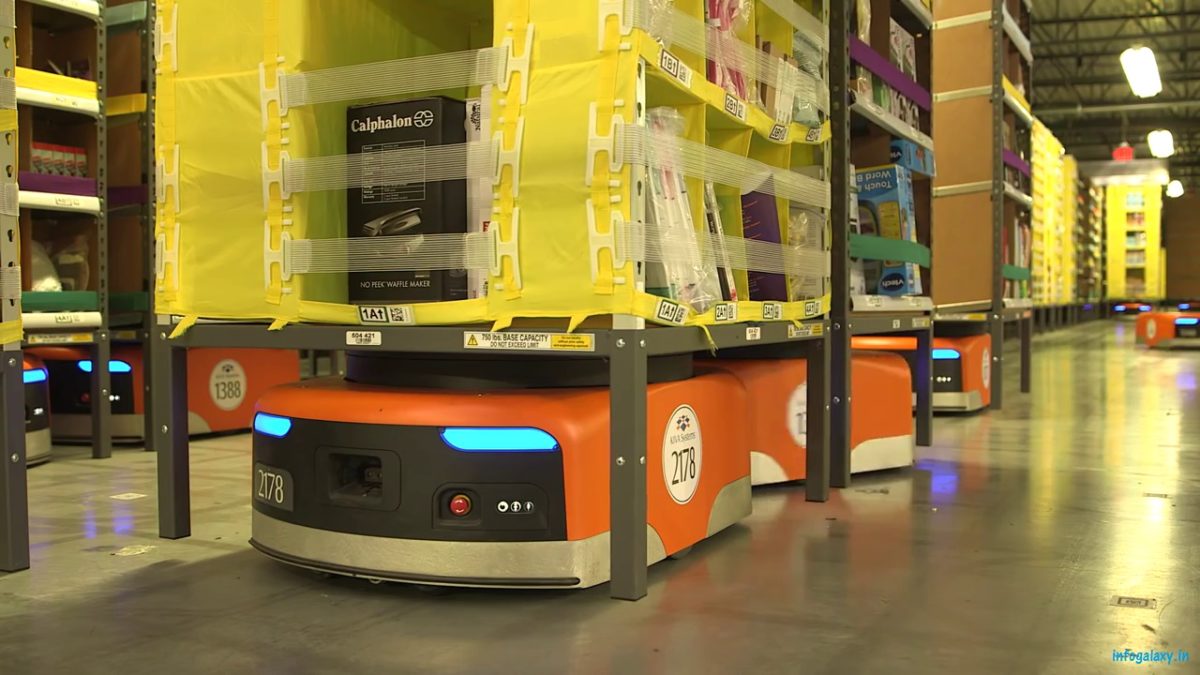
The robots are known as CartonWrap, and they are up to five times more efficient at boxing deliveries than humans. Employees are expected to box multiple deliveries per minute for hours on end, and while the typical employee can box around 150 deliveries an hour, the robots can box around 600 to 700.

Boxing orders is just one part of the packaging process, and human employees still pick up orders and add them to the conveyor belt among other things. Amazon is, however, attempting to add automation to these areas too. One of the biggest hurdles of warehouse automation is a machine’s ability to pick up a wide variety of items gently. Creating a robotic hand that can delicately pick up anything from a drinking glass to a lawnmower is no easy feat of engineering. Amazon is currently working with Boston startup Soft Robotics to solve this problem, which could potentially eliminate one of the biggest advantages human employees have over robots in the near future.

By getting millions in subsidies for building packaging plants and creating jobs across the U.S. and then aggressively replacing that labor force with automation, Amazon is having its cake and eating it, too. Aggressive automation will surely lead to PR trouble for the delivery giant in the future, as well as a strained relationship with the U.S. government. As American jobs are slowly drained by automation, it may be time to rethink our race for efficiency.

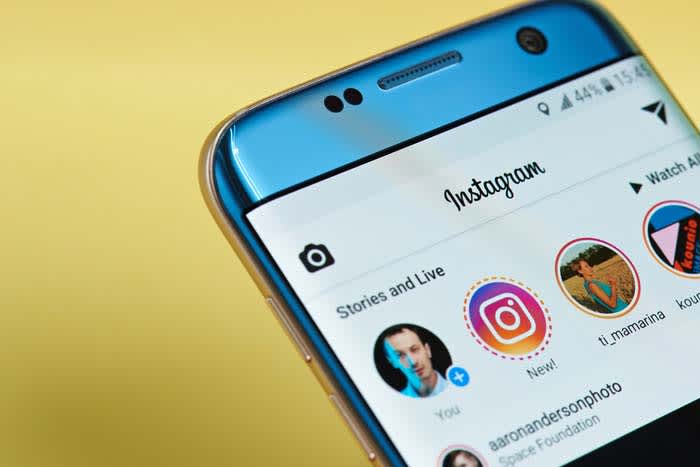
Your guide to Instagram automation

What is Instagram automation, and should I use it?

Instagram

Once you’re up to your eyeballs in scheduling, responding, and #engaging obligations, Instagram isn’t quite as fun as it used to be.

If you care about engagement, you A: need to post regularly. And B: need to post at the right times.

It’s no wonder that there are countless tools on the market for automating everything from following other users to scheduling posts. There are even tools for commenting on your behalf.

But when does automation veer into the danger zone? It’s hard to say. Here, we’ll look at some of the platforms available ranging from the legit to the not-so-much.

Instagram Download Now ►
7

What is Instagram automation?

There are countless Instagram automation tools that claim to save you time, energy, and make you more popular in the process. But, they all offer a slightly different feature lineup. Some are paid, others, like Bot4Gram, are free.

The simplest way to define Instagram automation apps is that these are tools that take care of your in-app busy work for you. There’s a varying range OF price points, features, and customization settings. It’s a matter of “you get what you pay for” in a lot of cases.

For example, the now-defunct Instagress was designed to comment on your behalf. A HootSuite blogger shared their experience with the tool. The blogger mentions that you’d choose a set of comments that a bot could use to “engage” with other users.

Postable is another option, and it is still around. However, it is still in beta. This tool allows users to pre-schedule posts, connect your account to DropBox, Google Drive, and other cloud-based storage tools, and automate engagement. Postable does manage follows and unfollows, as well as giveaways, but they don’t comment for you or dig into the DMs.

Postable costs a few bucks per month, but they aren’t a bad option if you need a helping hand.

Instagram schedulers are NOT the same as automation bots

Instagram photo

There are Instagram scheduling apps like Buffer and Sprout Social that “automate” when posts go out, so you can set it and forget it, then review the analytics down the road.

Then you have Later, an Instagram scheduler with additional features. There’s Plann, too. This is the app that helps you arrange and preschedule posts, though you’re the architect in control here.

It’s important to understand that there’s a big difference between apps that automate scheduling posts and apps that have a bot component.

Most marketing blogs have arrived at a common consensus. Brands should not automate IG comments or DMs.

It’s also worth pointing out that any user who is caught trying to cheat the system is in violation of Instagram’s terms of service so you might get booted from the app.

Automating likes vs. automating comments and DMs

Instagram automation works by outsourcing specific tasks to bots. So, you might automate comments, likes, and following and unfollowing accounts.

Automating likes is basically the equivalent of paying Instagram for a sponsored ad. It’s an opportunity to be seen by hundreds of people who otherwise wouldn’t find you.

Marketers are getting wise to the idea that people are gaming the system. Bots can search for users in your niche and follow them, as well as follow people who have followed you.

You can also automatically unfollow people who haven’t engaged with your site in a while — you know, the ones dragging down your engagement rates.

Can you automate Instagram without it being scammy?

Instagram user

Okay, it’s honestly hard to tell. Services like Postable and Social Captain are paid services. They offer as much functionality as the type of tools that an SEO pro might use to look up keywords. They also offer what a PR expert might use to identify influencers and publications to partner with.

Features like automated follows and unfollows are unlikely to cause too many problems down the line, but they do violate Instagram’s ToS.

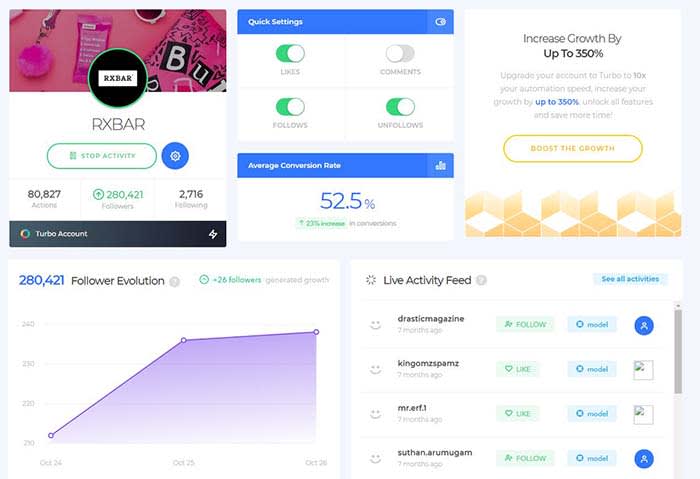
Social Captain, for example, offers a set of automation settings you can set and forget:

RX Bar social captain

However, automation is one of those things that, in moderation, delivers some benefits like growth and convenience. Also, Instagram is none the wiser.

That said, if you’re not careful about follow limits or you’re using shady automation features like DM-ing strangers with a bot, Instagram might issue a temporary ban.

Wrapping up

Sure, this type of automation isn’t the same thing as buying another user account or buying followers and likes. However, Instagram still considers it cheating.

Without a strategic approach to automation, you could do more harm than good. Long story short, keep bots out of your comments and DMs — at least until they know how to behave.