Microsoft uses your searches to feed its artificial intelligence: can you avoid it?

Microsoft collects your browsing data to train Copilot so that it adapts to your usage needs.

There is a phrase that is constantly repeated, stating that data has become the new oil. User information is used as currency in major tech companies, either to enhance advertising campaigns, train artificial intelligences, or both. Microsoft is one of the many companies engaging in these practices, and now, it amplifies its commitment to AI through tools like Copilot and Bing Chat.

Microsoft Edge DOWNLOAD

However, many of its users remain unaware that a significant portion of their browsing data is used to “inform” Copilot. When we talk about Copilot, we are referring to the artificial intelligence tool included in Microsoft 365 and Windows 11. Above all, Copilot is a digital assistant that provides personalized suggestions within programs like Word or Excel, for example. As you can imagine, this personalization is possible thanks to the use of our information.

In the end, data collection is necessary for Bing Chat and Copilot to offer, in return, an experience tailored to our usage. Nevertheless, the fact that these tools use this information without the user hardly noticing is something that could understandably concern many people.
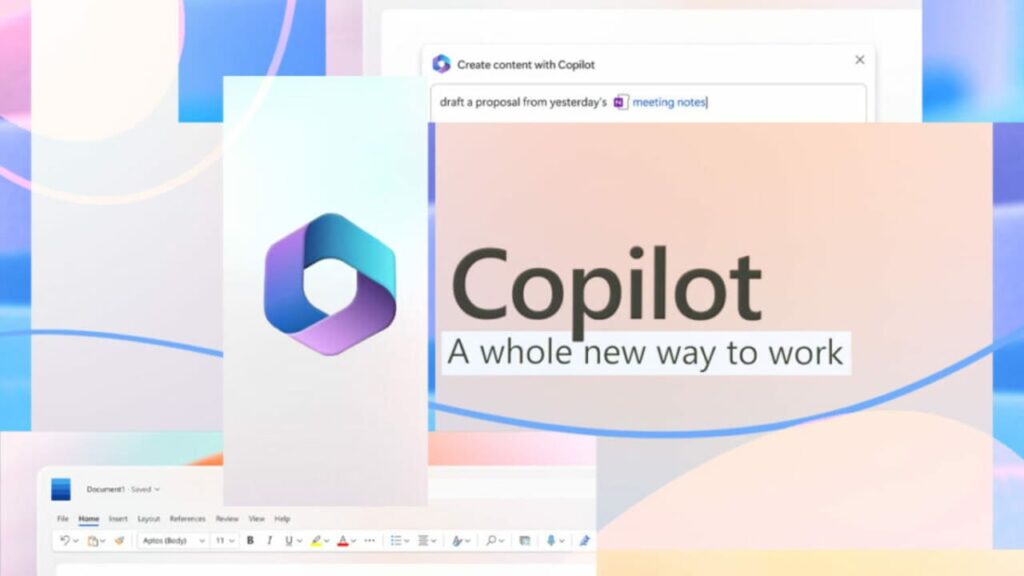
Copilot is one of Microsoft’s major future investments.

The big question: Can I avoid data collection?

To give users more control, the latest Canary version of Microsoft Edge has included a new setting located within App and Notification Settings > Bing Chat. Here, explicit consent is requested from the user to utilize their browsing data, improving the responses and suggestions generated by AI in Copilot.

As for your works and projects, you can rest assured; Microsoft does not use them to train its generative models. Within the company’s support blog, it is clarified that “neither the content of the document nor the descriptions you write are used for machine learning.”


Microsoft Edge DOWNLOAD

More problems for Microsoft: the Twin Towers evade Bing’s censorship

Chat Bing’s censorship is not enough: there are already those who have been able to recreate scenes that include the Twin Towers.

One of the new features included in DALL-E 3, the third version of OpenAI‘s image generator, was the complete censorship of controversial symbols and public figures. Nevertheless, users have managed to bypass all protections, and there are already those who recreate scenes where animated characters are seen flying over the Twin Towers.

Microsoft Edge DOWNLOAD

It’s a fact: we now know that internet users know all the tricks. DALL-E 3 is integrated into Bing Chat for free, and many have already started to “play” with its capabilities. However, the new censorship rules imposed by OpenAI have led some to see it as a challenge: what are the real limits of Bing Chat? Is it truly capable of avoiding offensive generations? It seems not.

A very striking example is that of the famous Twin Towers. The active blocking of words like “Twin Towers” or “World Trade Center” has not prevented the creation of scenes that include SpongeBob crashing into the buildings, to mention just one of many.

These measures have done very little for Microsoft. Caitlin Roulston, Microsoft’s Director of Communications, told The Verge that the company plans to improve its systems to “help prevent the creation of hurtful or sensitive content […] as with any new technology, some want to use it in ways that weren’t intended. That’s why we’re implementing a series of filters to make Bing Image Creator a positive experience.”

Microsoft has not provided details on what kind of filters would be used or how they would work. Moreover, these “blocks” are more urgent than ever. Users on forums like 4chan are already posting detailed guides on how to bypass censorship in Bing Chat and Stable Diffusion to distribute racist images, for example.

In the case of OpenAI, they themselves admitted that their security measures were far from “perfect” and are constantly being updated. Will we see the same thing soon with Bing Chat? Will their detection tools improve in the near future?

Microsoft Edge DOWNLOAD

DALL-E 3 is now free on Bing: here’s how to use it

Microsoft has confirmed that DALL-E 3 is now available to all Bing Chat and Bing Image Creator users.

The recent announcement of DALL-E 3 has generated much excitement about its capabilities and native integration into ChatGPT. Now, it’s Bing Chat’s turn: Microsoft has confirmed that DALL-E 3 is already available for all Bing Chat and Bing Image Creator users.

Microsoft Edge DOWNLOAD

During this past week, the update has been rolling out in stages. The first ones to try it out were Bing Enterprise users, followed by Bing Image Creator users. Finally, it has become public and is now available to everyone.

Microsoft is making a strong push for Bing, and it shows: to begin with, the search engine will have access to DALL-E 3 before ChatGPT itself. Furthermore, to use DALL-E 3 in ChatGPT, we will have to pay, unlike in Bing Chat.

OpenAI, the company behind DALL-E 3 and ChatGPT, has implemented new security tools in the image generator. One thing DALL-E 3 won’t be able to do is recreate public figures, as a measure against deepfakes and misinformation. Within Bing Image Creator, Microsoft is also embedding watermarks in each image to identify that they have been generated by artificial intelligence.

Moreover, making Bing Chat generate images is quite straightforward. You just need to start a conversation with the chatbot and ask. Describe how you want the scene to be and request Bing Chat to recreate it. The result is sure to surprise you.

However, be prepared for long waits and crashes on Bing. Currently, the search engine is facing many issues in generating images due to the high demand to try out DALL-E 3.

DALL-E everywhere

Microsoft wants to leverage the capabilities of DALL-E, and it is already planned to see the generator in other company applications, such as Paint. Redmond’s team is currently developing an image creation tool within Paint, powered by DALL-E. Therefore, Paint Cocreator (as it would be called) is set to become the first direct integration of this technology into Windows.

Microsoft Edge DOWNLOAD

Bing Chat, Microsoft’s generative AI, added new tools in Google Chrome

It has been several weeks since Bing Chat, Microsoft’s Artificial Intelligence based on GPT-4, started working in Chrome, Google’s popular browser. However, the thing does not stop there, but, in addition, Microsoft is adding more tools to the AI system that works from Google Chrome.

Bing Chat became available in Chrome browsers at the end of July, and thanks to this support, the bulk of web users, who use Google Chrome as their main browser, now also have the wide range of services offered by this AI, which, just by opening it, will display a series of tabs with different types of requests.

Microsoft Bing Search DOWNLOAD

Microsoft AI in Google Chrome

Google Chrome is thus friendly to the technological advances of its competitors, as it does not put any obstacles in the way of users being able to use its systems. In fact, Bing Chat allows all kinds of commands, such as organizing an agenda, writing, creating “original” content, helping to shop, entertaining and even programming functional code, among many other things.

Moreover, Bing Chat is not only expanding in Chrome, but also in its own ecosystems. Thus, Bing Chat Enterprise is now also compatible with the Edge browser for Android, where paying users can now have full support for the services that this Artificial Intelligence has at its disposal.

Bing Chat is now live and based on GPT-4

The dilemma of generative AIs

Artificial intelligences have emerged as one of the most popular fads in the technology world, because, at absolute levels, these systems are capable of doing amazing things. However, as a result, there are also dark shadows looming over society, such as the job viability of many sectors that may be engulfed by these AIs.

On the other hand, systems such as ChatGPT have proven to be quite problematic in different aspects, such as the lack of privacy it offers to users, which has led many companies to ban it, the collection of copyrighted data for its learning, or its answers, which, being based on network content, may fail or be invented depending on the information it collects.

Microsoft Bing Search DOWNLOAD