Don't worry, because there will be more 'Dragon Ball', and this date is the key

La franquicia de Dragon Ball ha enfrentado tiempos inciertos desde la muerte de su creador, Akira Toriyama, en 2024. Este evento ha generado preocupaciones sobre la continuidad y calidad de una serie que ha marcado la cultura popular durante décadas. Al final de ese mismo año, se estrenó Dragon Ball Daima, un anime original que, … Continúa leyendo “”

The Dragon Ball franchise has faced uncertain times since the passing of its creator, Akira Toriyama, in 2024. This event has raised concerns about the continuity and quality of a series that has marked popular culture for decades. At the end of that same year, Dragon Ball Daima, an original anime that, while entertaining, did not meet the high expectations of fans, premiered.

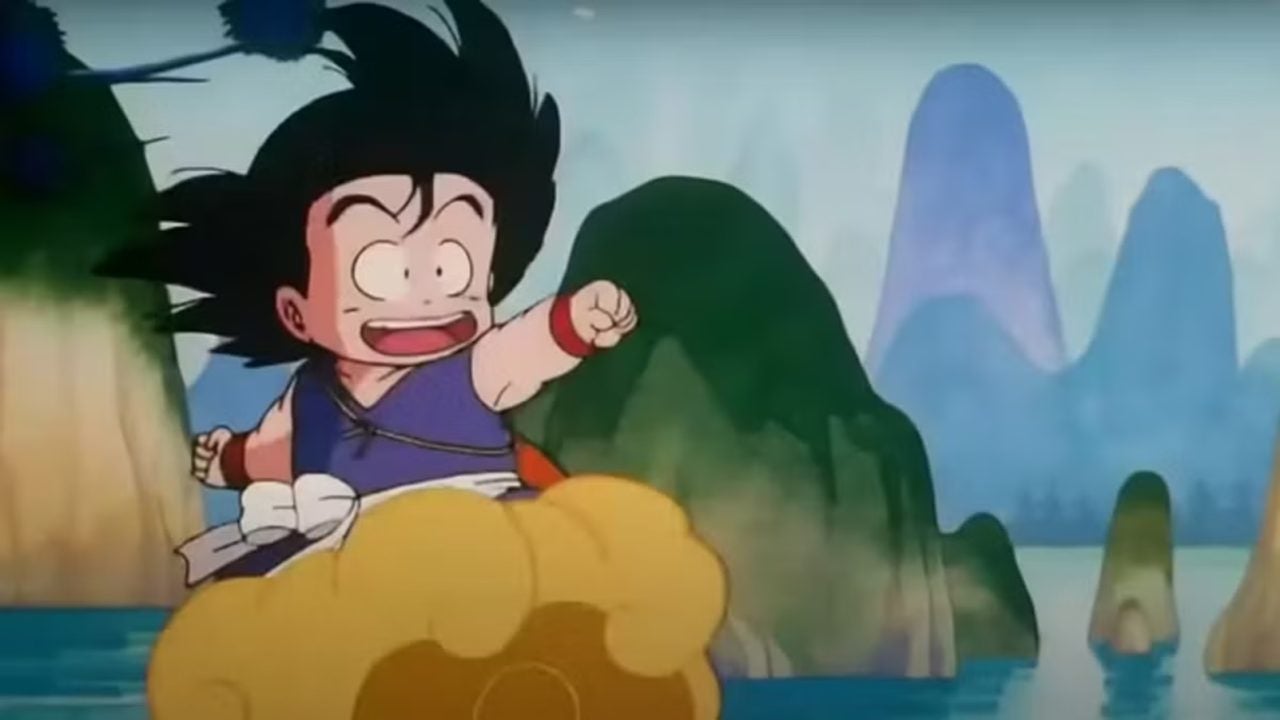
Come on, flying cloud!

As if that weren’t enough, the Dragon Ball Super manga has been on an indefinite hiatus for almost a year, which has generated even more anxiety among the saga’s followers. The situation has been a source of controversy, as Dragon Ball was one of the major absentees at the recent Jump Festa, which leads to speculation that the new people in charge of the franchise are taking their time to prepare more significant announcements.

The Dragon Ball Genki Dama Festival will take place on January 25th in Japan, an event specially conceived to celebrate the 40th anniversary of the series. This festival promises significant announcements, including potentially the return of Dragon Ball Super and news in the field of video games. Among the attendees are Masako Nozawa, the iconic voice of Goku, and producer Akio Iyoku, who has repeatedly hinted at the possibility of new projects.

Toyotaro, the current manga artist, has expressed his desire to resume Dragon Ball Super, which could give a new boost to the story that has remained frozen for so long. Additionally, there are rumors that new original animes and possibly a remake of the classic Dragon Ball are being considered, highly requested by fans. As the festival approaches, followers are waiting for the announcements to meet their expectations, eager for a rebirth in the franchise that has given so much to entertainment culture.

'Dragon Ball' shares a world with another of the most famous animes in history, but we didn't know it until now

Since its inception, Shonen Jump has been the home of iconic series that have set the standard in the world of manga and anime. Titles like Naruto, One Piece, and Hunter x Hunter have established themselves as pillars of success, each offering unique stories and independent universes. However, the creators of these works often find subtle ways to pay homage to their colleagues and the influences that have shaped their journey. Ka-me-ha-me-bleach! A recent example of this camaraderie can be found in Burn The Witch, a spin-off set in the universe of Bleach, created […]

Since its inception, Shonen Jump magazine has been the home of iconic series that have set the standard in the world of manga and anime. Titles like Naruto, One Piece, and Hunter x Hunter have established themselves as pillars of success, each offering unique stories and independent universes. However, the creators of these works often find subtle ways to pay tribute to their colleagues and the influences that have shaped their journey.

Ka-me-ha-me-bleach!

A recent example of this camaraderie can be found in Burn The Witch, a spin-off set in the universe of Bleach, created by Tite Kubo. In this anime, the iconic soundtrack of Dragon Ball is used, which is perceived as a fun and meaningful nod. It is said that Kubo has confirmed that Ichigo Kurosaki and his friends take a break between their missions to enjoy Goku’s adventures, a detail that highlights the connection between different series within the Shonen universe.

This type of nods are not only a tribute to fundamental influences like Dragon Ball, which has left an indelible mark on many manga authors, including Kubo, but they also foster a sense of community among fans. Although these homages do not alter the main plots of the series, they are well received and add a layer of enjoyment for the followers. The relationship between manga creators transcends competition, characterized by a deep mutual respect.

The manga industry benefits from this collaborative environment, where authors can celebrate and honor their predecessors without fear of being overshadowed. According to the sentiment expressed by Kubo, this camaraderie among mangakas is a vital aspect that enriches the medium and the experience of the viewers.

Is ‘Dragon Ball’ coming back? Fans believe he will be back soon, but there is nothing official

Kazuhiko Torishima, ex editor of Akira Toriyama y una figura controvertida en el universo de Dragon Ball, ha generado recientemente emoción con sus declaraciones sobre el futuro de la franquicia. En un episodio del podcast KosoKoso, Torishima sugirió que los fans podrían esperar una nueva película de Dragon Ball para 2026, lo que ha alimentado la especulación

Kazuhiko Torishima, former editor of Akira Toriyama and a controversial figure in the Dragon Ball universe, has recently stirred up excitement with his statements about the future of the franchise. In an episode of the KosoKoso podcast, Torishima suggested that fans could expect a new Dragon Ball movie by 2026, which has fueled speculation about Goku’s return to the big screen. However, this claim should be taken with caution, as it has not been officially confirmed.

We are not in such a hurry

Since 2018, the anime Dragon Ball Super has been on a hiatus, and the last movie in the saga was released in 2022. The lack of official announcements from Toei Animation and the Dragon Ball accounts has led many to question the current state of the franchise. Although Torishima has been a key figure in the history of Dragon Ball, he is currently not actively involved in its management, which places his claims on the same level as those of other industry insiders.

Despite this, rumors about the franchise’s return have been circulating for some time, suggesting that there might be some truth behind Torishima’s intentions. In this context, it is expected that Dragon Ball will not be present at the upcoming Jump Festa 2026, although an event called Dragon Ball Genkidamatsuri is anticipated, scheduled for January 25, 2026, where significant announcements related to Toriyama’s work are promised.

The possibility of a new Dragon Ball movie remains a hot topic among fans, and although there are no certainties, interest and speculation continue to grow. Followers of this iconic series will have to wait a little longer for official information and to confirm the return of their favorite characters.

Akira Toriyama drew a single frame of the Dragon Ball anime. It was never aired

Although it may seem incredible now, at one point Dragon Ball was about to end prematurely: the anime, even though it was at its best quality, was losing audience in Japan because the public continued to associate Akira Toriyama with the silliness of Dr. Slump (which, to be honest, was what he really liked). In the end, determined to give it a more adult twist, they not only made Goku grow up, but they also chose the director of Saint Seiya for the anime: thus Dragon Ball Z was born, a series that the author hoped would be the last… because […]

Although it may seem incredible now, Dragon Ball was almost canceled prematurely: the anime, despite being at its peak quality, was losing audience in Japan because the public continued to associate Akira Toriyama with the silliness of Dr. Slump (which, to be honest, was what he really liked). In the end, determined to give it a more adult twist, they not only made Goku grow up, but also chose the director of Saint Seiya for the anime; thus, Dragon Ball Z was born, a series that the author hoped would be the last… because he had run out of ideas. Little did he know that they would end up making 291 episodes over six and a half years and creating a legend along the way.

Kamehame, Master Toriyama!

Although it is no longer the case, in the past, manga authors had little say in the anime, which was left in the hands of the studio and the network. However, Toriyama was somewhat involved at the beginning of Dragon Ball, where he chose the voice actors and even requested that the color choices be different from those of Dr. Slump, as he wanted to give it a different tone as a pure and hard shonen fighting series. They listened to him, yes, but beyond some designs for the movies (and needing his approval for the vast majority of the merchandising), the author was left out of the anime, as demonstrated years later by the mere existence of Dragon Ball GT.

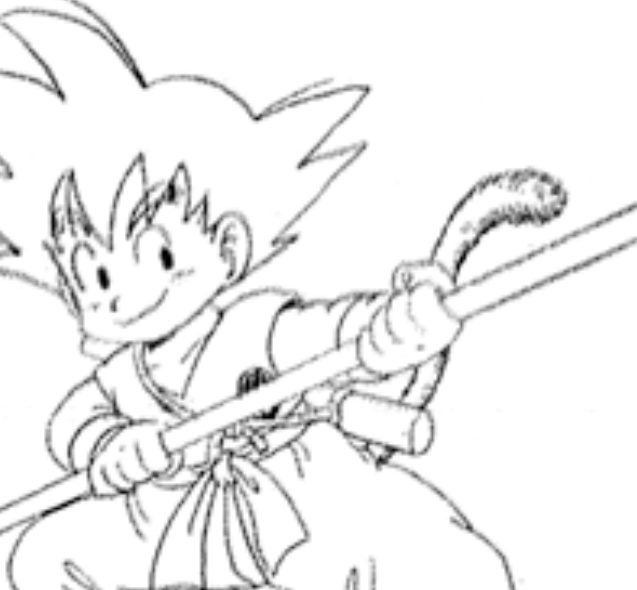
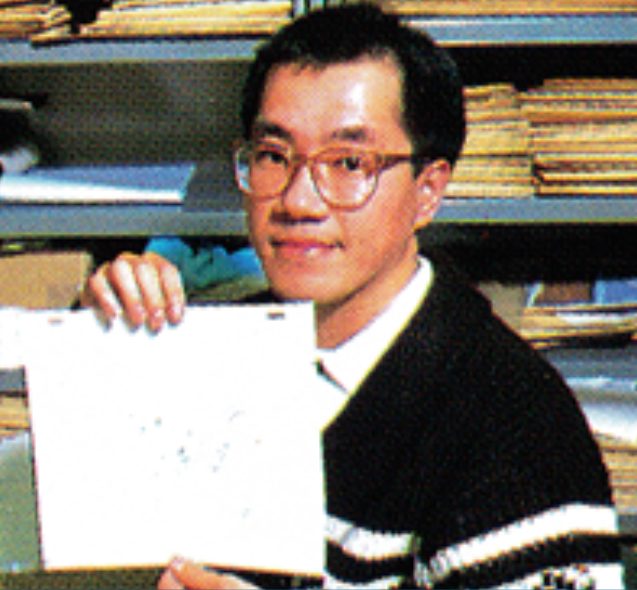
However, on February 18, 1986, a week before the premiere of the first episode on Fuji TV, the mangaka had a feature in Weekly Shonen Jump, which revealed the secrets of the series. Nothing unusual for anyone who knows something about animation, except for a small detail: you could see an image of Toriyama holding a drawing of Son Goku made by him. The text read “He was able to draw his own key frame and see the process by which it became an animation sheet.” So… did a drawing by the author end up in his own anime?

The answer is that sadly no. Despite having a drawing from the master himself, it is most likely that Toriyama had it framed on the wall or that Toei possesses it and has it stored somewhere. The only thing that is clear is that this image of Goku with the staff in hand was never seen on any channel, and it became a lost work that now, a year and a half after his death, it would be incredible to recover.

Over the years, Toriyama stopped enjoying anime and even stated that he was openly displeased with what had been done with his work: “For a while, Dragon Ball became something of the past, but then I got angry about the live-action movie, I rewrote a complete script and now I complain about the quality of the new anime, so it seems that it has grown on me so much that I can’t just leave it alone. Dragon Ball Super, at that time, had terrible animation quality, to be honest, and no one knew what to do about it. Who knows, maybe they could have drawn on a certain forgotten image to rediscover what made it special.

Goku's voice receives an incredible unique award in 75 years

Masako Nozawa, the iconic voice actress who has brought Son Goku to life since the premiere of the anime ‘Dragon Ball’ in 1986, has reached an unprecedented milestone by receiving the prestigious Order of Culture from the Japanese government. This award is given annually to individuals who have significantly impacted Japanese culture, and it is a recognition that Nozawa is proud to share with her colleagues in the dubbing world. The voice of a generation Born on October 25, 1936, in Tokyo, Nozawa has been a key figure in the anime industry since […]

Masako Nozawa, the iconic voice actress who has brought Son Goku to life since the premiere of the anime ‘Dragon Ball’ in 1986, has reached an unprecedented milestone by receiving the prestigious Order of Culture from the Japanese government. This award is given annually to individuals who have significantly impacted Japanese culture, and it is a recognition that Nozawa is proud to share with her colleagues in the dubbing world.

The award for the voice of a generation

Born on October 25, 1936, in Tokyo, Nozawa has been a key figure in the anime industry since the 1960s, lending her voice to numerous iconic characters, including Gohan and Goten. Her devotion and talent have led her to break records in the dubbing field, becoming an unmistakable voice in Japan, where it is hard to imagine Goku being voiced by anyone other than her.

The Order of Culture not only grants a symbolic recognition but also includes a lifetime pension of approximately 3.5 million yen annually (around 19,876 euros). This award, established in 1951, has been given to a select group of twenty individuals each year, and it is the first time in nearly 75 years that a voice actor receives this honor, highlighting Nozawa’s influence on Japanese popular culture.

In her statements, Nozawa has emphasized her love for acting and her desire to continue voicing Goku for many more years. With a legacy that transcends generations and a special bond with ‘Dragon Ball’ fans, Nozawa stands as a true legend of Japanese entertainment.