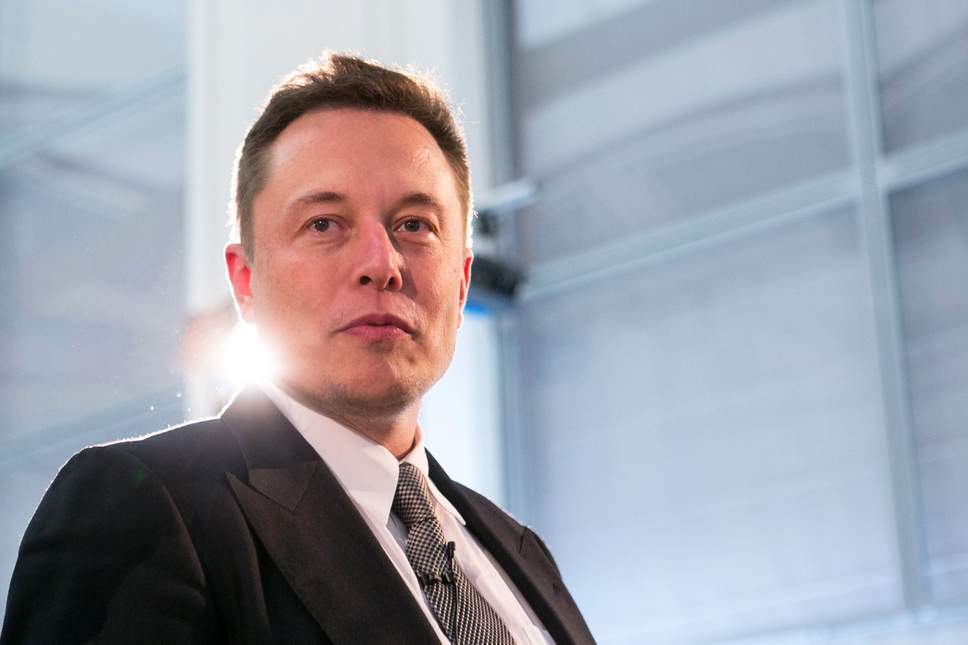
As if the lawsuit against Twitter wasn’t enough, Elon Musk is now in hot water with his Tesla company. South Korea’s Fair Trade Commission is issuing a US$2.2 million fine against the electric car business for false advertising. Apparently, it has to do with false information pertaining to the driving range and how fast the vehicles recharge.
Since Tesla established itself in the Asian country in 2015, it’s sold about 45,812 units, according to September 2022 numbers. The company advertised specific numbers regarding how quickly the vehicles recharge and how far they can drive on full batteries. It looks like it may have been false marketing, as many South Korean vehicle owners are complaining.
It’s actually not the first time I’m seeing Tesla complaints this week. Movie maker and screenwriter, Neill Blomkamp (District 9, Elysium, Chappie, upcoming Gran Turismo movie), tweeted that the window on his Tesla vehicle randomly shattered. Many Twitter fans commented that the same thing happened to them. It’s ironic, as Elon Musk made a video showing the strength of these windows by throwing a metal ball against one.
Has anyone ever heard of a Tesla window spontaneously cracking on its own? For no reason? I’m sitting in car and this just happened… pic.twitter.com/vRA8hb31En
One hilarious chap also commented that Neill probably lost his blue check mark.
Jokes aside, we’ll have to see how Tesla addresses the concerns of the Fair Trade Commission in South Korea. It also sent a report about a cancellation policy that doesn’t have sufficient information for consumers. This goes against an electronic commerce act in the country, which the commission holds highly. It could result in buyers losing money if the terms and conditions of canceling orders aren’t spelled out correctly.
It would be great if we could get some comments from Elon Musk about the state of his current companies. At the moment, Tesla and Twitter appear to be in deep water. The SpaceX project is the one that interests me the most, as I love astronomy and the study of planetary objects. I dearly want us to succeed in moving to Mars. At the moment, the project is trying to raise funds to the tune of US$750 million for the year ahead.
The entire Twitter fiasco these last few months feels like a fever dream, one that is very likely nearly at an end. With Elon Musk posting a pollto determine whether or not he should leave the blue bird alone, and the results of that poll being primarily affirmative, it seems that Musk might be leaving Twitter soon. Or is he?
The results of the poll spoke for themselves. Approximately 58 percent of Twitter users who voted wanted Musk to resign. After the poll was finalized, Musk upheld the self-imposed conditions of the poll and announced that he would step down as CEO of Twitter as soon as he found ‘someone foolish enough to take it.’ He added, however, that he’d remain in charge of its server teams and software.
Now, Musk understands how Twitter works at this point. He understands that it doesn’t really matter whose name is on the CEO’s desk but rather that the control of the company lies with whoever runs its servers and software. This is due to the simple fact that software and servers make up the bulk of Twitter’s existence.
This is particularly true after thelarge-scale layoffs that Musk initiated. Therefore, as he intends to maintain control of Twitter’s servers and software, Musk has essentially announced that he will remain the de-facto leader of the Twitterverse.
Anyone hoping that Musk stepping down as CEO would mean the end of Musk’s battle against the lack of free speech on social media can kindly sit down again. Or, more likely, head straight to TikTok, Facebook, or any of the other vapid social media destinations to voice their concerns. Free speech will not be leaving Twitter, and neither, as it turns out, is Elon Musk.
The Twitter votes were in for Elon Musk to resign as CEO of the platform. It was a clear indication that the majority wanted him gone. As predicted, Musk wasn’t going to do so. Now, it looks like he agrees with a few supporters that bots are the reason the voting results were skewed. It looks like he will only allow subscribers to vote going forward.
Elon has been focusing a lot on the Twitter platform since he took over, making us wonder if he still has an interest in Tesla and the space project to Mars. He’s ruffled several feathers, causing many of the employees to leave over the last month or so. It doesn’t look like he’s planning to stop his shenanigans anytime soon.
Lately, Musk has been using votes to make key decisions on Twitter. One of the biggest was whether Donald Trump should have his account reinstated. When the majority said yes, the former US President got his account back. This time, he asked people to vote on if he should resign as CEO. While the majority said yes again, he’s yet to show signs of doing so.
With his followers asking him if bots were involved in the voting, Musk wondered the same thing. Now he’s saying that only members with a Twitter subscription can vote. Apparently, this will avoid bots affecting the votes, for which he’s hoping for a better result. Talk about fiddling with the elections.
I usually follow what Collin Rugg has to say about Elon, as he always provides insightful or hilarious information. In one of his latest Tweets, he says Musk only used the voting to catch accounts that were using bots. Whatever the reason is, I don’t think Elon is going to step down as Twitter CEO anytime soon. At least he knows what the majority think of him.
BREAKING: Elon Musk hints that yesterday’s poll about him stepping down as Twitter CEO was a trick to catch bots.
Would you allow an object in your brain if you could talk to computers?
“Even in a benign AI scenario, we will be left behind,” Elon Musk spoke glumly of our pathetic odds in the wake of an AI apocalypse like something out of “Terminator” or “Avengers: Age of Ultron.” While we’re not enlisting the help of The Vision or Sarah Connor just yet, there is a kernel of truth here: We’re integrating more sophisticated tech into our phones, our appliances, our houses, and our cars – but we’re leaving behind one valuable part of the equation – us.
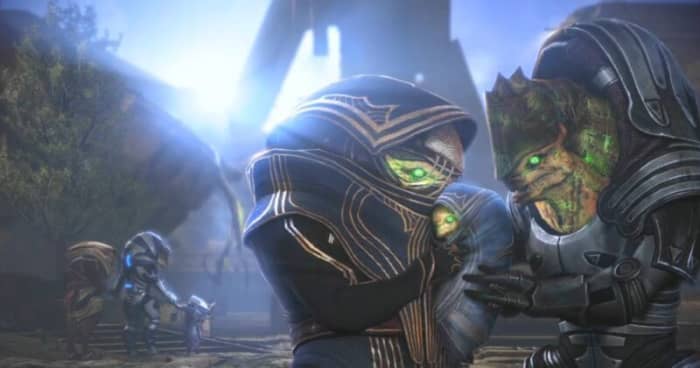
Integrating AI and organic life? Mass Effect did it first.
Musk’s strategy is not to try and one-up ourselves over tech; in his eyes, that’s a lost cause. But if you can’t beat ’em, Musk advises we join them.
“I think with a machine interface we can go along for the ride and effectively have the option of merging with AI,” he said. He’s proposing a (very ambitious) concept of how to do just that.
The idea
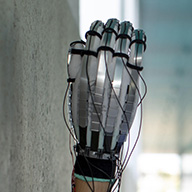
Symbiosis between human and machine has been a sci-fi concept since the days of Doctor Who and Star Trek, and because (or despite?) of its mainstream appeal, we’ve largely dismissed notions of making science fiction into science fact. Elon Musk is heading a new project to insert a computer connection directly into a human brain, creating a true cybernetic future, and have already taken the first steps with chimpanzees.
“The monkey was able to control the computer with his brain, just FYI,” Musk said proudly. The team expects to be ready to move testing to human subjects by next year, and the process is allegedly as safe and painless as Lasik eye surgery.
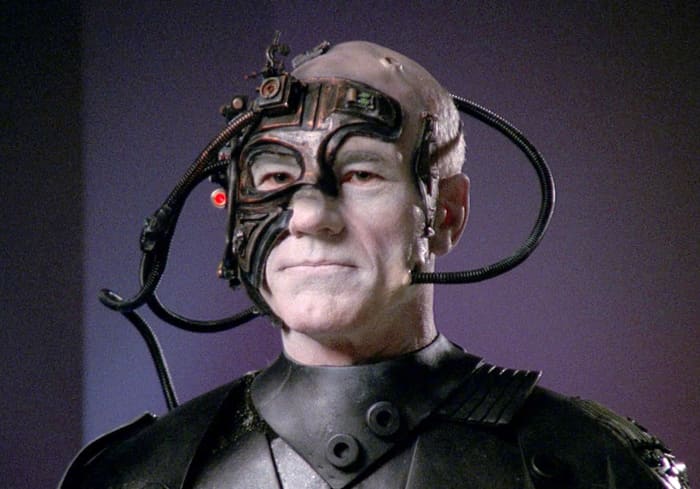
Picard rocking an early prototype of Elon Musk’s chip
Why this is new
If you’ve heard of similar tech, that’s because it (sort of) already exists: There are scattered FDA-approved devices that are intended for the disabled. Examples include a deep-brain stimulation device that helps people with Parkinson’s disease control their tremors.
Musk’s new implant chip would be created by Neuralink, his own brain-computer interface start-up. Neuralink is Musk’s own private company that he created back in 2016, and is based out of San Francisco. There’s one major difference that will bring Musk’s project to the forefront: The process.
The chip itself is a thread-like device that’s thinner than a human hair. It’s so thin that the grafting procedure looks almost like sewing. Neuralink has a computer system set up so that during this process the grafting avoids blood vessels on the surface of the brain.
These flexible threads are actually a thin cellophane-like material that insulates the conductive wires which link to a series of tiny electrodes.
“One of the big bottlenecks is that a mechanical drill couples vibration through the skull,” said Max Hodak, Neuralink’s president and one of the company’s founders, “which is unpleasant, whereas a laser drill, you wouldn’t feel.” Since the device itself is so thin, it would far less invasive than our current tech.
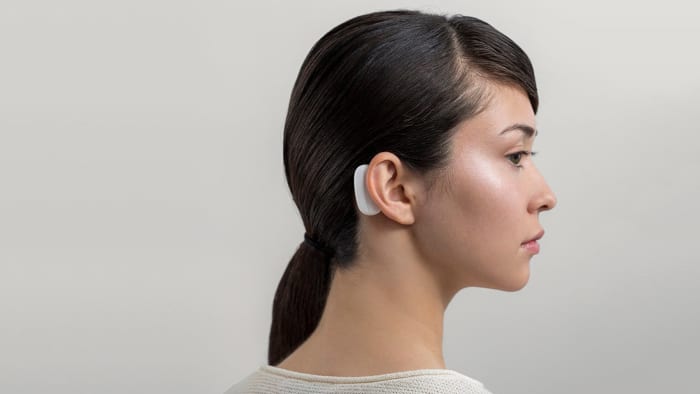
The new chip would be as subtle as a hearing aid.
Once the procedure is complete, the implant is wirelessly connected to a receiver worn behind the ear. The receiver communicates with a computer or smart device, and voila! You can talk with electronic appliances with your mind.
Science confirms the internet is changing our brains
While this is some serious next-gen, cutting-edge thinking, is it really for the best? We’re up to our eyeballs in privacy issues with email, messaging, texting, and phone calls. Do we really want people to access cloud data with a chip in their brain?
Remember when we were mad at Zuckerberg about Facebook Portal? Imagine that you control that screen with your mind.
For better or worse, there are some definite roadblocks for Neuralink to tackle in the coming year. Researchers still need proof that the insulation of the neural threads can survive long periods (plastic can deteriorate in the salt solution of the brain’s environment!), and moreover they’re not the only company trying their hand at the puzzle.
On the other hand, Elon Musk is no pushover. We’re talking about a guy who successfully launched and landed heavy rockets and has a lot of financial backing to push his projects to completion. As of July 2019, Neuralink has received $158 million in funding (of which, $100 million came from Musk himself) and is employing a staff of 90+ people.
Elon Musk’s Secretive Brain Tech Company Debuts a Sophisticated Neural Implant https://t.co/Hn0SE18lkz
Do you think this is a crackpot pipe dream, or are we heading towards a future where we can turn on the TV just by thinking it? Let us know if you’d be interested in getting this brain chip, and stick with Softonic for the latest in tech news!
Space travel is making huge strides because of three wealthy visionaries.
It’s been a great year for space travel.
Early this year, after President Trump signed the Omnibus Bill, NASA miraculously received $20.7 billion, the highest amount since the 2009 stimulus package. The Trump Administration’s proposed 2018 budget was seen by many as a “War on Science,” but when the bill was actually voted on most of NASA’s budgets were increased or remained uncut, shocking the scientific community. This is surprising as Republican senators have historically been opposed to climate and earth-based research, some of which is carried out by NASA.
After a few decades of budget cuts and stagnation, NASA’s revitalized budget has caused much celebration. However, for many years it looked like NASA had been all but abandoned by the federal government. This drought led various entrepreneurs (mostly billionaires who established their fortune in other industries) to create their own private space companies.
The goal of these private space companies is to greatly reduce the cost of space travel, making it viable and realistic to achieve lofty goals such as colonizing the moon and Mars. This new private space industry, dubbed NewSpace, is high-profile, brutally competitive, and utterly fascinating.
Here are some of the top players in NewSpace right now:
Elon Musk
Elon Musk is easily the most high-profile player in NewSpace. In 2002, the PayPal co-founder used his enormous wealth to fund SpaceX, of which he is the lead designer and CEO. Though his eccentricities and hasty Twitter fingers have often led him in hot water, Musk has nonetheless become the face of NewSpace. Musk famously has extremely high ambitions for SpaceX, with plans for the colonization of Mars within his lifetime.
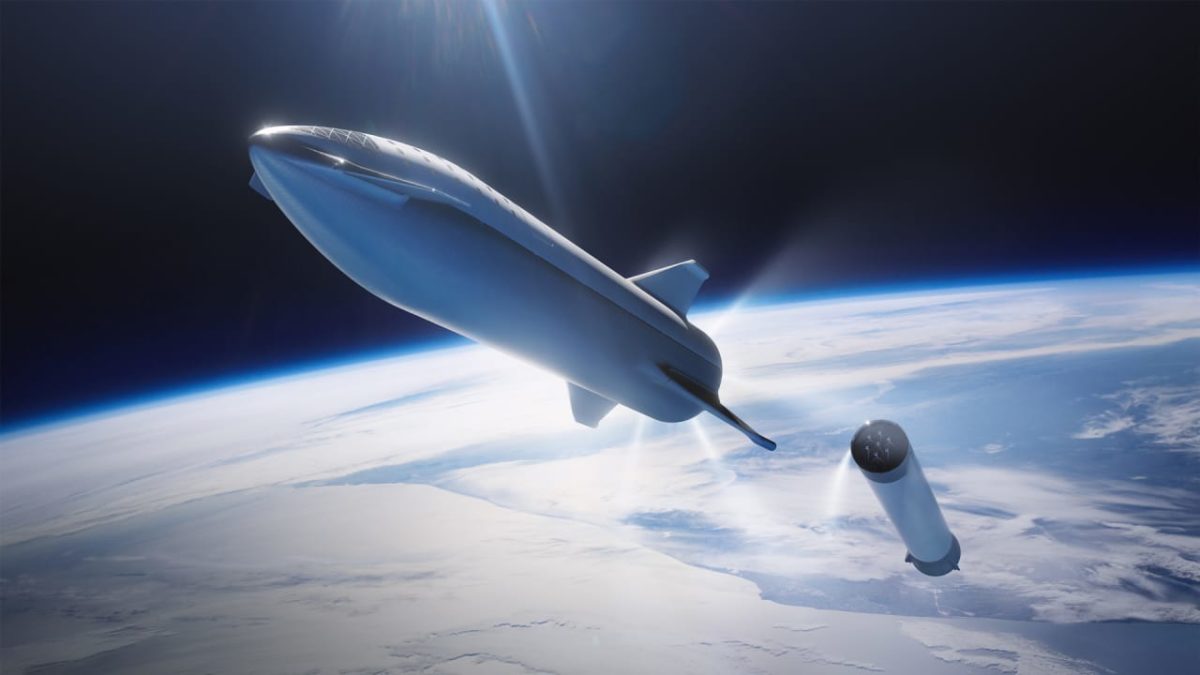
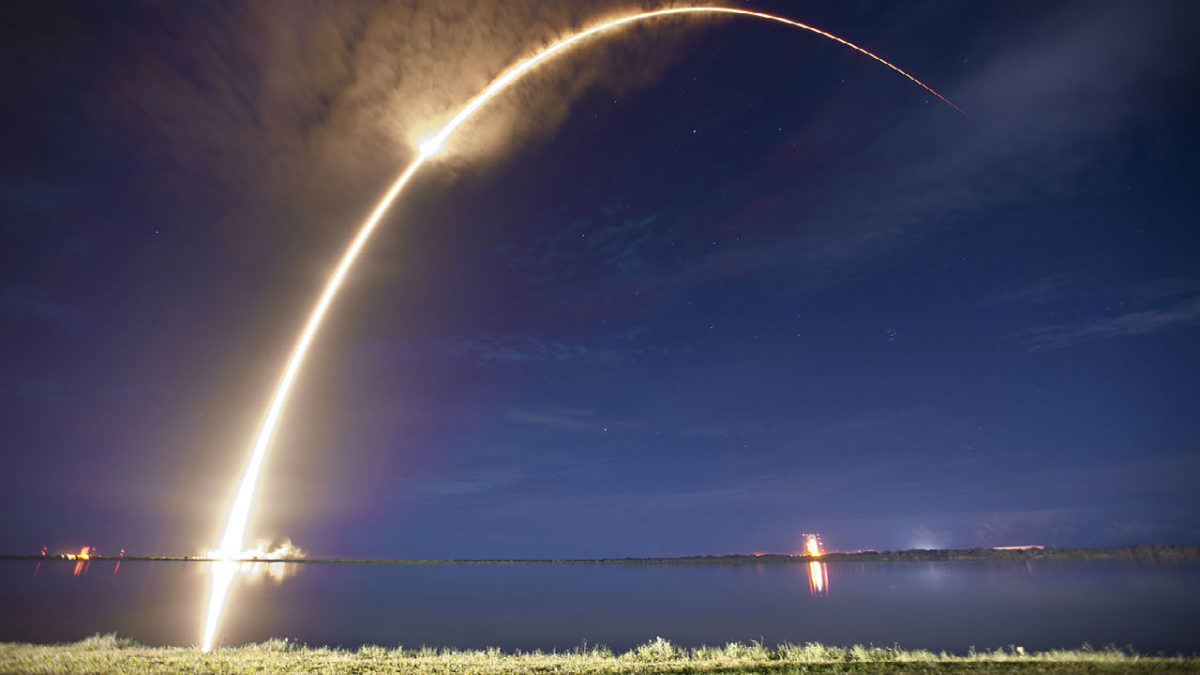
SpaceX has had a number of high-profile rocket launches, with its most famous being the Falcon series of rockets. Notably, SpaceX is currently working on its BFR (Big Falcon Rocket or Big F***ing Rocket) series of spacecraft, which will allow rockets to be reused and relanded automatically instead of being discarded. This would dramatically reduce costs for space flight missions, a stated goal of Musk and SpaceX.
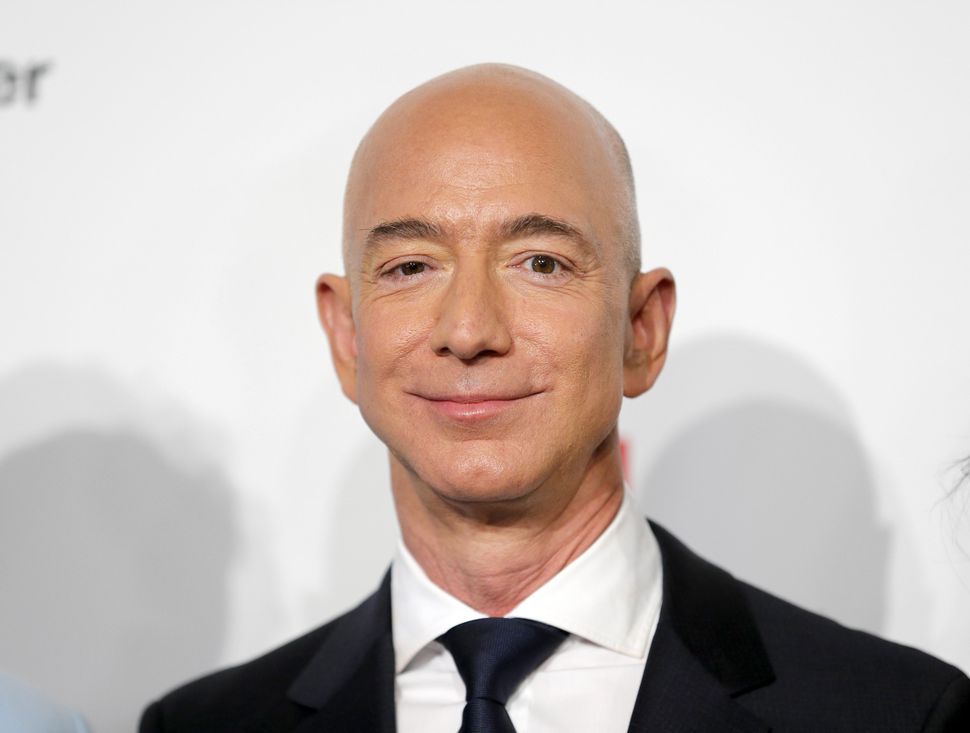
Amazon founder and CEO Jeff Bezos is currently the richest person in the world, with a net worth of over $150 billion. He formed the private space company Blue Origin in 2000 as a response to what he saw as government negligence to space travel. The company has a troubled history of fabled launches, though fortunately for it Bezos has more than enough money to keep it afloat.
Blue Origin is notably both less flamboyant and more secretive than SpaceX. Despite this, the two companies share a heated rivalry categorized by legal disputes and Twitter flame wars. Like its rival, Blue Origin has been slowly gaining more valuable government contracts and security clearances. Blue Origin’s current main goal is to create affordable sub-orbital space tourism. Tickets are going on sale next year for the low, low price of $300,000. In the future, Bezos has said that establishing a permanent Moon colony is Blue Origin’s ultimate goal.
Yuri Millner
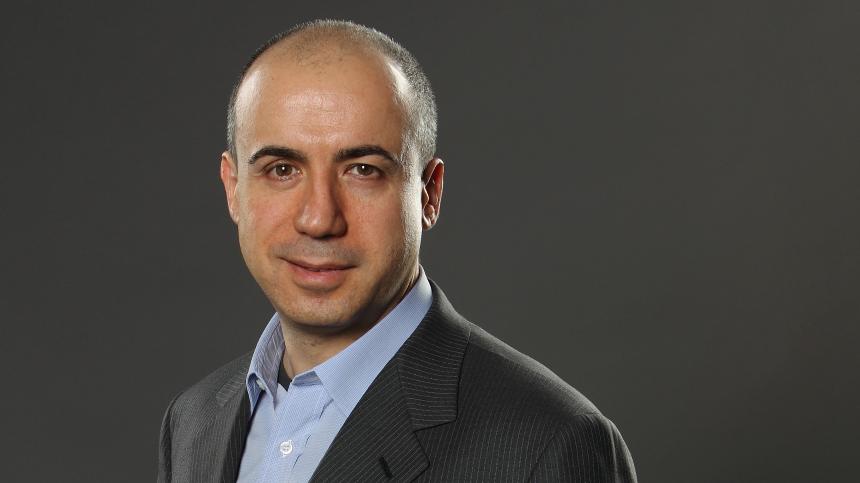
Russian dot-com billionaire Yuri Millner launched Breakthrough Initiatives in 2015. While he plays a part in NewSpace, BI’s goals are decidedly different from both SpaceX and Blue Origin. Instead of looking to reduce the cost of space travel, Breakthrough Initiative’s goal is to find and make contact with extraterrestrial intelligent life.
Breakthrough Initiative is comprised of three main departments: Breakthrough Listen, Breakthrough Message, and Breakthrough Starshot. Breakthrough Listen utilizes various observatories to listen for “radio and laser signals from the nearest million stars, the nearest 100 galaxies, and the plane and center of the Milky Way.” Over $100 million is being invested in Listen over the next 10 years.
Breakthrough Message offers a million dollar prize for people to submit messages that would be transmitted to alien civilizations. Whichever messages win, there would be an international panel that votes on whether the messages are both ethical and properly represent humanity. Lastly, Breakthrough Starshot is a project that would utilize light sails traveling at 20% the speed of light in order to reach Alpha Centauri, a journey that would take 20 years of travel plus an additional 4 years to transmit a message back to Earth.
What do you think about all of the people and companies mentioned? Do you think they’ll be able to accomplish their goals? Let us know!
The launch marked the first time SpaceX successfully landed a rocket on the west coast as opposed to a drone at sea. SpaceX has completed ground landings before, but only on the east coast, as they previously did not have permission to build the gigantic landing pads that they needed in the west.
Additionally, past ground launches attempted to land the rocket at a target a few miles away from the launch site. For Sunday’s launch, the rocket was successfully landed at a target that was only a quarter mile (400 meters) away from the launch site.
The purpose of the launch was to send up the SAOCOM 1A for the Argentinan space program. The radar on the satellite tracks the activity of natural disasters, allowing the government to notify people and keep them safe. The satellite also can analyze the moisture content of soil (all the way from space!) in order to help farmers maximize their crop yields.
The continued success of SpaceX’s rocket launches has caused the valuation of the company to climb, even in the face of continued controversy regarding its eccentric CEO Elon Musk. Valued at $28 billion, SpaceX is currently the third most valuable American startup after Uber and Airbnb. Looking towards the future, the most high profile upcoming SpaceX endeavor is ferrying American astronauts to the International Space Station. This mission has been delayed repeatedly, but is currently expected to happen in January.
LocalS were warned ahead of time of sonic booms and bright lights as authorities assured them that neither an alien invasion or nuclear annihilation was coming.