It is undisputable that Elon Musk is very interested in the politics of his country, the United States. Not only does he constantly position himself on Twitter, but he also interviews one of the candidates and states that he would love to work with him during his term. With all this, it is clear that Elon Musk is interested in Donald Trump winning the elections.
And here comes the problem: Elon Musk’s AI integrated on Twitter, Grok, has been spreading false information about Kamala Harris in the last months, creating one of the biggest deceptions of the campaign. Is it an AI mistake or a deliberate action?
A story that begins with Joe Biden’s resignation
Shortly after Joe Biden announced that he was resigning his candidacy for re-election, misinformation began to circulate on the Internet about the possibility of a new candidate assuming the presidency.
The screenshots claiming that it was not possible to add a new candidate to the ballots in nine states quickly spread on Twitter, accumulating millions of views.
Secretaries of state urge Elon Musk to fix AI chatbot spreading election misinformation on X https://t.co/rEivdqFlM0
Even the office of the Secretary of State of Minnesota began receiving fact-checking requests for these messages, which were completely false: the voting deadlines had not expired, so Kamala Harris had plenty of time to add her name to the ballots.
The source of misinformation was Grok, the Twitter chatbot. When users asked the artificial intelligence tool if there was still time to add a new candidate to the ballots, Grok gave the wrong answer.
Finding the source served as a test of how election officials and artificial intelligence companies will interact during the 2024 United States presidential elections amid fears that AI could confuse or distract voters.
This example has shown how AI, in this case Grok, can play a crucial role in elections, a dangerous and highly partisan role.
Remember that Elon Musk has described Grok as an anti-woke chatbot that often gives spicy and sarcastic responses. This philosophical belief puts Grok at a disadvantage in avoiding misinformation, as does another feature of the tool: Grok relies on the best tweets to craft its responses, which can affect its accuracy.
Grok requires a paid subscription, but it is integrated into Twitter at half the price, so it has the potential for widespread use.
We all know that big technology companies like OpenAI, Meta, or Google have been crawling the web in search of content to feed their artificial intelligence. AI is nothing without being trained with billions of data, as it is not capable of learning by itself, it needs content.
And since the legal or permitted content is very limited and insufficient, big tech companies have been scouring the internet for all published content, regardless of its value or veracity (that’s why AI can’t solve equations).
Well, according to what we have found out, Meta is using the photos and public posts of Facebook and Instagram users to train its artificial intelligence. Although European users have been allowed to opt out of sharing their content, Australian users do not have that option. The reason is clear.
Facebook has admitted that it scrapes the public photos, posts and other data of Australian adult users to train its AI models and provides no opt out option, even though it allows people in the European Union to refuse consent. https://t.co/u2tQxTFGgk
Europe, a bastion for the rights of its citizens against Big Tech and AI
Facebook and its parent company Instagram paused the launch of their AI product in Europe in July due to privacy regulations of the General Data Protection Regulation (GDPR). As a result of the GDPR law, Meta received the order to stop training its large language model with European user data for privacy reasons, and Meta has given European users the option to opt out.
Senator Tony Sheldon, president of the Labor Party’s investigation into the adoption of artificial intelligence in Australia, asked Meta executives on Tuesday why this option had not been extended to Australian users.
“I’ll be very honest with you. I would prefer not to participate in Australia… and I would like to have similar options to those in Europe, for all Australians, including myself. Why can’t I have that option?” asked the senator.
Melinda Claybaugh, Director of Privacy Policy at Meta, said this only applies to the posts of those who chose to make them public and only for users over 18 years old.
After that response, Claybaugh explained that the opt-out option in Europe was “in response to a very specific legal framework” and did not want to say whether a similar option would be offered to Australians in the future.
From this news, we can deduce that only the organized actions of countries and large administrations will be able to stop the power of technological giants, which sometimes have more influence than governments.
Europe has been fighting against the monopoly of big tech companies for decades, and only its coordinated response is making significant progress in the rights of its citizens.
According to Gartner, a company specializing in analyzing the market and new trends, organizations that adopt AI must learn to manage the emotional and monetary costs generated by the technology while also focusing on obtaining productivity benefits.
Subscribe to the Softonic newsletter and get the latest in tech, gaming entertainment and deals right in your inbox.
The company offered this opinion today in Australia, where it kicked off the first of its flagship events of the year, the Symposium. “It’s really easy to waste money on generative AI,” Mary Mesaglio explained, and we read in The Register, before asking attendees if they remembered their first cloud computing bills.
“The reaction was probably one of surprise and then confusion about what they were charging you,” he recalled in his speech. The same is likely to happen with AI invoices, he warned, pointing out that “errors of 500 to 1,000 percent can occur in AI cost estimates.”
Price increase, inappropriate use of AI, very curious customers…
One reason for these setbacks is suppliers’ increase in prices. Simply not paying attention to cloud resource costs will also affect AI experimenters.
Another problem is the misuse of AI. Mesaglio said that organizations need to learn when search will be enough instead of using AI for simple queries.
AI can also become a victim of its own success: users enjoy it and start writing longer and more complex queries that cost more in token-based pricing systems.
The cost of AI consultations or workloads can also vary depending on how organizations structure their AI’s access to data.
Allowing AI to work with unstructured data can uncover more information and produce better results, but it is an expensive approach. Consolidating and entrusting the data to IT departments presents its own challenges.
The success of AI can also create other problems. Mesaglio described one as “productivity leakage.” Citing a Gartner study that showed that workers using AI can save 43 minutes per day, she asked if employees would use that time to work more.
“I would spend that time enjoying a cup of coffee with milk,” he replied, suggesting that many others would do the same and create a “productivity leak” that would represent between ten and thirty percent of the benefits of AI.
The good news, according to analysts, is that all organizations are running their own race in terms of AI: providers are speeding up to try to capture the market, but users can choose to ignore their sprint and move at the pace that best suits their needs.
The director of the CIA, Bill Burns, and the head of the British Secret Intelligence Service (SIS), Richard Moore, have written a joint opinion article for the first time in which they both confirm that they use generative artificial intelligence in their agencies.
Subscribe to the Softonic newsletter and get the latest in tech, gaming entertainment and deals right in your inbox.
And not forgetting China, who represents “the main geopolitical and intelligence challenge of the 21st century,” Moore and Burns assure. Burns explained to Khalaf that the CIA has tripled its budget in the last three years to deal with technology theft and other similar security issues by China.
When OpenAI introduced SearchGPT, the demonstrations suggested that everything related to the way people search for things on the Internet would immediately change forever.
Subscribe to the Softonic newsletter and get the latest in tech, gaming entertainment and deals right in your inbox.
However, that initial effect evaporated as soon as we saw it in action. The examples of the AI search engine in operation turned out to be somewhat faulty. The challenge to Google’s reign as a search engine is still under review.
Enjoyed talking to @washingtonpost about SearchGPT, and how it compares to Google AI Overviews and Perplexity. Shocked that @OpenAI declined to give SearchGPT access to journalists, and only gave 10k people access. (1/2) pic.twitter.com/QX2sHUyCVc
If an AI-powered search engine hallucinates in its answers, we have a problem
The problems are not difficult to understand. SearchGPT is supposed to combine OpenAI’s AI models with real-time web data to get faster and more accurate answers. Questions and keywords return a summary of the requested information instead of standard Google links. It can be fast and informative… but it’s not.
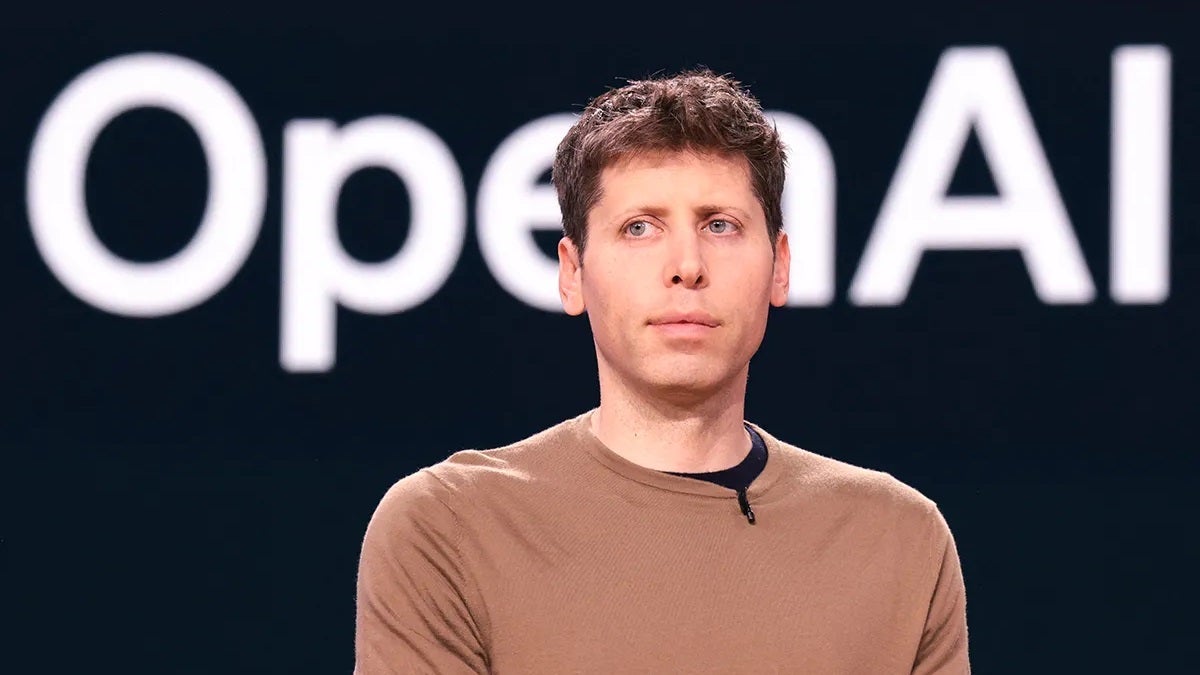
Unfortunately for OpenAI, that initial mistake is starting to look more like the rule than the exception. As the Post points out, early users who tested the service found that SearchGPT claimed that Sam Altman, CEO of OpenAI, was going to give a speech at a tech conference in the near future, which he actually had no plans to do. It’s a hallucination as bad as any other invented by ChatGPT.
And even if SearchGPT had the guarantee of telling only the truth, that is not of great comfort when it has no way of answering your questions. The evidence shared with the Post particularly minimized SearchGPT’s ability to help with local information.
And the thing is that this information has to come from somewhere. The decades that Google has been collecting data about a large number of businesses and the products and services they offer allow you to find in the blink of an eye most of the information that people need about the places around them.
Ultimately, Google has been the ultimate search engine on the Internet for 30 years and the amount of information it has in its databases is unparalleled, no matter how much OpenAI promises us with its AI. It will take many years to see a worthy rival and OpenAI will not achieve it overnight.
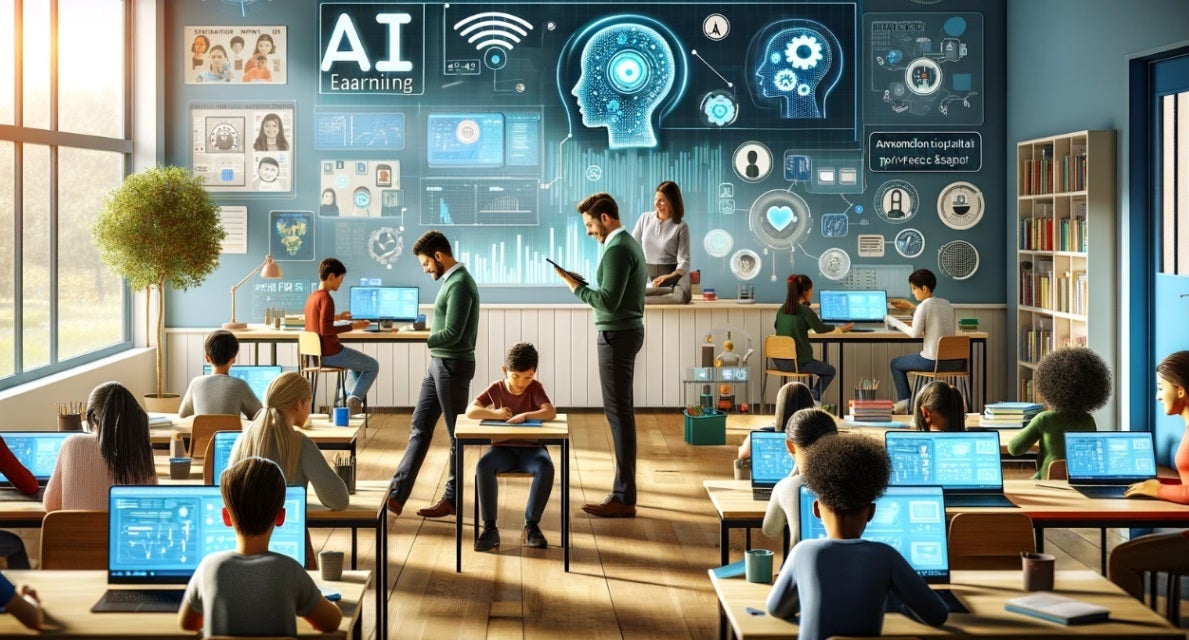
In an initiative that could reshape the future of education, David Game College in London is set to launch the first fully AI-powered classroom in the UK.
This innovative and controversial approach, which will start in September, represents a major step towards the integration of advanced technology in the educational system.
Gone are the days when a teacher stood in front of the classroom, giving lectures to a group of students. Instead, 20 GCSE students will embark on a unique learning journey where AI will be the protagonist. The question is: a good or bad protagonist?
What will this new education between AI and students be like?
Using advanced AI platforms and virtual reality glasses, these students will experience an unprecedented level of personalized education.
The AI-based system will adapt the lessons to each student’s strengths and weaknesses, providing a personalized learning experience that caters to their needs.
For example, if a student struggles with math but excels in science, AI can adjust the curriculum to focus more on math, providing additional support when needed and allowing the student to progress more quickly in science at the same time.
And although the idea of a classroom without a human teacher may seem futuristic, David Game College has made sure that students continue to receive the guidance they need.
A private school in London is opening the UK's first teacherless classroom taught by artificial intelligence, but some teachers think this is taking the technology too far.
Three ‘learning coaches’ will be present in the classroom to supervise behavior, offer support, and teach subjects in which AI struggles, such as art and sexual education.
These learning tutors are not traditional teachers, but rather act as facilitators, ensuring that the AI system runs smoothly and that students remain engaged and motivated. Their role is crucial in bridging the gap between technology and human interaction, providing a balanced educational experience.
The introduction of AI-powered classrooms has sparked a heated debate about the future of education. And with good reason, as AI always makes mistakes when it comes to reasoning or solving simple math problems.
Critics argue that relying too much on AI could dehumanize the learning process, eliminating the interpersonal skills developed through interaction with human teachers. They are concerned that students may become too dependent on technology and lose the ability to think critically and creatively.
The concept of AI-powered classrooms raises an important question: Could AI completely replace human teachers? Although it may seem like a distant possibility, rapid advances in AI technology suggest that it could become a reality sooner than we think.
However, many experts believe that AI will never completely replace teachers, but rather work alongside them to enhance the learning experience.
As they say, artificial intelligence can take care of tasks such as grading, analyzing data, and planning lessons, freeing teachers to focus on what they do best: building relationships with students, fostering creativity, and stimulating critical thinking.
One of the great annoyances that humans are exposed to on a daily basis is poorly mixed movies and series with no balance. This translates into explosions being too loud and dialogue barely being heard. That’s why we have to have the remote control in hand, constantly adjusting the volume up and down.
This is especially true of action movies and modern television shows, which seem to have been mixed primarily to shake our walls, while not a single dialogue is heard clearly.
So, we dive into the settings, adjust the soundbar’s location, activate the subtitles, and do it all. Some things help, but never enough. DTS is trying to solve this problem once and for all with some well-placed artificial intelligence.
The company has just announced its DTS Clear Dialogue feature, an “AI-based solution designed to improve dialogue clarity on your TV.”
DTS claims that the AI algorithm identifies and enhances dialogues in audio streams, thus eliminating the issues mentioned above. The system also allows for customized audio adjustments, as what is “perfect” for one person may be “please make it stop” for another.
This is a set of tools for devices, which means TV manufacturers will eventually adopt it. DTS has not yet announced any partnerships, but the company’s technology is usually adopted by all the big players, such as Sony, Hisense, Philips, LG, and Vizio, among others.
We will be keeping an eye on the first televisions that incorporate this feature. For now, the company is demonstrating the service at the IFA technology conference in Berlin.
DTS collaborates with content providers to bring the cinema sound to homes. Recently, it has partnered with Disney to enhance the sound of MCU movies and offer an experience similar to IMAX.
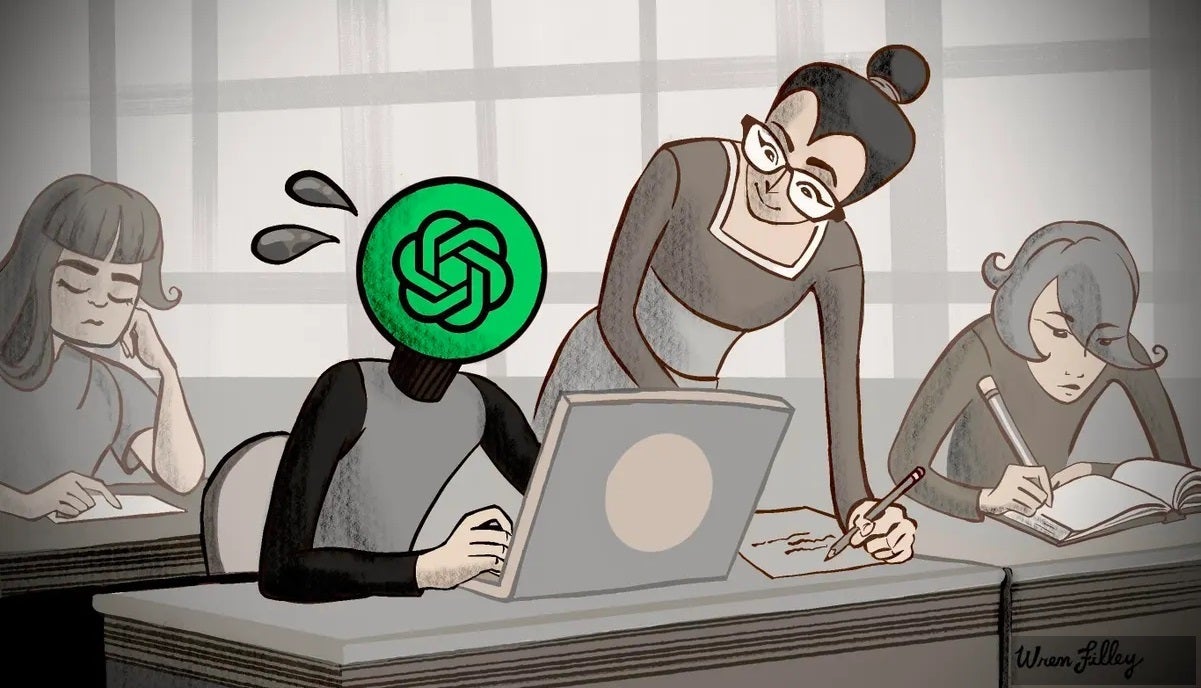
Cheating is an activity as old as the sun itself. Since the world exists, students have wanted to take advantage of their classmates’ knowledge for their own benefit. But in 2024, we don’t use our classmates; we use AI as “support” to find help.
Subscribe to the Softonic newsletter and get the latest in tech, gaming entertainment and deals right in your inbox.
The attraction is understandable. The dubious writing services where a student has to spend a fortune for a person – whose qualifications you don’t know – to write 1,200 words about the fall of the Roman Empire have disappeared. An artificial intelligence writing tool can do it for free in 30 seconds and from your mobile, tablet, or computer.
A professor of strategic communication explains that he often encounters students who use AI tools such as ChatGPT, Grammarly, and EssayGenius.
It clarifies that it is generally easy to know when a student has used one of these tools to write their entire work. The telltale signs include ambiguous language and the AI’s annoying tendency to generate text that is not the essence of the task.
"Students seem to cheat a lot, generally—up to seventy per cent of students reported at least one instance of cheating in the past month—but they cheated at the same rates before the advent of A.I." https://t.co/fVFbKBq7sk
For example, a student can use ChatGPT to write a brief response to an assignment by copying and pasting the teacher’s question into the tool.
The professor explains that one of the most noticeable warning signs is the frequency with which the key terms of the question are mentioned in the work. In other words, if a work asks about the Roman Empire, an AI tool will repeatedly write the Roman Empire throughout the work, something that a person would never do.
Students generally do not repeat the key terms of the question in their work in this way, and the results resemble an internet SEO strategy more than a unique essay intended to demonstrate an understanding of the topic.
How I Use AI to Catch Cheaters at School
It's getting harder to spot by the day, but here are some ways you can use ChatGPT to spot student papers using ChatGPT.
But can teachers use AI tools to detect students who use them? I devised some ways to be smarter at detecting artificial intelligence in tasks.
This is what Professor Rachel Kane says in her article on CNET:
Understand AI capabilities: Currently, there are AI tools in the market that can scan a task and its grading criteria to provide a complete, cited, and fully written work in a matter of moments. Familiarizing yourself with these tools is the first step in combating integrity violations caused by AI.
Do as the cheaters do: Before the semester begins, copy and paste all your assignments into a tool like ChatGPT and ask it to do the work for you. When you have an example of the results it provides explicitly in response to your assignments, you will be better prepared to detect robot-written answers. You can also use a tool specifically designed to detect artificial writing in papers.
Get a real writing sample: At the beginning of the semester, ask your students to send you a simple, fun, and personal text. Once you have a real writing style sample from the student, you can later use it to have an AI tool review that sample by comparing it to what you suspect might be an AI-written work.
Ask for a rewrite: If you suspect a student is using AI to cheat on their assignment, take the submitted work and ask an AI tool to rewrite it. In most cases, I have encountered an AI tool that will rewrite its own work in the laziest way possible, substituting synonyms instead of changing substantial elements of the original work.
With all of this, we would already have more than enough tools to combat cheaters and reward good students. Good luck, teachers, you’re going to need it.
Artificial intelligence has made huge strides in recent years, and one of the fields that has most captured users’ attention is image generation from text. Thanks to this technology, something that used to seem like science fiction is now a reality within anyone’s reach: you just have to write a sentence, like “a cat astronaut on Mars,” and the AI will instantly transform it into an image.
With image generation tools, the possibilities are endless, from creating unique visual concepts to generating detailed illustrations for creative projects. Obviously, these AI tools do not replace the work and knowledge of drawing and graphic design professionals, but they can be great allies if you don’t have skills in these fields.
In 2024, image-generation tools have reached impressive levels of sophistication and realism. But with so many options available, how do you know which one is the best? Here are the top four AI tools for generating images from text in 2024.
DALL-E 3 is the latest version of the popular OpenAI tool, the creators of ChatGPT. It stands out for its ability to generate high-quality and coherent images from detailed descriptions. This version has significantly improved the AI’s ability to understand and represent complex details in images, something that its predecessors already did remarkably well. For example, if you ask for an image of “a dragon flying over a futuristic city at sunset,” it will not only generate a generic dragon, but it will also capture the essence of the sunset and the futuristic architecture of the city, integrating them harmoniously.
OpenAI has been working intensively on improving the contextual understanding of language, allowing DALL-E 3 to interpret nuances in descriptions and reflect them in the final image. Additionally, this version offers higher resolution and more refined details, making it an essential tool for those seeking professional-quality results. Its ease of use, combined with the power of OpenAI technology, positions it as one of the best options in the market.
Midjourney, created by the company with the same name, has become a prominent name in the field of image generation. This tool is known for its ability to produce images with a unique, almost cinematic aesthetic, making it ideal for those seeking a more artistic and less literal style. Midjourney V6 focuses on delivering results that not only meet the textual description but also provide an additional creative touch with a style that often resembles digital artwork.
One of the most impressive features of Midjourney V6 is its ability to interpret vague or abstract descriptions. For example, if you ask for “a surreal dream in an enchanted forest,” Midjourney will not only generate an image of a forest but will also add dreamlike and surreal elements that capture the essence of what a dream could be.
Stable Diffusion has been one of the great revelations in the field of image generation from text, and its XL version takes this technology to a new level. What sets Stable Diffusion XL apart from other AI is its focus on stability (as its name suggests) and the coherence of the generated images. This tool, developed by LMU Munich and Runway, is handy for those who need consistent and high-quality images in large-scale projects, such as advertising campaigns or content creation for social media.
Stable Diffusion XL stands out for its ability to maintain coherence in complex and detailed elements. If you need to generate multiple images with a specific theme or style, this AI ensures that all of them maintain a high level of quality and a uniform aesthetic. This is especially useful for brands that need to maintain a consistent visual identity in their advertising materials. In addition, Stable Diffusion XL is highly customizable, allowing users to adjust parameters to obtain more specific results that align with their creative needs.
DeepArt (DeepArt UG)
DeepArt is a tool that is not as well-known as the previous ones it offers, but it provides surprising results, especially for those who want an artistic touch in their generated images. Created by DeepArt UG, this AI can convert textual descriptions into images that appear to have been painted by an artist, making it ideal for projects where a more pictorial or illustrative visual style is sought.
What sets DeepArt apart is its ability to interpret artistic style in image generation. If you ask for “a portrait in the style of Van Gogh of a city at sunset,” the AI will not only create an image that matches the description, but it will also apply a pictorial style similar to that of the famous painter, capturing the essence of his brushstrokes and use of color. It is a perfect tool for those seeking a more artistic and less literal approach to image generation from text, offering a final result that resembles more an artwork than a simple AI-generated image.
It is rumored that Apple is harnessing the capabilities of generative AI to build a new “personality” that could live inside future robotic devices, potentially similar to Siri’s current functions on the iPhone.
This is stated by Mark Gurman in Bloomberg, one of the most reliable journalists when it comes to Apple’s future products. Gurman has previously spoken about Apple’s plans for the home robot, and now he has added more details about a possible AI assistant.
“While Siri is the digital assistant on current Apple devices, the company is working on another human-like interface based on generative AI,” writes Gurman. “It could work on desktop products and other future robotic devices from Apple, according to what I have been told.”
Apple wants that desktop robot to cost less than $1,000, according to Gurman. However, these robotic devices are still in the early stages of development, and there are no guarantees that they will see the light of day.
One vital piece of Apple’s robotic work is the creation of a personality. While Siri is the digital assistant on Apple’s current devices, the company is working on another humanlike interface based on GenAI. It could run on the tabletop and other future Apple robotics devices.
A vital piece of Apple’s robotic work is the creation of a personality. Although Siri is the digital assistant for Apple’s current devices, the company is working on another interface similar to a human-based on GenAI. It could work on the tablet and other future robotic devices from Apple.
What we do know for sure is that Apple is making a lot of noise about Apple Intelligence, the set of generative AI features that will arrive on iPhones, iPads, and Mac computers later this year, along with other important software updates.
Given that Apple has already fully embraced next-generation AI, it makes sense that they are working on a project like a new robotic personality that is more capable and more natural in conversation than Siri is right now.
Power On: Inside Apple’s exploration of robotics — tabletop, mobile and humanoids — in search for life beyond the iPhone https://t.co/cNKjr2tUmA
That being said, we know that a large part of Apple’s generative artificial intelligence will be based on ChatGPT, at least for now. It is clear that Apple has to catch up in this field before launching its own generative AI chatbot.
Gurman himself states that Apple’s work in robotics is “very promising,” although he also admits that it is “unclear” to what extent Apple is committed to launching a real domestic robot.











.png)