Do you use artificial intelligence in your daily life? In recent years, AI has experienced a spectacular boom, and its impact is felt in practically every sector. From improving work efficiency to providing new forms of entertainment, AIs have transformed the way we interact with technology. In this scenario, two names stand out above others: ChatGPT by OpenAI and Microsoft Copilot, used every day by millions of people due to their impressive capabilities.

Subscribe to the Softonic newsletter and get the latest in tech, gaming, entertainment and deals right in your inbox.
Subscribe (it's FREE) ►However, despite the fact that ChatGPT and Microsoft Copilot share some similarities, such as the use of natural language models and the ability to integrate multiple data sources to generate accurate and relevant responses, the differences between these two AIs become quite evident when we delve deeper. Below, we detail the main differences that distinguish ChatGPT and Microsoft Copilot.
Purpose and focus
The first major difference between ChatGPT and Copilot lies in their own purposes. ChatGPT was designed as a generalist conversational AI, so it can answer a wide range of questions and maintain textual and voice conversations that are very varied, from everyday chats to complex technical topics. OpenAI’s AI is designed to be flexible and adapt to almost any context where a fluid dialogue is needed, and its main goal is to generate natural and useful interactions for users in all kinds of situations.

For its part, Microsoft Copilot is more focused on productivity and assisting users with specific tasks within work environments, integrating into programs and tools like Edge, Word, Excel, and PowerPoint to help users with all kinds of tasks more efficiently. Rather than simply maintaining a general conversation, the purpose of Copilot is to automate and simplify processes within a workflow, optimizing tasks that usually consume a lot of time.
Integration with other tools
Another major difference between both AIs is their ability to integrate with other tools. ChatGPT is primarily presented as an autonomous application that users can use directly through a website, an app, or an API. Although it can be integrated with some platforms, its main focus remains conversational interaction without the need to be linked to a specific software suite.
On the contrary, and although it also has its own website, Microsoft Copilot is deeply integrated into the Microsoft ecosystem, allowing it to offer assistance directly in applications like Excel and Outlook. This gives it a huge advantage in work environments where these tools are essential, as Copilot can access the user’s documents and data within these applications to offer personalized suggestions and perform a wide variety of tasks, such as creating charts or automatically drafting emails.

Flexibility versus specialization
The flexibility of ChatGPT contrasts with the specialization of Microsoft Copilot. ChatGPT is capable of adapting to different contexts and is not limited to a specific set of applications or tasks. Users can ask it to explain a mathematical concept, generate a short story, or offer advice on a wide range of topics. This generalist approach allows ChatGPT to be useful for a broad audience, from students to professionals in various fields.
In contrast, Microsoft Copilot focuses on very specific and specialized tasks, particularly within the business sector, and is designed to enhance productivity within platforms like Azure or Microsoft 365, making it a very versatile tool for those who use these in their daily activities. However, although its specialization makes it extremely efficient in these contexts, its usefulness outside of these applications is quite limited.
Interface and user experience
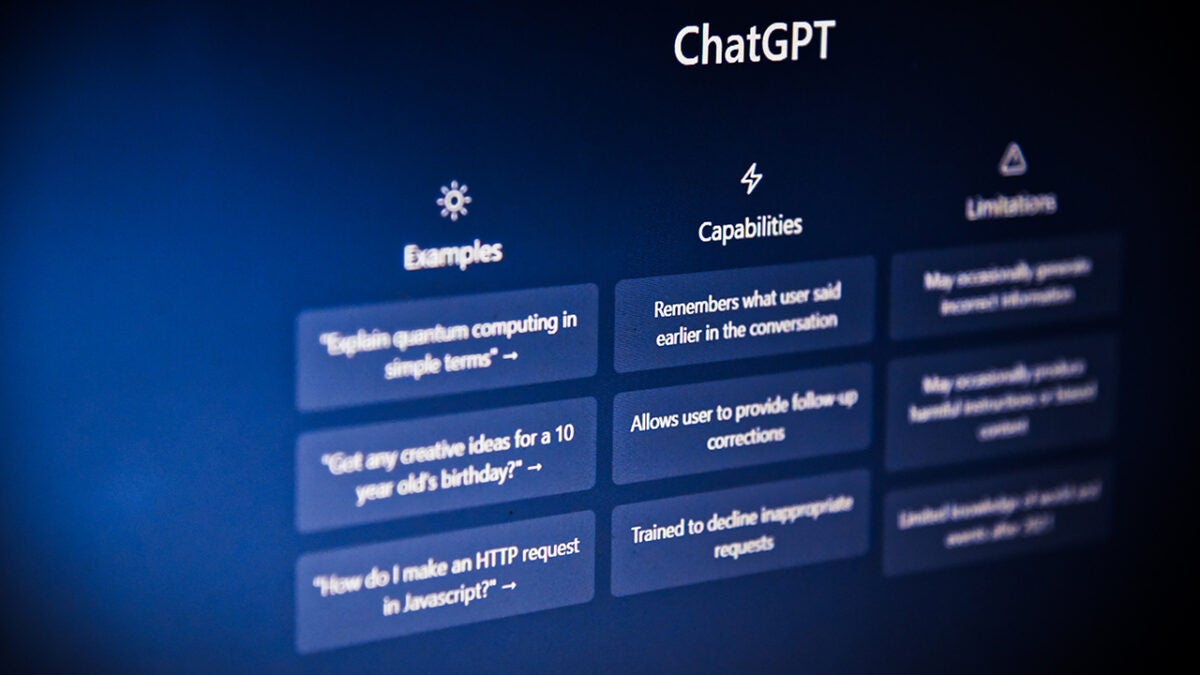
Regarding access to these AIs, ChatGPT is designed to be used through a simple chat interface. Users interact with the AI by typing questions or commands in a chat window, and ChatGPT responds quickly and directly, using the most suitable model for each context. This simplicity makes the user experience very intuitive due to the great similarity to a natural conversation.
For its part, Microsoft Copilot takes a different approach. In addition to using a web chat interface, Copilot integrates directly into the Microsoft ecosystem. This way, by being within programs that the user already knows, such as Word and Edge, the learning curve is reduced and access to its functionalities is facilitated.
Update and customization
Finally, one of the most notable differences is how both systems are updated and customized. ChatGPT receives periodic updates from OpenAI, which expand its knowledge base and improve its ability to generate accurate responses. Additionally, users can customize their interactions through specific prompts or have the AI remember things thanks to its Memory function, allowing it to adapt to different contexts.
Microsoft Copilot, on the other hand, is closely tied to the updates of the programs and systems in which it is integrated, and its ability to be customized largely depends on the user’s data and context within these applications. This makes it a more static tool in terms of its update, as it is limited by the advancements in the Microsoft ecosystem.