Meta has a problem with its AI: it doesn't interest even its own workers

Meta is facing challenges in retaining talent, despite its costly efforts to attract workers from competitors like OpenAI and Google. Recent employee departures raise concerns about organizational stability and the effectiveness of the company’s artificial intelligence (AI) strategy. Although the number of departures may be limited, these moves suggest deeper tensions within the company. Some former employees have expressed feelings of misalignment with Meta’s values, choosing to join organizations that prioritize the safety and social impact of AI. AI is worth as much as AI […]

Meta is facing challenges in retaining talent, despite its costly efforts to attract workers from competitors like OpenAI and Google. Recent employee departures raise concerns about organizational stability and the effectiveness of the company’s artificial intelligence (AI) strategy. Although the number of departures may be limited, these movements suggest deeper tensions within the company. Some former employees have expressed feelings of misalignment with Meta’s values, choosing to join organizations that prioritize the safety and social impact of AI.

AI is worth so much AI

The situation is exacerbated by Meta’s recent hiring freeze, which indicates the need to recalibrate the integration of new employees. This strategy aims to stabilize teams, reduce internal friction, and reassure investors about the sustainability of their hiring plans. Despite having sufficient financial resources to compete in the talent war in AI, the company must reconsider its approach to organizational culture and values when it comes to attracting and retaining employees.

Talent departures could have significant implications for Meta’s efforts to position itself as a leader in AI innovation and research. Excessive reliance on monetary compensation as the sole tool to attract talent has proven to be insufficient, highlighting the need for a change in recruitment strategy. Meta may be forced to rethink how its culture and mission impact employee loyalty, as recent events demonstrate that money does not necessarily translate into loyalty.

Meta and Google launch open-source MMM tools to improve advertising measurement

The growing privacy regulations are redefining how advertisers measure their campaigns. In light of the accelerating loss of signals and the complexity of omnichannel advertising, marketers are turning back to Marketing Mix Modeling (MMM) as a holistic and privacy-safe solution. This approach allows for the analysis of aggregated data over time to uncover correlations between marketing activities and their outcomes. The importance of MMM Platforms like Meta and Google have embraced this trend by launching open-source MMM tools, such as Robyn and Meridian. These […]

The growing privacy regulations are redefining how advertisers measure their campaigns. In light of the accelerating loss of signals and the complexity of omnichannel advertising, marketers are turning back to Marketing Mix Modeling (MMM) as a holistic and privacy-safe solution. This approach allows for the analysis of aggregated data over time to uncover correlations between marketing activities and their outcomes.

The importance of MMM

Platforms like Meta and Google have embraced this trend by launching open-source MMM tools, such as Robyn and Meridian. These platforms aim to democratize access to advanced measurement techniques, offering marketers the ability to customize their models to fit the specific needs of their businesses. This shift also promotes collaboration and continuous improvement of the models over time, unlike vendor solutions that operate as black boxes.

In addition, the incorporation of artificial intelligence and automation is accelerating the MMM process by facilitating data ingestion and modeling, thus enabling the delivery of more agile and real-time insights. This evolution towards agile models, which generate weekly or biweekly analyses, has become a standard for brands that require real-time adaptability.

Retail media networks are integrating MMM capabilities to measure performance in both digital environments and physical stores. Given the increase in advertising spending in these media, MMM becomes essential to assess the total impact of campaigns, taking into account dynamics such as digital shelf and promotions, using data provided by retailers. This measurement strategy, which includes incremental testing and platform reporting, offers advertisers a more comprehensive and reliable view of their performance across different channels.

Mark Zuckerberg throws a tremendous jab at Tim Cook… at the expense of Sundar Pichai

During the Stripe Sessions 2025 conference, Meta’s CEO, Mark Zuckerberg, took the opportunity to position Apple as an adversary and Google as an ally. In a conversation with Stripe’s CEO, John Collison, about the recent court ruling in the U.S. that forces Apple to relax its rules in the App Store, Zuckerberg made an ironic comment: “Tim has had a bad week. I don’t want to add more, but I appreciate Sundar.” Zuckerberg criticizes Apple and praises Google at the Stripe Sessions 2025. This exchange highlights the tensions that exist […]

During the Stripe Sessions 2025 conference, Meta’s CEO, Mark Zuckerberg, took the opportunity to position Apple as an adversary and Google as an ally.

In a conversation with Stripe’s CEO, John Collison, about the recent court ruling in the U.S. that forces Apple to relax its rules in the App Store, Zuckerberg made an ironic comment: “Tim has had a bad week. I don’t want to add more, but I appreciate Sundar.”

Zuckerberg criticizes Apple and praises Google at the Stripe Sessions 2025

This exchange highlights the tensions that exist in the field of application platforms. Although both Apple and Google have faced criticism for their market policies, Epic Games’ frustration also extends to Google due to its anti-direction restrictions and a series of ongoing antitrust battles. However, Zuckerberg seems to be seizing the moment to emphasize a notable shift in the dynamics between these companies.

The recent situation benefits Stripe, which is seeing an increase in its popularity among developers who prefer its payment processing solutions, especially after Apple is forced to allow out-of-app purchases without commissions. This could drastically change the way developers interact with their platforms.

On the other hand, Zuckerberg has shared a troubling perspective on artificial intelligence, suggesting that it could be the answer to problems of isolation and lack of friendships. Meta’s vision, which includes holograms and artificial intelligence friends, has sparked criticism, as many suggest that the real solution lies in reconnecting with lost friends and fostering genuine human interactions in public places.

As a popular comment on social media points out, instead of relying on technology to fill the void of social relationships, it is advisable to go out, explore new places, and enjoy life outside of screens.

Meta launches an app with AI technology for integration into its smart glasses

Meta has launched a new standalone app powered by its Llama 4 AI model, which replaces the previous Meta View and integrates seamlessly with the Ray-Ban Meta smart glasses. The company aims to position itself in the field of artificial intelligence, promoting voice interactions as the most intuitive way to communicate with AI, including features like hands-free chat and an advanced full-duplex speech system that allows for speaking and listening simultaneously. The new app enables users to start conversations on their smart glasses and easily continue on their mobile devices or […]

Meta has launched a new standalone application powered by its AI model Llama 4, which replaces the previous Meta View and integrates seamlessly with the Ray-Ban Meta smart glasses.

The company aims to position itself in the field of artificial intelligence, promoting voice interactions as the most intuitive way to communicate with AI, including features such as hands-free chat and an advanced full-duplex speech system that allows speaking and listening simultaneously.

The new app allows users to start conversations on their smart glasses and easily continue on their mobile or desktop devices.

Enjoy seamless conversations with Meta’s voice-based AI technology

Thanks to the synchronization of settings and data, interactions become seamless, making it easy to follow a conversational thread without issues. For example, a user can ask the AI about a nearby library while walking and check the response later on their phone or desktop.

A highlighted feature of the app is the discovery feed, where users can explore prompt ideas and view publicly generated images that can be remixed for their own projects.

In addition, the desktop version of Meta AI is refreshed with a new interface, expanded image generation options, and an experimental document editor, allowing for the creation and editing of texts with the incorporation of visuals.

Meta has successfully integrated its AI with other applications like Instagram and Facebook, allowing Meta AI to tailor its responses based on user activity on these platforms. This enhances personalization, suggesting restaurant destinations or travel itineraries based on the user’s previous interactions.

However, some critics may question the intensive use of personal data, an approach that Meta aims to balance by emphasizing personal connection in the user experience.

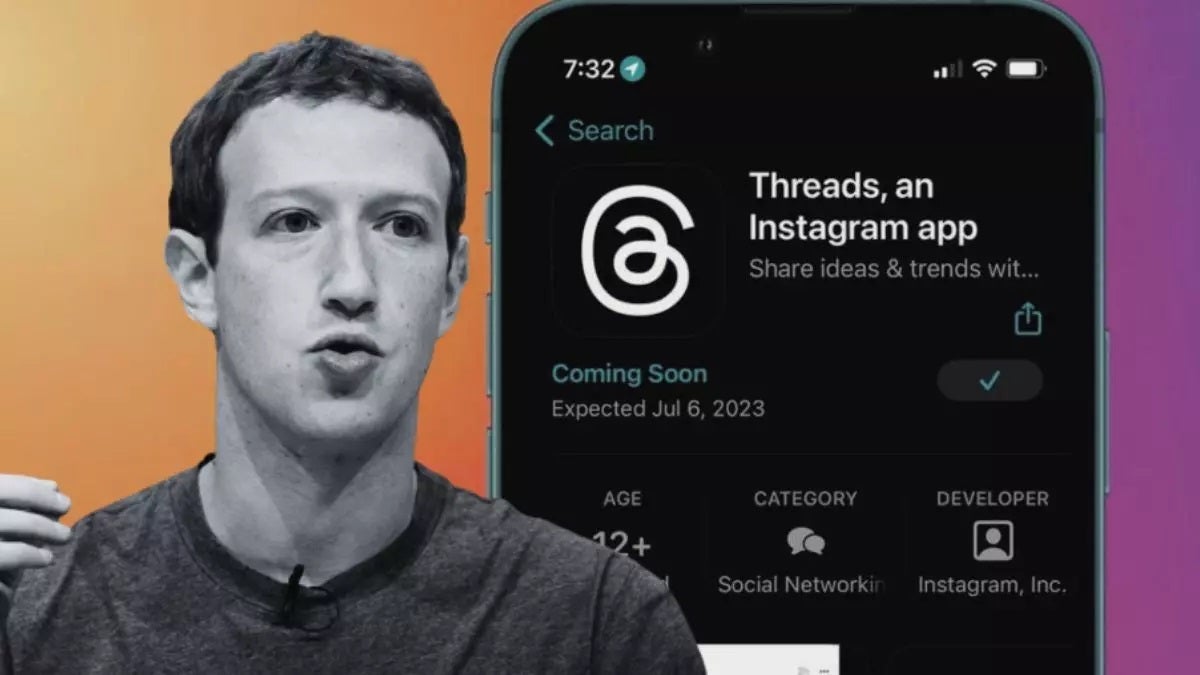
Meta's tactic to increase the user base of Threads raises doubts

Meta has decided to encourage the use of Threads, its microblogging platform, through Instagram, leveraging the vast user base of the latter. As the popularity of Threads has begun to decline after its initial launch, the company seeks to reactivate interest by motivating users to share Threads content in their Instagram stories. Threads users have started receiving suggestions to “Add this to your Instagram story,” designed to attract new users and foster interaction between both platforms. Instagram stories aim to boost interaction in […]

Meta has decided to encourage the use of Threads, its microblogging platform, through Instagram, leveraging the vast user base of the latter.

As the popularity of Threads has begun to wane following its initial launch, the company is looking to rekindle interest by encouraging users to share Threads content in their Instagram stories.

Threads users have started receiving suggestions to “Add this to your Instagram story,” designed to attract new users and encourage interaction between both platforms.

Instagram stories aim to boost interaction on Threads despite the conflict

This message, which appears during the creation of posts, seems to have the explicit intention of increasing the visibility of the posts, suggesting that by sharing on Instagram, one can get “more eyes on your posts.” However, this approach has raised doubts about its effectiveness, given the difference in purpose and style between the two social networks.

Surprisingly, a large part of the content shared on Threads may not be suitable for Instagram, which raises an internal conflict between the two platforms.

They are networks that, although they belong to the same conglomerate, have distinct characteristics and attract different audiences and types of content. While Instagram focuses more on curated images and videos, Threads tends to host more informal dialogues and quick opinions.

Although Meta has not made any official statement regarding this strategy, it is evident that the true goal behind these prompts is to increase the user base of Threads, rather than simply improving the visibility of existing posts.

The company seems to be in a race to revitalize interest in a social network that, after its meteoric launch, has taken a back seat in the current media ecosystem. This tactic could be seen as an attempt to consolidate its presence in a market where competition is fierce and constantly evolving.

The fines on Apple and Meta make the United States angry with Europe

The European Commission recently imposed severe sanctions on Apple and Meta, marking a significant moment in trade relations between the United States and the European Union. Apple has received a fine of 500 million euros, while Meta will have to pay 200 million for practices that, according to Brussels, violate the competition rules set out in the Digital Markets Act. Both companies have expressed that they consider the sanctions unfair and have indicated their intention to appeal. Tariffs are the great danger of this historic fine. This situation is exacerbated at a time when relations between the U.S. […]

The European Commission recently imposed severe sanctions on Apple and Meta, marking a significant moment in the trade relations between the United States and the European Union.

Apple has been fined 500 million euros, while Meta will have to pay 200 million for practices that, according to Brussels, violate the competition rules set out in the Digital Markets Act.

Both companies have expressed that they consider the sanctions unfair and have indicated their intention to appeal.

Tariffs are the great danger of this historic fine

This situation is exacerbated at a time when relations between the U.S. and the EU were already marked by volatility, a consequence of tariff policies implemented during Donald Trump’s administration.

The White House has labeled the Digital Markets Act as “discriminatory”, suggesting that it is designed to favor small businesses at the expense of large U.S. tech corporations.

A spokesperson for the U.S. government warned that any country that attacks major tech companies could face retaliation. Although the current climate shows signs of tension, with Donald Trump reconsidering some tariffs, the current situation could trigger new restrictions or tariffs on European products, in response to the imposed sanctions.

In this context, the debate over regulation and market dominance in the digital age becomes increasingly relevant. The leaders of both entities, Apple and Meta, have the opportunity to legally argue the legitimacy of their practices.

The decisions made on this front could have significant implications not only for their operations but also for the future of international trade and technological regulation.

Meta presents its new smart glasses Aria Gen 2, for researchers

Meta has unveiled its new Aria Gen 2 augmented reality glasses, specifically designed for researchers and featuring a set of innovative characteristics. This second model, which follows the launch of the first generation in 2020, aims to facilitate the exploration of machine perception and artificial intelligence systems from a human perspective. The Aria Gen 2 are equipped with an RGB camera, spatial microphones, eye tracking and heart rate sensors, as well as a contact microphone that allows distinguishing the user’s voice from that of others. Glasses designed for research and […]

Meta has unveiled its new augmented reality glasses Aria Gen 2, specifically designed for researchers and featuring a set of innovative characteristics.

AppleTV+ DOWNLOAD

This second model, which follows the launch of the first generation in 2020, aims to facilitate the exploration of machine perception and artificial intelligence systems from a human perspective.

The Aria Gen 2 are equipped with an RGB camera, spatial microphones, eye tracking sensors, and heart rate sensors, as well as a contact microphone that allows distinguishing the user’s voice from that of others.

Glasses designed for research and accessibility

This approach aims not only at academic development but also at assisting blind or visually impaired individuals. In a demonstration, a user can request help to pick apples, and the glasses guide them to the right place using sounds as a reference.

Weighing 75 grams and with a battery life of between 6 and 8 hours, the new glasses promise to be a versatile tool for researchers looking to create open-source tools, anticipating the possible arrival of other augmented reality products from Meta in 2027.

Meta highlights that these glasses are not intended for the general consumer, but they offer a glimpse of the features that could be available in the future, such as the use of emerging technologies, including the future integration of Android XR in Samsung devices.

In addition, hand and eye tracking technology allows users to interact with interfaces directly through the glasses, similar to a display module.

AppleTV+ DOWNLOAD

These innovations place the Aria Gen 2 at the forefront of smart glasses technology, marking a significant step towards the development of more advanced AR products.