Year’s Breakthrough: Artificial Intelligence Embeds Itself in Our Mobile Devices

It’s a fact. Whether we like it or not, artificial intelligence is here to stay. It’s gradually taking up more space in applications we use every day like Microsoft Paint, in more specialized ones like Adobe Express, and gradually in every aspect of our lives. It’s slowly being integrated into our mobile devices, and it’s not uncommon to read news about new and enhanced features through artificial intelligence. This time, Meta will introduce its own generative artificial intelligence into next-generation Samsung and OnePlus phones, according to recent agreements signed with Qualcomm and Mediatek.

Meta’s response to ChatGPT

At the moment, generative artificial intelligences suffer from a weakness: they are hosted on remote servers, which makes them extremely expensive to operate. Thus Mediatek and Qualcomm will link in future generations of their chips with Llama 2, Meta’s AI. In this way this artificial intelligence could act natively in smartphones of the next cycle, greatly reducing the economic and computational barrier of access that many developers suffer in this field.

This is not free. It is part of a strategy by Meta according to which it would be encouraging developers to adapt to its artificial intelligence and move away from ChatGPT. In fact, Meta is trying to spark interest in this sector to use its language model for artificial intelligence by releasing the code completely free of charge. Although, always be warned, some expert actors are concerned that opening the code gates blithely could lead to security loopholes that are exploited by actors for not particularly good purposes.

But what does this mean for the general public? The end result of such an integration could lead to virtual assistants that could advise the user based on any data collected through the smartphone. It sounds like a big security breach, but in principle these assistants would also protect people’s digital hygiene during the use of their devices.


Meta’s Geo-Restriction: European Users Blocked from Threads, VPNs Ineffective

Meta has confirmed that they are indeed preventing access to Instagram Threads for users in Europe, as the new app from Mark Zuckerberg’s company is currently unavailable in the EU, at least for now. Interestingly, even with a VPN, you won’t be able to access the platform.

Instagram DOWNLOAD

On July 6th, the social network was launched in over 100 countries, none of which included any European countries. The reason behind this is that data protection regulations prevented its debut, as Threads utilizes user data from Instagram, including information about user behavior and advertising, which directly violates the EU’s General Data Protection Regulation (GDPR).

Even with a VPN you won’t be able to access Instagram Threads from the EU

For this reason, Meta decided to postpone the launch of Threads in Europe in order to find appropriate solutions and avoid compliance issues with European regulations. This is what motivated the company to prevent European users from accessing the social network, even if they use a VPN, as shared by Twitter user Matt Navarra. They have implemented new measures that block access to the social network, regardless of the method used to access it.

However, the Threads team has assured that the European market remains crucial to them, indicating that it will eventually be available to users in the European Union, although no specific release date has been announced. Considering that the app is still in its early stages, it may not be a significant setback to have to wait to enjoy it in this continent.

As of today, the Meta-owned platform, which already has over 100 million users, collects data on users’ health and physical activity, as well as financial information, contact details (physical address, email, phone), shared content, and browsing history. That’s not all; Threads also utilizes other types of data, such as user location and contacts, among many others.

Instagram DOWNLOAD

Indeed, it is evident that Meta needs to make significant improvements in these aspects for Threads to be able to launch in Europe and comply with the regulations of the EU Digital Markets Act. Nevertheless, Instagram Threads has already emerged as one of the most promising alternatives to Twitter currently available.

Say Hello to Your Virtual Self: Meta Unveils Avatar Video Call Feature

Surely all of you have found yourselves in that situation where you have to make a video call but you’re not looking too presentable. Well, Meta has added a very interesting feature for users who make video calls from Instagram and Messenger, which are some of the best apps for these calls.

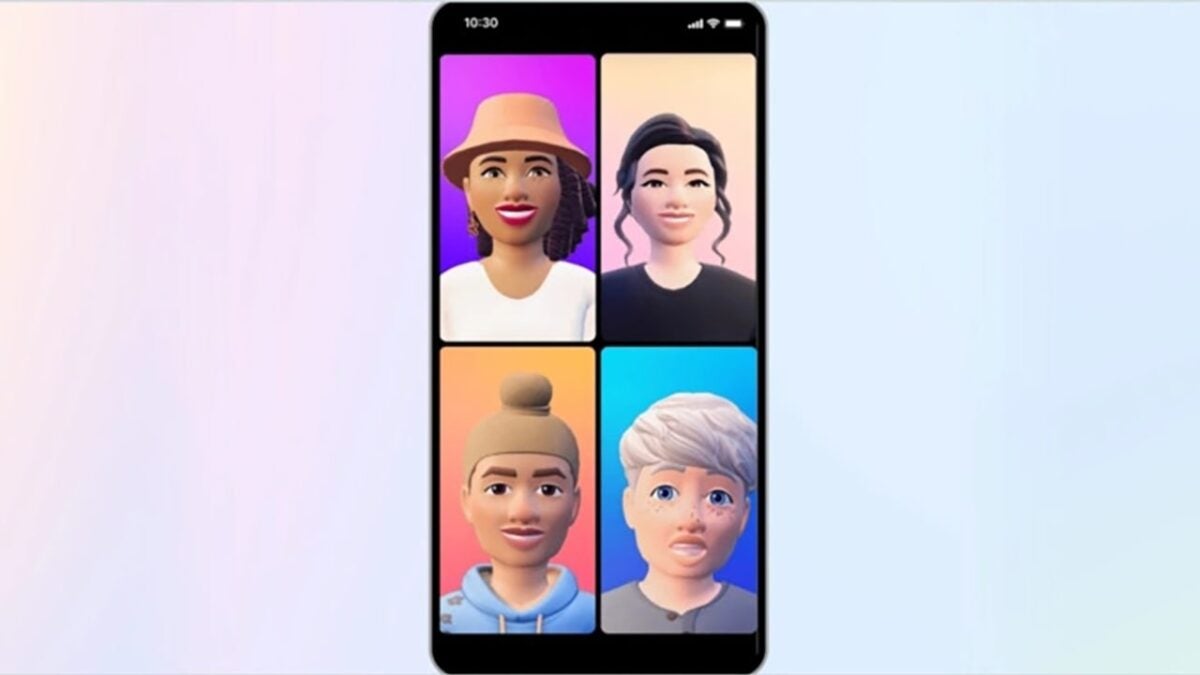
Specifically, the company has announced that now users can use their avatars to make video calls from Instagram and Messenger, which is undoubtedly a great addition for all those people who are in a hurry during the day. This functionality is available for iOS and Android devices.

If you are not visible, don’t worry, now you have your avatar to make video calls on Instagram and Messenger

“We’ve all been there: a call comes in, but your hair looks like a mess. Or you’ve been crying while rewatching From Scratch. Sometimes, we just aren’t camera-ready. Wouldn’t it be great if there was a third option between having the camera off and being fully present on the call?” Meta said in a blog post.

In the announcement itself, Meta has confirmed that over a billion Meta avatars have been created, helping people express themselves in new ways in digital spaces. Undoubtedly, this addition to Instagram and Messenger is a new way of conducting video calls, apart from the typical options of having the camera on or off. Let’s say it’s a rather interesting middle ground.

Furthermore, they have also indicated that with this functionality, avatars will now be “more fun, useful, and social than ever.” Regarding these avatars, it has been mentioned that their respective stickers can now be used to add “a bit more action and liveliness to conversations.” In fact, these stickers, which can be animated, can be shared through Instagram, on Facebook stories and Reels, as well as in Facebook comments and 1:1 Messenger message threads.

Instagram DOWNLOAD

Lastly, the company has also mentioned that they are testing a simpler way to create avatars on WhatsApp and Facebook, where you can take a selfie and receive a suggestion for your avatar directly from your photo. Once you choose the option that interests you the most, you can always further personalize your avatar.

Breaking the Mold: Meta’s Unanticipated AI Function Revealed

Meta has announced the launch of what will be its first artificial intelligence feature in one of its social apps.

Despite Meta (formerly Facebook) having developed its own AI named LLaMA, the company has not yet implemented any AI function in its products. While there is an Instagram chatbot in development (with an uncertain release), other social media platforms like Snapchat have already taken the lead in AI implementation.

Instagram DOWNLOAD

Now, Meta wants to catch up in the midst of the AI revolution and offer its users the first AI-powered feature in one of its products: AI-generated stickers for Messenger. Yes, that’s right, perhaps it’s not the AI feature that users were expecting in a Meta app.

Messenger DOWNLOAD

In a meeting accessed by The Verge, Meta’s VP of AI, Ahmad Al-Dahle, explained to employees that the company will leverage its image generation model to allow users to create stickers from text messages. Currently, the feature is being tested internally, but it will likely be released to the public in the near future.

“With AI-generated stickers, our users can have infinitely more options for self-expression, cultural representations, and even trend relevance,” Al-Dahle states. “Of course, stickers are just the tip of the iceberg.”

The VP of AI also states that Meta is “working on AI models that will transform any image you want in any way you want.” Among the possible functions, there would be the ability to “change the aspect ratio of your photo” or turn a photo “into a painting.”

This marks a first step for Meta in implementing artificial intelligence into its social media ecosystem. However, considering Zuckerberg’s ambitions, we can almost certainly expect to see many more AI functions in the coming years.

Messenger DOWNLOAD

Some of the links added in the article are part of affiliate campaigns and may represent benefits for Softonic.

Introducing Meta Quest 3: Meta’s Ambitious Move to Challenge Apple’s Dominance

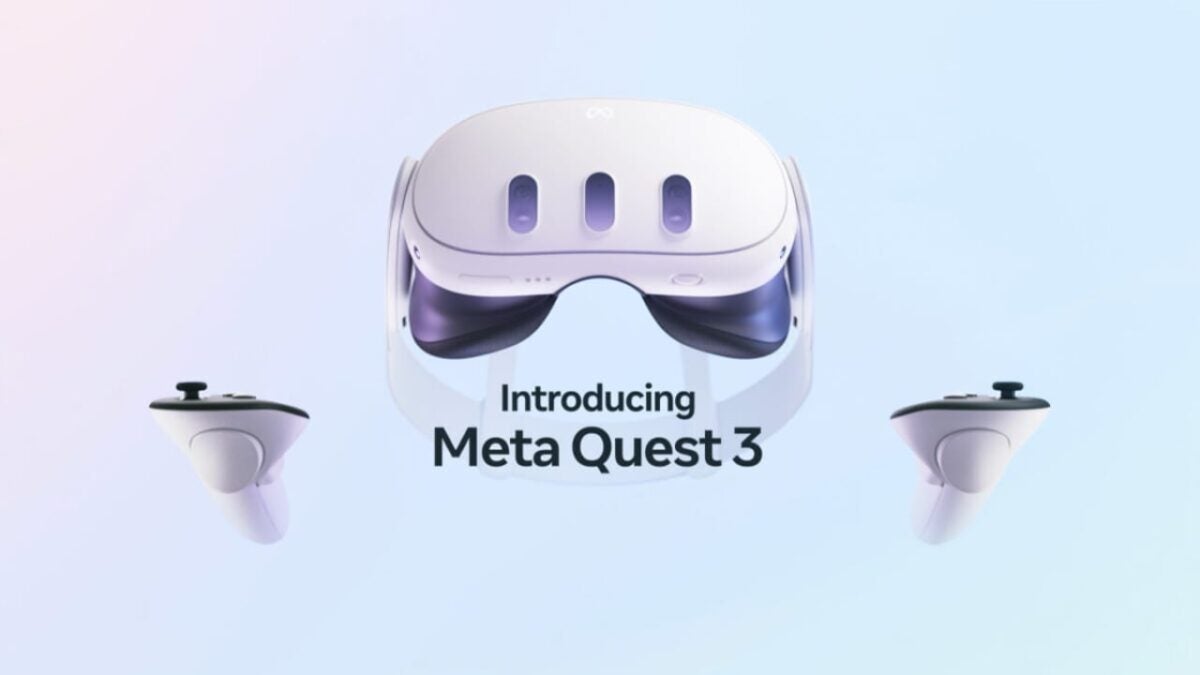
Meta has just announced the Meta Quest 3, the successor to the popular Meta Quest 2 VR headset.

WWDC 2023 is getting closer and closer. Several sources and rumors claim that Apple will unveil their highly anticipated mixed reality headsets at the event. In light of this occasion, Meta couldn’t “hold back” and has just announced the Meta Quest 3, the successors to the popular Meta Quest 2 VR glasses.

Facebook DOWNLOAD

Unlike the Meta Quest 2, the company’s new gadget combines virtual reality and augmented reality. As if that wasn’t enough, it also comes with a price increase: $499.99 (€569.99 in Spain), $100 more than the current cost of the Quest 2.

According to the information revealed by Meta, the Meta Quest 3 introduces a new design that makes them 40% lighter than their predecessor. Their more oval-shaped appearance features three indentations on the front, where their new sensors are located.

In addition, the Meta Quest 3 will include new high-definition displays and improved resolution thanks to a new Qualcomm chipset. While it has been confirmed that it will feature a new state-of-the-art Snapdragon, the specific model and its characteristics are not yet known. However, Meta promises a significant leap in performance and up to double the GPU power.

To enable mixed reality, the Meta Quest 3 will incorporate dual 4-megapixel RGB cameras along with much more precise depth sensors.

Another area that has been revamped is the controllers. The so-called Touch Plus controllers include the tracking system seen in the Quest Pro and feature a more ergonomic design. As expected, it has been confirmed that all of our games and applications from the Meta Quest 2 will be compatible with the Meta Quest 3.

To find out more, we will have to wait until September

Although Meta has rushed to announce it through social media, the truth is that there is still not much information available. For now, it’s just a small teaser to whet our appetites while we wait for September 27th, the day of Meta Connect.

To make the wait more enjoyable, Meta has released the first trailer of what will be the new Attack on Titan VR: Unbreakable on their social media. Judging from what has been shown, it is a game that no Meta Quest owner should miss, whether they are a fan of the famous anime or not.

Facebook DOWNLOAD

Some of the links added in the article are part of affiliate campaigns and may represent benefits for Softonic.

The Untold Story of Apple’s Success: Why It is about people?

As several company executives have already commented on many occasions: the core of Apple is people.

Apple suspended hiring for most work outside of research and development late last year – specifically in July – as part of its strategy to cut costs. The measure has not been applying to teams working on future devices and long-term projects, but now the situation is changing.

Continue reading “The Untold Story of Apple’s Success: Why It is about people?”

Meta closes its global Connectivity division

It’s almost ten years since Facebook Connectivity launched in an effort to bring free internet, and Facebook, to millions of people worldwide. While there have been various experiments and successes, Meta has decided it’s time to shut the division down. It all seems linked to the 11,000 layoffs that happened about a month ago in the company.

Recently rebranded as Meta Connectivity, the division has spent almost a decade and plenty of money on several initiatives. There were drones beaming internet connection to Facebook to users on the ground. Also, they played with using some satellites orbiting the Earth, but that team vanished to Amazon.

As part of its ambition, Meta Connectivity also brought free internet and connection to Facebook in poor or underdeveloped areas. I say free loosely, as Meta discovered that mobile providers were still charging users for data usage. None of that matters now, as Meta is officially closing the Connectivity division.

Rumors are that Mark Zuckerberg is pumping more money into the Metaverse, which is apparently still a main focus for the company. According to experts, Meta will lose more money going into 2023 developing this virtual playground for the blockchain elite and wealthy.

Meta closes its global Connectivity division

At least Meta is still involved in the Telecom Infra Project (TIP), designed for the development of telecom infrastructure. However, Zuckerberg’s ambition may get the best of him yet. We may also see Meta pulling out of this project if it needs more funds for the Metaverse. 

Let’s try to put a positive spin on this. Maybe if Metaverse makes the company enough money, Meta will use those returns to return to helping underdeveloped areas connect to the internet for more than simply posting on Facebook for free. Or help them join the virtual space at no cost to them.

We’ll have to see what plans Meta comes up with now that the Connectivity division is gone.

After cutting its workforce, Meta is now cutting services and products

2018 saw Meta announcing Portal devices, a new range of electronic products that gave users instant access to video calling services, a smart camera, Amazon Alexa, and many more integrated features. However, while Portal is clever on paper, it’s not generating any. This explained Meta’s June 2022 announcement that it was scaling Portal devices back to purely enterprise hardware. Now, however, Portal is being killed off completely. Will we see services and products cut for apps like Facebook next?

Facebook DOWNLOAD

The news that the assistant-like devices were being killed off first broke on Reuters, shortly after Meta announced that it had initiated the biggest layoff in its history. This layoff affected 11 000 employees who, together, made up around 13% of Meta’s total workforce, but this doesn’t seem to have saved the company enough money. In the same breath that it reported on the demise of Portal, Reuters also mentioned Meta winding down its smartwatch project – excuse the pun. 

Mass layoffs, product purges, and scaling back new initiatives, to the untrained eye, makes it look like Meta itself is dying. In fact, it seems plausible that Meta is doing everything it can to stay afloat. Previously, we’ve reported on the issues facing the company, from Facebook losing popularity with younger generations and the older pro-Facebook generations dying out, to the some-would-say inevitable failure of the Metaverse. However, in other areas, the company seems to be exhibiting growth. 

Meta cuts products main 2

Perhaps Meta has simply shifted focus, as Mark Zuckerberg has said, to ‘high priority growth areas.’ For support of this statement, look no further than the resources that Meta is plowing into the Metaverse, a project that Zuck and Meta are convinced is the means of communication, work, socialization, relaxation, and learning of the future. Another argument for this refocus is Meta’s dedication to its AI discovery business. Zuck has also mentioned that Meta will retain focus on its ad platform. No surprise there. 

There is enough proof of either of these scenarios coming to pass. Either Meta will fold and be relegated to the hall of Memorium of tech innovations past, or it will continue cutting costs where it matters and continue shaping the world in its own – or Mark Zuckerberg’s image. We’ll see how all of this will affect fellow apps like WhatsApp and Instagram.

I suppose it all depends on whether all these resources going to the Metaverse are worth it, or whether Meta is overextending itself with the entire Metaverse concept. I, for one, don’t believe people are ready to move into virtual and augmented reality to that extent.