LocalThunk, the enigmatic developer behind the acclaimed game Balatro, has decided to maintain his anonymity to face the pressures of success in the video game industry. During his recent participation in the Game Developers Conference, LocalThunk had the opportunity to observe for the first time how strangers interacted with his creation. This experience was revealing, and the developer expressed on Bluesky: “Some people told me I should have played this before,” which reflects his skill and connection with the game. A decision based on wanting to maintain his privacy Despite his anonymity, which some compare […]
LocalThunk, the enigmatic developer behind the acclaimed game Balatro, has decided to maintain his anonymity to face the pressures of success in the video game industry. During his recent participation in the Game Developers Conference, LocalThunk had the opportunity to observe for the first time how strangers interacted with his creation. This experience was revealing, and the developer expressed on Bluesky: “Some people told me I should have played this before,” which reflects his skill and connection with the game.
A decision based on wanting to maintain your privacy
Despite his anonymity, which some compare to the style of the famous artist Banksy, LocalThunk does not seek to provoke media attention. According to Wout van Halderen, communications director of Playstack, the publisher of Balatro, his decision to remain in the shadows is based on a personal preference, allowing him to enjoy his success without being overwhelmed by the public spotlight. This gives him the freedom to act and experiment at events like GDC in ways that other recognizable developers could not. For example, during the conference, LocalThunk moved through the crowd after showcasing some impressive gameplay of the game.
The revelation of LocalThunk has sparked discussions about how interactions are perceived at such events. A GDC attendee shared a piece of advice they had received: “Don’t read the badges until after talking to someone, so you don’t get dazzled by fame.” This philosophy seems to resonate with LocalThunk’s experience in choosing discretion in their public appearances.
The reserved approach of LocalThunk has been positively received, both for its personal well-being and for the appeal it generates among fans, turning its story into a fact as intriguing as the game Balatro itself.
Balatro, the acclaimed game that started as a simple hobby project, has managed to sell millions of copies and has been awarded several prizes since its release. Its success has continued to grow, capturing the attention of players around the world and becoming a phenomenon that even features collaborations with iconic characters like Geralt of Rivia. However, its creator, known as LocalThunk, has chosen to remain anonymous, allowing him to handle the pressure that comes with the success of the work. A man who likes to be anonymous According to Playstack’s communications director, Wout […]
Balatro, the acclaimed game that started as a simple hobby project, has managed to sell millions of copies and has been awarded several prizes since its release. Its success has continued to grow, capturing the attention of players around the world and becoming a phenomenon that even features collaborations with iconic characters like Geralt of Rivia. However, its creator, known as LocalThunk, has chosen to remain anonymous, allowing him to handle the pressure that comes with the success of the work.
A man who likes to be anonymous
According to Playstack’s communications director, Wout van Halderen, LocalThunk’s choice to remain in the background is not part of a Banksy-style marketing strategy. Instead, it is a thoughtful decision aimed at protecting his personal life. “LocalThunk is a person who doesn’t really enjoy the spotlight,” says van Halderen. “His anonymity has been a way to cope with the pressure and maintain some normalcy in his daily life.”
Despite the success, the enigma surrounding LocalThunk has sparked speculation about its intentions. Many consider its anonymity a tactic to accentuate the mischievous nature of the game, an interpretation that van Halderen has clarified as incorrect. “I just wanted to be left alone to create my game and live my life,” he adds.
The success of Balatro has also opened new opportunities in terms of collaborations and merchandising, facilitating quicker access to partnerships thanks to its popularity. “When you achieve success with a game like Balatro, it’s easier for platforms to respond to your proposals,” notes van Halderen. However, LocalThunk enjoys the advantage of having a quiet personal life, where their greatest recognition is possibly for hockey, a luxurious showcase in today’s digital entertainment society.
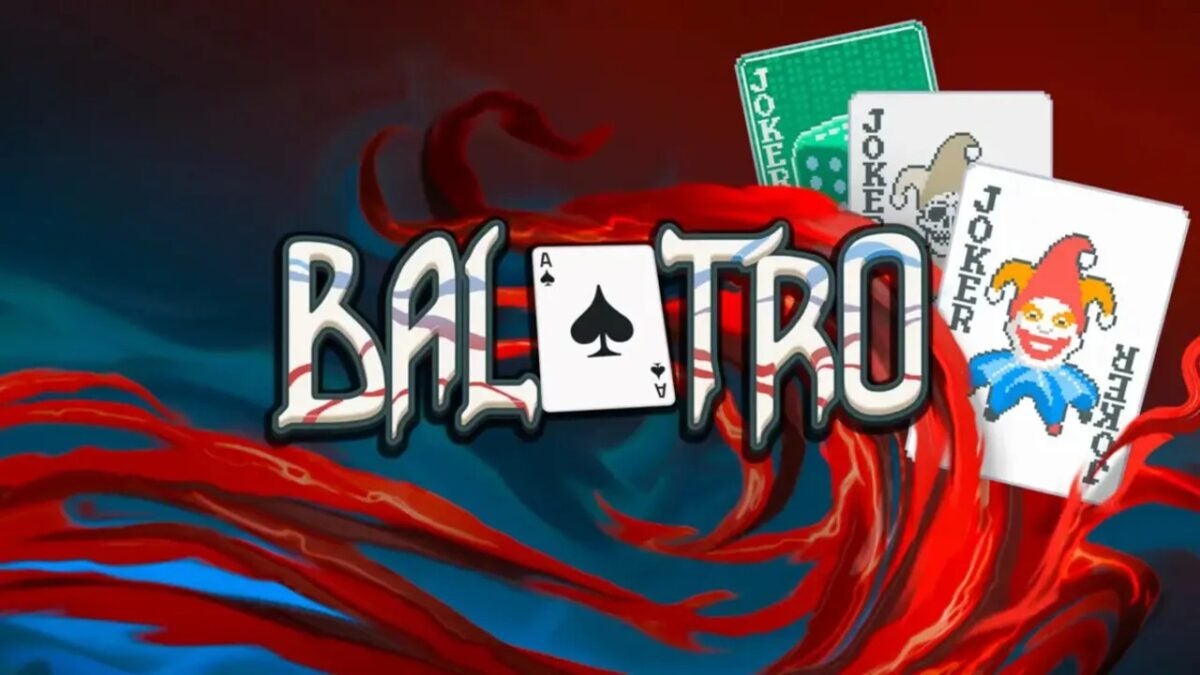
Balatro is a deck-building card game that emerges as a rebellious fusion providing a fresh take on mechanics and reinvents the game of poker. At the core of this experience are illegal poker hands, an abundant variety of dynamic wildcards, and a wave of gameplay driven by combos that ensures each match feels distinct and equally exciting.
A recent debate on the Balatro subreddit has led developer LocalThunk to express his stance on art generated by artificial intelligence, arguing that this type of art harms artists and is unwelcome in the community. This conflict began after an intervention by former moderator DrTankHead, who stated that the subreddit would not ban AI-generated art as long as it was properly labeled. LocalThunk is clear: AI harms artists. However, the community’s response was notable, showing strong disagreement with the apparent acceptance of AI-generated art. LocalThunk, in a […]
A recent debate in the Balatro subreddit has led developer LocalThunk to express his stance regarding art generated by artificial intelligence, arguing that this type of art harms artists and is unwelcome in the community. This conflict began after an intervention by former moderator DrTankHead, who stated that the subreddit would not ban AI-generated art as long as it was properly labeled.
LocalThunk is clear: AI harms artists
However, the community’s response was notable, showing a strong disagreement with the apparent acceptance of AI-generated art. LocalThunk, in an attempt to clarify the situation, emphasized that both he and Playstack, the company behind Balatro, do not support the use of this technology in their projects. “I do not use AI in my game, I believe it harms artists of all kinds,” expressed LocalThunk. Following these statements, a moderator was removed from their position due to their previous comments about AI.
In addition, Wout van Halderen, director of communications at Playstack, reaffirmed that the company does not condone the use of AI-generated art and that the subreddit rules would be adjusted accordingly. In fact, the new rules explicitly prohibit any AI-generated content, emphasizing the community’s commitment to protecting artists.
Despite the opposition from LocalThunk and Playstack to AI-generated art, there is a trend of developers and players who are more open to its use. In a twist, the subreddit Balatroromance, known for containing NSFW content, has announced that it will allow AI-generated art, maintaining its support for LocalThunk and the Balatro moderation team.
With this movement, questions arise about the future of art within gaming communities and whether AI will take a place in the culture of development or if we will continue to see resistance to its use on these platforms.
Balatro is a deck-building card game that emerges as a rebellious fusion providing a fresh take on mechanics and reinvents the game of poker. At the core of this experience are illegal poker hands, an abundant variety of dynamic wildcards, and a wave of combo-driven gameplay that ensures each match feels distinct and equally exciting.
Balatro has been one of the biggest indie hits of the season, now announcing its expansion to more devices and million-dollar sales.
Some games become popular because they are good. They don’t rely on gimmicks, trends or big advertising campaigns. They are simply great games and that’s why, upon release or some time later, they manage to reach their audience. In some cases, they even manage to break through and reach the mainstream. This is what has happened with the latest indie sensation: Balatro.
The premise of Balatro is very simple. We have a French deck of cards and we have to make the minimum possible amount of points each turn, using a maximum number of hands and discards. In each new phase, we have to achieve a greater amount of points to overcome it, while the points are obtained by creating poker hands. That simple. That limited. Or it would be if there wasn’t something else behind it.
Balatro is a game full of details that add depth to the game. We can obtain jokers that allow us to increase our scores. Bonuses that improve some of our cards. Or buy or destroy cards, if what we want is to have a deck tailored to a particular run.
Because Balatro is a roguelike. One that, like any good roguelike, gives us the tools to play in a linear and strict way, if that’s what we want, but also to break the game in all unimaginable ways. As many players have already discovered, it is possible to make hands worth millions of points with the right combinations, if not billions of points if we dedicate a special effort to break the game. This is not limited to a single strategy, partly due to the randomness factor, partly due to the simplicity and flexibility of its foundation, which makes the possible winning strategies virtually infinite.
That’s why it has become one of the most popular games of the moment. It’s easy to understand, difficult to master, and incredibly fun to break. That’s why it’s no surprise that its popularity keeps growing. Leading even to its developer, LocalThunk, deciding to take it further.
According to statements made by the developer to iMore, Balatro will be coming soon to Apple mobile devices. Without giving a specific date or the qualities of this port, they have only confirmed that the game will be available for anyone who has an iPhone or an Apple tablet.
This will contribute to further increasing its sales, which are already extraordinary. According to Harvey Elliot, CEO of Playstack, the game’s publisher, Balatro has already sold over a million copies. With its release dating back to February 20th for PC, Mac, PlayStation, Xbox, and Nintendo Switch, this means that the game has sold this amount in less than a month, with the first 500,000 copies being sold during the first ten days. An absolutely staggering amount for an indie game, even after being forced to disappear from all online console stores for a few days.
According to the statement released by PlayStack’s CEO, the success of Balatro is “a testament to the quality and creativity that the indie sector can deliver.” Similarly, LocalThunk has also emphasized, in another statement, that “I still can’t comprehend the response to this game.” Demonstrating how impactful its success has been, even when it is well-deserved.
In addition, those who already have Balatro will have few reasons to stop playing. According to LocalThunk, their idea is to continue providing post-launch support to the game, including new secrets to the game. Something that, considering its success and how easily modifiable it is, would not be surprising to end up meaning the inclusion of new content in the game. Especially when in a tweet to announce that million copies milestone, they hinted that “we still have fun things planned for the future”.
For all these reasons, it is easy to assume that Balatro still has a long way to go. Not only because as a roguelike it is potentially infinite, as previous similar games have shown us with a lifespan of years, like Slay The Spire, but also because of the amazing reception it has had among the public. Something that seems to confirm that the popularity of roguelikes and card games has not been a one-day thing – the genre is here to stay.
So much so, that overnight it has disappeared from the Switch e-shop in quite a handful of countries. And, although it may not seem like it, there is a very logical reason for this.
‘Balatro’ has come out of nowhere, but it has become the new big obsession in the online gaming world. Move aside, ‘Palworld’, your replacement has arrived. The poker game is extremely fun, yes, but also addictive. So much so, that overnight it has disappeared from the Switch e-shop in a good number of countries. And, although it may not seem like it, there is a more than logical reason for this.
This poker-themed roguelike deck builder (my father, by this point, would have stopped reading without understanding a single word) has been removed from the eShop because the recommended age has been increased from 3 years and older to 18 years and older. The reason? Well, the one you’re imagining: they believe it encourages gambling, and the gambling issue has already destroyed many lives.
There is only one problem: there is no betting or encouragement to do so. But Nintendo has wanted to cover its back and the game disappeared from most of Europe, in Japan and in Australia, although it is still available in the United States. On PSN and Xbox, for now, it continues… but the PEGI rating has increased. And one thing is for your child to play a roguelike game designed for everyone and another thing is for them to play an adult game. It’s not a good idea.
In a tweet, the developers of ‘Balatro’, Playstack, who must be having a fabulous time right now, have promised to do everything possible to get the game back up as soon as possible. For now, and apparently, Nintendo has taken action and is helping it reappear soon on the eShop, turning this drama into an anecdote and giving the game some free publicity as a gift.
In fact, they have clarified not only that there is no encouragement to gamble in the game, but they are strongly against gambling and that the PEGI code has been awarded completely unfounded. They do not rule out (ha) that the game may regain its previous age rating. Only time will tell. And now, a game?