The prices of video games have escalated to levels that have begun to generate discontent among players. With the recent release of Mario Kart World, Nintendo has set the price of the physical version at 90 euros, breaking the barrier of 80 euros that began to be established in the industry. This price increase is not limited to Nintendo, as other companies, including Xbox, have already raised the cost of their consoles, games, and accessories, and it is rumored that more brands will follow this trend. Within reach of a few Shuhei Yoshida, former head of PlayStation, has shared his perspective […]
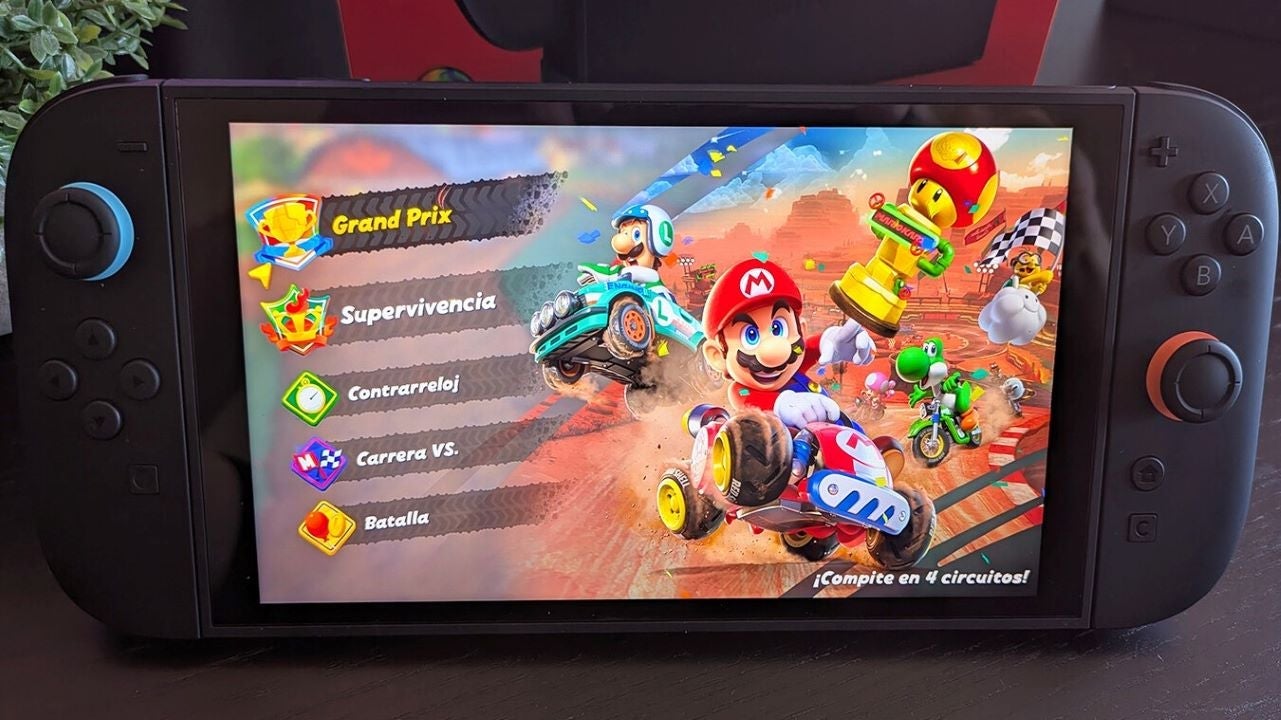
The prices of video games have escalated to levels that have begun to generate discontent among players. With the recent release of Mario Kart World, Nintendo has set the price of the physical version at 90 euros, breaking the barrier of 80 euros that began to be established in the industry. This price increase is not limited to Nintendo, as other companies, including Xbox, have already raised the cost of their consoles, games, and accessories, and it is rumored that more brands will follow this trend.
Within reach of a few
Shuhei Yoshida, former head of PlayStation, has shared his perspective on this matter in a recent interview, where he discusses the value of video games in relation to the hours of entertainment they provide. Yoshida argues that not all games should have a uniform price, as each title offers different value to the player. According to him, the price should be determined by publishers and developers based on the budget and quality of the game.
In a previous interview, Yoshida emphasized that players should not complain so much about video game prices, as long as they are aware of how they spend their money. He suggested that inflation in other sectors has outpaced the price increases in the world of video games, implying that companies have been slow to adjust their prices in response to these inflationary trends.
The controversy surrounding video game prices is clear: while some defend the increases based on the value they offer, other players express their frustration. As the industry continues to evolve, it will be vital to observe how both companies and consumers react to these price changes and what implications they will have for the future of interactive entertainment.
Nintendo has surprised the video game world with the announcement that some titles for its new console, the Switch 2, will have a price of 90 euros, a significant increase from the previous price of 70 euros. Doug Bowser, president of Nintendo of America, has stated that the company will implement a “variable pricing” strategy in its software line, thus allowing prices to be adjusted according to each game. Prices should not be based on the interests of the stores This change has generated various reactions in the video game development community. Michael Douse, publishing director of Larian […]
Nintendo has surprised the video game world with the announcement that some titles for its new console, the Switch 2, will have a price of 90 euros, a significant increase from the previous price of 70 euros. Doug Bowser, president of Nintendo of America, has stated that the company will implement a “variable pricing” strategy in its software line, thus allowing prices to be adjusted according to each game.
Prices should not be based on the interests of stores
This change has generated various reactions in the video game development community. Michael Douse, publishing director of Larian Studio, emphasized that developers should not be limited by retail pricing rules. Douse shared his opinion via Twitter, arguing that “it’s very liberating not to have to worry about a shelf, but rather about an audience I can easily talk to.”
Industry analysts suggest that the increase to 90 euros may reflect several factors, such as fees in the U.S., a chaotic market, and rising costs. All experts do not hesitate to state that “Nintendo is setting this price because it feels it can and that people will pay”. This raises a scenario where the price of 90 euros could become a new standard in the industry, depending on the success of Nintendo’s pricing model and the overall economic conditions.
Despite the controversy, Nintendo has clarified that not all of its games will be available at this new price. With the rising cost of living and increasing economic pressure, the future of prices in video games seems more uncertain and subject to change. As the Switch 2 continues to gain popularity, it will be interesting to see how the market responds to this new financial strategy.
The president of Capcom has said that video games are too cheap and the truth is that he is right; In this article we explain why.
The price of video games is a contentious issue that is rarely discussed in reconciliatory terms. They are a luxury product, but one with a value that has been extremely distorted by a series of questionable market decisions made over a decade and a half. That’s why every time an executive says that video game prices are too low, we react with surprise. But what if that were true?
All of this comes in the context of recent statements from Capcom’s president, Haruhiro Tsujimoto, who believes that the company’s video games are priced too low. He explains this by pointing out that the cost of development has grown exponentially, while the price of games has not followed suit, suggesting that increasing game prices would be a “healthy option” for the industry.
According to Tsujimoto, development costs are a hundred times higher than in the 80s, while software prices have hardly increased. And while it’s true that the recession is something to consider, he believes it’s not something that affects the industry, as demonstrated by the 2008 financial crisis.
Up to this point, it may seem like the discourse of someone completely disconnected from reality. However, he’s not saying anything that is untrue. Since 2004, the video game market, particularly on PC, has kept the base price of games practically unchanged. This means that prices have remained virtually the same for 20 years, even when there has been double-digit inflation that may well be approaching three digits rather than just one. This has recently changed for most AAA console games, increasing the price to 70-80 euros from the previous 60-70 euros, even though on PC, prices largely remain at 50-60 euros for base games.
How is it possible that these prices have remained until relatively recently? Essentially, it’s due to the constant influx of players. The increase in players over time has been exponential. Starting with the arrival of the PlayStation, but particularly with the PlayStation 2 and the complete democratization of the PC, the internet, and mobile phones, the number of players exploded. This allowed them to continue maintaining prices even as margins became increasingly marginal. They made less money, but they had more buyers.
That’s the problem. Big companies like Capcom, EA, Sony, Microsoft; they can afford to do this. But it creates a suffocating situation for small and medium-sized companies. A situation where it’s practically impossible to create games beyond a certain point without underselling your product.
Small companies, indies, have to sell their games well below their market value because between the prices set by big companies and constant sales, a too-high price would result in very few full-price sales. This makes the viability of a small studio entirely dependent on creating a game that sells in the six-figure range, something generally exclusive to large companies, or creating moderately successful games consistently, with none of them failing, to keep the company afloat.
In fact, this explains the near-complete disappearance of AA games, those medium-sized games leaning towards the larger side, and with it, the disappearance of medium-sized companies. As their production costs have increased but the perceived value remains the same, they must sell them well below their cost. Therefore, they must either be a resounding success or a failure that questions the viability of the company, essentially making it impossible to take such risks.
Is it better, then, to create a large game? Not necessarily. AAA games are so costly in terms of production and marketing that even at their price point, they need to sell millions to break even. The difference is that big companies could scale them down and create less expensive games, in line with the prices they charge, to balance the equation, instead of constantly scaling up, seeking an unsustainable limit — of people willing to pay whatever, of a constant influx of new players. Something they won’t do because that’s the ideological foundation of capitalism: the physically impossible perpetual growth.
That’s where the problem lies. Big companies keep scaling up, relying on an infinite market of potential new customers, creating an entirely unrealistic value scale. This makes medium-sized companies unsustainable, unable to compete, and forces small companies to devalue their product, forcing them to subsist to ridiculous levels or take insane risks that no one should take. Such as mortgaging their homes, betting that the game will be a resounding success, as many indie developers who have succeeded have done, and many more who have not and have ended up on the street, and we haven’t heard about them.
That’s why Haruhiro Tsujimoto is right. Games cost less than they should. Specifically, indie games, medium-sized games, cost less than they should. But not the big games from big companies. A new Resident Evil could simply scale down to fit a realistic value scale. 70, 80, or 90 euros for a video game is a lot of money. Raising it even further, as if people’s purchasing power were infinite, is a gamble they shouldn’t want to take.
Therefore, what’s healthy for the industry is not for AAA games to raise their prices. What’s healthy for the industry is for indie and medium-sized games to raise their prices, and for AAA games to become smaller and less grandiose. Have worse graphics. Be made by smaller studios. What’s healthy for the industry is for the difference between a blockbuster and an indie game not to be measured in numbers equivalent to the GDP of a medium-sized country. Because as long as it remains like this, no matter how much they raise or don’t raise the price of games from big companies, the industry will continue to be on the brink due to an economically unsustainable model.