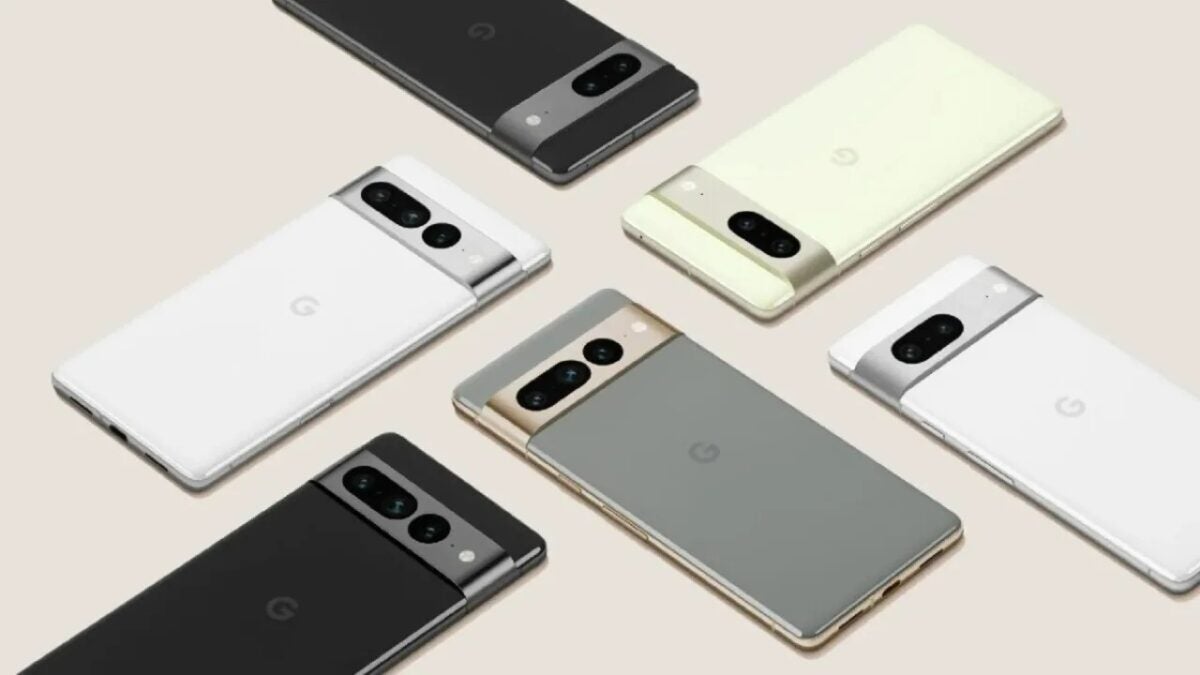
Google and Qualcomm have announced a strategic alliance aimed at extending software and security support on Android phones for up to eight years, a significant advancement that promises to improve the sustainability of mobile devices. Let’s remember that Google already offers 7 years of support for Android on its Pixel 8 and Pixel 9. This new program includes updates for both the Android operating system and the SoC, allowing original equipment manufacturers (OEMs) to keep their devices updated without incurring substantial additional costs. The implementation of this extended support is subject to the decision of the manufacturers, with some […]
This new program includes updates for both the Android operating system and the SoC, allowing original equipment manufacturers (OEMs) to keep their devices updated without incurring substantial additional costs.
The implementation of this extended support is subject to the manufacturers’ decision, with some like OnePlus already expressing their intention to offer only four years of support.
Qualcomm just announced that its Snapdragon 8 Elite platform will be supported for "up to eight consecutive years of Android software and security updates."
"What this means is that support for platform software included in this program will be made available to OEMs for eight… pic.twitter.com/UdfaspMzkg
Is it possible to provide 8 years of updates realistically?
The first phase of the program will be applied to phones equipped with Snapdragon Elite 8 chipsets, and it is expected to cover the next five generations of Qualcomm processors. This means that companies using these chips will have access to reliable software for a considerable period.
Despite these promises, there are challenges. Not only is the support period affected by manufacturers’ decisions, but there is also the issue of the durability of lithium-ion batteries, which could deplete within a span of eight years, limiting the actual lifespan of the devices.
Google, Qualcomm will support 8 years of Android updates with latest chips https://t.co/cxAImh6Mmq
In addition, the new software features, especially those that incorporate artificial intelligence, require more advanced chips, which could make the user experience less than optimal throughout the support duration.
At a time when concern about planned obsolescence and electronic waste is greater than ever, this collaboration represents a positive step towards sustainability.
Many users could benefit from being able to use their phones for a longer time, perhaps mitigating the alarmingly growing volume of electronic waste. However, the feasibility of extending the lifespan of a smartphone to eight years remains to be seen in practice.
The Indonesian government has reached an agreement with Apple to lift the sales ban on the iPhone 16, after months of negotiations between both parties, according to a government source speaking to the AFP agency. This decision ends the ban imposed in October 2024 due to Apple not complying with the regulation that requires 40% of the device’s parts to be manufactured locally, a requirement aimed at encouraging investment in the country by large tech companies. Since its imposition, the ban has caused a stagnation in sales of […]
The Indonesian government has reached an agreement with Apple to lift the sales ban on the iPhone 16, following months of negotiations between both parties, according to a government source who spoke to the AFP agency.
This decision ends the ban imposed in October 2024 because Apple did not comply with the regulation that requires 40% of the device’s parts to be manufactured locally, a requirement aimed at encouraging investment in the country by large technology companies.
Since its imposition, the ban has caused a stagnation in the sales of this model, although it is estimated that, by the end of 2024, around 9,000 units have entered Indonesia in a non-commercial manner.
Indonesia and Apple have agreed on terms to lift the country’s ban on iPhone 16s, said people familiar with the matter https://t.co/AnLyimUiK5
“If you don’t manufacture locally, you can’t sell here”
The Indonesian government has also imposed restrictions on other devices, including the Google Pixel, for the same reasons of non-compliance in the local supply of parts.
Throughout the negotiation process, Indonesia rejected an initial investment proposal of $100 million from Apple, arguing that it did not meet the “equity” criteria set by the government.
Indonesia says $1bn offer from Apple not enough to lift iPhone 16 ban https://t.co/OIqwX2cGda
Subsequently, Apple offered an investment of $1 billion to build an AirTag factory in the country, which seems to have been a crucial factor in resolving the conflict.
The CEO of Apple, Tim Cook, visited Indonesia last year with the aim of exploring investment opportunities and diversifying supply chains outside of China. During his visit, Cook met with then-President Joko Widodo and his successor Prabowo Subianto, indicating the company’s interest in strengthening its presence in the Southeast Asian market.
The official announcement of the terms of the agreement reached is still awaited, as well as the response from the Indonesian authorities, which will mark a new stage in the relationship between Apple and the Indonesian government.
HP has announced the acquisition of the startup Humane, known for the development of the controversial Ai Pin device. Through this purchase, HP will obtain 300 patents and patent applications, as well as the intellectual property and a group of employees from Humane. The transaction, valued at 116 million dollars, is expected to be completed by the end of this month. Although Humane promised to revolutionize the field of wearable devices with its Ai Pin, the project has left a bitter taste among consumers. What does HP gain from this purchase of Humane? The functionalities of the device, […]
Through this purchase, HP will acquire 300 patents and patent applications, as well as the intellectual property and a group of employees from Humane.
The transaction, valued at 116 million dollars, is expected to be completed by the end of this month. Although Humane promised to revolutionize the field of wearable devices with its Ai Pin, the project has left a bitter taste among consumers.
Humane announced that it has been acquired by HP and is immediately discontinuing sales of its $499 AI Pins.
The startup told customers who had already purchased an AI Pin that their devices will stop functioning at 12 PM PST on February 28, 2025.
What does HP achieve with this purchase of Humane?
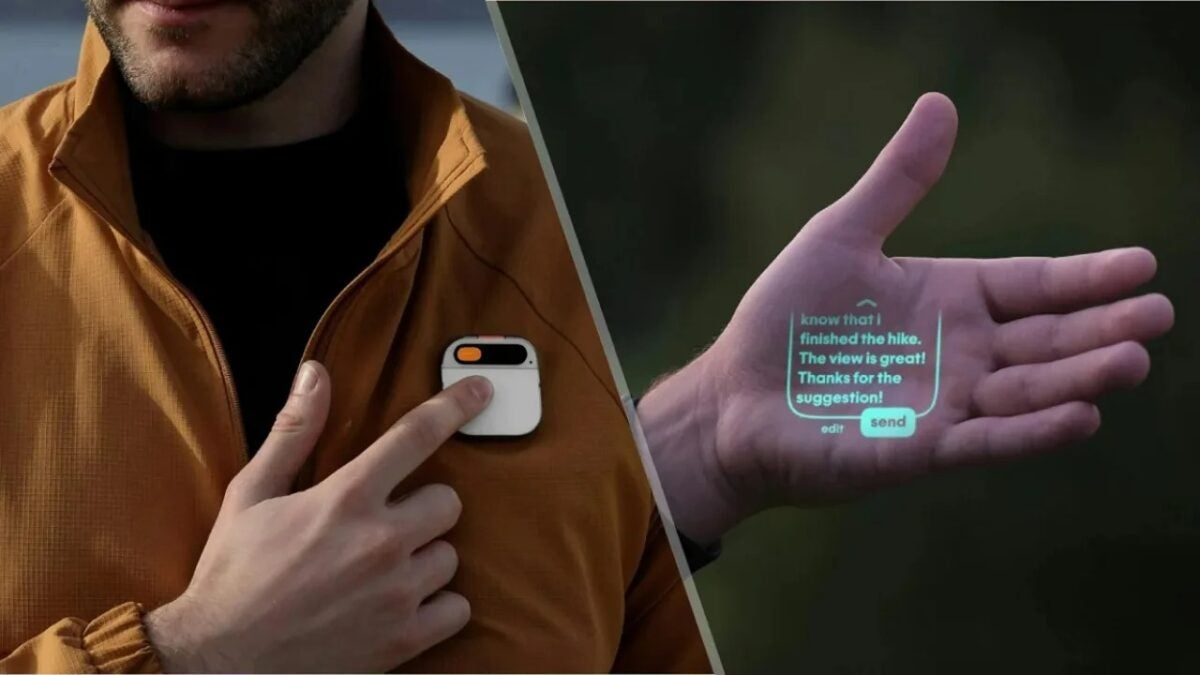
The device’s functionalities, which included calls and messaging through an interface projected onto the user’s hand, will no longer be available once the cloud software ceases operations on February 28, 2025.
Humane has reported that it will process refunds for those who purchased the device in the last 90 days at a price of 700 dollars, in addition to offering returns for those customers with subscription plans of 24 dollars per month, although no refunds have been mentioned for early buyers.
The company has also acknowledged the issues it faced, such as poor quality control and difficulties in customer service, which contributed to frustrating many consumers.
Despite this setback, the founders of Humane, Imran Chaudri and Bethany Bongiorno, who worked for years at Apple, will lead a new division called ‘HP IQ’, focused on integrating artificial intelligence into HP printers and PCs.
HP seeks to capitalize on Humane’s experience and intellectual property to strengthen its portfolio, although it has no plans to continue developing dedicated artificial intelligence devices.
In statements to Bloomberg, Tuan Tran, President of Technology and Innovation at HP, stated that “there will be a time and place for pure AI devices, but AI will be present in all our devices.”
The Google Pixel 9 has just been released, and the smartphone is already receiving a substantial update that improves the data transfer experience, something that affects all of us when we change phones.
Paul Dunlop, Product Manager of Onboarding and Switching at Android, tweeted a thread about all the important changes. And he even describes it as the biggest version in its history.
So excited for customers getting their hands on the new #Pixel9 and #Pixel9Pro today. For Setup and Data Transfer, this is our biggest release ever, with so many new features, improvements and fixes. I wanted to share a few of the highlights with folks. A thread:
Dunlop first shows a new entry in the device settings menu called Backup or Data Backup. Initial reports claimed that users could copy photos, contacts, messages, and more from an old Pixel to the Pixel 9.
All of that is true, but what we didn’t know is that this process can be done as many times as you want, whether it’s through a USB cable, WiFi connection, or cloud servers. It is no longer necessary to factory reset the devices.
For the first time, it's possible to transfer your data at any point, not just during Setup or within the first few days. There's a new entry point in the Settings app to access this. pic.twitter.com/eLiohKye7S
Data transfer can take quite a while, especially if you have many files. So, if you’ve been wishing for a faster method, the Pixel 9 now features the Express tool. Dunlop claims that this “massively reduces the time it takes” to move the data. According to a screenshot, the feature only copies files that are not already present in your Google account.
According to reports, it is “cloud-aware,” which means that Express knows what you have saved and ignores backups to speed up the process. In addition, images sent through the tool will retain their original quality. However, you have the option to select which files to move or not through Customize.
With #Pixel9 you now get the option to use Express setup, which is the fastest way to transfer all your data from your old device. Express setup is cloud aware, and will use what it knows about your Google Photos backups to speed up the transfer. pic.twitter.com/cbCABcywm6
Beyond files, the renewed data transfer of Pixel 9 also transfers more system settings, permissions, and notification preferences. This can help establish your preferred smartphone settings on the new device without having to redo everything from scratch. It will be similar to your old phone.
Improvements in the quality of life of users
Google has worked with top developers around the world to ensure that applications stay connected and running before the data migration begins. There is also the interesting transport multiplexing.
If your WiFi transfer is taking too long, you can now connect a USB cable mid-transfer. We call this Transport Multiplexing, and it uses cable AND WiFi to transfer data faster than the maximum speed possible with either method on their own.
Let’s say you’re transferring files over WiFi, but the process is taking forever. Dunlop claims that you can connect a USB cable halfway through the transfer to assist: the feature uses both methods to send files quickly. The Pixel 9 will even recommend you to do it through an on-screen notification.
The cybersecurity company iVerify has recently discovered a serious vulnerability that affects millions of Pixel smartphones worldwide and has published its findings in a new report.
The APK (Android Package Kit) receives its configuration file from an insecure domain on Amazon Web Services. In theory, a malicious actor could intercept these connections or impersonate the website’s identity and inject malware or spyware into a Pixel phone. Additionally, since Showcase has ‘excessive system privileges,’ it is easy for cybercriminals to compromise a target.
What is particularly terrifying is that Showcase has been part of the Google Pixel ecosystem since September 2017. And the worst part is that the average user cannot remove the APK through the standard uninstallation process, as it is considered a system-level application. iVerify claims that ‘only Google can fix’ this issue.
No matter how bad things are, there is good news. First of all, it seems that no one, not even hackers, knew about the exploit. A Google spokesperson told The Washington Post that they have not seen any attacks that can be attributed to Showcase.
And they stated that there is no evidence of ‘active exploitation’ and even suggested that such an attack ‘would be unlikely.’
Google is aware of the problem. The tech giant told Forbes that they are taking measures ‘out of an abundance of caution’ and plan to deploy a patch to all ‘compatible Pixel devices on the market.’ However, don’t worry about the Pixel 9 series, as none of the four models have Showcase.apk.
When it comes to fast charging technologies, Realme is not a new name. Recently, during an event at the Shenzhen headquarters (China), the company presented innovations that would come to smartphones.
Among the many demonstrated capabilities, the phone’s touchpad was added to support both swiping and tapping, and the AirGap voltage transformer was added to help maintain energy efficiency and protect the phone from damage during power outages.
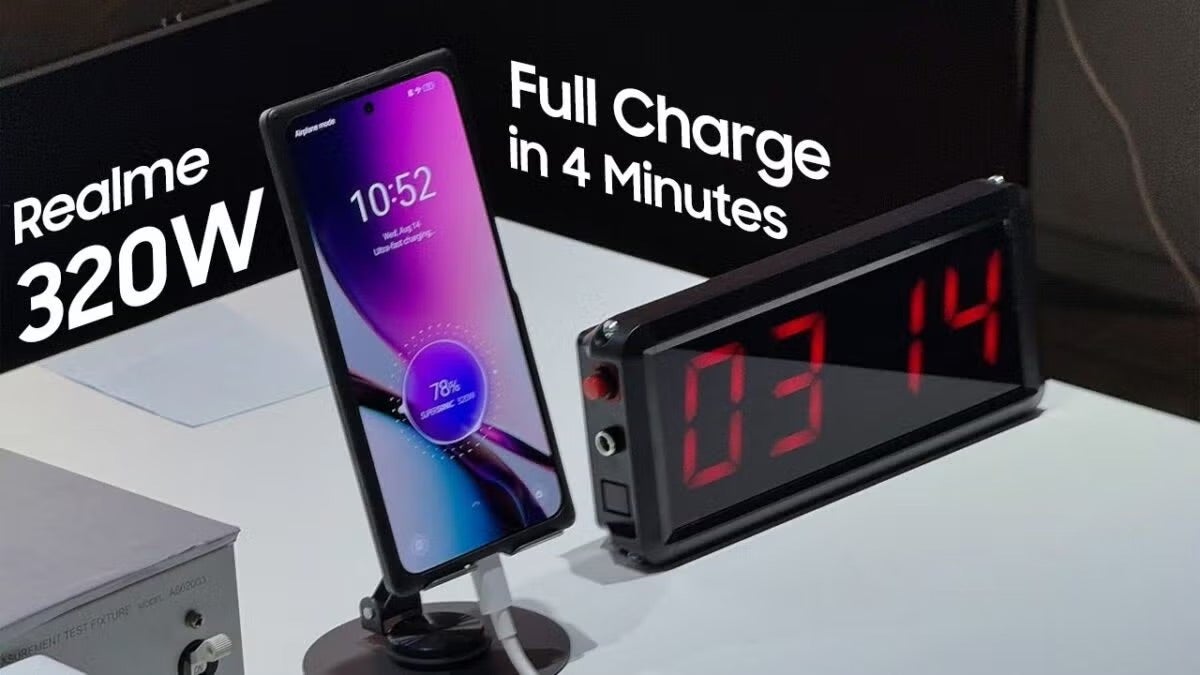
However, the feature that became the center of attention in the main announcements was its new SuperSonic Charge technology, which provides an astonishing charging speed of 320W.
A 320W charger that can charge your phone faster than ever
The Chinese company Realme has been leading the mobile industry in terms of charging speed for some time now, but even so, we did not expect to see a 320 W charger in 2024, when the fever for fast charging seemed to have ended.
Xiaomi unveiled its 300W technology that could charge a device in 4 minutes and 55 seconds in 2023. No manufacturer has been able to top that speed, but Realme changed that on Wednesday, demonstrating its new technology at the Fanfest event in Shenzhen, China.
With its new fast charging technology, which sets records, the smartphone battery can be charged to 26% in 1 minute, 50% in 2 minutes, and fully in exactly 4 minutes and 30 seconds, according to the demonstration, with a 4,420 mAh battery.
RealMe just showcased 320W charging in a smartphone… THREE HUNDRED TWENTY watts
That charged a 4400mah phone from 1-100% in 4 minutes 22 seconds ?
0-26% in 1 minute 0-50% in 2 minutes 0-100% in 4 minutes 30 seconds
This incredible loading speed is possible thanks to the help of multiple cell batteries that can accelerate the charging time by performing the task simultaneously, unlike others that rely on a single cell battery.
Realme also managed to increase the 240W charger that was launched last year to an impressive 320W, and the increase was made with no change in size. To address the dissipation issues when using SuperVOOC charging, Realme introduced a new AirGap voltage transformer that keeps the battery and transformer physically separated.
We have limited information about which devices will be included with the new technology and when the new supersonic charging feature will be fully ready, but the company could surprise us again by introducing it during the launch of their product next year.
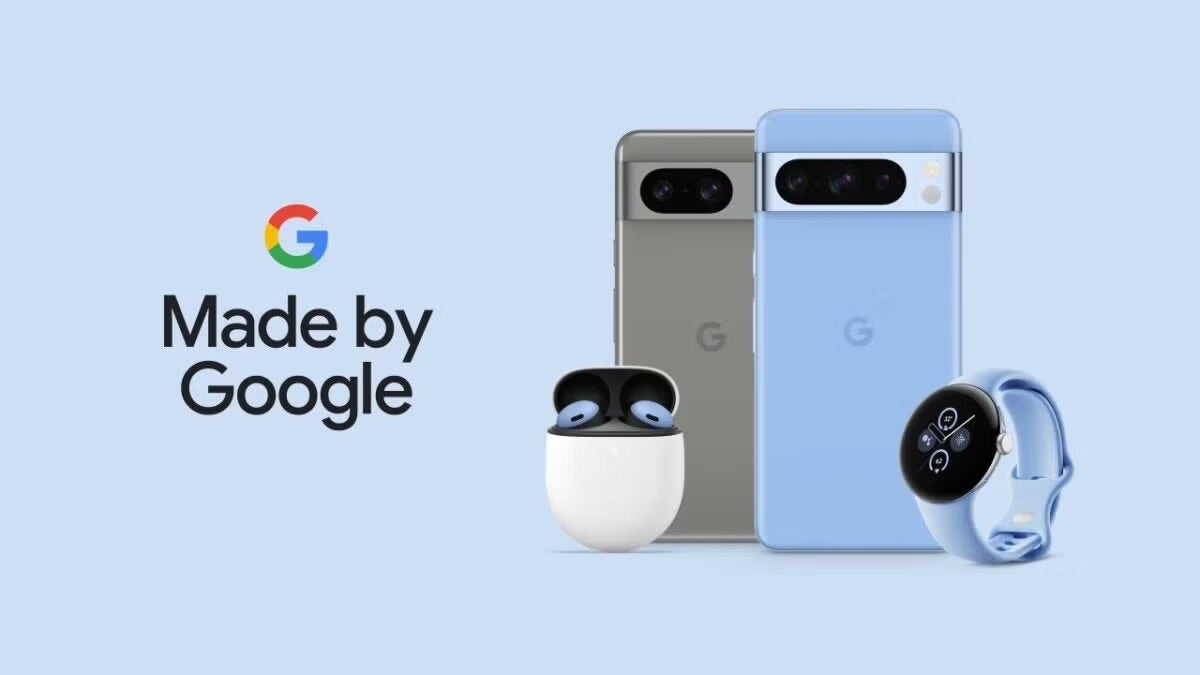
Google had its big day at the highly anticipated Made by Google conference, where we were able to officially see the revamped Pixel 9 range and updates to other Google devices, such as their new smartwatch or the Pixel Buds Pro 2 headphones.
Although the Pixel event confirmed many of the leaks we’ve seen in recent weeks, Google shared some announcements that we hadn’t heard of yet. Here’s a detailed look at everything they showed us about the Pixel 9, by the way.
We start with a summary that will cover, point by point, all the interesting news from the Made by Google event.
The new Google Pixel 9 family
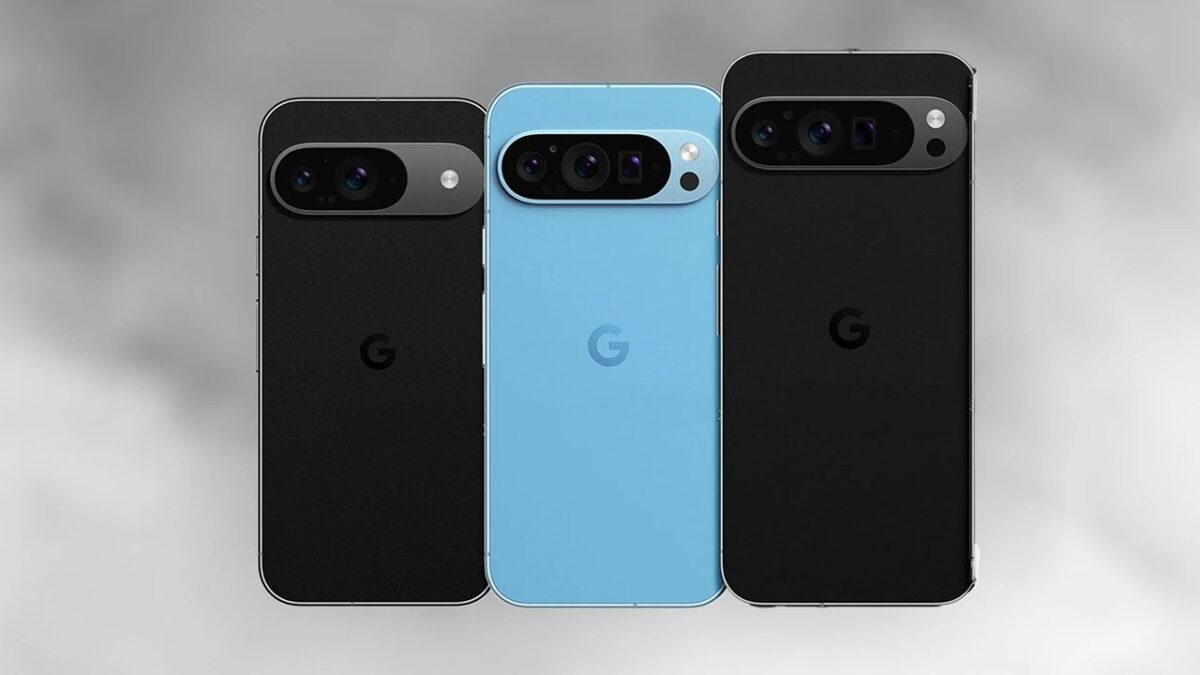
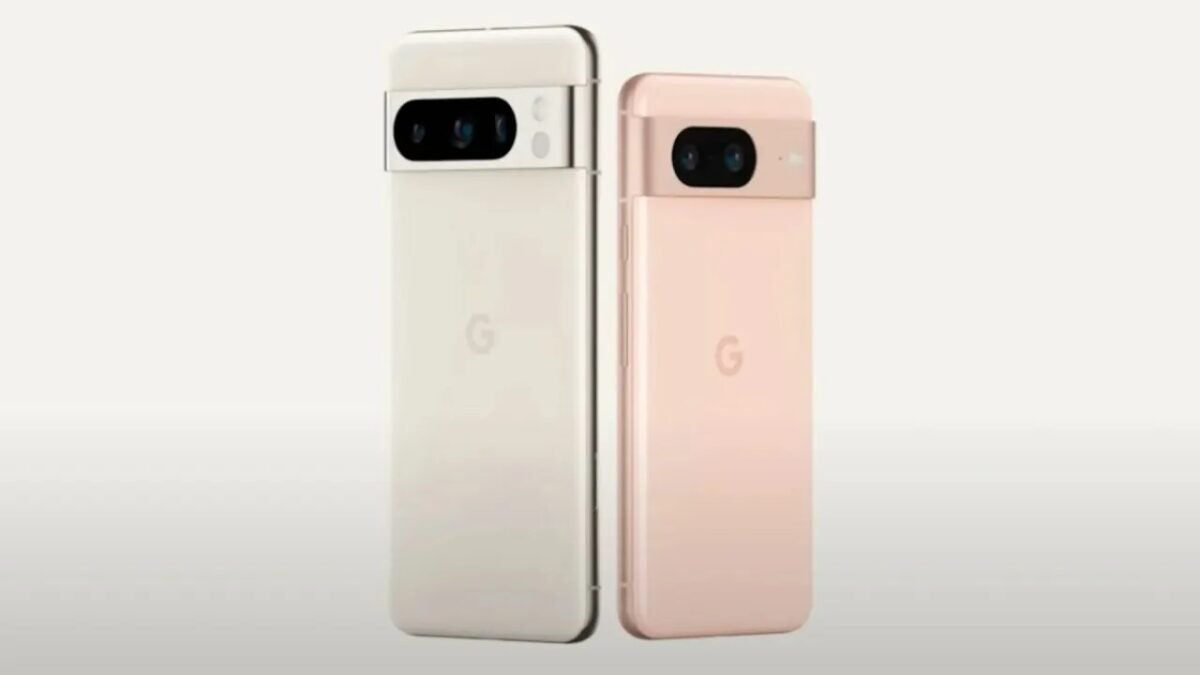
Google has finally unveiled its Pixel 9 phone lineup, which includes three regular phones and one foldable phone. The traditional smartphone lineup consists of a base Pixel 9 with a 6.3-inch display, a Pixel 9 Pro XL with a 6.8-inch display, and a new smaller option, the Pixel 9 Pro with a 6.3-inch measurement.
The trio of devices comes with a renewed oval-shaped camera housing design, the new Google G4 Tensor chip, improved battery life, and a new satellite SOS feature.
While the initial price of $799 for the Pixel 9 is $100 more than last year’s model, the Pixel 9 Pro starts at $999, and the Pro XL will cost $1,099. The Pixel 9 and the 9 Pro XL will begin shipping on August 22nd, with availability for the smaller Pixel 9 Pro starting in September.
The Pixel 9 Pro Fold receives larger screens and a slimmer profile
In addition to the three new Pixel devices, Google presented the Pixel 9 Pro Fold. The redesigned Fold is taller and thinner than its predecessor, offering a cover display of 6.3 inches, and 8 inches on the internal display.
The device, which also comes with a G4 Tensor chip, features an internal display with a maximum brightness of 2,700 nits compared to the original Pixel Fold’s 1,450. The Pixel 9 Pro Fold is priced at $1,799 and starts shipping on September 4.
AI functions everywhere
Of course, Google’s new Pixel devices come with the company’s Gemini artificial intelligence assistant, which you can use to find information within your apps or ask questions about a photo you just took.
The Pixel 9 product line also includes two new AI applications: PixelScreenshots, which uses on-device AI to allow you to search for information in saved screenshots, and Pixel Studio, a text-to-image generator.
Google has included some AI-powered image editing tools to accompany the improved cameras of the Pixel 9 range, such as the “Add me” option, which allows you to include someone in a group photo by merging two scenes. The Magic Editor in Google Photos now also allows you to use generative AI to replace entire sections of a photo, such as the sky.
The Google Pixel Watch 3 has a larger 45 mm option
The Google Pixel Watch 3 comes in a larger 45 mm option along with the 41 mm model. In addition to the thinner bezels that offer more screen space, the Pixel Watch 3 has a new ultra-wideband chip, a brighter display that reaches 2,000 nits, and several new fitness features.
One of the most outstanding features of the Pixel Watch 3 is the ability to detect if the user’s pulse has stopped, which allows it to call emergency services if the user does not respond to a check-in request and does not detect movement.
This feature will start working in Europe. The Pixel Watch 3 41 mm starts at $349.99 with Bluetooth, while the 45 mm watch starts at $399.99. Both sizes will be available September 10.
The Pixel Buds Pro 2 get updated inside and out
The Google Pixel Buds Pro 2 are not only smaller and lighter, but now they come equipped with 11-millimeter transducers and a new Tensor A1 chip that supposedly improves active noise cancellation (ANC).
The new headphones also have a fin design, which should help them stay in your ears during a workout, along with up to eight hours of audio playback with ANC enabled (or up to 30 hours with the case).
The Pixel Buds Pro 2 cost $229, a little more than their predecessors, which were launched at $200. They will be released on September 26th.
Google launches Gemini’s voice chat option
Gemini Live, which Google first announced at I/O in May, is now rolling out to Gemini Advanced subscribers. The new voice chat option allows you to ask questions out loud to Google’s artificial intelligence assistant, which will respond with 10 different voices.
Just like ChatGPT’s voice assistant, Gemini Live will allow you to speak conversationally, and you can even interrupt it in the middle of a sentence.
The startup believes it is worth between 750 and 1,000 million dollars despite the deep software flaws and hardware issues of its first product.
Humane, the startup behind the AI Pin gadget, is already on the hunt for a potential buyer for its business. According to a Bloomberg report, the company, led by former Apple employees, is “seeking a price between 750 and 1,000 million dollars”.
After the debut of the AI Pin, priced at a whopping $699, it could be difficult to sell it: the device has been heavily criticized for its slow response time and a user experience that does not match the concept of a portable and always-on artificial intelligence assistant that its founders promised prior to the device’s launch.
The product was presented, at least in part, as a way for people to be more present and reduce their increasing dependence on smartphones.
AI Pin: A powerful idea, a terrible execution
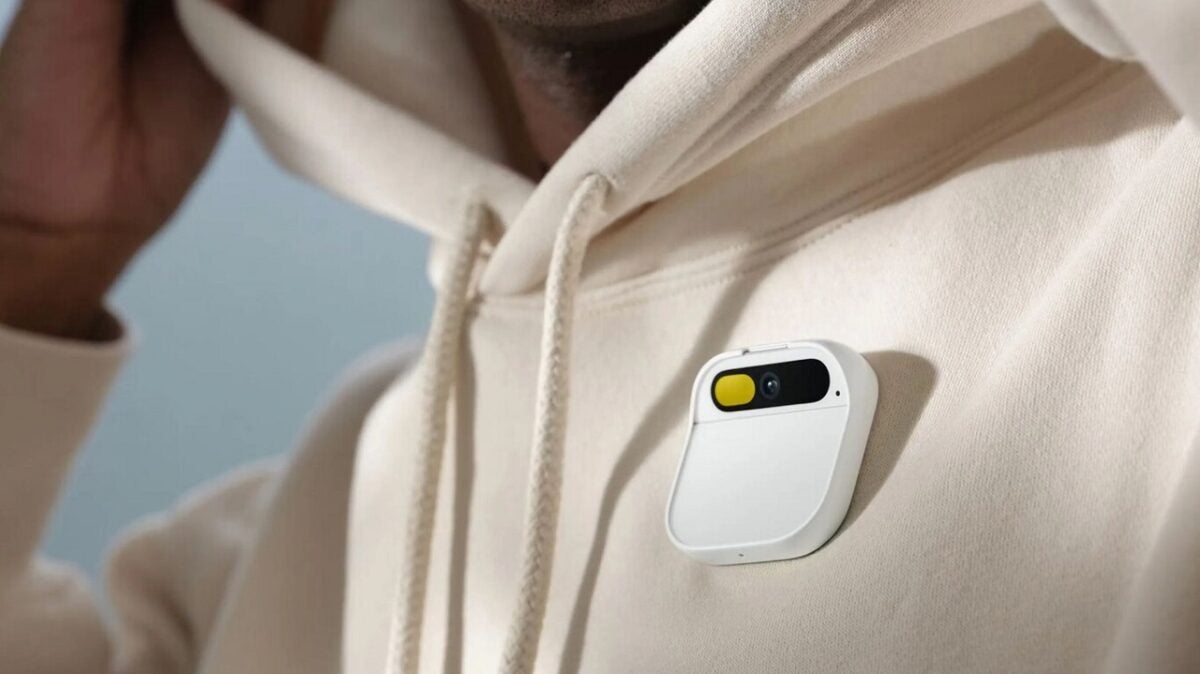
Humane has developed its own operating system, CosmOS, which runs on the AI Pin. It connects to a network of AI models to get answers to voice queries and analyze what the integrated camera points at. For some interactions, the device emits a laser “screen” that is projected onto the user’s palm. A monthly subscription is required to keep the device active.
The Bloomberg report indicates that Humane has raised $230 million from investors including Sam Altman, CEO of OpenAI, who is rumored to be developing an unrelated product (in collaboration with legendary Apple designer Jony Ive) that could better showcase the promises of AI.
Humane was valued at $850 million by investors in 2023, but that was before its first product was universally criticized by industry professionals. There are some innovative and clever ideas, but the AI software is not sufficiently developed and is too inconsistent, and the hardware has shown poor battery life and overheating issues.
The list of potential buyers for Humane seems quite small considering the price that the startup expects to reach.
Amazon, Apple, Google, Meta, and Microsoft are making great strides in the field of AI, with large-scale language models and an increasingly prevalent generative AI, but it is not clear how much value Humane’s intellectual property would actually bring to any of their ongoing efforts.
Shared on Twitter by leaker @MysteryLupin, the video shows the complete back of the Pixel 8a in green and blue tones (rumored to be called Mint and Bay respectively).
The design matches previous leaks, showing a dual-lens camera in the now iconic Google camera bar, a colorful back panel, and an overall design similar to the Pixel 8.
What specifications does the Pixel 8a have and when will it be released
The phone also briefly rotates towards the front, but unfortunately it has a cover, so we cannot see how the screen will be or how much bezel we will have in this model.
What we do see is the box, which contains a USB-C to USB-C cable, a USB-A to USB-C adapter, and a tool to remove the SIM card. Finally, the text in the video indicates that the phone has 128 GB of storage and 8 GB of RAM, although there may be other configurations and, in fact, we have already heard that there could be a 256 GB Pixel 8a.
That’s all we can say about the phone, and although we would take this video with a grain of salt, it certainly looks like the real Pixel 8a.
The fact that a video of what appear to be retail units of the Pixel 8a has been leaked also suggests that the phone will be released very soon, which aligns with what we have heard.
Our best guess, based on leaks and the past, is that it will be unveiled during Google I/O 2024, which starts on May 14th, so there may only be a few weeks left to wait.
The last in the Pixel series will arrive by the end of this year, and with it, we will see Android 15 for the first time, along with some software features.
Like clockwork, the latest in the Pixel series will arrive later this year, and with it, we will see Android 15 for the first time, as well as some new and exciting software features. Above all, everything related to artificial intelligence.
While we continue to wait for everything that will come to the OS thanks to the possibilities of the Pixel 9, it seems that a new leak has arrived mentioning the next Google phone, appearing in the latest version of the Google app.
Google App is preparing support for the upcoming Google Pixel 9
This new piece of information was discovered in the latest beta, version 15.14.34.29, and it has some code that seems to be specific to the Pixel 9. And while it’s not the most exciting leak, it appears that there are some relevant details for the phone that could appear during the Google Assistant setup process.
The news comes from The SP Android, sharing two files, one of which actually has an animation file that could appear on the upcoming Pixel 9. You can see the animation in the image above, but it doesn’t say much.
Google has remained tight-lipped about Pixie, but it could end up being a new exclusive AI assistant for Pixel devices. According to our previous report, this new assistant will not be a replacement for Google Assistant, but instead will take over when it cannot handle requests, especially when Assistant is less powerful, as it is disconnected.
A new Google app update could offer clues about the upcoming Pixel 9 https://t.co/zXrF0MGboq
Although we don’t know much about the new assistant, reportedly, will be powered by Gemini, but will be less powerful. Pixie will also supposedly be able to extract data from connected apps to offer a more solid experience. While it is expected to arrive on the Pixel 9, there is also the possibility that it will be available on other Google products as well.
What do we know about Pixel 9
When it comes to the upcoming Pixel 9 series, we actually know quite a bit, and it could come as a trio of devices ready to make their debut later this year as the Pixel 9, Pixel 9 Pro, and Pixel 9 Pro XL.
As for the processor,we should expect the next generation of Google Tensor processors, as well as improvements in the cameras.
In addition, the phones will run Android 15 and we should also expect some fantastic software tricks that will really set it apart from other phones on the market.
But, as usual, we will have to wait until October, the usual release date for these devices.