What is AI Pin by Humane? This is the technology that comes after the smartphone

Humane wants the Pin to be considered a fully independent device, rather than an accessory for your smartphone. This is what we know.

Many people wonder: what will come after the smartphone? Apple has been doing it for more than half a decade, hence its total commitment to the Apple Vision Pro, in the future, a substitute for the computer and the mobile phone. But it’s not the only one.

ChatGPT DOWNLOAD

And it’s true that the smartphone was invented in the mid-2000s, and there are many companies that believe the time of the intelligent mobile phone has passed and that we must innovate or die.

The American company Humane has been teasing its first device, the AI Pin, for almost the entire year. Its launch is scheduled for today, Thursday, but The Verge has managed to get ahead of its official presentation. And this is what we know about it.

A very expensive wearable with access to artificial intelligence

Humane, the company that advocates for a world beyond smartphones, is about to launch what amounts to a wearable smartphone priced at $699 without a screen. It comes with a monthly subscription fee of $24 and provides access to AI models from Microsoft and OpenAI.

The AI Pin is a square-shaped device that magnetically attaches to clothing or other surfaces. The clip serves as more than just a magnet—it also functions as a battery, allowing you to swap it out throughout the day to keep the Pin operational.

The exact battery life of a single battery is unknown, but the device comes with two “battery boosters.” It runs on a Qualcomm Snapdragon processor and utilizes a camera, depth sensors, and motion sensors to track and record its surroundings. It features a built-in speaker, referred to by Humane as a “personal speaker,” and can connect to Bluetooth headphones.

Since it doesn’t have a screen, Humane has devised new ways to interact with the Pin. It is primarily designed as a voice-based device but also features the green laser projector we’ve seen in demonstrations, which can project information onto your hand.

Objects can be brought close to the camera, allowing interaction with the Pin through gestures; there is a touch panel somewhere on the device. The Pin isn’t always recording or listening for a wake word; it requires manual activation in some way. It has a “trust light” that blinks when the Pin is recording.

Documents indicate that Humane wants the Pin to be seen as a completely standalone device rather than an accessory for your smartphone.

For $699, you get the Pin, a charger, and the two battery boosters. However, the catch is the $24 monthly subscription to Humane, which includes a phone number and data on Humane’s own branded wireless service operating on the T-Mobile network (in the U.S.).

The Pin’s operating system is called Cosmos, and instead of functioning like a collection of apps, Humane seems to be envisioning a more fluid system that can call upon various AIs and other tools as needed. It sounds a bit like the plugin system of ChatGPT, where new functions or data can be added to the chatbot’s experience.

ChatGPT DOWNLOAD

MediaTek has just announced its chip to compete with Qualcomm’s Snapdragon 8 Gen 3

The Dimensity 9300 has what MediaTek calls a performance-oriented
“large core architecture” with four cores…

The processor war we are witnessing in the mobile sector is wonderful. And the best part is, we, the consumers, are the only ones benefiting from all of this. It’s becoming cheaper to produce high-quality chips, and making a good smartphone is getting easier every day.

Android 14 DOWNLOAD

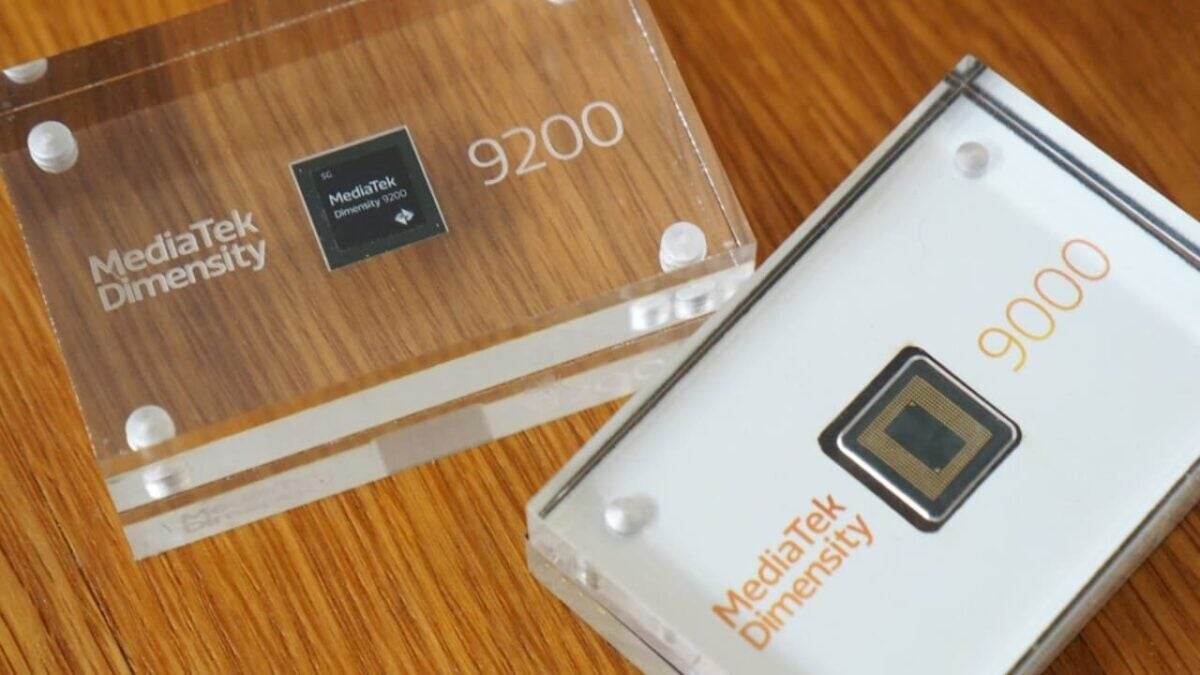
MediaTek has unveiled its flagship mobile processor, the Dimensity 9300, which utilizes TSMC’s 3rd generation 4nm+ technology, trailing just behind Apple and its 3nm process.

The company claims significant improvements in performance and energy efficiency compared to last year’s Dimensity 9200 and asserts that its performance matches Qualcomm’s new Snapdragon 8 Gen 3 processor in some key tests.

With this release, there are now three mobile systems-on-chip launched in the last month (including Google’s Tensor G3), showcasing a healthy competition in the high-end mobile processor sector.

No efficient cores, we just want power

The Dimensity 9300 features what MediaTek calls a “large core architecture” focused on performance, with four ultra-large cores and four large cores, totaling eight cores.

In comparison, the Snapdragon 8 Gen 3 comes with a single ultra-large Cortex-X4 core, along with 5 large Cortex-A720 cores and 2 smaller Cortex-A520 cores to balance power efficiency and performance.

With these configurations, it offers 15% more performance than the Dimensity 9200 at the same power level or a 33% power efficiency improvement with the same performance.

Indeed, MediaTek claims a 40% increase in maximum performance. The company also states to have achieved an AnTuTu score of 2,130,000+, which roughly matches the AnTuTu score of the Snapdragon 8 Gen 3.

MediaTek also boasts a 46% increase in GPU performance compared to the previous processor at the same power levels, with frame rates higher than its rival in certain gaming benchmarks.

Furthermore, it offers significantly superior deep learning performance compared to the Dimensity 9200, thanks to the new APU 790 AI processor, providing up to 8 times faster processing speed and stable image generation in less than a second.

If these claims hold true, it is indeed impressive, though real-world tests will be necessary to confirm these statements. In any case, it appears to be a solid alternative to Qualcomm’s Snapdragon 8 Gen 3.

Android 14 DOWNLOAD

The release date of Xiaomi 13T and Xiaomi 13T Pro has been revealed

It seems like leakers and insiders never rest, and while we are getting to know the latest news about the Google Pixel 8 or the Samsung Galaxy S24, other brands haven’t lagged behind either. From September as the starting point with the presentation of the iPhone 15 to early 2024 with the release of the S24, we can expect months of revelations, rumors, and leaks as part of our daily routine. In fact, that’s exactly what has happened with Xiaomi: specifications, regional differences, and its supposed release date have been leaked. Although, to be honest, they seem quite reliable.

It will arrive sooner than we expect

While we can’t grant full credibility to the leaks, if they turn out to be true, the Xiaomi 13T and 13T Pro will arrive on September 16, 2023. It’s a very close date, but it doesn’t seem too far-fetched, considering that the Xiaomi 12T was launched on October 4, 2022.

Regarding their specifications, there are some promising aspects. Xiaomi is known for focusing on power in its devices, and this won’t be an exception. For instance, this time they have chosen to equip their device with a powerful Mediatek Dimensity 9200 Plus, the same one found in the Redmi K60 or Vivo X90S. This processor will come with various options for RAM, allowing you to choose between 12 or 16 gigabytes, and storage options of either 256 gigabytes or 512 gigabytes. This is a potent combination further reinforced by an IP68 certification and a 5000 mAh battery, which is expected to provide decent battery life.

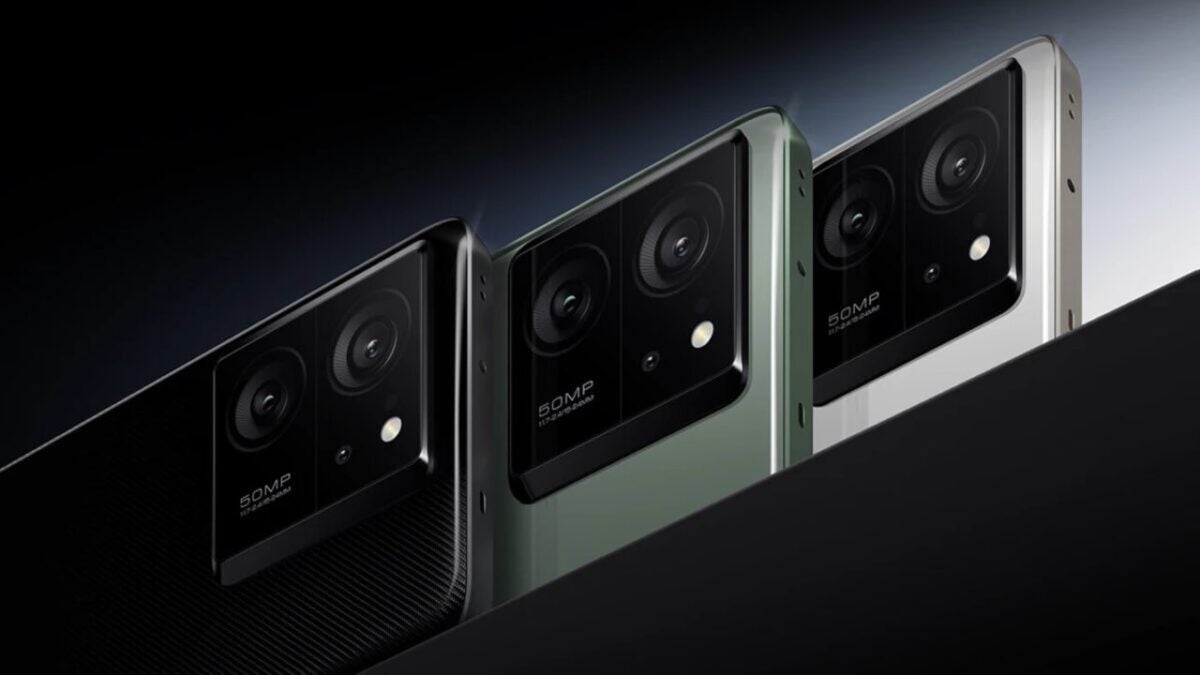
Where we seem to find regional differences is in the camera system, as revealed by the Twitter user @Sudhanshu1414. There will be versions with and without Leica branding. This might be due to Xiaomi avoiding the brand image in certain markets, although it seems likely that the Leica branding will be present in Europe.

In any case, we’ll have to wait a few more days to see if this is true. If it is, we’ll be excited to learn more.

Realme’s Game-Changer: The Unexpected Debut of the 11x 5G

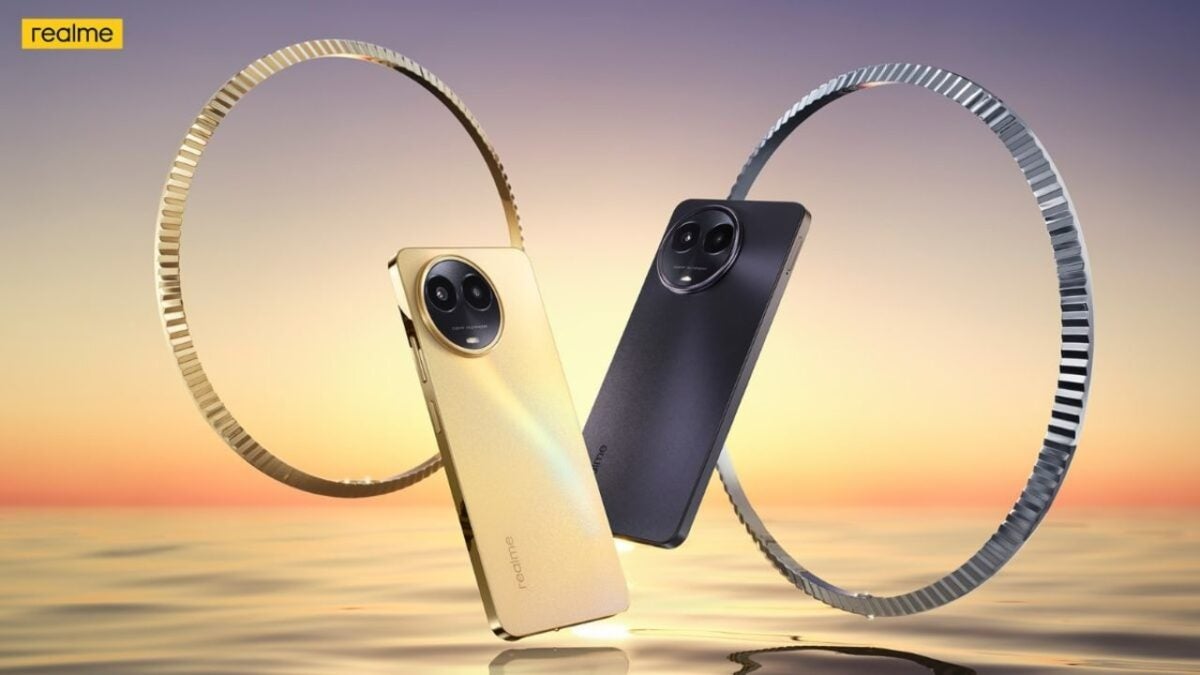
It’s that time of the year when the competition between the big companies heats up and the new products for next year start to emerge. Samsung has already begun to prepare the ground for the Galaxy S24 while other brands, such as Motorola, are creating their own path with fascinating experiences. This time it is the turn of Realme, which comes to feed its 11 series with the 11x 5G, an entry-level handset with a continuity in its exterior design but with a lot to be happy about inside.

What Realme brings us

6.72 inches of screen at 120Hz refresh rate is the first thing we can look at when we have the performance sheet in hand, although it is quite noticeable during use, also reaching a resolution of 2400×1080 pixels, a little longer than FullHD. We are also going to run into a Mediatek Dimensity 6100+, a new addition from the company that without being very powerful can get to perform quite well for moderately demanding uses, which are complemented by up to 8 gigabytes of RAM and 128 or 256 gigabytes of storage space. This is quite an interesting configuration for its segment, especially considering the approximate price of 165 euros that manages this terminal.

The rear system is composed of a 64-megapixel f/1.8 main camera and a 2-megapixel secondary camera for depth. The front camera is 8 megapixels, which is not ideal but sufficient considering its price range, and records video in FullHD at 30 frames per second.

In addition to all this, the Realme 11x 5G incorporates a 5000mAh battery with 33 watts fast charging, which should offer more than enough autonomy to reach the end of the day with this device as long as you keep a normal use of it.