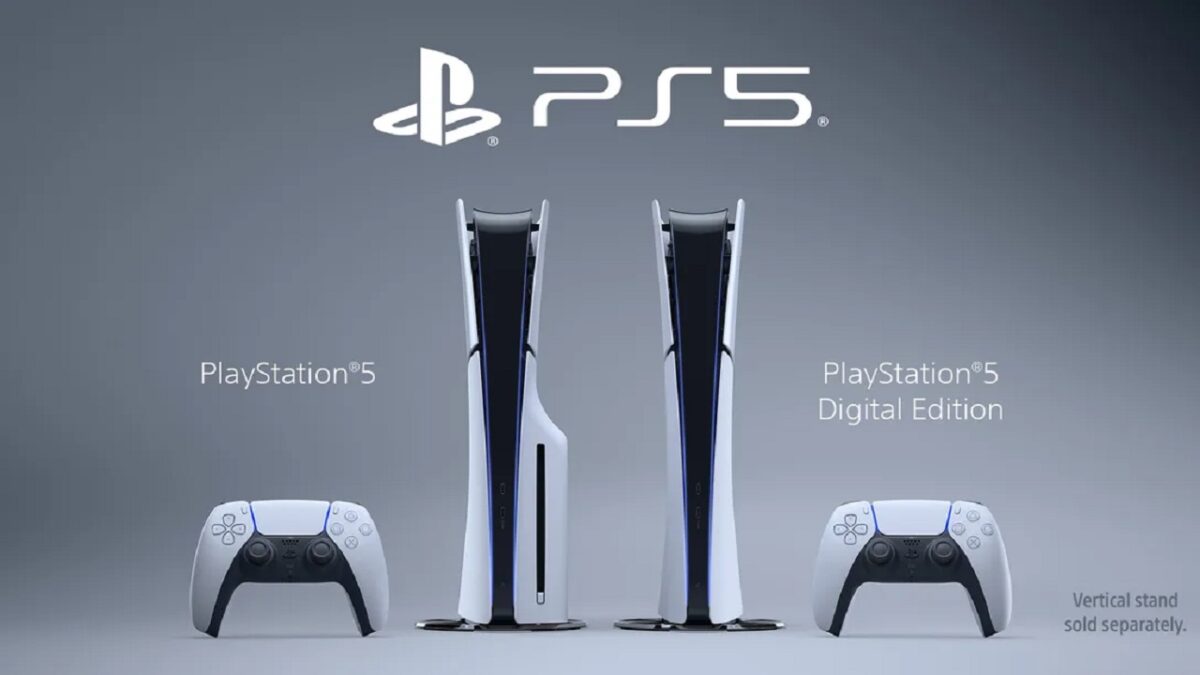
Sony has blamed the price increase of its PlayStation 5, PS5 Pro, and even its portable device (specifically streaming) PlayStation Portal on the “ongoing pressures in the global economic landscape.” The bottom line: a PS5 that is more expensive in all its variants, more expensive than at launch.
Starting April 2, all PS5 models will cost at least 150 dollars more than they did in 2020, when the console was launched. The PlayStation 5 Digital Edition will cost 600 dollars.
The PS5 with a disc drive will cost 650 dollars. If you want the high-end console, the PlayStation 5 Pro, you will have to spend 900 dollars. That is 200 dollars more than its initial price of 700 dollars when the console was released in 2024. Additionally, you will need to buy a disc drive for 80 dollars if you want to play your physical PS4 and PS5 game library on the high-end console.
Here you have the complete breakdown for European readers.
- PS5: 649.99 €
- PS5 Digital Edition: 599.99 €
- PS5 Pro: 899.99 €
- PlayStation Portal: 249.99 €
Sorry not sorry, as they say in the United States. “We know that price changes affect our community and, after careful evaluation, we have concluded that this was a necessary step to ensure that we can continue to offer innovative and high-quality gaming experiences to players around the world,” Sony excuses itself in its blog post.
Are the players being scammed?
It is important to remember that the PS5 launched at a price of 499.99 euros and that now one will have to pay 650 euros to get one, something that has never happened in history, where consoles have always decreased in price as they aged.
And the real blow is the cost of a PS5 Pro. Now, you have to spend more than 1,100 euros to buy the console, the disc reader, and the stand. An absolute madness that is no longer justifiable.
And yes, Sony is raising prices worldwide, probably in reaction to the current memory shortage. Major memory semiconductor companies have redirected their entire business towards supplying high bandwidth memory (HBM) for AI data centers, which has caused a massive shortage for consumer devices.
This has driven up the prices of SSDs and RAM in general. Major manufacturers of desktop and laptop computers have regularly increased the cost of devices since the end of last year.
PS6? Not at the moment
At the beginning of this year, Bloomberg reported that Sony was considering delaying the launch of its yet-to-be-announced next-generation console (likely a PlayStation 6) due to the RAM shortage.
Sony could postpone whatever is coming to 2028 or later. No one seems to have concrete data on how long the memory shortage could last. The president of the major memory manufacturer SK Hynix, Chey Tae-won, recently stated that the company may not be able to meet consumer RAM demand until “around” 2030.
This is not how devices are supposed to evolve. In all other generations of consoles, the equipment became cheaper over time. The main console manufacturers released mid-generation updates with renewed hardware and lower prices to boost sales.
Now, both the original and the updated hardware cost hundreds of dollars more than at the time of their release. It is becoming increasingly difficult to be a gamer without going broke.