Skype also joins artificial intelligence

Artificial intelligence is here to stay. Although some media try to resist and some companies are taking more discreet steps than others, it seems a reality that this new technology is here to stay. This is demonstrated by Google’s advances in the ethical use of AI, but also by the changes that Microsoft intends to introduce in its Paint application or Companion, Zoom’s new weapon to fight Microsoft Copilot, are clear indicators that the world is turning in a very specific direction. Tech giants are increasingly betting on strengthening their applications through AI-enhanced features or even adding some new tools that were unthinkable before it.

Skype insider DOWNLOAD

Long-awaited additions

Although Skype has not been one of the first applications to enjoy it, Microsoft has been flirting with this technology for a long time. Above I mentioned Copilot and the functions that will soon come to MS Paint, but its star bet has undoubtedly been Bing AI, an artificial intelligence as powerful as Bard, which will be used to strengthen and improve the functions of the calling and chat application. It has not yet reached the final version of Skype, but the new features can already be tested thanks to Skype Insider, the test version of the program that anyone can access with a couple of clicks.

The new features that Bing AI has brought to Skype are quite interesting, such as a rewriting function that offers you more formal or academic alternatives, among others, as you type. It almost seems like a feature that would be appreciated in Microsoft Word for creative writing, but the cool addition of marking tone to an already written sentence and having the application modify it accordingly is also a very cool feature. It also includes several overlay actions and a sleep state to only activate once you start typing, and never before.

Skype insider DOWNLOAD

In addition to artificial intelligence, Skype Insider fixes a number of bugs in the latest market version of Skype, mostly related to issues that were occurring on iOS.


WhatsApp is very close to supporting HD videos

It seems that WhatsApp is gradually adapting to the changing times and, above all, to the needs of its users. While it’s true that sometimes its features haven’t quite caught on, like video statuses, others respond to popular demand, such as the ability to use a single app to manage multiple WhatsApp accounts. Over the years, WhatsApp has added many other features, such as the ability to make voice and video calls, which changed the mobile phone landscape to some extent. This time, it’s the turn of HD videos, something that the WhatsApp community has been requesting for a while.

WhatsApp DOWNLOAD

It’s still behind, but it’s a big improvement

Yes, believe it or not, this is a novelty: until now, WhatsApp did not support HD videos, and the maximum resolution allowed was 848×476 pixels, with an aspect ratio of approximately 16:9. This resolution made sense when most smartphones had screens with that resolution or, at most, HD. However, with the proliferation of Full HD and even 2.5K screens, this limitation has become problematic because the video quality of compressed files sent via WhatsApp did not meet user expectations.

With the new update, users will be able to edit the video resolution in the video editing panel before sending it, similar to how images are handled. The HD resolution will not be the default setting because SD quality takes up less storage space and is easier to transmit in cases of poor connectivity.

WhatsApp DOWNLOAD

Indeed, it may not be the leap that many were hoping for, but it’s a positive step toward improving video sharing on the platform. WhatsApp was starting to lag behind its competitors in this regard. With any luck, they’ll update to Full HD resolution in the near future, which would be a welcome improvement for users.

Clubhouse reinvents itself as an audio messaging app

Clubhouse has always had a somewhat peculiar concept: launched as an app in 2020 as a different type of social network, it offered various chat rooms where users could communicate through voice notes, which was supposed to facilitate “more dynamic and entertaining conversations.” It is used by several celebrities like Drake or Kevin Hart to interact in a somewhat more direct way with their audience, although this does not seem to have been enough to garner greater user engagement with the platform, and the social network is on the brink of disaster. Or it was.

Clubhouse DOWNLOAD

Clubhouse faces the change of direction with a complete overhaul

While Clubhouse enjoyed a certain level of popularity during the pandemic, it has rapidly declined over time, in part due to competition from Telegram. To prevent the app’s closure, Clubhouse has abandoned the idea of chat rooms and transformed into an audio messaging system. It has embraced this new function wholeheartedly. Upon opening the app, users will find a complete redesign centered around chats, with a main tab displaying chats in a manner similar to WhatsApp, which by the way will have a new feature very soon.

However, Clubhouse hasn’t entirely abandoned its original concept. While the app now revolves around chats between acquaintances, live rooms are still present, although the functionality is currently somewhat less accessible. Users must tap on a specific icon and swipe it until the “tap to go live” option appears in order to open a room. Although the developers have assured that this feature will remain a key part of the app, it may gradually diminish in use if the application survives.

Clubhouse DOWNLOAD

Nevertheless, Clubhouse is a great alternative for socializing and meeting new people in a different environment than Twitter or Facebook, so you might want to give it a try.

Slack embraces artificial intelligence

After a fierce lawsuit that ended with Microsoft separating Teams from its Office suite and the announcement of Zoom AI Companion, it was expected that Slack, another major player in digital communication, would respond. Naturally, Slack doesn’t want to lag behind in the race for the market share opened up by this innovative technology. Therefore, Slack is preparing an artificial intelligence-based tool that, without the need to leave the application, will be capable of summarizing threads, recapping the most important parts of a conversation, and searching for answers in your own messages. Testing of this new functionality is set to begin, according to Slack’s update on Wednesday, this winter.

Slack DOWNLOAD

A tough competition for Companion and Copilot

Through its new integrated artificial intelligence features, Slack aims to offer the ability to generate message summaries, filtering out chat noise to help users access important conversations or ones that may have been overlooked. As for searching for answers within one’s messages, this tool can be used to quickly review Slack chats, files, and channels by simply asking it a question. The tool will then create a topic outline, creating a link to the conversation where it was being discussed.

This isn’t just a challenge to Zoom and Microsoft’s AI, but also to many task managers like Asana and Trello. Being able to track projects among all team members using the application and, most importantly, not having to leave it to keep your schedule up to date or find out who’s responsible for a task, could potentially reshape how we view and use task managers.

Slack DOWNLOAD

This is just one of the AI-powered offerings that Slack is proposing. In early 2023, it introduced a ChatGPT-based bot that helps in composing responses to colleagues who send you a message. Meanwhile, all the new AI-based features of the application will begin testing in the winter of this year. If you want to try it, you can sign up for their waiting list at this link.

The mouse we deserve exists: it’s called the Superlight 2

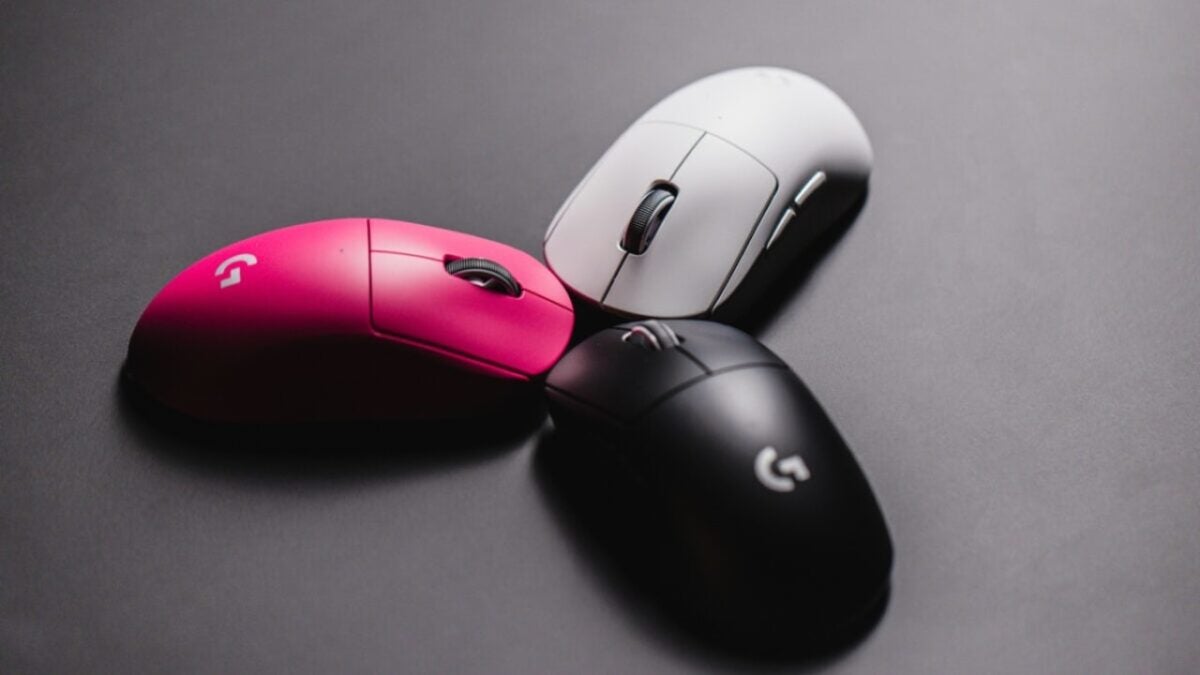
Just recently, we were discussing how interesting Logitech’s incredible gaming innovations are, focusing on the Lightspeed keyboard and the Superlight 2 mouse. However, I don’t think I emphasized enough the Logitech G Pro X Superlight 2 and how amazing it is as a mouse. Logitech is indeed known for delivering extraordinary peripherals that can do almost anything, but this one, in particular, is simply a true marvel that makes the G502 look like a toy. A very good toy, but the level they have achieved with this new piece is simply very hard to surpass.

The lightest wireless mouse

With a weight of just 60 grams, which is approximately half of the G502 Superlight, it is by far the lightest mouse Logitech has ever made, and, it’s safe to say, also the fastest. It boasts a wireless polling rate of 2 kHz and the ability to track at speeds of up to 500 inches per second, with a DPI range of up to 32,000. Additionally, it features a dual-mode design that maintains tracking even if the mouse is tilted or lifted off the mousepad.

While the original Superlight had a battery life of up to 70 hours, this enhanced version offers up to 95 hours of battery life. Notably, Logitech has moved away from the front-facing micro-USB connection, opting for USB-C, as they have done with the G502 X.

However, it’s important to note that this is an expensive mouse, designed for professional eSports players or gamers aiming for the highest level of performance. With a price tag of over 150 euros, you might wonder if the real difference will be noticeable, and in terms of specifications, it exists; however, for the average user, it can be challenging to perceive. What can be detected is the slightly increased actuation force required for a click, but it’s easy to adapt to. What might not be so easy to forget is the sniper button, which may seem like it’s missed at 32,000 DPI, but it’s not at all.

I have doubts about whether this mouse will become popular among the general public, but it is extremely comfortable in many ways and is a particularly convenient addition even for everyday use.

Zoom IQ is artificial intelligence on steroids

It had to happen. While some protect themselves from artificial intelligence, others embrace it as a way to reach new horizons. With Microsoft trying to add this technology to a large part of its applications and Adobe strengthening Adobe Express with generative artificial intelligence, Zoom makes a statement and chooses to strengthen and renew Zoom IQ with three different AIs. It has also taken the opportunity for a small rebranding and has abandoned its old name to become Zoom AI Companion.

Zoom AI Companion will feature the most popular generative AIs

This new Zoom assistant combines three of the most popular artificial intelligences to promote productivity, collaboration, and skill improvement: ChatGPT, Llama 2, and Claude. This functionality is included with the Zoom subscription of all users, and the company has assured that this tool will not use audio, video, chat, screen sharing, or any type of communication in any way to train Zoom’s artificial intelligence or third-party AI models. This provides several guarantees that users may greatly appreciate, especially since Mozilla has just initiated a petition to ask Microsoft if it intends to train its Copilot through user data.

The comparison with Copilot is not coincidental, as AI Companion could be strong competition for Microsoft’s tool, as it has several similar functions. Some of these include meeting summaries, as well as summary and task suggestions; both of which are very useful in the business world. In addition, Companion will offer content creation and message composition based on ideas and the ability to provide ideas through brainstorming.

But that’s not all. Zoom aims to improve AI Companion and keep it updated to help its users prepare for meetings, write complex summaries, and provide critical thinking. This makes it sound very promising, not only as an almost ideal assistant but also as one of the biggest quality-of-life improvements for many workers.

Zoom likes Teams less than you do

Microsoft is often faced with recurring lawsuits for anti-competitive practices, such as when in 2022 it was denounced by Slack before the European Union or, more recently, when the European Commission forced Microsoft to uncouple Teams from its Office Suite. Now, without waiting for the company to recover from the blow, Zoom’s CEO is trying to convince the Federal Trade Commission in the United States (FTC) to follow in the footsteps of the European Union.

As reported by Bloomberg, Eric Yuan – the CEO of Zoom – has spoken out in this regard recently, as the inclusion of Teams for free in the Office suite almost killed Slack, which would have forced this move by the European Commission. In Yuan’s words, responding to a question on the subject: “you should ask this question to the FTC as well”.

A problem more serious than it seems

To many people, bundling applications into packages or suites may seem like a secondary issue, but many companies move from one program to another simply because of the synergies between programs in the same group, or even for the convenience of not having to manage multiple accounts and passwords. This is something that is also starting to happen with Google Meets as a result of Google Workspace, with which it is difficult to compete. In the case of Teams, it is even more blatant, since it comes preinstalled in Windows 11 and if you do not deactivate it, it starts automatically every time you log in to your session.

That last one is a simple example of how Microsoft constantly uses its products to get its users to use its other products. Edge is not only the default browser, but also the base reader of the operating system and the one that opens when one tries to search for a solution to a problem (even if the default browser is another one), automatically searching Bing even if Google is the preferred search engine. Microsoft’s practices are at times highly questionable and stifle its competition while greatly degrading the user experience. Perhaps, with any luck, regulations will get stricter and stricter in the face of these facts.

A Zoom le gusta Teams menos que a ti

Microsoft suele enfrentarse recurrentemente a demandas por prácticas contra la competencia, como cuando en 2022 fue denunciada por Slack ante la Unión Europea o, más recientemente, cuando la Comisión europea ha forzado a Microsoft a desvincular Teams de su Office Suite. Ahora, sin esperar a que la compañía se recupere del golpe, el CEO de Zoom trata de convencer a la Comisión Federal de Comercio en Estados Unidos (FTC) de que siga los pasos de la Unión Europea.

Tal como ha informado Bloomberg, Eric Yuan -el CEO de Zoom- se ha manifestado a este respecto recientemente, ya que la inclusión de Teams gratuitamente en la suite de Office casi acabó con Slack, lo que habría forzado este movimiento por parte de la Comisión Europea. En palabras de Yuan, respondiendo a una pregunta sobre el tema: “deberías hacer esta pregunta también a la FTC”.

Un problema más grave de lo que parece

A mucha gente puede parecerle que es un asunto secundario la agrupación de aplicaciones en paquetes o suites, pero muchas compañías se mueven de unos programas a otros sencillamente por las sinergias entre programas del mismo grupo o, incluso, por la comodidad de no tener que estar gestionando diversas cuentas y contraseñas. Esto es algo que está comenzando a suceder también con Google Meets a raíz del espacio de trabajo Google Workspace, con el que resulta complicado competir. Para el caso de Teams es incluso más sangrante, ya que viene preinstalado en Windows 11 y si no lo desactivas se inicia automáticamente cada vez que entras a tu sesión.

Ese último es un sencillo ejemplo de cómo Microsoft constantemente utiliza sus productos para conseguir que sus usuarios utilicen sus demás productos. Edge no solo es el buscador predeterminado, sino también el lector base del sistema operativo y el que se abre cuando uno intenta buscar una solución a un problema (aun si el navegador predeterminado es otro), buscando automáticamente en Bing aun si Google es el buscador favorito. Las prácticas de Microsoft son en ocasiones altamente cuestionables y ahogan a su competencia mientras degradan enormemente la experiencia de usuario. Quizá, con un poco de suerte, las regulaciones sean cada vez más estrictas de cara a estos hechos.

The release date of Xiaomi 13T and Xiaomi 13T Pro has been revealed

It seems like leakers and insiders never rest, and while we are getting to know the latest news about the Google Pixel 8 or the Samsung Galaxy S24, other brands haven’t lagged behind either. From September as the starting point with the presentation of the iPhone 15 to early 2024 with the release of the S24, we can expect months of revelations, rumors, and leaks as part of our daily routine. In fact, that’s exactly what has happened with Xiaomi: specifications, regional differences, and its supposed release date have been leaked. Although, to be honest, they seem quite reliable.

It will arrive sooner than we expect

While we can’t grant full credibility to the leaks, if they turn out to be true, the Xiaomi 13T and 13T Pro will arrive on September 16, 2023. It’s a very close date, but it doesn’t seem too far-fetched, considering that the Xiaomi 12T was launched on October 4, 2022.

Regarding their specifications, there are some promising aspects. Xiaomi is known for focusing on power in its devices, and this won’t be an exception. For instance, this time they have chosen to equip their device with a powerful Mediatek Dimensity 9200 Plus, the same one found in the Redmi K60 or Vivo X90S. This processor will come with various options for RAM, allowing you to choose between 12 or 16 gigabytes, and storage options of either 256 gigabytes or 512 gigabytes. This is a potent combination further reinforced by an IP68 certification and a 5000 mAh battery, which is expected to provide decent battery life.

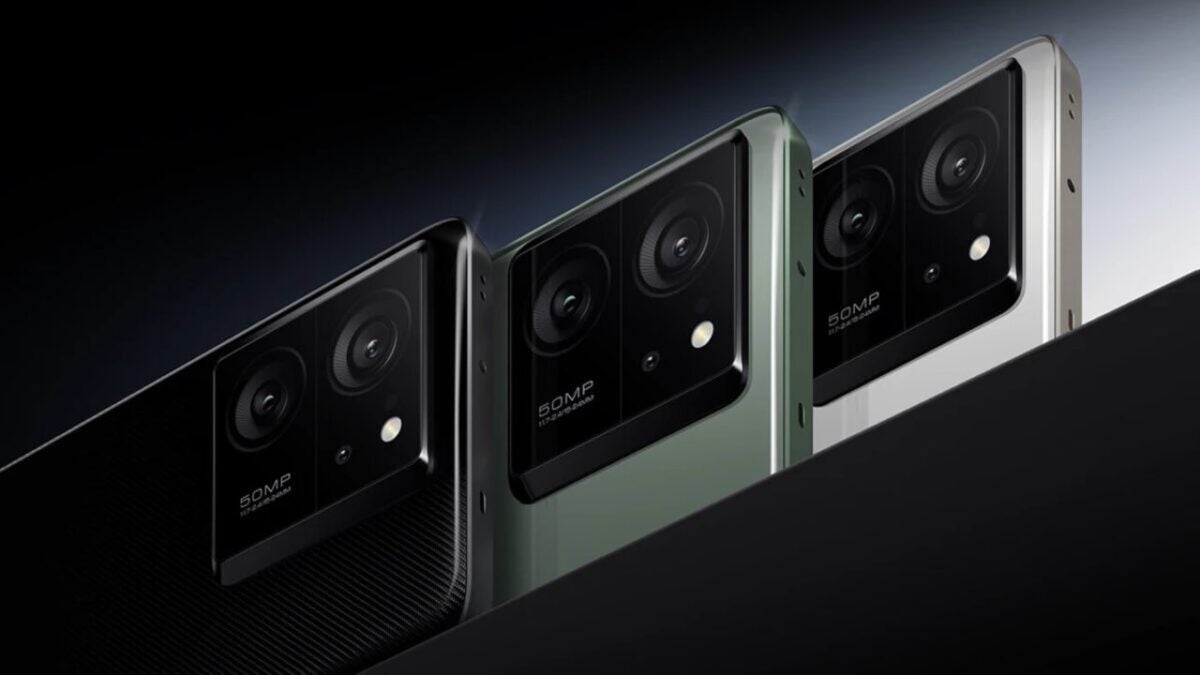
Where we seem to find regional differences is in the camera system, as revealed by the Twitter user @Sudhanshu1414. There will be versions with and without Leica branding. This might be due to Xiaomi avoiding the brand image in certain markets, although it seems likely that the Leica branding will be present in Europe.

In any case, we’ll have to wait a few more days to see if this is true. If it is, we’ll be excited to learn more.

Logitech is expanding its gaming lineup with an impressive keyboard and mouse

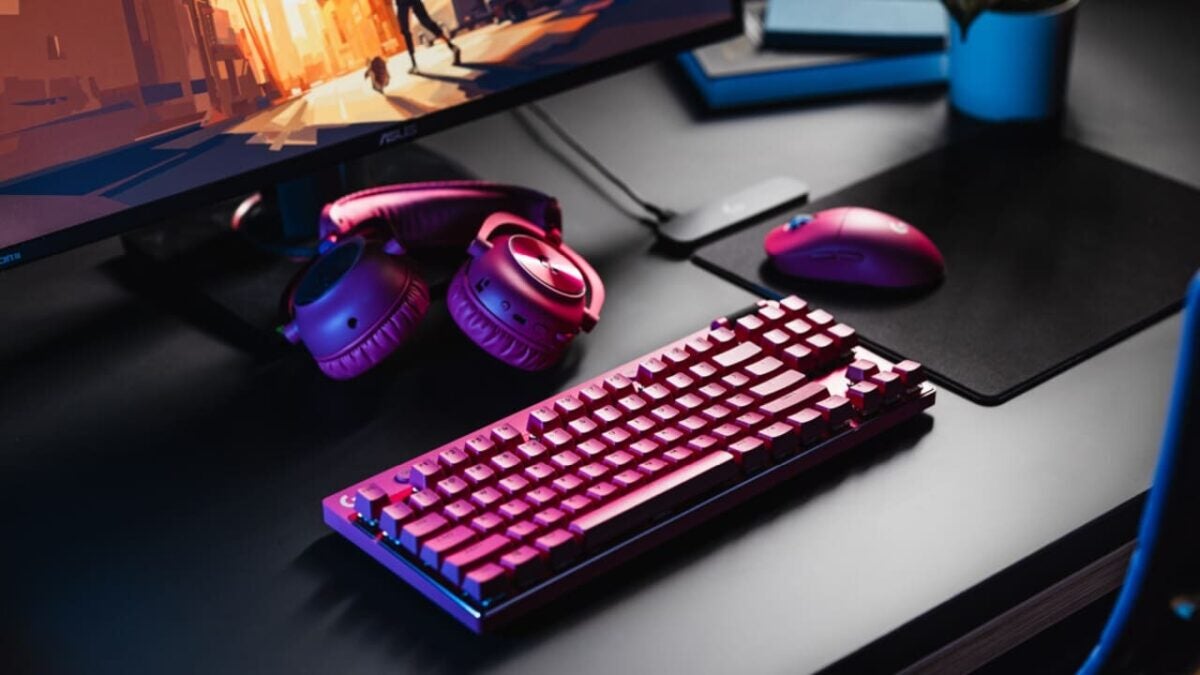
For several years now, hardware providers have been capitalizing on one of the most lucrative niches in the market: the gaming sector. It encompasses everything from specialized peripherals that could take us to the Titanic to ergonomic chairs and components dedicated to gaming. In the world of PC gaming, there are frequent releases of keyboards and mice designed to enhance players’ performance. Logitech, a company that has been manufacturing these instruments for quite some time, has been a part of this segment, and whenever possible, they introduce something new to surprise their users. This time, it’s the G Pro X TKL Lightspeed and the G Pro X Superlight 2, a keyboard and a mouse, respectively, designed for high-performance eSports competition.

At the forefront of gaming

These are not cheap peripherals. While the Lightspeed keyboard costs 240 euros, the Superlight 2 mouse is priced around 160 euros, but they offer a noticeable improvement over previous versions. For example, they feature improved connectivity to ensure greater success for eSports professionals.

But the changes don’t stop there: the G Pro X Superlight 2 is designed to provide greater speed and precision, weighing only 60 grams and equipped with Lightforce Hybrid switches, which offer faster response times and superior reliability. It also introduces a new sensor, the Hero 2, which can move the cursor at up to 32,000 dots per inch (DPI), along with USB connectivity and up to 95 hours of battery life, making it unlikely that you’ll need to resort to tricks to extend its autonomy.

On the other hand, the G Pro X TKL Lightspeed enhances its performance with programmable keys, a game control mode, and both Bluetooth and USB-C connectivity. Its battery lasts up to 50 hours, which is notably less than the Superlight 2 mouse but it’s also a more demanding device that includes multimedia and audio controls, various game configuration options, and RGB lighting with LightSync.

In addition to this, Logitech is releasing a pink version of the G Pro X 2 Lightspeed headset to complete the set, which will be available in addition to the pearl gray and black options.